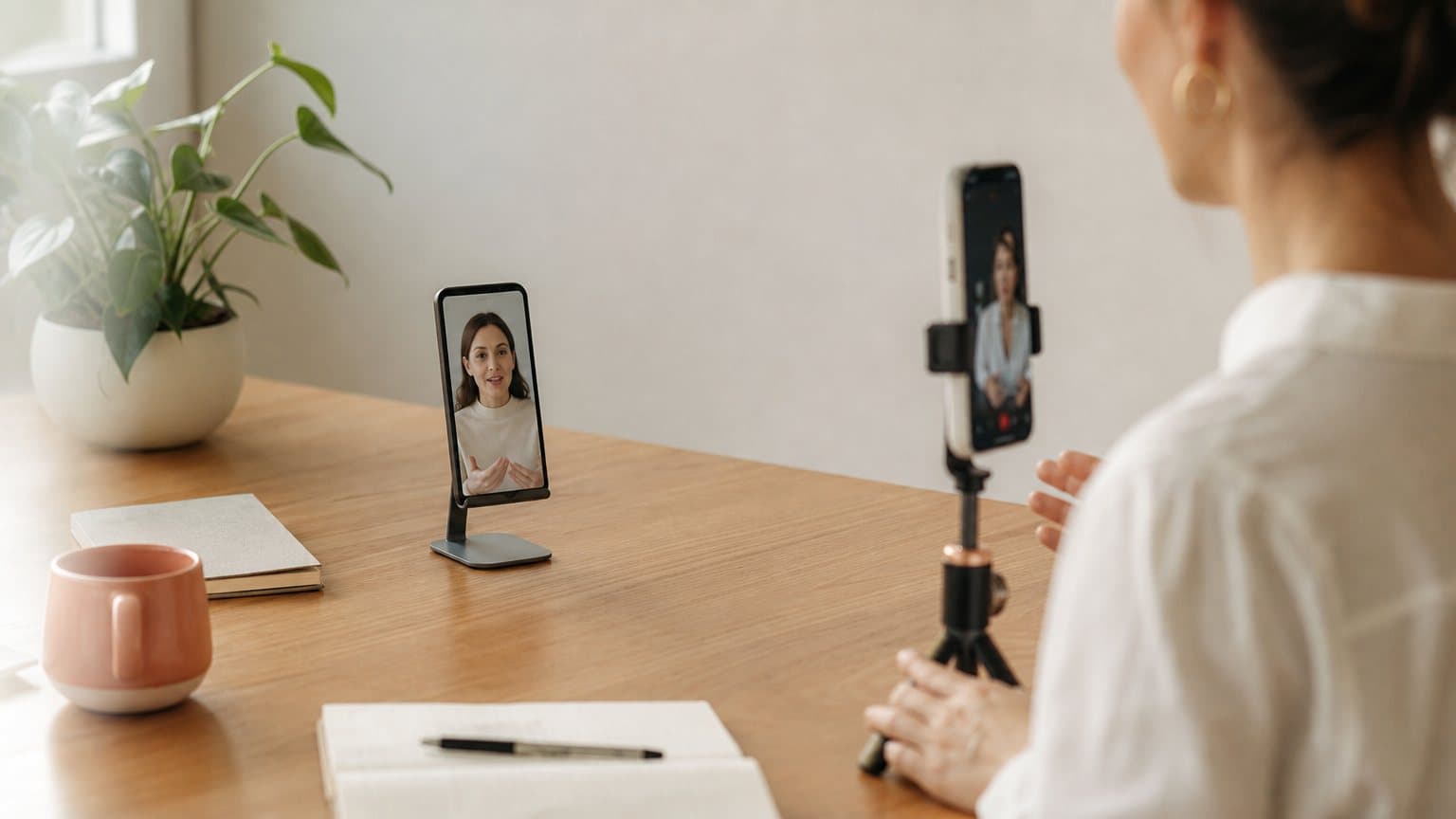
Best HeyGen Alternatives for AI UGC Ads: 7 Tools Compared by Price and Fit
HeyGen makes polished spokesperson and avatar video. For handheld UGC ads, here are seven alternatives compared on the kind of ad they make, what they cost to test, and how well they fit ecommerce.

Mauricio Valdivia
·Updated ·11 min

HeyGen makes a great spokesperson. UGC wants a friend.
A founder wants to know if AI UGC can move her new collagen powder. She opens HeyGen, picks an avatar, pastes her script, and the presenter delivers it cleanly: even lighting, broadcast diction, a face that could anchor a brand channel. It looks expensive in the good way.
Then she scrolls her own feed and finds the ad that is actually selling: a woman in a kitchen, phone at arm's length, holding the tub and talking like she is texting a friend. Different planet.
She has nothing against HeyGen. She just needs a different shape of video for this one job, and she would rather line up the tools that make it before she commits to anything. HeyGen earned its reputation. It is built around AI avatars and spokesperson-style delivery, with a free tier plus paid plans, and it is one of the cleanest ways to put a polished presenter on camera reading a script. The question is rarely whether HeyGen is good. It is whether a studio-grade avatar is the right shape for a paid-social UGC ad, or whether the ad wants to look like a real person filmed it on a phone.
TL;DR: the 7 best HeyGen alternatives in 2026
The axis that matters here is not price. It is what we will call the Authenticity Spectrum: how handmade or how studio-polished the finished ad looks. HeyGen anchors the polished, spokesperson end, where a clean presenter is exactly what you want. UGC ads usually live at the other end, where the video should feel handheld and unscripted. Every tool below makes ads that sit somewhere on that spectrum, and most let you start for free, for a dollar, or for a clearly listed price.
- Novoads is best for native-accent product UGC, with a custom actor made from a photo of someone holding your product. Start for $15/month (Starter, 200 credits per month).
- Synthesia is best for corporate training and reach across 140+ languages.
- Arcads is best for benchmark talking-head realism.
- Creatify is best for paste-a-product-URL ecommerce volume, with a watermarked free plan.
- Captions is best for an all-in-one actor plus a built-in AI editor.
- MakeUGC is best for a large AI-actor library you can start for $1.
- HeyFish described itself as an AI UGC video ad generator with actors that hold your product, but its website has not loaded since at least September 19, 2026 (we checked again on October 22).
Pick on fit before price. If the ad should feel handheld, like a real customer filmed it, look at Novoads, MakeUGC, or Creatify. If you want a polished presenter or a training video, HeyGen and Synthesia fit. Arcads sits closest to UGC realism for talking heads, and Captions bundles the edit. Then start at the cheapest point that can make your kind of ad.
| Tool | Best for | How to start |
|---|---|---|
| Novoads | Native-accent product UGC | $15/month (Starter) |
| Synthesia | Corporate training, 140+ languages | Free Basic plan |
| Arcads | Talking-head realism | Sign-up to view pricing |
| Creatify | Paste-a-URL ecommerce ads | Free plan |
| Captions | Actor plus built-in editor | Free tier |
| MakeUGC | Large AI-actor library (1,000+) | $1 trial |
| HeyFish | AI UGC ads, actors holding your product (archived Feb 2026) | Site not loading (Oct 22, 2026) |
The Authenticity Spectrum: studio polish to handheld UGC
Most roundups rank features. For UGC, that is the wrong first cut, because the most expensive mistake is not overpaying. It is making the wrong kind of video, which no plan tier fixes. The right first question is where on the spectrum your ad needs to sit.
What the spectrum measures
The Authenticity Spectrum runs end to end:
- Studio-polished: a clean avatar or presenter, even lighting, broadcast delivery, a scripted voice. Reads as the brand speaking, on purpose.
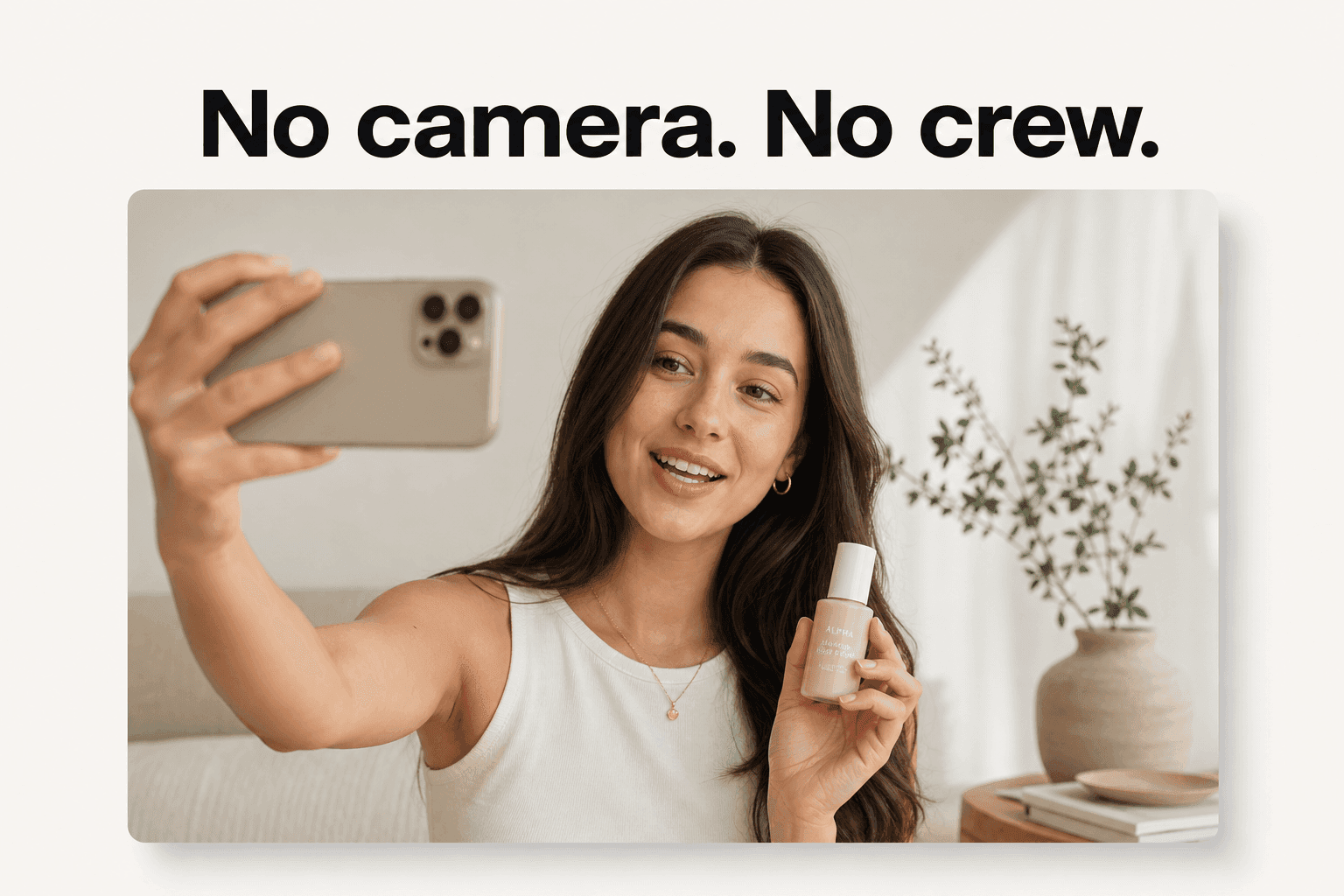
- Native handheld: a real-seeming person, phone at arm's length, an ordinary room, talking to camera. Reads as a customer who just tried the thing.
Neither end is better in the abstract. They win different jobs. An explainer or a training module wants the polished end. A paid-social ad built on what a UGC creator actually is usually wants the handheld end, because the handheld look is itself the trust signal.
Where HeyGen sits
HeyGen anchors the polished, spokesperson end, and it is excellent there. A clean avatar reading a script, an explainer, a branded presenter: that is the job HeyGen is built for, and a studio-grade look is a feature, not a compromise, when the brand should be the one talking. If your ad is a spokesperson piece, HeyGen is a strong default, and you should weigh the alternatives on fit rather than expect them to out-polish it at its own game.
The practical rule
Decide the shape first, then the price. If your buyer responds to a person who looks like them holding the product, you want a handheld-UGC tool, and the cheapest one that can show your product is enough to find out. If your buyer wants authority and clarity, a polished presenter earns its keep. For the full economics of either path, our video ad production cost breakdown runs the math against hiring a creator.
What HeyGen actually does well
Before ranking alternatives, be precise about what you are comparing against, because HeyGen does the spokesperson job at a high level, and the alternatives are not trying to beat it there.
Avatars and spokesperson delivery
This is the core. HeyGen is built around AI avatars: a synthetic presenter reads your script with steady delivery and clean lip-sync, the kind of talking head that fronts a product page or a brand channel. For a presenter speaking directly and credibly to camera, the output is polished, and it scales to many scripts without booking a studio or a shoot day.
Where studio polish is the right call
Some ads should look produced, and a clean avatar serves them better than a shaky phone clip ever would:
- An explainer that has to be crystal clear.
- An onboarding or internal training video.
- A brand spot where the company is openly the narrator.
- A spokesperson piece for a product page or a brand channel.
HeyGen also offers a free tier plus paid plans, so you can see exactly what it costs before you commit. The alternatives below do not win by out-polishing HeyGen at its own job. They win, where they win, by making a different kind of ad, the handheld kind, or by costing less to try.
Match the tool to the ad you need
The first filter is output, not price. Pick the wrong category and no plan tier saves you, because the tool is simply making the wrong kind of video.
Reach for a UGC-actor tool (Novoads, MakeUGC, Creatify) when:
- The ad should feel handheld and native, like a customer filmed it.
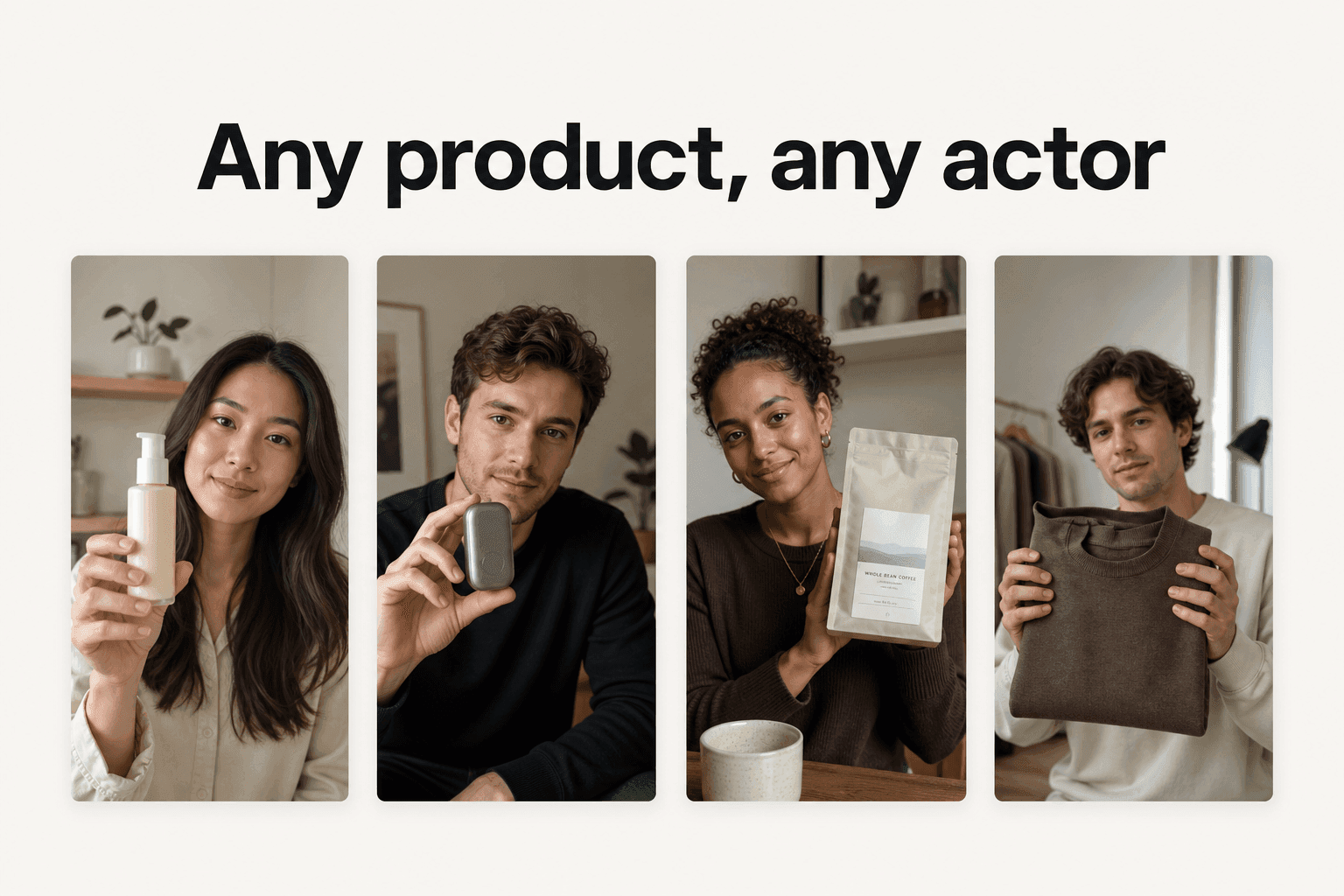
- The creator should hold, wear, or demo your product on camera (in Novoads, through a custom actor made from a photo of someone holding it).
- You are running paid social and need many cheap angles.
Reach for an avatar or studio tool (HeyGen, Synthesia) when:
- You want a polished presenter, not a phone-shot vibe.
- You are making training, explainer, or internal-comms video.
- Studio-clean delivery matters more than looking unscripted.
If you are still deciding whether AI can stand in for a hired creator, our guide on AI versus UGC creators is the better starting point, and the wider field is covered in our comparison of AI video ad platforms.
The 7 best HeyGen alternatives in 2026
1. Novoads, best for native-accent product UGC
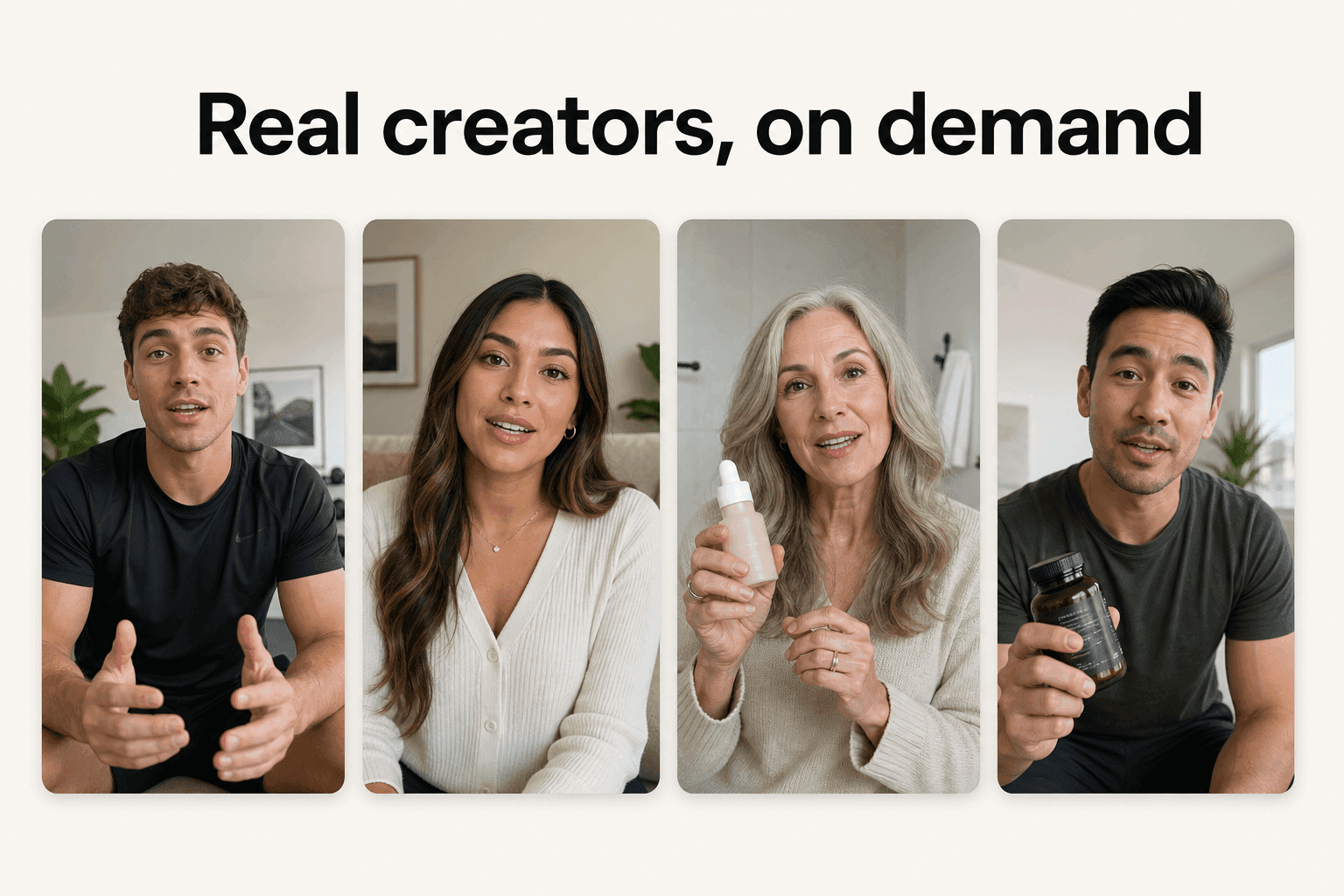
Novoads is a global AI UGC video-ad generator built around the part of the job HeyGen does not center: the actor holds and presents your actual product. You upload a photo of someone holding your product to create a custom actor (the 100+ stock actors in the library have empty hands), write or auto-generate a script, and get a vertical ad where the creator holds the item on camera. It runs multiple frontier models (Seedance, Kling, Veo, Omni Flash and Wan 3.0), and it ships ads in 30+ languages with real regional accents, not a translated caption track over one flat voice.
- Best for: native-accent UGC with the product on camera.
- Start at: $15/month (Starter, 200 credits per month).
2. Synthesia, best for corporate training and reach
Synthesia is the enterprise end of AI video: studio-clean avatars and deep localization aimed at training, onboarding, and internal communications. It supports 140+ languages and voices, its Starter plan is $19 a month on monthly billing for US visitors ($29 for dollar visitors outside that US tier), after a first month at $9 or $14 (read November 10, 2026), and a free Basic tier lets you try it. For polished, multilingual corporate video it is a category leader, and it sits near HeyGen on the spectrum rather than against it.
- Best for: training and 140+ language reach.
- Start at: a free Basic plan.
3. Arcads, best for talking-head realism
Arcads makes some of the most believable AI talking-head performances in the category, which is why agencies that have validated the format pay for it. It carries a 1,000+ AI-actor library, lets you create your own AI avatar, runs multiple frontier video models (its help center names Veo 3.1, Kling 3.0, Seedance and OmniHuman, read October 22, 2026), and localizes into more than 30 languages. Its actors can also hold and present a physical product through a custom-actor workflow. Pricing sits behind a sign-up, so it reads as a premium, commit-first tool: a fair pick once you already know you want polished talking heads.
- Best for: benchmark talking-head realism.
- Start at: pricing behind a sign-up.
4. Creatify, best for paste-a-URL ecommerce volume
Creatify is built for ecommerce workflow speed: you point it at a product URL and it generates an AI-avatar ad, with batch generation for running many at once. It has a watermarked free plan, so the cost to test is nothing, plus affordable paid tiers above it and a competitor ad tracker on the higher plan. It leans more avatar-and-template than native-handheld, but for paste-and-go catalog volume it is hard to beat.
- Best for: URL-to-ad batch volume.
- Start at: a watermarked free plan.
5. Captions, best for an all-in-one actor plus editor
Captions (by Mirage) pairs AI creators with a built-in, chat-based AI video editor in one app, so the clip and the edit live in the same place instead of bouncing to a separate tool. Its pricing page lists Max at $24.99/mo, the card that covers AI actors, with Frontier tiers above it (US-dollar prices for its iOS plans, read October 22, 2026), and a free plan to start. If you want generation and editing under one subscription, it is the most complete single workflow on this list.
- Best for: one app for actor and edit.
- Start at: a free tier.
6. MakeUGC, best for a large actor library
MakeUGC is the closest cousin to Novoads: a script-first generator with a very large AI-actor library (its homepage advertises 1,000+ realistic AI actors) and actors that present your product. It starts on a low-friction $1 trial of its own. If your priority is sheer variety of faces and accents to test, the library depth is the draw.
- Best for: maximum actor variety on a cheap trial.
- Start at: a $1 trial.
7. HeyFish, an AI UGC ad generator whose site is not loading
HeyFish's website has not loaded since at least September 19, 2026 (we checked again on October 22); the description below is from its homepage as archived on February 11, 2026. That page called HeyFish an "AI UGC Video Ad Generator" whose AI actors "can hold and showcase real products through image-to-avatar technology": pick an actor, add your product, get a UGC ad. We cannot check what it charges or offers today, so it carries no price here.
- Best for: AI UGC ads with an actor holding your product, once its site loads again.
- Start at: site not loading (October 22, 2026).
A worked example: testing one collagen powder
Say you want to know which format sells a single collagen powder: a polished spokesperson or a handheld customer. You cannot guess this reliably, so you test both, and the only real question is what the test costs.
Run one head-to-head across the spectrum:
- Polished cut (free tier): a spokesperson reading your three best lines, made on HeyGen's free tier for $0, with a watermark on the free videos. Synthesia's free Basic plan lets you try its editor too, but downloading starts on its Starter plan.
- Handheld cut: five real, unwatermarked variations where the actor holds the tub, made on Novoads from $15/month with a custom actor built from a photo of someone holding it, or on MakeUGC's $1 trial.
Push both into a small paid test and let click-through and ROAS decide, not your taste. Our notes on how to create UGC ads with AI cover the production steps for each cut. A Novoads clip runs from about 25 cents for a five-second Seedance 2.0 Mini clip to about $4 for an eight-second Google Veo 3.1 clip, and about $10 for a full 30-second Seedance 2.5 take, and it takes about four minutes, so the handheld side of the test is cheap to expand once an angle works. In most ecommerce feeds the handheld cut wins, because the demo is the ad, but now you will know rather than assume, and you will have spent about $15 to find out.
How Novoads solves product-led UGC
Novoads is built for the exact ad that makes ecommerce teams reach past a spokesperson tool: a creator who holds your actual product, in a language your audience actually speaks. You upload a photo of someone holding your product to create a custom actor, write or auto-generate a script, and the model returns an ad ready to run:
- A vertical clip with voice and lip-sync, plus captions as one more step (0 credits in the default style), sized for TikTok, Reels, and Meta.
- A choice of frontier models (Seedance, Kling, Veo), so you are not betting on one engine.
- Delivery in 30+ languages with real regional accents, not a flat translation.
The headline time is about four minutes, and a clip costs cents to a few dollars instead of a few hundred.
The difference from HeyGen is not better versus worse. It is which end of the Authenticity Spectrum your ad needs: HeyGen owns the polished presenter, and Novoads centers the product-in-hand, native-accent ad that paid social rewards, built on a custom actor made from a photo of someone holding your product, from $15/month to test the whole idea. For a closer look, see Novoads versus HeyGen, and for the realism end of the field, the best Arcads alternatives.
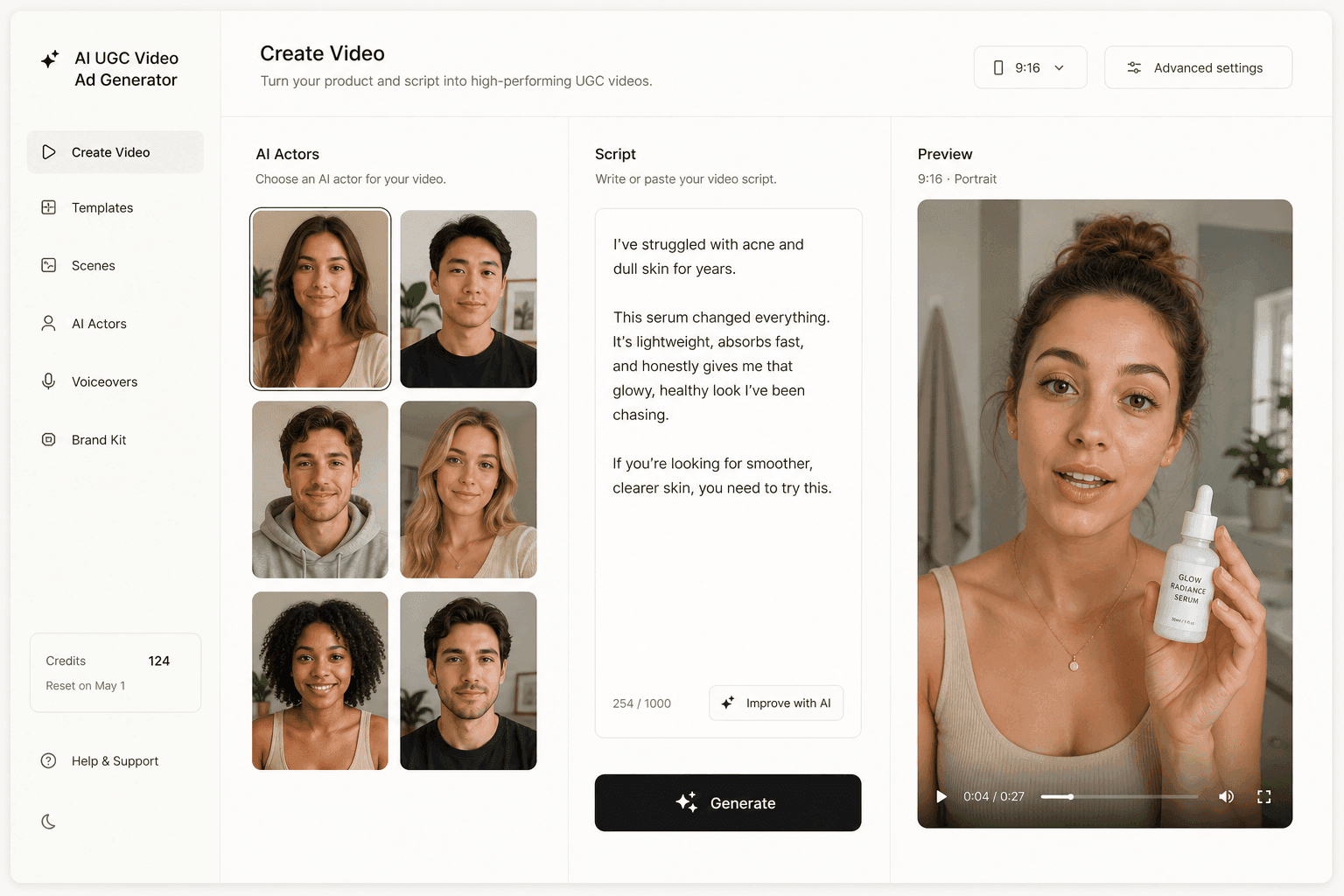
UGC wants a friend, not a spokesperson
The best HeyGen alternative is not the one with the glossiest avatar. It is the one that makes the ad your product needs, at the end of the Authenticity Spectrum your buyer responds to. HeyGen is the benchmark for a polished presenter, and when the brand should be the one talking, it is a fair default. For everyone testing whether handheld AI UGC moves the needle, especially in ecommerce, where the demo is the ad, and in markets where the accent has to be right, the smarter move is to start cheap, show your product, and let the data pick the tool. You can make your first product-in-hand AI UGC ad with Novoads by turning a photo of someone holding your product into a custom actor, from $15/month (Starter) at novoads.ai. Cancel anytime.
Compare HeyGen and Novoads side by side
Frequently Asked Questions
What is the best HeyGen alternative?
It depends on the ad you need, not on a single winner. For product-led ecommerce UGC where the creator holds and presents your product (in Novoads, a custom actor made from a photo of someone holding it), and for native-accent delivery across many languages, Novoads is the closest fit. For corporate training and reach, Synthesia. For benchmark talking-head realism, Arcads. For paste-a-product-URL volume, Creatify. For an actor plus a built-in editor, Captions. For a large AI-actor library you can start for $1, MakeUGC.
Is HeyGen good for UGC ads?
HeyGen is excellent for polished spokesperson and avatar video, explainers, and brand spots, with a free tier to try it. UGC ads usually want a handheld, native feel, like a real customer filmed them on a phone, so for that specific job many advertisers pair or swap in a UGC-actor tool. The right call is to pick by where on the Authenticity Spectrum your ad needs to sit: studio-polished or handheld.
Which HeyGen alternatives can show a product in the creator's hands?
Several. Novoads is built around product-in-hand UGC: you upload a photo of someone holding your product to create a custom actor (Create Actor > Upload), write or auto-generate a script, and that actor presents your actual product on camera. MakeUGC also pairs AI actors with your product, and Arcads actors can hold and present a physical product through a custom-actor workflow. For ecommerce, where the demo often is the ad, that product-on-camera capability matters as much as raw polish.
Which HeyGen alternatives have a free plan or trial?
HeyGen itself has a free tier, and most alternatives match that low cost to test. Creatify and Captions offer a free tier, Synthesia has a free Basic plan, and MakeUGC uses a $1 trial. Novoads has no free tier and no trial: it starts at $15/month (Starter, 200 credits per month). That spread is why teams test before committing: the cost of finding out whether AI UGC works for your product runs from nothing to one month of a paid plan.
How much do HeyGen alternatives cost?
They span a wide range. Watermarked free plans (Creatify), free tiers (Captions, Synthesia Basic), and MakeUGC's $1 trial all let you start cheaply. Listed prices include Captions' Max at $24.99/mo (US dollars, iOS plans, read October 22, 2026) and Synthesia's Starter at $19 a month on monthly billing for US visitors, or $29 for dollar visitors outside that US tier, after a first month at $9 or $14 (read November 10, 2026). Arcads keeps its pricing behind a sign-up. Novoads starts at $15 a month (Starter, 200 credits per month), and HeyGen and several others publish a free tier.
Do AI UGC ads actually perform?
User-generated content is the format shoppers trust, because a real-seeming person reads as more credible than a brand talking about itself. AI UGC reproduces that trust signal from a script in minutes for a few dollars, which is what makes testing many ad angles affordable. The tool you pick decides how handheld the output looks and whether you can show your product on camera.
Key Takeaways
- HeyGen is built around AI avatars and spokesperson-style video, with a free tier plus paid plans. For a polished presenter reading a script, an explainer, or a brand spot, it is a strong default.
- Most teams look past HeyGen for paid social on fit, not quality. A UGC ad usually wants the handheld, native end of what we call the Authenticity Spectrum, not a studio-clean presenter.
- Match the tool to the ad before you compare prices. Novoads, MakeUGC, and Creatify make native handheld UGC; Synthesia fits corporate training; Arcads is the talking-head realism benchmark; Captions bundles an actor and an editor.
- Most alternatives let you test for very little: a watermarked free plan, MakeUGC's $1 trial, or a listed monthly tier such as Novoads' $15/month Starter, so you can see the price before you pay it.
- Novoads fits product-led UGC best: a custom actor made from a photo of someone holding your product shows it on camera, it runs multiple frontier models, it ships ads in 30+ languages with real regional accents, and you can start for $15/month (Starter, 200 credits per month).