
The 7 Best AI Video Ad Generators in 2026, Ranked by Fit and Price
The best AI video ad generator depends on the ad you need: handheld UGC where the actor holds your product, a polished spokesperson, or studio-clean corporate video. These seven platforms are ranked fit first, price second, so you start with the right tool for the least it costs to test.

Mauricio Valdivia
·12 min

The wrong format costs more than the wrong price.
A growth marketer wants to test whether AI video ads can sell a new magnesium supplement. She opens the most-hyped tool she has seen on her feed, picks an avatar, writes a hook, and the render is clean. Then the ad ships and it flops. Not because the price was wrong, but because she bought a polished spokesperson when her audience only trusts a real-seeming person filming at home.
That is the mistake that actually wastes money. The best AI video ad generator is not the one with the most lifelike actor or the lowest sticker price. It is the one that makes the ad shape your product needs, because no plan tier fixes a tool that makes the wrong shape of video. Get the format right and even the cheapest tool can win. Get it wrong and the most expensive one still loses.
This is a roundup of the seven platforms worth your shortlist, ranked the way a buyer should actually rank them: fit first, price second. We concede each tool's real strengths honestly and re-check every price and capability against the vendor's own site. The point is to match the platform to the ad, then start with the cheapest one that can make it. If you are new to the format itself, our primer on AI UGC ads covers why it works, and our broader guide to AI ads frames where video fits.
TL;DR: the 7 best AI video ad generators in 2026
The lens that matters is what we will call the Format-Fit Rule: pick the generator that makes your ad shape first, then pick the cheapest one that makes it. Every tool below is genuinely good at something. None of them is good at everything.
- Novoads is best for product-led UGC across many languages, with a custom actor that holds your product on camera. Start at $49/month.
- MakeUGC is best for the largest AI-creator library, on a $1 trial.
- HeyFish is best for the lowest listed cost per video, with a free first ad.
- Creatify is best for paste-a-product-URL ecommerce volume, with a watermarked free plan.
- Arcads is best for benchmark realism in talking-head performances, priced behind a sign-up.
- HeyGen is best for a polished spokesperson or avatar video, from a free tier.
- Synthesia is best for corporate training and reach across 160+ languages, from a free plan.
Which is right for you comes down to one question before price: what kind of ad do you actually need? If the creator should hold, wear, or demo your product, look at Novoads (through a custom actor or Discover's product templates), MakeUGC, HeyFish, or Creatify. If you want a polished presenter or a training video, HeyGen and Synthesia fit better. If raw talking-head realism is the only thing that matters, Arcads is the benchmark. Then pick the cheapest tool that can make it.
| Platform | Best for | How to start |
|---|---|---|
| Novoads | Product-led UGC, many accents | $49/month |
| MakeUGC | Biggest AI-creator library | $1 trial |
| HeyFish | Lowest listed cost per video | Free first ad |
| Creatify | Paste-a-URL ecommerce ads | Free, watermarked |
| Arcads | Benchmark talking-head realism | Behind a sign-up |
| HeyGen | Spokesperson, avatar video | Free tier |
| Synthesia | Corporate training, 160+ languages | Free plan |
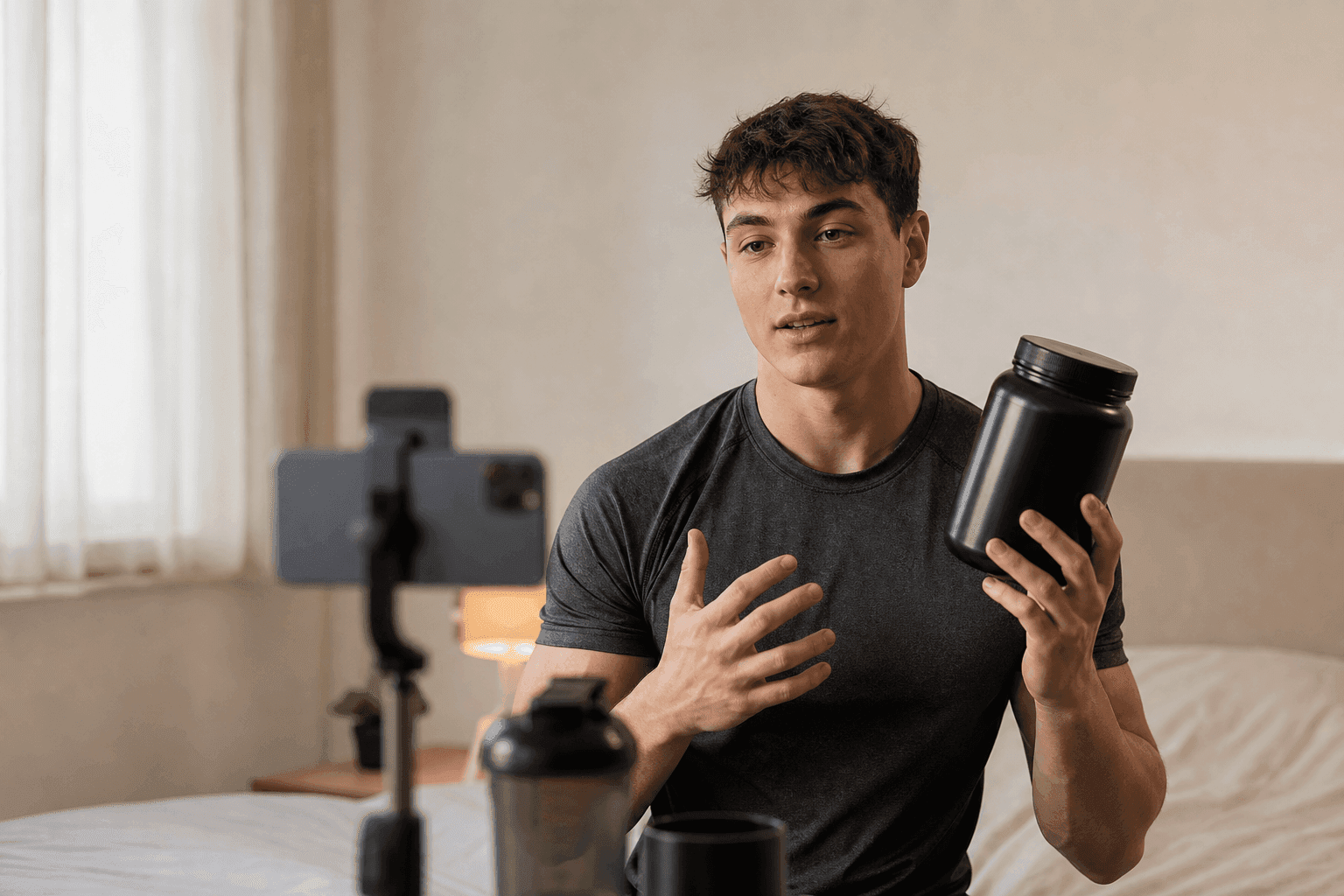
The Format-Fit Rule: shape first, price second
Most tool comparisons open with a price table. That ranks the tools on the cheapest axis to measure, not the one that decides whether your ad works. The Format-Fit Rule runs two gates, in order.
The Shape Gate
Every AI video generator makes one of three ad shapes, and the shapes do not substitute for each other:
- Handheld UGC: a real-seeming person filming themselves, like a customer review shot on a phone.
- Spokesperson or avatar: a polished presenter reading to camera, clean and on-brand.
- Studio or corporate: training, onboarding, and explainer video built for clarity, not for the feed.
Picking the wrong shape is the most expensive mistake in the whole process, because no plan tier fixes it. A studio-clean avatar will not pass as a customer filming in their kitchen, and a handheld UGC clip will not feel like a corporate training module. Decide the shape your campaign needs before you look at a single price.
The Cost Gate
Once the shape is right, the only question left is what the experiment costs. The spread across these platforms is wide:
- Free to try: a watermarked free plan or a free first ad, so the first cuts cost roughly nothing.
- A dollar to look: a $1 trial on the tools that run one, such as MakeUGC.
- A listed entry tier: a clear published price, from about $25 to $59 a month, Novoads included at $49.
- Behind a sign-up: pricing you only see after creating an account.
The further left you start on this gate, the more angles you can test before you have spent anything that stings.
The practical order
Run the gates in order: shape, then cost. First decide whether you need handheld UGC, a spokesperson, or a corporate explainer. Then, within that shape, pick the cheapest tool that can make it. You do not need the priciest platform to learn whether the format converts. You need the one that makes your ad and costs the least to try. For the full economics against hiring a human, our video ad production cost breakdown runs the math.
Match the platform to your ad shape
The first filter is output, not price, and the categories split cleanly. Picking the wrong category is the costly error, so sort here before you compare plans.
Reach for a UGC-actor tool when
- The ad should feel handheld and native, like a real customer filmed it.
- The creator should hold, wear, or demonstrate your product on camera.
- You are running paid social and need many fresh angles cheaply.
These are the tools where the demo is the ad: Novoads (through a custom actor or Discover's product templates), MakeUGC, HeyFish, and Creatify. If you are still deciding whether AI can stand in for a hired creator, what a UGC creator actually is covers the format, and AI versus UGC creators covers the trade-off honestly.
Reach for a spokesperson or avatar tool when
- You want a polished presenter representing the brand, not a phone-shot vibe.
- The clip is an explainer or a personalized message at scale.
- Clean, on-brand delivery matters more than looking unscripted.
This is where HeyGen sits. It is built around AI avatars and digital twins, with a free tier to try it before the paid Creator plan.
Reach for a studio or corporate tool when
- You are making training, onboarding, or internal-communications video.
- Multilingual reach across a documentation-grade library matters.
- Studio-clean production is the goal, not social-native scrappiness.
This is Synthesia's home: studio-clean avatars, deep localization, and a feature set aimed at corporate video.
The 7 best AI video ad generators, compared
Fit sorts the category; the deep dive below sorts within it. Every price and capability here was re-checked against each vendor's own live site in July 2026, because these numbers move faster than any roundup. The one comparison worth a table is fit against entry price, because that is the decision you are actually making.
| Platform | Ad shape | Entry price | Product in hand |
|---|---|---|---|
| Novoads | Handheld UGC | $49/mo | Yes, custom actor |
| MakeUGC | Handheld UGC | $1 trial | Yes |
| HeyFish | Handheld UGC | $24.99/mo, free first ad | Yes |
| Creatify | Avatar, URL-to-ad | Free, then 39 a month | Partial |
| Arcads | Talking head | Behind a sign-up | Yes, custom actor |
| HeyGen | Spokesperson | Free, then $29/mo | No |
| Synthesia | Corporate | Free, then $29/mo | No |
1. Novoads, best for product-led UGC in many languages
Novoads is a global AI UGC video-ad generator built around the part of the job ecommerce cares about: your actual product on camera. You upload a product image and write or auto-generate a script, pick from 100+ AI actors, and get a vertical ad with voice, lip-sync, and captions ready for TikTok, Reels, and Meta; to have the creator hold the item, you create a custom actor from a photo of someone holding it. The frontier models available in Novoads (Seedance 2.0, Kling v3 Pro, and Google Veo 3.1) mean you are not betting on a single engine, and it ships ads in 30+ languages with real regional accents, not just translated subtitles. A clip lands in about four minutes. The walkthrough on how to create UGC ads with AI covers the production steps end to end.
- Best for: native-accent UGC where the product is on camera.
- Start at: $49/mo.
2. MakeUGC, best for the biggest actor library
MakeUGC is the closest direct comparison to Novoads: a script-first generator that advertises 1000+ realistic AI creators, and it lets any AI actor hold and present your product on camera. It starts on a low-friction $1 trial of its own, with paid plans beginning at $59/mo. If your priority is sheer variety of faces and accents to test, its library depth is the draw.
- Best for: maximum actor variety on a cheap trial.
- Start at: a $1 trial.
3. HeyFish, best for the lowest listed cost per video
HeyFish positions itself directly as an AI UGC Video Ad Generator: pick an actor, drop in your product, and get a UGC ad. Its product-holding avatar technology is a headline feature, and it leans hard into ecommerce demos where the actor showcases your actual product on camera. The entry paid plan is $24.99/mo, the lowest listed here, and your first video is free to start. If your constraint is pure volume on a tight budget, it is the most explicitly cost-led option.
- Best for: high volume at the lowest listed price.
- Start at: a free first ad.
4. Creatify, best for paste-a-URL ecommerce volume
Creatify's signature is workflow speed for ecommerce: its URL-to-video flow generates ad creative for your products from any URL, with batch generation for running many at once. It has a free plan whose exports include a watermark, so the cost to test is zero, and paid plans start at 39 dollars a month with the Pro tier at $99/mo. It leans more avatar-and-template than native handheld, so for paste-and-go catalog volume it is hard to beat, and our best Creatify alternatives roundup covers where it falls short for handheld UGC.
- Best for: URL-to-ad batch volume.
- Start at: a watermarked free plan.
5. Arcads, best for benchmark realism
Arcads makes some of the most believable talking-head performances in the category, which is why agencies that have validated the format pay its premium. It offers a library of 1,000+ Captivating AI Actors, runs multiple frontier video models (naming Sora 2 Pro and Seedance 2.0 among them), and lets you create your own AI Avatar. Its actors can also hold your product through a custom-actor workflow, while localizing into more than 30 languages. Arcads keeps its pricing behind a sign-up, which reads as a premium, commit-first posture: a tool priced for teams that already know they need it. For a closer look, see our best Arcads alternatives roundup and the Novoads versus Arcads head-to-head.
- Best for: benchmark talking-head realism.
- Start at: create an account to see pricing.
6. HeyGen, best for spokesperson and avatar video
HeyGen is built around AI avatars and digital twins for spokesperson-style delivery. It is excellent for a clean presenter reading a script, explainer videos, and personalized video at scale, with a free tier and a $29/mo Creator plan above it. When you want a polished talking head representing the brand rather than a handheld feel, it is a strong pick, and our best HeyGen alternatives roundup covers the UGC-first options if that is where you land.
- Best for: polished spokesperson and avatar video.
- Start at: a free tier.
7. Synthesia, best for corporate training and reach
Synthesia is the enterprise end of AI video: studio-clean avatars, deep localization across 160+ languages, and a feature set aimed at training, onboarding, and internal communications. Its Starter plan is $29/mo, with a free Basic tier. For polished, multilingual corporate video, it is a category leader, though it is not built for the scrappy, handheld feel that paid social rewards.
- Best for: training and 160+ language reach.
- Start at: a free Basic plan.
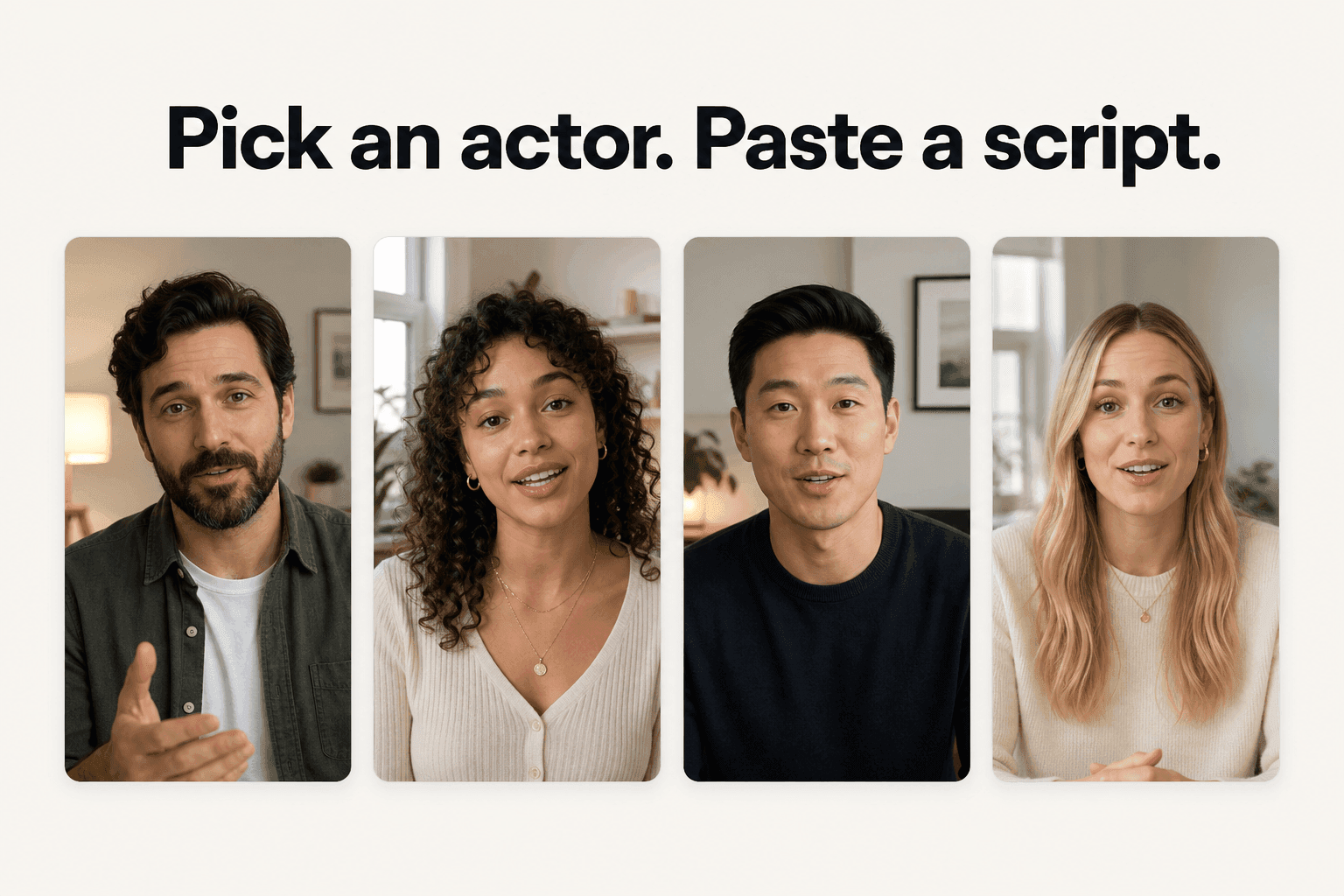
Best AI UGC ad generator: the shortlist inside the shortlist
The queries "best AI video ad generator" and "best AI UGC ad generator" are not the same search. The first is the whole category above. The second is narrower: a UGC generator has to produce a clip that reads as a real customer filmed it, usually with your product in their hands, not a studio avatar reading a script. That cut removes the spokesperson and corporate tools and leaves four to five contenders.
What makes a UGC generator different
A true UGC generator has to clear three things a general avatar tool does not:
- Product in hand. The actor holds, wears, or demonstrates your actual item, because in ecommerce the demo is the ad.
- Native accent, not translation. A robotic or mismatched voice breaks the "real customer" illusion instantly.
- Volume economics. UGC wins by testing many angles, so cost per finished clip decides how much you can learn.
A tool can be a superb AI video generator and a poor AI UGC ad generator if it aces polish but fails the handheld test. Our overview of UGC and AI walks through why the handheld read matters more than resolution for social.
The UGC shortlist, ranked
Ranked on the three UGC criteria above, not on general video quality:
| Tool | Product in hand | Accents | Cheapest start |
|---|---|---|---|
| Novoads | Custom actor, script-first | 30+, real regional | $49/month |
| MakeUGC | Yes, 1000+ creators | Many | $1 trial |
| HeyFish | Yes, product-holding | Fewer | Free first ad |
| Creatify | Partial, URL-to-ad | Many | Free, watermarked |
| Arcads | Custom-actor workflow | 30+ | Behind a sign-up |
Novoads and MakeUGC anchor the top because both are script-first and both put your product in hand (Novoads through a custom actor, MakeUGC natively); MakeUGC opens on a $1 trial, Novoads on a published $49/month plan. HeyFish is the value pick when budget is the only constraint. Creatify is the volume pick when you would rather paste a catalog URL than write scripts. Arcads is the pick when realism outranks price and you are ready to commit.
When a human creator still wins
AI UGC is the right tool for testing angles at volume, not for every job. A flagship hero video, a specific real face your audience already knows, or a founder story still belongs to a human creator. The honest read is that AI wins the "run twenty variations this week" job and a person wins the "one asset that has to be unmistakably real" job. Our guide on how to make UGC ads with AI covers where the line sits in practice.
A worked example: testing one supplement
Say you want to find a winning angle for a single magnesium supplement, and you plan to test five:
- A problem-solution hook.
- A testimonial to camera.
- A morning-routine clip.
- An ingredient explainer.
- An unboxing.
The format rewards running all five, because the winner is rarely the one you would have guessed. The only real question is what it costs to find out.
The cost to find out
Run that five-angle test through the Cost Gate. On the $49/month plan with Novoads, those five real, unwatermarked variations sit well inside the monthly credit grant, each render lands in about four minutes (so the whole set is roughly twenty minutes of work), and each finished video runs from about a dollar for a five-second Seedance 2.0 Mini clip to about $8 for an eight-second Seedance 2.5 clip, and about $26 for a full 30-second Seedance 2.5 take, all in render cost. Compare that to hiring a human creator at a few hundred dollars a video: five briefs run into four figures and a week or two of back-and-forth.
In every cheap path you get a read on what works before you have committed real budget. That is the Format-Fit Rule paying off: the cheapest tool that can make your ad shape is also the cheapest way to find your winning angle. Our guide on improving ROAS with UGC covers what to do once an angle wins.
Why language and accent decide non-English performance
Spanish and Portuguese markets together represent hundreds of millions of consumers and some of the fastest-growing ecommerce segments anywhere. Yet many AI video tools treat these languages as an afterthought, with generic text-to-speech and no regional nuance. For social UGC, that gap is decisive.
Accent as a trust signal
UGC ads live or die on authenticity. The whole reason the format works is that a real-seeming person reads as more credible than a brand talking about itself. A robotic or mismatched accent breaks that signal instantly: if your AI creator sounds like a textbook instead of someone from your buyer's city, the audience scrolls past before the hook lands. The accent is not a nice-to-have. It is the trust signal the ad is built on.
Where native accents matter most
The platforms split here too. Synthesia covers 160+ languages and voices for corporate and training video, where clarity is the bar. For native-feeling social UGC, what matters is regional delivery, not just language coverage. Novoads ships ads in 30+ languages with real regional accents rather than a flat translation, which is the difference between an ad that sounds local and one that sounds dubbed. If you sell across Latin America, Brazil, or any non-English market, treat accent quality as a first-class selection criterion, not a footnote.
How Novoads solves product-led UGC
Novoads is built for the exact job that makes ecommerce teams leave a spokesperson tool: an ad where the creator holds your actual product (a custom actor made from a photo of someone holding it), in a language your audience actually speaks. It is the answer when the best AI UGC ad generator for you has to clear the product-in-hand and native-accent tests at the same time.
The product-in-hand workflow
You create a custom actor from a photo of someone holding your product (Create Actor > Upload), write or auto-generate a script, and get a vertical UGC ad with voice, lip-sync, and captions, formatted for TikTok, Reels, and Meta. It runs multiple frontier models so you are not betting on one engine, and if you want to understand how those engines differ for ads, our Seedance versus Veo comparison breaks it down.
Native accents, not translated subtitles
It produces ads in 30+ languages with real regional accents. The headline time is about four minutes, and a clip runs from a few dollars instead of a few hundred. The difference from a benchmark talking-head tool like Arcads is not that one is good and the other is not. It is fit and commitment: Novoads centers the native-accent ad with a custom actor holding your product, the kind paid social rewards, and publishes the $49/month entry price instead of making you sign up to see it.
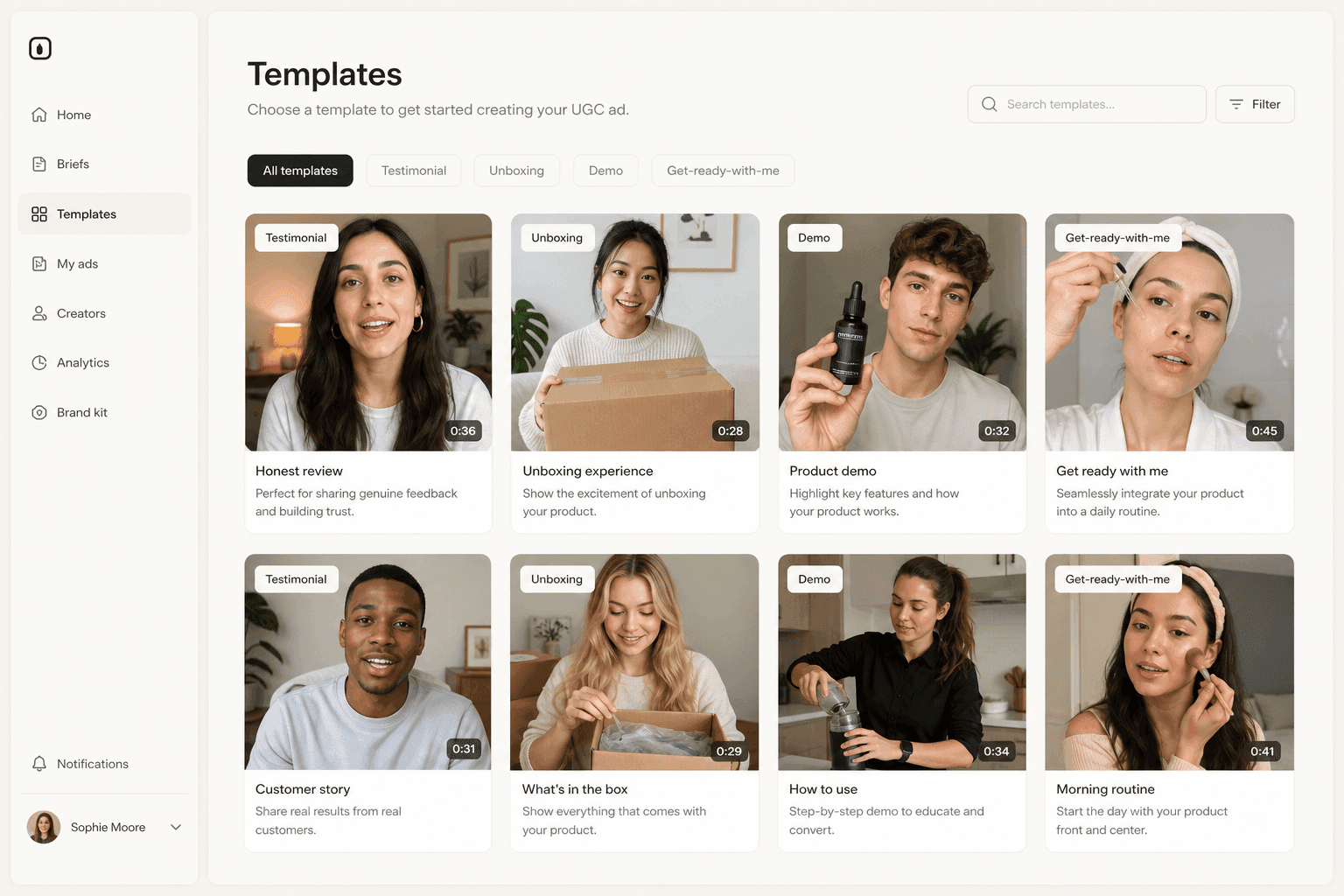
Fit picks the tool, price picks the tier
The best AI video ad generator is not the one with the most lifelike actor or the lowest sticker price. It is the one that makes the ad your product needs, for the least it costs to find out. Match the shape first, then start at the cheapest point that can make it. You can produce your first product-in-hand AI UGC ad with a Novoads custom actor from $49/month at novoads.ai. Cancel anytime.
Frequently Asked Questions
What is the best AI video ad generator?
There is no single winner, only the best fit for the ad you need. For product-led ecommerce UGC where the creator should hold your product (on Novoads, a custom actor made from a photo of someone holding it), and for delivery across many languages with real regional accents, Novoads is the closest fit, and you can test it from $49/month. For the largest AI-creator library, MakeUGC on a $1 trial. For the lowest listed cost per finished video, HeyFish at $24.99/mo with a free first ad. For paste-a-product-URL volume, Creatify. For benchmark talking-head realism, Arcads. For a polished spokesperson, HeyGen. For corporate training across 160+ languages, Synthesia.
What is the best AI UGC ad generator specifically?
For UGC ads, where the whole point is a real-seeming person filming at home, the shortlist narrows to tools that pair an AI actor with your product on camera. Novoads is built for product-in-hand UGC, through a custom actor made from a photo of someone holding your product, across 30+ languages with real regional accents, from $49/month. MakeUGC advertises 1000+ realistic AI creators on a $1 trial. HeyFish is the most cost-led AI UGC ad generator, with a free first ad and a $24.99/mo Starter. Creatify leans URL-to-ad and more template than handheld. Arcads is the realism benchmark and can hold your product through a custom-actor workflow.
Are AI video ads cheaper than hiring a creator?
Significantly. A freelance UGC creator runs into the hundreds of dollars per video once you add briefing, shooting, and revisions. AI generators produce comparable UGC-style content for a few dollars a video, which is what makes it affordable to test ten or twenty angles in a single campaign instead of betting a budget on one or two.
Which AI video platform is best for Spanish or Portuguese ads?
Accent quality varies enormously, and audiences notice a mismatched or generic accent immediately. Novoads ships ads in 30+ languages with real regional accents rather than a flat machine translation, which matters most for native-feeling social UGC. Synthesia supports 160+ languages and voices and is built for studio-clean corporate and training video. Match the platform to whether you need a handheld social ad or a polished corporate one.
Which platforms have a free plan or trial?
Several, and the spread is why most teams test elsewhere first. HeyGen has a free tier plus a $29/mo Creator plan; Synthesia has a free Basic tier plus a $29/mo Starter; Creatify has a free plan whose exports include a watermark plus a Starter at 39 dollars a month; HeyFish gives you a free first ad plus a $24.99/mo Starter; MakeUGC uses a low-cost $1 trial; Novoads has neither a free tier nor a trial and starts at $49/month. You can validate whether AI video ads work for your product on a free tier or a low-cost entry before committing.
Can the AI actor hold my product on camera?
Yes, on the tools built for it. Novoads is designed around product-in-hand UGC, but a stock library actor has empty hands: you create a custom actor from a photo of someone holding your product, or upload a product image to Discover's product templates, which swap it into the template creator's hand. MakeUGC and HeyFish also pair AI actors with your product, and Arcads actors can hold your product through a custom-actor workflow. For ecommerce, where the demo often is the ad, that capability matters as much as raw realism.
Key Takeaways
- The first decision is format, not price. AI video generators make one of three ad shapes: handheld UGC, a spokesperson or avatar, or studio-clean corporate video. No plan tier fixes a tool that makes the wrong shape.
- For product-led ecommerce UGC where the creator holds your product on camera (a custom actor made from a photo of someone holding it), and for delivery in many languages with real regional accents, Novoads is the closest fit. You can test it from $49/month.
- The best AI UGC ad generator is the cheapest one that makes your exact shape: MakeUGC for the biggest library, HeyFish for the lowest listed price with a free first ad, Creatify for paste-a-URL volume with a watermarked free plan.
- Arcads is the realism benchmark for talking-head performances, with a 1,000+ AI-actor library and multiple frontier models, and it keeps pricing behind a sign-up. HeyGen fits spokesperson video from a free tier. Synthesia fits corporate training across 160+ languages.
- Run the Format-Fit Rule in order: match the ad shape first, then pick the cheapest tool that can make it. Most platforms let you find out on a free tier, with a free first ad, or on a low-cost paid plan.