Best Synthesia Alternatives: 7 AI Video Ad Tools Ranked by Fit and Cost
Synthesia makes studio-clean training videos in 160+ languages, but a paid-social ad needs handheld UGC that looks like a real customer filmed it. Here are seven alternatives ranked by the kind of ad they make, what they cost to test, and how well they fit ecommerce.

Mauricio Valdivia
·11 min

Great training videos. But you need an ad.
A growth marketer at a supplement brand wants to test whether AI video can sell a new sleep gummy. She opens Synthesia, picks an avatar, pastes her script, and the result is clean: a presenter in even lighting, reading the copy without a stumble, ready to drop into an onboarding flow. Then she remembers the job. This is a TikTok ad. It has to look like a real customer filmed it on her kitchen counter, not like a corporate explainer.
That gap, not any flaw in Synthesia, is what sends ad teams looking for alternatives.
Synthesia earned its standing as the studio-clean benchmark for corporate video: a free Basic tier to start, a Starter plan at $29 per month, avatars that deliver a script cleanly, and reach across 160+ languages for training and onboarding. The question is rarely whether Synthesia is good at what it is built for. It is whether that polish fits the AI UGC ad you actually need to run.
TL;DR: the 7 best Synthesia alternatives in 2026
The lens that matters here is what we will call the Feed Test: would this clip belong in a TikTok feed, or in a training portal? It runs from studio-clean to handheld-real. Synthesia lives at the studio end, which is exactly right for training and onboarding. Most ads on paid social live at the other end, where the clip looks like a real customer filmed it.
- Novoads is best for native-accent UGC across many languages, with custom actors made from a photo of someone holding your product. Start for $49/month.
- HeyGen is best for polished spokesperson and avatar-style video, with a free tier to try.
- Arcads is best for the most lifelike talking-head performance, with pricing behind a sign-up.
- Creatify is best for paste-a-product-URL ecommerce volume, with a watermarked free plan.
- Captions is best for an all-in-one actor plus a built-in AI editor.
- MakeUGC is best for the largest AI-actor library on a $1 trial.
- HeyFish is best for the lowest cost per video, with a free first ad.
Which is right for you comes down to one question before price: what kind of ad do you actually need? If the creator should hold and demo your product, look at Novoads (through a custom actor made from a photo of someone holding it), MakeUGC, HeyFish, Creatify, or Arcads. If you need a polished spokesperson, HeyGen fits, and if the job is really training or onboarding rather than an ad, Synthesia itself is still the right tool. Then pick the cheapest option that can make it.
| Tool | Best for | How to start |
|---|---|---|
| Novoads | Native-accent UGC, product in hand via a custom actor | $49/month |
| HeyGen | Spokesperson, avatar video | Free tier |
| Arcads | Most lifelike talking heads | Sign-up to see pricing |
| Creatify | Paste-a-URL ecommerce ads | Free plan |
| Captions | Actor plus built-in editor | Free tier |
| MakeUGC | Biggest AI-actor library | $1 trial |
| HeyFish | Lowest cost per video | Free first ad |
The Feed Test: a training portal or a TikTok feed
Most tool comparisons rank features. For ad video, the axis that decides the outcome is different: would this clip belong in a learning portal, or in a paid-social feed?
What the Feed Test asks
The Feed Test runs from a polished presenter in even lighting to a clip that looks like a customer filmed it on a phone:
- Studio end: a clean avatar or spokesperson reading a script. Reads as credible and on-brand for training, onboarding, and B2B explainers.
- Handheld end: an unscripted-feeling creator holding your product. Reads as a peer recommendation, which is what paid social rewards.
Neither end is better in the abstract. The right end is the one your placement rewards.
Where Synthesia lands
Synthesia lives at the studio end by design, and that is a strength for the work it targets. A training module should look composed, not improvised. The friction shows up only when you bring corporate-grade polish to a TikTok feed, where the same composure that builds trust in a learning portal can read as the ad a viewer scrolls past.
How to apply it
Pick the tool whose default output already sits where your ad needs to be. For a paid-social ad, that usually means the handheld end, where the creator holds your product and the clip feels native. For onboarding or an explainer, the studio end. You do not fix a category mismatch with a higher plan tier, so this choice comes before price.

What Synthesia is genuinely great at
Before ranking alternatives, it helps to be precise about what you are replacing, because Synthesia is a category leader at a real job.
Studio-clean corporate video
Synthesia's avatars read a script with even pacing, clean audio, and consistent framing. For training modules, onboarding, product documentation, and internal communications, that polish is the point: you want a calm presenter who never fumbles, not a handheld vibe. It has a free Basic tier to try and a Starter plan at $29 per month, so the cost to start is low and the price is public.
Reach across many languages
Synthesia localizes into 160+ languages, which makes it strong for global learning teams where the same module has to ship in a dozen markets. For a training library, breadth of language coverage often matters more than whether the delivery looks unscripted. That is a genuine edge, and the alternatives below do not win by matching it head-on. They win, where they win, by making a different kind of video for a different job.
Match the tool to the ad you need
The first filter is not price. It is output. Picking the wrong category is the most expensive mistake, because no plan tier fixes a tool that makes the wrong kind of video.
Reach for a UGC-actor tool (Novoads, MakeUGC, HeyFish, Creatify, Captions, Arcads) when:
- The ad should feel handheld and native, like a real customer filmed it.
- The creator should hold, wear, or demonstrate your product on camera (in Novoads, through a custom actor made from a photo of someone holding it).
- You are running paid social and need many angles cheaply.
Reach for an avatar or corporate tool (HeyGen, Synthesia) when:
- You want a polished spokesperson or presenter, not a phone-shot vibe.
- You are making training, explainer, onboarding, or internal-comms video.
- Studio-clean delivery matters more than looking unscripted.
If you are still deciding whether AI can replace a hired creator at all, our guide on AI versus UGC creators is the better starting point, and what a UGC creator actually is covers the format itself.

The 7 best Synthesia alternatives in 2026
1. Novoads, best for product-led UGC in many languages
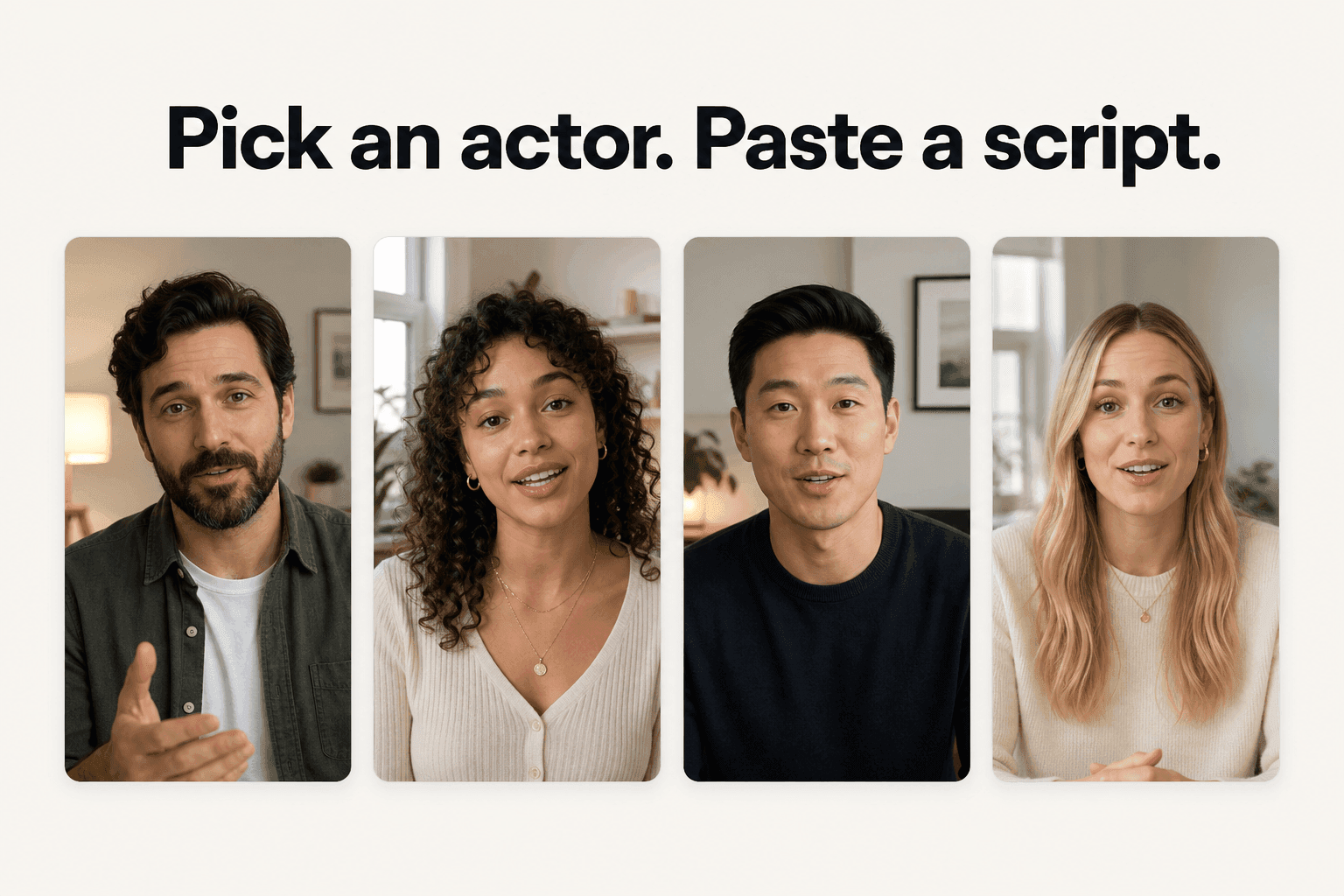
Novoads is a global AI UGC video-ad generator built around the part of the job ecommerce cares about: the actor presents your actual product. You upload a photo of someone holding your product to create a custom actor (the 100+ stock actors in the library have empty hands), write or auto-generate a script, and get a vertical ad where the creator holds the item. It runs multiple frontier models (Seedance, Kling, and Veo), and it ships ads in 30+ languages with real regional accents, not just translated captions.
- Best for: native-accent UGC where the product is on camera.
- Start at: $49/month.
2. HeyGen, best for spokesperson and avatar video
HeyGen is built around AI avatars and spokesperson-style delivery: a clean presenter reading a script, explainer videos, and personalized video at scale, with a free entry tier to try it. If your ad should look like a polished brand spokesperson rather than a phone-shot customer, it is the closest match to Synthesia's studio register, with a library built for talking-head delivery.
- Best for: polished spokesperson and avatar video.
- Start at: a free tier.
3. Arcads, best for the most lifelike talking heads
Arcads is the realism benchmark for AI talking-head ads. It pairs a 1,000+ AI-actor library with the option to create your own AI avatar, runs multiple frontier video models (it names Sora 2 Pro on its own site), and localizes into more than 30 languages. Its actors can also hold and present a physical product through a custom-actor workflow. It keeps pricing behind a sign-up, which reads as premium and commit-first.
- Best for: the most believable talking-head performance.
- Start at: create an account to see pricing.
4. Creatify, best for paste-a-URL ecommerce volume
Creatify's signature is workflow speed for ecommerce: you point it at a product URL and it generates an AI-avatar ad, with batch generation for running many at once. It has a watermarked free plan, so the cost to test is $0, plus affordable paid tiers above it. It leans more avatar-and-template than native-handheld, but for paste-and-go catalog volume it is hard to beat.
- Best for: URL-to-ad batch volume.
- Start at: a watermarked free plan.
5. Captions, best for an all-in-one actor plus editor
Captions (by Mirage) pairs AI creators with a built-in, chat-based AI video editor in one app, so the clip and the edit live in the same place instead of bouncing to a separate tool. Its entry web tier is $24.99/mo, with higher Scale tiers above it and a free tier to start. If you want generation and editing without a second subscription, it is the most complete single workflow.
- Best for: one app for actor and edit.
- Start at: a free tier.
6. MakeUGC, best for the biggest actor library
MakeUGC is the closest direct comparison to Novoads: a script-first generator with a very large AI-creator library (it advertises 1000+ realistic AI creators), and actors that can present your product. It starts on a low-friction $1 trial of its own. If your priority is sheer variety of faces and accents to test, its library depth is the draw.
- Best for: maximum actor variety on a cheap trial.
- Start at: a $1 trial.
7. HeyFish, best for the lowest cost per video
HeyFish is a direct AI UGC Video Ad Generator (pick an actor, drop in your product, get a UGC ad) with price-aggressive positioning built around cheap per-video output. Its entry paid plan is $24.99/mo, and it markets ads at roughly the cost of a coffee. If your constraint is pure volume on a tight budget, it is the most explicitly cost-led option here.
- Best for: high volume at the lowest price.
- Start at: a free first ad.
A worked example: testing one sleep gummy
Say you want a winning angle for a single sleep gummy, and you plan to test five:
- A problem-solution hook.
- A testimonial to camera.
- A nighttime-routine clip.
- An ingredient explainer.
- An unboxing.
The format rewards running all five, because the winner is rarely the one you would have guessed. The only real question is what it costs to find out.
Run the same five-angle test from the studio end to the feed:
- Studio end (Synthesia free Basic, then Starter at $29 per month): five clean presenter reads at $0 on the free tier, ideal if the winning angle turns out to be the ingredient explainer.
- Handheld cut (MakeUGC's $1 trial, Novoads from $49/month): five real, unwatermarked variations, with the product in the creator's hands (on Novoads, a custom actor made from a photo of someone holding it).
- Handheld end for free (HeyFish first ad, Creatify and Captions watermarked free plans): rough cuts at $0, enough to judge whether the actor and the hooks land.
At Novoads' going rate of about a dollar to $8 per clip of up to eight seconds, from a five-second Seedance 2.0 Mini clip to an eight-second Seedance 2.5 clip, or about $26 for a full 30-second Seedance 2.5 take, those five handheld variations run about $5 to $40. A single hired creator typically costs $200 to $500, so five would run $1,000 to $2,500. That spread is the whole reason to test before you commit. Our video ad production cost breakdown runs the full math, and improving ROAS with UGC covers what to do once an angle wins.
How Novoads solves product-led UGC
Novoads is built for the exact job that makes ad teams leave a studio-clean tool: an ad where the creator holds your actual product, in a language your audience actually speaks. You upload a photo of someone holding your product to create a custom actor, write or auto-generate a script, and get a vertical UGC ad with voice, lip-sync, and captions, formatted for TikTok, Reels, and Meta. It runs multiple frontier models so you are not betting on one engine, and it produces ads in 30+ languages with real regional accents rather than a flat translation. The headline time is about four minutes, and a clip runs from a few dollars instead of a few hundred.
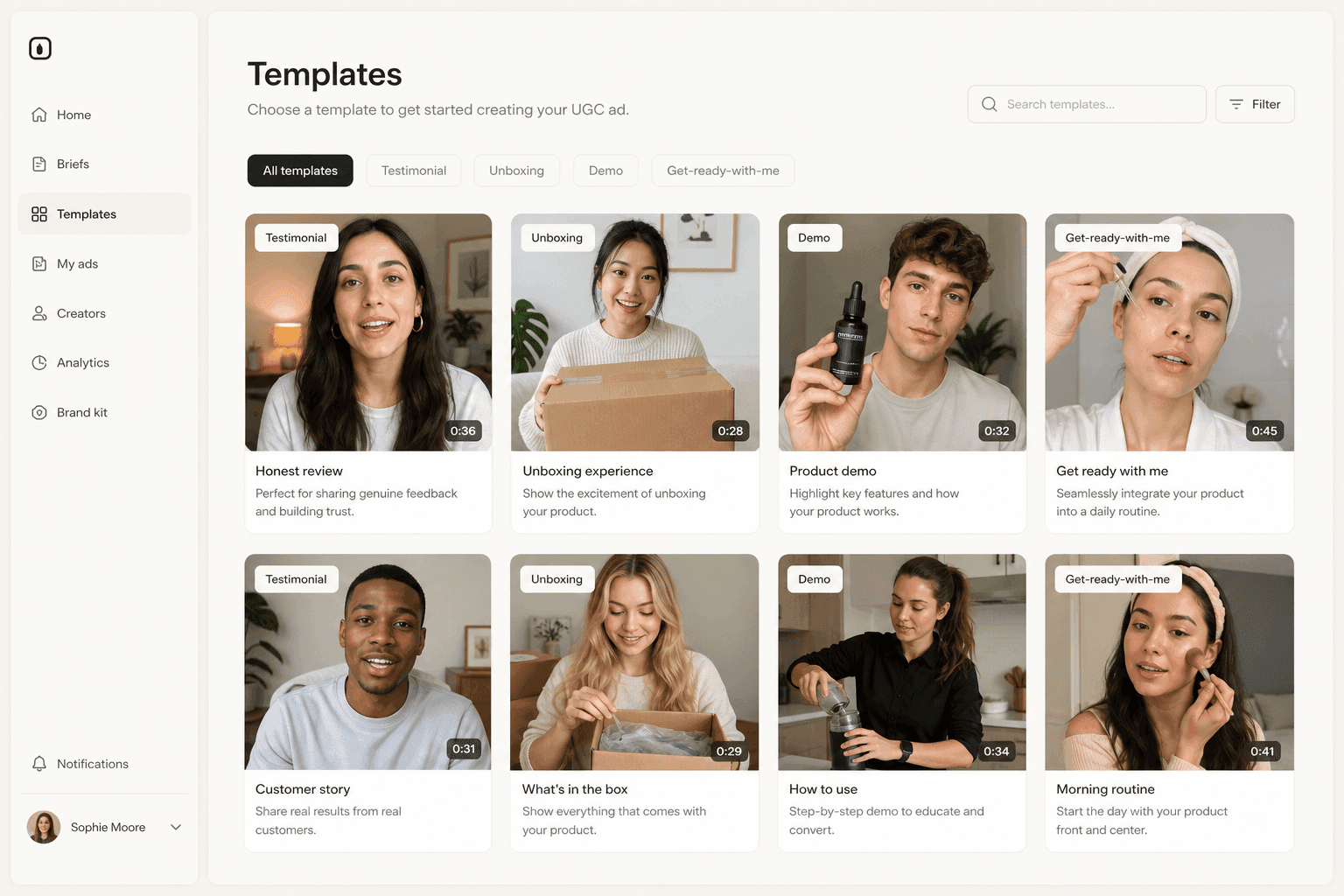
The difference from Synthesia is not that one is good and the other is not. It is fit: Synthesia owns studio-clean corporate video, and Novoads centers the product-in-hand, native-accent ad that paid social rewards, built on a custom actor made from a photo of someone holding your product. You can test the whole idea from $49/month instead of producing a polished presenter for a feed that wants the opposite. For the full production walkthrough, see how to create UGC ads with AI, and Novoads versus Synthesia covers the head-to-head.
Made for the feed, not the boardroom
The best Synthesia alternative is not the one with the most lifelike avatar. It is the one that makes the ad your placement rewards, for the least it costs to find out. Synthesia is the studio-clean benchmark, and for a team shipping training and onboarding across many languages, it is a category leader worth paying for. For everyone making ads for a feed that rewards the opposite of studio polish (especially in ecommerce, where the demo is the ad, and in markets where the accent has to be right) the smarter move is to start cheap, show your product, and let the data pick the tool. You can produce your first product-in-hand AI UGC ad with Novoads by turning a photo of someone holding your product into a custom actor, from $49/month at novoads.ai. Cancel anytime.
Frequently Asked Questions
What is the best Synthesia alternative?
It depends on the job, not on a single winner. For product-led ecommerce UGC where the creator should hold and present your product (in Novoads, a custom actor made from a photo of someone holding it), and for native-accent delivery across many languages, Novoads is the closest fit. For the largest AI-actor library on a $1 trial, MakeUGC. For the lowest cost per video, HeyFish. For paste-a-product-URL volume, Creatify. For the most lifelike talking-head performance, Arcads. For an actor plus a built-in editor, Captions. For polished spokesperson video, HeyGen. If the job is really training or onboarding, Synthesia itself is still the right tool.
How much does Synthesia cost?
Synthesia publishes its pricing on its own site: a free Basic tier to start and a Starter plan at $29 per month, with avatars across 160+ languages. That makes it inexpensive to test for what it is built for, which is studio-clean corporate video. For ads specifically, several alternatives let you start on a $1 trial or a free first ad, so you can validate the handheld UGC format on your own product before paying a monthly plan.
Can a Synthesia alternative show a product in the creator's hands?
Yes. Among the alternatives, Novoads is built around product-in-hand UGC: you upload a photo of someone holding your product to create a custom actor (Create Actor > Upload), write or auto-generate a script, and that actor presents your actual product on camera. MakeUGC, HeyFish, and Arcads also pair AI actors with your product. For ecommerce, where the demo often is the ad, that product-on-camera capability matters as much as how polished the delivery looks.
Which Synthesia alternatives have a free plan or trial?
Several. Creatify and Captions offer a free entry tier, HeyGen has a free tier, HeyFish gives you a free first ad, and MakeUGC uses a low-cost $1 trial. Novoads has no free tier and no trial: it starts at $49/month. That spread is the main reason ad teams test elsewhere first: the cost of finding out whether handheld AI UGC works for your product runs from nothing to one month of a paid plan.
Synthesia vs HeyGen: which is better?
They solve adjacent jobs. Synthesia is built for corporate training, onboarding, and internal communications across 160+ languages, with studio-clean delivery. HeyGen is built around AI avatars and spokesperson-style video, including personalized video at scale, with a free tier to start. For a polished presenter, both fit. For an ad that should look like a real customer filmed it, a UGC-actor tool is the right category.
Do AI UGC ads actually perform?
User-generated content is the format shoppers trust, because a real-seeming person reads as more credible than a brand talking about itself. AI UGC reproduces that trust signal from a script in minutes for a few dollars, which is what makes testing many ad angles affordable. The tool you pick decides how native the output looks and whether you can show your product on camera.
Key Takeaways
- Synthesia is the studio-clean benchmark for corporate video: a free Basic tier, a Starter plan at $29 per month, avatars that present a script cleanly, and reach across 160+ languages. It is built for training, onboarding, and explainers.
- The reason ad teams look past it is rarely quality. It is the Feed Test: paid social rewards video that looks like a real customer filmed it, the opposite end from a studio-clean presenter.
- Match the tool to where your ad needs to sit. Novoads, MakeUGC, HeyFish, Creatify, Captions, and Arcads make handheld native UGC; HeyGen makes polished spokesperson video; Synthesia owns corporate training.
- Most alternatives let you test for very little: MakeUGC's $1 trial, a free first ad, or a watermarked free plan, so you can validate the format on your own product before committing.
- Novoads fits product-led UGC best: a custom actor made from a photo of someone holding your product shows it on camera, it runs multiple frontier models, it ships ads in 30+ languages with real regional accents, and you can start for $49/month.