How to make TikTok ads that actually sell
A practical guide to TikTok ads: the native format that performs, how to produce dozens of variations with AI, and how to launch them as Spark Ads or In-Feed.

Mauricio Valdivia
·11 min
On TikTok You Win on Creative Volume, Not One Perfect Ad
Making TikTok ads isn't filming a commercial and uploading it. It's producing a lot of short videos that feel like native content, launching them at once, and letting the data decide which one to scale.
The problem is almost never the budget. It's the creative. On TikTok videos burn out fast, and you can only test what you can produce. As long as an ad depends on a camera, talent, and editing, testing ten angles is a luxury.
This guide walks the practical path: which format works, how to produce enough variations with AI, and how to launch them. To size the opportunity, TikTok ads reached about 1.59 billion people in early 2025 — 19.4% of everyone on Earth, per DataReportal. The challenge isn't reaching people; it's feeding the algorithm enough creative.
What Makes a TikTok Ad Work
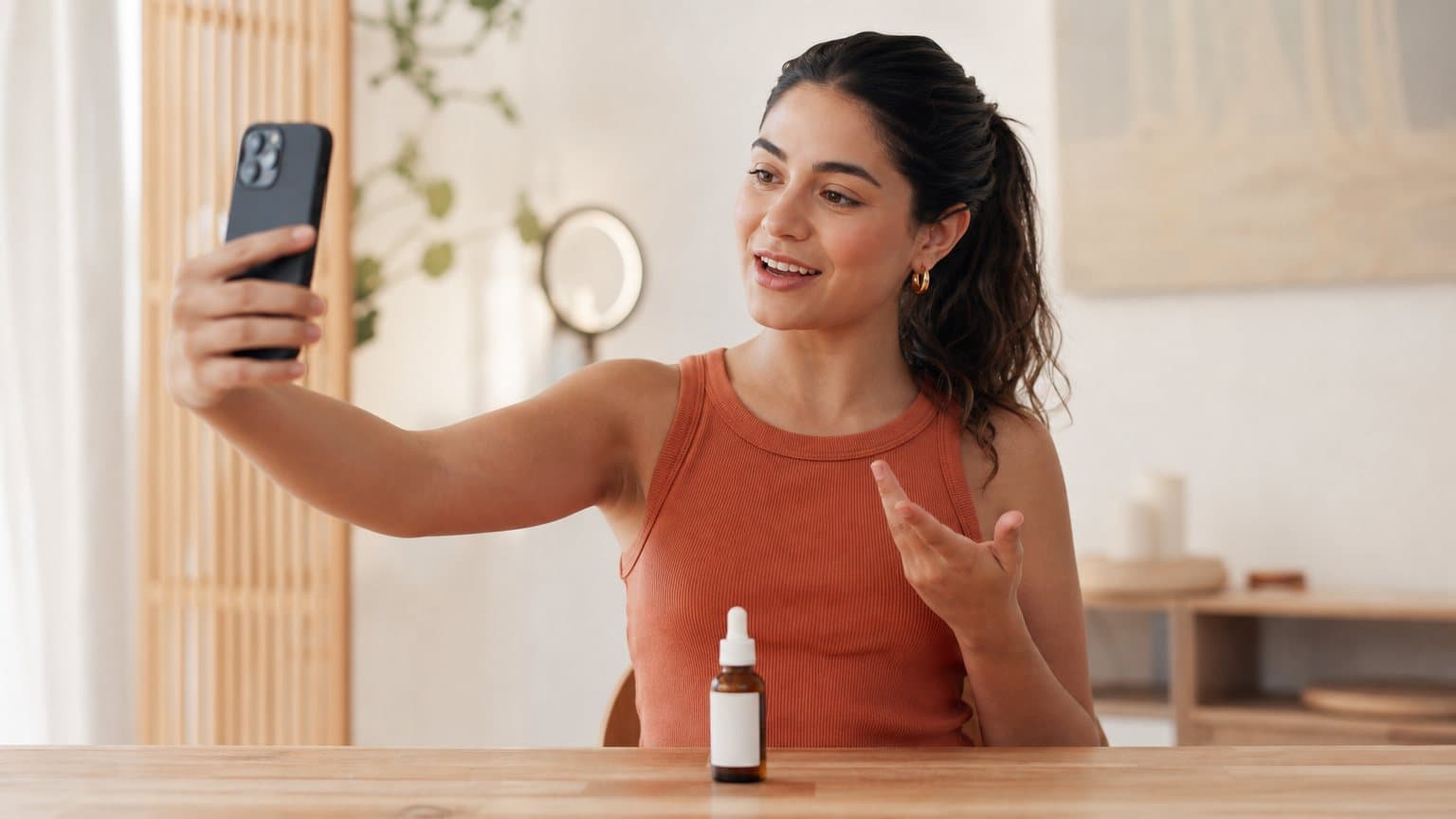
The rule that separates the sellers from the budget-burners is simple: your ad has to look like a TikTok, not like advertising. Handheld camera, normal light, one person talking to the lens, native sound. The moment a video feels produced like a TV spot, the user clocks it and scrolls.
The other factor is the opening. TikTok recommends introducing your proposition in the first 3 seconds to improve recall and awareness. That's where everything is decided: if the hook doesn't stop the thumb, nothing after it matters. So before you think about the offer or the close, work the first frame and the first line.
A note on sound: on TikTok audio isn't decoration, it's part of the message. A voice that speaks clearly and large captions hold retention even when someone watches with the volume off.
The Real Bottleneck: Producing Enough Creative
Here's the mindset shift. In performance advertising the most polished video doesn't win — whoever tests the most does. Each creative is a bet; the more cheap bets you place, the more likely you are to find the one that beats your benchmark.
Hiring a UGC creator costs between $200 and $500 per video and takes one to two weeks. At that price, you're not going to produce the dozen-plus variations TikTok rewards. With AI, a vertical UGC ad starts from around $2–3 per video with the cheapest models. The difference isn't only the savings: it's the freedom to test angles you'd never pay to shoot one by one.
And volume isn't optional on TikTok. Creatives fatigue fast, so you need a steady flow, not a single hit. You can generate those variations with AI in Novoads in minutes and keep the rotation alive.
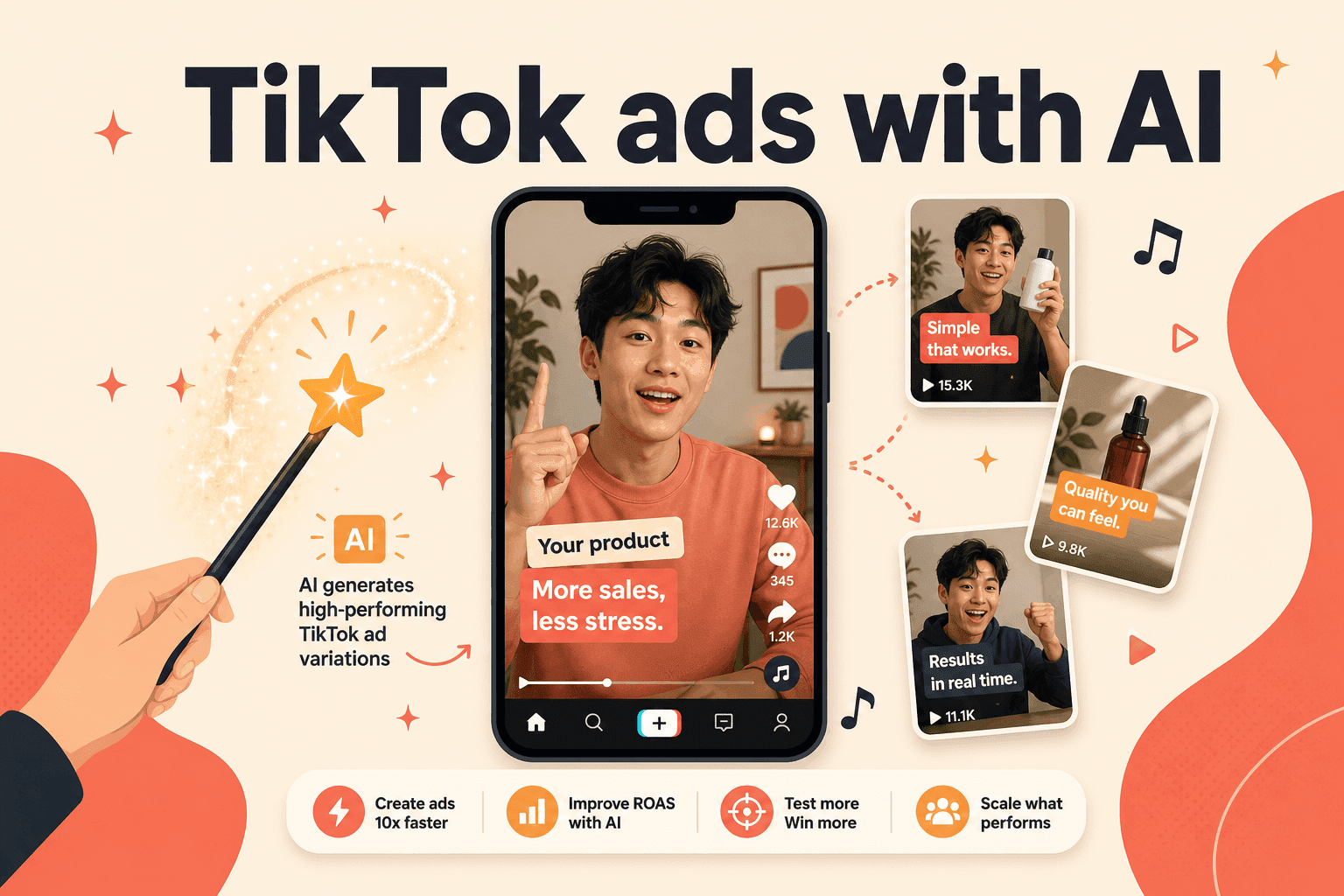
How to Produce a TikTok Ad with AI, Step by Step
The flow is direct and needs no camera or editor. Once you have the angle, each video comes out in minutes.
- Start from your product. Upload your product photo and write (or auto-generate) a short script. You don't paste a store URL — the script is the heart of the ad, so define it yourself around the angle you want to test.
- Pick the hook. Write the first 3 seconds first. That line and that opening frame decide whether anyone stays. Write three different hooks for the same product.
- Choose an AI actor. Match age, gender, and accent to your audience. A local accent builds a trust a neutral voice can't — and in many markets that matters.
- Generate and export in 9:16. You get the vertical video with voice, lip-sync, and captions, ready to upload to TikTok Ads Manager.
A script structure that works for conversion: hook (1–3s), problem (3–5s), solution with your product (5–10s), and a close with a call to action. How to know it landed: watch it with no sound. If in the first 3 seconds you understand what it's about and you want to keep watching, it's ready to test.
Spark Ads or In-Feed: How to Launch What You Made
Once you have your videos, TikTok gives you two native ways to run them as ads. The difference matters because it changes where the creative comes from.
| Dimension | Spark Ads | In-Feed Ads |
|---|---|---|
| What it promotes | An existing organic post (yours or a creator's, with permission) | A video you upload straight to the ads manager |
| How it looks | The original post, with its likes and comments | Native content in the "For You" feed |
| When to use it | When an organic post is already performing and you want to amplify it | When you produce creative purely for paid (the typical case with AI) |
For most brands generating creative with AI, In-Feed is the path: you produce the batch of videos, upload them, and put them in competition. Spark Ads shine when you already have a post with traction and you want to put budget behind it.
A note on campaign structure: TikTok suggests 3–5 different creatives per ad group and 3–5 diversified ad groups per campaign. Use it as a template — three hooks across two actors already gives you six videos for one ad group, enough for the algorithm to find the winner.
Refresh Creative Before It Burns Out
The most expensive mistake on TikTok is letting the same video run until it dies. Ads fatigue: performance drops when the same people see them too many times. TikTok recommends refreshing creative when delivery results show a consistently declining trend or when daily new users get low.
The way to sustain that without blowing the budget is to have variations ready in advance. If you produce ten videos of one concept in an afternoon, you can swap out the ones that fade without pausing the campaign. That's the real superpower of generating with AI: it's not a cheaper video, it's never running out of creative ammunition.
Label AI-Generated Content
If your ad uses a realistic AI actor, disclose it. TikTok requires you to label content generated with AI when it contains realistic images, audio, or video, so viewers understand the context.
The practical rule: keep your claims honest, turn on the label when the platform asks for it, and never imply that a real person endorsed you if they didn't. TikTok's audience already expects lightly produced content, so an AI label rarely takes the punch out of an ad.
Where Most Advertisers Go Wrong
- Chasing the perfect ad. TikTok rewards volume of tests, not a masterpiece. Generate many and let the data choose.
- Neglecting the first 3 seconds. If the hook doesn't stop the thumb, the rest of the video never gets seen.
- Using a neutral accent for a local market. An actor who sounds like your audience builds a trust a generic voice can't reach.
- Not rotating. Running the same creative until it burns out wastes the whole advantage of being able to produce fast.
Make Your TikTok Ads with Novoads
If you want to turn this approach into real ads — no camera, no creator, no editor — that's where Novoads comes in.
Novoads is an AI video-ad generator built for marketers, not editors. You upload your product photo, write or auto-generate a script, pick an AI actor that matches your audience's age, gender, and accent, and you get a vertical 9:16 UGC ad with voice, lip-sync, and captions, ready for TikTok. Because each video costs a fraction of what a creator charges, you can build the batch of variations the platform needs and refresh it when it's time. You can start creating yours from $49/month at novoads.ai, and cancel whenever you want.
Frequently Asked Questions
Do I need a camera or a creator to make TikTok ads?
No. You can generate a vertical UGC ad with AI: upload your product photo, write (or auto-generate) a script, pick an AI actor, and you get a 9:16 video with voice, lip-sync, and captions. A camera and a creator still earn their place for hero pieces, but for the constant testing TikTok rewards, AI lets you produce far more variations for the same money.
How much does a TikTok ad made with AI cost?
A UGC ad made with AI starts from around $2–3 per video with the cheapest models, versus $200–$500 and one to two weeks with a human creator. That low cost is exactly the point: it lets you test angles and hooks you'd never pay to shoot one by one.
What ad format performs best on TikTok?
The native format: a person talking to camera in vertical (9:16), with sound and captions, that feels like one more TikTok rather than a commercial. You can run it as a Spark Ad (promoting an existing post) or In-Feed (it appears in the feed as native content). Both accept AI-generated video.
Does TikTok allow ads made with artificial intelligence?
Yes, as long as you follow its policies: no impersonating real people and no misleading claims. TikTok also requires you to label content that contains realistic AI-generated images, audio, or video. Disclose it and keep your claims honest.
How many ads should I have ready per campaign?
TikTok suggests 3–5 different creatives per ad group and 3–5 diversified ad groups per campaign. Because creatives fatigue quickly, prepare several variations from the start and refresh them when performance begins to slip. With AI, generating those variations takes minutes, not weeks.
What's the ideal length for a TikTok ad?
Short and direct. What matters isn't the exact number of seconds but the opening: TikTok recommends introducing your proposition in the first 3 seconds. A useful structure for conversion is hook (1–3s), problem (3–5s), solution with your product, and a close with a call to action — no filler.
Key Takeaways
- On TikTok the bottleneck is creative, not budget: you win by testing many variations, not by chasing one perfect video.
- The ad that works looks like a TikTok, not a commercial — handheld camera, native sound, and the hook in the first 3 seconds.
- With AI you can produce a vertical UGC ad from around $2–3 per video instead of paying a creator $200–$500, so you can test angles you couldn't afford before.
- Launch them as Spark Ads (on top of a post) or In-Feed (native in the feed); TikTok suggests 3–5 creatives per ad group and 3–5 ad groups per campaign.
- Label AI-generated content when it's realistic: TikTok requires it, so disclose it and keep your claims honest.