UGC Content Creator: Hire One, or Out-Test It With AI for Under $100
A UGC content creator is a paid pro who makes authentic-style videos brands post as their own. Here is how to find, brief, and manage one, how to become one, and how AI now produces the same clip from a script for a few dollars.

Mauricio Valdivia
·12 min

The hard part of UGC was never finding the creator
You can find a UGC content creator in an afternoon. The marketplaces are full of them, the DMs answer fast, and a quote lands by morning. Finding one was never the bottleneck.
The hard part is everything after. Writing a brief the creator can actually shoot. Buying the usage rights that let you run the clip as a paid ad. Waiting out the revision loop. Then doing all of it nine more times, because the winning angle is almost never the one you would have guessed. That is the real job, and it is why 96% of shoppers rank real-customer content like ratings and reviews as the single most influential factor in what they buy, yet most brands still ship one or two UGC ads a quarter.
This is the practical hub for the whole cluster: how to hire a UGC content creator, how to work with one without the process eating your calendar, how to become one if you are on the other side of the brief, and how AI now changes the math underneath all three. For the definition itself, start with what a UGC content creator is. For the full rate card, see how much UGC creators charge. This guide is about the work.
Where to find a UGC content creator, and how to vet one
Sourcing is the easy 10% of the job, so spend your judgment on vetting, not searching. The goal is not the cheapest quote or the biggest following. It is the creator most likely to hand back a clip you can run as an ad this week.
Marketplaces versus direct outreach
There are two doors. Creator marketplaces (Billo, JoinBrands, Collabstr, and similar) give you a filtered roster, escrow, and a rate card, at the cost of a platform fee and a somewhat generic look. Direct outreach, sliding into the DMs of a creator whose niche videos you already like, gets you a sharper fit and a direct relationship, at the cost of doing your own vetting, contracting, and payments.
For a first test, a marketplace lowers the risk: you get replacements if the cut is wrong. Once you know a creator converts, move them off-platform for a standing relationship. The mistake is treating the two as interchangeable. A marketplace is for discovery and volume; a direct relationship is for the faces that work.
The three-minute vetting pass
You do not need a hiring process. You need three filters, in order:
- Category fit. Have they shot your kind of product? A creator who nails skincare demos may be wrong for a B2B app. Look for the format you actually need, not general polish.
- Conversion proof, not reach. Ask for one clip that ran as a paid ad and how it did. A creator who thinks in hooks and CTAs is worth more than one with 200,000 followers who has never made an ad.
- A rate that fits testing. If one video eats your whole test budget, they are the wrong tier for this job. Save the premium creator for the flagship piece.
The difference between a UGC creator and an influencer matters most here: you are buying an asset you will run, not access to an audience, so a portfolio beats a following every time.
Red flags a low rate is hiding
A cheap quote is not automatically a good deal. Watch for the tells: no examples in your category, a "rate" that quietly excludes usage rights, vague turnaround ("a couple weeks"), and no mention of revisions. Each of those is a cost that arrives later. The honest read of a $60 quote with no rights and no revision cap is that it is a $200 engagement wearing a $60 sticker.
The brief that gets a shootable video back the first time
Most bad UGC is not a talent problem. It is a brief problem. The single highest-leverage thing you can do when working with a creator is to remove guesswork before they hit record, because every ambiguity comes back as a revision round, and revisions are where the timeline quietly doubles.
Angle before script
Do not open with a script. Open with an angle: the specific pain point, the promise, and what the first three seconds must do. A problem-solution angle, a testimonial angle, and a demo angle are three different videos before a single word is written. Nail the angle and the hook, and the script mostly writes itself. Hand a creator a script with no angle and you get a competent reading of the wrong idea.
The five things every brief must pin down
A brief that a creator can shoot without asking a follow-up question specifies exactly five things:
- Format and length. 9:16 vertical, and a target runtime (most UGC ads live at 15 to 30 seconds).
- The claims they may and may not make. Especially for supplements, skincare, and finance, where a wrong claim is a legal problem, not a creative one.
- Must-say lines and the CTA. The one sentence that carries the offer, verbatim.
- The hook. The first line or action, because the opening decides whether the rest is seen.
- Deliverables. Final cut, raw footage or not, and how many hook or CTA variations.
Keep it to one page. A brief longer than the video is a sign you are managing anxiety, not the shoot.
How to know the cut is good
Give yourself an acceptance test before you watch, so you judge the video against the job and not against your mood. A UGC cut passes when three things are true: the first three seconds would stop a scroll, the product claim is exactly what you approved, and it reads like a person, not a spokesperson. If it fails the first, it will not test well no matter how clean the rest is. Send that as your revision note, specifically, and you get one recut instead of three.
Usage rights, revisions, and the contract nobody reads
The rate is the smallest number in a UGC engagement. What surrounds it, rights, revisions, and turnaround, is where budgets actually go, and it is the part first-time buyers skip until it surprises them.
What the base rate does and does not buy
A base rate almost always buys the final cut and organic use, and nothing else. Raw footage, extra variations, and the rights to run the clip as a paid ad are separate line items. This is not gouging; it is how the market prices real time and real risk. It just means the sticker price rarely survives contact with a live campaign. The full breakdown of what UGC creators charge runs every tier, but the shape is simple: the base rate is the floor, not the total.
Rights, whitelisting, and exclusivity in plain terms
Three terms decide most of the real cost, so learn them before you negotiate:
| Line item | In the base rate? | Typical add-on |
|---|---|---|
| Final cut | Yes | Included |
| Raw footage | No | Per-clip fee |
| Paid-ad usage rights | No | +30 to 50% |
| Whitelisting / Spark Ads | No | Billed separately |
| Extra hook or CTA cuts | No | Per version |
| Exclusivity | No | Category premium |
Paid-ad usage rights are the one you cannot skip if the clip is for ads: they commonly add 30 to 50% on top of the base. Whitelisting, where the video runs through the creator's own handle for extra credibility, is billed again. Exclusivity, paying so the creator does not film a competitor, is a premium you only need for a signature face. A $300 clip can become $500 before you have licensed it to do its job.
The revision loop and the timeline
The hidden cost is the calendar. A normal engagement runs brief, shoot, first cut, revision, recut, approve, license, and each step carries a wait measured in days. Even a smooth version is close to a week; a normal one is one to two weeks per video. Rush fees buy priority, not physics. That per-video clock is fine for one hero asset. It becomes the whole problem the moment you want to test at volume, which is the next section.
How to become a UGC content creator
The rest of this guide is for the brand side. This section is for the person on the other side of the brief, because "how do I become a UGC content creator" is one of the most searched versions of this topic, and the honest answer is not "grow a following."
Build a spec portfolio before you pitch
You do not need clients to start. You need three to five spec videos: real, ad-ready clips for products you already own, shot the way a brand would want them. A skincare routine, an app demo, a supplement testimonial. The portfolio is the product. No brand hires from a promise, but plenty hire from a reel that already looks like their next ad. Study the deliverables real UGC ads use and reproduce them, on your own dime, until they look commissioned.
Pick a niche and price for rights, not minutes
Generalists get commodity rates. A creator known for skincare, or fitness, or fintech apps, gets briefs where the fit is obvious and the price is not the first question. Then price like a licensor, not an hourly worker. Your base rate covers filming; your real money is in usage rights, hook variations, and turnaround speed. A beginner who charges $60 and throws in paid-ad rights is leaving most of the value on the table. The creators who raise rates fastest are the ones who understand that the brand is buying a license, not an afternoon.
Where the work comes from
Three channels feed a UGC career: marketplaces (fast, competitive, lower rates), direct inbound from posting your own work publicly (slower, higher trust, better rates), and repeat business from brands you already delighted (the whole game). The metric that compounds is not followers. It is your acceptance rate and your turnaround. A creator whose first cut gets approved and who delivers in three days can charge for a near-guarantee, which is exactly what a brand tired of the revision loop will pay a premium to get.
The volume problem: one product, ten angles, priced two ways
Everything above is manageable for one video. The math breaks when you accept the one thing UGC actually demands: volume. The winning ad is rarely the one you predicted, so the format rewards running many angles and killing the losers fast. Here is what that costs, made concrete.
The test, and the hiring math
Say you sell a cold-brew coffee subscription and you want to test ten angles before you put real budget behind a winner: three problem-solution scripts, three testimonials in different voices, two demos, and two "morning routine" lifestyle cuts. That is a real test, not a hunch.
Price it by hiring. Ten angles at the roughly $198 benchmark is about $1,980 in base rates. You need paid-ad usage rights on all ten, so add 40%, and you are near $2,770. Now add the calendar: ten briefs, one or several creators, and one to two weeks of revisions before the first ad is even live. You will spend close to $2,800 and the better part of a month to learn which of the ten deserves a budget. Our video ad production cost breakdown runs the same logic across formats.
Why brands quietly cut the test to two
Faced with a four-figure bet and a month-long calendar, most brands do the rational thing and shoot two videos instead of ten. Which defeats the purpose. They picked UGC because it is a testing medium, then used it to ship one or two precious ads, the format run exactly backwards. The bottleneck was never creativity or budget. It was throughput, and throughput is the single most expensive thing the human model produces. That gap, cheap to design and expensive to manufacture, is where most UGC programs stall. The performance case for UGC only pays off if you can actually run the volume it rewards.
Build a hybrid UGC operation, not an either-or
The debate is usually framed as humans versus AI, which is the wrong frame. The brands getting this right run both, and they assign each to the job it is actually good at. The mistake is using the expensive tool for the cheap job, and most UGC budgets do exactly that.
Keep a small human roster for the faces that matter
A human creator is the right call when the person is the message: a founder, a real customer, a signature face you build a brand around over months. For those, you want lived experience a script cannot fake and a relationship worth the rate. Keep that roster small and paid well. This is where the premium tier, exclusivity, and long-term terms earn their cost, and where a marketplace relationship graduates into a standing one.
Generate the volume that testing actually needs
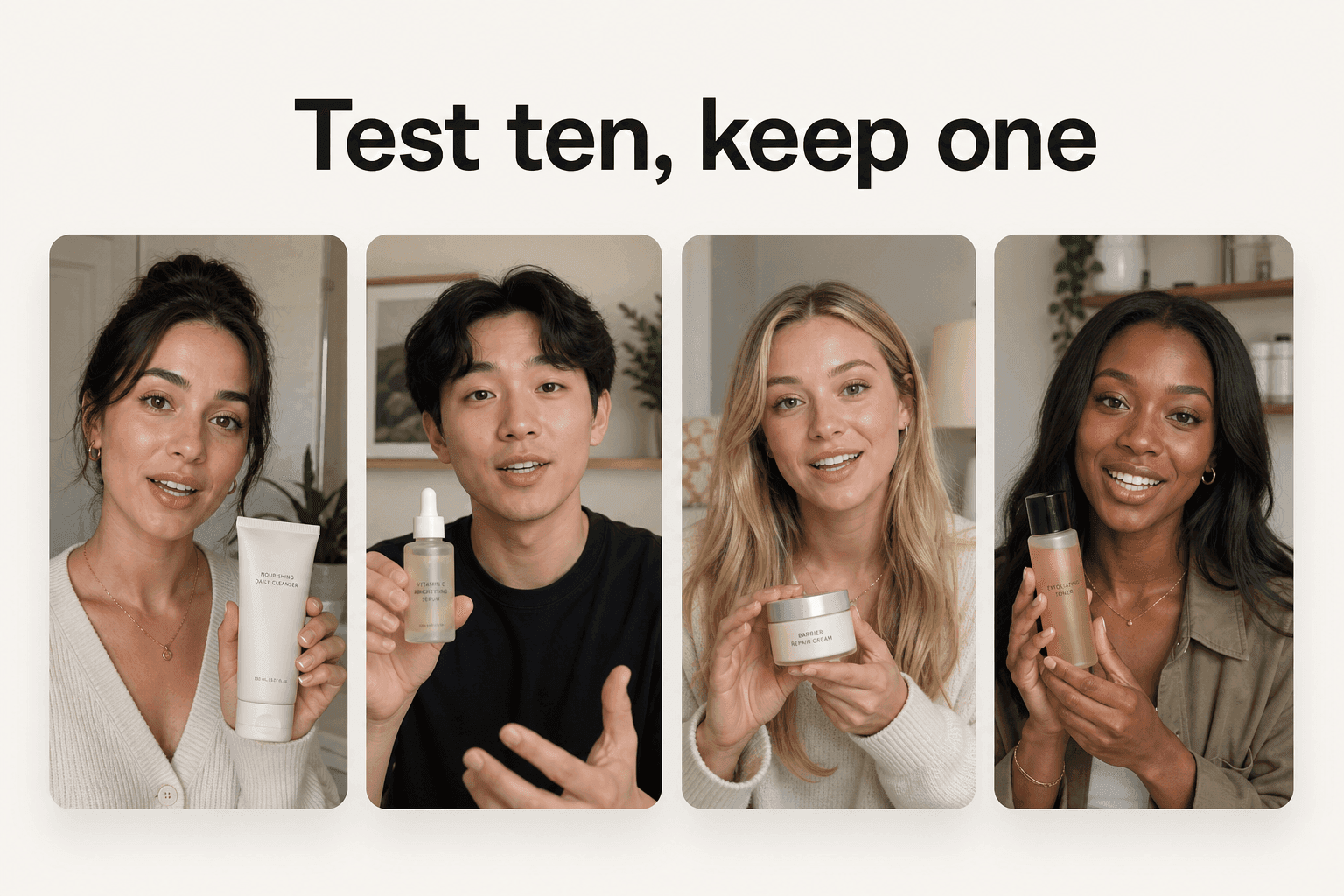
Everything that is really a throughput problem, ten angles, three accents, a fresh weekly batch to beat ad fatigue, belongs to AI. Not because AI makes a better video than a talented creator, but because it removes the reason you could only afford to test twice. When each variation is a script away, the test the format was built for finally fits a normal budget. Run the same ten cold-brew angles through an AI UGC tool and they land around $10 to $80 in total, often under $100, produced the same afternoon instead of over a month. The deeper AI versus UGC creators comparison carries this all the way through.
The operating model in one line
Hire humans for the handful of faces that carry the brand. Generate everything you would otherwise not be able to afford to test. That split, roster plus volume, is the operating model, and it is the one most brands back into only after they have wasted a quarter paying creator rates for a throughput job.
How Novoads removes the volume bottleneck
Novoads is a global AI UGC video-ad generator. In Novoads, you write or auto-generate a script, pick an AI actor that matches your audience's age, gender, and accent, and it produces a UGC-style vertical video with voice, lip-sync, and captions, formatted 9:16 for TikTok, Reels, and Meta. You can also upload a product photo and turn it into an ad creative. The headline time is about four minutes, and a clip runs from about a dollar for a five-second Seedance 2.0 Mini clip to about $8 for an eight-second Seedance 2.5 clip, and about $26 for a full 30-second Seedance 2.5 take rather than a few hundred dollars per invoice.
It makes native-local ads in 30+ languages with real regional accents, so localizing the same script across audiences is one more render, not one more hire. What it does not do is replace a talented human for a flagship face. What it removes is the reason you could only afford to test twice. When ten angles cost about what one beginner charges, the UGC ads testing program the format was built for finally fits a normal budget. You can produce your first AI UGC ad from $49 per month. Cancel anytime.
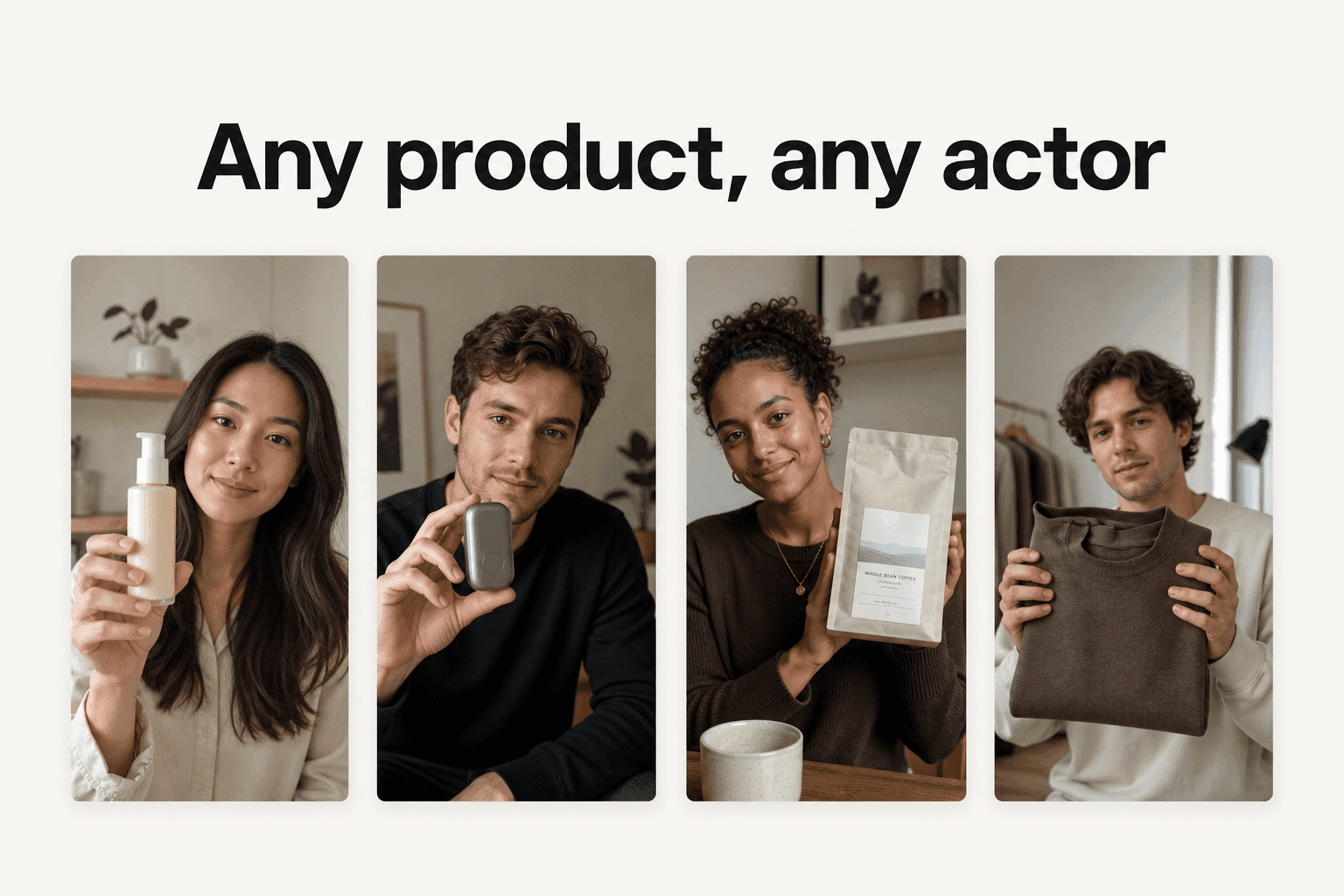
Hire the face, generate the volume
A UGC content creator was never really selling a video. They were selling a believable person reading your pitch, and the whole craft is making paid content read as unpaid. That is worth real money for the one face a brand builds itself around. It is a tax on testing for everything else.
So stop framing it as a choice. Hire humans for the faces that carry the brand, and generate the volume that testing actually demands, because the number that should drive your UGC budget in 2026 is not the price of one video. It is the cost of the tenth, because finding the winner was always the point. Novoads makes that tenth video cost a few dollars, on a plan that starts at $49 a month.
Frequently Asked Questions
What is a UGC content creator?
A UGC content creator is someone a brand pays to produce authentic-style content, usually short vertical videos but also photos and testimonials, that the brand then posts on its own channels and ads. The point is that it reads like a real customer made it, not a studio. The creator hands over the footage and the brand owns and runs it. For the full definition and how it differs from an influencer, see our guide on what a UGC content creator is.
How do I find and hire a UGC content creator?
Start on a creator marketplace or search a niche hashtag, then shortlist by three things: a portfolio that matches your product category, proof of conversion or ad experience rather than a follower count, and a rate that fits your testing budget. Send a tight brief, agree on usage rights and revisions in writing before any money moves, and start with one paid test video before committing to a package.
How do I write a UGC creator brief that actually works?
Pin down the angle before the script: the specific pain point, the promise, and the first three seconds. Then specify format (9:16), length, the exact product claims they may and may not make, must-say lines, and the deliverables (final cut, raw footage, hook variations). A good brief is one page and removes guesswork. If the creator has to ask what you want after reading it, it is not done.
How do you become a UGC content creator in 2026?
Film three to five spec videos for products you already own to build a portfolio, pick a niche where brands spend on ads (skincare, supplements, apps, home), and pitch brands directly or through creator marketplaces. Price for usage rights, not just your filming time, and treat your acceptance rate and turnaround speed as the assets that let you raise rates. Followers help but are not the product; the deliverable is.
Do you need to buy usage rights from a UGC creator?
Yes, if you plan to run the clip as a paid ad. A base rate usually buys organic use only. Paid-ad, website, and email usage commonly adds 30 to 50% on top, and whitelisting through the creator's own handle is billed again. Agree on the rights in writing up front, because a cheap base rate can nearly double once you license the video to do the job you hired it for.
Is it better to hire a UGC content creator or use an AI UGC tool?
It depends on the job. Hire a human when you need one specific real face, a flagship asset, or a long-term ambassador. Generate with AI when you are testing many angles, localizing across accents, or refreshing creative weekly to beat ad fatigue. A human UGC video costs $50 to $500+ and takes days; an AI UGC tool produces a UGC-style vertical clip from a script in minutes for a few dollars. Most brands need a small human roster plus AI volume.
Key Takeaways
- A UGC content creator is a paid pro brands hire to produce authentic-style video (and photo) that the brand then posts on its own channels and ads. You own the file.
- Working with one is an operations problem, not a shopping trip: sourcing, a tight brief, usage rights, and revision loops. The per-video rate is the smallest line item.
- The most expensive thing in the human model is volume. Testing ten angles runs roughly $2,000 to $2,800 with usage rights and one to two weeks, which is why most brands under-test.
- Becoming a UGC content creator is a portfolio-and-pitch business: spec videos, a chosen niche, and rights-aware pricing beat chasing a follower count.
- AI UGC produces the same trust signal from a script in minutes for a few dollars per clip, so the winning play is often hiring humans for flagship faces and generating the volume.