User Generated Content on Instagram: Three Surfaces, Three Formats, Three Rights Problems
Instagram is not one channel. Feed, Reels, and Stories each crop UGC differently, reward different things, and need a different permission before you can post or run it.

Mauricio Valdivia
·11 min
Instagram is three surfaces wearing one app icon
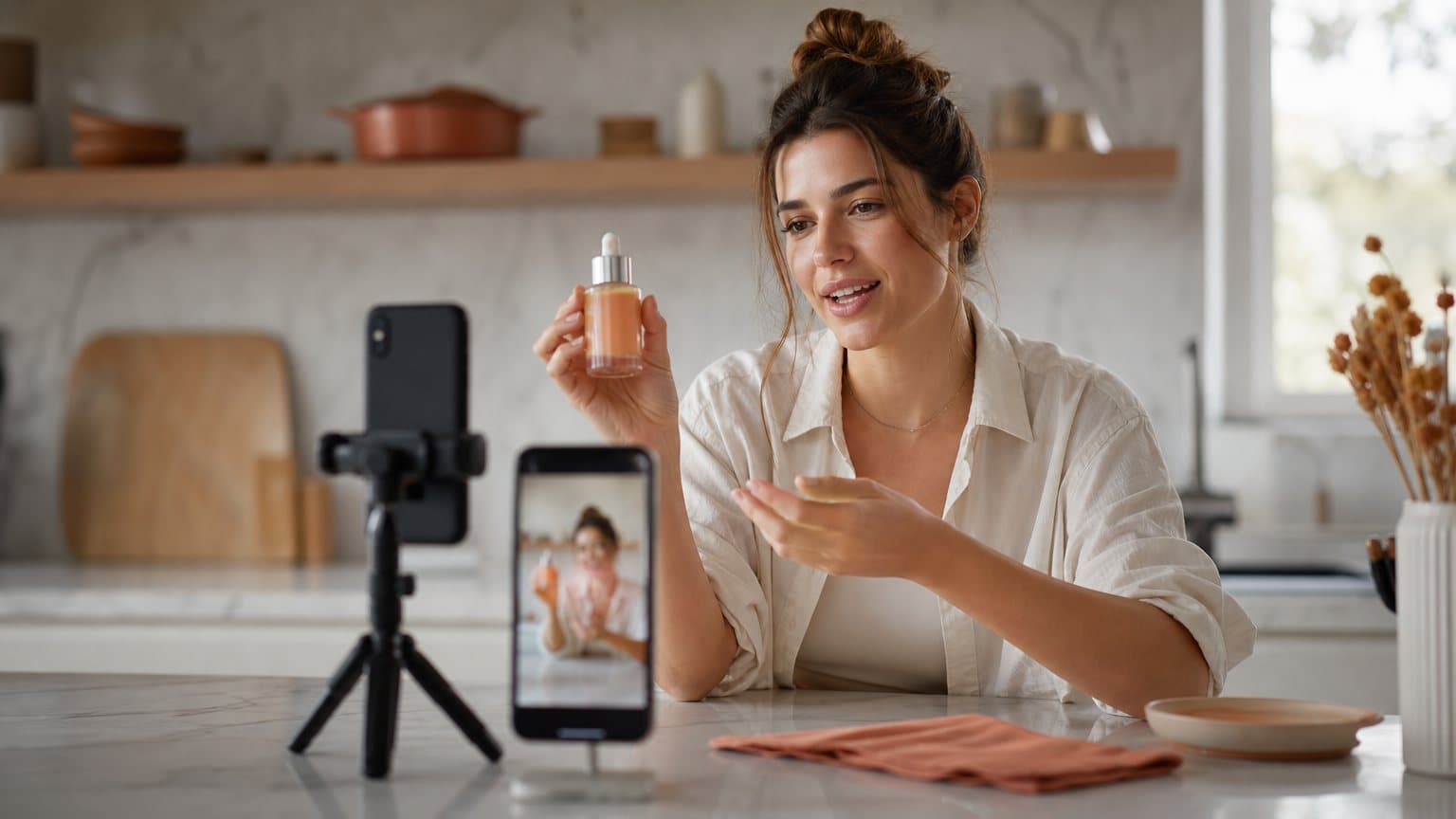
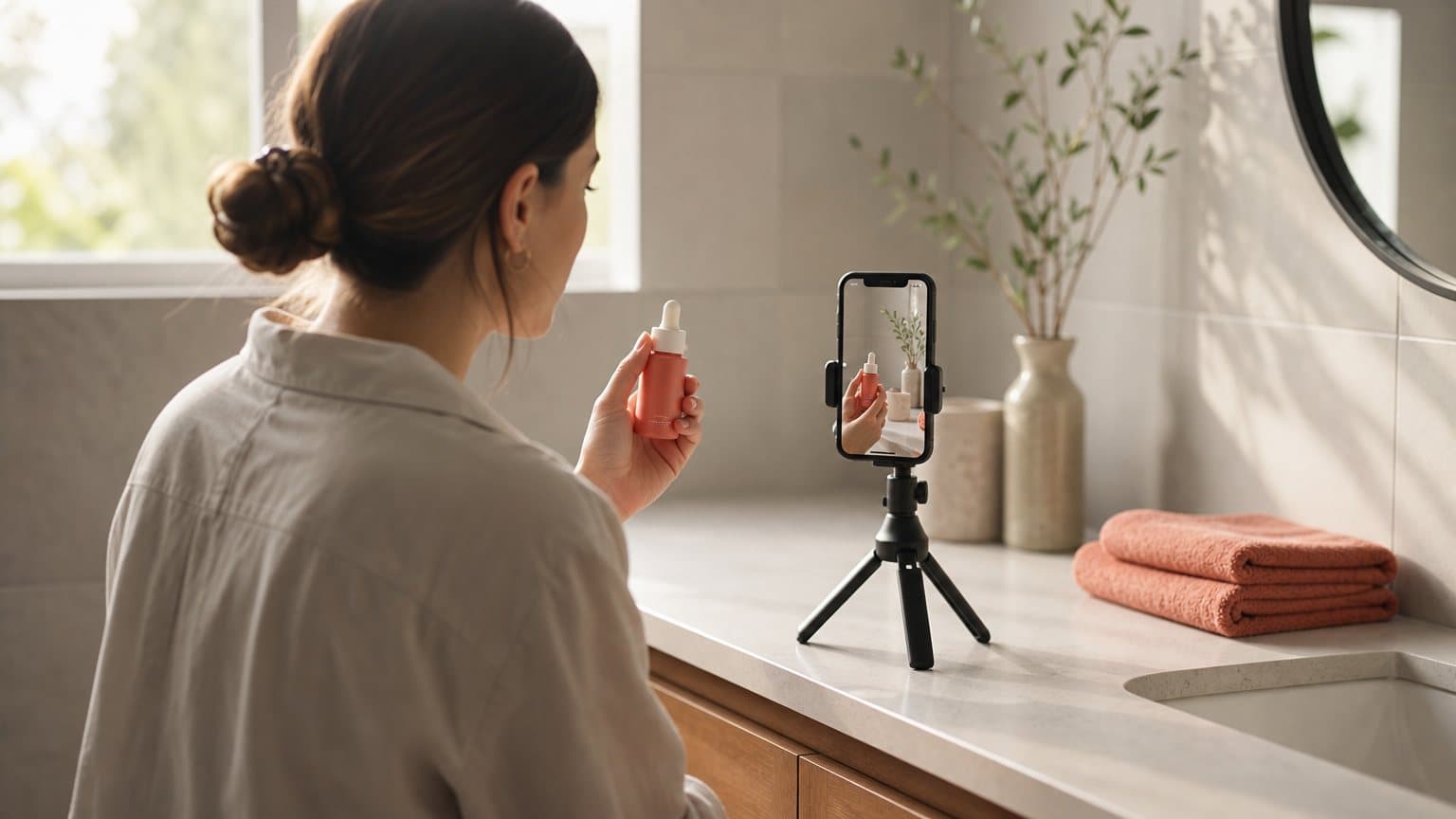
A customer films your serum on her bathroom counter, posts it, tags you, and goes to work. By Friday the clip has been sent to seventeen people in DMs and reshared into four Stories, and your marketing team has done nothing with it. That private pass-along is not a side effect of Instagram. It is the main event: messaging is now the most popular way people share photos and videos on Instagram, and Reels get reshared over 4.5 billion times a day across Meta's apps.
That clip is an asset. Most brands never treat it like one.
User generated content on Instagram is any photo, video, or Story that a real customer or a hired creator makes, which your brand then reposts, embeds, or runs as a paid ad. The general definition, and why the format outperforms brand-made creative, is covered in what user generated content is. This piece is narrower and more practical: what Instagram itself does to that content once it lands, surface by surface, and what you are actually allowed to do with it.
Because Instagram is not one channel. It is three products sharing an app icon, and each one asks something different of the same 30-second clip.
What actually counts as UGC once it is on Instagram
Before the mechanics, a boundary. "UGC" on Instagram covers three things that behave very differently in your workflow, and conflating them is where most rights problems start.
The post you did not commission
A customer posts, tags you, and owns everything. You have reach you did not pay for and an asset you do not control. This is the purest form and the rarest at volume. It arrives on the platform's schedule, not your campaign calendar, and it almost never matches the angle you are currently testing.
The asset you did commission
A paid creator films to your brief and hands you a file. Nothing gets posted to their account unless you ask for it. This is the version most e-commerce teams mean when they say UGC, and it is really a production service dressed in the aesthetic of an accident. How to create UGC ads covers the briefing side in detail.
The reshare
Someone sends the video to a friend, adds it to their Story, or reposts it. On Instagram this is where the distribution lives, and it is the one type you cannot manufacture directly. You can only make content worth passing along. That is also why the platform matters commercially: 37% of consumers turn to social media first for product reviews and recommendations, so the reshare chain is often the whole research process.
The Surface Contract: shape, signal, permission
Here is the frame worth keeping. Every Instagram surface makes the same three demands of a piece of UGC, and they are non-negotiable in a specific order. Call it the Surface Contract.
Shape
The aspect ratio, the safe zone, and the crop the platform will apply if you get it wrong. This is decided by physics, not taste, and it is decided before the camera rolls.
Signal
What the surface rewards. Feed rewards proof and browsability. Reels reward the first two seconds and the reshare. Stories reward frequency and reply-worthiness. The same script performs differently on each.
Permission
What you must have in hand before the content can legally live there. This scales sharply: a Story reshare needs almost nothing, a feed repost needs the creator's agreement, and a paid ad needs an explicit grant inside Instagram's own tooling.
Most brands solve shape, ignore signal, and discover permission after a video starts working. The order should be reversed. Decide the surface, then the permission you will need, then film.
The whole contract fits in one table.
| Surface | Shape | Signal | Permission |
|---|---|---|---|
| Feed | 4:5 to 1.91:1 | Proof, browsability | Written repost rights |
| Reels | 9:16 recommended | First 2 seconds, reshares | Repost plus ad grant |
| Stories | Vertical, full bleed | Frequency, replies | Mention is the invitation |
Feed: the grid is a shelf, not a stream
The feed post is the least fashionable Instagram surface and the most useful one for commerce, because it is the only surface that persists. A Reel gets discovered once. A feed post sits on your profile grid, which functions as a landing page for everyone who taps your name from an ad.
The 4:5 ceiling
Meta's own developer documentation is blunt about the shape: feed images must be within a 4:5 to 1.91:1 range. 4:5 is the tallest option, which is why it became the default. If you shot 9:16 for Reels, your feed cutdown loses roughly the top and bottom of the frame, so anything you care about (the product label, the face, a caption) has to sit in the middle band. Frame once for both, or crop twice and lose the shot.
Ten slots, one post
A carousel holds up to 10 images, videos, or a mix of the two, and it counts as a single post. That is the highest-leverage format for UGC that most brands underuse: one carousel can carry a customer photo, three review screenshots, a size comparison, and a 15-second clip, all in one unit that the algorithm treats as one piece of content and that a shopper can swipe through like a mini product page.
What feed UGC is actually for
Not discovery. Verification. Someone saw an ad, tapped through, and is now checking whether real people own this thing. The commerce data lines up: 91% of shoppers say they are more likely to buy when reviews include photos and videos alongside text. Your grid is that reviews section. Build it like one, and see UGC ad examples for what the assets themselves should look like.
Reels: vertical, sound on, reshared or dead
Reels is where new people find you, and it is the most opinionated surface about format.
9:16 is a recommendation with teeth
Meta's platform documentation accepts a wide range for reels, between 0.01:1 and 10:1, and then recommends 9:16 "to avoid cropping or blank space." Read that as: anything else will be letterboxed or cut. The technical permissiveness is not an invitation. Vertical, full-bleed, with your key elements away from the edges where the profile icon and the call-to-action button sit.
The cover frame nobody chooses
Here is the detail that quietly ruins grids. If the cover image you supply for a reel is not 9:16, Instagram crops it and uses the middle-most 9:16 rectangle. Nobody picks that frame. It gets picked for you, and it is the thumbnail every future visitor to your profile sees. Choose the cover deliberately, in 9:16, or accept whatever the middle of your frame happened to contain.
Reshares are the distribution
The 4.5 billion daily reshares are the mechanism. A reel that gets sent in a DM is being recommended by a person, which is a stronger signal than any like. This changes what you brief for: a video that ends on a punchline, a genuinely surprising result, or a "you need to see this" moment is built for sending. A video that ends on a discount code is built for scrolling past. The craft side of that is in UGC-style ads, and the paid teardowns live in Instagram ad examples.
Stories: the cheapest UGC loop nobody is running
Stories is the surface where UGC costs you nothing and most brands still let it rot.
The mention-to-reshare loop
When a customer mentions your account in their Story, you get a notification and a one-tap path to reshare it to your own. That is the entire loop. It is native, it is instant, it credits the original poster automatically, and it is the one place where reposting is unambiguously invited by the platform's own design.
Make it a standing system, not a scramble
The failure mode is treating this as something a social manager does when they remember. Assign it: someone checks mentions daily, reshares what is usable, and saves the good ones to a Highlight organized by objection (fit, delivery time, does it actually work). Six months of that produces a Highlight reel of proof that outperforms anything you could brief, and it costs one habit.
What Stories will not do
Stories expires, and it does not compound. It is a conversion surface for people who already follow you, not a discovery engine. Do not measure it like Reels, and do not build your creative strategy on it.
Rights: what you are actually allowed to do
This is the section people skip and then regret. The person who filmed the video owns it. Tagging you is not a transfer of copyright, and a comment saying "feel free to use this" is a weak foundation for a paid campaign.
Embedding is licensed. Downloading is not.
There is one route Meta explicitly sanctions: the Instagram oEmbed endpoint, which lets you display public posts and reels on your own site. It comes with a hard boundary in Meta's own documentation, which states that using post or video content from the endpoint "for any purpose other than providing a front-end view of the page, post, or video is strictly prohibited." So embedding a customer's post on a product page is a supported, licensed path. Downloading the file and re-uploading it as your own creative is a different act entirely, and it needs the creator's permission, not Meta's.
The two-permission problem
Permission to repost organically and permission to advertise are two different grants, and brands routinely secure the first and act as though they have the second. Running an ad that appears to come from a creator's handle requires that creator to grant your ad account permission inside Instagram. And Meta's advertising standards are explicit that ads promoting branded content must tag the featured third-party product, brand, or business partner using the branded content tool. Skip that and you are running an undisclosed endorsement with a platform-policy problem attached to it.
A permission request people say yes to
Keep it short, specific, and time-bounded. Name the asset, name the surfaces, name the duration, and offer something. A message that says "we would love to use your Reel from March 3 on our Instagram feed and in paid ads for 12 months, and we will send you a full-size set for it" gets a yes far more often than a vague "can we share this?" Vagueness reads as a trap. Specificity reads as a deal. The paid mechanics themselves are covered in UGC ads.
Four ways this goes wrong
Each of these has a cause and a fix, and all four are common enough to be worth naming.
- The screenshot repost. Someone screenshots a customer's Story and posts it to feed. The quality collapses, the credit disappears, and you have republished a stranger's work. Fix: reshare inside Stories where the attribution is automatic, or ask for the original file.
- The verbal yes. A creator says "of course" in a DM, you run the video as an ad for six months, and then they ask why. Fix: put the surfaces and the duration in writing at brief time, not at performance time.
- The silent boost. A tagged customer post gets boosted as an ad without the branded content tag. Fix: run creator-fronted ads through Instagram's partnership permissions, so the tag and the disclosure exist by default.
- The orphaned winner. A reel performs, you want it on feed, and the 9:16 framing cannot be cropped to 4:5 without cutting the product out. Fix: frame for the crop during the shoot, keeping everything that matters in the middle band.
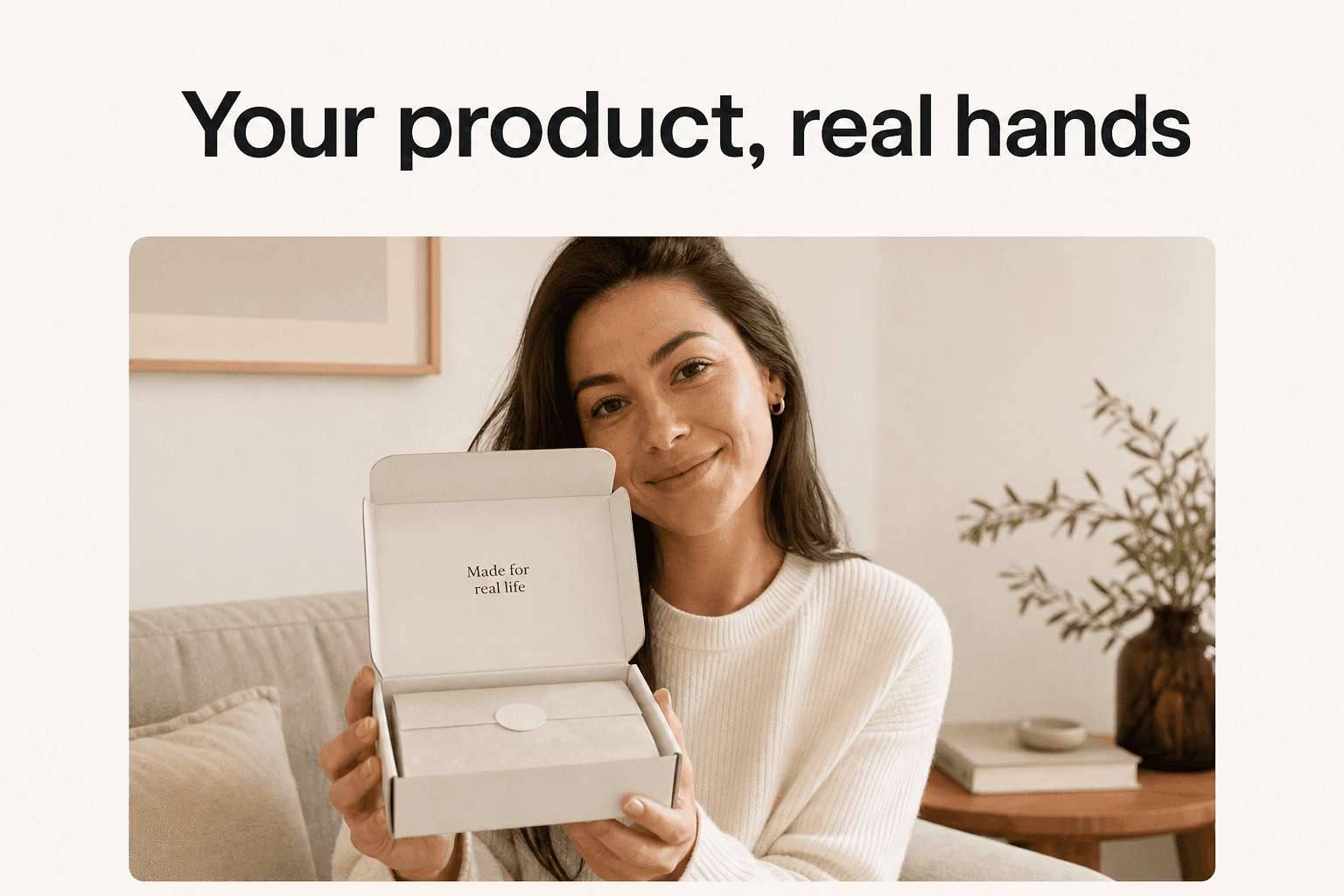
One product, three surfaces, one afternoon
The Surface Contract only pays off when you plan backwards from it. Here is the worked version for a single skincare SKU.
The asset list.
- Three Reels hooks at 9:16: a morning-routine open, a texture close-up, a before-and-after. Each gets a deliberately chosen 9:16 cover frame rather than whatever the middle of the video happens to be.
- Three feed cutdowns at 4:5, reframed so the label stays inside the middle band that survives the crop.
- One 10-slot carousel: two customer photos, three review screenshots, a size reference, a texture shot, and three ingredient slides.
- A Story cadence of reshares from whatever mentions arrive that week, saved into an objection-based Highlight.
What it costs. Twelve pieces from one product and one afternoon of planning. Filmed traditionally that is a shoot day, a creator fee, and a week of turnaround. Generated with AI, a video runs from about a dollar for a five-second Seedance 2.0 Mini clip to about $8 for an eight-second Seedance 2.5 clip, and about $26 for a full 30-second Seedance 2.5 take, which puts the whole set inside a single month of tool access. The point is not that the generated version is cheaper per file. It is that the twelfth variation costs the same as the first, so testing an angle stops requiring a budget conversation.
How to know it worked. Reach on Reels, saves and profile taps on feed, replies on Stories. Three surfaces, three metrics. If you score them all on the same number, you will kill the asset that was working.
How Novoads solves the Instagram UGC supply problem
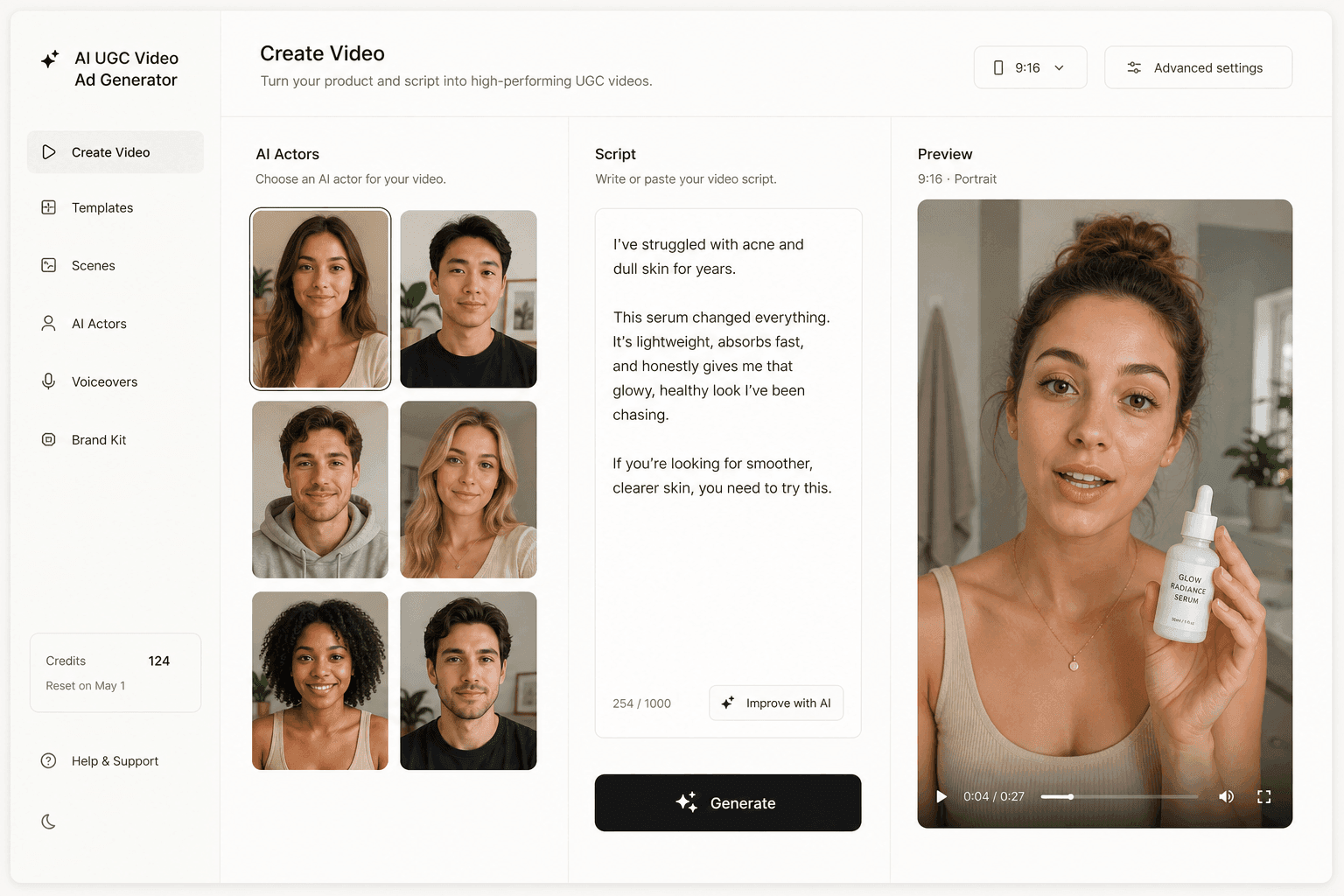
Real customer posts arrive at their own pace, and it is never the pace of a test calendar. Novoads closes that gap: upload a product image, write or auto-generate a script, pick an AI actor, and export a UGC-style video in 9:16, 1:1, or 16:9, which is exactly the three shapes the Surface Contract asks for. Voices cover 31 languages, so the same angle can be tested in every market you sell in. You can try it from $49/month on the Starter plan.
It does not replace the customer who filmed your serum on her bathroom counter. It fills the eleven other angles she was never going to film. If you are building the paid side too, how to make Instagram ads is the companion piece.
The surface decides the asset
The mistake is not filming the wrong thing. It is filming before deciding where it will live, and then discovering that the shape is wrong, the signal is off, and the permission you have does not cover what you now want to do with it. Instagram will tell you all three rules up front, in its own documentation, for free. Read them before you shoot, not after a video starts working.
Good UGC is not content that looks accidental. It is content that was aimed at a surface on purpose.
Frequently Asked Questions
What counts as user generated content on Instagram?
Three different things, and brands mix them up constantly. First, organic posts and Stories customers make without being asked, usually tagging or mentioning you. Second, content you commissioned from a paid UGC creator, which is a raw asset delivered to you rather than posted to their account. Third, reshares of either one, which is where most of the reach actually happens. Only the first is user generated in the literal sense, but all three behave the same way on the platform: they read as a person, not a brand.
What aspect ratio should Instagram UGC be?
Reels are vertical. Meta's own developer documentation accepts aspect ratios between 0.01:1 and 10:1 for reels but recommends 9:16 to avoid cropping or blank space, and if a reel cover image is not 9:16 it gets cropped to the middle-most 9:16 rectangle. Feed images must sit within a 4:5 to 1.91:1 range, and 4:5 is the tallest allowed, which is why 4:5 is the standard for feed. Film in 9:16, frame with headroom, and cut down to 4:5 for feed.
Can I repost a customer's Instagram video without asking?
Not safely. Reposting to your Story when someone tags you is the one low-friction case, because the mention is an invitation and the reshare stays inside Instagram. Downloading a customer's video and re-uploading it as your own feed post or Reel is republishing someone else's copyrighted work. Ask in writing, and ask specifically for the use you want: organic reposting, website embedding, and paid advertising are three separate permissions.
Do I need permission to run a creator's video as an Instagram ad?
Yes, and it is a stronger permission than a repost. Running an ad from a creator's handle requires that creator to grant your account partnership permissions inside Instagram, and Meta's advertising standards require ads promoting branded content to tag the featured third-party product, brand, or business partner using the branded content tool. Get usage rights and an ad-permission grant in the same conversation as the brief, never after the video performs.
How much UGC do you need for Instagram?
More than customers will hand you. A single week of testing on Reels burns through hooks faster than organic tagging replenishes them, which is why most brands end up commissioning creators or generating variations. The practical target is a standing pipeline: a few real customer posts a month, a small set of commissioned assets, and generated variations to test angles that no one has filmed yet.
Does UGC work better than polished brand content on Instagram?
On the surfaces where people are scrolling to be entertained, usually yes, because it does not announce itself as an ad in the first second. The commerce evidence points the same way: 91% of shoppers say they are more likely to buy when reviews include photos and videos alongside text. But the format is not magic. A UGC-style video with a weak first three seconds fails exactly like a polished one.
Key Takeaways
- Instagram is three surfaces, not one channel. Feed, Reels, and Stories each impose a different shape, reward a different signal, and require a different permission from the person who filmed the content.
- Decide the surface before the shoot. Reels accepts aspect ratios from 0.01:1 to 10:1 but recommends 9:16, and a cover image that is not 9:16 gets cropped to its middle rectangle automatically.
- The real distribution on Instagram is private. Messaging is now the most popular way people share photos and videos there, and Reels are reshared over 4.5 billion times a day across Meta's apps.
- Permission to repost is not permission to advertise. Embedding a public post is licensed by Meta's own oEmbed terms; downloading, re-uploading, and boosting a customer's video is a separate ask that needs written rights.
- Volume is the constraint most brands hit, not creativity. AI UGC fills the gaps between real customer posts so every surface has something native to run.

![What Is UGC? A Complete Guide to User-Generated Content [2026]](/_next/image?url=%2Fblog%2Fque-es-ugc.jpg&w=3840&q=75)