UGC-Style Ads: The Format That Outsells Polished Video, Made With AI in 4 Minutes
A UGC-style ad is a paid video built to look like organic, phone-shot content, and it beats polished brand ads on TikTok, Reels, and Meta because the feed rewards native. Here is what the format is, why it works, and how to make one with AI end to end.

Mauricio Valdivia
·11 min

Your best-performing ad probably doesn't look like an ad
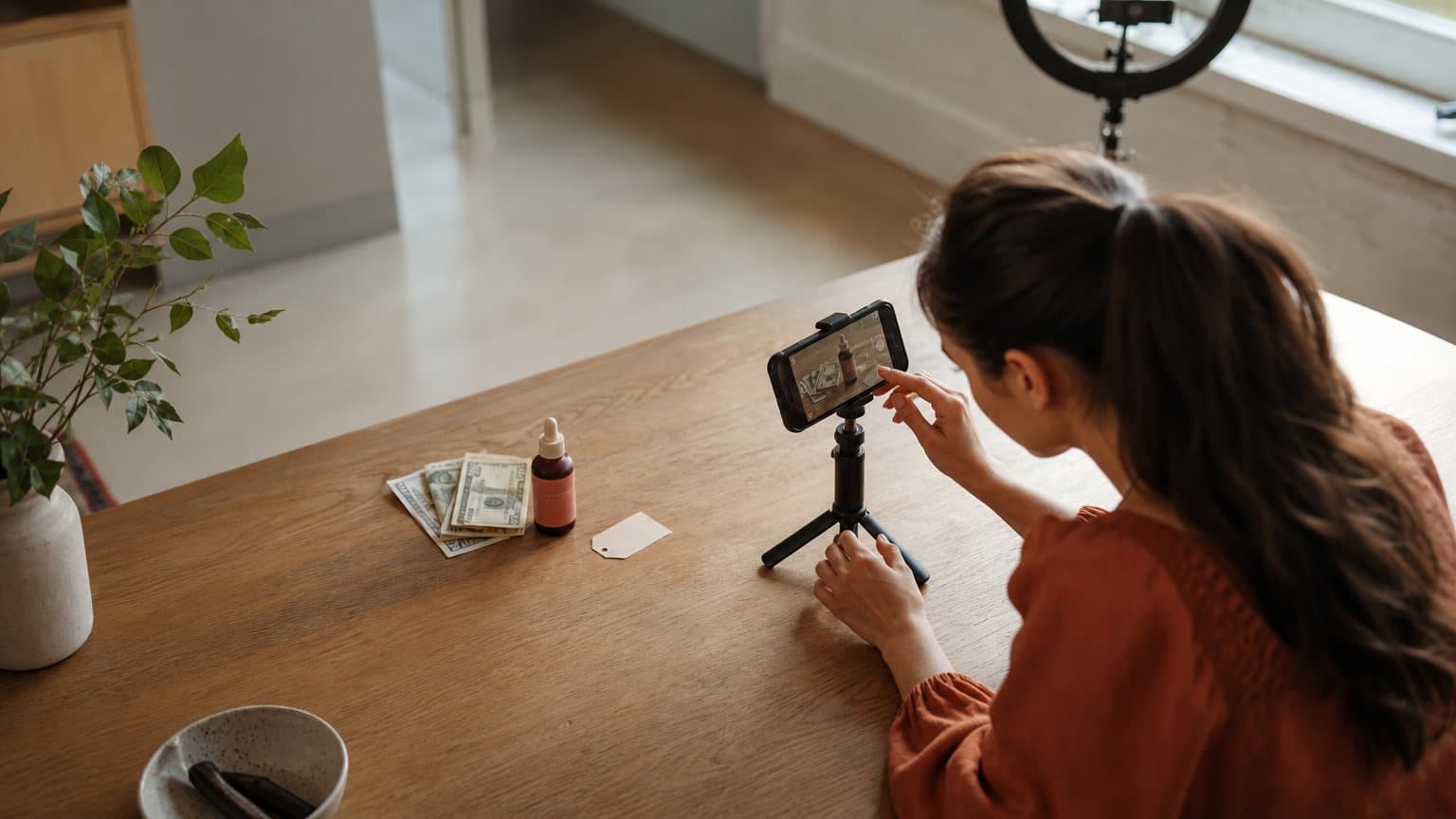
Open your ad account and sort by return on ad spend. The winner is rarely the cinematic one. It is usually the clip that looks like a friend filmed it on a phone: framed a little off, lit by a window, one person talking straight into the lens about a thing they like. That is a UGC-style ad, and it is quietly eating the polished stuff alive.
The reason is not taste. It is trust. In a 2025 survey of more than 21,000 US shoppers, 96% ranked ratings and reviews as the single most influential factor in what they buy, and 60% now search for real customer photos and videos before they check out. People believe other people. They discount a brand talking about itself on sight.
This guide is about the format itself, not the person behind it. What a UGC-style ad actually is, the parts it is built from, why it outperforms polished video on paid social, and how to produce one end to end with AI, without a camera, a crew, or a creator on retainer.
What a UGC-style ad actually is
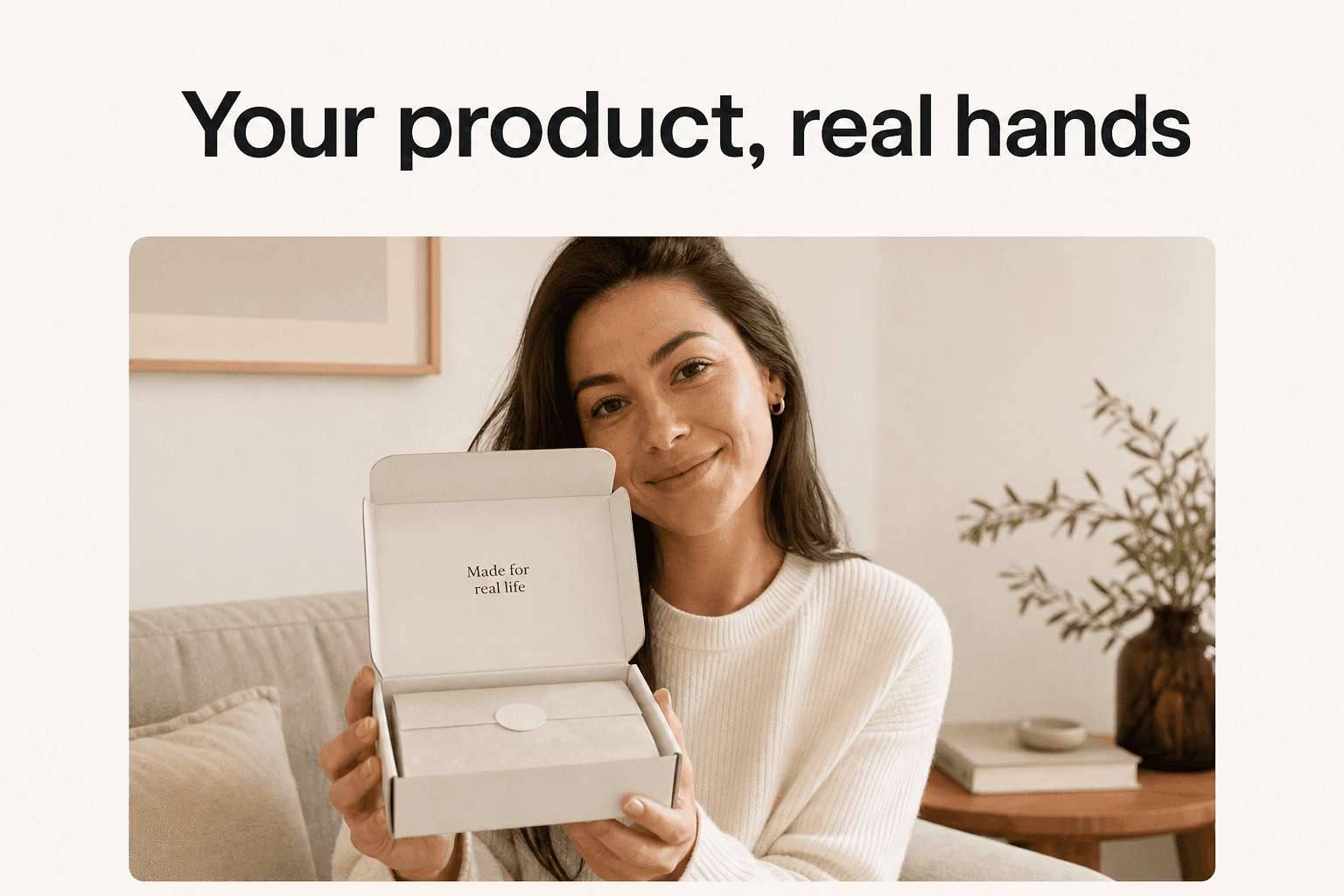
A UGC-style ad is a paid advertisement made to look like user-generated content. Vertical, handheld, one real-seeming person, native captions, the deliberate absence of studio gloss. The word doing the work is style: you are buying the look and feel of organic content and running it as an ad.
The format, not the creator
This is the distinction that trips up most briefs. A UGC content creator is a person you hire. A UGC-style ad is a creative format. They are related, but they are not the same noun, and conflating them is why teams overpay. You do not need a specific human to get the format. You need the look: the hook, the handheld frame, the plain-spoken claim, the caption track.
That is also why UGC-style ads sit inside, but are narrower than, the broader category of AI ads. AI ads cover copy, static images, and video of every kind. A UGC-style ad is one specific, high-performing shape of video ad, and it happens to be the shape AI is best at reproducing.
Why "style" is the operative word
Because it is a format and not a job title, three completely different sources can produce the identical output. A real customer can film it on their phone. A hired creator can shoot it to a brief. An AI actor can generate it from a script. To the algorithm and to the viewer, all three read as the same native, credible clip. What performs is the style, not who held the camera.
That decoupling is the whole opportunity. Once you accept that the format is the thing that converts, the question stops being "who do I hire" and becomes "how do I produce this look, at the volume paid social actually rewards, without the cost of a shoot each time."
UGC-style versus a polished brand ad
The two are built on opposite premises. A polished ad announces that a brand spent money. A UGC-style ad hides it. Here is how they differ on the axes that decide performance:
| Dimension | Polished brand ad | UGC-style ad |
|---|---|---|
| First impression | Reads as an ad | Reads as a post |
| Trust signal | Brand voice | A peer's voice |
| Native to the feed | No, it interrupts | Yes, it blends |
| Production cost | High, per asset | Low, per asset |
| Variations you can afford | One or two | Dozens |
| Best job | Brand film, launch | Volume testing, direct response |
The anatomy of a UGC-style ad
Strip a winning UGC-style ad down and the same parts appear every time. It is a small, repeatable kit, which is exactly why the format is so testable. Master the pieces and you can assemble a new variation in the time it takes to write a caption.
Every UGC-style ad is assembled from the same five ingredients. Miss one and the clip either gets skipped or reads as an ad:
- A hook in the first three seconds that earns the next second.
- A face and a voice that match the audience, not the brand.
- A single claim a real person would actually make.
- One call to action, spoken and not just captioned.
- Native formatting: 9:16, native captions, no studio gloss.
The three that decide most of the outcome deserve their own beat.
The hook that survives the first three seconds
The opening decides whether the other twenty-five seconds exist. A hook is the first line or the first action, and it has one job: earn the next second. "I was today years old when I learned..." or a hand yanking the product into frame both work because they interrupt before the brain files the clip as advertising. Nail the hook and the rest of the script mostly writes itself. Miss it and nothing downstream matters, no matter how clean the production is.
A face and a voice that match the audience
The single fastest way to break a UGC-style ad is a mismatch between who is talking and who is watching. A neutral, anywhere accent selling to a specific market reads as a stock voice, and a stock voice reads as an ad. The credibility comes from the sense that this is a person like the viewer. That is why localizing across accents, not just languages, is where a lot of the performance actually lives, and it is the part hiring makes slow and generating makes trivial.
One claim, one call to action
Amateur UGC-style ads try to say everything. Winning ones say one thing. A single, believable claim ("this fixed my 3pm energy crash") beats a feature list, because a real person recommending something does not recite a spec sheet. Then one clear call to action, spoken, not just captioned. The discipline of one claim and one CTA is what keeps the clip feeling like a recommendation instead of a brochure read aloud.
Why the format outperforms polished ads on paid social
The performance gap is not a rounding error, and it is not luck. Three separate mechanisms push in the same direction, and they compound. Understanding them is what lets you brief the format on purpose instead of hoping a clip goes viral.
The pattern interrupt
A social feed is a stream of native content: friends, creators, other people's phones. A polished brand film is a visual seam in that stream, and the brain is trained to skip seams. A UGC-style ad does the opposite. It matches the surrounding content well enough to get watched before it gets classified as an ad. The paradox is that looking less like an ad is what buys the attention an ad is paying for.
The trust transfer
This is the mechanism the numbers keep confirming. Shoppers extend credibility to peers that they withhold from brands. 91% say they are more likely to buy a product when reviews include photos and videos alongside text, 86% of shoppers engage with creator content before buying, and 65% rely on user-generated content when making buying decisions. A UGC-style ad borrows that peer credibility on purpose. It is a way to buy a trust signal on a schedule instead of waiting for organic reviews to arrive. If you want the rate math behind the human version of that signal, the breakdown of what UGC creators charge runs every tier.
The algorithm rewards native content
The platforms are not neutral here. TikTok and Meta build their ranking around keeping people in-feed, and native, UGC-style content is what keeps people in-feed. So the format gets a distribution tailwind on top of the trust and attention advantages. You are not fighting the algorithm with a UGC-style ad. You are handing it the thing it already wants to show. That is a rare case where the credible creative choice and the algorithmic choice are the same choice.
The UGC-style ad formats that keep working
Inside the format sits a short menu of angles that reliably perform. None of them is hard to produce. The craft is in the hook and the fit to your product, not the camera work, which is precisely why the menu is so easy to test at volume.
| Format | Best for | The hook it leans on |
|---|---|---|
| Testimonial | Warm audiences | A believable before and after |
| Problem-solution | Cold audiences | A frustration in the first second |
| Unboxing | New products | Anticipation and the reveal |
| Demo | Feature-led products | Proof over promise |
| Day-in-the-life | Habit products | Low-pressure routine fit |
| Street interview | Social proof | Caught, not staged |
Testimonial and problem-solution
The two workhorses. A testimonial is a person to camera explaining what changed for them, and it leans entirely on the trust transfer. A problem-solution skit opens on a frustration in the first three seconds and turns on the product as the fix. Problem-solution tends to win cold audiences because the frustration is the hook; testimonials tend to win warmer ones who already know the category.
Unboxing, demo, and day-in-the-life
- Unboxing and first impressions. The package, the reveal, the reaction. It works because anticipation is native to the feed.
- Demo and how-to. The product solving the exact problem it is sold against, on camera, in real time. Proof beats promise.
- Day-in-the-life. The product woven into a routine so it reads as a habit, not a pitch. Lowest sales pressure, highest native feel.
Street interview and founder-to-camera
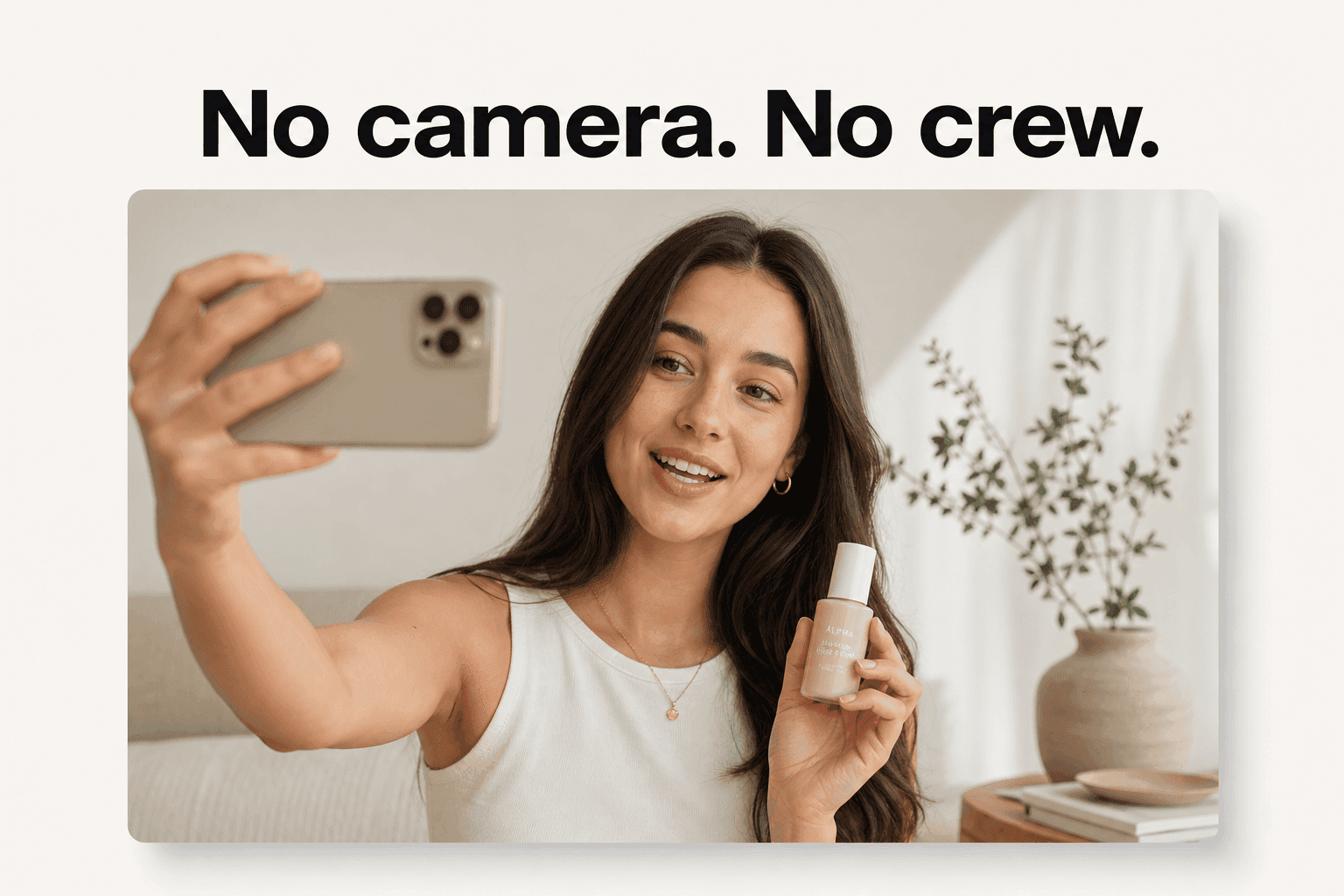
Two formats that carry outsized authenticity. A street-interview style, real reactions, unscripted cadence, reads as caught rather than staged. A founder-to-camera clip trades polish for skin in the game: the person who made the thing standing behind it. Both are hard to fake with a polished shoot and easy to render as a UGC-style ad when you can pick the actor and the setting.
How to make a UGC-style ad with AI, end to end
Here is the part that changed in the last two years. If the format is a look and a structure, and not a specific human, then a model can produce it from a script. That collapses scripting, casting, filming, and editing into one text-to-video step, and it does it for the price of a coffee.
The five-step production loop
The flow is the same regardless of tool, and it takes minutes once you have an angle:
- Start from the product and pick an angle. Problem-solution, testimonial, or demo. Angle before script, always.
- Write or auto-generate the script. Lead with the hook. Keep it to one claim and one call to action.
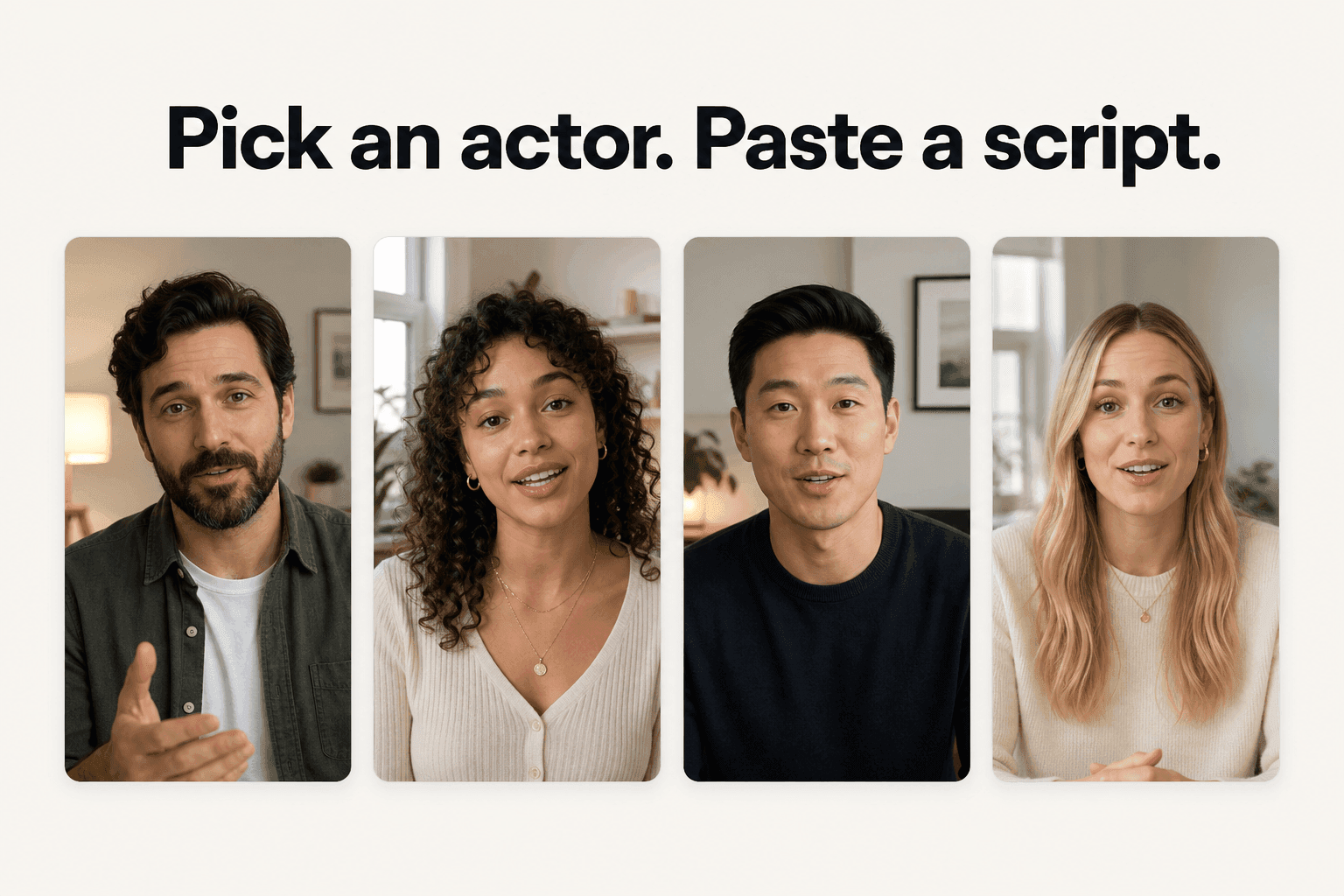
- Choose an AI actor. Match age, gender, and accent to the audience, not to your own taste.
- Generate the clip. Voice, lip-sync, captions, and a 9:16 crop are handled for you.
- Duplicate and vary. Swap the hook, the actor, the accent. One product becomes a dozen ads in a sitting.
A worked example: one serum, six ads
Say you sell a vitamin C serum and you want to test six angles before you spend real budget: two problem-solution scripts about dull skin, two testimonials in different accents, one demo, and one day-in-the-life. Hiring that out is six briefs, several creators, paid-ad usage rights on each, and one to two weeks of revisions, which lands somewhere near two to three thousand dollars and most of a month. Read the full comparison in the guide to working with a UGC content creator.
Generate the same six with AI and each clip runs from about a dollar for a five-second Seedance 2.0 Mini clip to about $8 for an eight-second Seedance 2.5 clip, and about $26 for a full 30-second Seedance 2.5 take, so the whole test lands around $6 to $48, produced the same afternoon. If you are choosing a video model for the render, the head-to-head on Seedance versus Veo covers the quality and cost tradeoffs. The point is not that AI makes a better clip than a talented creator. It is that six angles now cost less than one hire, so you can finally run the test the format was built for.
How to tell a good one from AI slop
The failure mode is over-polish, not under-polish. A UGC-style ad that looks too clean stops reading as a person. Judge a generated clip against three tests before you launch it:
- The hook test. The first three seconds would stop a scroll on their own.
- The accent test. The voice matches the audience, not a generic stock read.
- The person test. It reads like a recommendation, not a spokesperson.
If it fails the accent test, regenerate with a matched actor. If it fails the hook test, rewrite the first line. Everything else is fixable in the caption.
Where advertisers get UGC-style ads wrong
Most of the ways this goes sideways are the same handful of mistakes, and each has a fix. The pattern underneath all of them is treating a testing format like a hero-asset format, the same trap that catches teams new to the broader AI ads playbook.
- Chasing one perfect ad. Paid social rewards volume of tests, not a single masterpiece. If you can only afford to make one, you have picked the wrong production method. Generate many and let the data choose.
- Over-polishing the look. Studio lighting and a spokesperson cadence kill the trust transfer. Let it look handheld. The imperfection is the feature.
- Using a neutral accent for a local market. A stock voice reads as a stock ad. Match the actor to the audience, and localize the accent, not just the language.
- Ignoring the hook. If the first three seconds do not land, nothing after them is seen. Test hooks as their own variable.
- Never reading the data. Generating ten ads and shipping all ten equally wastes the whole advantage. Kill the losers fast, scale the winner, and refresh before the winning clip fatigues.
How Novoads makes UGC-style ads at volume
Novoads is a global AI UGC video-ad generator built for the loop above. You write or auto-generate a script, pick an AI actor that matches your audience's age, gender, and accent, and it produces a UGC-style vertical video with voice, lip-sync, and captions, formatted 9:16 for TikTok, Reels, and Meta. You can also upload a product photo and turn it into an ad creative. The headline time is about four minutes, and a clip runs from about a dollar for a five-second Seedance 2.0 Mini clip to about $8 for an eight-second Seedance 2.5 clip, and about $26 for a full 30-second Seedance 2.5 take rather than a few hundred dollars per invoice.
Because it makes native-local ads in 30+ languages with real regional accents, localizing the same script across audiences is one more render, not one more hire, which is exactly the variable that decides whether a UGC-style ad reads as native or as stock. What it removes is the reason you could only afford to test twice. When six angles cost about what one clip used to, the volume the format was built for finally fits a normal budget. You can produce your first UGC-style ad from $49 per month. Cancel anytime.
The look is the strategy
A UGC-style ad was never a cheaper version of a polished ad. It is a different bet entirely: that a clip which looks like it was not paid for will outsell one that obviously was. The trust it borrows and the attention it earns are the product, and the studio gloss you left out is the reason it works.
So stop treating the look as a downgrade and start treating it as the plan. The number that should drive your creative budget is not the cost of one beautiful film. It is the cost of the tenth native clip, because finding the winner was always the point, and the format only pays when you can afford to keep looking.
Frequently Asked Questions
What is a UGC-style ad?
A UGC-style ad is a paid advertisement produced to look like user-generated content: a vertical, phone-shot clip of a real-seeming person talking to camera, with native captions and no studio gloss. The point is that it reads like a genuine customer made it, not a marketing department. It is a format and a look, so it can be filmed by an actual customer, a hired creator, or generated with an AI actor. What performs is the style, not the source.
Why do UGC-style ads outperform polished ads?
Three mechanisms stack up. First, a native-looking clip is a pattern interrupt in a feed of other native clips, so it stops the scroll where a glossy film gets skipped as an ad. Second, it carries a trust signal a brand talking about itself cannot: shoppers believe other people, and most now look for real customer video before they buy. Third, TikTok and Meta actively surface native, UGC-style content over produced brand films. The format wins on credibility and on distribution at the same time.
How is a UGC-style ad different from a regular AI ad?
AI ads are a broad umbrella that includes AI-written copy, AI-generated static images, and AI video. A UGC-style ad is a specific format inside the video slice: the handheld, talking-to-camera, feels-unscripted look, whether a human or an AI actor delivers it. In short, UGC-style describes the creative format, while AI describes the production method. The two overlap when you generate a UGC-style clip with an AI tool, which is the highest-leverage combination for paid social.
What makes a UGC-style ad look authentic instead of like AI slop?
Match the actor's age, gender, and accent to the audience you are targeting, keep the captions native to the platform rather than a burned-in brand font, lead with a real hook in the first three seconds, and make a single believable claim instead of a feature list. Over-polishing is the tell: perfect lighting, a spokesperson cadence, and a studio background break the illusion. A little imperfection is the format working as intended.
How much does it cost to make a UGC-style ad?
Filming with a human creator runs roughly $50 to $500 and up per video plus one to two weeks. Generating a UGC-style clip with AI costs from about a dollar for a five-second Seedance 2.0 Mini clip to about $8 for an eight-second Seedance 2.5 clip, and about $26 for a full 30-second Seedance 2.5 take and takes minutes. The low unit cost is the entire strategic point: it lets you produce the ten or twenty angles the format rewards instead of betting the budget on one or two expensive shoots.
How many UGC-style ad variations should I run?
Start with five to fifteen per concept: different hooks, actors, accents, and angles against the same offer. The winning ad is rarely the one you would have guessed, so volume is how you find it. Launch them as a test, kill the ones that miss your benchmark fast, and put budget behind the one or two that beat it. Then feed what you learned into the next batch to stay ahead of ad fatigue.
Key Takeaways
- A UGC-style ad is a paid ad deliberately shot to look like organic, user-made content: vertical, handheld, one real-seeming person talking to camera, native captions, no studio polish.
- It is a look and a structure, not a job title. A customer, a hired creator, or an AI actor can all produce the same format. The style is what performs, not who filmed it.
- It outperforms polished video on paid social for three reasons: it stops the scroll as a pattern interrupt, it carries a trust signal brand ads cannot, and the platforms surface native content over glossy films.
- The winning UGC-style ad is almost never the one you would have predicted, so the format only pays off if you can produce many angles cheaply and let the data pick.
- AI produces the same format from a script in about four minutes for about a dollar to $8 per clip of up to eight seconds, from a five-second Seedance 2.0 Mini clip to an eight-second Seedance 2.5 clip, or about $26 for a full 30-second Seedance 2.5 take, which is what finally makes running the volume the format demands affordable.