MAI Image 2.5 Pro vs the Models Behind Your Ads: Eight Ratios, One Megapixel
Microsoft put MAI-Image-2.5 Pro into public preview in Microsoft Foundry on July 23, 2026, pitched at hero imagery and precise in-image text. Here is how its published specs line up against the image models already drawing ad creative, and which one to open when your ad has a headline, a legible label, or a product that has to look identical every time.

Mauricio Valdivia
·11 min
The ad decides the model, not the leaderboard
You have a serum bottle, a headline, and a deadline. The headline has to be readable at thumb speed. The bottle has to look like the bottle, including the label. And by Friday the same shot has to exist in four shapes for four placements. Nothing on any image-model leaderboard tells you which model does that.
On July 23, 2026, Microsoft AI's Superintelligence team introduced MAI-Image-2.5-Pro, and Microsoft Foundry opened it up. Microsoft's own wording is worth reading closely: the model "is now in public preview," it is aimed at "hero imagery, detailed editing, precise in-image text rendering," and Microsoft calls it "our highest-fidelity image model to date." That is an ad-team pitch, written in ad-team vocabulary.
Novoads does not run MAI Image 2.5 Pro, so what follows is not a review and there are no hands-on benchmark numbers in it. What there is: the published specs, read next to the models that already draw ad creative, and organised around the only question that matters on a Tuesday afternoon. Which one do you open when the ad has a headline, a legible label, or a product that has to look identical forty times?
The short answer, by the job in front of you
No single model wins all three of those jobs, and this week the published specs make the split unusually legible.
- Reach for MAI Image 2.5 Pro when you want Microsoft's highest-fidelity tier for one polished frame and you are already working inside Foundry or fal. It is a preview, so treat quotas and prices as movable.
- Reach for Ideogram 4 when the words are the creative. Its release is built around in-image text and it hands you explicit bounding-box layout and color-palette control.
- Reach for Seedream 5.0 Pro when the same creative has to ship in several languages, or when you want to move one element without re-rolling the whole picture.
- Reach for Nano Banana 2 Lite when you need volume and speed more than you need any single frame to be perfect.
- Reach for GPT Image 2 when the job is the actual ad rather than the render: a product photo turned into a creative in a placement ratio, which is what the Novoads image-to-ad flow runs it for.
The rest of this piece is why, and the three published numbers that decide it.
What Microsoft actually put into preview
The launch language and the documentation describe the same model in noticeably different registers. Reading both is the fastest way to work out what this thing is for.
Preview, not general availability
The status word matters more than the launch verb. Microsoft's announcement says the model "is now in public preview," and Microsoft Foundry's deployment documentation lists it as MAI-Image-2.5-Pro (Preview), model version 2026-06-19.
Two things follow from that one word in brackets:
- Quotas, regions and prices are all allowed to move before general availability, so anything you cost out this week is a draft rather than a commitment.
- The version string is roughly five weeks older than the announcement, which makes
2026-06-19a weights date, not a launch date. If you see it quoted as a release date somewhere, it is not one.
One more scoping note, because this family ships fast. MAI-Image-2.5 and MAI-Image-2.5-Flash are separate SKUs that arrived before Pro and are listed alongside it in Foundry. Benchmark numbers circulating under the MAI-Image-2.5 name belong to MAI-Image-2.5. They are not Pro's, and the two get conflated constantly.
Whose words are whose
Three pages describe this model and none of them uses the same vocabulary, which is worth untangling before any of it ends up in a deck.
- Microsoft's launch post keeps it narrow: hero imagery, detailed editing, precise in-image text rendering.
- fal, which hosts the endpoint, writes its own and reaches much wider, calling it "Microsoft's highest-fidelity image model for production-grade text-to-image generation" that is "designed for hero imagery, detailed compositions, precise text rendering, photorealism, stylized illustration, commercial design, and visually rich concept work."
- Microsoft Learn's model table, the least promotional of the three, says only that it is "well suited for tasks such as concept visualization, creative content generation, image editing workflows, and production design."
Notice that only the marketing surfaces say hero. The docs say concept visualization and production design. When a vendor's documentation and its blog disagree about what a model is for, the documentation is usually describing what it does and the blog is describing who they would like to sell it to. That is not cynicism, it is just how the two documents get written, and for a buying decision the docs are the more useful of the two.
The price is per token, and that is not a per-image price
Microsoft published the rate on launch day. The model is "priced at $5 per 1M text input tokens, $8 per 1M image input tokens, and $106 per 1M image output tokens."
Here is the part most coverage will skip. That $106 buys image output tokens, and Microsoft does not publish how many output tokens one image consumes. Without that number, turning $106 per million into a cost per creative is arithmetic performed on a variable nobody has released. You will see the conversion anyway, in roundups written this week. Do not put it in a budget.
What you can say honestly is the shape of it:
- text in is cheap
- image in is cheap
- image out is where the money sits
- and the whole thing bills like a language model, not like the flat per-image endpoints most ad teams are used to
That last difference is not cosmetic. A per-image endpoint makes a campaign's cost a multiplication you can do in your head; a per-token endpoint makes it a forecast, and forecasts are how creative budgets quietly go wrong.
Three published numbers to check before you plan a campaign around it
Specs are usually where a launch post gets boring. Not this one, because all three of the numbers below cut against the marketing in a way that changes what you would actually use the model for.
The ratio menu on fal stops at eight
fal's queue schema for the endpoint is the most concrete document in this whole story, because an OpenAPI enum is a closed set rather than a description. It accepts exactly eight values for aspect_ratio: auto, 1:1, 4:3, 3:4, 16:9, 9:16, 3:2 and 2:3. It takes up to four images per call and returns jpeg, png or webp.
Now read that list again with a media plan in your hand. There is no 4:5. That is the tall-but-not-vertical shape that fills a phone feed without committing to a Story, and it is the ratio a paid social team asks for by name more often than any other. Our own image-to-ad flow exposes six ratios and 4:5 is deliberately one of them, next to 9:16, 1:1, 16:9, 2:3 and 21:9.
Be precise about what is missing, though, because this is a fal constraint rather than a model constraint. Microsoft's Foundry API does not take a named ratio at all. It takes width and height as integers, so a 4:5 output is expressible there: 896 by 1120 sits comfortably inside the pixel budget below. The limitation lives in the route you reach the model through. If you plan to hit it via fal, plan around eight shapes plus a crop step, and check your per-platform ratio requirements before you generate rather than after.
One megapixel is the documented ceiling
Foundry's documentation puts a hard budget on output: "Both width and height must be at least 768 pixels each. Either dimension can exceed 1024 as long as the total pixel count stays within the limit." The model table states the limit numerically and gives an example inside it: "Minimum 768×768 pixels; maximum total pixel count 1,048,576 (equivalent to 1024×1024). Either dimension can exceed 1024 as long as the total pixel count stays within the limit (for example, 768×1365 is a valid size)."
So tall shapes are fine. 768 by 1365 is close to 9:16 and it fits. What does not fit is scale. 1,048,576 pixels is a comfortable social asset and a small one for anything that gets printed, blown up in a billboard mockup, or handed to a retoucher who wants room to crop.
That is the tension worth naming, and both halves of it are true at once: the announcement says hero imagery, and the documentation says one megapixel. A hero asset on a phone and a hero asset on a wall are different products. Through this API, today, the model makes the first one. Set that beside Ideogram 4, whose release lists "native 2k resolution images" as a headline feature, and you can watch two design intents pull apart in public.
Throughput is measured in requests per minute
The third number is the least glamorous and the most likely to bite. Foundry's documentation states that "MAI image models have the following rate limits measured in Requests Per Minute (RPM). The tier available to you depends on your subscription and deployment configuration."
Requests per minute is a sensible unit for an editing tool and an awkward one for creative testing, which is a batch activity by nature. The workflow that makes AI images worth using for ads is not one perfect render. It is thirty variations of one layout, judged side by side, which is the whole premise of disciplined creative testing. A model metered per minute and billed per token is not shaped for that. It is shaped for the one frame you are going to obsess over.
That is not a flaw. It is a positioning statement hiding inside a quota table.

Where each of these models earns its slot
Almost every image decision an ad-maker makes reduces to one of three questions:
- Does the creative carry words that have to be legible?
- Does it ship in more than one language?
- Does the product have to look identical across a whole campaign?
Sort the field by those and it stops looking like a leaderboard and starts looking like a toolbox.
| Model | Built around | Why you would open it |
|---|---|---|
| MAI Image 2.5 Pro | Highest-fidelity tier, in preview | One polished frame inside Foundry or fal |
| Ideogram 4 | In-image text and layout control | Bounding boxes, color palettes, native 2K |
| Seedream 5.0 Pro | Multilingual text and layers | One creative, several languages |
| Nano Banana 2 Lite | Speed and unit cost | Volume while you hunt for an angle |
| GPT Image 2 | The ad, not the render | Product photo to placement-ready creative |
The text-first specialists
Ideogram 4 is the clearest case of a model designed around a single axis. Its release describes "a new structured JSON prompting interface, with best-in-class multilingual text rendering, deep language understanding, explicit bounding-box layout and color-palette controls, and native 2k resolution images," and it names the jobs outright: "best-in-class in-image text generation (signage, logos, captions, watermarks, multi-line text) with high fidelity directly from the prompt."
The bounding boxes are the detail that matters. A prompt is a wish; a bounding box is an instruction. A sale poster is a layout problem long before it is an aesthetics problem, which is why that one interface decision does more for ad work than another step up in photorealism would. We went through what it unlocks in our look at Ideogram V4.0q.
Seedream 5.0 Pro takes similar territory from a different side. ByteDance says it renders native text "for over ten commonly used languages worldwide" and that it "supports intelligent layer separation," so a product, a background and a badge stay independent instead of fusing into one flat picture. For anyone running the same offer in three markets, that first capability deletes a localization step rather than performing a demo trick, and we unpacked the rest in our Seedream 5.0 Pro breakdown.
Set MAI Pro's documentation next to those and one row stands out. Microsoft Learn's model table lists its languages as en. The doc does not say whether that column describes the prompt language, the text the model will render inside an image, or both, so it should not be over-read as a hard multilingual limit. But if your creatives ship in Spanish and Portuguese, it is a row worth resolving before you commit a quarter to it.
The volume model, and the one that draws the ad
Nano Banana 2 Lite sits at the other end of the same trade. Google says it "delivers text-to-image outputs in 4 seconds" at "$0.034 per 1K image," which describes a model built for how many rather than how good. That is a legitimate thing to want while you are still hunting for an angle, and our write-up of it covers where the speed stops paying for itself.
GPT Image 2 is the odd one out in this table because we do not judge it as a model at all. It is what the Novoads image-to-ad and product-to-ad flows run at medium quality, and the reason it holds that slot has nothing to do with winning a fidelity comparison. It is that the output is aimed at an ad: the product read correctly, framed for a placement, in a ratio a media buyer actually asked for. A bare render and an ad creative are different artifacts, and most launch coverage in this category quietly treats them as the same thing.
The consistency problem no spec sheet solves
Every model above will hand you one good frame. The two jobs underneath that are the ones nobody's spec sheet answers, and they are the jobs that decide whether a campaign ships.
A campaign is the same product, forty times
The fortieth frame looking like the first is what "campaign" means operationally. One bottle, one label, one cap, one set of proportions, holding across every asset it appears in:
- the hero frame everyone approves in the deck
- the three-up that runs as a carousel
- the story crop, where the label lands near the safe zone
- the lifestyle version where a hand is holding it
- the seasonal re-skin someone asks for six weeks later
Microsoft's launch language points directly at this, and it is the right thing to point at. It is also the hardest claim to verify from outside, because consistency failures surface on the eighth asset rather than the first, and no launch gallery has ever shown anyone the eighth asset. Every model in this category looks flawless in its own reel.
Which is why the only honest posture on a preview-week model is to run it against your own product and your own label, not to read the gallery. The same discipline applies to keeping an AI actor consistent across variations, where the failure mode is identical and the fix turns out to be a workflow rather than a better prompt.
The still is not the ad
There is a second gap, and it is larger than any spec on this page.
A finished ad is an argument, and an argument has parts a renderer never supplies:
- an angle, meaning a reason this product matters to this buyer
- an offer with a reason to act now rather than later
- a person the buyer believes, for most performance UGC
- that person speaking in the buyer's own accent
- a format the placement accepts without a re-crop
Every model in the table above produces one input to that argument. The distance between a beautiful still and a creative that beats your benchmark is not a resolution gap or a text-rendering gap. It is the gap our look at the AI ad quality problem keeps landing on: production got cheap and judgment did not.
How Novoads solves the model-picking problem
Choosing a model is real work with a real switching cost, and most of that cost is plumbing rather than judgment: another account, another key, another billing unit to reconcile.
Novoads does not run MAI Image 2.5 Pro. It is not in the image picker today, and saying so plainly is better than implying an integration that does not exist. What is there is most of the rest of the table.
What the picker actually costs
The image-to-ad and product-to-ad flows run GPT Image 2 at medium quality at 0.3 credits per image, across six aspect ratios: 4:5, 9:16, 1:1, 16:9, 2:3 and 21:9. Beside it in the picker sit Seedream 5 Pro at 0.6 credits per image, Seedream 5 Lite at 0.4, Nano Banana Pro at 0.5 for 1K and 2K output or 1.0 at 4K, and Reve 2.1 at 1.0.
One account, one balance, no separate provider keys, and no per-token rate to reverse-engineer before you can answer what a campaign costs. That last point is the quiet one. Every model in this comparison publishes its price in a different unit, and a shared credit balance is mostly a way of refusing to make that your problem.
Where the still goes next
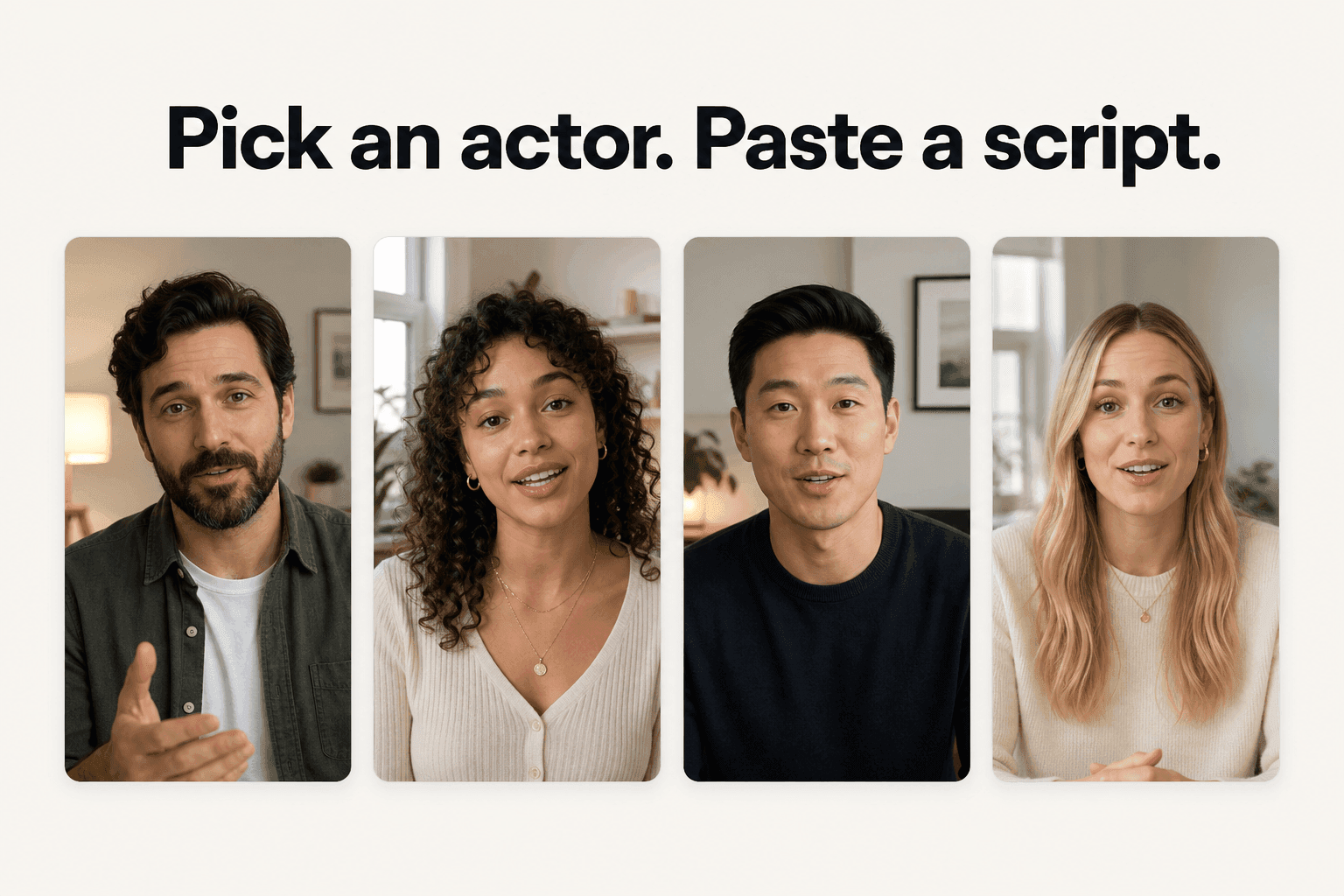
Then the step a still cannot take. In Novoads you write or auto-generate a script, pick an AI actor whose age, gender and accent match the audience, and get back a vertical clip with synthetic voice, lip-sync and burned-in captions, assembled for the feed. That is what turns the image you just argued about into something a scroller stops for, and our guide to making product videos with AI walks the whole loop end to end.
The handoff is worth understanding before you pick a model, because it changes what the image is for. An image-to-video call takes one approved still as literal frame one, so the still stops being the deliverable and becomes the staging decision: the route from a single key frame to a finished 3D animated spot shows the ratio, the framing and the product placement all inherited from that frame, which is a good reason to argue about the still before you spend on motion.
The Inicial plan is $49 a month and grants 50 credits, enough for several finished takes. Cancel anytime.
Read the schema before the announcement
MAI Image 2.5 Pro is a real model from a serious lab, shipped into preview with unusually well-documented limits, and this week the documentation is the most useful thing about it. It says plainly what the model is for: one high-fidelity frame, metered per minute, billed per token, capped at a megapixel. That is a specific tool, and specific is good.
The mistake would be reading the launch language and concluding you now have a campaign engine, because the numbers underneath that language describe something narrower, and more interesting, than the announcement does.
Which is the lesson every image-model launch keeps teaching and nobody keeps learning. You do not choose these models on quality anymore, because quality is close to a tie across the frontier and getting closer every month. You choose them on the constraint that will actually stop you on a Thursday afternoon: the ratio the menu does not offer, the ceiling on the file, the quota on the batch, the language the docs quietly list as en. The announcement is written to be exciting. The schema is the part that has to be true.
Frequently Asked Questions
What is MAI Image 2.5 Pro?
MAI-Image-2.5-Pro is Microsoft's image generation model, announced by Microsoft AI's Superintelligence team on July 23, 2026 and made available in Microsoft Foundry. Microsoft calls it its highest-fidelity image model to date and points it at hero imagery, detailed editing and precise in-image text rendering. Microsoft Foundry's own documentation lists it as a text-to-image and image-to-image editing model, well suited to concept visualization, creative content generation, image editing workflows and production design.
Is MAI Image 2.5 Pro generally available?
No. Microsoft's announcement says the model is now in public preview, and Microsoft Foundry's deployment documentation lists it as MAI-Image-2.5-Pro (Preview). That matters for planning: preview-tier quotas, regional availability and pricing can all move before general availability, so any cost or throughput model you build this week should be treated as a draft rather than a commitment.
How much does MAI Image 2.5 Pro cost per image?
Microsoft has not published a per-image price. The published rate is per token: $5 per 1M text input tokens, $8 per 1M image input tokens and $106 per 1M image output tokens. Because Microsoft does not publish how many output tokens a single image consumes, converting that rate into a cost per creative would require a number nobody has published. Treat any per-image figure you see for this model as an estimate someone invented.
What resolution can MAI Image 2.5 Pro produce?
In Microsoft Foundry the output is bounded rather than free. Both width and height must be at least 768 pixels, and the total pixel count must not exceed 1,048,576, which is the equivalent of 1024 by 1024. Either dimension can exceed 1024 as long as the total stays inside that budget, so Microsoft's documentation gives 768 by 1365 as a valid size. That is comfortable for a social placement and small for anything print-grade.
Can I use MAI Image 2.5 Pro inside Novoads?
Not today. MAI Image 2.5 Pro is not one of the models in the Novoads image picker. Novoads' image-to-ad and product-to-ad flows run GPT Image 2 at medium quality at 0.3 credits per image, and the picker also offers Seedream 5 Pro at 0.6 credits, Seedream 5 Lite at 0.4, Nano Banana Pro at 0.5 credits for 1K and 2K output or 1.0 at 4K, and Reve 2.1 at 1.0. The workflow is model-agnostic by design, so new models get evaluated as they earn a slot.
Which image model should I use for an ad with text on it?
Reach for a model built around in-image text rather than one built around photorealism. Ideogram 4's release is organised around in-image text generation for signage, logos, captions, watermarks and multi-line text, and it exposes explicit bounding-box layout and color-palette controls, which turns a layout into an instruction instead of a prompt. Seedream 5.0 Pro is the choice when that same text has to ship in several languages, since ByteDance says it renders native text for over ten commonly used languages worldwide.
Key Takeaways
- Microsoft AI announced MAI-Image-2.5-Pro on July 23, 2026 and it shipped in public preview, not general availability, described as Microsoft's highest-fidelity image model to date and pointed at hero imagery, detailed editing and precise in-image text rendering.
- Its published price is per token: $5 per 1M text input tokens, $8 per 1M image input tokens and $106 per 1M image output tokens. Microsoft publishes no tokens-per-image figure, so that rate cannot honestly be converted into a cost per creative.
- Microsoft Foundry documents a hard output budget of at least 768 pixels per side and no more than 1,048,576 total pixels, the equivalent of 1024 by 1024. A tall shape such as 768 by 1365 fits inside it; a large print-grade hero does not.
- On fal the endpoint enumerates eight aspect ratios (auto, 1:1, 4:3, 3:4, 16:9, 9:16, 3:2 and 2:3) and 4:5 is not among them, though Microsoft's own Foundry API takes raw width and height instead of named presets.
- Novoads does not run MAI Image 2.5 Pro. Its image-to-ad flow runs GPT Image 2 at medium quality for 0.3 credits per image across six ratios including 4:5, with Seedream 5 Pro, Seedream 5 Lite, Nano Banana Pro and Reve 2.1 selectable in the image picker.