Branded Content Examples: What the Paid Partnership Label Changes About Reach, Rights and Cost
Branded content, UGC and ads look identical in the feed and are governed by three different rulebooks. Here are the examples that trigger the label, what Meta and TikTok actually require, and what the disclosure toggle buys you.

Mauricio Valdivia
·9 min

One video, three labels, three different rulebooks
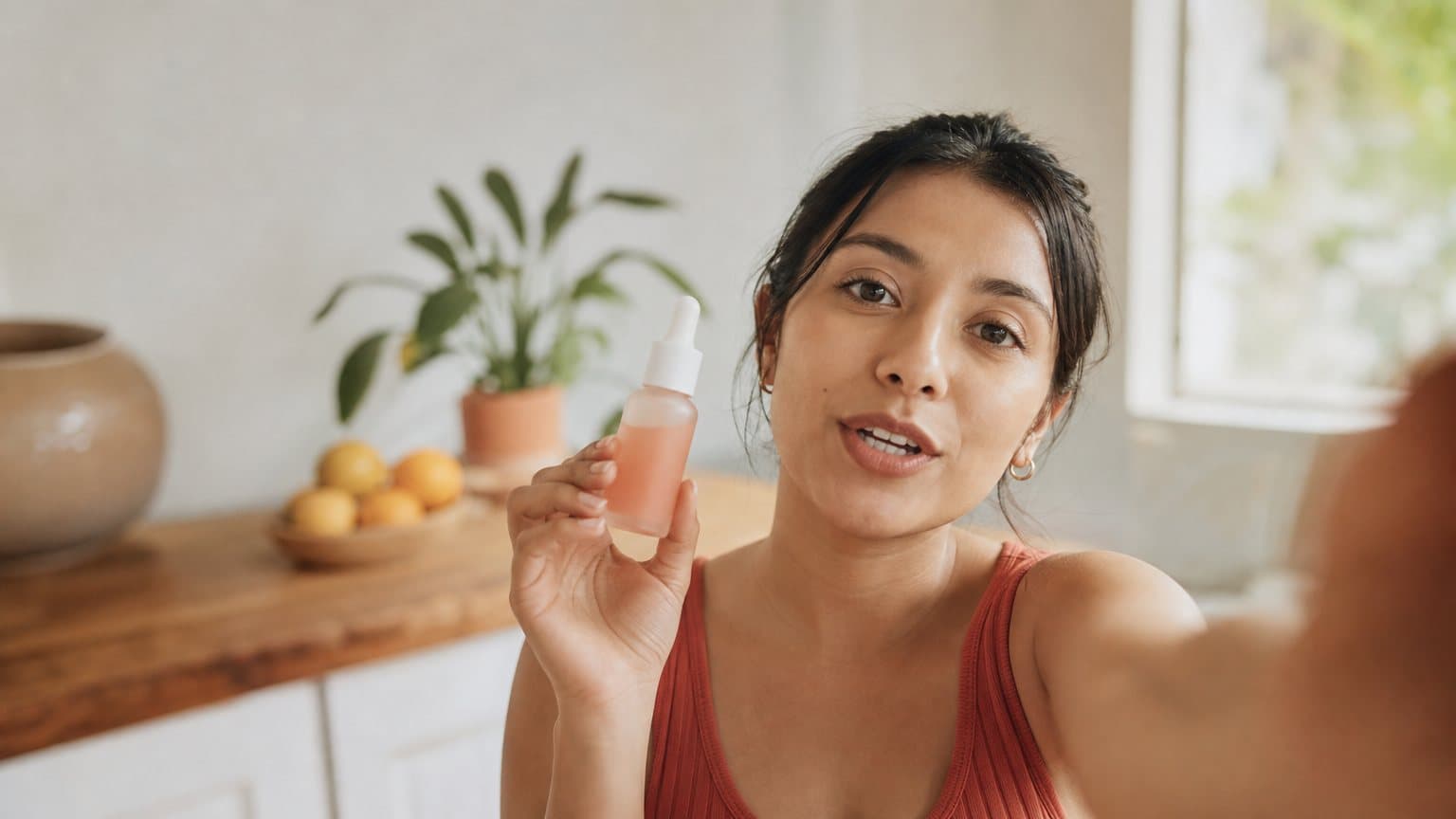
A creator finishes a sixty-second serum review in her kitchen. Same phone, same light, same script. Then she reaches the upload screen and makes a decision that changes almost nothing about the video and almost everything about its life: does she flip the commercial content disclosure toggle. Most creators hesitate there because they assume the label is a tax on reach. TikTok's own Business Help Center says it is not. The company states it compared nearly 2 million videos with and without proper branded content disclosure and found no performance difference.
Branded content is not a look. It is a category defined by money, and it sits between two things people confuse it with constantly. On one side is user-generated content, which describes who filmed the video. On the other side is a paid ad, which describes who is buying the distribution. Branded content is the middle rung, and it is the one with paperwork.
This post covers what triggers the branded content label, six concrete examples sorted by what the label changes, what Meta and TikTok require in their own words, and what the toggle buys you that a plain post does not get.
What actually makes a video branded content
The definitions are short, and they are worth reading literally, because almost every compliance mistake comes from adding a condition that is not in them.
The exchange-of-value test
Meta's developer documentation defines branded content as content that "features or is influenced by a brand partner for an exchange of value." TikTok's Branded Content Policy defines it as "content that promotes or reviews a third-party brand or its products or services in exchange for payment or any other incentive."
Neither definition mentions production quality, script control, contracts or invoices. The trigger is the exchange. If something of value moved from a brand to the person posting, the video is branded content, whether or not either party used that phrase.
It is worth naming what the definitions deliberately leave out, because each omission is a place teams invent a rule that does not exist:
- No minimum fee. A free sample and a five-figure retainer sit in the same category.
- No contract requirement. Nothing has to be signed for the obligation to attach.
- No creative-control test. The brand can have zero say over the script and the video is still branded content.
- No format test. A story, a Reel, a long review and a static carousel are treated the same way.
Gifts, codes and ambassadors count too
TikTok spells out the edge cases most programs get wrong. Its policy lists "a product or service that has been gifted to you by (or on behalf of) a brand" as branded content, alongside paid posts, affiliate arrangements where the creator earns a commission, and ongoing brand-ambassador relationships.
That means product seeding is not a loophole. A PR box with no contract, no brief and no fee still creates the obligation. So does an affiliate link. So does an unpaid post from someone who was on your ambassador roster last quarter.
Where UGC ends and branded content begins
The two words describe different axes, which is why they blur. UGC is about authorship and aesthetic. Branded content is about the commercial relationship. Sort your library this way:
- Pure UGC. A customer films a review nobody asked for. No exchange, no label, and no usage rights either.
- Branded content. A creator films a review after receiving a payment or a product. Label required, rights negotiated.
- A brand ad. Your team makes the video, whatever it looks like. No branded content label, because there is no third-party partner. It is subject to ad policy instead.
That third row is where most people trip. A UGC-style ad can look exactly like a creator video and still be a plain ad in policy terms, because the category tracks the relationship, not the aesthetic.
The Label Ladder: three rungs, three rulebooks
Here is the frame worth keeping. Call it the Label Ladder. Every video sits on one of three rungs, each rung adds an obligation, and each rung buys a right you do not get on the rung below.
Rung one: organic UGC
A customer or fan posts about you unprompted. You owe nothing and you are owed nothing. You cannot legally repost it as an ad without permission, and you have no partner tag to apply. Most brands discover this rung the hard way, when their best-performing organic mention turns out to be unusable as media. Real teardowns of what works in this format live in our UGC ad examples breakdown.
Rung two: branded content
Value changed hands. The video now carries a disclosure obligation on every surface it appears on, and a partner tag that names the brand. In return, the brand gets a documented relationship and, if the tag is set correctly, the option to promote the post.
Rung three: the paid ad
You are buying distribution. Ad policy governs the claims, the creative and the targeting. Disclosure requirements here are separate from branded content rules and often stricter, which is the whole subject of our TikTok ad disclaimers guide.
| Rung | What triggers it | What you must declare | Who can run it as media |
|---|---|---|---|
| Organic UGC | Nothing | Nothing | Nobody, without rights |
| Branded content | Exchange of value | Partner tag plus disclosure | The tagged brand |
| Paid ad | Buying reach | Ad policy disclosures | The advertiser |
The ladder matters because brands routinely try to skip a rung. They want rung one's cost, rung two's authenticity and rung three's distribution. The label is the thing that makes the last two possible, and it has to be in place at publish time.
Six branded content examples, sorted by what the label changes
The category is easier to hold once you see it as a spectrum of exchanges rather than a format.
The gifted PR unboxing
A skincare brand ships fifty boxes. No fee, no brief, no contract. Eleven creators post. Under TikTok's policy, all eleven posts are branded content and all eleven need the toggle. The brand's risk is that it never asked, so it has no record of who disclosed.
The paid partnership review
The classic case. A fee, a brief, a delivery date. The video carries the paid partnership label and names the brand. This is the version everyone pictures, and it is the minority of what actually gets posted.
The affiliate code demo
A creator demonstrates a product and reads a discount code they earn on. No upfront fee changes hands, which is exactly why creators skip the toggle here. TikTok counts commission-bearing content as branded content regardless.
The ambassador series
A rolling relationship rather than a per-post deal. Every post in the series inherits the obligation, including the ones that feel incidental. The trap is the fourth month, when the posting feels habitual and the paperwork has gone quiet.
The boosted creator post
A branded content post that the brand then promotes. This is the case where the label stops being a formality and becomes plumbing, because the tag is what makes the promotion possible at all.
The synthetic UGC ad
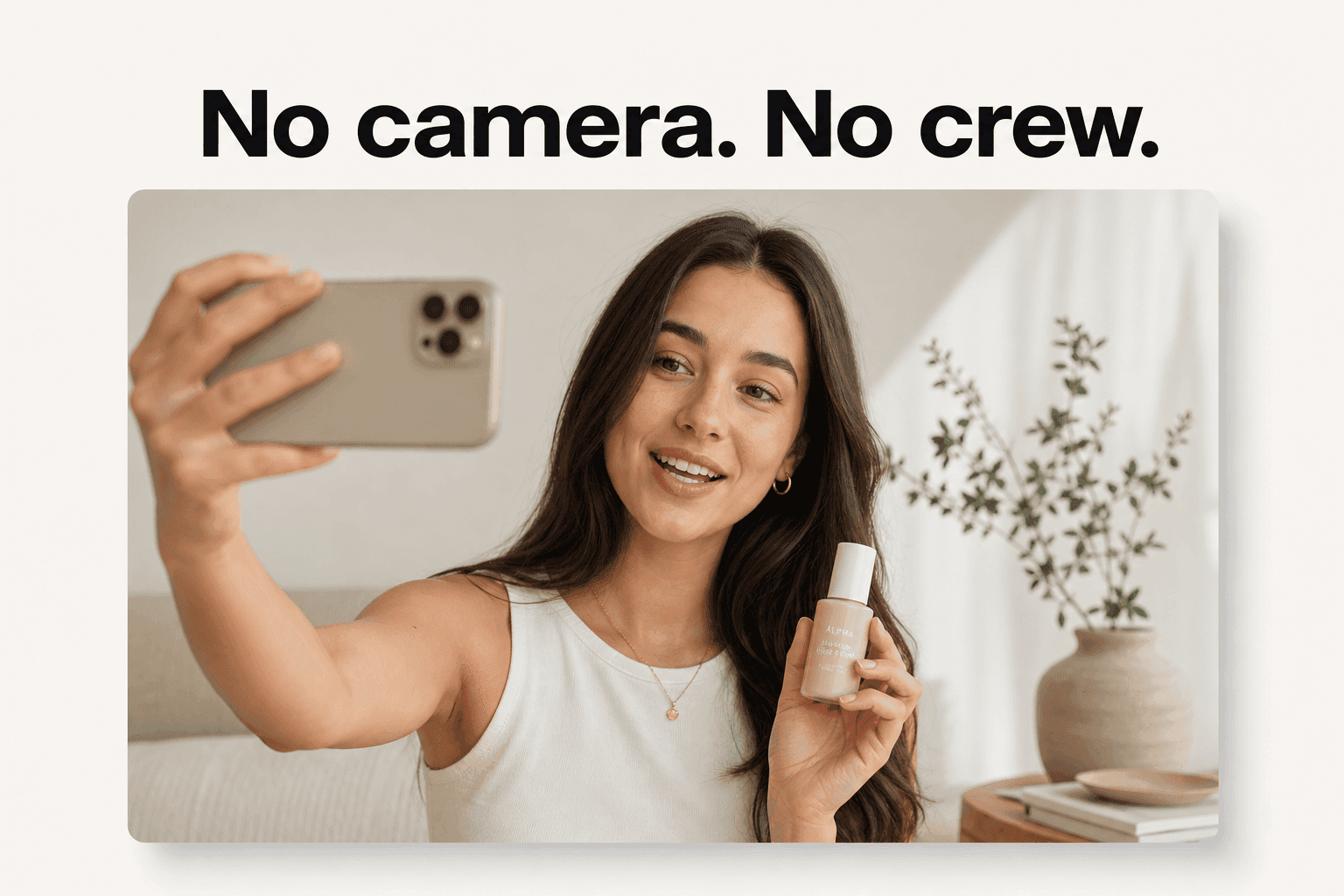
A brand generates a creator-style video with AI actors and runs it as an ad. There is no third-party partner and no exchange of value, so there is nothing to tag under branded content rules. Ad policy and content-labelling rules still apply in full, which is a genuinely different checklist and one we walk through in our comparison of AI and human UGC creators.
How platforms decide for you when you skip the toggle
The most expensive assumption in creator marketing is that disclosure is self-declared. On TikTok, it is not.
The three marketing-intent signals
TikTok's Business Help Center states that it "flags videos as commercial content when it shows clear marketing intent based on three factors." The page describes them as:
- Financial incentives. Money or benefits received for promoting something, including URLs, promo codes, hashtags, collaboration mentions, QR codes and overlay ads.
- Brand mentions. A brand name appearing as a hashtag, as a tag, or as a visible logo.
- Product recommendations. Showing or talking about a product or service, including demos, tutorials and calls to action such as buy now.
Read that list against your last creator batch. A promo code and a visible logo are enough. The system does not need your contract.
The 24-hour window
When TikTok suspects an undisclosed branded content post, the creator gets a notification and can respond "within 24 hours before the video is ineligible for the For You Feed." The clock runs whether or not anyone at the brand is watching, and only the original poster can appeal. That is a real operational dependency: your creative outcome sits with a person who may not check notifications on a Saturday.
What disclosure does not cost
The reach fear is the reason the toggle gets skipped, and TikTok addresses it directly. Its own study of nearly 2 million videos found no performance difference between properly disclosed and undisclosed branded content. The penalty is entirely on the other side. TikTok says that when commercial content is not properly disclosed, "the video may not be eligible for distribution in the For You feed and will impact organic performance."
There is also a durability point people miss. TikTok notes that where required by law, branded content "may be added to the TikTok Commercial Content Library." Your disclosed posts can outlive your campaign, and in some jurisdictions outlive your decision to delete them.
The four failure modes worth pre-empting
Every undisclosed-post incident we have seen traces back to one of four causes, and each has a different fix:
- Seeding treated as marketing, not partnership. Nobody briefs the creator because nobody paid them. Fix: put the disclosure ask in the box, not in the contract you never send.
- The creator forgets on repost. The original post is tagged, the Reels cut-down is not. Fix: brief per asset, not per campaign.
- The tag is applied after publish. The post goes up clean, the tag arrives the next day, and the promotion window is already gone. Fix: treat the tag as a publish-blocker.
- Nobody watches the notification. The 24-hour appeal window expires over a weekend. Fix: name one person on the brand side who has the creator's phone number.
The distribution the label buys
Compliance is the boring half of the story. The interesting half is that the label is a media control.
Partnership ads run from the creator's handle
Meta states that "partnership ads (formerly known as branded content ads) allow advertisers to amplify content with a creator" or other partner's handle. It also states that "advertisers can boost organic Instagram content as partnership ads, including branded content with the paid partnership label."
That is the payoff. A labelled post can be bought as media and served from the creator's identity rather than the brand's. An unlabelled post cannot. Miss the tag at publish time and your best creator video is a post you liked, not an ad you can scale into a paid UGC ad program.
Four things have to be true at publish time, not afterwards:
- The brand is tagged as the partner on the post itself.
- The creator has granted the brand permission to promote it.
- The product is identifiable inside the video without leaving it.
- The same asset carries the label on every surface it is cross-posted to.
The clarity rule that breaks reuse
TikTok also requires that "you must ensure that the product or service you are promoting is sufficiently clear, without requiring viewers to access your profile page or any links." Practically, that kills the elegant, mysterious cut where the product never gets named. If your creative depends on the bio link to make sense, it is not compliant and it is not reusable. The policy suggests two ways to satisfy it:
- Say the product or service out loud in the video.
- Or name it in the on-screen text caption.
A worked example: the relabel tax on 12 hook variants
Say you have one strong creator video and you want to test twelve hooks against it. On the branded content path, every variant that changes what the creator says or shows is a new deliverable, and each one carries the same four steps:
- A new approval loop with the creator.
- A new upload from the creator's own account.
- A new disclosure toggle on that upload.
- A new partner tag before the brand can promote it.
Twelve variants means twelve dependencies on someone else's calendar, and your test finishes when the slowest creator replies.
On the synthetic path, the same twelve hooks are twelve renders from your own account. At Novoads model pricing a video runs from about a dollar for a five-second Seedance 2.0 Mini clip to about $8 for an eight-second Seedance 2.5 clip, and about $26 for a full 30-second Seedance 2.5 take, so the whole twelve-variant slate is a low-double-digit spend and lands the same afternoon. Neither path is strictly better. The branded content video carries a real person's credibility, which no render buys. The synthetic slate carries iteration speed, which no creator calendar buys. The mistake is running your hook testing on the rung that was designed for trust rather than throughput.
How Novoads solves the relabel problem
Branded content is the right instrument when you are borrowing someone's credibility. It is the wrong instrument when you are searching for a hook, because every iteration re-enters a partnership loop you do not control.
A simple way to pick the rung before you brief anything:
- Use branded content when the claim needs a face the audience already trusts, when the offer is a launch moment worth a real endorsement, or when the creator's own audience is part of what you are buying.
- Use synthetic UGC when you are still hunting for the hook, when you need the same script in several languages, when you need twelve variants of one angle, or when the ad has to ship before a creator can reply.
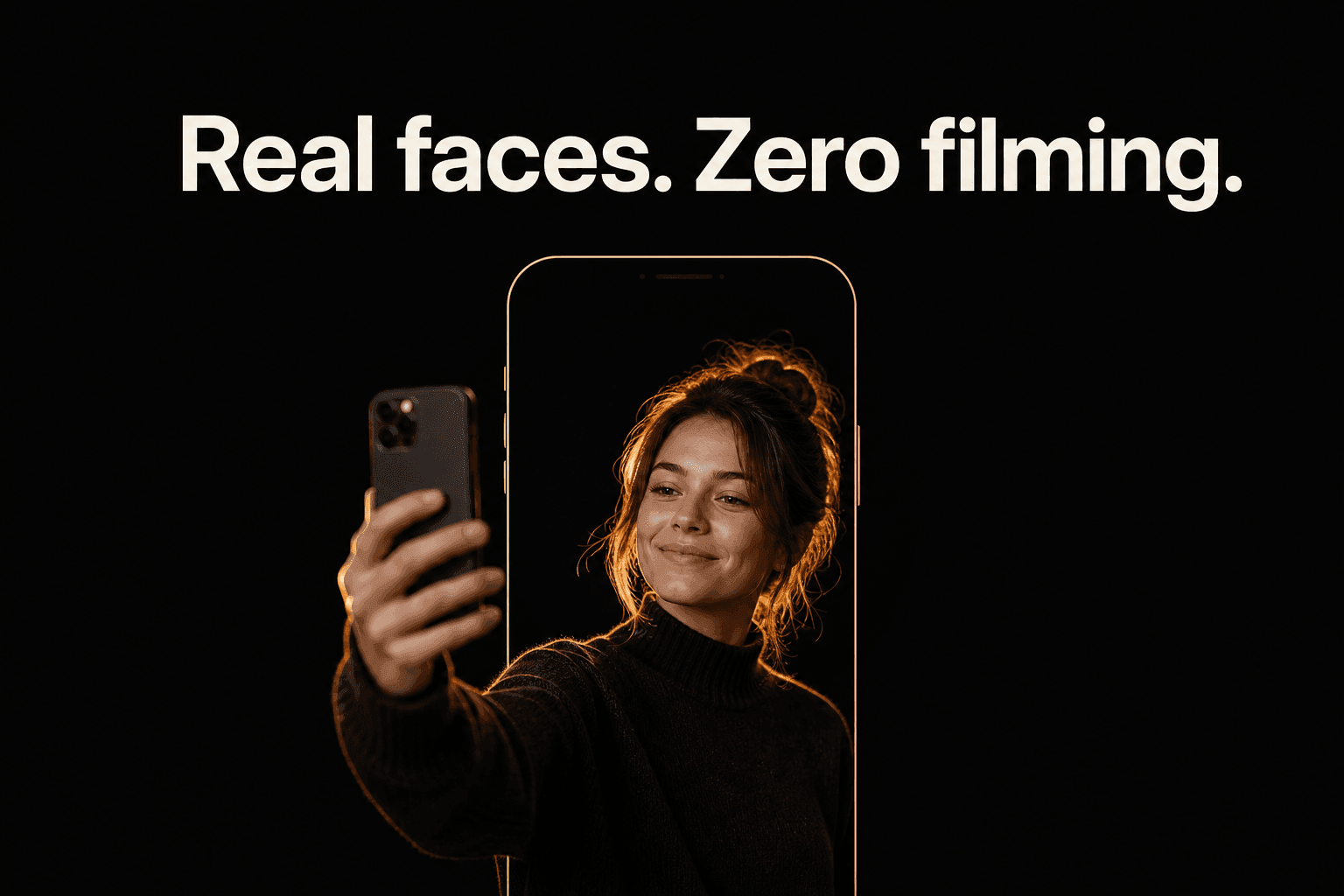
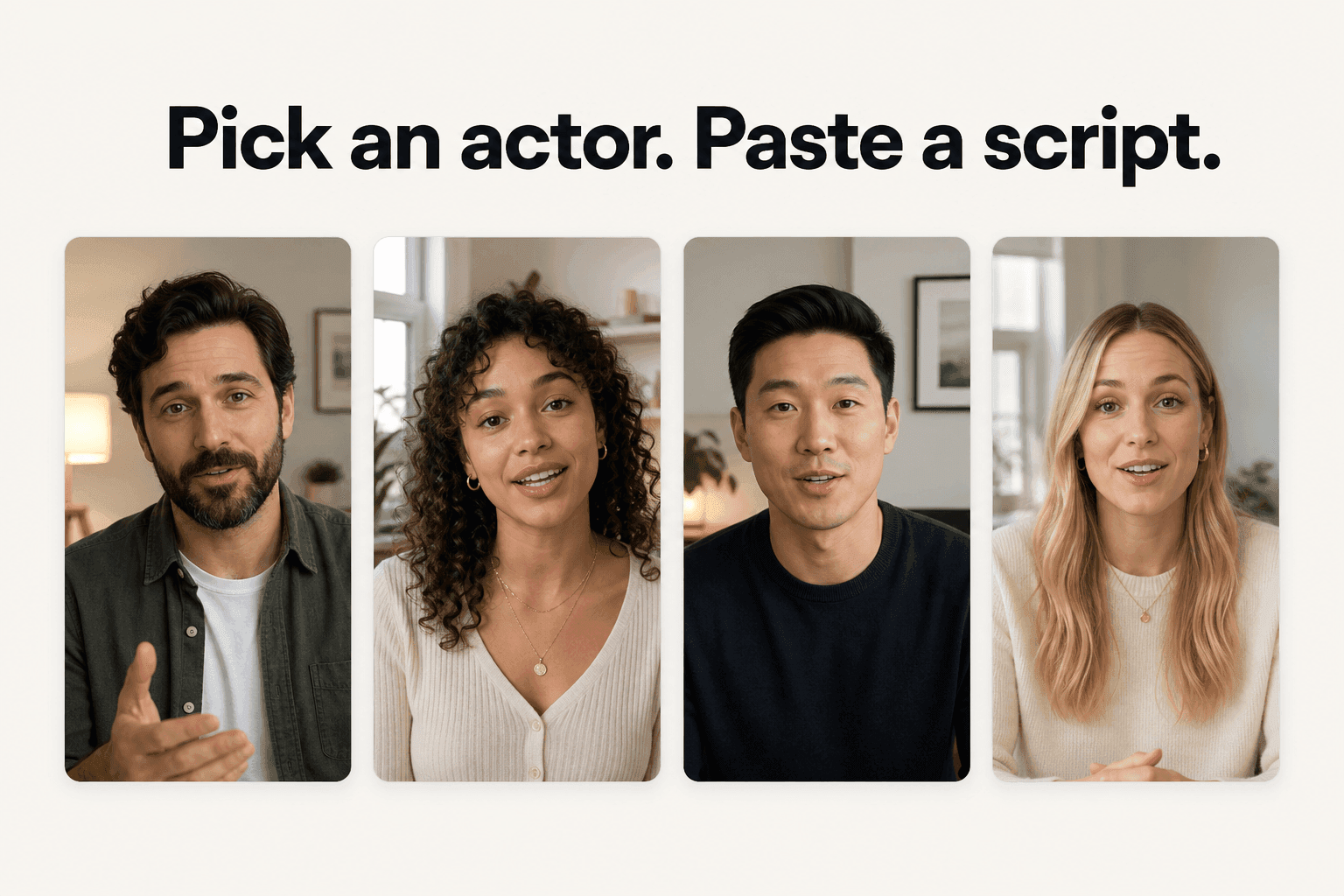
Novoads is built for the second job. You upload a product image and write or auto-generate a script, pick an AI actor, and get an ad-ready vertical video, with voices across 31 languages from the global voice catalog. There is no third-party creator in the loop, so there is no partner tag to coordinate and no disclosure toggle waiting on someone else's phone. You still own the ad-policy and AI-labelling obligations that apply to any advertiser, and those are the ones our disclosure rules breakdown covers. What you stop owning is the approval chain.
The practical pattern most teams land on: find the winning hook synthetically, then spend real creator budget on the two angles that already proved out. You can try it from $49/month before deciding whether it belongs in your process.
Disclosure is a distribution setting, not a legal chore
The label does not change how your video looks, who watches it, or how well it performs. It changes which rulebook the video is judged under and what you are allowed to do with it afterward. Brands that treat the paid partnership toggle as compliance overhead keep discovering, at the worst possible moment, that their best creator asset is a post they cannot buy. Brands that treat it as a media setting decide the rung before they brief the video, and never have to relabel anything.
Frequently Asked Questions
What is branded content, in plain terms?
It is content a creator makes where a brand gave them something. Meta's own developer documentation defines branded content as content that features or is influenced by a brand partner for an exchange of value. TikTok's Branded Content Policy defines it as content that promotes or reviews a third-party brand or its products or services in exchange for payment or any other incentive. Note what is missing from both definitions: any requirement that the video look polished, scripted or expensive. A shaky phone clip filmed in a kitchen is branded content if a brand paid for it, and an agency-produced film is not branded content if no third-party brand is involved.
What is the difference between branded content and UGC?
UGC describes who made the video and how it looks. Branded content describes the commercial relationship behind it. They overlap constantly, which is why people use the words interchangeably and then get the compliance wrong. A customer who films an unpaid review is UGC and not branded content. A paid creator who films the same review in the same kitchen is both. A brand that generates a UGC-style video with AI actors and runs it as an ad is neither UGC nor branded content, because there is no third-party creator and no exchange of value.
Does a gifted product count as branded content?
On TikTok, yes. The Branded Content Policy explicitly lists a product or service that has been gifted to you by or on behalf of a brand, alongside paid posts, affiliate commissions and brand-ambassador relationships. This is the single most common compliance miss in creator programs: brands treat seeding as marketing spend with no paperwork, and creators treat a free box as a free box. The platform treats it as an exchange of value.
Does the paid partnership label reduce your reach?
TikTok says no. Its Business Help Center states that TikTok ran an internal study comparing nearly 2 million TikTok videos with and without proper branded content disclosure and there was no performance difference. The cost runs the other way. If commercial content is not properly disclosed, TikTok says the video may not be eligible for distribution in the For You feed and will impact organic performance.
Do I need the label if my video uses AI actors and no creator?
Branded content rules govern the relationship between a brand and a third-party partner, so a video you generate yourself with AI actors has no brand partner to tag and no partnership to disclose under those specific rules. That does not exempt it from everything else. Platform advertising policies, AI-content labelling rules and consumer-protection law still apply to the claims you make. Treat the branded content toggle and ad-level disclosure as two separate checklists.
What does the label actually unlock?
Paid distribution from the creator's handle. Meta says advertisers can boost organic Instagram content as partnership ads, including branded content with the paid partnership label, and that partnership ads, formerly known as branded content ads, let advertisers amplify content with a creator's handle. Without the tag in place at publish time, the post is just a post. The label is the plumbing that turns it into media you can buy.
Key Takeaways
- Branded content is a legal category, not a video style. Meta defines it as content that features or is influenced by a brand partner for an exchange of value, and TikTok counts payment or any other incentive, including a gifted product.
- The label is what separates the three rungs of the Label Ladder: organic UGC, branded content, and a paid ad. Same video, three rulebooks, three sets of rights.
- Disclosure is not a reach penalty. TikTok says it compared nearly 2 million videos with and without proper branded content disclosure and found no performance difference. Skipping the toggle is what costs you the For You feed.
- TikTok does not wait for you to declare. It flags commercial content from three signals of marketing intent: financial incentives, brand mentions and product recommendations.
- The label is what unlocks paid distribution. On Meta, a labelled creator post can be boosted as a partnership ad and run from the creator's own handle.