UGC-Style Ads: The Craft Details That Make a Clip Read Organic Instead of Staged
A UGC-style ad almost never fails on the idea. It fails on craft: camera height, window light, handheld drift, room tone, and cut rhythm. Here is how to direct each one, how to judge a finished take before you spend on it, and what changes when the camera is a prompt.

Mauricio Valdivia
·Updated ·12 min
The tell is never the actor, it is the room
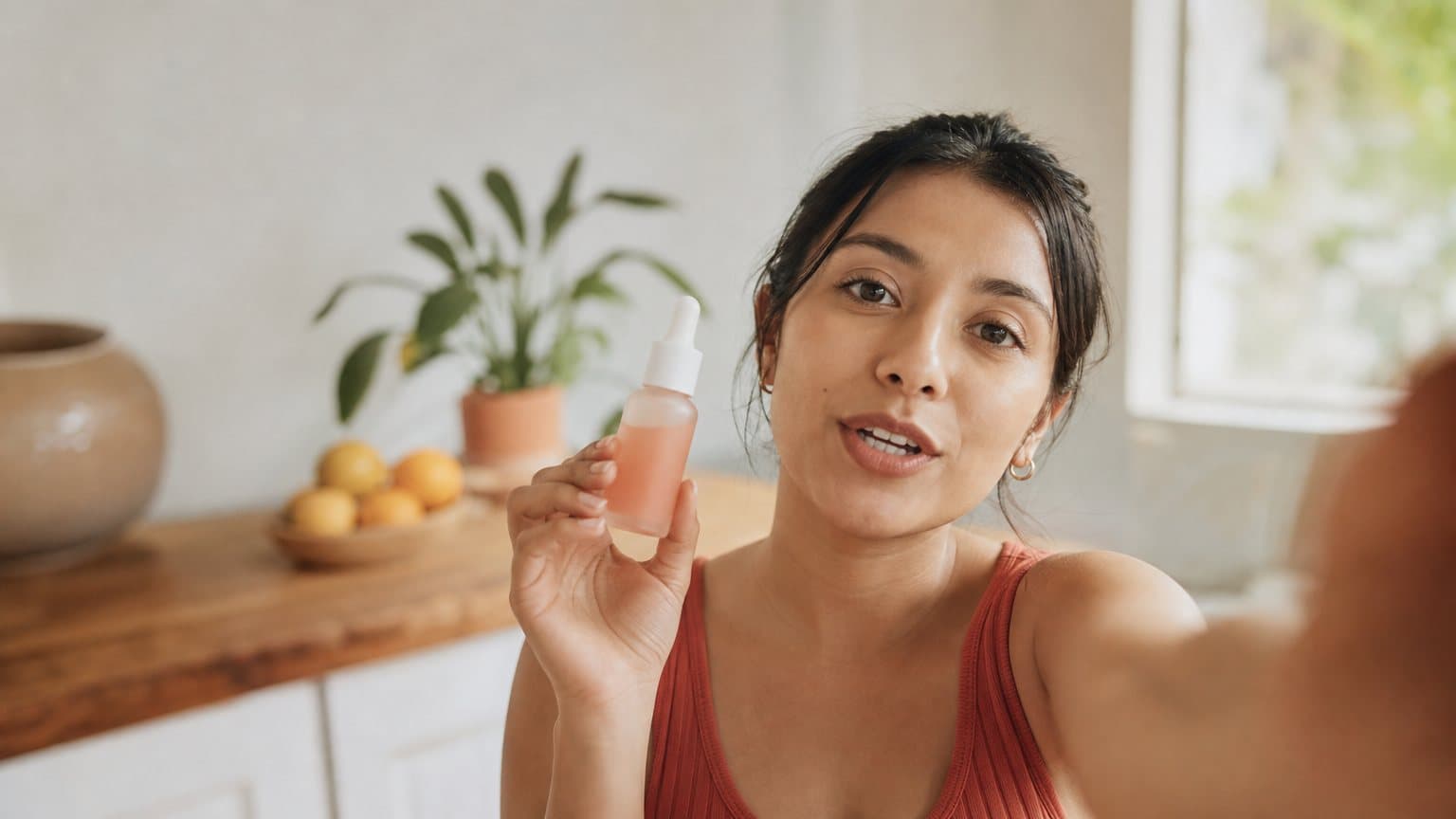
Play back the clip that flopped. The actor is fine. The script is fine. Then look past her. The light lands with equal weight on both cheeks, the frame hasn't moved a pixel in nine seconds, and behind her is a wall with nothing on it. Nobody films themselves like that. Anyone scrolling past had already filed it as an ad before she finished her first sentence.
That verdict arrives fast. TikTok's Creative Codes guide puts 90% of an ad's recall impact inside the first six seconds, and its help center tells advertisers to prioritize the hook in the first 6 seconds. Six seconds is too short to explain anything, but it's plenty of time to look wrong.
If you want to know what the format is, who makes it, and why it outperforms polished brand video, our guide to UGC ads covers all of that. This one is about the other half of the job: the framing, lighting, motion, sound, and set-dressing choices that decide whether a finished take reads as a post or as a commercial, and how to direct all of them when your camera is a prompt.
The six tells that mark a clip as staged
Ask a media buyer why a clip feels fake and you'll usually get a shrug. Ask them to point at the moment it goes wrong and they can, every time. They know it when they see it, even if they can't name it, and what they're seeing nearly always comes down to one of six things:
- Light with no direction. Both sides of the face are lit the same, so it looks like there's no window in the room.
- A frame that never moves. Real phone footage breathes, even when the phone is propped up.
- Silence between the words. Every room has a floor of noise, and a generated take often has none.
- A background nobody lives in. A blank wall reads as a set.
- Spokesperson cadence. Even stress, no false starts, and a full stop at the end of every line.
- Hands with nothing to do. People hold things, so a talking head with idle hands comes across as a presenter.
Watch it muted, then listen with your eyes shut
Judge picture and sound separately, because they fail separately. The muted pass catches the visual tells: where the light comes from, whether the frame drifts, and whether there's any evidence of a life behind the person. The eyes-shut pass catches the audio tells: dead silence, a voice with no room around it, and stress landing evenly on every word. Most teams watch once, with sound, and end up rewriting the script when the problem was a lamp.
The tells are additive, not fatal
One tell survives contact with the feed. A single frame that's slightly too clean won't sink a clip, and chasing perfection is a tell of its own. Three stacked tells don't survive, because they stop being details and start forming a pattern the viewer recognizes without effort. That's also why the cheap fixes pay off so well. Moving the key light off axis and laying room tone under the take costs nothing and removes two of the six, while a resolution upgrade removes none of them.
Framing: eye level, arm's length, and the safe zone
Framing is the first thing a viewer takes in and the cheapest thing to get right. It's also the decision most briefs skip entirely, which is why so many clips arrive technically clean and instantly recognizable as produced.
Camera height is the fastest fix
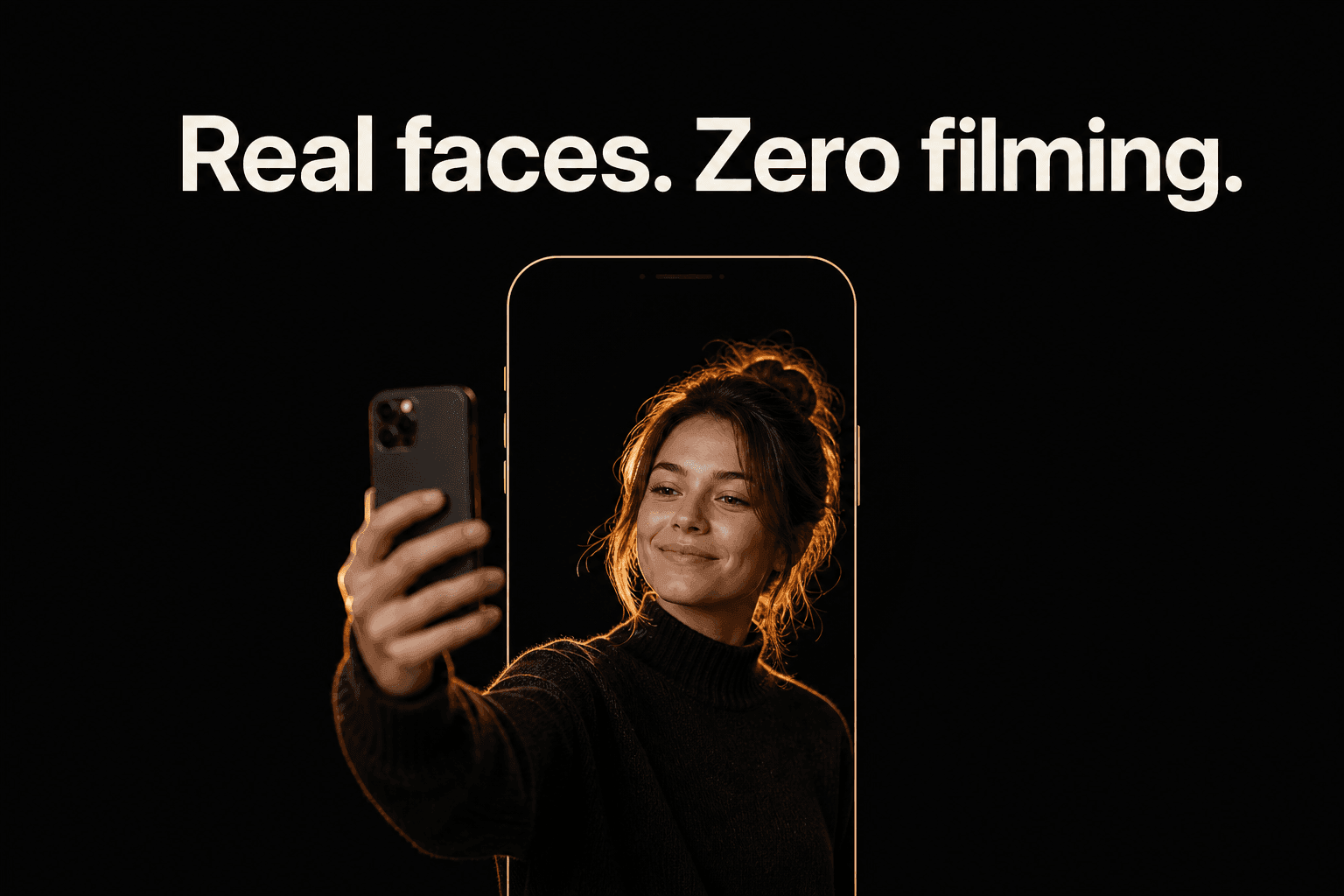
Someone filming themselves raises an arm, so the lens sits at eye level or a few degrees above it, looking very slightly down. Drop the camera to chest height and you've shot an interview. Raise it a foot and tilt it down, and you've shot a webcam call. There's nothing wrong with either one as a photograph, but both are wrong as a post. If you're going to change one thing about a clip that feels staged, change the height before you touch the words.
The arm's-length frame
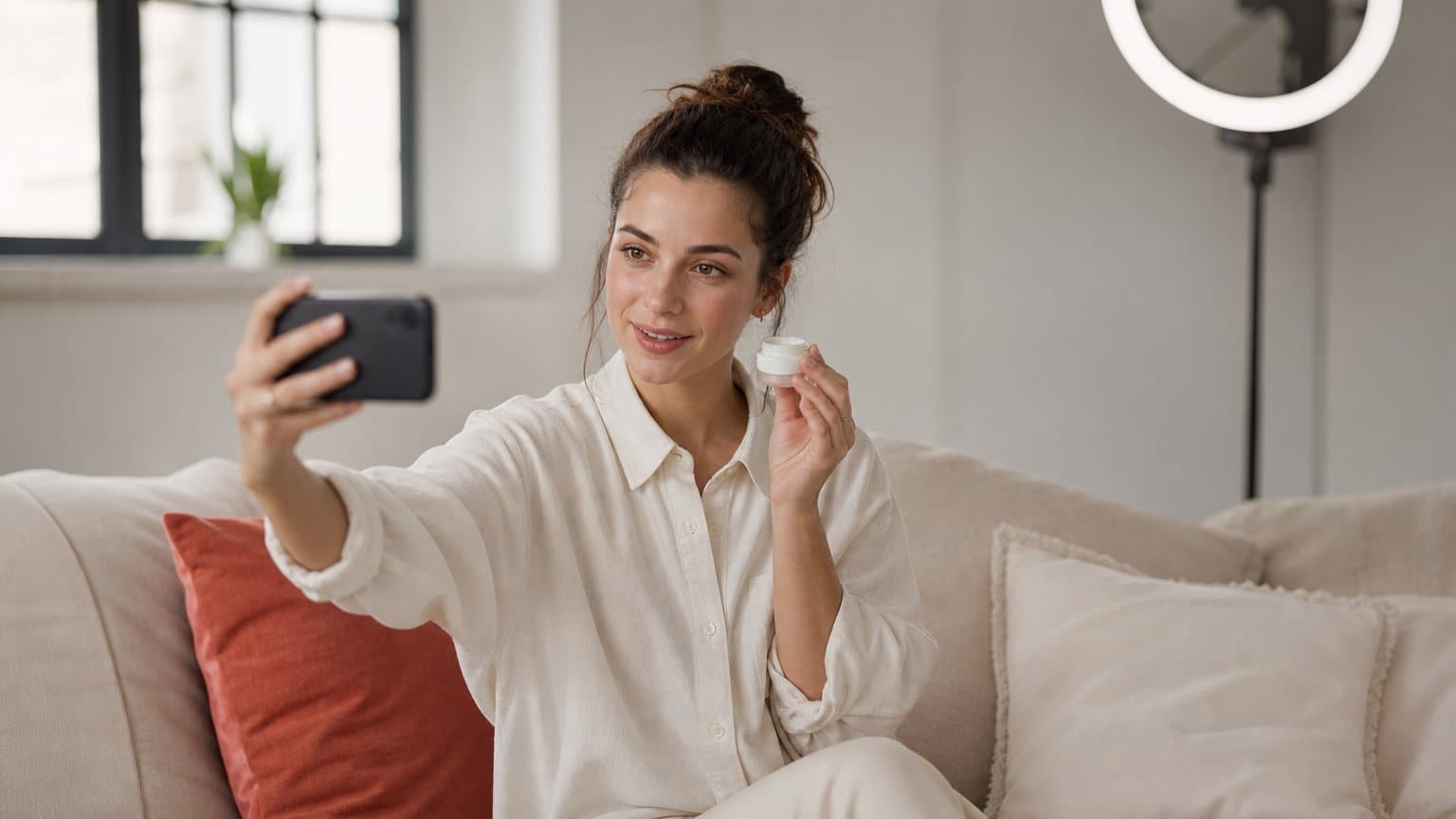
When people film themselves, the length of their arm sets the frame. That means head and shoulders, a sliver of headroom, and the torso cut off somewhere around mid-chest. Go wider and the camera is across the room, which implies a tripod and an operator. Go tighter and you're in a beauty ad. Keep the eyes a little off the exact vertical center too, because a perfectly centered face says someone framed a shot instead of just holding up a phone.
What the interface covers
The platform puts its own furniture on top of your picture. TikTok's creative basics are explicit about the constraints, telling advertisers to build around "using sound/ music, orienting vertically at 9:16, shooting at least 720P resolution, and keeping your content visible within the UI safe zone". In practice, that furniture takes up three parts of the frame:
- The bottom third goes to the caption, the handle, and the CTA button.
- The right edge goes to the like, comment, share, and sound controls.
- The top strip goes to the status bar and whatever tab the viewer arrived from.
So the face belongs in the upper middle, and anything you burn into the bottom of the frame will be covered by something you don't control.
Lighting that reads as a window, not a softbox
Lighting is where most generated clips give themselves away, and it's the one variable you can describe precisely enough for a model to follow.
One source, one direction
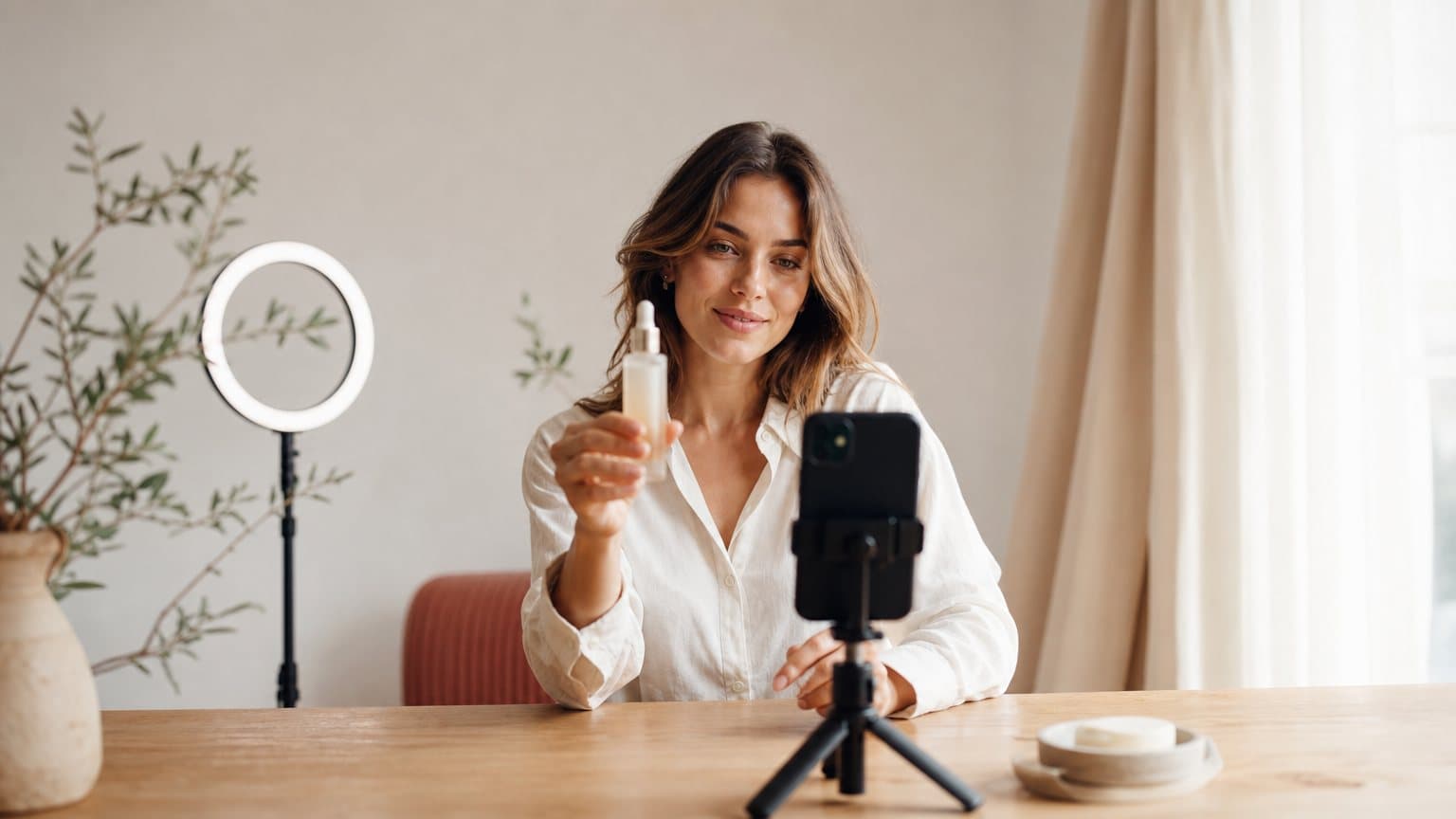
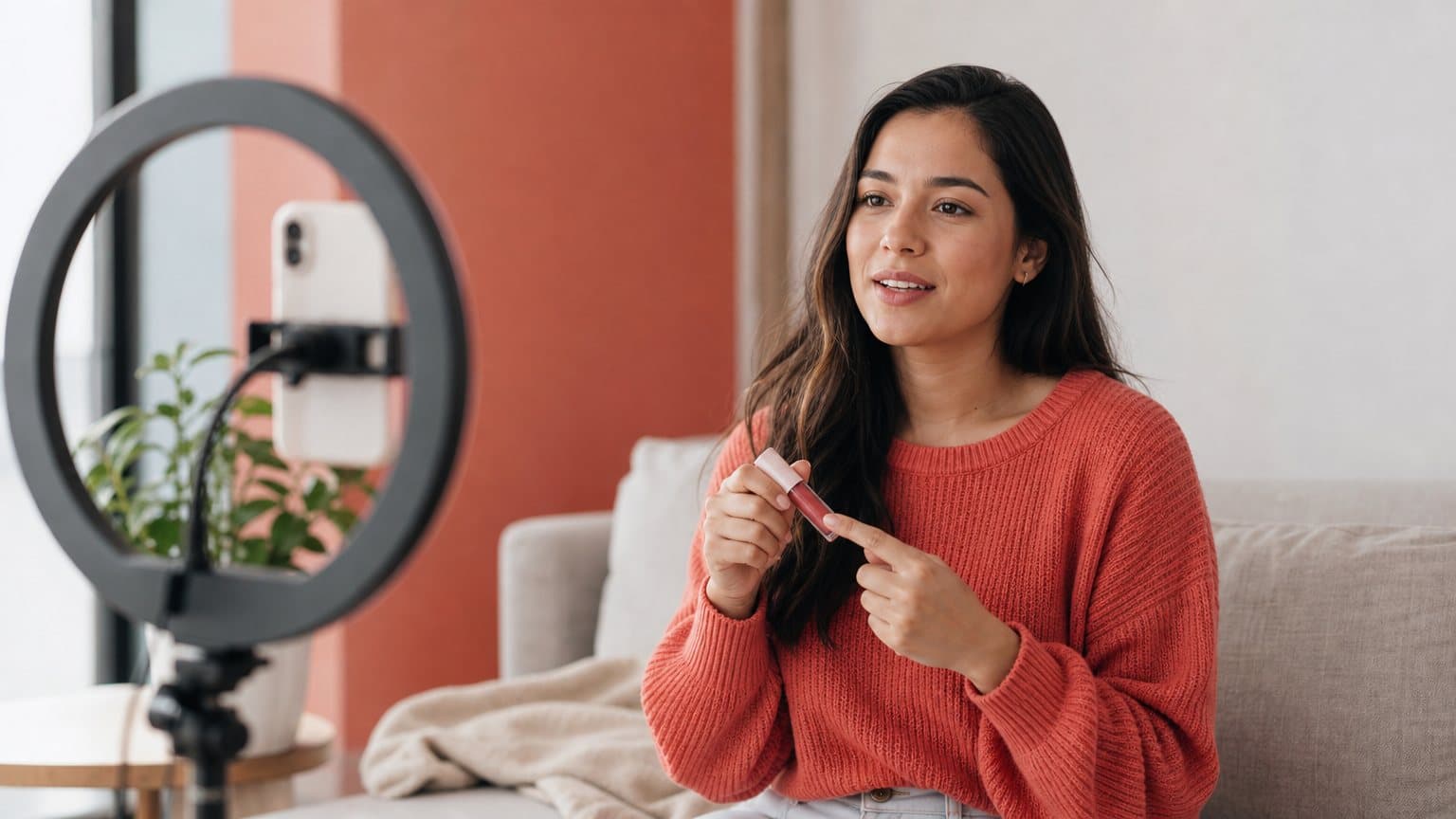
Real rooms have a dominant light, and it comes from somewhere. Put the person at 30 to 45 degrees to a window so one cheek gets more light than the other, with a soft shadow under the nose and along the jaw. A ring light does the opposite. It lights both sides evenly, leaves no modeling on the face, and puts a circular catchlight in the eyes that viewers have been trained to read as content production. The signal is in the direction of the light, and brightness doesn't carry it. This window setup works almost everywhere:
- Place the person at 30 to 45 degrees to the window, never square to it.
- Leave nothing that bounces light back into the shadow side, so one cheek stays darker.
- Put the camera on the window side of the face, so the shadow falls away from the lens.
Let the room color the light
Rooms are mixed and slightly ugly, with daylight from one side, a warm bulb behind, and a green cast bouncing off a painted wall. A clip where every surface is neutral was white-balanced by someone whose job was to white-balance it. Leave the background a little warmer or cooler than the face, and the image starts to look like it was shot on a phone.
Skin the camera did not smooth
Phone footage has texture: visible pores, a shine on the forehead by the end of a take, and flyaway hair that catches the light. Uniformly smooth skin with no specular highlight is the detail that makes a viewer suspect a filter before they can say why. It's one of the few places where asking for lower quality actually makes a clip more believable.
Motion and pacing: drift, cuts, and the hook window
A viewer reads movement and rhythm before they hear a word, and both usually get left at whatever the default is. Brief them as deliberately as you brief the light.
Drift, not shake
The most common overcorrection is treating handheld as shake, when real handheld is slow drift with micro-corrections. The frame wanders a few percent over several seconds, then snaps back when the person notices they've gone off-center. Aggressive camera movement reads as a stunt, perfect stillness reads as a tripod, and real footage falls in the narrow band between them. Give a take one small reframe partway through, and it stops looking generated.
Where a real post cuts
Amateur edits cut on a beat. Real posts cut where the person stopped talking, and that's uneven by nature: a four-second opening, a one-second jump after a fumbled word, a seven-second demo that runs long because the product needed the time. Jump cuts mid-sentence are native to the format, and viewers read them as trimmed dead air, so they don't register as editing. A dissolve is a tell. So is a cut that lands exactly every three seconds, because that's an editor's rhythm. Someone deleting their own mistakes doesn't cut that evenly.
Cutting for the hook window
Treat the opening as its own edit with its own rules. TikTok spells out the structure it recommends: "We recommend a three-part structure consisting of a hook, body, and close." The first frame should already be a face mid-sentence or the product doing something, with no title card, no logo sting, and no fade from black. The body can breathe, but the hook window can't, because that's where recall gets decided. If the opening is the variable you want to isolate, testing ad hook variations against one body is a discipline of its own.
Sound is half the illusion
Buyers grade UGC-style ads on the picture and lose them on the audio. Every decision above can be right, and a single dry voice track will still undo all of it.
Room tone is the cheapest realism there is
Silence and quiet aren't the same thing. A real room has a floor of noise: a fridge two rooms away, traffic, the hiss of the space itself. When the gaps between sentences are digitally silent, the take sounds dead and the voice sounds pasted onto the picture, which is usually exactly what happened. Laying a few decibels of room tone under the whole take buys more perceived realism for the effort than anything else on this page.
Mic distance and the too-clean voice
A phone microphone sits roughly 30 to 50 cm from the mouth, off axis, in a room with reflective surfaces. So a genuine take carries a little room in the voice, the occasional plosive on a hard consonant, and a level that dips when the head turns toward the product. A voice recorded dry, de-essed, and compressed into a flat line is a studio voice, and it'll fight every visual choice you made.
Captions that look typed, not designed
Native captions are the platform's defaults or a plain sans-serif with a hard edge. Brand fonts, tracked-out kerning, and word-by-word animation read as the work of a post-production department. Keep captions short and moving at a readable rate. TikTok recommends displaying 5-10 words per second when using text, and it tells advertisers to use captions or text overlays to provide context. The caption is part of the costume, so dress it like the rest of the clip.
Wardrobe, set dressing, and the shot each format needs
Dress the person, not the brand
Branded merch on the talent collapses the whole illusion, because a customer doesn't own your hoodie. Put them in one everyday outfit with something slightly imperfect about it, like an unironed collar, and leave their hair touched but not styled. Wardrobe should date the clip to a Tuesday rather than to a campaign.
What belongs in the background
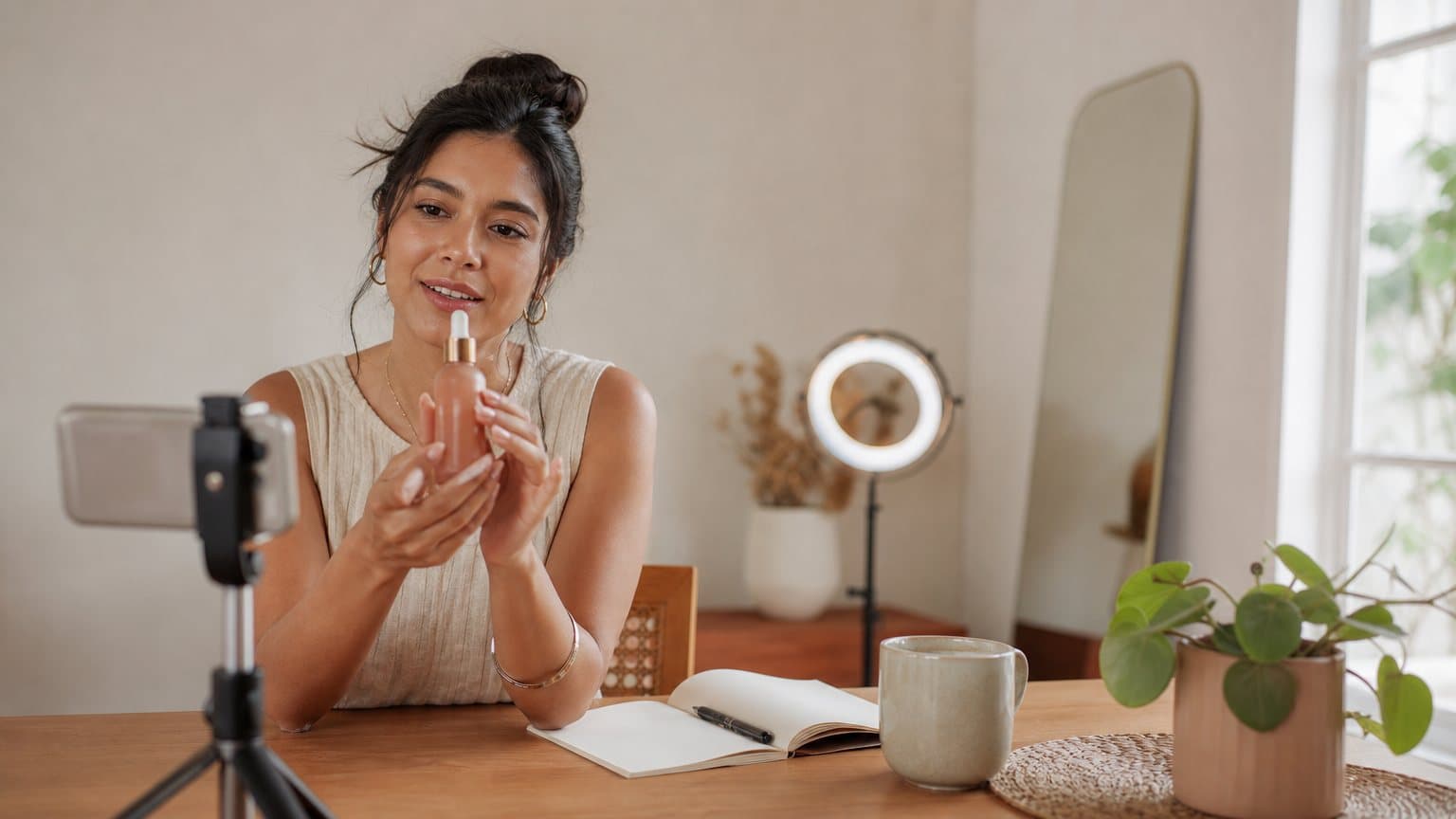
A blank wall is a set. Real rooms have depth and evidence of a life in them: a door frame, a plant, a half-full glass, the corner of a bed. In September 2026, TikTok's own fashion playbook told sellers to "film product try-ons in a bedroom or living room setting", which is as much a set-dressing instruction as a location one. Keep the clutter shallow and slightly out of focus so it reads as someone's life and doesn't compete for attention.
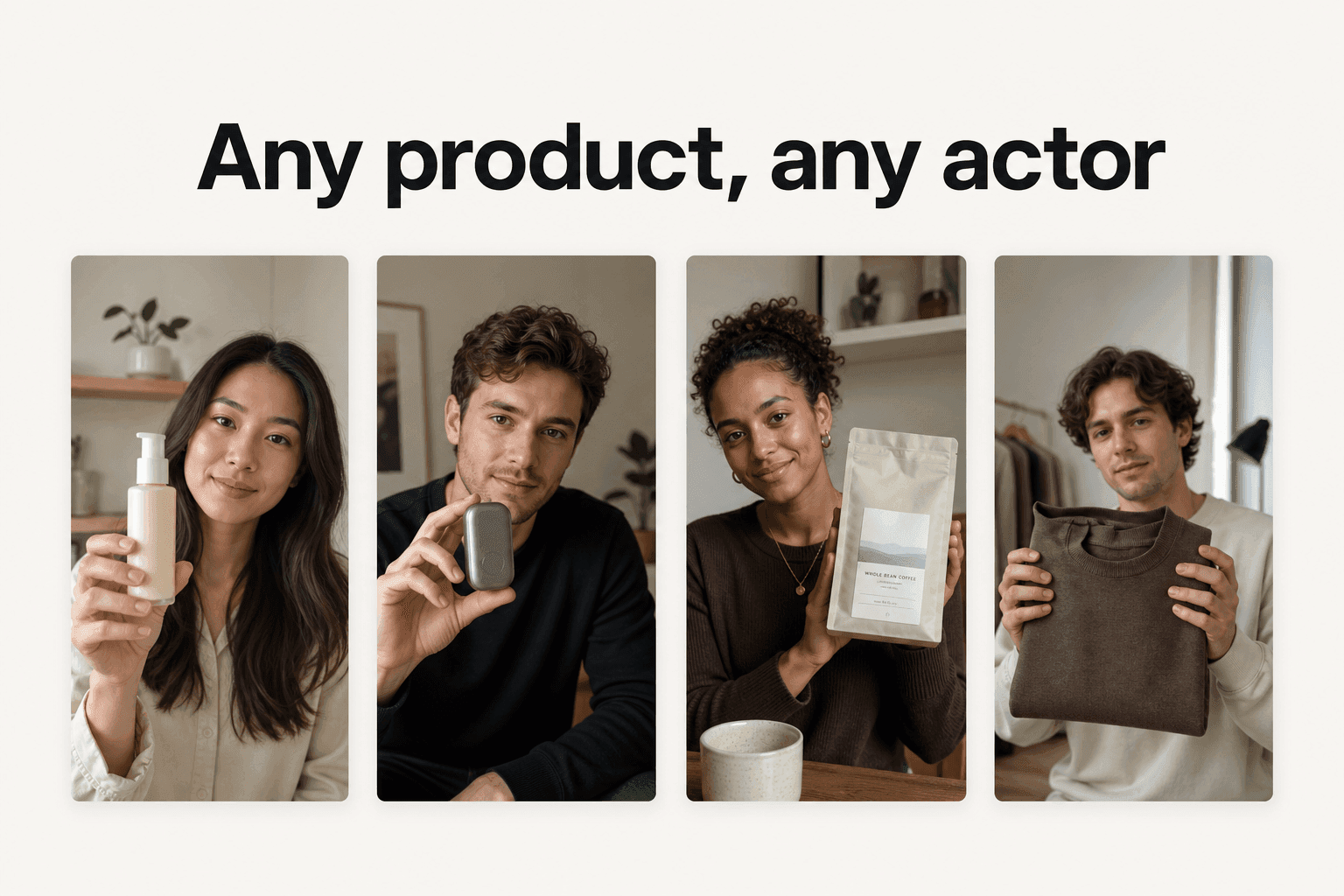
Hands deserve their own line here, because they're the most-skipped part of the brief. People hold the thing they're talking about, and a talking head with idle hands comes across as a presenter. If you're generating rather than filming, this is the one craft decision the tooling constrains. In Novoads, the stock library actors have empty hands, so a script about your product will show nobody holding it. To put the product in frame, you can create a custom actor from a photo of someone holding it, or use one of the Discover product templates, which swaps your uploaded product into the template creator's hand. If the product is the subject rather than the person, the product video route is the other way to get it on screen.
The shot each format needs
The menu of angles is short and well known. What isn't well known is that each one has its own shot and its own way of going wrong:
| Format | How it is shot | The craft risk |
|---|---|---|
| Testimonial | Seated, eye level, one window | Rehearsed delivery |
| Problem-solution | Opens on the mess, not the face | Cutting to the product early |
| Unboxing | Hands and table, looking down | Styled table, clean hands |
| Demo | One unbroken take, follow the hand | Cutting away at the proof |
| Day-in-the-life | Short angles, changing daylight | Continuity that is too perfect |
| Street interview | Handheld, noisy, off-center | Audio too clean for a street |
Directing the craft when your camera is a prompt
Generating a clip gets rid of the shoot, but every decision above still needs somebody to make it. Those decisions just move off the set and into the prompt, the casting, and the takes you throw away. The rest of the AI ads stack went through the same migration, as the work moved upstream into the brief.
The five-step production loop
- Pick the room before the script. A bathroom at 8am and a kitchen counter at night carry different claims. The room constrains light, wardrobe, and background in one decision, so make it first.
- Write the script with the craft in it. Give it one claim, one spoken call to action, and a false start or a self-correction in the opening line. Clean prose reads as copy being performed.
- Cast for the audience, not for taste. Match age, gender, and accent to whoever's watching. TikTok recommends "featuring people such as creators, employees, or customers", and the closer the actor comes to that description, the less work the rest of the clip has to do.
- Direct the frame inside the prompt. Ask for eye level, arm's length, one window off to the side, slow handheld drift, and a lived-in room behind. Those belong in the prompt itself. Don't leave them as notes for post-production.
- Generate several takes and reject most of them. The unit of work is the take. Cheap takes are a craft tool first and a cost saving second.
A worked example: one serum, six takes
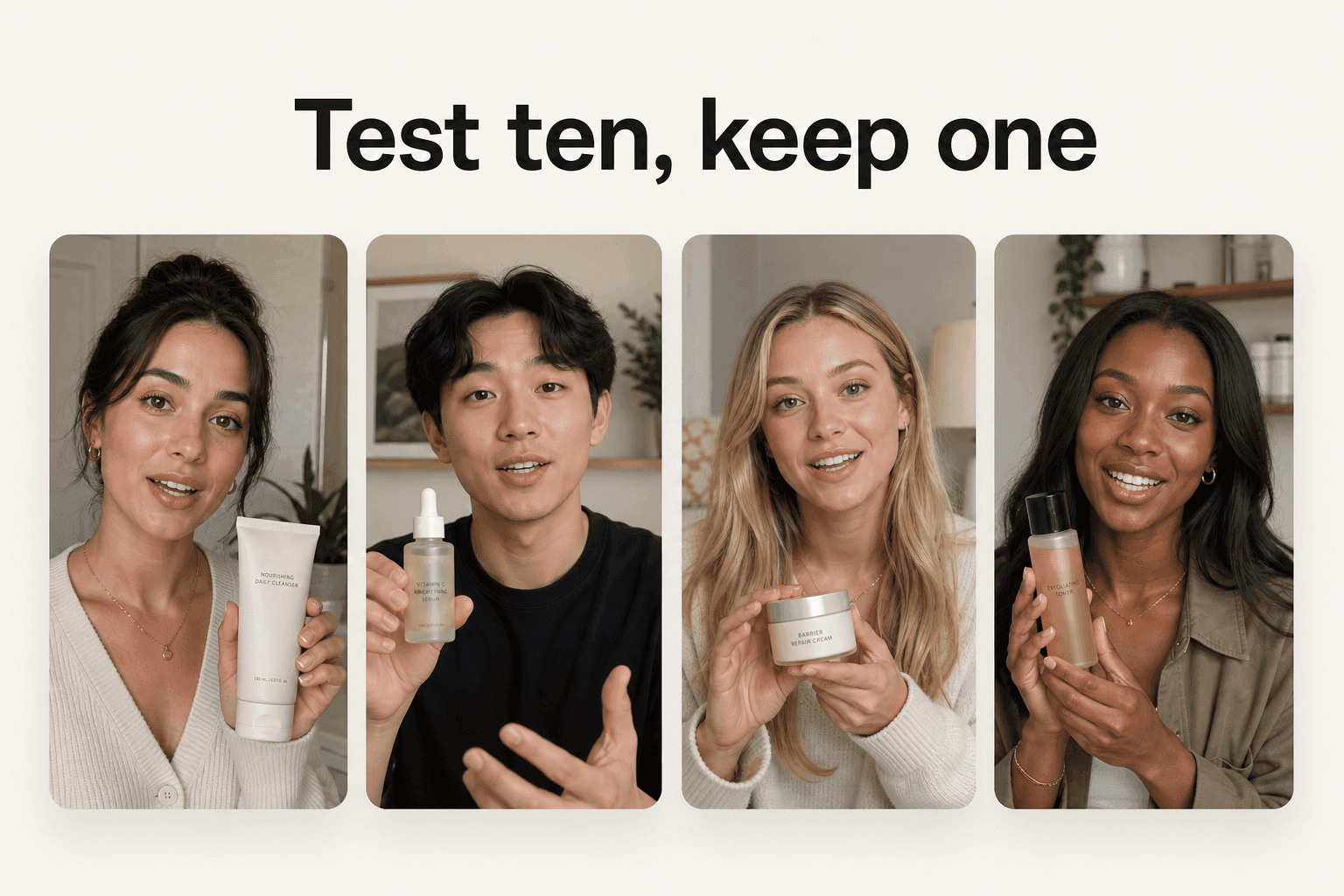
Say you sell a vitamin C serum. Instead of six scripts, you shoot one claim six ways: a bathroom mirror in morning window light, a kitchen counter under mixed daylight and a warm bulb, a walk-and-talk with real drift in the frame, a hands-and-counter demo with no face in it at all, a tight arm's-length frame, and a wider seated frame with the room visible behind. That's the same claim in six rooms, with six different reasons to believe it.
Hiring that out means six briefs, several creators, usage rights on each, and one to two weeks of revisions. Our guide to working with a UGC content creator lays out that math, and so does the tier-by-tier breakdown of what UGC creators charge. If you generate them instead, a five-second Seedance 2.0 Mini clip costs about 25 cents and an eight-second Google Veo 3.1 clip about $4. At those prices the whole set lands around $1.50 to $24 and is finished the same afternoon, which is what makes rejecting five takes a reasonable thing to do. Need a full 30-second take? On Seedance 2.5, that's about $10.
The slop screen: how to judge a take before you spend on it
Ask these six questions of every take, in this order. It's about forty seconds of work per take.
- Muted, can you tell where the light is coming from?
- Does the frame move, and does it drift rather than shake?
- Is there anything behind the person that a person would own?
- With your eyes shut, is there a room under the voice?
- Do the hands do anything?
- In the first six seconds, has anything actually happened?
If a take fails two of them, regenerate it with a corrected prompt. If it fails four, the room was wrong from the start, and no amount of caption work will rescue it. There's one more check, and it isn't about craft. TikTok's advertising policy on misleading and false content allows significantly AI-edited or AI-generated ad content only when you apply its AIGC label or add a "clear disclaimer, caption, watermark, or sticker of your own". It also counts audio that's completely AI-generated as significant, so a synthetic voice alone triggers the requirement. Label it. The sticker fits the visual register of everything else in the feed.
Where advertisers get UGC-style ads wrong
Most of the ways this goes sideways are craft failures dressed up as strategy problems, and each one has a fix:
- Buying resolution instead of direction. Making a badly lit person in an empty room sharper and cleaner gives you a worse ad. Put the effort into the lamp and the background.
- Treating handheld as shake. Added camera wobble is as artificial as no movement at all. Ask for drift and one small reframe instead.
- Rewriting the script when the room is the problem. If the muted pass fails, the words were never the issue. Change the location and shoot the same script again.
- Lighting the face and forgetting the background. A perfectly exposed subject against a dim, empty wall is a studio portrait. The background carries most of the believability.
- Shipping the first take. The first generation is only a draft of the framing. Teams that ship take one are the ones who end up concluding the format doesn't work.
- Refreshing too late. TikTok's Creative Codes guide is blunt about it. It notes that "even the best ads will experience creative fatigue at some point" and advises advertisers to refresh creative often. Build the next batch while the current one is still winning, and read the results the way our ad creative testing guide sets out instead of eyeballing them.
How Novoads makes UGC-style ads at volume
We built Novoads, a global AI UGC video-ad generator, for the loop above. You write a script or auto-generate one, then pick an AI actor matched to your audience's age, gender, and accent. What comes back is a UGC-style vertical video with voice and lip-sync, formatted 9:16 for TikTok, Reels, and Meta, and captions are one more step (0 credits in the default style). You can also upload a product photo and turn it into an ad creative. Our headline time is about four minutes. Clips start at about 25 cents for five seconds on Seedance 2.0 Mini and run to about $4 for eight seconds on Google Veo 3.1. A full 30-second Seedance 2.5 take is about $10.
The craft decisions stay yours. The room, the framing, the light, the wardrobe, and the delivery all go into the prompt and the actor you cast. Our voice catalog covers 32 languages with regional accents, so matching the voice to the room takes one more render and no new hire. What the tool removes is the reason you could only afford one take. When six rooms cost about what one clip used to, rejecting five of them stops being a luxury. You can make your first UGC-style ad from $15 per month (Starter, 200 credits). Cancel anytime.
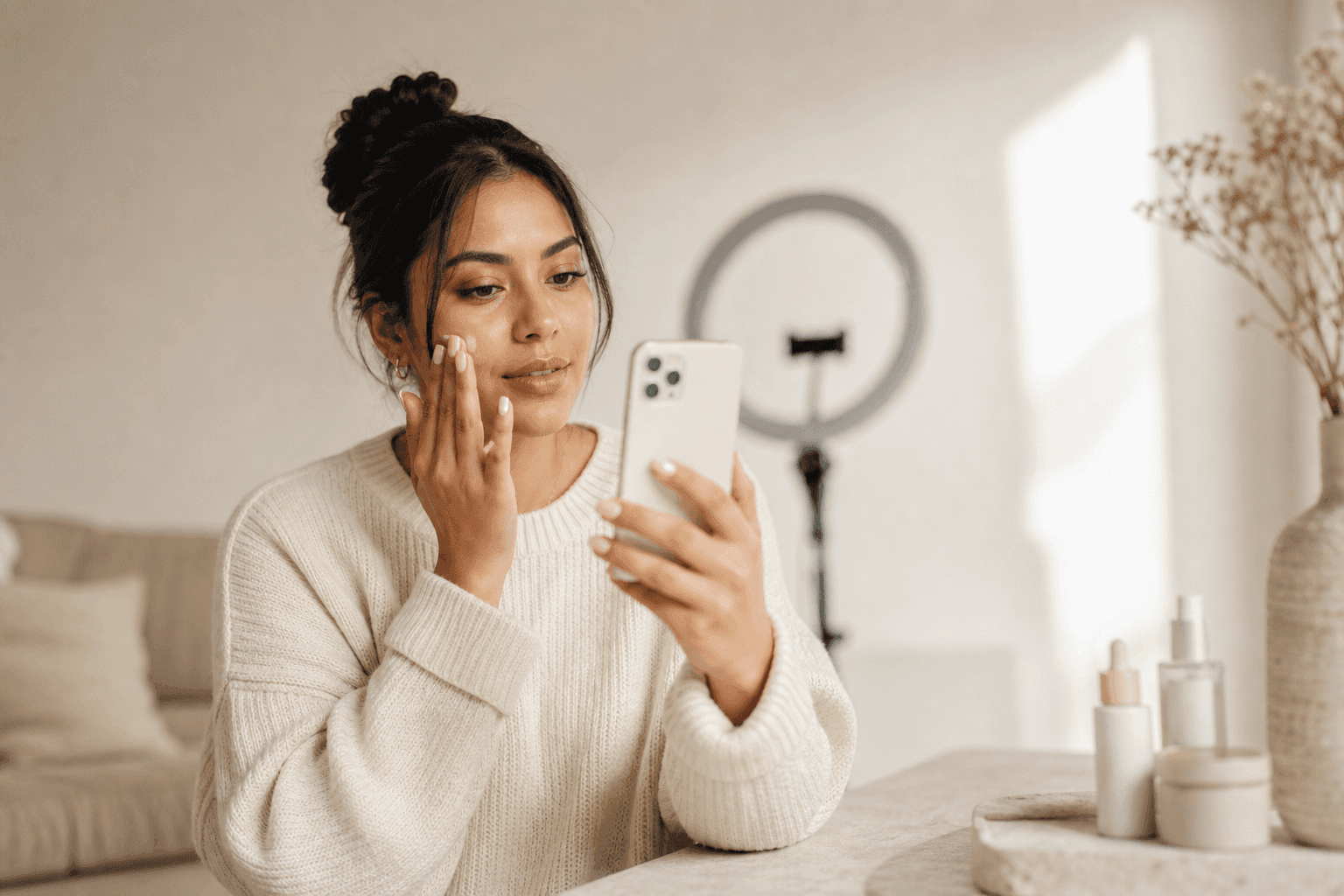
Craft is the part that does not commoditize
Every tool in this category runs on the same rented video engines, so your ads and your competitor's ads converge on the same picture quality this quarter. What doesn't converge is the direction: which room, which window, which take gets thrown away.
So stop grading UGC-style ads on how good they look and start grading them on how ordinary they look. The clip that wins isn't the one that was generated best but the one that was directed like a person happened to film it.
Frequently Asked Questions
How do you make an AI-generated ad look handheld instead of staged?
Ask for drift rather than shake. Real phone footage wanders a few percent over several seconds until the person notices and corrects it, so the frame is never quite where it was a moment ago. Violent camera shake reads as a stunt. Perfect stillness reads as a tripod, and that's what most generated clips default to. Specify slow handheld drift, an arm's-length distance, and a small reframe partway through the take, then reject any take where the frame stays locked from start to finish.
What camera height and framing make a UGC-style ad read as organic?
Put the camera at eye level or a few degrees above, because a person holding a phone raises their arm. Chest height looking up is an interview setup, and a high angle looking down is a webcam. Both break the illusion instantly. Frame head and shoulders at roughly arm's length with a sliver of headroom, keep the face slightly off the exact vertical center, and compose the shot so nothing important lands in the bottom third or on the right edge, where the platform puts its caption, username, and buttons.
What lighting makes a UGC-style ad look real?
Use one dominant source with a clear direction, ideally a window at 30 to 45 degrees to the face, so one cheek is brighter than the other and there's a soft shadow under the nose and jaw. A ring light does the opposite. It flattens both sides evenly and stamps a circular highlight in the eyes, which is one of the most recognizable signs of produced content in the feed. Let the background stay warmer or cooler than the face, because real rooms mix daylight with lamps and never white-balance cleanly.
Why does a generated clip sound fake even when it looks right?
Because there's no room in the audio. A phone microphone sits 30 to 50 cm from the mouth, off axis, in a space with reflections, so a real take carries a low floor of room noise, the occasional plosive, and a level that moves when the head turns. A voice recorded dry and compressed flat sits on top of the picture instead of inside it. Add room tone under the whole take, keep a little of the room in the voice, and the same visual suddenly reads as filmed.
How do you tell a good UGC-style ad from AI slop before you spend on it?
Run a two-pass screen that takes about forty seconds. First watch it muted and ask where the light comes from, whether the frame moves, whether the background is a place someone lives, and whether the hands do anything. Then close your eyes and listen for a room under the voice, uneven stress, and cuts that land where a person stopped talking rather than on a beat. If it fails two checks, regenerate. If it fails four, the room was wrong, and no amount of caption work will rescue it.
Do you have to disclose that a UGC-style ad was made with AI?
On TikTok, yes. Its advertising policy on misleading and false content allows significantly AI-edited or AI-generated ad content only when the advertiser applies the AIGC label or adds a clear disclaimer, caption, watermark, or sticker of its own. It also counts completely AI-generated audio as significant, so a synthetic voice alone triggers the requirement. The same policy lists lighting and color adjustments and background removal as insignificant edits that don't need a label. These rules change, so check each platform's current policy before you launch.
Key Takeaways
- A UGC-style ad rarely fails on the concept. It fails on craft: light with no direction, a frame that never moves, silence where room tone should be, and a background nobody actually lives in.
- Most of a clip's believability comes down to three framing decisions: the camera at eye level or slightly above, a head-and-shoulders frame at arm's length, and the face kept out of the bottom third, which the interface covers.
- Sound is half the illusion. A dry studio voice over a picture of a living room is the fastest tell there is, and a few decibels of room tone will fix more than any resolution upgrade.
- Cut for the hook window. TikTok tells advertisers to prioritize the hook in the first 6 seconds, and its Creative Codes guide puts 90% of ad recall impact inside those six seconds.
- Generating the clip removes the shoot, but you still have to direct it. The craft moves into the room you specify, the actor you cast, and the takes you reject, which is why cheap takes are a craft tool as well as an economic one.