Ad Hook Variations: How to Test Ten Openings on One Video Ad
Ad hook variations are several openings cut onto one fixed ad body. Write ten, hold every one to the same length, run them five at a time, and read attention before cost per result.

Mauricio Valdivia
·12 min
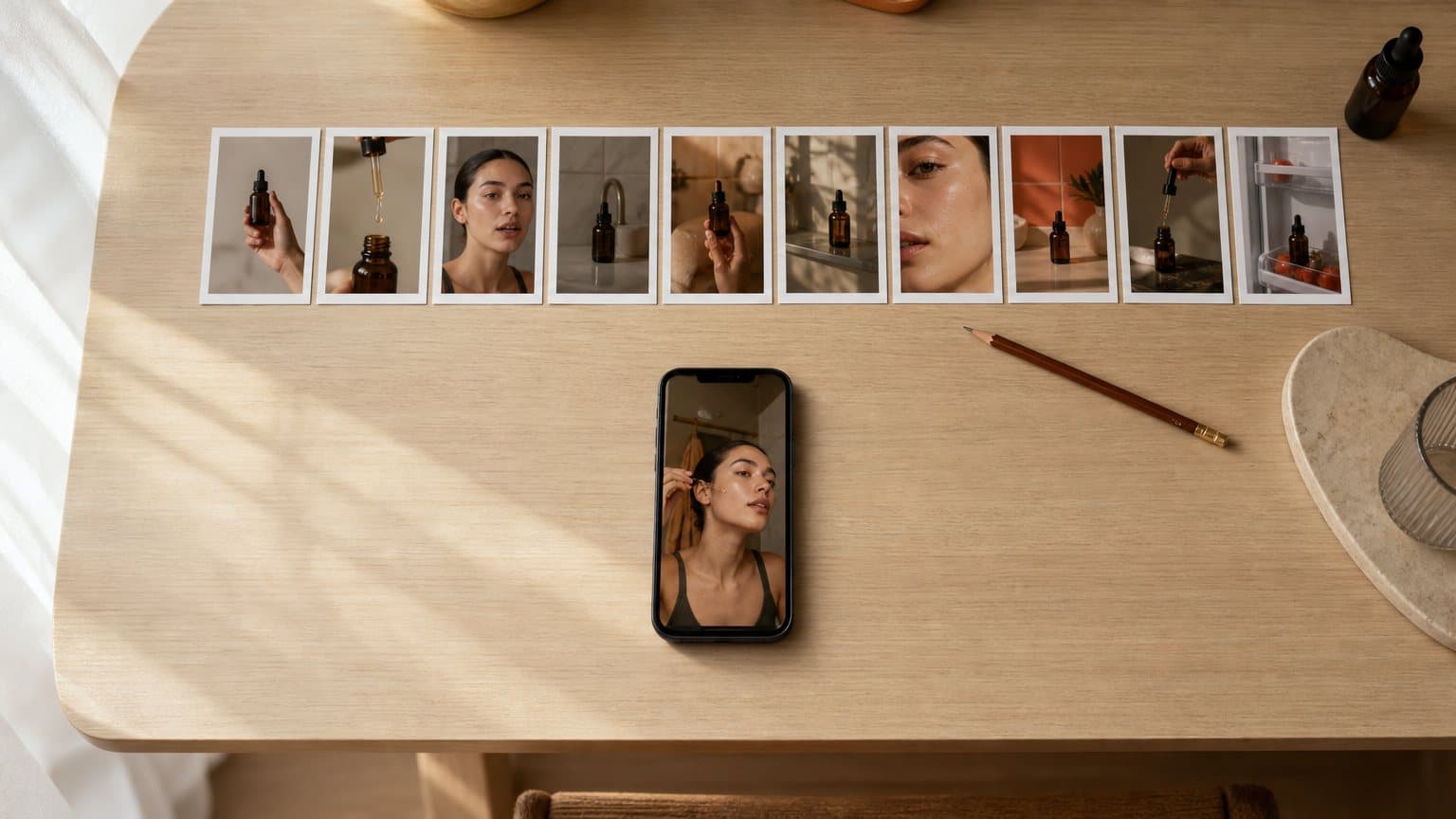
Keep the ad, replace the first three seconds
A skincare brand has a 24-second video that already sells. Same woman, same bathroom, same bottle, same offer at the end. It has run for five weeks. The team's instinct is to shoot a new ad.
The cheaper move is to leave the last 21 seconds exactly as they are and write ten new first three seconds. TikTok's Creative Codes guide says 90% of ad recall impact is captured within the first six seconds. Read that number carefully: it is TikTok's own figure, which the guide credits to a 2020 TikTok "Value of View" analysis, and it measures whether people remember an ad, not whether they buy. It still tells you where the leverage sits.
Ad hook variations are several openings cut onto one fixed ad body. Only the opening changes. The body, the close, the offer and the length after the cut stay frame-for-frame identical, so any difference in results belongs to the hook. This guide covers how many openings to write, what to vary inside them, and how to read the numbers without fooling yourself.
Why the first seconds are the cheapest thing to test
What TikTok's 90% figure measures, and what it does not
TikTok recommends a three-part structure for an ad: a hook, a body and a close. The 90% line sits under the hook, next to advice to communicate the value proposition early and hold attention with "suspense, surprise, and emotion." The same guide adds that faster scene changes typically draw viewers in early.
Three limits keep the figure honest:
- It is recall. It describes how much of an ad's memorability is earned early. It says nothing about clicks, purchases or cost per result.
- It is TikTok's research about TikTok. The guide credits it to TikTok's own analysis, not to an independent study.
- It is not new. The analysis is dated 2020, so treat it as a durable principle rather than a fresh finding.
None of that makes it wrong. It makes it a reason to test openings, not a promise that a better opening sells more. Only your own test can tell you that.
Three platforms give the same instruction
TikTok's help center article on performance ads, last updated June 2025, is blunter than the guide. It says to prioritize the hook in the first 6 seconds, and to introduce the content proposition in the first 3 seconds for better recall and awareness.
Google's ABCDs for YouTube ads say the same thing in their own words. Under Attention, the "Jump in" guideline tells advertisers to get to the heart of the story faster, with engaging pacing and tight framing. Under Branding, Google asks advertisers to introduce the brand or product from the start.
So the opening window is not a TikTok quirk. The platforms agree that the first seconds carry outsized weight, and none of them can tell you which opening will work for your product. That gap is the test.
Why a frozen body makes the read clean
When two whole ads compete, the winner differs from the loser in a dozen places: the actor's energy, the order of the claims, the length, the close. You learn which ad won and nothing about why.
Freeze everything after the cut, and the only thing left to explain a difference is the opening. That is the entire logic of a hook test. Every rule below exists to protect it.
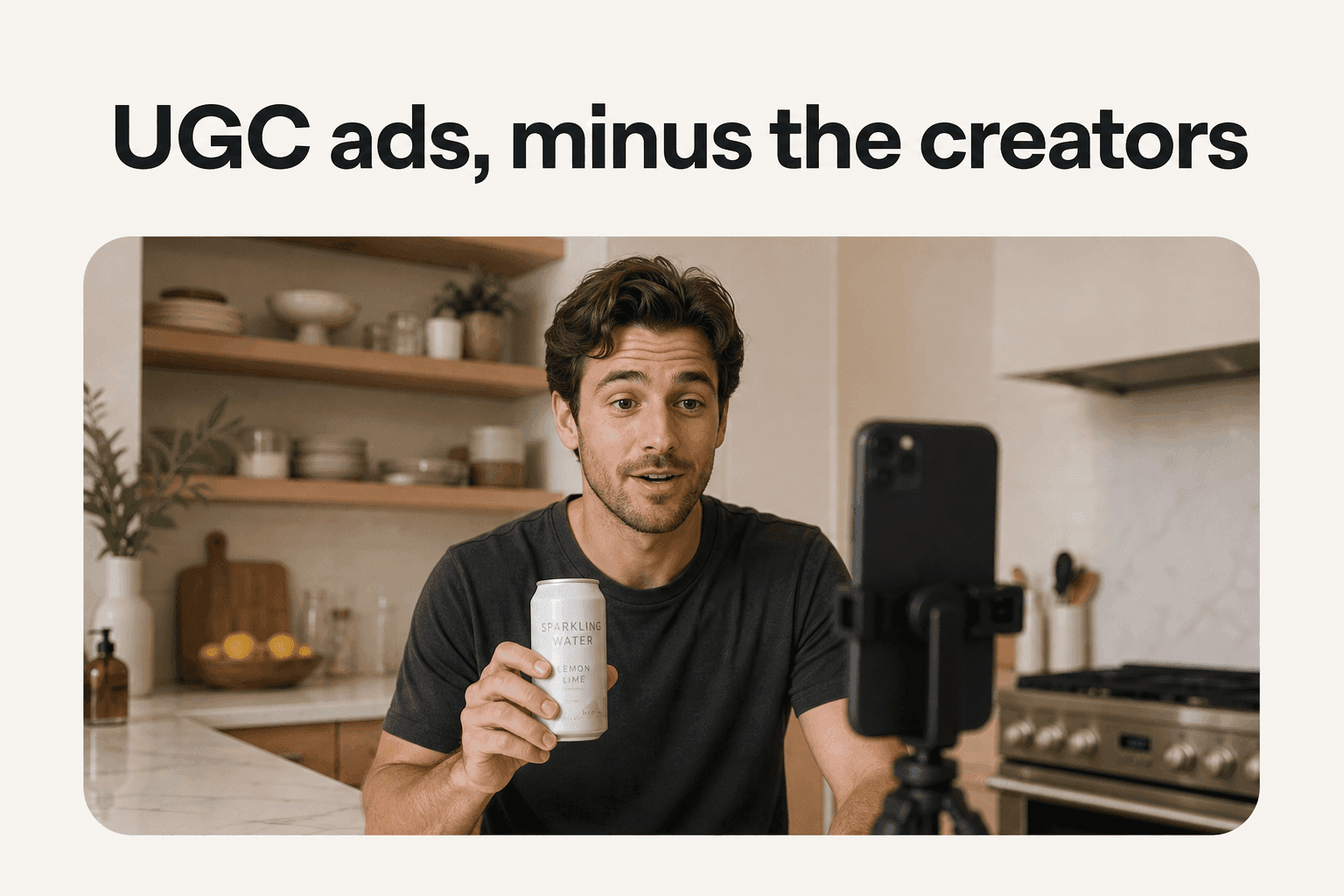
What counts as a hook variation, and what does not
The swap window: one length, one cut point
Pick a hook length and hold every variant to it. Three seconds is the practical default, for two reasons. It matches TikTok's window for landing the content proposition, and it lines up with the watch metrics you will read later: a 3-second play means the viewer saw the whole hook, and a TikTok 6-second view reaches three seconds into the body.
The cut point matters as much as the length. Every variant must hand off to the same first frame of the body. If hook four runs 4.5 seconds and hook seven runs 2 seconds, the body starts at a different moment in each ad, and every watch metric downstream compares different amounts of body. That is no longer a hook test.
The four layers of an opening
An opening is more than a line. It has four layers, and a variant can change any of them:
- The first frame. What is on screen at zero seconds: a face mid-sentence, the product in use, a result, something out of place.
- The first spoken line. A question, a claim, a number or an objection, said out loud.
- The on-screen text. TikTok recommends displaying 5 to 10 words per second when using text, so a three-second overlay tops out around 15 to 30 words. Treat that as a ceiling. Most good hooks use a fraction of it.
- The emotional lever. TikTok names suspense, surprise and emotion. Google's ABCDs name humor, surprise and intrigue.
This post assumes you already have the lines. For the craft of writing ad hooks that stop the scroll, start there, then come back to test them.
Changes that are not hook tests
Some edits look like hook variants and are really new ads:
- A different offer or price in the close.
- A different actor in the body, or the same actor recorded again.
- A longer or shorter body.
- A new call to action.
Each of those changes the body, so each belongs in a concept test rather than a hook test. The distinction matters because the two tests answer different questions, and when you still do not know what works, distinct concepts beat variants of one.
Write ten openings for one body
Start from a body that has already earned its place
TikTok's help center says it is always better to use creatives with big differences, especially when testing. That is advice for finding what works, the job of an ad creative strategy. A hook test is the step after: the body has already beaten other concepts, and now you are refining the first three seconds of a proven ad, not repurposing the winner.
Running hook variants on an unproven body wastes the budget twice. If the body is weak, the best hook in the batch wins a contest nobody should have entered, and you then scale a weak ad with a slightly better start.
The way to honor TikTok's big-differences advice inside a hook test is to make the ten openings different in kind, not in wording. Five rewordings of the same question are one idea tested five times, the trap our creative diversity guide describes.
The ten, by type
Here is a worked set for the skincare ad above. The body is 21 seconds: a woman uses a vitamin C serum for a week and shows the result, then the close carries the offer. Every opening below is exactly three seconds long and hands off to the same first frame of that body.
| # | Type | First frame | First line |
|---|---|---|---|
| 1 | Question | Face to camera | "Why is my skin dull?" |
| 2 | Result first | Day seven close-up | "Week one. No filter." |
| 3 | Objection | Serum on a shelf | "I don't trust serums." |
| 4 | Number | One drop falling | "Two drops a day." |
| 5 | Pattern break | Bottle in the fridge | "It lives in here now." |
| 6 | Confession | Bathroom mirror | "I almost returned this." |
| 7 | Before and after | Split screen | Text only, no line |
| 8 | Mistake | Too much product | "You're using too much." |
| 9 | Social proof | Phone with messages | "My sister asked what changed." |
| 10 | Direct callout | Bare face, close | "Dull skin after thirty?" |
Ten types, ten different first frames. If one wins, it wins as a type, and a type is something you can carry to the next product. A winning rewording teaches you about one sentence.
Write the bridge line once
The body's first sentence has to follow every one of the ten openings. "I started using this a week ago" works after a question, a confession or a result. "So here's the answer" only works after a question, and it quietly turns nine of your variants into non sequiturs.
Write the bridge before you write the hooks. Then read each hook aloud followed by the bridge. Any pair that sounds wrong gets a new hook, never a new bridge, because the bridge belongs to the frozen body.
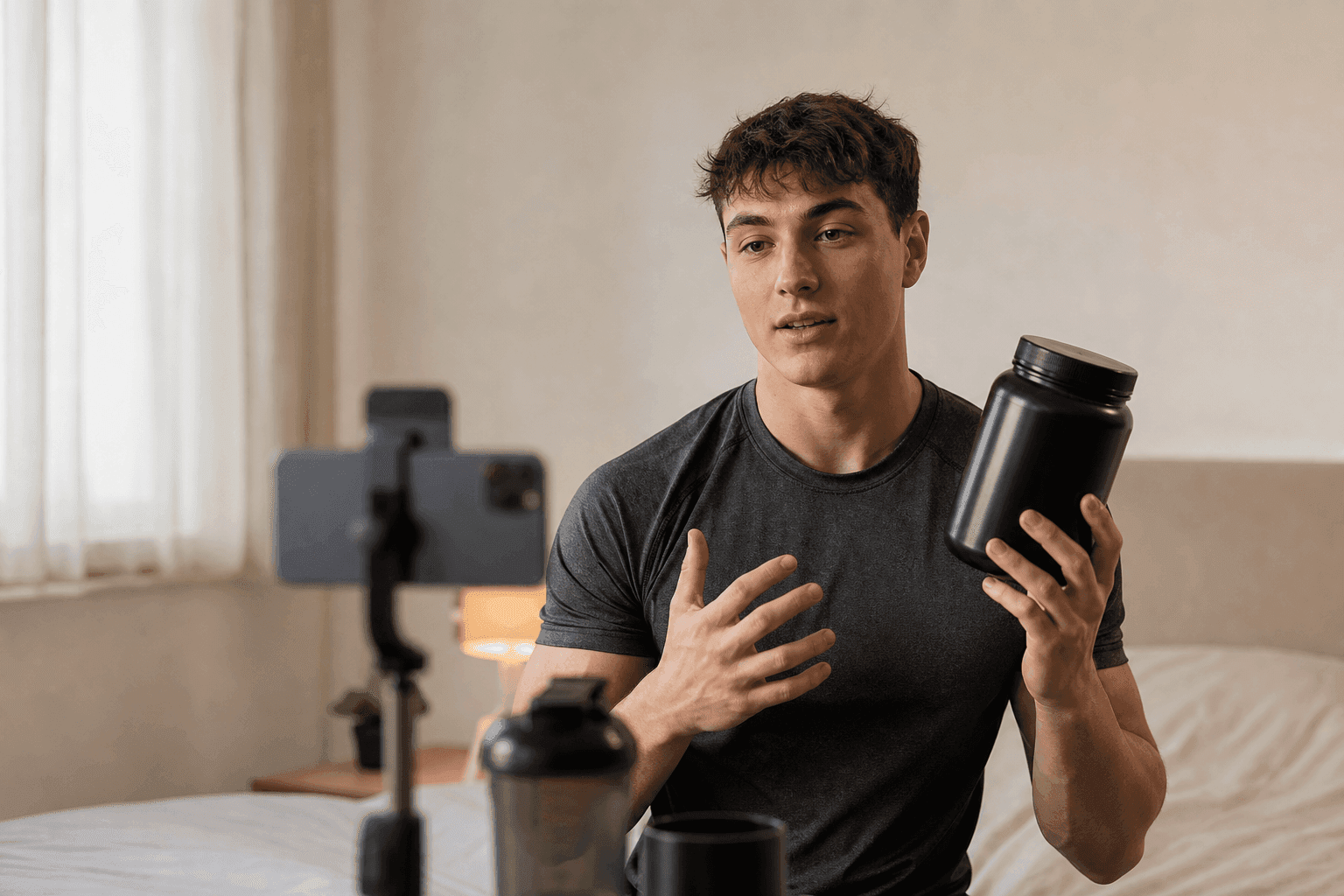
How many hooks to run at once
Five per batch, because the platforms size it that way
Two platforms hand you a working batch size. Meta's A/B testing tool lets you test up to five ad variants in one experiment, and TikTok's help center suggests between 3 and 5 different creatives per ad group. So write ten, run five.
Round one takes five openings. Round two takes the round-one winner as the control, plus four fresh openings. The winner now has to beat new challengers, not just the batch it was born in, which is a cheap check on luck.
Why ten at once invites a false winner
This is the part most hook tests skip. Compare nine challengers against one control, each at 95% confidence, and the chance that at least one of them reads as a significant difference when all ten openings truly perform the same is roughly 37%. With four challengers it is about 19%. Every extra hook in a round is another lottery ticket for noise.
A batch of five does not remove that risk. It halves it. The second round, where a winner has to repeat against fresh openings, removes most of what is left.
The ceiling is impressions, not ideas
Writing a hook takes a minute. Reading one takes a few thousand impressions. The number of openings you can test in a month is set by how many impressions each one needs to produce a number you can trust, and that is worth doing on paper before you launch anything.
The impression math behind a readable hook test
A baseline to plan against
You need an expected hook rate before you can size a test. The largest recent public read is Billo's. Billo sells creator-made UGC video through a pool it lists as 5,000+ vetted US creators, so it competes with Novoads for the same creative budgets, and its benchmark is one vendor's data. Its H1 2026 report defines hook rate as 3-second video plays divided by impressions and, across 88,329 sales-objective Meta video ads, puts the cross-industry average at 25.44%. Our read of those video ad benchmarks covers how the dataset was built and where categories sit.
Worked example: impressions per hook
Take a 25% baseline. The table shows roughly how many impressions each hook needs before a real gap of a given size shows up reliably, at 95% confidence and 80% power, treating each impression as one independent trial.
| Real gap | Hook rate moves to | Impressions per hook | Ten hooks |
|---|---|---|---|
| 10 points | 35% | about 330 | about 3,300 |
| 5 points | 30% | about 1,250 | about 12,500 |
| 3 points | 28% | about 3,400 | about 34,000 |
| 2 points | 27% | about 7,550 | about 75,500 |
Two things fall out of it:
- Big winners are cheap to find. A hook that is truly ten points better shows itself within a few hundred impressions. Those are the hooks worth hunting.
- Small gains are expensive to prove. Confirming a two-point lift across ten hooks costs about 75,500 impressions, or 75.5 times your CPM, to learn something small.
The same math explains why early reads mislead. At 1,000 impressions, a 25% hook rate still carries a margin of error of about 2.7 points either way, so a 26% against a 24% at that volume is a tie. Impressions are not fully independent either, since one person can see an ad twice, so read every number in the table as a floor.
What the math cannot fix
Sample size assumes the openings got comparable delivery, and in practice they often do not. Meta says that when campaigns or ad sets run at the same time without its A/B testing tool, the system does not split them evenly but treats them in combination, skewing delivery and budget distribution.
Put five hooks as five ads in one ad set and the delivery system picks favorites before your test has read anything. The losing hooks may never reach their impression floor. Use the platform's split tool, and see how a controlled creative test is set up for the mechanics of the split itself.
Reading the result in three passes
Pass one: did the opening stop the scroll?
The first read is attention. On Meta, that is the hook-rate ratio from the benchmark above: 3-second plays over impressions. On TikTok, Ads Manager reports 2-second video views, the number of times a video starts playing for at least 2 seconds in an impression session, along with 6-second video views. Divide either by impressions.
One detail changes how you read TikTok's 6-second number. It counts plays of at least six seconds, and also any view that received at least one engagement within the first 6 seconds. A hook that provokes quick reactions can lift it without holding anyone. Use 2-second views as the cleaner hook signal and the 6-second figure as a handoff signal.
Pass two: did the body keep who the hook caught?
A hook can stop the wrong people. The second pass asks how many viewers who got past the opening stayed into the body. Because the body is identical in every variant, this ratio compares directly across hooks, which a whole-ad test can never give you.
On TikTok, compare 6-second views against 2-second views, then look at views at 25%, 50%, 75% and 100% of length and at average play time per video view. On the 24-second skincare ad, the 25% mark falls three seconds into the body. A hook that wins pass one and loses here is buying curiosity the body cannot pay off. The full creative metric ladder explains how these rungs fit together.
Pass three: cost per result picks between finalists
Attention metrics arrive fast and decide nothing on their own. The finalists, usually two or three openings that cleared the first two passes, go into a test read on cost per result.
Meta advises keeping A/B tests running for at least 2 weeks or up to 30 days for the most reliable results, and conversions take far longer to separate hooks than plays do. That asymmetry is the whole design:
- Screen many openings on the cheap, fast metric.
- Filter with the hold after the cut, which costs nothing extra.
- Decide between few on the slow, expensive one.
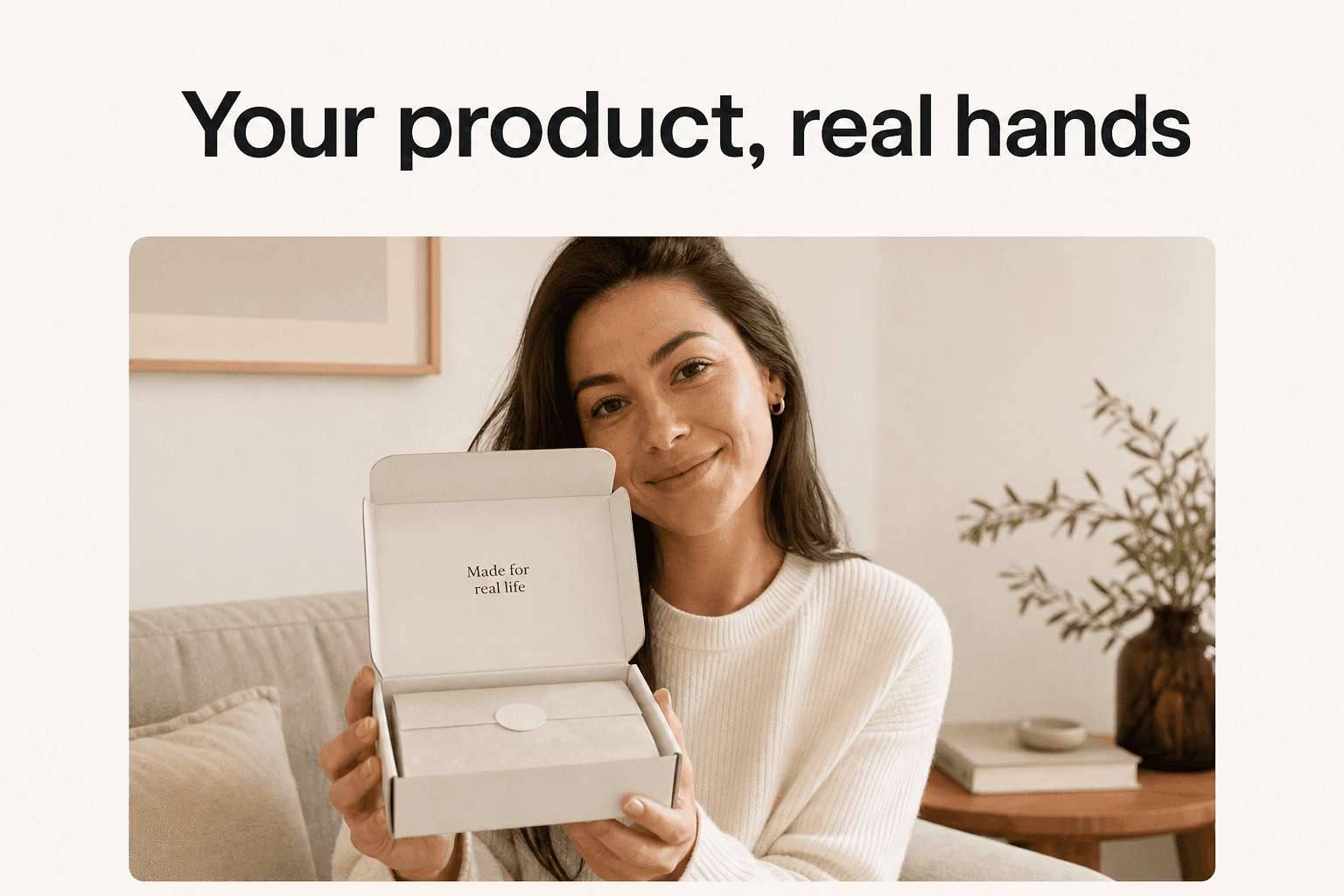
Five ways a hook test lies
Each of these produces a confident winner that is not real.
- The clickbait winner. An opening that promises something the body never delivers wins pass one and loses pass three. Read all three passes before crowning anything, because a high click or view rate does not mean a good ad.
- Unequal hook lengths. A longer opening pushes the body later, which changes every watch metric after the cut. Trim every variant to the same frame count before upload.
- The early call. Five hooks at 800 impressions each, one at 27% and one at 24%. That spread sits inside normal noise at that volume. Wait for the floor in the table.
- A body made again. If each variant is filmed or rendered from start to finish, the body changes too, even with the same script and the same actor. Make the body once and cut every opening onto that single file.
- Hooks launched one at a time. A hook launched in week three meets an audience that has already seen the body for weeks, so it looks worse for reasons that have nothing to do with its opening. Launch the whole batch on the same day.
The pattern behind all five is the same. Each one lets a second variable leak into a test that was designed to have exactly one.
How Novoads solves the opening-supply problem
Novoads generates UGC-style video ads from a script and an AI actor, or from an uploaded product image. For a hook test, that turns ten openings into a writing job instead of a shoot, and it makes "make the body once" the default rather than a discipline.
One actor, ten lines, one render
A talking-actor video in Novoads bills 10 credits per started minute. Put all ten three-second hook lines in one script, read back to back, and as long as the audio stays under a minute it is one render: one actor, one voice and one lighting setup across every opening. Cut each line to exactly three seconds and join it to your existing body in the editor you already use.
Because every variant shares that single body, none of them carries a body made again. If you plan to reuse the same face across many rounds, keeping one AI actor consistent across ad variations covers the rest.
Visual openings from a product image
For result-first, pattern-break or product-in-use openings, generate the shot instead of filming it. A five-second Seedance 2.0 Mini clip costs 1.5 credits, so ten visual openings cost 15 credits before you trim each to three seconds.
If an opening needs the product in someone's hand, pick the route that does that. One is a custom actor made from an uploaded photo of a person holding your product. The other is one of Discover's product templates, which place your uploaded product in a template creator's hand. A stock library actor has empty hands.
Both routes together, twenty openings, come to 25 credits, half of what the Starter plan includes each month. Novoads starts at $49/month (Starter, 50 credits per month). All plans are published on /pricing. The first batch of openings can come out of Novoads the same afternoon you write them.
A frozen body is what makes a hook honest
Hook variations are not about making more ads. They are about changing one thing so that a result means something. Hold every opening to one length and one cut point, run five at a time, let attention screen and cost per result decide, and make the second round prove the first.
The platforms already agree that the opening carries the weight. Only a clean test tells you which opening carries it for your product. Ten openings on one body is one experiment; ten different ads are ten guesses.
Frequently Asked Questions
What are ad hook variations?
Ad hook variations are several different openings cut onto the same ad body. The first few seconds change (the first frame, the first spoken line, the on-screen text or the emotional lever) while everything after the cut stays frame-for-frame identical. Because the body, close and offer never change, any difference in results can be attributed to the opening.
How many hook variations should I test at once?
Write about ten and run them five at a time. Meta's A/B testing tool tests up to five ad variants in one experiment, and TikTok's help center suggests 3 to 5 creatives per ad group. Smaller batches also cut the odds of a false winner: comparing nine challengers against a control at 95% confidence gives roughly a 37% chance that one of them reads as significant on noise alone, against about 19% with four challengers.
How long should a hook be?
Pick one length and hold every variant to it. Three seconds is a practical default: TikTok's help center says to introduce the content proposition in the first 3 seconds and to prioritize the hook in the first 6, and a three-second opening lines up with the 3-second play count most advertisers use for hook rate. What matters most is that every variant hands off to the body at the same frame.
Is it true that 90% of an ad's impact happens in the first six seconds?
Not quite. TikTok's Creative Codes guide says 90% of ad recall impact is captured within the first six seconds, and the guide credits that figure to TikTok's own 2020 'Value of View' analysis. It measures whether people remember an ad, not whether they click or buy, so it is a reason to test openings, not proof that a better opening sells more.
What metric tells me which hook won?
No single metric does. First read attention: 3-second plays over impressions on Meta, or 2-second video views over impressions on TikTok. Then read the hold after the cut, which is comparable across hooks because the body is identical. Finally, compare cost per result between the two or three finalists, because a hook that wins attention can still attract people who never buy.
How many impressions does each hook need before I can trust the result?
It depends on the size of the gap you want to detect. Starting from a 25% hook rate, at 95% confidence and 80% power, a real 10-point gap needs about 330 impressions per hook, a 5-point gap about 1,250 and a 3-point gap about 3,400. Treat those as floors, because impressions are not fully independent.
Key Takeaways
- Ad hook variations are several openings cut onto one fixed body. Only the first seconds change; the body, the close, the offer and the length after the cut stay identical, so any difference in results belongs to the hook.
- TikTok's Creative Codes guide says 90% of ad recall impact is captured within the first six seconds. It is TikTok's own figure, credited to a 2020 TikTok 'Value of View' analysis, and it measures recall, not sales.
- Hold every opening to one length (three seconds is the practical default) and one cut point, and make the ten openings different in kind, not ten rewordings of one idea.
- Write ten and run five per round: Meta's A/B testing tool takes up to five variants and TikTok suggests 3 to 5 creatives per ad group. At a 25% hook rate, a real 5-point gap needs about 1,250 impressions per hook to show up reliably.
- Read in three passes: the hook metric screens, the hold after the cut filters out curiosity the body cannot pay off, and cost per result decides between the two or three finalists.
Sources
- •TikTok For Business: Creative Codes, 6 principles for creating on TikTok
- •TikTok Ads Help Center: Creative best practices for performance ads
- •TikTok Ads Help Center: Video play metrics
- •Google Ads Help: About the ABCDs of effective video ads
- •Meta: A/B testing
- •Billo: Video Ad Hook Rate Benchmarks H1 2026