Local Video Editing for Ads: Fix One Detail Without Re-Rendering the Whole Clip
Regional editing changes one part of an AI video ad, a product label, a background, a color, without regenerating the whole take. Here is what ByteDance is promising, what it means for fixing winning ads instead of rerolling them, and the limits.

Mauricio Valdivia
·Updated ·10 min
Your Best Ad Had One Flaw, So You Threw the Whole Thing Away
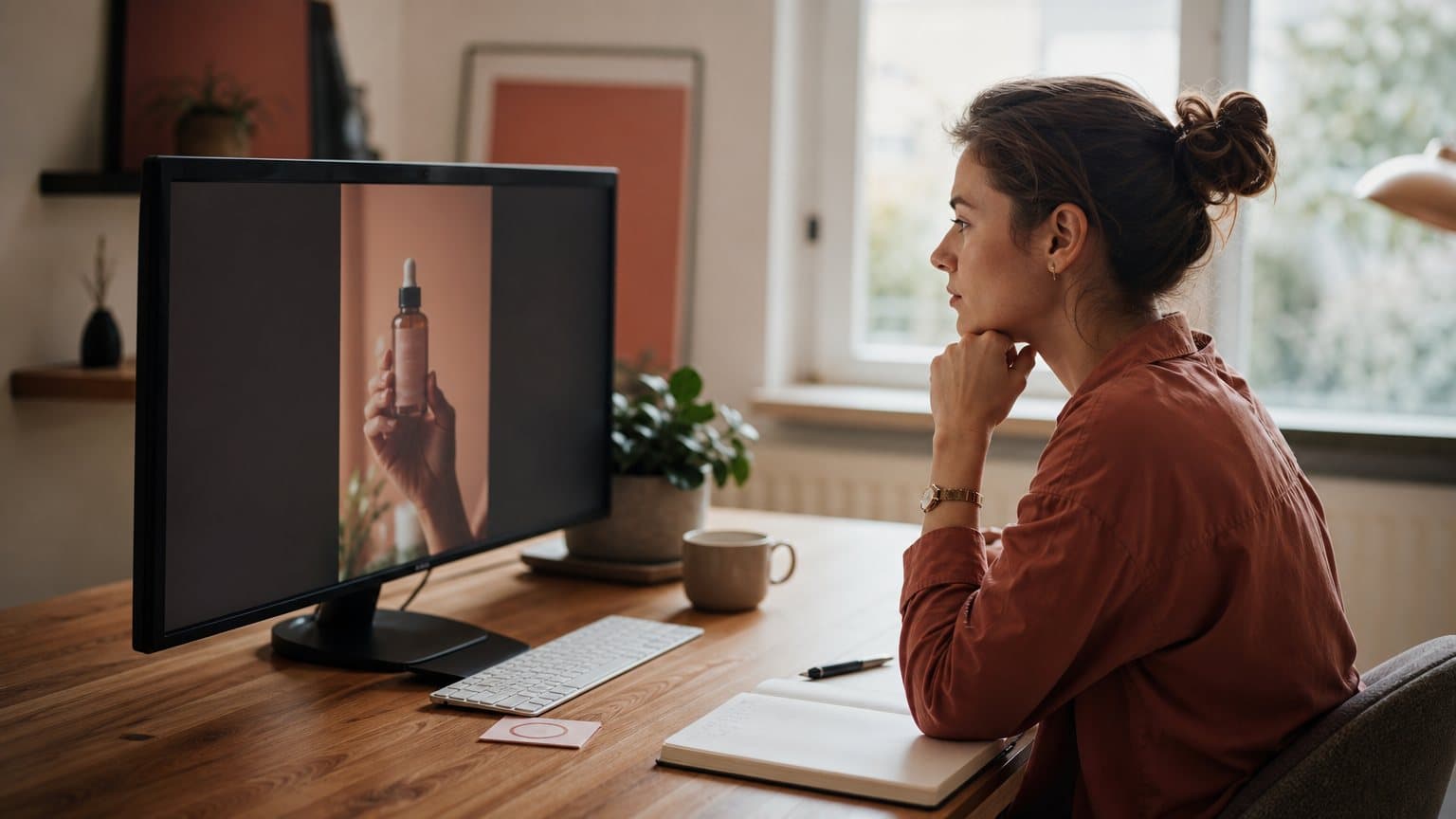
You ran a batch of AI video ads, and one of them beat the rest. The hook landed, the actor felt real, the pacing was right, and the numbers said keep spending. Then someone noticed the product label in the background read from the old packaging. One detail, in the one clip that was working.
So you did the only thing the tool allowed. You regenerated it. And the new take had a slightly different camera drift, the actor's smile sat wrong, and the hook that had been carrying the ad was gone. You had traded a winner for a lottery ticket to fix a label.
That trade is the quiet tax on AI video ads today, and it is exactly what a wave of newly announced models is aiming at. The idea is called regional editing, or local editing: change one region of a finished clip and leave everything else exactly as it was. ByteDance's announced Seedance 2.5 is one of the first big models to put it front and center. Here is what regional editing actually is, why re-rolling a winning ad is a worse deal than it looks, and how it rewires the way you iterate on creative.
Editor's note, September 2026: this post was written in early July 2026, when Seedance 2.5 was announced but not yet released. It shipped in August 2026 and is on Novoads at 7.6 credits for a 5-second clip, with single takes of up to 30 seconds. The Novoads generator does not expose a region-editing control (it takes a prompt plus reference images, audio and video), so the iteration advice below still stands; the July framing of the model itself is kept as the record of that month.
What Regional Editing Actually Changes
Regional editing sounds like a small feature. It is closer to a different mental model for how you make an ad. Instead of treating each clip as one indivisible roll of the dice, it treats the clip as a scene you can reach into and adjust in one spot.
Editing a region, not re-rolling the take
Most AI video today is all-or-nothing. You write a prompt, the model generates a clip, and if anything is wrong, your only lever is to generate again with a tweaked prompt and accept a brand new result. There is no way to say "this is perfect, just change that one thing."
Regional editing adds that lever. You point at a single region of the frame, a label, a hand pose, a background prop, a color, and change only that, while the rest of the take stays put. It is the video equivalent of inpainting an image: mask the part you want different, leave the rest locked. The surrounding motion, camera path, lighting, and composition do not get re-rolled, because you never asked the model to redo them.
What the Seedance 2.5 announcement adds
ByteDance announced Seedance 2.5 in late June 2026, and editing is a headline of the pitch, not a footnote. The reporting from the announcement describes exactly this capability. According to The Decoder's write-up of the launch, Seedance 2.5 lets you edit generated videos after the fact "while keeping the visual style and look intact." Independent coverage of the announcement goes further on the mechanism: one write-up describes local re-draw editing that "changes one element, keeps the rest," so you can swap a product, background, or subject without altering the motion, camera, or lighting.
Read as a spec, that is one bullet point. Read as a workflow, it is the difference between fixing an ad and rebuilding one. If you want the full picture of the model's other announced features, the Seedance 2.5 explainer covers the 30-second single take and the reference inputs; this piece stays on the editing story, because that is the part that changes how you work day to day.
Announced, not benchmarked
One caveat belongs up front rather than buried. As of early July 2026, Seedance 2.5 is announced, not something most people can put their hands on. A model listing exists, but it is early access and carries no public description yet, and ByteDance's own surfaces do not spell out the editing behavior in testable detail. So every capability here is a stated spec, and the honest stance is to treat edit fidelity, how cleanly a region swaps without a visible seam, as an open question until the model is in hand. A launch is a promise. A benchmark is a measurement. This is still a promise, and the smart way to read a promise is to understand what it would change if it holds.
Why Re-Rolling a Winning Ad Is a Bad Trade
To see why regional editing matters, you have to be honest about what full regeneration actually costs. It is not the render time, and it is barely the credits. The real cost is what regeneration does to a result you already liked.
Every regeneration is a fresh lottery
AI video is probabilistic by design. The same prompt run twice gives you two different clips, which is a feature when you are exploring and a liability when you have already found the one. When your best-performing ad has a single flaw and your only fix is to generate again, you are not editing. You are re-entering the lottery and hoping the machine hands back something at least as good as what you had, plus the correction.
It usually does not. The expression shifts, the camera energy changes, the timing of the beat that made the hook work moves half a second, and now you are A/B testing your fix against your own winner instead of shipping it. The thing you were trying to protect, the exact take that beat your benchmark, is the thing regeneration puts at risk.
A worked example, in credits and minutes
Put rough numbers on it. On Novoads today, a five-second Seedance clip is about 3 credits, roughly $2. Say your winning spot is a 30-second concept, and the one flaw lives in a single beat of it. Regenerating that beat is cheap in credits. The expense is everywhere else: you re-run the generation, you re-check that the new take matches the rest, and if it drifts, you run it again, and each attempt is another roll where the fix might arrive attached to a worse performance.
Now multiply by a test. If you are running ten variations of that concept and the same label is wrong in all of them, the reroll path is ten fresh lotteries, ten chances to lose a good take, ten re-checks. A targeted edit is ten identical corrections to one region, with every winning take left intact. The credits were never the story. The story is how many good results you have to gamble to fix a detail that had nothing to do with them.
The consistency tax on a variant set
There is a second, quieter cost. Ad testing only works if your variations differ in the thing you are testing and match in everything else, so you can read the result. The moment a reroll changes the actor's face or the camera move along with the label, your clean test is contaminated, and you are no longer measuring the message. Regional editing is really a consistency tool wearing an editing tool's clothes: it lets you change one variable on purpose while guaranteeing the rest held still. That is the same reason consistency, not novelty, is what separates AI from human UGC creators for volume work.
The Fix-The-Winner Workflow
Specs only matter if they change what you can ship. Regional editing lands as a handful of concrete moves that replace expensive re-generations with cheap targeted edits, and each one is worth naming.
Ship the winner, patch the one flaw
The first shift is the most direct. When a top ad has a small defect, an outdated label, a stray object in frame, a color that is slightly off brand, you keep the take and fix the defect. The unit of work drops from "the clip" to "the detail." That is a different job description for a creative team: less regenerating and re-reviewing, more surgical correction on assets that are already performing. The ad you launch is the ad the data liked, minus the one thing that was wrong with it.
One master, many markets
The second shift is localization. A huge share of ad work is running the same concept across markets, and the on-screen differences are often tiny: a label in another language, a currency, a color that reads differently in another country. With regional editing you build one master take and swap only the region that changes per market, instead of regenerating the entire spot a dozen times and praying the actor and pacing survive each pass. One good take becomes a dozen localized versions that stay visually identical except where you meant them to differ. That plays straight into where AI UGC already earns its keep, shipping ads that feel native across many languages and accents rather than one dubbed master.
Batch fixes instead of batch rerolls
The third shift is scale. Once an edit targets a region rather than the whole clip, the same correction can be applied across a set. A brand refresh that changes a logo, a compliance note that has to appear on every variant, a seasonal swap: these become one edit repeated, not one campaign rebuilt. The economics of a fix stop scaling with the number of clips and start scaling with the number of distinct changes, which is almost always a much smaller number.
Regional Editing vs Full Regeneration
Neither approach wins outright, and pretending one replaces the other is how you end up misusing both. The right question is which lever fits the change in front of you. As a quick reference:
| Situation | Best lever | Why |
|---|---|---|
| Winning take, one wrong detail | Regional edit | Keeps the performing take intact |
| Same fix across a variant set | Regional edit | One correction, applied many times |
| Per-market label or color swap | Regional edit | One master, no reroll per country |
| Concept is not working yet | Full regeneration | You want a genuinely different take |
| New hook, actor, or angle | Full regeneration | The change is the whole clip, not a region |
| Exploring before you have a winner | Full regeneration | Variety is the point at this stage |
When a targeted edit is the right call
Reach for regional editing when you already have something worth protecting. If a take is performing and the change is local, an object, a label, a color, a small pose, editing the region is strictly better than rolling again, because it removes the risk of losing the result while you fix it. This is the late stage of creative work, after testing has told you what wins, when your job is to preserve and polish rather than discover.
When you still want a clean generation
Reach for a fresh generation when the thing you want to change is not a region but the idea. A new hook, a different actor, a new camera language, a fundamentally different angle: those are not edits, they are new bets, and you want the model to give you a genuinely different clip. Early in a test, when you are hunting for the winner in the first place, variety is the feature and regeneration is the tool. Regional editing is what you graduate to once you have something to keep.

The Limits Worth Naming Before You Bank On It
It would be easy to read the announcement and assume the reroll problem is solved. It is not, yet, and a few limits deserve to be said plainly so you plan around them instead of being surprised.
It is reported, not shipped
Every capability in this piece is a stated spec from ByteDance's announcement and the coverage of it, not a tested result. Caixin Global reported the model would launch "in early July," with "native 4K resolution, 30-second video outputs" among its headline features, and separate write-ups added the editing detail. But an announced feature and a shipped one are different objects. Until the model is in hand, the honest read is that edit fidelity, whether a swapped region blends cleanly or leaves a faint seam, is unknown. Plan as if it is promising, not as if it is proven.
Enterprise-first, early access
Availability is its own limit. New ByteDance models tend to reach enterprise customers through Volcano Engine first, and the current public listing is early access with no general availability. So even if regional editing lands exactly as described, the window between "announced" and "you can actually use it in your workflow" is real, and for most ad teams it is not this week. That gap is the whole reason the practical move today is different from the exciting move tomorrow.
Some fixes still need a re-roll
Even at its best, regional editing is not a universal undo. Some flaws are not local: a hook that does not land, timing that feels off, an actor whose whole read is wrong. You cannot inpaint your way to a better idea, and trying to patch a fundamentally weak clip region by region is just a slower reroll. The skill is knowing which problems are regional, fix them, and which are structural, regenerate or rethink them. If you are still learning what makes a clip work at all, the fundamentals in how to create UGC ads matter more than any editing feature.
How Novoads Fits While Regional Editing Lands
You do not have to wait for a region-editing control to stop treating every fix as a gamble. The point of regional editing is to make iteration cheap and safe, and there is a version of that you can run today.
What you can do today
In Novoads you upload a product photo, write or auto-generate a script, pick an AI actor to present it, and generate a UGC-style vertical ad with voice, lip-sync, and captions in about four minutes. The models live behind one workflow, Seedance, Kling, and Veo 3.1, so you swap the engine per placement instead of betting a campaign on one. When Seedance 2.5 and its editing features ship, they slot into that same rotation rather than forcing a new tool.
Cheap regeneration is its own kind of edit
Until region-level editing is broadly available, the closest lever most teams have is making regeneration cheap enough that the lottery stops hurting. When a five-second clip is about 3 credits, roughly $2, and a fresh variation takes minutes rather than a shoot, rerolling a flawed clip is annoying but not expensive, and generating a dozen alternates to find one clean take is affordable. It is not the same as surgically fixing one region, but it attacks the same problem, the cost of iteration, from the other side. For the wider set of tools this fits into, our roundup of the best AI video ad platforms puts the models side by side.
One honest note by the button: the entry plan is $49/month, cancel anytime. It is a paid plan, not a free tier, and it grants 50 credits a month, so what you see is your own product in several finished ads rather than a demo reel.

The edit, not the render, is where ad iteration lives
Strip away the spec sheet and regional editing is a wager about where the real work of an AI ad happens. For years the answer was the render: you prompted, you generated, and the clip you got was the clip you shipped or the clip you threw away. Editing a region moves the center of gravity to the detail, and that is exactly where ad iteration actually lives, in the labels, the colors, the one beat that is off, the small differences between markets.
Whether Seedance 2.5 delivers it cleanly is a question only the shipped model can answer. But the idea underneath it is already right: the ad you fought to win should not be the ad you gamble away to fix a label. The first models that let you keep the winner and change only what is broken will quietly change how every ad team iterates, and until they arrive, the move is to keep iteration cheap and keep shipping.
Frequently Asked Questions
What is regional editing in AI video?
Regional editing, sometimes called local editing or local re-draw, changes one region of an already-generated clip while leaving the rest untouched. Instead of regenerating the whole take, you point at a single element, a product label, a hand pose, a background prop, and change only that, so the surrounding motion, camera, lighting, and composition stay consistent. It is the video version of inpainting an image.
Does Seedance 2.5 have local editing?
ByteDance's Seedance 2.5 was announced with local editing among its reported features. Independent write-ups of the announcement describe local re-draw editing that changes one element and keeps the rest, letting you swap a product, background, or subject without altering the motion, camera, or lighting. As of early July 2026 those are announced specs, so treat them as a vendor announcement pending hands-on testing, not a benchmarked result.
Why not just regenerate the whole clip to fix a mistake?
Because a fresh generation is a fresh lottery. AI video is probabilistic, so regenerating to fix one wrong label can hand you a different actor expression, a different camera drift, or a worse hook, and you lose the exact take that was winning. Regional editing keeps the winning take and changes only the broken part, which is the difference between a patch and a gamble.
What does regional editing change for ad iteration?
It flips the unit of work from the clip to the detail. When a top-performing ad has one small flaw, you fix the flaw instead of rerolling the ad, and when you localize a spot for a new market you swap the on-screen label or color from one master rather than regenerating the whole video per country. Both turn expensive re-generations into cheap targeted edits.
Can I use regional editing in Novoads today?
Seedance 2.5 itself has been on Novoads since August 2026, at 7.6 credits for a 5-second clip with single takes of up to 30 seconds, but the Novoads generator does not expose a region-editing control: it takes a prompt plus reference images, audio and video. What you can do today in Novoads is generate UGC-style ads with the shipping models, swap the model per placement, and regenerate a variation cheaply, about 3 credits for a 5-second Seedance 2.0 clip, roughly $2. You upload a product photo, write or auto-generate a script, and ship in 30+ languages with real accents.
How much does an AI video ad cost to make?
It depends on the model. On Novoads a 5-second Seedance clip is about 3 credits, roughly $2, while heavier models like Veo 3.1 or a one-minute talking actor run closer to $7, and the range across models is from about a dollar for a five-second Seedance 2.0 Mini clip to about $8 for an eight-second Seedance 2.5 clip, and about $26 for a full 30-second Seedance 2.5 take. That is a fraction of the $200 to $500 a human UGC creator typically charges per deliverable, which is what makes testing many variations affordable in the first place.
Key Takeaways
- Regional editing means changing one region of a finished clip, a product label, a background, a color, while the rest of the frame, its motion, camera, and lighting, stays exactly where it was.
- ByteDance's announced Seedance 2.5 is reported to add local re-draw editing, described as changing one element and keeping the rest, so a near-perfect ad no longer forces a full regeneration to fix one flaw.
- Re-rolling a winning clip is a bad trade because every fresh generation is a new lottery: you can lose the exact take that beat your benchmark while chasing one small correction.
- The real payoff is the ad workflow: ship the winner, patch the single wrong detail, and swap a label or color per market from one master instead of regenerating a dozen clips.
- The specs are reported, not benchmarked, and the model reaches enterprise customers first, so today the practical move is cheap regeneration and per-placement model swaps in a tool like Novoads.