What Is Midjourney V8.2? A Preview-Only Image Upgrade, and What It Means for Ads
Midjourney V8.2 is a preview-stage upgrade to Midjourney's AI image generation, released through a --preview flag with no benchmark or pricing, and here is what it changes for making ad images.

Mauricio Valdivia
·Updated ·10 min
Midjourney Shipped V8.2 in One Sentence, No Launch Event
On June 25, 2026, Midjourney told its users to add one word to their prompts. No blog post. No system card. No benchmark. Just --preview, and a promise of a new look.
That is how the lab many designers call the best image generator in the world announced its next aesthetic: a single line on X, pointing people at a prompt flag. The community did the rest, posting renders and calling them incredible before anyone had published a number you could actually check.
If you make images for ads, this matters less for the hype and more for a plain question. What actually shipped, is it even the right kind of tool for a product ad, and where does it sit next to the image models a video-ad platform already runs. This is the honest version, read through an ad-maker's lens.
First, the correction the internet keeps getting wrong. Midjourney does not make video. It makes still images. Anyone calling V8.2 an AI video model is describing a different category of tool entirely.
What Midjourney V8.2 Actually Is, and What It Is Not
An image model, not a video model
Midjourney is a text-to-image generator. You type a prompt, optionally add reference images, and it returns still pictures. That is the whole product. Its V8 line made those stills sharper and quicker to produce; Midjourney's own release note for V8 says "image generation is ~5x faster than before." There is no timeline, no motion, no audio, and no talking person anywhere in it. If you want a clip, a Midjourney image is a starting frame, not a finished ad.
So when a headline calls "Midjourney 8" a video model, read straight past it. V8.2 is an image upgrade. The question for an ad-maker is not "can it make my video," it is "can it make a still good enough to build a video, a thumbnail, or a product shot around." That is a real question, and the answer is more interesting than the hype.
A preview flag, not a finished release
V8.2 is not a normal launch. There was no versioned release page, no changelog entry, and no pricing note. Access runs through a prompt flag: Midjourney's update tells users to "Use --preview in your prompt to test the latest." The same note is blunt that this is early, warning that "Images that you create with --preview might be a little unpolished." You are looking at an in-progress model, and the output can shift between sessions.
That is a very Midjourney way to ship. The company has always leaned on community preference over documentation, and V8.2's rollout is the purest form of it: a flag, a wave of renders, and a vibe check running in public. Useful to know if you are deciding whether to bet real work on it today.
What "aesthetics and personalization" actually means
Midjourney framed the preview as being about aesthetics and personalization. Those are not vague adjectives; they point at specific tools. Midjourney's stylization runs on three of them, described in its own notes as the ability to "understand your aesthetics through personalization, style references (srefs) and moodboards." Personalization tunes the model to your taste over time. Style references, or srefs, let you point at a look instead of describing it in words. Moodboards do the same with a set of images. V8.2's pitch is that these get stronger and more consistent, so the model reads your intended style with less fighting.
What --preview and Draft Mode Ship Right Now
The --preview flag: an early, unpolished look
The mechanic is simple. Append --preview to any V8.1 prompt and the job switches to the in-development V8.2 build. You get the current state of the new aesthetic, with Midjourney's own caveat that the result might be a little unpolished and is not guaranteed to be final. For exploration this is fine. For a client deliverable due today, a preview flag is not something you pin a campaign on.
Draft Mode: 24 rough images, half the cost
The preview pairs with Draft Mode, which is where volume comes in. Per Midjourney's note, "Each draft mode generation creates 24 images at a lower resolution and quality." The trade is deliberate: rough, cheap, and many. Draft jobs are also lighter to run, using "half as many fast hours as V8.1 SD jobs," so you can burn through directions without spending your good compute.
In practice the loop is: draft wide, scan the grid of 24 for the frame that matches the brief, then re-render that single winner at full quality. It is the same testing logic paid social already rewards, applied to the image step. Explore cheap, commit expensive, and let the grid tell you which direction was worth finishing.
--sref random: 24 styles in one pass
The newest piece, posted June 25, is random styling. "Include --sref random in your draft-mode prompt to create 24 images with different styles." Instead of committing to one look, you get two dozen aesthetic directions at once and pick the one that fits. Draft mode itself turns on from the lightning icon "in the prompt bar or include --draft in your prompt."
Note carefully what this is and is not. It is 24 images in 24 styles, a breadth play for finding a direction. It is not a published speed benchmark, and Midjourney has not claimed a measured multiplier for it anywhere on its own pages. Treat "styles at once" as the real feature and ignore the round numbers circulating secondhand.
Why a Better-Looking Image Model Matters for Ads
The still is the top of your ad funnel
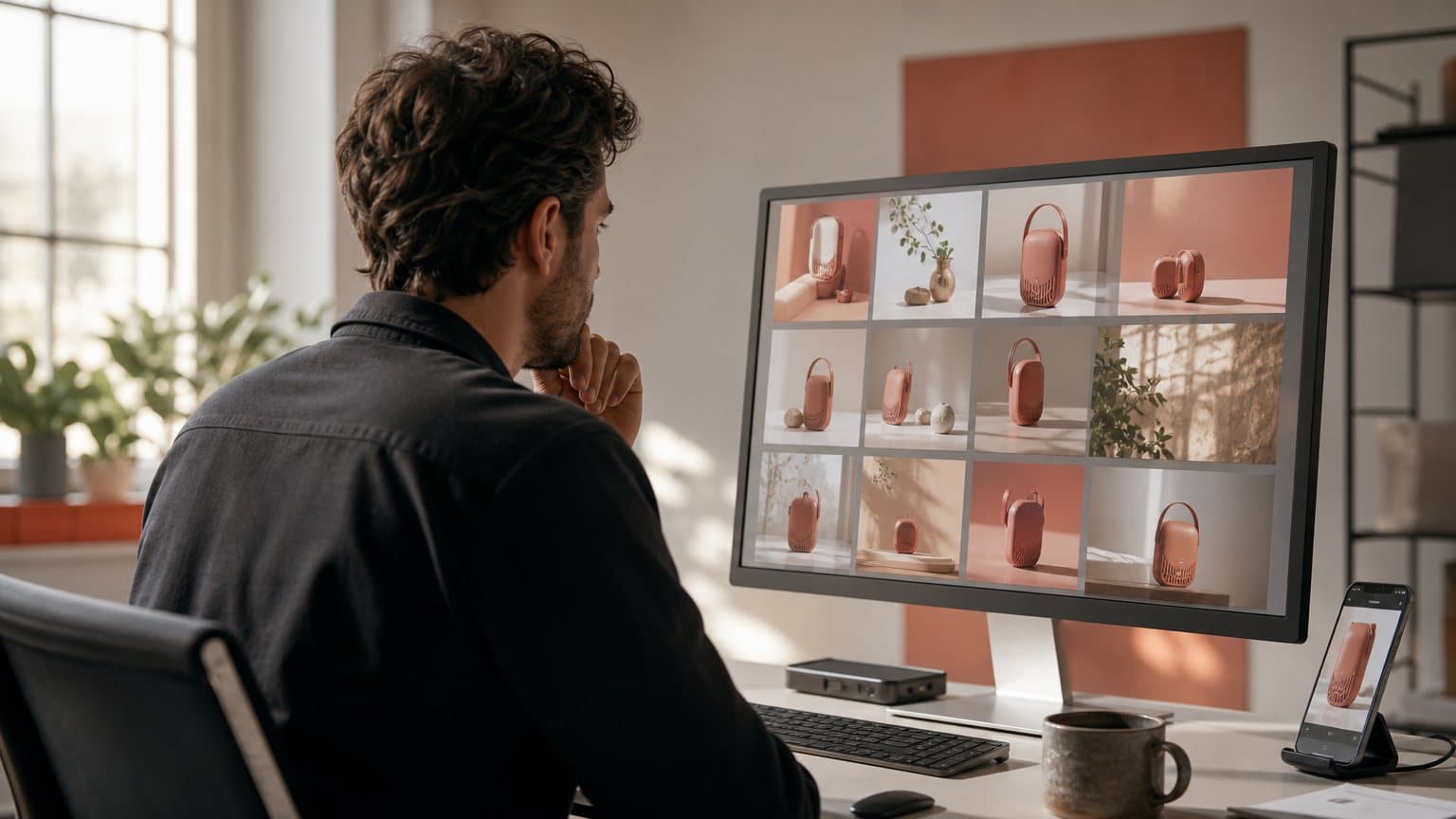
An ad almost never starts as a video. It starts as an image: the concept frame, the thumbnail, the product hero, the scroll-stopping first second. A model that makes a more beautiful, more on-brief still raises the ceiling on everything downstream, because that frame is what you animate, caption, and test. This is why an image-model release is an ad-tooling story even though it makes no video at all.
Take a real case. You are testing five hooks for a skincare serum. Each hook needs its own opening frame: the bottle on a bathroom shelf, a drop on skin, a before-and-after split, a hand reaching for it, a morning-routine flat lay. If your image model nails the mood but keeps rewriting the bottle shape and smearing the label, you now have five gorgeous frames you cannot actually run, because none of them shows the product a customer would recognize. The frame quality was never the bottleneck. Product fidelity was.
Where a beauty-first model helps
Midjourney's whole identity is aesthetic. For the parts of an ad where "does this look expensive and intentional" is the actual job, that strength is real: lifestyle backdrops, mood and lighting, stylized concept art, a hero scene that sets a tone before a single word is read. If your creative rests on a look, a model tuned for look reads is a genuine asset, and V8.2's sref and moodboard gains aim squarely at that.
Where it fights an ad-maker
The same instinct that makes Midjourney beautiful makes it stubborn for commerce. Ad images live and die on control, not just beauty: your exact product, your label, your logo, the same SKU held consistently across ten frames, and copy that renders legibly. A beauty-first model tends to reinterpret, to prettify, and to drift the product away from the real thing. That is wonderful for a mood board and a problem for a product page.
Here is the honest read. Midjourney is superb at the world around the product and unreliable at the product itself. If your ad is a feeling, it shines. If your ad has to show this jar, with that label, at this price, next to a caption someone can read, you are working against its nature.
A quick rule for when to reach for it
The fastest way to use Midjourney well on an ad team is to stop asking it to be your whole image stack and give it the one job it is best at. Treat it as your mood and concept engine, then hand off to a control-first model the moment the product has to be recognizable. In practice, the decision splits cleanly along a single question: is the brief a feeling, or a fact about the product?
Reach for Midjourney V8.2 when:
- You need a lifestyle backdrop, a brand-film frame, or a stylized concept that has to sell a feeling before any copy is read.
- You are still exploring directions and want breadth, not precision. Draft a wide grid, add
--sref randomfor two dozen looks in one pass, and keep the frame the room reacts to. - You have found a look you like and want to lock it. Feed that frame back in as a style reference so the next batch inherits the same mood instead of drifting.
Skip it and reach for a control-first model when:
- The shot has to show your exact product, label, or SKU held consistent across a set of frames a customer would recognize.
- The image carries a price, a badge, or a caption that has to render as clean, readable text rather than melted letters.
- You are recreating a competitor's winning ad frame and need fidelity to the real thing, not a prettier reinterpretation of it.
A simple instinct captures it: if the brief is a vibe, Midjourney is your first stop; if the brief is a fact about the product, it is your last. The style-reference approach to product ads and a purpose-built UGC ad workflow pick up exactly where a beauty-first render leaves off.
Where Midjourney Sits Next to the Image Models an Ad Platform Runs
Aesthetic-first versus control-first
An ad platform does not pick the prettiest model; it picks the most controllable one. The image models built into a UGC tool are chosen because they hold a product, keep text readable, and repeat a look across a batch. That is a different design goal than "most beautiful render," and it is why the tool an ad-maker reaches for daily is rarely the same tool a concept artist falls in love with.
The readable-text problem
The single most common ad-image failure is garbled text. A caption, a price, a label, a badge: if the letters melt, the asset is dead on arrival. This is exactly where a purpose-built model earns its place. It is the reason a platform ships models like Seedream 5 Pro, built to put readable text inside a product image, or Ideogram V4.0q, which is measured specifically on accurate text rendering. Beauty models and text models are solving different problems, and an ad usually needs the second one.
A side-by-side read
A blunt way to see the split:
| Model | Best at | Text in image | Your exact product |
|---|---|---|---|
| Midjourney V8.2 | Aesthetic, mood, concept | Weak | Reinterprets it |
| Seedream 5 Pro | Readable text on products | Strong | Keeps it faithful |
| Nano Banana Pro | Fast on-brief product images | Good | Keeps it faithful |
| GPT Image 2 | Turning your photo into an ad | Good | Uses your upload |
None of these is "the best model" in the abstract. Each is the best at one job. For a moody brand-film frame, reach for Midjourney. For a product still with a legible label you can actually run as an ad, reach for one of the control-first models. Picking by the job, not by the leaderboard, is the whole skill.
From a Still to a Moving Ad: the Image-to-Video Path
A picture is not an ad yet
A great still is one asset. Most paid social wants motion: a hook, a hand, a face, a beat you can scroll-stop on. The bridge from Midjourney's world to a running ad is image-to-video, where you feed a finished still into a video model and it adds movement. That is the step that turns "beautiful frame" into "thing you can put budget behind."
Turning a still into motion
Point an image-to-video model at your hero frame and it animates it: a slow push in, a subtle parallax, a product turning in the light. Our guide to free AI image-to-video generators walks the trade-offs, and the short version is that a strong still plus a video model beats either one alone. This is also why the image-model race matters to video people at all: better stills feed better clips, and the clip is what runs.
Where a talking creator still wins
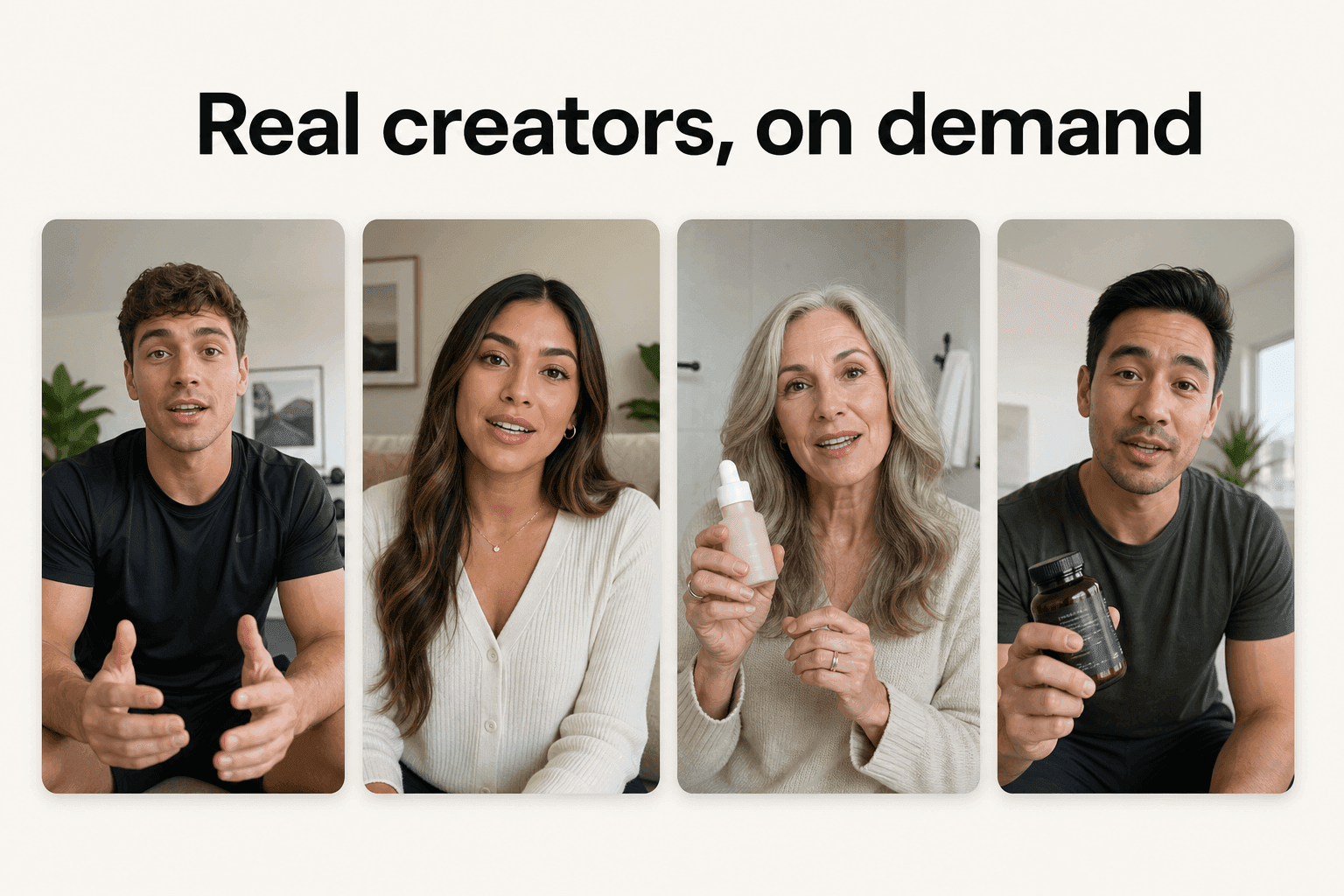
There is a hard ceiling on the image-to-video path. It animates a scene; it does not deliver a script. For UGC, the format that actually converts on paid social, you need a person talking to camera, with a voice and lip-sync and a hook in the first three seconds, not a drifting still. That is a talking-actor job, a separate pipeline entirely, and no amount of image polish replaces it. A pretty frame sells a mood. A person selling a benefit sells the product.
How Novoads fits around a model like Midjourney
Midjourney is not part of Novoads, and saying so plainly is the point, rather than pretending it lives in the box. If your job is ad creative, the image step is one link in a chain that ends in a running video, and Novoads is built for the chain rather than for the single most beautiful render.
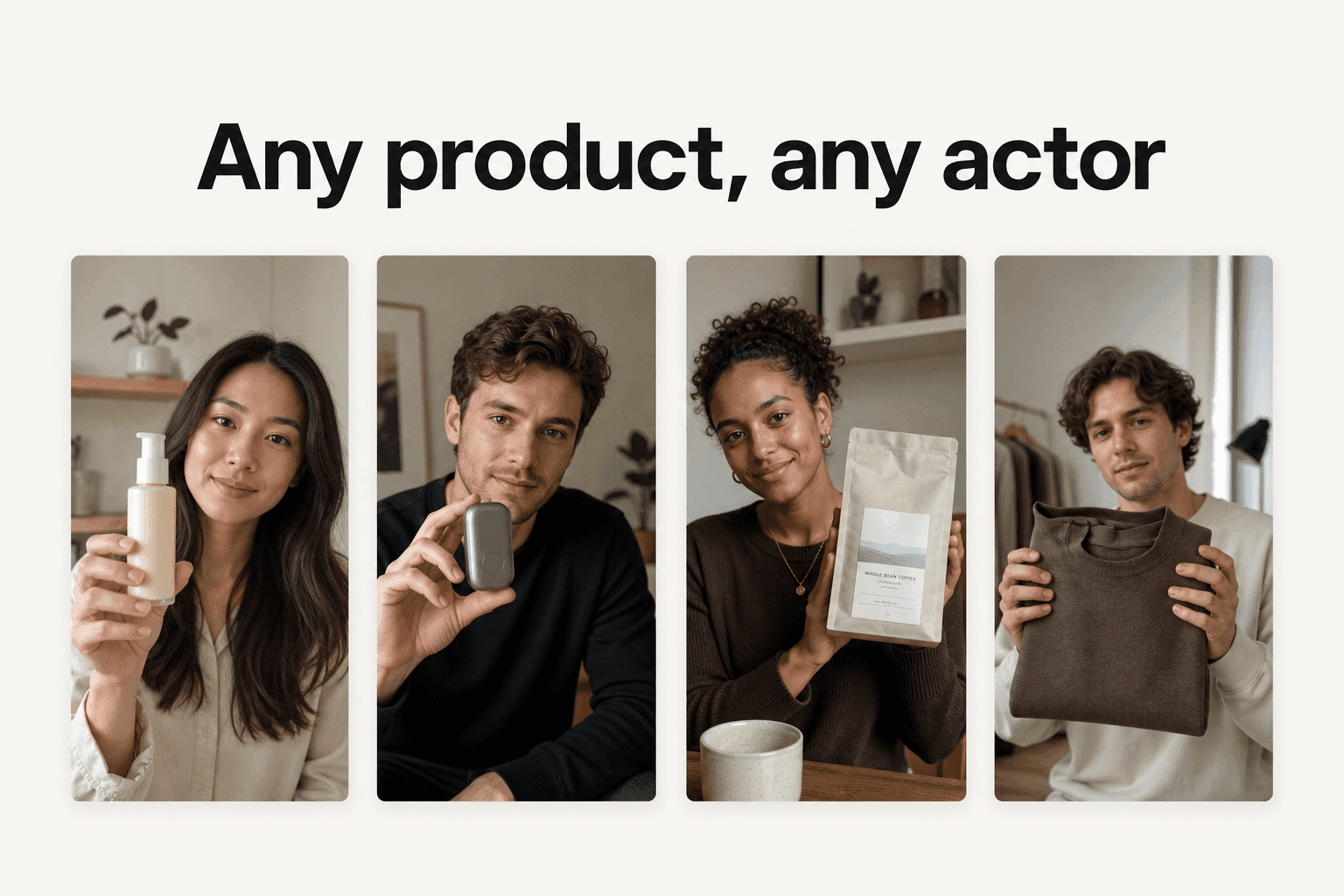
In Novoads, the image models are chosen for ad control: Seedream 5 and Nano Banana Pro for on-brief product images with readable text, and GPT Image 2 to turn an uploaded product photo into an ad creative. From there you keep going in the same place instead of exporting frames around. Animate a still with image-to-video, or hand a script to an AI actor and get a UGC-style vertical video with voice, lip-sync, and captions, formatted for TikTok, Reels, and Meta. The video side runs Seedance 2.0, Kling v3 Pro, and Google Veo 3.1. Our walkthrough on creating ads with AI covers the full loop, and Nano Banana 2 Lite goes deeper on the fast image model.
The distinction is not "our model is prettier than Midjourney." It is that an ad is a pipeline, and a pipeline that runs from product photo to finished, testable video beats a single gorgeous frame you still have to figure out how to move.
The vibe check is not a verdict
Midjourney V8.2 is a real step for the thing Midjourney is best at: making a beautiful image. It is also, right now, a preview behind a flag, with no benchmark, no system card, and no pricing, judged on renders from a handful of well-followed accounts. That is a fine reason to be curious and a poor reason to rebuild your workflow.
For ad-makers the read is calmer than the timeline suggests. A better image model raises the ceiling on your concept frames and your product heroes, and that is worth watching closely. But the ad is the video, and the video needs control, text that renders, and a person who can carry a hook, none of which a beauty-first image model is trying to solve. You can run that whole pipeline, from product photo to finished UGC ad, in Novoads for $49/month. Cancel anytime.
Frequently Asked Questions
Is Midjourney V8.2 a video generator?
No. Midjourney is a text-to-image generator, and V8.2 is an image upgrade. It produces still pictures from text and image prompts, with no timeline, motion, or audio. If you see it called an AI video model, that is a category error. To turn a Midjourney still into a moving ad you would pass it to a separate image-to-video model.
What is the Midjourney --preview flag?
It is a prompt flag that switches a job to the in-development V8.2 build. Midjourney's own note says to use --preview in your prompt to test the latest, and warns that images created with --preview might be a little unpolished. It is an early look, not a stable release you would build a client campaign on.
What do Draft Mode and --sref random do?
Draft Mode generates 24 low-resolution images per run for half the fast hours of a standard job, so you can explore many directions cheaply. Adding --sref random to a draft-mode prompt returns 24 images in 24 different styles at once. The point is breadth of exploration; Midjourney has not published a measured speed multiplier for it.
Is Midjourney good for product ads?
It is excellent at the world around the product: mood, lighting, lifestyle scenes, and concept frames. It is unreliable at the product itself, because a beauty-first model tends to reinterpret your exact item, label, and text. For a legible product still you can run as an ad, control-first image models built for readable text and product fidelity are the safer choice.
Can I turn a Midjourney image into a video ad?
Yes, through image-to-video. You feed a finished still into a video model that adds motion, such as a slow push or a product turning in the light. That gets you a moving clip, but not a UGC ad with a person delivering a script. For that you need a talking-actor pipeline with voice, lip-sync, and captions.
Does Novoads use Midjourney?
No. Midjourney is an external tool that Novoads does not run. Novoads uses its own image models, including Seedream 5 and Nano Banana Pro plus GPT Image 2 for product images, and its own video models for the motion step. The comparison in this post is about where a model like Midjourney fits in an ad pipeline, not about it being inside the product.
Key Takeaways
- Midjourney V8.2 is an AI image model, not a video model. It generates still images from text and image prompts. Anything calling it a video tool has the category wrong.
- V8.2 shipped as a preview behind the --preview prompt flag, announced by Midjourney on June 25, 2026, with no system card, no benchmark, and no pricing published on any Midjourney surface.
- Draft Mode creates 24 rough images per generation for half the fast hours, and --sref random returns 24 different styles in one pass. The real feature is breadth, not a measured speedup.
- Its strength is aesthetics, powered by style references (srefs), moodboards, and personalization. Its weakness for ads is control: your exact product, readable text, and the same look across a batch.
- For an ad, a still is only the top of the funnel. The running ad needs motion and a person who can carry a hook, which a beauty-first image model is not trying to solve.