D2C Marketing for Ad Buyers: Why Creative, Targeting and Measurement All Change
Selling direct removes the retailer from the middle, which turns the ad into the storefront, hands you the customer record instead of a sell-through report, and changes what a variant is allowed to cost.

Mauricio Valdivia
·12 min
Nobody stocks your shelf for you
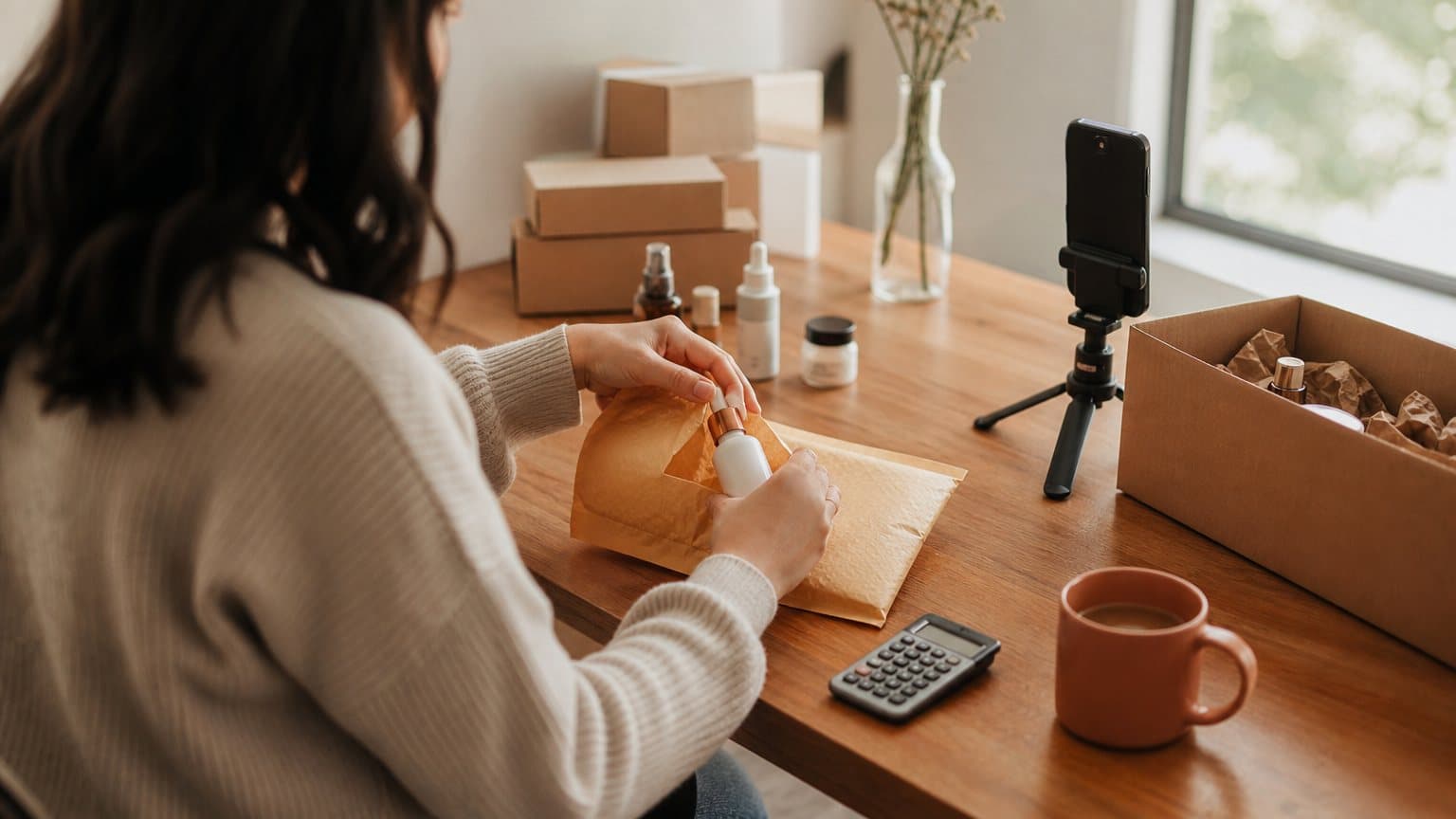
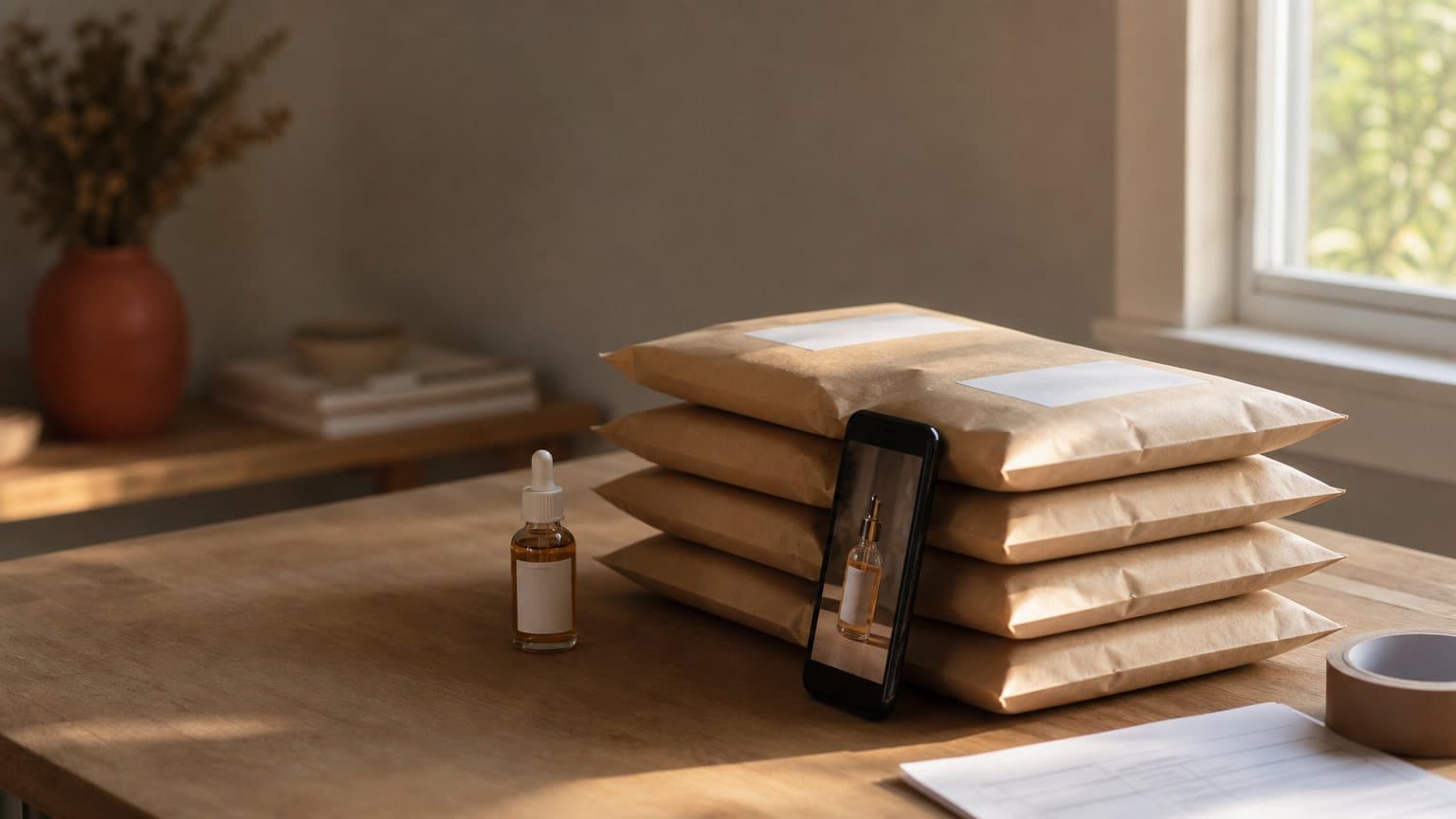
A founder in a spare room, four cases of a $58 serum stacked against the wall, watching a vertical video loop on a phone that is propped against the boxes. Between that video and the money there is one tap. No buyer meeting, no planogram, no end-cap negotiation, no floor staff explaining the bottle to someone who wandered into aisle six. Just the ad, then the checkout.
That is the whole of direct-to-consumer, and the definition is deliberately unglamorous. HubSpot's guide puts it as businesses that "promote and sell their products or services directly to the consumer rather than through intermediaries like wholesalers or retailers." Most explainers stop at that clause, which is the half that describes an org chart. The half that describes your job comes next in the same passage: this is "usually done online through a brand's website or social media, but some also have small retail spaces or pop-ups."
Read that second sentence as an operating instruction rather than a category label. If the store is a website and the shelf is a feed, the ad is not supporting a sale that closes somewhere else. The ad is where the sale happens. Three things move as a result: what the creative has to accomplish, what you are really targeting, and what you are able to count. Every other line in a D2C playbook is downstream of those three.
What "direct" actually removes
The intermediary was doing work you now do
A retailer is not only a distribution step. It is a demand-generation partner that never invoices you for that half of the work:
- Shelf position puts the product in front of someone who is already holding a basket.
- Store staff answer the one question that was stopping the purchase.
- The aisle itself supplies intent, because whoever is standing in it has already decided to buy something in this category today.
Strip that out and every one of those jobs lands on the creative. The feed is not a buying context. The person watching is between two photos of a friend's holiday, has decided nothing, and did not ask you for anything. In wholesale, creative is a support function. In direct, creative is the sales floor.
Direct is a position on a spectrum, not a switch
Almost every brand that calls itself D2C also runs at least one marketplace lane. That is a sensible portfolio rather than a betrayal of the model, and the mistake is not running it. The mistake is pricing all lanes as if an order is an order.
- Marketplace orders arrive net of a take rate. TikTok Shop's US referral fee has been 6% per qualified order since April 1 2024.
- The intermediary sets the entry conditions. Amazon requires a professional selling account, at least three months of selling history and live listings before a seller can upload shoppable listing video at all.
- The intermediary's surfaces do work. Amazon reports, from its own internal 2024 data, that product detail pages with shoppable videos saw an average 23.8% increase in sales compared with pages without them.
That last point is a concession worth making plainly, because the honest question is never "is direct better." It is what an order costs you in each lane after the take rate, and that number is what decides how much you can pay for a click. Amazon product video is a different craft with a different brief, and treating the two lanes as one creative pipeline is how brands end up running horizontal listing videos in a vertical feed.
What you inherit along with the margin
The margin a retailer used to take is real, and it is the part everyone talks about. The liabilities that arrive with it are less discussed:
- Demand creation, in full, every month, with no shelf carrying part of it.
- The customer record, which is now yours to store, message and keep accurate.
- The returns and the support queue, which used to be somebody else's counter.
- A creative calendar, which is a standing operating cost rather than a project.
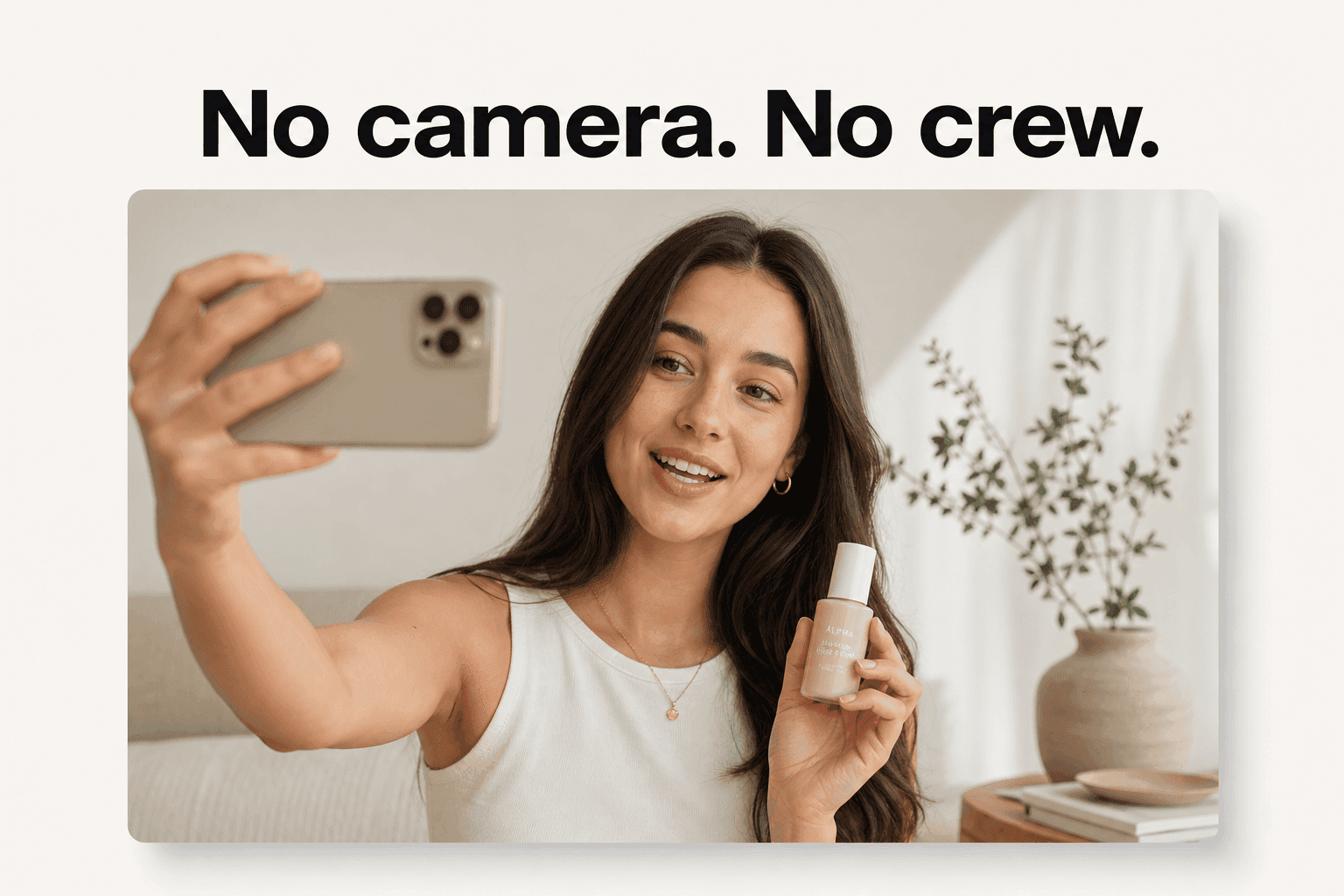
Creative stops supporting the shelf and becomes it
Selling through a retailer means renting its frame
The clearest way to see what changes is to read the specs the intermediary publishes. Amazon's Sponsored Brands video ad-specs page is short and unambiguous:
- Aspect ratio: "16:9 (square pixel) only".
- Audio: "by default, videos always start without audio".
- Runtime: "between 6 and 45 seconds (20 secs or less highly recommended)".
Horizontal, silent, short. Those three constraints are not arbitrary: they describe a merchandising unit that sits beside a search result, seen by someone who typed the category into a box a second ago. The ad does not have to create desire. It has to win a comparison that is already underway.
Selling direct means owning the frame and owing it a reason to watch
The feed hands you the opposite problem. TikTok's Spark Ads documentation states there are "no restrictions on video ratio, video resolution, file type, video duration, bitrate, and file size" on the organic video you are sparking. Nothing is dictated, which means nothing is decided for you, and none of the format's defaults are doing any persuading on your behalf.
TikTok's own creative guidance names the consequence directly: "The first 3-6 seconds of your ad are precious." In the retail lane the viewer was searching. In the direct lane you are interrupting, and the interruption has to justify itself before the product is even visible.
| Dimension | Through the retailer | Direct in the feed |
|---|---|---|
| Aspect ratio | 16:9 only | Whatever you shot |
| Audio | Starts muted | Sound carries the hook |
| Length | 6 to 45 seconds | Your call |
| Viewer intent | Already searching | Not thinking about you |
| The ad's job | Merchandise the listing | Create the demand |
The demonstration the packaging used to do
On a shelf, the box does a surprising amount of the selling:
- Scale, settled the second a hand closes around it.
- The claims panel: texture, ingredient list, certification badge, size in millilitres.
- Reassurance, from the plain fact that the object is real and in the room.
A shopper picks it up, turns it over, and three objections are answered without anyone speaking.
Sell direct and nobody picks anything up. Someone has to hold the bottle on camera, open it, pump it onto the back of a hand, and say out loud the sentence that was printed in six-point type on the back panel. That is the actual reason creator-shaped video dominates direct advertising, and it has nothing to do with authenticity being fashionable. It is the only format that reproduces the part of the purchase the packaging used to handle. If the category is new to you, what a UGC creator is covers the production side of that.
Targeting is a relationship, not a rented segment
You buy the customer, not the sell-through report
A wholesale brand learns about its buyers through a distributor's reorder volume, weeks late, with no name attached. It knows a region moved 400 units. It does not know who, when, in what basket, or whether any of them came back.
Selling direct replaces that with a row in your own database:
- A name and an email address, attached to a person rather than to a region.
- An order value and a first-purchase SKU, which tells you which entry point actually worked.
- A date, and eventually a second date, which is the only honest read on whether the product is any good.
That record, not the retailer's margin, is the asset selling direct actually buys you. It also rewrites the targeting question. You stop asking which demographic resembles your imagined customer and start asking which of your existing buyers is worth finding more of, which is a question only a direct seller can even pose.
A creator's handle is targeting you cannot buy in a dropdown
Both large ad platforms now let the identity of the person on camera travel with the ad. Meta states that "Once you have your creator partnership in place, you can run partnership ads with the creator's handle." TikTok's Spark Ads documentation offers the same shape, letting advertisers "Publish ads using organic posts made by other creators (with their authorization)."
Meta reports from its own data a "19% lower cost per acquisition when adding partnership ads into business-as-usual campaigns," which is a vendor figure and should be read as directional rather than as a benchmark. The mechanism is more interesting than the number. An ad delivered under a creator's handle reaches a stranger as a person's recommendation instead of a brand's claim, and that reframing happens before a single targeting parameter is set.
The machine is already editing your ad
One piece of housekeeping belongs in every direct account audit, because it quietly changes what your results mean. Meta's Advantage+ creative page states that "Some enhancements may be turned on by default, but you can turn them off at any time."
If you do not know which enhancements are active, you are reading performance data for a creative you did not entirely author, and comparing two concepts whose treatments may differ. Check the toggles before you conclude anything about a variant. That is the first step of any serious ad creative testing process, and it is the step most accounts skip.
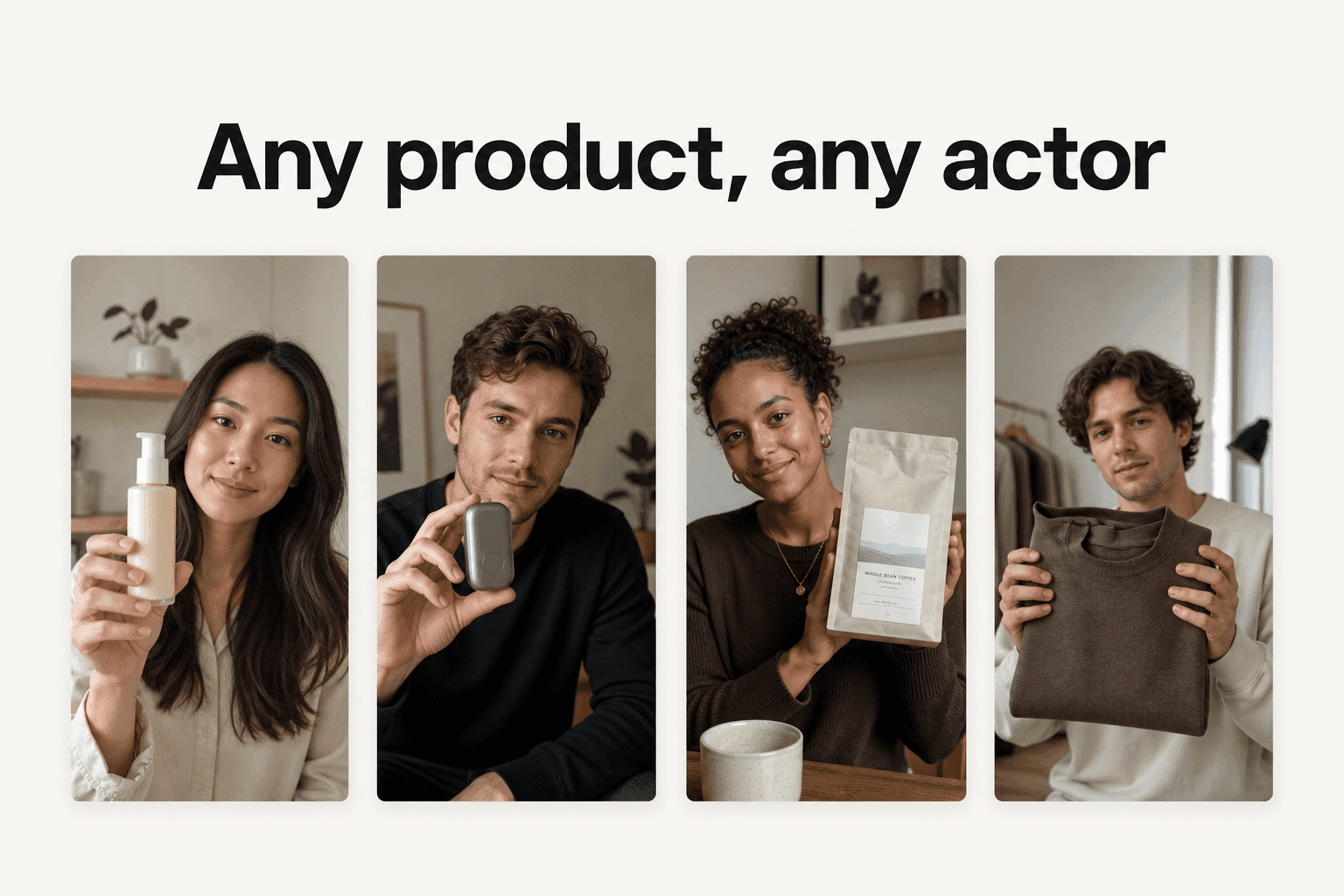
Measurement gets better and harder at the same time
You can finally see the order
Wholesale measurement runs on proxies: sell-through rates, distribution points, brand tracking studies, a panel estimate of share. Direct measurement runs on orders. You can connect a purchase to the creative that preceded it with a directness a wholesale brand structurally cannot buy at any price.
This, more than margin, is the argument for selling direct. Margin is a number you can also improve by renegotiating with a distributor. A closed loop between creative and revenue is not available in the wholesale model at all.
Worked example: what a variant is allowed to cost
Take that $58 serum. The unit costs and shipping below are illustrative placeholders for your own numbers; the only figure here that comes from a published source is the marketplace take rate.
- Direct lane. $58 order, $14 to make, $7 to pick, pack and ship. Contribution before advertising: $37.
- Marketplace lane. Same $58 order through TikTok Shop, less the published 6% referral fee of $3.48, less the same $21 of product and fulfillment. Contribution before advertising: $33.52.
The gap is $3.48, roughly 9% of the contribution, and it is the entire reason the two lanes deserve separate targets. At break-even the direct order can absorb $37 of acquisition cost and the marketplace order can absorb $33.52. Hold half the contribution back and the two allowable CACs are about $18.50 and $16.76.
Now put the creative next to those numbers. On the Pro plan, 100 credits cost $79, which is $0.79 a credit, and a 5-second Seedance 2.0 Mini clip costs 1.5 credits. That variant is about $1.19. Against $37 of contribution it is a rounding error. The line item that is not a rounding error is the order you never won because the only creative in rotation was the one you could afford to shoot in March.
If you are choosing where that creative gets made, the tools in this category are converging on features and separating on packaging, which we picked apart in Arcads vs HeyGen.
The platform's number and your bank account will disagree
The discipline that keeps a direct account honest is a division of labour between two systems:
- Rank creatives inside the ad platform. It is the only party that observed the auction, so it is the only one that can say which of five variants delivered the cheapest result.
- Count money in your own order log. It is the only system that knows what actually shipped, what came back, and what the second purchase was worth.
Treating a platform's reported total as your revenue is how a good month ends in confusion. Creative analytics is the layer that reconciles the two, and it is also why a high CTR on its own settles nothing about which creative deserves next month's budget.
The creative calendar a direct brand actually needs
Volume the shelf never asked for
TikTok reports from its own data that campaigns running "5-7 creatives alongside weekly refreshes drove the strongest ROAS" on average, and its playbook is explicit that it is offering observations rather than rules. Take the shape rather than the digit: several concepts live at once, replaced on a weekly rhythm.
Compare that with a wholesale production calendar, which is two shoots a year timed to trade shows and seasonal resets. The direct model needs a bench, and a bench is a standing cost rather than a project budget. How deep the bench has to be is set by how many tests your conversion volume can resolve, which is the arithmetic in how many ad creatives you actually need.
One idea, two wrappers
The same footage usually deserves to run twice, in two different wrappers:
- Brand-owned. The ad arrives as your claim, from your account, with your name on it.
- Under the creator's handle. Identical footage, arriving as somebody's recommendation.
The trust signal differs, the production does not. And because Spark Ads accept the organic file with no ratio, resolution or duration restriction, the sparked version needs no separate export at all.
Where your competitors' creative already is
Direct brands compete in public. Meta's Transparency Center states that "People can search for all active ads running across products from Meta," which means every live creative your competitors are running is sitting in a searchable index right now. Reading them systematically is cheaper than any research panel, and taking a competitor's ad apart is a faster route to a testable concept than another brainstorm.
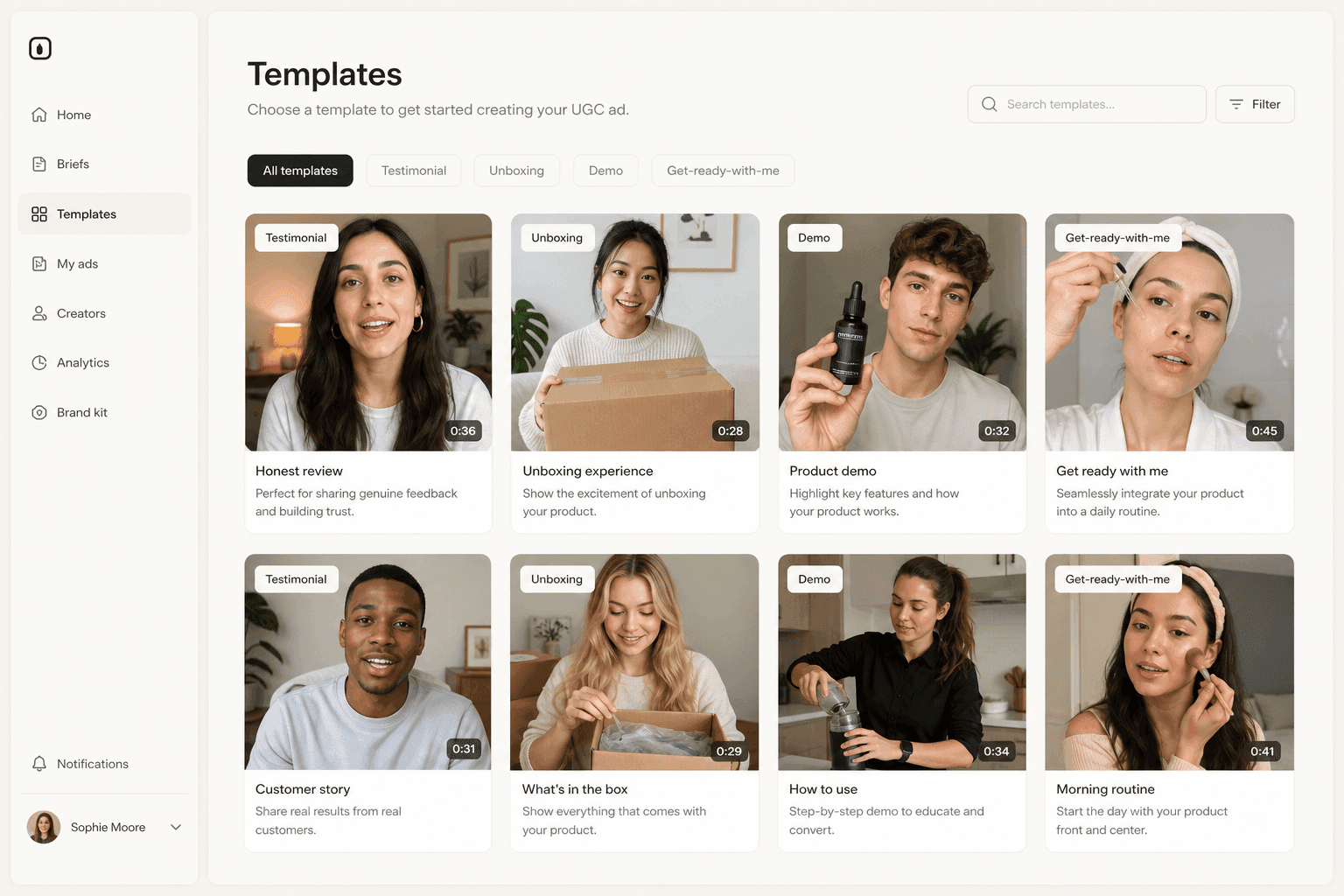
How Novoads solves the D2C creative-supply problem
Novoads turns a product photo and a script into a finished UGC-style video ad, which is the specific bottleneck the direct model creates and the wholesale model never had.
What a variant costs when you generate it
You upload the product image, write or auto-generate the script, and pick an AI actor. The price list is short:
- 5-second Seedance 2.0 Mini clip: 1.5 credits.
- 10-second clip: 2.5 credits.
- An uploaded product image turned into an ad image: 0.3 credits.
- Pro plan: $79 a month for 100 credits.
Which is why the concepts you sketched over coffee can exist as finished clips the same afternoon.
Output comes in 9:16, 1:1 and 16:9, which matters more in a mixed-lane business than it sounds. The same idea can ship vertical to the feed and horizontal to the retail lane without a second production day, and platform-specific ad specs stop being the reason a concept only ever ran in one place.
What generation does not fix
Three constraints survive cheap supply, and pretending otherwise is how a brand ends up with a hundred variants and the same revenue:
- The take rate. A marketplace order still arrives net of its referral fee, no matter how the creative was made.
- The attribution gap. Your order log is still the only honest revenue number.
- The idea. A weak concept rendered forty ways is one weak concept.
What changes is which concept gets to enter a test window. When the fourth idea costs credits instead of a shoot, you stop defending the three you already paid for. That is a different calculation from hiring, and what UGC creators charge per video is the comparison worth running before committing either way. If you are still choosing an approach, the platform landscape for brand UGC lays out the options side by side.
The middle is gone, and the ad is what replaced it
Removing the wholesaler and the retailer does not simply move margin onto your side of the ledger. It moves a job. Everything the shelf was quietly doing, creating context, demonstrating the product, answering the objection, closing in an aisle you never paid for, is now the responsibility of a video that has three to six seconds to earn its place. The brands that struggle with direct are rarely the ones with a bad product. They are the ones still budgeting creative like a company whose selling is done for it somewhere else.
Sell direct and the ad stops being marketing. It becomes the store.
If you want a bench deep enough to keep that store stocked without booking a shoot for every idea, Novoads is $49/month. Cancel anytime.
Frequently Asked Questions
What is D2C marketing?
HubSpot's guide defines it as when businesses promote and sell their products or services directly to the consumer rather than through intermediaries like wholesalers or retailers, and the same passage adds that this is usually done online through a brand's website or social media, though some brands also run small retail spaces or pop-ups. The second half is the operative one for anyone buying ads: if the storefront is your own site and the shelf is a feed, the ad has to create the buying context rather than support one that already exists.
How is D2C marketing different from B2C marketing?
B2C describes who you sell to. D2C describes how the product reaches them. A shampoo brand sold in supermarkets is B2C and not direct, because a wholesaler and a retailer sit between the brand and the shopper. The practical difference for advertising is where demand gets created: in the retail model the shelf and the store staff do part of the closing, so the ad's job is familiarity. Remove the retailer and the ad inherits the demonstration, the objection handling and the click.
Does selling on Amazon or TikTok Shop mean a brand is not D2C?
Most brands that call themselves direct run at least one marketplace lane alongside their own store, and that is a normal shape rather than a contradiction. What matters is that you price the lanes separately. TikTok Shop's US referral fee is 6% per qualified order, and Amazon gates parts of its creative surface behind account requirements, for example a professional selling account plus at least three months of selling history and live listings before you can upload shoppable listing video. Those costs and conditions come out of the same contribution your ad budget spends against.
What creative does a D2C brand actually need?
Enough distinct concepts to keep several running at once and to replace them on a regular cadence. TikTok reports from its own data that campaigns running 5 to 7 creatives alongside weekly refreshes drove the strongest ROAS on average, and its playbook is explicit that it is describing observations rather than rules. Read it as a shape rather than a target: a handful live, refreshed often, which is a fundamentally different production rhythm from the two campaign shoots a year a wholesale brand can survive on.
How should a D2C brand measure ad performance?
Rank creatives inside the ad platform, then count money in your own order log. The platform is the only place that can tell you which of five variants delivered the cheapest result, because it is the only party that saw the auction. Your store is the only place that knows what actually shipped, what got refunded and what the second order was worth. Treating the platform's total as your revenue number is how accounts end a good month confused.
Does AI-generated video change D2C ad economics?
It changes the cost of a variant, which is the supply half of the problem. On Novoads a 5-second Seedance 2.0 Mini clip costs 1.5 credits and a 10-second one costs 2.5 credits, turning an uploaded product image into an ad image costs 0.3 credits, and the Pro plan is $79 a month for 100 credits, which puts a short clip at roughly $1.20 of credits. Against a contribution of tens of dollars per order, the variant stops being the constraint. The take rate, the attribution gap and the quality of the idea are all untouched.
Key Takeaways
- The definition that matters to a media buyer is the second half of it. Selling direct means selling through your own site and social feeds, so the ad is not supporting a sale happening elsewhere. The ad is where the sale happens.
- Selling through a retailer means renting its creative frame. Amazon's Sponsored Brands video specs accept 16:9 square pixel only, start without audio by default, and cap the cut between 6 and 45 seconds. In the feed you inherit the opposite problem: TikTok puts no ratio, resolution or duration restriction on a sparked organic video, so nothing about the format earns attention for you.
- Direct is a position on a spectrum, not a switch. Most brands run a marketplace lane too, and each lane has its own take rate. TikTok Shop's US referral fee has been 6% per qualified order since April 1 2024, and that comes out of the same contribution your ads are spending against.
- The real asset of selling direct is the order record, not the margin. You get a name, a date, a basket and a first-purchase SKU, which is the input a wholesale brand structurally cannot buy.
- Cheap generation moves the supply constraint and nothing else. It does not lower a marketplace take rate, it does not fix attribution, and it does not make a weak concept work. What it removes is the quarter where you ran one creative because that was the one you could afford to shoot.