Novoads vs HeyGen: Handheld UGC Ads or Polished AI Spokesperson
Novoads and HeyGen both make believable AI video. HeyGen leads on polished avatar and spokesperson video with a free tier and personalized video at scale. Novoads centers handheld product UGC (in hand through a custom actor made from a photo of someone holding your product), 30+ languages with real regional accents, and a $49/month start. Here is how they compare and when to pick each.

Mauricio Valdivia
·10 min

Both look real. The job is what differs.
A founder records her first AI video in HeyGen and it is genuinely good: a polished spokesperson looks into the lens and explains her product in clean, even light, the kind of clip that would sit comfortably on a landing page or in an onboarding email. HeyGen has earned that reputation. Its avatars are convincing, it offers a free tier to start, and it can turn one script into personalized video at scale.
Then she opens her ad account and the brief is different. She does not need a presenter explaining the product. She needs a person holding it, turning it over in their hands, sounding like a creator who actually bought it, in the accent her market speaks. Same polish, different job.
That second job is what Novoads is built for, and it is the honest line between these two tools. This is a head-to-head, not a hit piece. HeyGen is excellent at the thing it optimizes for, and so is Novoads. The two simply bet on different parts of the funnel. If you want the wider field, our best HeyGen alternatives guide covers the roundup; this one is the close-up.
What each one is built for
Before the dimensions, it helps to name what each tool optimizes for, because that is the whole comparison in miniature.
HeyGen: the spokesperson studio
HeyGen is built around the AI avatar: a presenter who looks into the camera and delivers your script with studio-clean polish. That makes it a natural fit for explainer videos, product walkthroughs, onboarding clips, and corporate communication, the places where a consistent brand face talking to camera is exactly what you want. It offers a free tier plus paid plans, so you can try the format at no cost, and it is strong at personalized video at scale: one script, many tailored versions for different recipients. Think of a sales team that wants the same demo addressed to a hundred named accounts, or a knowledge base where every article ships with a short talking-head clip. When the deliverable is a polished person explaining something, HeyGen is in its element, and it has built its whole product around that strength.
Novoads: the product-and-language specialist
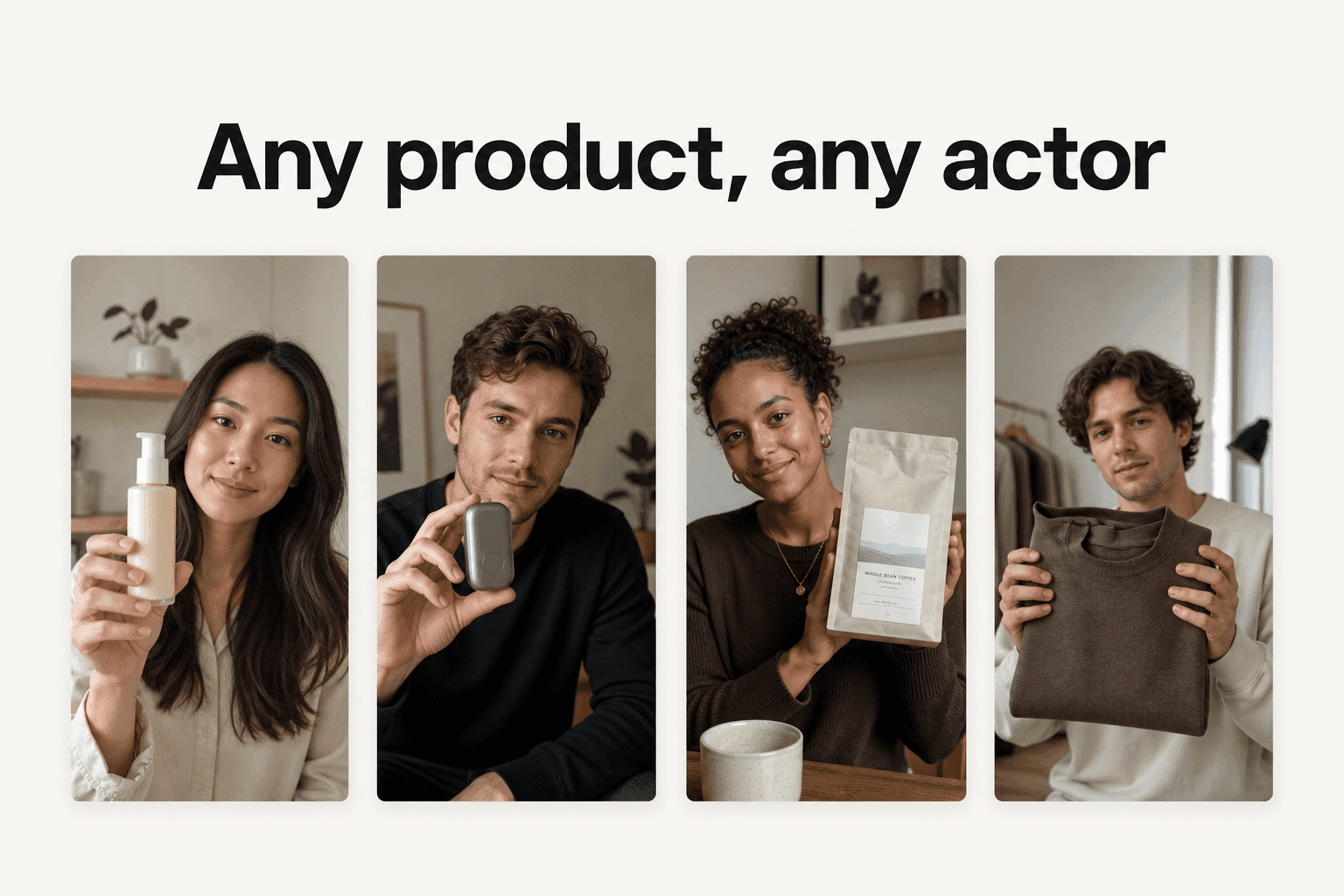
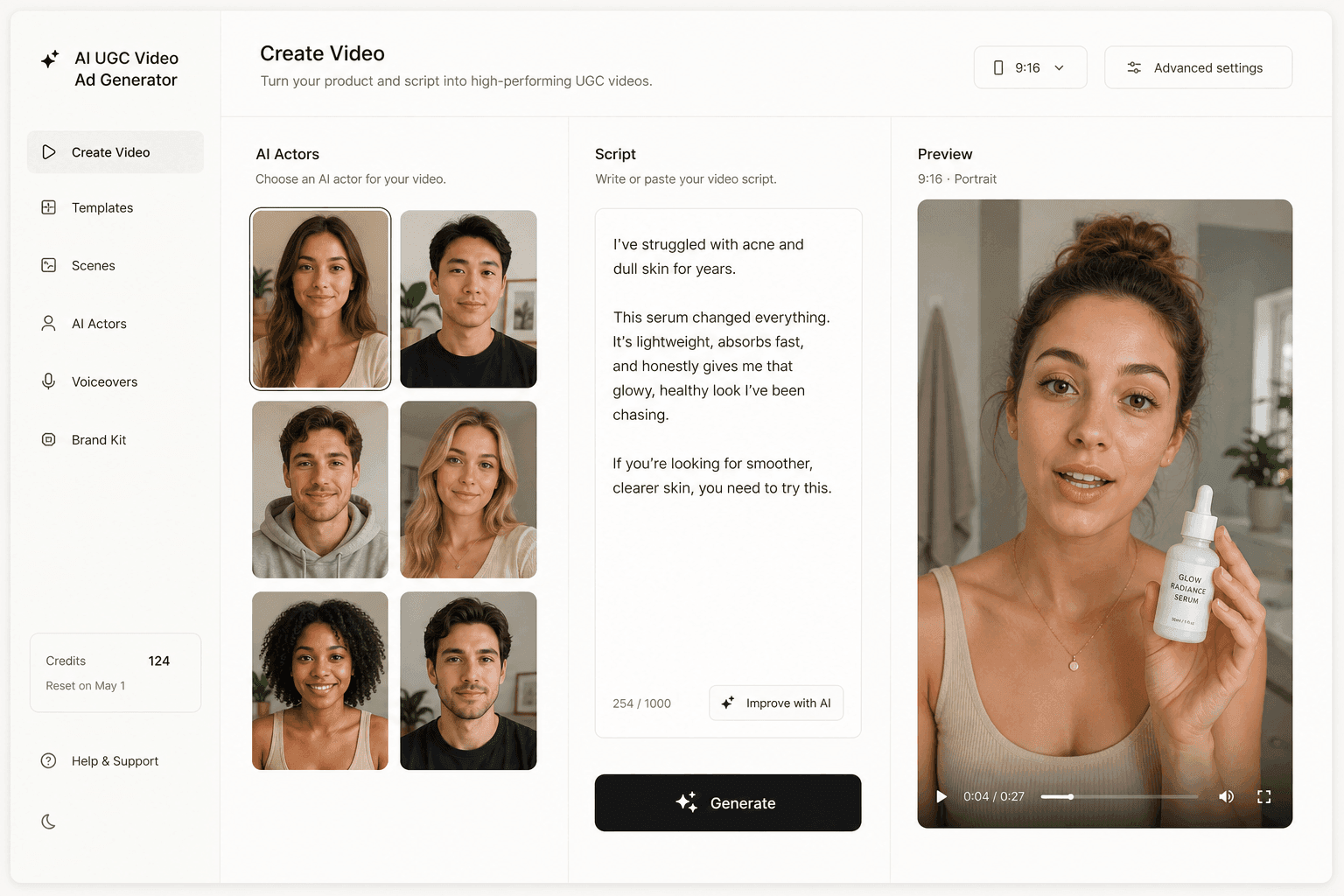
Novoads is built around the last mile of an ecommerce ad: the product on camera, in the right language, ready to publish. You write or auto-generate a script, pick from 100+ AI actors (or, to put the product in hand, create a custom actor from a photo of someone holding it), and get a vertical ad with voice, lip-sync, and captions. It also runs Seedance, Kling, and Veo as a separate route for generated video clips, and it ships ads in 30+ languages with real regional accents, not one generic version of each. For a catalog-heavy store that has to feed a paid-social account fresh creative every week, that product-first default is the point: the ad is built to show the thing you sell, not just a presenter reciting a script. The bet is that for most advertisers the avatar was never the bottleneck. The finished, local, product-in-hand ad was.
What Novoads and HeyGen share
The marketing around AI video makes every tool sound singular. On the things buyers worry about most, these two actually line up:
- Believable on-camera people. Both clear the realism bar most viewers judge on. Neither looks obviously synthetic in a well-made clip.
- Script to video in minutes. Both turn a written script into a finished talking video without a shoot, a crew, or a studio.
- Voice and lip-sync built in. Both generate the voice and sync it to the mouth, so the output is a watchable clip, not raw footage.
- A spectrum of looks. Both give you a range of on-camera people to match the audience you are addressing.
So this is not a quality argument. Everything below is about where they diverge: defaults, the shape of the output, and the kind of work you are optimizing to ship.
The head-to-head, dimension by dimension
Here is the snapshot, then the four dimensions that actually move the decision.
| Dimension | Novoads | HeyGen |
|---|---|---|
| Built for | Product-led, multilingual UGC | Avatar and spokesperson video |
| Primary input | Script plus actor (a custom actor from a photo of someone holding the product for product in hand) | Script for an avatar |
| Default frame | Creator to camera; product in hand with a custom actor | Presenter to camera |
| Voice and accent | 30+ real regional accents | Polished, studio-clean |
| Output | Voice, lip-sync, captions, ad-ready | Polished spokesperson clip |
| How to start | $49/month | Free tier plus paid plans |
| Best fit | Product UGC at volume | Explainers, training, personalized video |
Avatar polish and spokesperson realism
This is the dimension HeyGen owns. It is built around the AI avatar, and a polished presenter delivering a script to camera is exactly what it is engineered to produce. For explainer video, onboarding, training, and personalized spokesperson content where a consistent brand face is the point, that polish is the reason teams reach for it. A buttoned-up presenter is an asset in those formats: it signals that the brand is established and the message is official, which is the right register for a sales demo or a help-center walkthrough. Novoads' actors are believable and cover the range an ad needs (age, gender, look, accent), but if your single most important variable is the most polished spokesperson talking to camera, HeyGen has built its whole product there, and it is fair to say so. Edge: HeyGen.
Product in hand, accent, and the finished ad
This is where Novoads is built differently. The ad it is built for is a creator holding your actual product, not a presenter describing it, and there are two routes to that shot: a custom actor made from a photo of someone holding your product (Create Actor > Upload), or a Discover product template, which swaps your uploaded product image into the creator's hand. A stock library actor's hands are empty, so the product-in-hand ad starts from one of those two. On top of that sit two things ecommerce teams feel daily. The first is language: 30+ languages with real regional accents, so the ad sounds like a local creator in Mexico, Spain, or Argentina rather than one flat "Spanish" for all three. A generic translation reads as imported; a real regional accent reads as a neighbor, and in UGC that difference is most of the trust. The second is output: the file already ships with voice, lip-sync, and captions, formatted for Meta and TikTok. You get an ad, not a clip you still have to finish in a separate editor. Edge: Novoads.
Scale, but of different things
Both tools scale, so the honest question is what each one scales. HeyGen is built to scale personalized spokesperson video: one script, many tailored versions, ideal when the same presenter has to address a thousand recipients or explain a feature a dozen ways. Novoads is built to scale ad variations: one product image, many hooks, many accents, the creative volume a paid-social account burns through every week. The shape of "more" is different on each side. HeyGen multiplies the audience for one message; Novoads multiplies the messages for one product. Neither is "more scalable" in the abstract; they scale the output their buyers actually need more of. Even, on different axes.
Free tier and how you start
The split here is a posture, the one we call the Commitment Curve in our alternatives guide: how you get from curious to a finished test. HeyGen offers a free tier, so you can produce a first avatar clip at no cost, a real advantage if a $0 entry is a hard requirement. Novoads opens at $49 a month, cancel any time, so you ship a real product-in-hand ad, with a custom actor made from a photo of someone holding your product, and judge the exact thing you would be paying for. The honest framing is that the two answer different questions: a free clip tells you whether you like the avatar format, a finished product ad tells you whether it converts in your own ad account. HeyGen is the cheaper door; which one fits depends on whether you want a free spokesperson clip or a finished product ad to evaluate. Edge: depends on what you are testing.

A worked example: one product, a week of tests
Picture the concrete job that separates the two. You sell a $40 skincare serum and your paid-social account needs fresh creative this week: five hooks to test on TikTok, each in two markets, Mexico and Spain. That is ten ad-ready clips, and they have to read like real creators, not a brand presenter.
In Novoads the loop is short and you repeat it:
- Upload a photo of someone holding the serum once, to create a custom actor (Create Actor > Upload).
- Write or auto-generate five hooks.
- For each hook, pick the Mexican accent, generate, then the Castilian accent.
- Each clip comes back as an ad-ready vertical with voice, lip-sync, and captions, in about four minutes, at the talking-actor rate of 10 credits per started minute of video (about $6.90 for a clip up to a minute long).
Ten locally-voiced, product-in-hand ads. At 10 credits a clip, the whole test battery is 100 credits (10 clips x 10 credits), about $70, twice the 50 credits a month in Starter and still less than you would pay a single freelance creator for one of them, and our video ad production cost guide runs that math in full. You know it worked when the Mexican cut and the Castilian cut read like two different local creators, not one recording with the words swapped, and when you can launch all ten as separate ad variations and let the platform find the winner. The same week, if you also needed a polished two-minute explainer with one brand presenter walking through how the serum works, that is the clip HeyGen's avatar polish was made for. Different deliverable, different tool, same product. That is the comparison in one task: the avatar was never the hard part, shipping the local, product-in-hand ad at volume was.
The honest trade-offs
No tool is free of them, and pretending otherwise is how comparison posts lose your trust. Here is where each side asks you to give something up.
Where Novoads gives something up:
- It is purpose-built for product-led ad UGC, not a general video studio. If you also want cinematic b-roll, long-form explainers, or artistic clips, it is the wrong shape, and a presenter-led tool is the better home.
- There is no free tier. Novoads starts at $49 a month, so if a $0 entry point is a hard requirement, that is HeyGen's to give.
- It optimizes for vertical, social-first product ads. For presenter-led explainer or onboarding video with studio-clean delivery, HeyGen's spokesperson polish is the better shape.
- The actor catalog is curated (100+ AI actors) and built for UGC variety, not for locking in one brand presenter who recurs across a year of content.
Where HeyGen asks something different:
- It is built around the avatar and the spokesperson, which is a different optimization than handheld, product-in-hand UGC with a native regional accent. When that local-creator ad is the deliverable, a product-led tool is the more direct fit.
The pattern is consistent: HeyGen optimizes for the polished presenter, Novoads for the finished, local, product-in-hand ad. Neither is a flaw so much as a personality.
When to choose each
The honest version of this is not a winner. It is a fit test, and most of the decision falls out of two short lists.
Choose HeyGen when:
- You need a polished AI avatar or spokesperson presenting to camera.
- You produce explainer, onboarding, training, or corporate video and want studio-clean delivery.
- You want personalized video at scale: one script, many tailored versions.
- The face has to stay consistent across a long campaign or a whole knowledge base.
- A free tier to start is a requirement.
Choose Novoads when:
- The creator should hold your actual product, through a custom actor made from a photo of someone holding it or a Discover product template.
- You sell across markets and the voice has to sound local, with real regional accents.
- You want an ad that ships with voice, lip-sync, and captions, ready for Meta and TikTok, not a clip to finish elsewhere.
- You need volume: many hooks and many variations to feed paid social every week.
- You are still testing the format and want to find out on one month of the $49 plan, cancel any time.
If you are weighing whether AI can stand in for a hired creator at all, AI versus UGC creators is the better starting point, and what a UGC creator actually is covers the format itself. For the broad field of tools, our comparison of AI video ad platforms goes wider, and if Arcads is also on your list, Novoads versus Arcads is the sibling close-up.

How Novoads approaches product-led, multilingual UGC
Novoads is built for the exact moment an ecommerce team needs the product itself on camera, in the language the audience actually speaks. You write or auto-generate a script, pick an AI actor or create a custom one from a photo of someone holding your product (a stock actor's hands are empty), and get a vertical UGC ad with voice, lip-sync, and captions, formatted for TikTok, Reels, and Meta. It runs multiple frontier models so you are not betting on one engine, and it produces ads in 30+ languages with real regional accents rather than a flat translation. The headline time is about four minutes, and a clip runs from a few dollars instead of a few hundred.
None of that makes HeyGen worse. It makes the two a clean trade: HeyGen for the polished spokesperson and personalized video at scale, Novoads for the finished, local, product-in-hand ad. If you are still mapping the category, our guide to UGC ads is the next read.
The landing page or the ad account
There is no winner of Novoads versus HeyGen, because they are not running the same race. HeyGen is the spokesperson studio, and for a team that wants a polished presenter or personalized video at scale, it is an easy yes. Novoads is the product-and-language specialist, and for the much larger group of advertisers whose real job is shipping local, product-in-hand ads at volume, it fits the work better, and one month of the entry plan is what it costs to find out. The mistake is treating them as rivals for one slot; the teams that win usually keep the polished presenter for the landing page and the product-in-hand creator for the ad account. Decide by the ad you need, not the face you can make, and the answer picks itself. You can produce your first product-in-hand AI UGC ad with Novoads, using a custom actor made from a photo of someone holding your product, on the $49/month Starter plan at novoads.ai. Cancel anytime.
Frequently Asked Questions
Is Novoads or HeyGen better?
Neither is universally better; they optimize for different jobs. Both produce believable on-camera video, so realism is rarely the deciding factor. HeyGen leads on the polished AI avatar: spokesperson and explainer video, a free tier, and personalized video at scale. Novoads centers product-led, multilingual UGC: a product image as the primary input, 30+ languages with real regional accents, and ad-ready output. Pick by the deliverable you actually need.
Is HeyGen good for UGC ads?
HeyGen is built around the AI avatar, so it shines at spokesperson, explainer, and onboarding video where a polished presenter delivers a script to camera. For a handheld, product-in-hand UGC ad with a native regional accent, Novoads centers exactly that: you create a custom actor from a photo of someone holding your product and pick its voice in your market's accent (a stock library actor's hands are empty). Many teams use both, one for the polished presenter and one for the creator-style product ad.
Does HeyGen have a free plan, and how does pricing compare?
Yes. HeyGen offers a free tier plus paid plans, so you can try the avatar format at no cost. Novoads has no free tier: it starts at $49 a month, and what that buys is a finished product-in-hand ad, built on a custom actor made from a photo of someone holding your product, to evaluate rather than a watermarked sample. If a $0 entry point is a hard requirement, HeyGen has one; if you would rather judge the finished local ad you would actually run, Novoads is built for that.
Which is better for ecommerce product ads?
Novoads, in most cases, because uploading a product image is the primary input and the output ships ready for Meta or TikTok with voice, lip-sync, and captions, in the accent your market speaks. HeyGen is the stronger pick when a polished presenter explaining the product is the deliverable, such as an explainer or onboarding clip. Plenty of teams run both.
Does Novoads support multiple languages?
Novoads ships ads in 30+ languages with real regional accents: distinct regional variants rather than one generic version of a language. If your ad needs to sound like a local creator in Mexico, Spain, or Argentina rather than one flat 'Spanish' for all three, that accent depth is the reason to look at Novoads.
Can I use Novoads and HeyGen together?
Yes, and many teams do. A common split is HeyGen for polished spokesperson and explainer video, or personalized video at scale, and Novoads for fast, multilingual, product-in-hand UGC (through a custom actor made from a photo of someone holding your product) that ships across markets every week. They are not mutually exclusive; they are good at different parts of the same funnel.
Key Takeaways
- Both Novoads and HeyGen make believable on-camera video. The decision is fit, not realism, because both clear that bar.
- HeyGen's edge is the polished AI avatar: spokesperson and explainer video, a free tier to start, and personalized video at scale.
- Novoads' edge is the finished local ad: a product image as the primary input, 30+ languages with real regional accents, and output that ships with voice, lip-sync, and captions.
- They scale different things. HeyGen scales personalized spokesperson video; Novoads scales product-ad variations.
- The clearest practical split is how you start: HeyGen offers a free tier, while Novoads lets you ship a real product-in-hand test from $49/month, with a custom actor made from a photo of someone holding your product.