Best Billo Alternatives for UGC Ads: 7 Tools That Skip the 7-to-12-Day Wait
Billo delivers real human-creator UGC, but you brief creators, ship them your product, and wait 7 to 12 business days per video. Here are seven alternatives compared on cost, turnaround, and the kind of ad each one makes.

Mauricio Valdivia
·Updated ·12 min

The video is great. You waited two weeks and mailed them your product to get it.
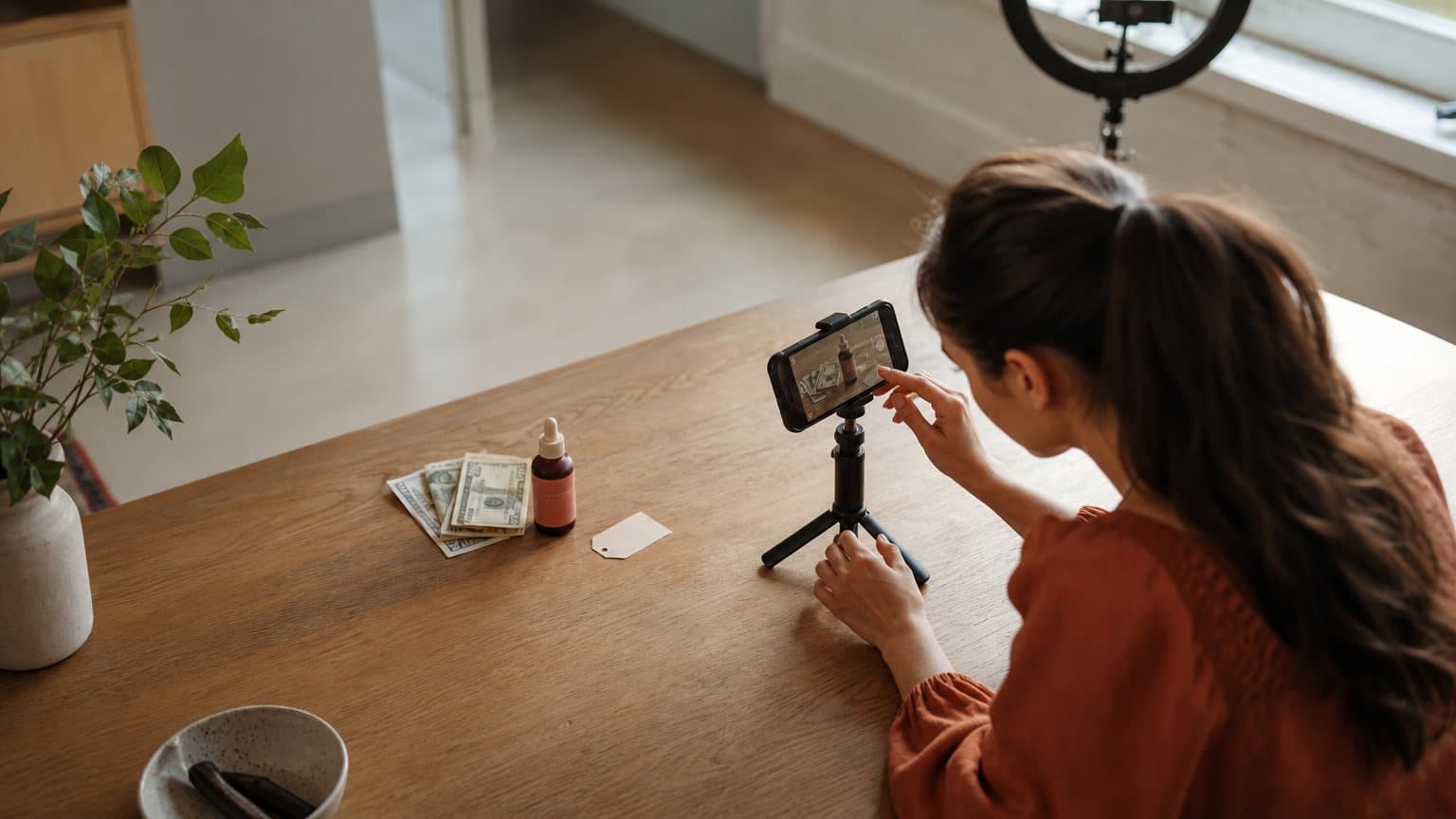
A performance marketer wants to test whether UGC can sell a new skincare serum. She opens Billo, writes a brief, and picks a creator. The catch arrives before the video does. First she has to box up a bottle and ship it, because the clock does not start until the product reaches the creator. Then she waits: Billo's own site puts turnaround at 7 to 12 business days. Two weeks later she has one genuinely good video, and one data point.
That is not a knock on Billo. A real person holding your product on camera is exactly what UGC is supposed to feel like, and Billo does it with a large network of vetted human creators. The friction is the shape of the model. Human UGC is brief-and-wait: a per-creator fee, a shipping step, a production window, and a fixed 2 rounds of revisions, repeated for every angle you want to try. If your job is one flagship testimonial, that is fine. If your job is finding which of ten hooks converts before Friday, the weeks add up. This guide compares seven alternatives on the three things that actually decide the pick: what it costs to test, how fast you get a video, and the kind of ad each one makes.
TL;DR: the 7 best Billo alternatives in 2026
The lens that matters is not features. It is the shape of the tradeoff. Billo gives you a real human on camera at the cost of a shipping step, a per-video fee, and a wait measured in business days. The tools below either speed up the human side or replace it with AI you can generate and test in minutes.
- Novoads is best for product-led AI UGC in many languages, generated in minutes. Start for $15/month (Starter, 200 credits per month).
- Arcads is best for the most realistic AI actors.
- Creatify is best for paste-a-URL ecommerce volume, with a watermarked free plan.
- MakeUGC is best for the biggest AI-actor library, on a $1 trial.
- Insense is best for a vetted human creator marketplace with more hands-on control.
- JoinBrands is best for hiring human creators across TikTok, Instagram, and Amazon.
- HeyGen is best for polished spokesperson and avatar video.
Which is right for you comes down to one question before price: do you need a real human on camera, or do you need to test a lot of angles fast? If a genuine person is the point, stay on a human marketplace and pick Insense or JoinBrands for more speed and control than a single order gives you. If throughput is the point, an AI tool tests more ideas per dollar and skips the shipping and the queue entirely.
| Tool | Type | Best for | How to start |
|---|---|---|---|
| Novoads | AI-native | Product-led UGC, many languages | $15/month (Starter) |
| Arcads | AI-native | Most realistic AI actors | Sign-up gated |
| Creatify | AI-native | Paste-a-URL ecommerce volume | Free plan |
| MakeUGC | AI-native | Biggest AI-actor library | $1 trial |
| Insense | Human marketplace | Vetted creators, hands-on control | Free to browse |
| JoinBrands | Human marketplace | Creators across TikTok, IG, Amazon | Free to browse |
| HeyGen | AI-native | Spokesperson, avatar video | Free tier |
What you are actually trading when you leave Billo
Before ranking alternatives, it helps to be precise about what Billo does, because the answer decides who should switch and who should stay.
A real human marketplace, done well
Billo's core is genuine people. It markets a network of 5,000+ human creators and positions itself as a creator marketing platform trusted by more than 22,000 brands. When the ad has to be an unmistakably real person, filmed in a real kitchen, reacting to a real product, that authenticity is the product you are buying. No AI tool fully replaces the specific credibility of footage a human actually shot, and for a flagship testimonial or a founder-story piece, that is worth the wait.
The timeline is the real cost
The price you feel first is time, not money. Billo's site states that turnaround typically ranges from 7 to 12 business days, and it is explicit that the countdown begins only once your product has been delivered to the creator. So a single video is really three clocks stacked: the days it takes your package to reach the creator, the production window, and then any revisions. For one asset, manageable. Across a test of many angles, you are booking weeks before you learn anything, and the format's whole advantage is learning fast.
Per-video fees and a fixed revision cap
Billo prices per video rather than as flat software. Its self-serve pricing now sits behind a sign-in, so there is no public per-video number to quote, but the model is order-by-order: each angle is a separate fee, and each video comes with 2 rounds of edit requests. If your third revision idea lands outside that cap, or you want fifteen variations instead of three, the cost and the calendar both climb linearly. Compare that to a tool where extra variations cost almost nothing once you are inside a plan, and the difference is not small. Our breakdown of how much UGC creators charge runs the full economics of testing at human rates.
Match the tool to the ad you need
The first filter is not price. It is whether you need a human. Picking the wrong category is the most expensive mistake here, because no amount of budget turns a fast AI tool into a real person, or a human marketplace into an instant one.
Reach for an AI UGC tool (Novoads, Arcads, Creatify, MakeUGC) when:
- You need to test many hooks and angles quickly, not commission one hero clip.
- The product has to appear on camera, but it does not have to be filmed by a specific real human.
- You are running paid social and want cost per usable video as low as possible.
Reach for a human marketplace (Billo, Insense, JoinBrands) when:
- The ad genuinely depends on a real person having shot it, and viewers would care.
- You want a specific creator's face, voice, or following attached to the content.
- You are buying a flagship asset, not a testing library, and the timeline is fine.
If you are still deciding whether AI can stand in for a hired creator at all, our guide on AI versus UGC creators is the better starting point, and what a UGC creator actually is covers the format itself before you shop for a tool. For the wider field of options, our best UGC creator tools roundup lines them up side by side.
The 7 best Billo alternatives in 2026
1. Novoads, best for product-led UGC in many languages
Novoads is a global AI UGC video-ad generator built around the part of the job Billo makes you wait for: the actor presents your actual product, and you get the ad in minutes instead of days. You upload a photo of someone holding your product as a custom actor, write or auto-generate a script, and get a vertical UGC ad where the creator holds your item, with no package to mail and no revision queue. It runs multiple frontier models (Seedance, Kling, and Veo), ships ads in 30+ languages with real regional accents rather than flat captions, and turns a product photo into a finished clip in about four minutes. Where Billo's strength is a real human, Novoads' strength is throughput: many angles, many languages, from about 25 cents a clip.
- Best for: fast, product-led UGC you can test at volume.
- Start at: $15/month (Starter, 200 credits per month).
2. Arcads, best for the most realistic AI actors
Arcads is the realism benchmark for AI talking-head ads. It markets a library of 1,000+ AI actors, runs multiple frontier video models, supports more than 30 languages, and its custom-actor workflow can have an actor hold your product. The catch is pricing transparency: Arcads does not publish a public self-serve price, so you create an account before you see a number. If you want the most convincing synthetic actors and do not mind gated pricing, it is the top pick for pure realism. Our full Arcads alternatives guide compares it head to head with the rest of this field.
- Best for: the most lifelike AI performances.
- Start at: a sign-up-gated account.
3. Creatify, best for paste-a-URL ecommerce volume
Creatify is the ecommerce volume play, with a full plan at $39 per month and a $99 Pro tier, though Novoads' $15 Starter is the lowest listed paid monthly plan here. Its signature workflow is URL to Video: you paste a product link and it generates ad variations, and it can batch-create a dozen at once. There is a watermarked free plan so the cost to test is nothing, which makes it a natural first stop for churning out many product-ad variations fast. It leans more avatar-and-template than handheld, but for paste-and-go catalog volume it is hard to beat.
- Best for: URL-to-ad batch volume.
- Start at: a watermarked free plan.
4. MakeUGC, best for the biggest AI-actor library
MakeUGC is a script-first generator with one of the largest catalogs in the category, marketing 1000+ realistic AI creators, and it starts on a low-friction $1 trial of its own. Its higher tier adds product-in-hand video, so it reaches toward product-led formats too. If your priority is sheer variety of faces and accents to test against, its library depth is the draw. See the MakeUGC alternatives rundown for how its credit pricing compares.
- Best for: maximum AI-actor variety.
- Start at: a $1 trial.

5. Insense, best for a vetted human creator marketplace
If you like Billo's real-people model but want more control and speed, Insense is the closest human alternative. It runs a vetted creator marketplace, marketing access to 100K+ responsive creators across dozens of countries, and it leans toward a hands-on workflow where you brief, review applications, and manage creators directly. You still ship products and wait on humans, but the pool is larger and the direct-collaboration flow suits brands that want a tighter grip on casting and briefs than a single managed order gives.
- Best for: direct control over a large human creator pool.
- Start at: free to browse the marketplace.
6. JoinBrands, best for hiring human creators across platforms
JoinBrands is another human UGC marketplace, built to find and hire creators across TikTok Shop, Instagram, YouTube, and Amazon, with escrow-style payments handled between brand and creator. If your ad program spans marketplaces and you want real creators tied to specific platforms and handles, its network breadth is the appeal. Like Billo, it is genuine human content with the shipping and turnaround that implies, so pick it when authenticity matters more than testing speed.
- Best for: real creators across multiple sales platforms.
- Start at: free to browse the marketplace.
7. HeyGen, best for spokesperson and avatar video
HeyGen is built around AI avatars and spokesperson-style delivery rather than handheld, phone-shot UGC. It has a free entry tier and paid plans around $29 per month, and it excels at a clean presenter reading a script, explainer videos, and personalized video at scale. For an ad that should look like a real customer in a kitchen, it is the wrong category. For a polished talking head representing the brand, it is a strong pick and a fast one.
- Best for: polished spokesperson and avatar video.
- Start at: a free tier.
A worked example: testing one skincare serum
Say you want a winning angle for a single serum, and you plan to test five:
- A problem-solution hook.
- A testimonial to camera.
- A morning-routine clip.
- An ingredient explainer.
- An unboxing.
The format rewards running all five, because the winner is rarely the one you would have guessed. The only real question is what it costs, and how long it takes, to find out.
On Billo, five angles is five orders. You ship product to each creator, wait out a 7-to-12-business-day window per video, and stay inside 2 revision rounds each. Even run in parallel, you are booking one to two weeks and a stack of per-video fees before the first ad goes live, and at typical short-form rates near $200 a video that is roughly a four-figure test. That is the throughput math our creator rates guide keeps coming back to: the invoice is not the expensive part, the calendar is.
On an AI tool, the same five angles are an afternoon. You generate five unwatermarked variations for a few dollars each, with your real product on camera, and you can spin up five more the moment a hook underperforms. Insense or JoinBrands sit between the two: still human, still shipping, but a bigger pool and a tighter workflow than one managed order. The point is not that AI is always right. It is that the cost of the experiment, in both dollars and days, is what should drive the pick, and for volume testing the AI path is the cheaper experiment by a wide margin.
What switching does and does not fix
Leaving Billo for a faster tool solves a speed-and-cost problem. It does not solve the harder one: knowing which ad works. Every tool here, human or AI, can produce a competent UGC clip. None of them tells you which hook, which angle, which first three seconds actually moves a viewer. That answer only comes from testing, and testing is exactly what a brief-and-wait model makes expensive.
So the honest reframing is this. If you need one genuinely real human video and the timeline is fine, Billo is a good service and you do not need this list. If you need to learn fast, the tool that wins is the one that lets you run the most real experiments for the least friction, then gets out of the way. That is the whole reason AI UGC took hold: a high volume of tested ideas beats polish on any single one, and the tool you can test on cheaply usually beats the one with the most impressive spec sheet or the most authentic single clip.

How Novoads solves the wait
Novoads is built for the exact moment brands leave a human marketplace: you need the product on camera, in the language your audience speaks, and you need it now, not in two weeks. You upload a product photo and write or auto-generate a script, pick an AI actor, and get a vertical UGC ad with voice, lip-sync, and captions, formatted for TikTok, Reels, and Meta, in about four minutes. Nothing ships. There is no revision queue and no per-order fee stacking up. It runs multiple frontier models so you are not betting on one engine, and it produces ads in 30+ languages with real regional accents instead of a flat translation.
The difference from Billo is not that one is good and the other is not. It is authenticity versus throughput. Billo gives you a real person and asks for weeks and a mailing label. Novoads gives you a product-in-hand ad, from a custom actor made from a photo of someone holding your product, that you can generate, test, and iterate the same afternoon, with a clip running from about 25 cents for a five-second Seedance 2.0 Mini clip to about $4 for an eight-second Google Veo 3.1 clip, and about $10 for a full 30-second Seedance 2.5 take. You can test the whole idea from $15/month (Starter, 200 credits per month) at novoads.ai. Cancel anytime.
Speed is the real differentiator
The best Billo alternative is not the one with the most realistic face. It is the one that fits the job you actually have. If that job is a single, unmistakably human hero video, Billo and the other marketplaces earn their timeline, and you should let them. For everyone still testing whether UGC moves the needle, where the demo is the ad and the winning angle is unknown until you run it, the smarter move is to trade the shipping step and the two-week wait for a tool that lets you find the winner this week. Match the tool to the ad, price the calendar as carefully as the invoice, and start cheap enough that finding out costs almost nothing.
Frequently Asked Questions
What is Billo and how does it work?
Billo is a human UGC creator marketplace. You create a brief, real vetted creators film your product, and you receive the video to use in your ads. Its own site describes a network of 5,000+ human creators and video turnaround of 7 to 12 business days, with the countdown starting only once you have shipped your physical product to the creator. Each video is a per-creator fee and comes with 2 rounds of edit requests. It is genuine human content, priced and paced like a production service rather than a software tool.
What is the best Billo alternative?
It depends on whether you want faster human content or AI-generated UGC. For the same real-creator marketplace model without Billo, Insense and JoinBrands are fair alternatives. For UGC you can generate and test in minutes rather than weeks, Novoads is the closest fit for product-led ads in many languages, Arcads for the most realistic AI actors, Creatify for paste-a-URL ecommerce volume, and MakeUGC for the biggest AI-actor library. There is no single winner, only the right tool for the ad you need and the speed you need it.
How much does Billo cost per video?
Billo prices per video rather than by subscription, but its self-serve pricing now sits behind a sign-in, so there is no public per-video number to quote on its site today. As market context, Billo's own rates guide anchors typical short-form UGC near $200 per short video, and independent creator rates run roughly $50 to $500+ before usage rights. The practical point for testing is that each Billo video is a separate order and a separate fee, where an AI tool bundles many videos into one low monthly cost.
How long does Billo take to deliver a video?
Billo's site states that video turnaround typically ranges from 7 to 12 business days, and the countdown only begins once your product has been delivered to the creator. So the real wait includes shipping time to the creator plus the production window plus any of your 2 revision rounds. For a single hero asset that is reasonable. For testing ten ad angles before a launch, it is the main reason brands look for a faster tool.
Can an AI Billo alternative show my real product?
Yes. Product-led AI UGC tools are built for it. In Novoads you upload a photo of someone holding your product to create a custom actor (Create Actor > Upload), write or auto-generate a script, and that actor presents your actual product on camera, so the packaging stays faithful without shipping anything to anyone. Arcads and MakeUGC also pair AI actors with your product. For ecommerce, where the demo often is the ad, that product-on-camera capability matters as much as whether the creator is human or synthetic.
Is AI UGC as effective as a real Billo creator?
For finding a winning angle, volume usually beats a single polished clip, and that is where AI wins: you can test many hooks in an afternoon for a few dollars each instead of one video every week or two. A real human creator is still the right call when you need one specific authentic face or a flagship piece that has to be genuinely real. For running many variations cheaply and fast, an AI tool is the practical choice, and the trust signal of a UGC-style ad survives either way.
Key Takeaways
- Billo is a human UGC marketplace: you brief real creators, ship them your product, and wait. Its own site puts turnaround at 7 to 12 business days per video, and the clock only starts once your product reaches the creator.
- That model is the tradeoff. You get a genuine person on camera, but each video is a per-creator fee, capped at 2 revision rounds, and paced in weeks, not minutes.
- AI UGC tools invert it: you generate and test many angles in minutes for a few dollars a clip, with no shipping and no revision queue. The cost is that the on-camera person is synthetic.
- Match the tool to the ad. For product-led UGC you can test at volume, look at Novoads, Arcads, Creatify, or MakeUGC. For real human creators without Billo, Insense and JoinBrands are fair marketplaces. HeyGen fits polished spokesperson video.
- The deciding question is throughput. If you need one authentic human face, hire a creator. If you need to find a winning angle this week, an AI tool tests more ideas for less.