Best Midjourney Alternatives for Ad Creatives: 7 Image Generators Matched to the Job
Midjourney makes striking concept images, but its terms bar automated tools and it reserves Stealth mode for Pro and Mega plans. Here are seven alternatives for ad creatives, matched to legible text, product edits, brand consistency and batch work.

Mauricio Valdivia
·13 min
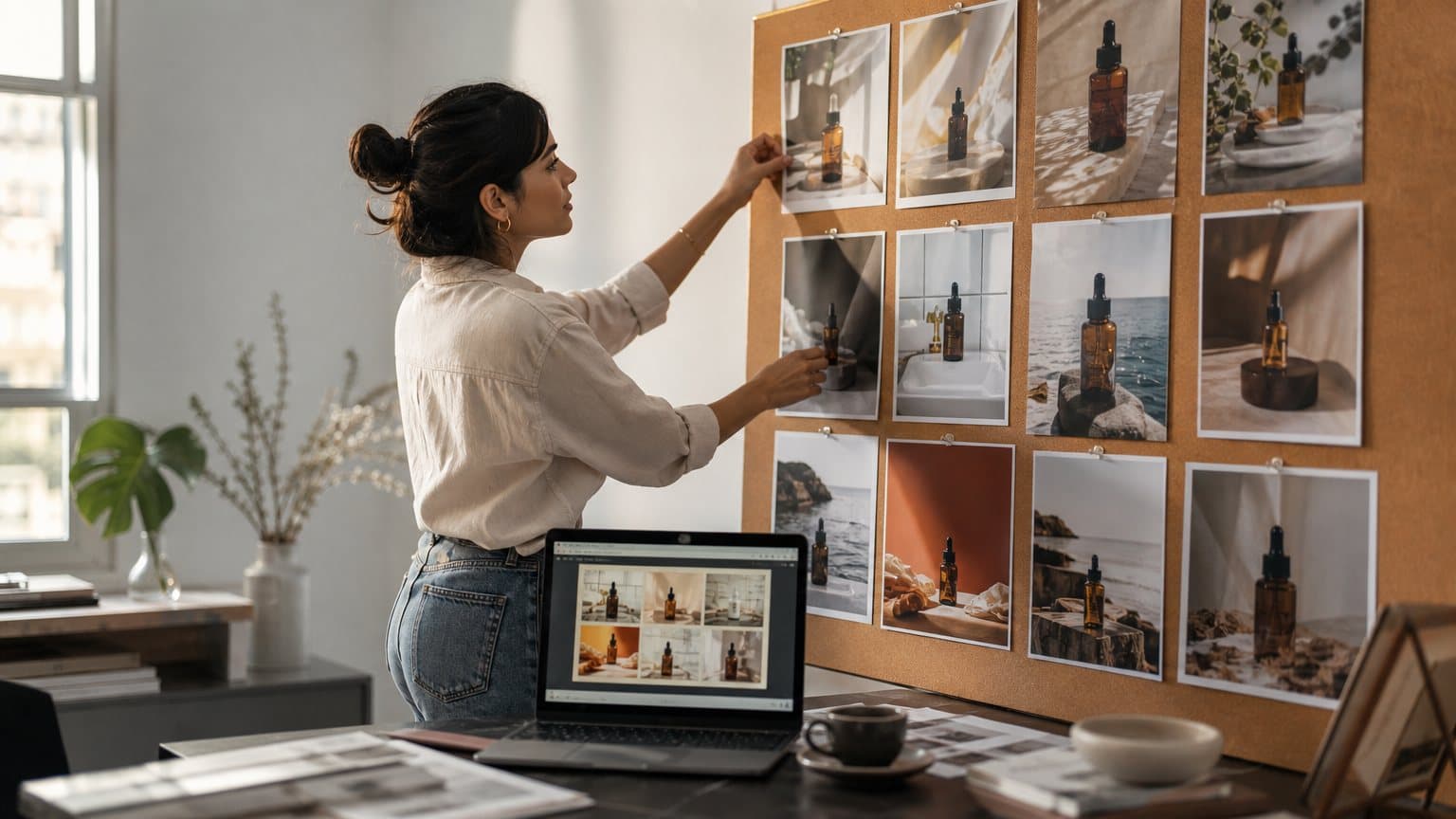
Midjourney wins the mood board. Ad briefs ask for more.
It is Monday, and a skincare brand needs 24 static ads for a serum launch by Thursday. The creative lead already has a gorgeous concept frame. Everyone loves it.
Then the media buyer sends the real brief. The price has to sit on the image. The bottle label has to be readable at phone size. Every variant needs the same warm look, and a second set has to run in Spanish, French and German.
That brief is where most teams start searching for Midjourney alternatives. Not because the concept frame was weak, but because an ad image has jobs a concept frame never had to do.
The best Midjourney alternatives for ad creatives are the image generators built for those jobs: text that reads, edits that keep your real product intact, one look held across many variants, and batch or API access for volume. Three of the seven below run inside Novoads with a published per-image credit price. The other four you use on their own platforms, and each one wins a different part of the brief.
The 7 best Midjourney alternatives for ads, at a glance
Here is the short version, one line per tool, matched to the ad job each one does best.
- GPT Image 2.5 is best for turning your own product photo into ad variants. Available in Novoads.
- Nano Banana Pro is best for headlines, price badges and copy that reads. Available in Novoads.
- Seedream 5 Pro is best for localized sale statics with dense text. Available in Novoads.
- Ideogram is best for typography-heavy statics and resizing one ad into many formats.
- Adobe Firefly is best for brands whose legal team needs IP indemnity.
- FLUX.2 is best for exact brand colors inside a developer pipeline.
- Krea is best for holding one brand look across a batch with weighted style references.
| Tool | Best ad job | Standout control | Where to run it |
|---|---|---|---|
| GPT Image 2.5 | Product photo variants | Edits keep subject intact | Novoads, 0.3 credits |
| Nano Banana Pro | Headlines and price badges | Up to 14 input images | Novoads, 0.5 credits at 2K |
| Seedream 5 Pro | Localized sale statics | Layer separation | Novoads, 0.6 credits |
| Ideogram | Typography-heavy statics | Ad resizer tool | Ideogram app or API |
| Adobe Firefly | Legal-reviewed brand work | IP indemnity terms | Firefly app |
| FLUX.2 | Brand colors at volume | Hex color matching | BFL API, pay as you go |
| Krea | One look across a batch | Weighted style references | Krea app or fal |
| Midjourney | Concept and mood frames | Style references, moodboards | Midjourney plans |
How this list was built
We started from the ad job, not from a leaderboard, the same way we built our Runway alternatives for ad creators, then read each tool's own surfaces (developer docs, pricing pages, changelogs and legal pages) in September 2026. Every capability below is attributed to the company that claims it.
Higgsfield's "10 Best Midjourney Alternatives in 2026", published August 31, 2026, is a useful cross-check. It is a general image-generation roundup rather than an ad-creative comparison, and Higgsfield ranks its own product third on it. Its ten picks are Google Gemini, ChatGPT Images, Higgsfield, Leonardo, Ideogram, Adobe Firefly, Flux, Stable Diffusion, Recraft and Krea. Our list shares four names with it (Ideogram, Adobe Firefly, Flux and Krea) and names specific models where it names apps. Higgsfield's own ad tool is a separate product, which our Higgsfield review covers.
What an ad image needs that a concept frame does not
A concept frame has one job: make the room react. A static ad that runs in a paid feed carries five, and a tool that nails the first can still fail all five. Use these as the scoring sheet for every alternative.
Text that reads on a phone screen
Headlines, prices, offer terms and dates are the copy a static ad sells with. If the letters melt, the asset is dead, and no amount of lighting saves it. The question to ask any image generator:
- Can it put exact words where you ask, spelled correctly?
- Can it handle dense text, such as a headline plus discount terms plus a date?
- Can it render the language of your second market, not just English?
The product you actually sell
An ad that shows a lookalike bottle is a trust problem, and in regulated categories it is a compliance problem too. The model has to start from your product photo and leave the label, the shape and the color alone while it changes the scene. Ask whether a tool edits around an uploaded image or redraws it from a description.
One look across forty variants
Creative testing means many images, and they still have to read as one brand. Three controls do that work: style references you can weight, custom models trained on approved assets, and exact brand colors. A single striking image with no way to repeat it is a dead end for a test plan.
Volume without hand work
A launch batch, a weekly refresh, twelve markets. At some point the images have to come from a spreadsheet or an API rather than a person clicking. A tool whose terms forbid automation caps output at what a human can generate in a day.
Rights, privacy and legal cover
Three questions sit behind every paid ad: who owns the output, who can see an unreleased campaign before it launches, and whether legal has any indemnity if a claim lands. Plans and terms answer these, not image quality.
Where Midjourney still earns a slot in an ad workflow
This is a balanced list, so start with what Midjourney does well for ad teams, then where the five jobs push back. For the version history and how its latest image model behaves, read our explainer on Midjourney V8.2 for ads; this section sticks to the ad-production questions.
What it does well for ad teams
Midjourney's strength is look development. Its own V8 announcement says the model can "understand your aesthetics through personalization, style references (srefs) and moodboards", which is exactly what a concept frame needs.
- Text is improving. Midjourney says text rendering "works better than ever (when specified in 'quotes')" in V8.
- Editing arrived. On August 27, 2026 Midjourney opened testing of its first V8.2 edit model, which edits images with instructions and generates "with up to 4 image references at once".
- Area edits. The same edit model supports inpainting and outpainting, so you can change one region or extend the canvas.
For a mood frame, a hero concept or a first draft of a key visual, it remains a strong pick.
Where the ad job pushes back
The friction is not image quality. It is the plan, the pipeline and the paperwork.
- No automation. Midjourney's Terms of Service say: "You may not use automated tools to access, interact with, or generate Assets through the Services." A spreadsheet-to-image pipeline is off the table.
- Privacy costs a top plan. Midjourney's help center says Stealth mode, the setting that controls who can see your creations on its website, "is available only to Pro and Mega Plan members." Keeping an unreleased launch private on the site means paying for one of those plans.
- Ownership depends on company size. The same terms say that a company, or an employee of a company, "with more than $1,000,000 USD a year in revenue" must be subscribed to Pro or Mega to own its assets.
None of that matters to an artist exploring style. For an ad team it decides which plan you buy, whether the tool can touch final assets, and what happens once you need three hundred variants instead of three.
The 7 Midjourney alternatives, matched to the ad job
Each entry covers what the tool does for ads, the job where it beats Midjourney, what to watch, and whether it runs in Novoads. Capability claims are the vendor's own unless stated otherwise.
1. GPT Image 2.5, best for turning your product photo into variants
OpenAI published its GPT Image 2.5 claims with the model on September 8, 2026, in two variants, Flare and Sunburst, per fal's model page. For product ads, the key line is fal's description of the Flare edit endpoint: it "changes only what is asked, keeping subject, composition and background intact." That is the property a product edit needs, a new scene around the same bottle.
Two details make it practical for ad layouts. Per fal, setting the background to transparent with PNG or WebP output means "the model returns a real alpha channel", so a cutout drops straight into a template. OpenAI also claims a requested visual style "holds more consistently from one generation to the next", which helps a variant set read as one campaign. fal's rule of thumb is Flare by default and Sunburst "when the detail has to survive a close look", such as small label copy.
Both variants are available in Novoads, next to GPT Image 2, at 0.3 credits per image at medium quality. Our GPT Image 2.5 ad-creative breakdown goes deeper on choosing between Flare and Sunburst.
- Better than Midjourney for: editing your real product photo.
- Watch out for: speed and style gains are OpenAI's claims.
- Best-fit ad job: lifestyle variants of one SKU.
2. Nano Banana Pro, best for headlines and price badges that read
Google calls Nano Banana Pro "the best model for creating images with correctly rendered and legible text directly in the image." That is a vendor's description of its own model, but it targets the exact failure that kills static ads. Google says it blends up to 14 images while keeping the resemblance of up to 5 people, and its developer docs pitch it for "accurate brand consistency, and precision creative control."
Ads are an explicit target. At launch in November 2025, Google said it was upgrading image generation in Google Ads to Nano Banana Pro for advertisers globally. One detail to check before files reach an ad account: Google also said it keeps a visible Gemini sparkle watermark on images made by no-cost and Google AI Pro tier users of its own apps, so the surface you generate on matters.
In Novoads, Nano Banana Pro costs 0.5 credits per image at 1K or 2K and 1 credit at 4K. The Nano Banana Pro ad-creative guide covers headline placement and resolution choices in detail.
- Better than Midjourney for: exact headline and price text.
- Watch out for: watermark rules on Google's own apps.
- Best-fit ad job: offer statics with a badge.
3. Seedream 5 Pro, best for localized sale statics
ByteDance's Seedream 5.0 Pro is built for dense design text in more than one language. ByteDance says the model natively handles input and generation in over ten common languages, "including French, German, Russian, Japanese, Korean, Spanish, and Arabic." Its own sale-poster demo is an ad-shaped test: the model has to "handle multi-tiered, dense text, including the headline, discount terms, and event dates."
The second useful feature is layers. ByteDance says that through text descriptions the model can separate an image into independent layers, "outputting editable design assets." A designer can then nudge a headline or swap a background without a full re-render, which matters when legal changes one word on launch day.
In Novoads it runs as Seedream 5 Pro at 0.6 credits per image, with Seedream 5 Lite at 0.4 credits for cheaper drafts.
- Better than Midjourney for: dense, multilingual ad text.
- Watch out for: always have a native speaker check copy.
- Best-fit ad job: one sale static in five languages.
4. Ideogram, best for typography-heavy statics and ad resizing
Ideogram's developer docs say it "excels at integrating text into images for logos, branding, POD, or design layouts." Where it pulls ahead for ad production is the tooling around generation. Its API lists tools to "remove or replace backgrounds, remove objects or logos, reframe, resize ads, recolor, swap materials, upscale, and layerize text."
Brand control is built in too. The API lets you "train on-brand image models from your approved assets so generations follow your style, art direction, typography, and visual identity." And Batch Generation, which Ideogram launched for Pro users in December 2024, lets you upload a spreadsheet with your prompts and settings and generate in bulk, close to how media buyers already plan variant grids.
One licensing note: if you plan to self-host, Ideogram 4's open weights ship under a non-commercial license, so read the terms before a self-hosted image runs in a paid ad. Ideogram is not available in Novoads.
- Better than Midjourney for: layouts, resizing, spreadsheet batches.
- Watch out for: open weights are non-commercial.
- Best-fit ad job: a typographic static in many formats.
5. Adobe Firefly, best for brands that need IP indemnity
Adobe sells Firefly on commercial safety. Its October 2025 announcement introduced "the new, commercially safe Firefly Image Model 5" as a public beta. The part a legal team actually reads is Adobe's Firefly IP indemnity page, which applies to customers whose agreement with Adobe links to it.
The fine print matters for ad work. That indemnity list excludes capabilities "powered or provided by non-Adobe trained models", and it also excludes features labeled beta or trial. Meanwhile Firefly lets subscribers generate with partner models, including Google Nano Banana Pro, GPT Image Generation and Runway Gen-4 Image, as well as Adobe's own Firefly models. Same app, different cover, so check the model label and its beta status before assuming a static is indemnified.
For volume, Adobe describes Firefly Creative Production as a batch tool to "edit thousands of images at once"; it was in private beta when Adobe announced it. Firefly is not available in Novoads.
- Better than Midjourney for: documented legal cover on Adobe models.
- Watch out for: partner models and betas fall outside it.
- Best-fit ad job: enterprise brand statics under legal review.
6. FLUX.2, best for exact brand colors in a pipeline
Black Forest Labs pitches FLUX.2 at production teams. It says you can "specify brand colors via hex codes with no approximation", and that the model can reference up to 10 images at once with what it calls "the best character consistency available today", a vendor claim worth testing on your own assets. Its own list of marketing uses reads like an ad brief: "character-consistent campaigns, product placement across contexts, brand-accurate color matching."
The buying model is built for pipelines rather than seats. Black Forest Labs' pricing page says "No subscriptions, no seat fees. Only pay for what you generate," and it sells open-weights licenses to "deploy and run FLUX models on your own infrastructure." FLUX.2 is not available in Novoads.
- Better than Midjourney for: API access and hex-exact color.
- Watch out for: a team without a developer gets less from it.
- Best-fit ad job: a product catalog rendered in brand colors.
7. Krea, best for one brand look across a batch
Krea describes Krea 2 as its "first foundation image model, built completely from scratch and focused on aesthetics, style transfer, and creative control." For ads, the useful part is the style system. In Krea's words: "You can add multiple references, combine them, and adjust how strongly they influence the image."
That weighting is a dial between the house look and a campaign's twist, which is what keeps forty variants from drifting apart. Developers can also reach it on fal, which lists the Krea 2 Turbo Style endpoint at $0.01 per megapixel (checked September 14, 2026). Krea is not available in Novoads.
- Better than Midjourney for: weighted, repeatable style references.
- Watch out for: a locked style does not lock your label.
- Best-fit ad job: a seasonal look across a full batch.
A worked example: 24 statics for one serum launch
Back to Monday's brief. Here is how the five jobs split across models, and what the batch costs when the image steps run in Novoads.
The brief
- Eight lifestyle scenes with the real bottle: bathroom shelf, gym bag, vanity, beach towel.
- Eight offer statics with a headline, the launch price and an end date.
- Eight localized versions of the best offer static for Spain, France and Germany.
- One warm look across all 24, matched to the concept frame the team approved.
Splitting the work across models
- Concept frame. Keep the Midjourney frame the team already loves as the mood reference. If the company is above Midjourney's $1,000,000 USD revenue line, confirm the account is on Pro or Mega first.
- Lifestyle scenes. Upload the product photo to Product-to-Ad, which runs GPT Image 2 at medium quality for 0.3 credits per image, and describe each scene in the concept frame's mood.
- Offer statics. Generate the headline and price variants on Nano Banana Pro at 2K, 0.5 credits each.
- Localized versions. Run the winning offer static through Seedream 5 Pro in each language, 0.6 credits each.
The credit math
The batch equation: credits = images × per-image price, summed per model.
- Lifestyle scenes: 8 × 0.3 = 2.4 credits.
- Offer statics: 8 × 0.5 = 4.0 credits.
- Localized versions: 8 × 0.6 = 4.8 credits.
That is 11.2 credits for 24 keepers. Budget one retry for every keeper and the batch uses 22.4 credits, under half of the 50 credits the $49/month Inicial plan includes each month.
How to tell it worked
- The label reads at phone size in every lifestyle scene.
- Prices, dates and offer terms match the brief character for character.
- All 24 images, side by side, look like one campaign.
- A native speaker signed off on each localized headline.
- Someone confirmed who owns every asset under each tool's terms.
Which Midjourney alternative fits your team
The same seven tools rank differently depending on who is running the account. Match the tool to the team first, then to the brief.
Solo founder or small DTC brand
- Use GPT Image 2.5 when the product photo is the ad and the scene is the variable.
- Use Nano Banana Pro when the offer, not the scene, is what you are testing.
- Keep Midjourney for the occasional hero concept rather than the whole batch.
Agency producing for many clients
- Use Ideogram when one layout has to ship in every placement size, since its API includes an ad resizer.
- Use Krea when each client has a house look you need to hold across batches.
- Use Seedream 5 Pro when a client runs the same offer in several languages.
Brand with legal review
- Use Adobe Firefly when legal wants indemnity, and stay on Adobe-trained, non-beta features for anything that must be covered.
- Check plan-level ownership terms on every other tool before a file ships.
Developer building a creative pipeline
- Use FLUX.2 when you need an API, hex-exact color and your own infrastructure.
- Use fal-hosted models such as Krea 2 and GPT Image 2.5 when you want several models behind one API.
- Leave Midjourney out of the automated path, because its terms bar automated tools.
How Novoads solves the image-to-ad handoff
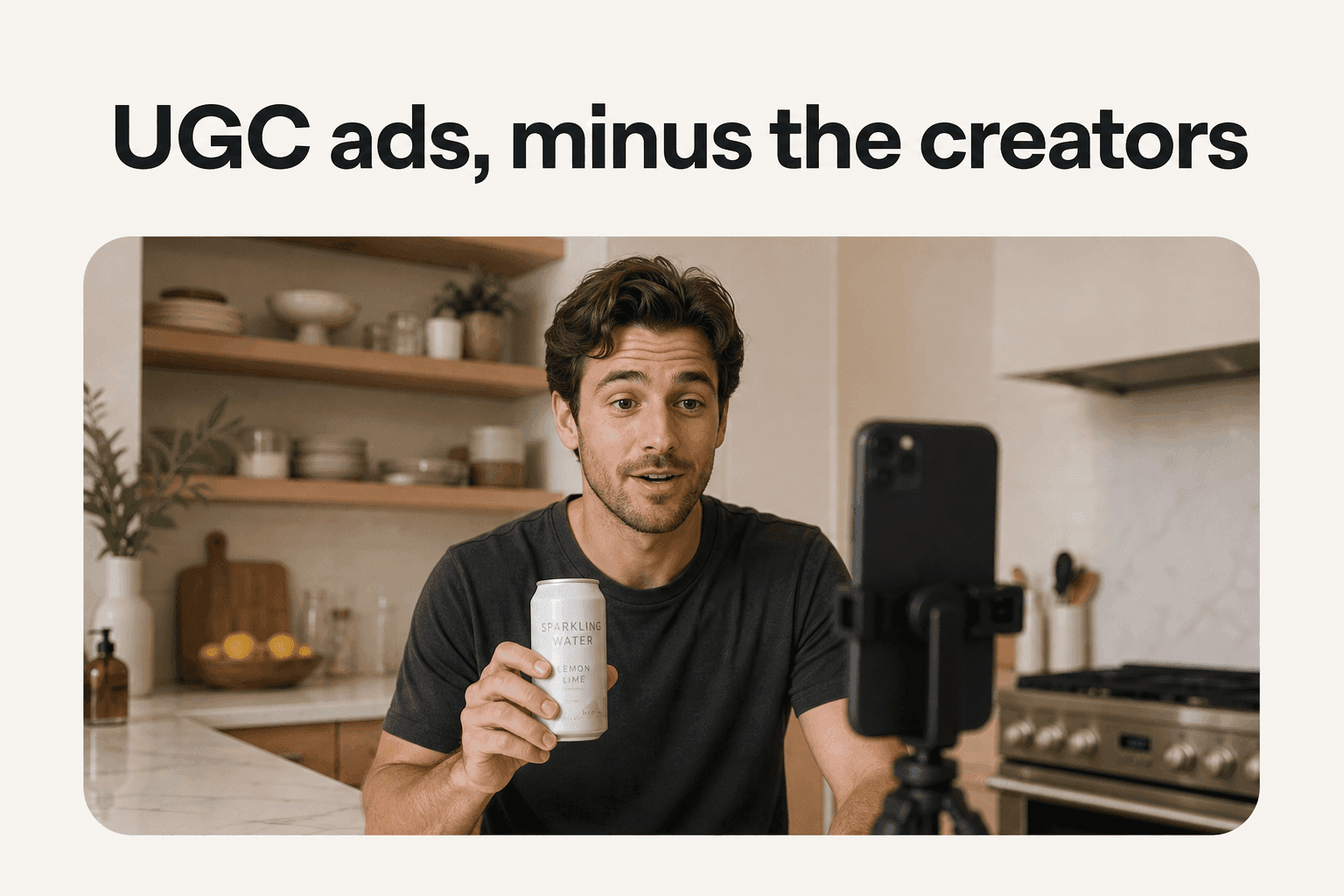
Novoads turns a product image into finished ad creative, from a static image to a UGC video where an AI actor holds the product on camera. The image step is one link in that chain, so the image models sit in the same place as the video step.
The image models in one picker
Three of the seven alternatives above run inside Novoads, each with a published per-image price:
- GPT Image 2 plus both GPT Image 2.5 variants, Sunburst and Flare: 0.3 credits per image at medium quality.
- Nano Banana Pro: 0.5 credits at 1K or 2K, 1 credit at 4K.
- Seedream 5 Lite at 0.4 credits and Seedream 5 Pro at 0.6 credits.
- Reve 2.1: 1 credit per image.
Product-to-Ad takes an uploaded product image (JPEG, PNG or WebP) and returns an ad image on GPT Image 2 for 0.3 credits, so the real product stays the starting point.
From a static to a UGC video
A static is often the first frame of a video ad rather than the last asset. In Novoads, an AI actor delivers your script and can hold the product on camera, with voice, lip-sync and captions, so the image you approved becomes a vertical UGC ad without leaving the tool. If you are still choosing an avatar video tool for that step, our HeyGen vs Creatify comparison weighs two of the best-known. You can compare the image models side by side and move the keeper into video in Novoads.
Novoads does not run Midjourney, Ideogram, Adobe Firefly, FLUX.2 or Krea. If your brief is indemnified enterprise work or typography-heavy print layouts, those tools are the better pick. Novoads starts at $49/month (Inicial, 50 credits per month). All plans are published on /pricing.
The concept frame is one job. The ad is five.
Midjourney is still one of the best places to find a look. But an ad image has to carry exact words, the product a customer will receive, one consistent look across a test grid, output at volume, and terms your legal team can sign. No single generator wins all five, and that is the point of having alternatives. Score each tool on the job your brief stresses most, run the rest of the batch on the model that does that job best, and let the ad account pick the winner. Start for $49/month. 50 credits every month. Cancel anytime.
Frequently Asked Questions
What is the best Midjourney alternative for ad creatives?
It depends on the job the ad image has to do. For edits that keep your real product intact, GPT Image 2.5. For headlines and price badges, Nano Banana Pro. For localized sale statics, Seedream 5 Pro. For typography-heavy layouts and resizing one ad into many formats, Ideogram. For brand work that needs IP indemnity, Adobe Firefly. For exact hex brand colors in an API pipeline, FLUX.2. For one look held across a batch, Krea. Midjourney itself remains a strong pick for concept and mood frames.
Can I automate Midjourney to make ads in bulk?
Not under its terms. Midjourney's Terms of Service say you may not use automated tools to access, interact with, or generate assets through the service, so it does not fit a batch or API pipeline. For volume, Ideogram offers an API and a spreadsheet-driven Batch Generation feature, Black Forest Labs sells FLUX.2 through a pay-as-you-go API, and models such as Krea 2 and GPT Image 2.5 are available on fal.
Can I use Midjourney images in ads for my company?
Midjourney's Terms of Service say that if you are a company, or an employee of a company, with more than $1,000,000 USD a year in revenue, you must be subscribed to a Pro or Mega plan to own your assets. Separately, Stealth mode, which controls who can see your creations on the Midjourney website, is available only to Pro and Mega members. Check both before an unreleased campaign touches the tool.
Which AI image generator is best at text inside ad images?
Three are built for it. Google calls Nano Banana Pro its best model for correctly rendered, legible text in the image. Ideogram's developer docs say it excels at integrating text into images for logos, branding and design layouts. ByteDance says Seedream 5.0 Pro renders text natively in over ten languages, including Spanish, French, German and Arabic, which suits localized ads.
Which of these Midjourney alternatives can I use inside Novoads?
Three of the seven: GPT Image 2.5 (Sunburst and Flare), Nano Banana Pro and Seedream 5 Pro. Novoads also offers GPT Image 2, Seedream 5 Lite and Reve 2.1. GPT Image 2 and both GPT Image 2.5 variants cost 0.3 credits per image at medium quality, Nano Banana Pro costs 0.5 credits at 1K or 2K and 1 credit at 4K, Seedream 5 Lite costs 0.4 credits and Seedream 5 Pro 0.6. Novoads does not run Midjourney, Ideogram, Adobe Firefly, FLUX.2 or Krea.
Is Adobe Firefly safer than Midjourney for brand work?
Adobe markets its own Firefly models as commercially safe, and it publishes an IP indemnity feature list for customers whose agreement links to that page. The list excludes capabilities powered by non-Adobe trained models and any beta or trial features. Firefly also offers partner models such as Google Nano Banana Pro and GPT Image Generation, so the cover depends on which model and which feature you actually use.
Key Takeaways
- An ad image carries five jobs a concept frame does not: legible text, the real product, one look across many variants, volume without hand work, and rights plus privacy. Pick the Midjourney alternative by the job your brief stresses most.
- Midjourney still earns a slot for concept frames, and its V8.2 edit model now takes up to 4 image references. But its Terms of Service bar automated tools, Stealth mode is limited to Pro and Mega plans, and companies above $1,000,000 USD in yearly revenue need Pro or Mega to own their assets.
- For text in the image, Google calls Nano Banana Pro its best model for legible text, Ideogram's docs say it excels at typography for branding and layouts, and ByteDance says Seedream 5.0 Pro renders over ten languages.
- For product fidelity and brand control, fal describes GPT Image 2.5 edits as keeping subject, composition and background intact, Black Forest Labs says FLUX.2 matches hex brand colors, and Krea lets you weight several style references.
- GPT Image 2.5, Nano Banana Pro and Seedream 5 Pro run inside Novoads at 0.3, 0.5 (at 2K) and 0.6 credits per image. A 24-image launch batch with one retry per keeper uses 22.4 of the 50 credits on the $49/month Inicial plan.