Best Nano Banana Alternatives for Ad Images: 7 Picks for Text, Edits and Volume
Google's docs list four Nano Banana models, so the right alternative depends on the job yours is doing. Here are seven image models for ad work, sorted by text that has to read, edits that keep the real product, and cheap draft volume, with what each one costs.

Mauricio Valdivia
·13 min
Four Nano Banana models, four different reasons to leave
A growth lead at a pet-food brand opens Google's Gemini API docs to check one setting. She finds her pipeline's model described in the past tense. The image-generation page, last updated on September 4, 2026, calls the original Nano Banana "the legacy pioneer" of its series and says Google strongly recommends moving to Nano Banana 2 Lite.
That is a migration notice. Google's deprecations page puts a date on it: October 2, 2026. It is also the moment to shop.
The catch is on the same docs page. Google says Nano Banana 2 Lite only supports 1K resolution and is not optimized for multiple reference inputs or multi-turn sequential editing. Her pipeline drops the real bag of kibble into every frame from a reference photo. The recommended replacement was built for a different job.
As of that September 4 update, Google's docs say Nano Banana refers to four distinct models: Nano Banana 2 Lite, Nano Banana 2, Nano Banana Pro and the legacy original. So "Nano Banana alternative" is not one question. It is one question per job: cheap drafts, edits built on reference photos, or copy that has to read inside the image.
One disclosure before the list. Novoads sells AI image generation, including Nano Banana Pro and four of the seven picks below, so we have a stake in the answer. The other three are not in Novoads, and they are on this list because they win their job.
The quick answer: which model takes over which job
Start from what your Nano Banana model does all day, then read across.
| Pick | Takes over | Where it runs | Novoads credits per image |
|---|---|---|---|
| Ideogram 4 | Typography-led statics | Ideogram, fal | Not offered |
| Seedream 5 Pro | Localized text statics | Novoads, fal | 0.6 |
| GPT Image 2.5 | Edits that keep the product | Novoads, fal | 0.1 to 0.8 |
| FLUX.2 | Multi-reference API pipelines | Black Forest Labs | Not offered |
| Midjourney V8.2 | Mood-led concept frames | Midjourney | Not offered |
| Seedream 5 Lite | Draft volume at size | Novoads, fal | 0.4 |
| Reve 2.1 | A flat-priced third take | Novoads | 1.0 |
What counts as an alternative here
Every pick had to clear three bars:
- You can use it today. A model in announced early access, or with no way to reach it, does not make the list.
- Its own vendor states the capability. Each claim below comes from the maker's or host's own page, dated, not from a roundup.
- It wins a job Nano Banana does for ads. General image quality is not the test. The frame your media buyer needs is.
What actually sends teams looking past Nano Banana
Nobody leaves a model family that works. Three things in Google's own documentation push teams to look anyway, and each one points to a different kind of alternative.
The original model is now a migration
Google's image-generation page describes the original Nano Banana (gemini-2.5-flash-image) as a reliable workhorse, then says it strongly recommends that customers transition to Nano Banana 2 Lite. The Gemini API deprecations page, last updated September 16, 2026, lists the shutdown date for that model as October 2, 2026. A team that built prompts, seeds and QA habits around it now has to re-test them on something. Once you are re-testing anyway, adding a second vendor to the test costs very little.
The cheap tier and the reference tier are different models
Google calls Nano Banana 2 Lite "Our fastest and cheapest Gemini image model," and the same paragraph says it is not optimized for multiple reference inputs or multi-turn editing. Nano Banana 2, one rung up, is the one Google describes as excelling at multiple reference image processing and consistency. We covered what Nano Banana 2 Lite changes for cheap product drafts when it launched, and the trade-off has not moved: the price tier and the reference tier are separate choices. If your ads need both, you are already running two models, and the second one does not have to be Google's.
Reasoning you cannot switch off
Google's docs say three things about how its Gemini 3 image models think:
- They reason through complex prompts, and the feature "is enabled by default and cannot be disabled in the API."
- The model can generate up to two interim images to test composition and logic before the final one.
- Those interim images are not charged.
For a hero static, that is a feature. For a draft run where you want a fast rough frame, it is a setting you cannot reach.
Alternatives for copy that has to read inside the image
This is the job most ad teams bought Nano Banana Pro for, and Google still positions Pro as "The premium choice for the most complex visual tasks." We went deep on why Nano Banana Pro's legibility matters for price badges and headlines, so this section only covers what competes with it.
1. Ideogram 4: typography first, with ad tools in the API
Ideogram's developer docs put it plainly: "Ideogram excels at integrating text into images for logos, branding, POD, or design layouts." The company released Ideogram 4 as an open-weight model with native 2K output, and its README describes explicit bounding-box layout and color-palette controls in the prompt. That is the right shape for a static where the headline position is fixed by the brand template, not left to the model.
The API is where it gets specific to ad work. Its endpoint list includes:
- Generate with Ideogram 4.0 (Transparent Background), for cutouts you drop onto your own layouts
- Advertisement Resizer, for turning one approved ad into several placements
- Layerize Text, which Ideogram lists among its tools to separate text into layers
- Custom model training, which Ideogram says lets you "Train on-brand image models from your approved assets"
Price is per megapixel. On fal, as of September 2026, Ideogram V4.0 costs $0.0075 per megapixel in Turbo mode, $0.015 in Balanced and $0.025 in Quality, which fal works out to $0.03, $0.06 or $0.10 for a 2048 x 2048 image. One licensing note: the open weights ship under an Ideogram 4 Non-Commercial license, so paid ad work belongs on a hosted route. Novoads does not offer Ideogram. Our Ideogram V4.0q write-up covers the fal launch in more detail.
Use Ideogram 4 when: the layout is fixed, the copy is long, and you need the same ad in several sizes.
2. Seedream 5 Pro: one headline, many markets
ByteDance launched Seedream 5.0 Pro on July 8, 2026, and its launch post leans on two things ad teams rarely get together:
- Native text in many languages. It renders text "for over ten commonly used languages worldwide," naming French, German, Russian, Japanese, Korean, Spanish and Arabic.
- Layers on request. It can separate an image into independent layers from a text description. In ByteDance's own example, it splits a complete poster into more than 10 layers: text, subject, background and decorations.
For a brand running one offer in three markets, that pairing matters more than raw polish. The workflow it points to: generate once, work on the copy layer, and localize without re-rolling the product shot. Seedream 5 Pro is in Novoads at 0.6 credits per image, and our Seedream 5.0 Pro launch post walks through the layer workflow.
Use Seedream 5 Pro when: the same static has to ship in several languages, or your designer wants editable layers instead of a flat file.
Alternatives for edits that keep the real product
Nano Banana 2 earns its place on reference work. These three compete on it, from three very different directions.
3. GPT Image 2.5: edits scoped to the instruction
OpenAI's GPT Image 2.5 comes in two variants, Flare and Sunburst. fal's model page says both "generate from text and edit existing images, at up to 3840px," and lists up to 16 reference images on the edit endpoint. The edit behavior is the ad-relevant line: it "Changes only what is asked, keeping subject, composition and background intact." When the product in the frame is your real SKU, an edit that leaves the label alone is worth more than a better-looking re-roll.
Two more details from fal's page are useful for statics:
- Transparent output. Set the background to transparent with PNG or WebP output and fal says the model returns a real alpha channel.
- Which variant. fal's guidance is that Flare is the default, and Sunburst is the variant "to reach for when the image will be viewed large."
Both variants run inside Novoads at the same per-image price as GPT Image 2: 0.1 credits at low quality, 0.3 at medium and 0.8 at high. The GPT Image 2.5 variant guide covers when Sunburst is worth the wait.
Use GPT Image 2.5 when: the product has to stay exactly itself while the scene, the copy or the crop changes.
4. FLUX.2: one product, many scenes, through an API
Black Forest Labs pitches FLUX.2 at the same job from the pipeline side. Its model page says "Place your product anywhere. The lighting adapts." It lists reference support for up to 10 images at once, which BFL describes as "the best character consistency available today". Treat that as the vendor's claim, not a measurement. The page also lists three controls a brand team will care about:
- Exact brand color, via hex codes "with no approximation"
- Output up to 4MP, in any aspect ratio
- A typography variant, FLUX.2 [flex], which BFL calls specialized for typography and keeping small details
Pricing is pay as you go, with "No subscriptions, no seat fees," and BFL sells open-weights licenses to run FLUX models on your own infrastructure. That last option is the real differentiator: an in-house creative team can keep generation inside its own stack. Novoads does not offer FLUX.2.
Use FLUX.2 when: a developer is building the pipeline, brand color accuracy is non-negotiable, or you need to self-host.
5. Midjourney V8.2: references for mood, not for a pipeline
Midjourney started testing its first V8.2 image edit model on August 27, 2026. It edits with instructions, supports inpainting and outpainting, and generates "with up to 4 image references at once." For the concept frame that sets a campaign's look, it is a strong tool, and V8 added an --hd mode that renders natively at 2K.
For production ad work, read three lines of the terms first:
- No automation. The Terms of Service say you may not use automated tools to generate assets through the service.
- Public by default. Your content is publicly viewable and remixable unless you hide it.
- Privacy costs a tier. Stealth mode is available only to Pro and Mega plan members.
We laid those terms out in our Midjourney alternatives guide. Novoads does not offer Midjourney.
Use Midjourney V8.2 when: you are setting the look of a campaign by hand, not feeding a batch.
Alternatives for cheap draft volume
Nano Banana 2 Lite's slot is the draft: many rough frames, fast, to find the angle before anyone spends on a finished asset. Two picks compete here, and one of them is not cheap on purpose.
6. Seedream 5 Lite: drafts at a larger size
fal describes Seedream 5.0 Lite as built for "Product mockup generation | Marketing asset creation | Creative iteration workflows," which reads like a job description for a draft model. Two specs on the same page back that up:
- Size: images up to 3072x3072 pixels, with flexible aspect ratios
- Batching: up to 6 separate generations in one API call
Size is the difference that matters against Nano Banana 2 Lite. A draft you like at 1K has to be regenerated before it can become a finished static. A larger draft can sometimes skip that step. Seedream 5 Lite is in Novoads at 0.4 credits per image, one flat price with no quality setting to manage.
Use Seedream 5 Lite when: you are generating dozens of angles to cut down to three, and some of the drafts might ship.
7. Reve 2.1: one price, no dials
Reve 2.1 is the simplest line in the Novoads image generator: a flat 1 credit per image, with no resolution setting and no quality tier to choose. That ties it with Nano Banana Pro at 4K for the top of the ladder, so it is not a volume play. Its use is different: when two models keep converging on the same composition for a brief, a third model with nothing to tune is a quick way to see whether the angle or the model is the problem.
The cheapest rung is a setting, not a model
If price per draft is the only question, the answer inside Novoads is GPT Image 2 or either 2.5 variant at low quality, 0.1 credits per image. Novoads' Product-to-Ad flow runs on GPT Image 2 at medium quality, 0.3 credits, when you upload a product photo and want an ad image back. Quality is a dial on the same model. Dropping to low costs you detail, not a migration.
A 36-image bake-off before you move a pipeline
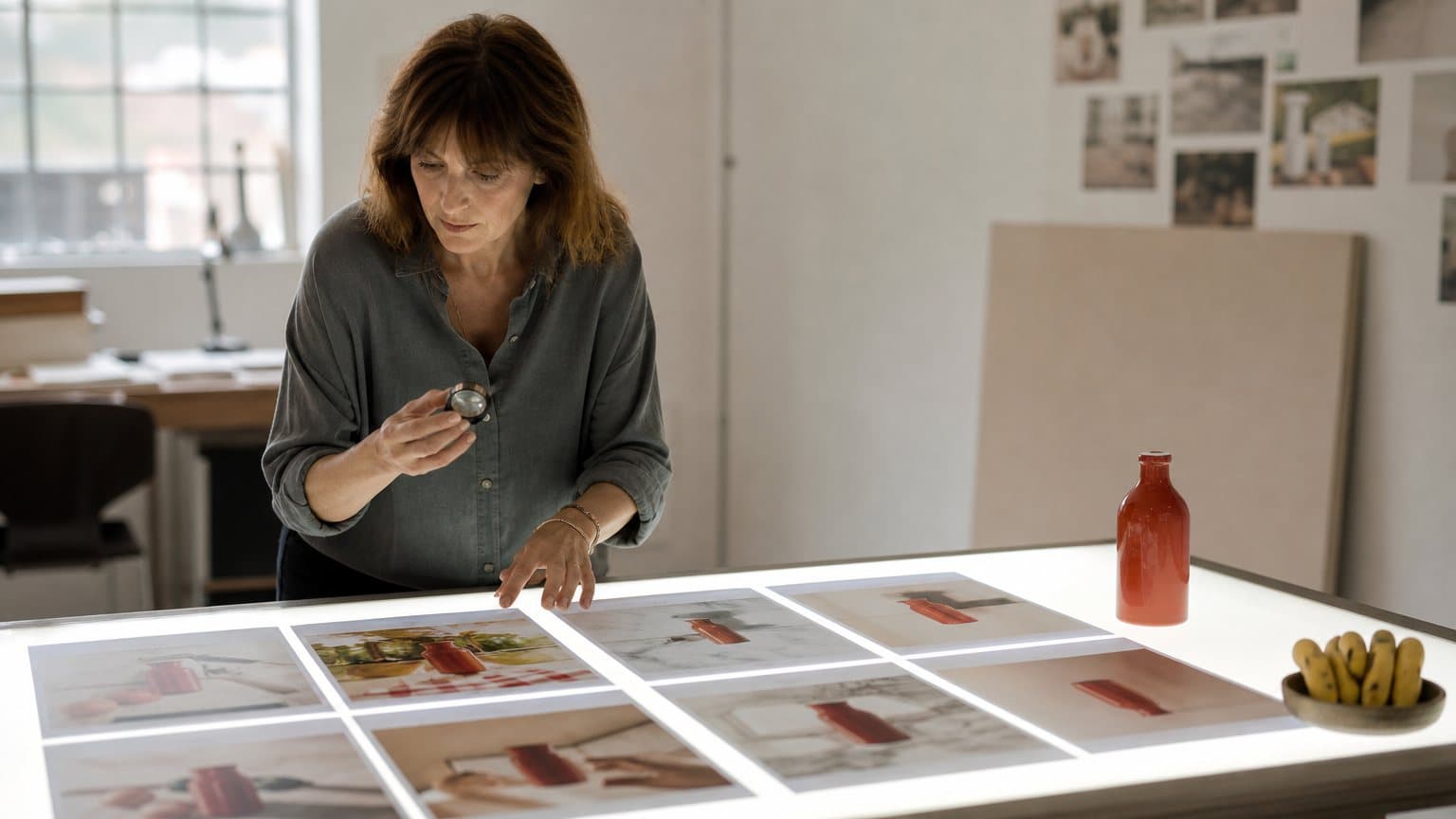
Switching models on faith is how teams end up re-shooting a week of statics. A small, deliberate test is cheaper. Here is one sized for a single brand, with Nano Banana Pro kept in as the control.
Three briefs that each stress one job
Write three briefs from real work, not from a model's demo gallery:
- Text brief: a price-badge static with a two-line headline in English, then the same frame in Spanish.
- Reference brief: the brand's real product, from two reference photos, placed in a kitchen scene.
- Draft brief: a rough lifestyle frame for a hook test, where speed and cost matter more than finish.
What it costs in credits
Run each brief twice on six models available in Novoads. That is 6 images per model and 36 images in total:
- Nano Banana Pro at 2K (the control): 6 x 0.5 = 3.0 credits
- GPT Image 2.5 Flare at medium: 6 x 0.3 = 1.8 credits
- GPT Image 2.5 Sunburst at high: 6 x 0.8 = 4.8 credits
- Seedream 5 Pro: 6 x 0.6 = 3.6 credits
- Seedream 5 Lite: 6 x 0.4 = 2.4 credits
- Reve 2.1: 6 x 1.0 = 6.0 credits
The whole bake-off costs 21.6 credits, under half of the 50 credits in one month of the $49 Starter plan. For Ideogram 4 and FLUX.2, run the same three briefs on their own platforms at their list prices and score them on the same sheet.
How to score it
A model wins a brief only if it beats the control on that brief's check, not on overall taste:
- Text brief: read every character back against the approved copy, in both languages. One wrong letter fails the frame.
- Reference brief: hold the output next to the reference photo and check the label, the cap and the proportions.
- Draft brief: count usable drafts per credit spent, and note the time to the first one you would keep.
If no challenger beats Nano Banana Pro on any brief, you have learned that cheaply. If one wins a brief, move that job, not the whole pipeline.
What the winner costs at 60 stills
Once a brief has a winner, price the run rate before you commit. Sixty stills inside Novoads cost:
- Nano Banana Pro: 30 credits at 1K or 2K, 60 at 4K
- GPT Image 2 or 2.5: 6 credits at low, 18 at medium, 48 at high
- Seedream 5 Lite: 24 credits
- Seedream 5 Pro: 36 credits
- Reve 2.1: 60 credits
Our guide to what one credit actually buys runs the same arithmetic across video, which is usually where the bigger share of the balance goes.
Reasons to keep Nano Banana on the ladder
A fair list has to say where the incumbent still wins. Nano Banana has real advantages, and some of them are hard to replace.
Fourteen references and live search
Google's docs list three strengths worth keeping:
- Fourteen references. Gemini 3 image models can mix up to 14 reference images.
- Live search. They can use Google Search as a tool to generate imagery from real-time data, such as a current weather map or a stock chart.
- 4K with references. Nano Banana 2 pairs its reference strength with what Google calls state-of-the-art 4K generation.
For a multi-product bundle shot, or an ad that has to reflect something current, that combination in one model is a good reason to keep it in the bake-off as the control.
Legal cover depends on the model, not the app
Some teams look past Nano Banana because legal wants an indemnified image. Adobe Firefly is a common answer, and it is worth reading closely:
- Firefly is a door, not one model. It offers partner models, including Google Nano Banana Pro and GPT Image Generation, alongside Adobe's own commercially safe Firefly models.
- The cover is a feature list. Adobe's IP indemnity list, published 13 July 2026 for customers whose agreement links to it, names Text to Image as an eligible feature as of August 16, 2023.
- The footnote matters. It excludes capabilities the interface denotes as powered by non-Adobe trained models, and any beta or trial features.
So check which model drew the image, not only which app it came from.
Provenance travels with the file too. Google says every image its Nano Banana models generate includes a SynthID watermark. Plan disclosure for a mixed set with the platform rules on labeling AI-generated ads in hand, whichever model drew each frame.
How Novoads solves the one-vendor problem
Novoads puts seven image models on one credit balance, so switching a job to a different model is a picker change, not a new account. Nano Banana Pro stays available while you test its alternatives.
Seven image models, one balance
The Novoads image generator offers Nano Banana Pro, GPT Image 2, GPT Image 2.5 Sunburst, GPT Image 2.5 Flare, Seedream 5 Lite, Seedream 5 Pro and Reve 2.1, at the per-image credit prices in the table at the top of this post. In practice that means:
- One control, many challengers. The bake-off above runs without a second account or a second invoice.
- A job can move alone. If Seedream 5 Pro wins your localized statics, only that brief changes model.
- One price list. Every image model is priced in the same credits, so the comparison is arithmetic, not a currency conversion.
Novoads does not run Ideogram, FLUX.2, Midjourney or Adobe Firefly. If one of those wins your bake-off, use it where it lives.
From the still to the ad
A still is rarely the last step. In Novoads you can upload a product photo and get an ad image back through Product-to-Ad, then turn that product into a UGC-style video ad with an AI actor. Novoads starts at $49/month (Starter, 50 credits per month), and all plans are published on /pricing. If you want to run the bake-off above on your own product, you can start with Novoads. 50 credits every month. Cancel anytime.
Choose the model per frame, not per family
Google itself sells Nano Banana as four models, each pitched at a different trade-off of speed, price and control. Ad teams should take the hint. The headline static, the reference edit and the throwaway draft are three different frames, and the best model for each one may come from three different vendors. Nano Banana was never one model. Your alternative does not have to be one either.
Frequently Asked Questions
What is the best Nano Banana alternative for ad images?
It depends on which Nano Banana model you use and what it does for you. For text-heavy statics, try Ideogram 4 or Seedream 5 Pro. For edits that keep your real product intact, try GPT Image 2.5, or FLUX.2 if you are building an API pipeline. For cheap draft volume, try Seedream 5 Lite. Midjourney V8.2 fits mood-led concept frames, and Reve 2.1 works as a flat-priced third take on a brief.
Is the original Nano Banana being retired?
Yes. Google's Gemini API deprecations page, last updated September 16, 2026, lists October 2, 2026 as the shutdown date for gemini-2.5-flash-image, the original Nano Banana. Google's image-generation docs, as of their September 4, 2026 update, call it the legacy pioneer of the series and strongly recommend that customers transition to Nano Banana 2 Lite. If your pipeline still calls that model, the migration has a deadline.
Can Nano Banana 2 Lite replace the original Nano Banana for product ads?
For drafts, often yes. For product-reference work, check first. Google's docs describe Nano Banana 2 Lite as its fastest and cheapest Gemini image model, but they also say it only supports 1K resolution and is not optimized for multiple reference inputs or multi-turn sequential editing. A pipeline that places your real product from reference photos may fit Nano Banana 2, Nano Banana Pro or GPT Image 2.5 better.
Which Nano Banana models can I use inside Novoads?
Nano Banana Pro. It costs 0.5 credits per image at 1K and at 2K, and 1 credit at 4K. The Novoads image generator also offers GPT Image 2, GPT Image 2.5 Sunburst, GPT Image 2.5 Flare, Seedream 5 Lite, Seedream 5 Pro and Reve 2.1 on the same credit balance. Novoads does not run Ideogram, FLUX.2, Midjourney or Adobe Firefly.
Which image model is best for ad text in several languages?
Seedream 5 Pro is the one built around it. ByteDance says Seedream 5.0 Pro natively supports input and generation in over ten commonly used languages, including French, German, Russian, Japanese, Korean, Spanish and Arabic. Ideogram's release also describes multilingual text rendering, and Google positions Nano Banana Pro for advanced localization. Whatever you pick, read every line of text back before an ad ships.
Does switching image models change the ad disclosure rules?
No. The platform rules on labeling AI-generated ads apply to the image, whichever model drew it. Check what each model attaches to the file, too: Google's docs say every image generated by its Nano Banana models includes a SynthID watermark, so keep that in mind when you plan disclosure across a mixed set.
Key Takeaways
- As of its September 4, 2026 update, Google's Gemini API docs say Nano Banana refers to four distinct models: Nano Banana 2 Lite, Nano Banana 2, Nano Banana Pro and the original Nano Banana, which Google now calls legacy, recommends replacing with Nano Banana 2 Lite, and lists for shutdown on October 2, 2026. Pick an alternative by the job your Nano Banana model is doing, not by the family name.
- For text that has to read inside the image, Ideogram's docs say it excels at integrating text for branding and design layouts, and ByteDance says Seedream 5.0 Pro renders over ten languages and can split a poster into more than 10 layers.
- For edits that keep the real product, fal lists up to 16 reference images on GPT Image 2.5 edits, Black Forest Labs lists up to 10 on FLUX.2, and Midjourney's V8.2 edit model, in testing since August 27, 2026, takes up to 4.
- For cheap draft volume, fal lists Seedream 5.0 Lite at up to 3072x3072 pixels, while Google's docs say Nano Banana 2 Lite only supports 1K.
- Inside Novoads, Nano Banana Pro costs 0.5 credits per image at 1K or 2K, GPT Image 2 and both 2.5 variants cost 0.1 to 0.8 credits by quality, Seedream 5 Lite 0.4, Seedream 5 Pro 0.6 and Reve 2.1 a flat 1 credit. A 36-image bake-off across six of them uses 21.6 of the 50 credits in the $49 Starter month.