
ChatGPT Ads Reaches 31 European Markets With No Custom Audiences: What You Can Buy
ChatGPT Ads went live across 31 European markets on August 24, 2026, and OpenAI's developer documentation blocks custom audiences for any campaign targeting the EEA or Switzerland. Here is what those campaigns can actually buy, and who is allowed to buy them.

Mauricio Valdivia
·Updated ·11 min

At launch, the ads reached 31 countries and the ad accounts did not
A performance lead in Madrid goes looking for a ChatGPT Ads account on the morning of Monday 24 August, budget already signed off, because ChatGPT Ads went live in Spain that day. What OpenAI offers her is an interest form, for advertisers "located outside of these countries" who want to "register your interest and stay informed about future availability." That is the European launch in one screen.
OpenAI turned on ad inventory across a very large slice of Europe in the week of 24 August, and its own announcement is precise about the size of it: "Next week, ChatGPT Ads will expand to 31 European countries, including Germany, France, Spain, Italy, Sweden, Norway, Denmark, the Netherlands, and Austria." The post is dated August 18, 2026, which puts the go-live on Monday the 24th. At launch, buying ran through OpenAI's sales and partner channels.
The constraint that actually shapes a media plan is not the account, though. It is one sentence in OpenAI's developer documentation, and it decides what any campaign pointed at these markets is allowed to do: "Custom audiences are not supported for campaigns targeting the European Economic Area (EEA) or Switzerland, where personalized ads are not yet available."
Hold that next to the map and the story tightens into something worth planning around. Every market that opened that day is inside that carve-out. The audience layer is off in all of them, which leaves geography, the conversation on screen, and whatever you put in the ad. If you want the wider picture of how advertising inside ChatGPT works, start there. This is the version of it Europe gets first, and it is a different job.
What actually turned on across Europe on Monday
Three facts define the launch, and each one narrows what the channel can be used for.
The 31 markets are exactly the EEA plus Switzerland
Count the set and the scope stops looking approximate:
- 27 EU member states
- plus Iceland, Liechtenstein and Norway, which completes the European Economic Area at 30
- plus Switzerland, which brings it to 31
The United Kingdom is not in the group, because ChatGPT Ads already ran there.
That is why the developer documentation reads like it was written for this launch. The carve-out and the expansion describe the same territory, so there is no European market where ads are live and personalization is also available. The map and the restriction are one shape.
Ads reach the Free and Go plans, and nobody else
OpenAI states the audience boundary plainly: "As in our existing markets, ads will be shown only to users on the Free and Go plans. Plus, Pro, and Enterprise subscriptions will remain ad-free." Its Help Center goes further on who is excluded, saying it does not show ads "to users on Plus, Pro, or any Business plan, or to any users who tell us or we predict are under the age of 18."
So the reachable population across those 31 countries is adults on the lower-tier consumer plans, in a mode where they are asking rather than scrolling. That is a narrower pool than the headline user numbers suggest, and it is a warmer one.
Six months from a US pilot to the largest expansion so far
The trajectory matters for how much of this is likely to change under you. OpenAI's own summary: "In February, we began testing ads in ChatGPT with a pilot in the United States. Over the past six months, we have expanded to eight additional markets. The addition of 31 European markets marks our largest expansion to date."
Nine markets in six months, then 31 in one week. A platform moving at that rate rewrites its own documentation faster than a media plan gets approved, which is an argument for checking the source pages on the day you build rather than trusting any article, this one included.

The sentence in the developer docs that sets your ceiling
One line does more work here than the entire launch announcement. It is worth reading slowly, because two of its details change what you should do.
Where it lives, and why that matters
The restriction sits in OpenAI's developer documentation for the Ads API, on the custom audiences page. It does not appear in the advertiser-facing Help Center article about the same feature, which describes uploads, matching and bid multipliers without mentioning Europe at all.
That gap is a small trap. An advertiser reading the Help Center path would find a complete-looking guide to a feature they cannot use in these markets. The precise attribution is the developer documentation, and it is the surface to check before promising a client an audience strategy.
It restricts campaigns, not companies
The wording is scoped to "campaigns targeting the European Economic Area (EEA) or Switzerland." That is a targeting condition, not a corporate address. A US or Brazilian advertiser pointing a campaign at Germany runs into exactly the same wall as a German one, and a European brand advertising into the United States does not.
Two separate rules are in play, and they come from different pages:
- The documented one, from the developer docs: no custom audiences on a campaign that targets the EEA or Switzerland, whoever is running it.
- The account one, from the availability page: to use self-service Ads Manager, the business that will advertise and be billed must be based in a country the page lists as available. At launch no EEA country was marked available, and in the page's October 23, 2026 copy all 31 European markets are.
Keeping them apart is what stops a plan from being built on the wrong one. The account rule follows where the billed business is based, and the audience rule follows where the campaign points, so a team in London or New York buying into these markets still can't use an audience.
"Not yet" is doing real work
The sentence says personalized ads are "not yet available," not that they are unavailable. That is OpenAI's own choice of words on its own documentation, and it reads like a staging note rather than a settled position.
Plan for the configuration that exists. A campaign designed today should assume no audience layer for its full flight, because that is the documented state, and a campaign designed around personalization arriving partway through its flight is a campaign betting on a roadmap. If it lands, it is upside on a plan that already worked.
Who could open an account at launch, and what changed after
At launch, the gap between where the ads ran and where an advertiser could open a self-serve account was the most quotable thing about it.
What the availability page listed on August 18
OpenAI publishes an Ads Manager availability table. As captured on August 18, 2026, the page said the table "shows where Ads Manager is currently available and where access is coming soon," and the available column held nine countries: Australia, Brazil, Canada, Japan, Korea, Mexico, New Zealand, the United Kingdom and the United States.
Nine. Not one of them is in the European Economic Area or Switzerland. So in the week ads started appearing across those 31 markets, the number of them where an advertiser could open an account through the front door was zero. People in the new countries got the ads before advertisers in the same countries could find their country on the self-serve list.
The routes OpenAI named at launch
OpenAI's August 18 announcement named the route directly: "Advertisers will initially be able to access ChatGPT Ads through the OpenAI Ads Solutions team, agency partners, and technology partners. Self-service access through Ads Manager will follow later this summer."
For a large brand with a holding-company relationship, that was a phone call. For a mid-market ecommerce team, it was a form and a wait. That meant the first European advertisers on this channel were likely to skew toward managed spend, with the early learning reported by agencies rather than published in a dashboard anyone could open.
What the availability page has said since August
The August 18 copy hedged that "Country availability may continue to evolve as testing expands," and the table changed within two weeks. The page's August 27 copy said "Self-service access is coming soon to the 31 countries in our Europe expansion" and marked each of them Coming Soon. In its September 1 copy, all 31 were marked Available under self-service availability.
The newest archived copy is the page's Spanish-language version from October 23, 2026, an automatic translation of the English article. It lists 89 countries, each marked available for self-service, and all 31 European markets are among them. That copy postdates OpenAI's October 21 expansion to 89 countries, which named Serbia and Ukraine among its new markets. The English copy of October 12 says the legal entity that will advertise and be billed "must be based in a country listed as available," and that "Advertisers in the new European markets can currently get started through the OpenAI Ads Solutions team, agency partners, or technology partners." The October 23 copy says both in Spanish.
Two things follow:
- On the day you build the plan, check the page for the country where your billed business is based. The list went from nine countries in August to 89 in late October, and it can change again.
- Ask OpenAI's Ads Solutions team, or your agency or technology partner, which route your account will go through, since the page still names all three for new European markets.
Build the creative now, because the creative is the part that works either way.
What a European campaign can actually buy
Strip out the audience layer and four families of control remain. They are enough to run on, and they are not the ones most media buyers reach for first.
What an EEA-targeted campaign can use today:
- Geo-targeting by country, region or market, with location exclusions
- Platform targeting: the ChatGPT iOS app, the Android app or the web
- Placement against the conversation on screen
- Context hints at the ad group level
- Impressions, clicks or conversions as the goal
- The OpenAI Pixel, the Conversions API and third-party measurement
What it cannot use:
- Custom audiences built from your customer or prospect lists
- Audience exclusions built from those same lists
- Custom-audience bid multipliers
- Any other form of personalized targeting, for now
Geography, at three levels of resolution
As of October 31, 2026, OpenAI describes location targeting as a way to "choose the countries, regions, or markets where your ads can deliver," and neither its location page nor its campaign targeting page mentions Europe. The custom audiences restriction is the only place OpenAI's Ads docs mention the EEA or Switzerland. You can leave places out too. In OpenAI's example the campaign covers the US minus California, and that kind of exclusion is a geographic setting, separate from the audience exclusions listed above. Locations come from OpenAI's lookup, which finds "locations currently available for targeting," or from a CSV of the current catalog linked in the docs, so check what's available on the day you build the campaign.
So a Spanish campaign can be a Spanish campaign, and a campaign that wants Bavaria and not the rest of Germany can be that too. Geography survives the carve-out intact, and with platform targeting it's one of the two hard boundaries a European campaign still sets.
Which ChatGPT apps and browsers can show the ad
The second control is the platform. As of October 31, 2026, OpenAI's campaign targeting docs let you "choose the ChatGPT surfaces where a campaign can deliver," in three broad groups: the iOS app, the Android app and the web, which includes desktop and mobile browsers. Its platform targeting page also lists desktop, Android and iOS browsers as separate options. Neither page mentions Europe, the EEA or Switzerland, so we'd treat platform targeting as working in a European campaign the way it does anywhere else.
Context, which means the conversation and not the person
The third control is placement against what is on screen. Ads render below the response, and ad selection runs through what OpenAI calls a "relevance-weighted, second-price auction." The signals it considers include the context and intent of the current conversation, the landing page, the title, the copy, and advertiser-provided context hints.
Read that list again with the audience layer removed. Four of the five inputs are things you wrote. In a market with personalization switched off, your copy is not just the message, it is most of how you qualify for the auction at all.
Measurement, which came along for the trip
The measurement stack is not carved out either. OpenAI describes it as expanding "measurement beyond clicks through the OpenAI Pixel, Conversions API, and third-party measurement integrations." That gives a European campaign three routes home:
- The OpenAI Pixel, browser-side, the fastest to install and the easiest to lose to consent tooling.
- The Conversions API, server-side, the sturdier of the two and the one worth the engineering hour.
- Third-party integrations, for teams already measuring several channels in one place.
Conversion bidding works the same way it does elsewhere, and the thing worth knowing before you set a target is that the CPA bid you type is not the unit you are billed in.
One default deserves a check rather than a paragraph: the pixel's automatic advanced matching switch, set for August 17, 2026, changes what your site sends back to OpenAI, and a European rollout is a good moment to confirm which consent gate sits in front of it.
When you cannot slice the audience, the creative does the slicing
Here is the part that turns a policy note into a media plan. Every targeting control a platform removes gets reassigned to the creative, and this one removed the biggest one.
That reassignment is not unique to OpenAI. In the same week, Microsoft Advertising set an October 1 date for removing the Max CPC control from new campaigns on its standalone automated bidding strategies while switching on wider search-term matching, which leaves budget, targets and creative as the inputs a buyer still sets. Two platforms, two different levers taken away, and the same residue left behind.
The unit is small, and the picture is most of it
A ChatGPT ad is a headline, a sentence and an image. The API caps ad titles at 3 to 50 characters and bodies at up to 100, which is roughly a title and one line of copy. There is no room to explain, qualify or segment inside the unit.
That puts an unusual amount of weight on the image, and it means the number of distinct images you can put into an ad group is close to the number of distinct arguments you can make. In every other channel, creative volume is an optimization. Here it is the targeting mechanism.
Context hints are a description, not a keyword list
The instrument most buyers reach for next is context hints, and it repays a careful read. OpenAI's own wording is that these hints help guide matching, "but they are not exact-match keywords and do not guarantee delivery in specific conversations."
So the hint tells the system what conversation you belong in. It does not buy that conversation. Which means you cannot fix a mismatch by editing a keyword the way you would on search. You fix it by putting a different creative in front of a differently framed conversation and reading what survives.
A worked example, in one fortnight
Take a skincare brand entering Germany and Spain on day one, with the audience layer unavailable in both.
- Two campaigns, not one. Country-level geo split, so spend and results stay readable per market.
- One landing page per market. Hold the destination constant, so the variable under test is the picture.
- Eight image treatments per market. Same product, eight arguments: texture close-up, in-hand scale, morning routine, before-and-after framing, ingredient hero, packaging on a bathroom shelf, a hand applying it, and the product against a plain surface.
- Two headlines per image. Fifty characters is not room for a message test, so vary the promise, not the phrasing.
- Read at the ad row. Per-creative rows are the clean signal the platform returns, so let them decide what survives the first two weeks.
That is 32 ad variants across two markets before anyone has agreed on a hero shot. Producing them the traditional way is a shoot, a retouch queue and a fortnight of lead time, which is exactly where a plan like this normally dies. The discipline behind it is the same one that governs structured creative testing on mature channels, and the arithmetic behind the number of variants is covered in how many ad creatives a test actually needs.
One more note for anyone porting a plan across from the US or the UK: our ChatGPT Ads setup guide covers the mechanics, and its country section follows OpenAI's October 21 count of 89 countries.

How Novoads solves the creative-supply problem contextual targeting creates
Contextual-only targeting does not need better ads. It needs more of them, consistent with each other, ready before the flight starts.
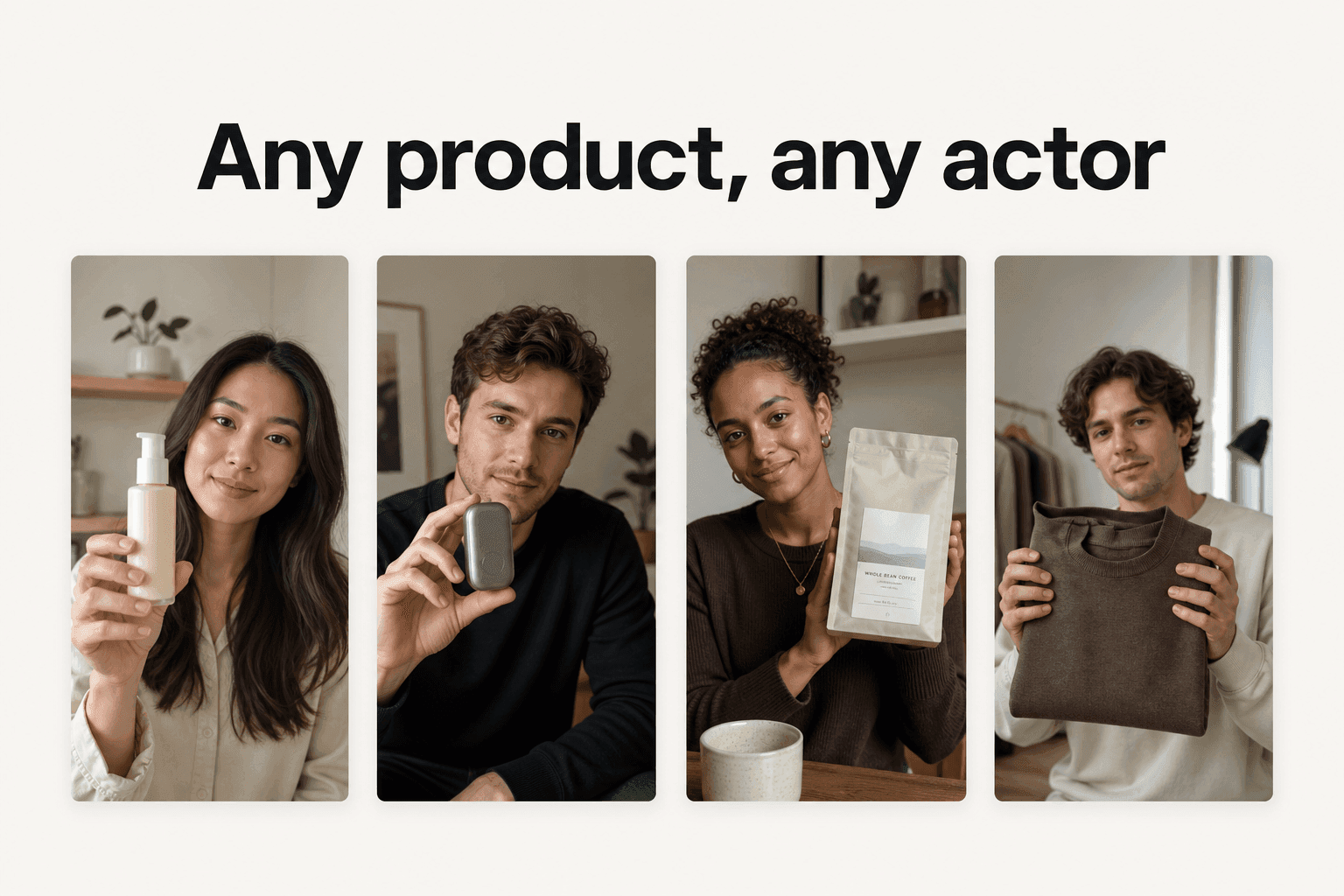
That is a production problem, and it is the one Novoads is built for. You upload a product photo and generate ad-ready stills from it through GPT Image 2 at one credit per image at medium quality, so eight treatments of one product is eight credits and a second set in a different setting is another eight. The same product photo also feeds the UGC video ads you run on the channels where video is the unit, which keeps one asset library serving several placements instead of one shoot serving one campaign. What that changes is the decision: you stop choosing which three ideas are worth photographing and start choosing which of eight the auction liked.
Novoads starts at $15/month (Starter, 200 credits per month). Plus is $49/month (1,000 credits), and Ultra starts at $129/month (3,000 credits) for more volume. Cancel anytime.
In Europe, creative is the targeting layer
Every young ad platform is thin somewhere, and the thin part tells you where the work is. ChatGPT Ads arrived in Europe with the audience layer switched off, self-serve promised for later in the summer and the copy capped at a sentence, and it handed advertisers geography, a conversation and a picture.
That is not a weaker channel. It is a channel where the usual order is inverted. On Meta or Google you find the right person and let a competent creative do the rest. Here the creative finds the moment, because nothing else can. The advertisers who treat variant supply as the media plan, rather than waiting for the audience controls to arrive, will have spent a full quarter learning what the conversation responds to.
Frequently Asked Questions
Which European countries have ChatGPT Ads?
OpenAI's announcement of August 18, 2026 states that ChatGPT Ads will expand to 31 European countries, naming Germany, France, Spain, Italy, Sweden, Norway, Denmark, the Netherlands and Austria among them. That set of 31 corresponds to the 27 EU member states plus Iceland, Liechtenstein and Norway, which together form the European Economic Area, plus Switzerland. The United Kingdom is not part of the 31 because ChatGPT Ads already ran there.
Can you use custom audiences in ChatGPT Ads in Europe?
No. OpenAI's developer documentation for custom audiences states that they are not supported for campaigns targeting the European Economic Area or Switzerland, where personalized ads are not yet available. The wording is scoped to the campaign's targeting rather than the advertiser's location, so a US advertiser pointing a campaign at Germany hits the same wall. Elsewhere the same feature carries its own floor. As of October 31, 2026, OpenAI's docs give 25,000 matched users as the public planning threshold for including an audience or adjusting bids with it, and a ready exclusion audience has no minimum.
Can European advertisers open a ChatGPT Ads account yet?
In the newest archived copy of OpenAI's Ads Manager availability page, a Spanish-language version from October 23, 2026, all 31 European markets are marked available for self-service. The earliest archived copy that marks them that way is from September 1. The page says the legal entity that will advertise and be billed must be based in a country listed as available, and that advertisers in the new European markets can currently get started through the OpenAI Ads Solutions team, agency partners or technology partners. At launch, on August 18, OpenAI said self-service through Ads Manager would follow later this summer, and the page listed nine countries as available, none of them in the EEA. Check the page for the country where your billed business is based before you plan a launch.
What targeting does ChatGPT Ads support in the EEA?
Geography, platform and context. OpenAI's targeting docs, read October 31, 2026, let you choose countries, regions or markets and exclude locations, and limit delivery to the ChatGPT iOS app, the Android app or the web. They carry no EEA carve-out on either setting, so both layers work normally. The rest of the match comes from the conversation itself, along with your landing page, title, copy and the context hints you supply at the ad group level. Those hints are explicitly not exact-match keywords and do not guarantee delivery in specific conversations.
Is contextual-only permanent in Europe?
OpenAI's wording is that personalized ads are not yet available, which is a statement about the launch configuration rather than a settled policy. Treat contextual-only as the state of the channel on the day it opened and re-check the documentation before you build a plan around personalization arriving or not arriving. The safe planning assumption is the one that is true today.
Who sees ads in ChatGPT in Europe?
Only people on the lower-tier consumer plans. OpenAI states that ads will be shown only to users on the Free and Go plans, and that Plus, Pro and Enterprise subscriptions remain ad-free. Its Help Center adds that ads are not shown to users on any Business plan, or to any user it is told or predicts is under the age of 18.
Key Takeaways
- The expansion is 31 European countries, announced on August 18, 2026 and live the following Monday. That set is the 27 EU member states plus Iceland, Liechtenstein and Norway, which is the European Economic Area, plus Switzerland.
- OpenAI's developer documentation states that custom audiences are not supported for campaigns targeting the EEA or Switzerland, where personalized ads are not yet available. The restriction is scoped to where a campaign points, not to where the advertiser sits.
- At launch, buying in Europe ran through OpenAI's Ads Solutions team, agency partners and technology partners, and none of the 31 markets was marked available on OpenAI's Ads Manager availability list. By September 1, 2026, that list marked all 31 as available for self-service. Its newest archived copy, a Spanish-language version from October 23, still does, and the same page says advertisers in the new European markets can currently get started through the Ads Solutions team, agency partners or technology partners.
- What a European campaign can buy is geo-targeting by country, region or market (OpenAI's location types as of October 31, 2026), platform targeting, and placement against the conversation on screen, measured through the OpenAI Pixel, the Conversions API and third-party integrations.
- With the audience layer switched off, the creative is the only targeting instrument left, and the ad unit gives it a title of 3 to 50 characters, a body of up to 100 and one image. Variant supply becomes the constraint that decides performance.
Sources
- •OpenAI: ChatGPT Ads expands across Europe (archived August 21, 2026)
- •OpenAI Developers: Custom Audiences
- •OpenAI Developers: Campaign Targeting
- •OpenAI Developers: Location Targeting
- •OpenAI Help Center: Ads Manager Availability (archived August 18, 2026)
- •OpenAI Help Center: Ads Manager Availability (archived August 27, 2026)
- •OpenAI Help Center: Ads Manager Availability (archived September 1, 2026)
- •OpenAI Help Center: Ads Manager Availability (archived October 12, 2026)
- •OpenAI Help Center: Ads Manager Availability, Spanish-language version (archived October 23, 2026)
- •OpenAI: ChatGPT Ads expands to 26 new countries as over 100,000 advertisers have used the platform (archived October 23, 2026)
- •OpenAI Developers: Platform Targeting
- •Search Engine Roundtable: ChatGPT Ads Expanding To 31 European Countries