Higgsfield vs Kling for Video Ads: One Model, Three Ways to Buy It
Kling is a video model family. Higgsfield sells twelve Kling models inside its creative suite, Kling sells them in its own studio, and fal lists them per second. What each door charges for a clip, what Higgsfield's Unlimited really covers, and which door fits an ad team.

Mauricio Valdivia
·12 min

One Kling clip, three different bills
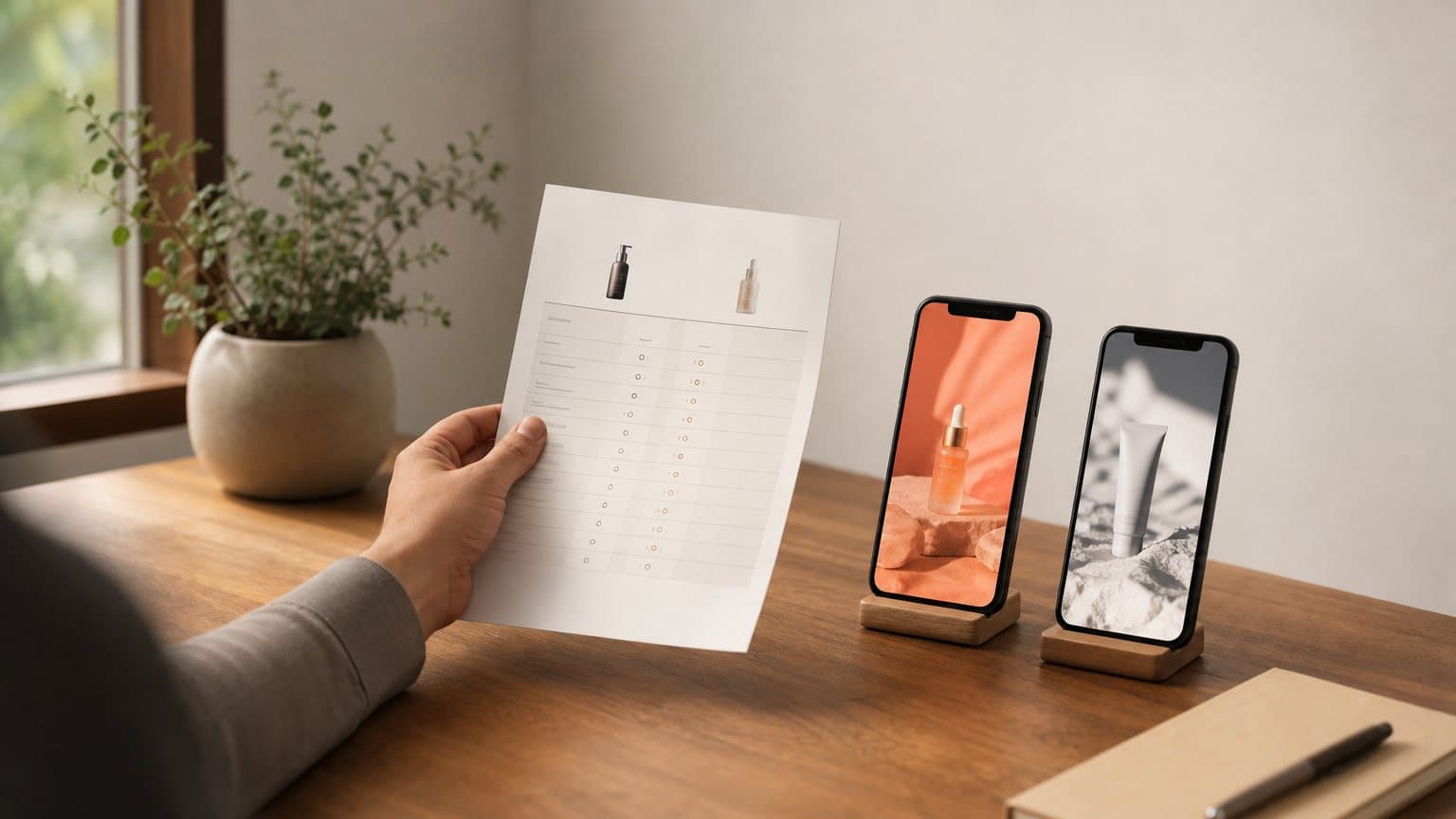
A performance marketer at a skincare brand has a Kling prompt she likes: a hand lifts an amber serum bottle into morning light, eight seconds, sound on. She needs 40 variations for a hook test. Three stores sell her the render.
On Higgsfield, the price is a credit count on the Generate button. Higgsfield's own plan comparison, published September 15, 2026, says that button showed 20 credits, about $1.00, for an eight-second Kling 3.0 clip at 1080p. On fal, the Kling 3.0 Pro endpoint lists $0.168 for every second of video with audio on. In Kling's own studio, the cost shows up in Kling credits when she generates. Same model. Three bills.
That is the real question behind "Higgsfield vs Kling." Kling is a video model family. Higgsfield is an AI creative suite that sells access to Kling as one of more than 30 models. So the decision is rarely which one makes the better clip, because the engine underneath is Kling either way. The decision is which door to buy it through: a platform, the source, or a per-second reseller.
A disclosure before the comparison. We make Novoads, an AI UGC ad tool that competes with Higgsfield for some of the same buyers, and Novoads also sells Kling inside its own app. So everything about Higgsfield, Kling and fal below comes from their own pages as read on September 17, 2026, with the page's own date wherever it carries one.
The quick answer
If you only read one section, read this one. Each door wins a different job.
- Buy Kling through Higgsfield when Kling is one of several models you use every week, you work in the browser, and a web-only Unlimited window on a model you use would cover real volume.
- Buy Kling from Kling when Kling is your only engine, you want the maker's own studio, credits and MCP connector, and you are comfortable pricing each job from a test generation.
- Buy Kling per second from a reseller such as fal when you are wiring generation into your own code and want a published price per second that you can put in a spreadsheet.
- Or skip the raw clip and buy Kling inside an ad tool when the ad is a script on camera and the model is one step of the job, not the whole job. Novoads is one of those; the last section covers where it fits and where it costs more.
The rest of this post shows the receipts: what each door is, what a clip costs, what Unlimited actually covers, and the terms an ad team signs at each one.
What you are actually comparing
The comparison gets confusing because the two names sit at different layers. One is a model. The other is a store that stocks it.
Kling is a model family with its own storefront
Kling's homepage presents a 3.0 model series, VIDEO 3.0 and VIDEO 3.0 Omni, and sells it through its own creative studio, apps and an API platform. Kling's VIDEO 3.0 user guide says the model generates up to 15 seconds of continuous video, with a flexible duration from 3 to 15 seconds, and that native audio supports Chinese, English, Japanese, Korean and Spanish.
On the money side, Kling's own credit guide, dated July 28, 2026, says Kling AI uses credits and membership plans to manage access to generation features. That makes the direct door a subscription store, not a per-clip vending machine.
Higgsfield stocks twelve Kling models in one suite
Higgsfield's help centre article on Kling, dated August 1, 2026, describes Kling as a video model family "available on Higgsfield and built for stylized and multi-shot filmmaking," and lists twelve Kling models. The ones an ad team is most likely to reach for:
- Kling 3.0: scene-based multi-shot filmmaking with audio, up to 4K, 3 to 15 seconds.
- Kling 3.0 Turbo: fast iteration on the 3.0 base, at 1080p.
- Kling 3.0 Motion Control: transfers real motion onto a character, 3 to 30 seconds.
- Kling 3.0 Omni: generation and editing in one model, up to 4K.
The rest of the list reaches back to Kling 2.6, the O1 video models, Kling 2.5 Turbo and Kling 2.1. Higgsfield's Kling landing page states the pitch plainly: "Day 0 access to every Kling model," together with the rest of its catalog, all under one subscription. For how that subscription compares with Runway's, see our Runway vs Higgsfield comparison.
Where fal and ad tools sit
fal is a developer platform. It serves Kling 3.0 as API endpoints in Pro and Standard tiers, for text-to-video and image-to-video, and prints a price per second on each endpoint page. Each page has a playground for testing, but the product is built to be called from code.
Ad tools are the fourth layer. They buy model access and wrap it in an ad workflow: scripts, actors, product photos, formats. If you are weighing Higgsfield as that kind of tool, our full Higgsfield review for advertisers covers its ad product, Marketing Studio, in depth. This post stays on the Kling question.
What a Kling clip costs through each door
Every door prices the same seconds of Kling in a different unit. Put them side by side and the gaps are smaller than the units make them look, and the real differences hide in different places.
fal prints a price per second
fal's endpoint pages charge for every second of video generated, at three settings per tier:
- Kling 3.0 Pro: $0.112 with audio off, $0.168 with audio on, and $0.196 when voice control is used.
- Kling 3.0 Standard: $0.084 with audio off, $0.126 with audio on, and $0.154 with voice control.
- A full Pro take: fal's image-to-video page works the math for 15 seconds, $1.68 with audio off and $2.52 with audio on.
Two cautions. These are fal's prices for its endpoints, not Kling's own rates. And list prices move, so read them as of September 2026.
Higgsfield prices in credits, shown before you confirm
Higgsfield's help centre says every generation costs credits "depending on the model, resolution, and duration," with the exact cost on the Generate button before you confirm. Its September 15, 2026 plan comparison puts numbers on the plans:
- Starter: $15 a month for 200 credits and the model catalog, without the unlimited set.
- Plus: $49 a month for 1,000 credits.
- Ultra: $129 a month for 3,000 credits.
The same post gives the one Kling reading we have from Higgsfield itself: 20 credits, about $1.00, for an eight-second Kling 3.0 clip at 1080p. That line does not state the audio setting. Subscription credits reset each billing cycle and do not roll over, per Higgsfield's help centre.
Kling prices in its own credits, per second
Kling's July 28, 2026 credit guide tells creators to plan around the "model, feature, resolution, duration, and the current product workflow shown at the time of generation." It publishes a plan table from a free Basic tier to Ultra, with first-subscription discounts, and warns that "credits, prices, plan benefits, and access rules can change." Its practical advice is sound for any door: run a short test generation before you scale.
The rate itself is published. Kling's VIDEO 3.0 guide charges per second in Kling credits: 12 with native audio at 1080p and 8 without it, 9 and 6 at 720p, and 2 more for voice tone control. An eight-second clip with sound at 1080p is 96 Kling credits. Confirm it on the generation panel before a big batch, as Kling advises.
A worked example: 40 eight-second hook variants
Here is the marketer's batch from the opening, priced on the published numbers. Forty clips of eight seconds is 320 seconds of video.
| Door and setting | Billing unit | 40 clips, 8 s each |
|---|---|---|
| fal, Kling 3.0 Pro, audio on | $0.168 per second | $53.76 |
| fal, Kling 3.0 Pro, audio off | $0.112 per second | $35.84 |
| fal, Kling 3.0 Standard, audio on | $0.126 per second | $40.32 |
| Higgsfield, Kling 3.0 at 1080p | 20 credits per clip | 800 credits |
| Kling studio, native audio, 1080p | 12 Kling credits per second | 3,840 Kling credits |
On Higgsfield, 800 credits fits inside the 1,000 monthly credits of Plus at $49; Starter's 200 credits would cover ten clips. On fal, sound is the biggest lever, a third of the bill. Edge on a predictable number: fal. Edge on a subscription you already pay for: Higgsfield.
Two things change every row. Retries multiply the bill, since a usable hook rarely comes from one render, and our guide to AI video credits shows how fast attempts compound. And the cheapest door on paper stops being cheapest the moment its queue or its terms cost you a day.
What Unlimited covers for Kling on Higgsfield
Unlimited is the most attractive word in Higgsfield's plans, and the one that needs the closest reading. Its own help centre spells out the terms.
A window per model, not a permanent pass
Higgsfield's article "What are Unlimited models, and which plans include them?", dated August 3, 2026, defines them as "specific models where generations don't deduct credits for a set period." It adds that:
- The period varies by model: most included models come with 365-day access, while the newest flagship models "may have shorter windows (for example, 7 days)."
- It needs an active subscription: if the subscription ends, Unlimited stops working even when its period has not finished.
- Coverage depends on the plan: the exact models and periods sit on each plan's card on the pricing page, and higher plans include more of them.
Higgsfield's plans article adds that Unlimited access "is a one-time purchase, not a recurring subscription." For Kling specifically, the September 15, 2026 plan comparison says Plus and Ultra carry a 365-day set of six image models, and that annual billing adds a Kling 3.0 window on both paid tiers. Higgsfield also sells Unlimited access to individual models as bundles through its Unlimited Models Marketplace, where video bundles run one generation at a time, up to 15 seconds.
Only on higgsfield.ai
The same article says Unlimited "applies only on higgsfield.ai." Any generation made through MCP, CLI, Canvas, Supercomputer and other automated tools always deducts credits, regardless of Unlimited status. Higgsfield also states that Unlimited "is designed for personal, human use only," and that automation tools, scripting and reselling access are prohibited.
For an ad team, that draws a clean line. Unlimited can cover a person generating hooks in a browser. It cannot cover an agent or a script generating them overnight.
The standard queue
Speed is the quiet trade. Higgsfield says Unlimited generations run in the standard queue, while credit-based generations always run in the priority queue, and that speed and concurrency on Unlimited may vary during peak hours. Its Kling article adds its own warning about demand: the highest-quality models run at high demand, so use a Turbo variant for drafts and switch to the full model for finals.
The practical read: an active Kling 3.0 window is excellent for exploration, when a slow afternoon of drafts costs nothing. For a launch with a deadline, switch that generation to Credit Mode, which Higgsfield says runs in the priority queue at maximum speed.

Creative control: models, shots and length
The engine is shared, but each door exposes it through different controls. For ads, three differences matter.
How many Kling models each door opens
Higgsfield lists twelve Kling models, including editing models (Kling 3.0 Omni Edit, Kling O1 Video Edit) and older generations, next to other makers' models in the same interface. The fal endpoints priced above are Kling 3.0 in Pro and Standard tiers. Kling's own studio leads with its current 3.0 series. If your test plan compares Kling against other engines, the platform door keeps the comparison in one tab. Our Kling alternatives guide sorts those other engines by job, and our Kling vs Veo comparison takes one pairing head to head.
Shots, elements and frames
The multi-shot tooling is where the doors differ most in feel. Higgsfield's Kling article walks through a web workflow: define each scene, upload start and end frames, add Elements to lock characters, products or objects across scenes, set audio, then pick a genre and a speed ramp. fal's image-to-video page exposes the same ideas as API parameters:
- Multi-shot: a multi-prompt list, one prompt and duration per shot.
- Consistency: an elements array, referenced as @Element1 in the prompt.
- Framing: a required start image and an optional end frame. The aspect ratio "is determined by the start image, not a parameter," which matters when you need 9:16 and 1:1 cuts of one concept.
For product ads, element locking is the feature to test first, because a product that changes shape between shots is an unusable ad. Our comparison of Seedance and Kling for UGC ads covers where Kling's stability helps and where it does not.
Length and resolution
Kling 3.0 tops out at 15 seconds per generation on every door we checked. Motion Control runs longer, up to 30 seconds in Higgsfield's table, and our breakdown of Kling motion control pricing explains the orientation setting that decides that cap. Higgsfield lists Kling 3.0 and Kling 3.0 Omni at up to 4K. Whether 4K earns its credits depends on the placement; a vertical feed ad and a connected-TV spot are different deliverables.
Agents, APIs and the terms an ad team signs
Past the render itself, three quieter differences decide whether a door survives contact with a real campaign.
Automation exists at every door, billed differently
All three doors now reach AI agents and code. They bill that traffic differently.
- Higgsfield: its MCP server and CLI connect agents to your account, and everything generated through them deducts credits regardless of plan. Its public API charges successful generation requests in account credits. Higgsfield says its Kling Turbo variant is available on the web, Supercomputer, MCP and CLI. Our explainers on Higgsfield MCP and the Higgsfield API cover the setup.
- Kling: it runs its own MCP server. Its August 27, 2026 guide connects it to Claude Code with a single command pointing at kling.ai/mcp, then batch-generates restaurant promo videos from one approved creative direction.
- fal: the whole product is an API, billed per second of video.
Commercial use and ownership
This is where the doors differ most for an advertiser:
- Kling direct: its credit guide lists the free Basic tier with "generated content is not for commercial use," and its paid tiers with "generated content is for commercial use." Its credits policy also lists 1080p videos and watermark removal among premium-only functions.
- Higgsfield: its help centre says it "does not restrict the commercial use of outputs," adds that other users "may generate the same or similar outputs," and says legal indemnification against third-party IP claims "is available on the Enterprise plan only."
So a paid Kling membership is the floor for ad work at the source, and on Higgsfield the question to ask before a big campaign is exclusivity, not permission.
Failed renders and credits that expire
Both credit stores return credits on failure, with different fine print:
- Kling: its credits policy says that if a generation fails, the corresponding credits are refunded. Subscription credits stay valid for one month from distribution, and purchased credits for two years.
- Higgsfield: failed generations usually refund automatically within a few minutes, though Higgsfield notes that specific models might not refund credits for failed generations. Subscription credits reset every cycle without rollover.
For a monthly testing rhythm, expiry matters as much as price. Credits bought for a launch that slips are credits you may lose.
Which door fits which ad team
There is no single winner here, and pretending otherwise would misread the question. Here is how the choice usually falls.
Choose Higgsfield if
- You run several models, not just Kling. Higgsfield's September 15, 2026 post says one credit balance covers more than 30 frontier models, including Veo 3.1, Kling 3.0, Seedance 2.5 and Wan 2.6.
- Your team works in the browser. Web-only Unlimited windows and priority Credit Mode both live there.
- You want many Kling variants in one interface, from Kling 2.1 to Kling 3.0 Omni, next to other makers' models.
Choose Kling directly if
- Kling is your only engine, and a second catalog would sit unused.
- You want the maker's own agent route through its MCP server.
- You are happy to budget in Kling credits, at the per-second rates its VIDEO 3.0 guide lists.
Choose a per-second reseller if
- You build your own pipeline and want no subscription layer at all.
- Your finance team wants a rate card, with audio on and off as separate lines.
- You already run other models in code, so Kling becomes one more endpoint.
A fair concession to both named products: Higgsfield's cross-maker catalog is a genuine advantage when your ads use more than one engine, and Kling's own door is the only one where you are buying from the maker. Neither is a mistake. They are different shapes of the same purchase. Our Runway vs Kling comparison runs the same door question for Runway.
How Novoads solves the script-first Kling ad
Novoads offers Kling v3 Pro inside an ad workflow rather than as a raw clip store. You upload a product photo, write or auto-generate the script, pick an AI actor or a video model, and get an ad-ready video. Kling v3 Pro sits in the same project as Seedance 2.0, Seedance 2.0 Mini, Seedance 2.5, Google Veo 3.1 and Omni Flash, plus Kling Motion Control.
What Kling costs in Novoads credits
Kling v3 Pro in Novoads runs from 3 to 15 seconds, in 16:9, 9:16 or 1:1:
- 3 seconds: 2.2 credits.
- 5 seconds: 3 credits.
- 8 seconds: 4.2 credits.
- 15 seconds: 7 credits.
Across the roster, a clip runs from about a dollar for a five-second Seedance 2.0 Mini clip to about $8 for an eight-second Seedance 2.5 clip, and about $26 for a full 30-second Seedance 2.5 take. Novoads starts at $49/month (Starter, 50 credits per month). All plans are published on /pricing.
Where it costs more, and what that buys
Here is the concession. Per raw second of Kling, Novoads credits cost more than Higgsfield's 20-credit reading or fal's list price. If your job is bulk Kling footage for an editor, those doors are cheaper, and you should use them. What Novoads adds is the part around the model: the script is the input, the actor delivers it, and you choose the engine per generation inside the same project. If that is the job, you can make your first Kling ad in Novoads.
The model is the commodity, the door is the decision
Kling is the same Kling in every store that stocks it. What changes is the unit you pay in, the queue you wait in, and the rights attached to what comes out. Higgsfield sells breadth and a browser studio, with Unlimited windows that end at the edge of the website. Kling sells the source, priced per second in its own credits. fal sells a rate card. Pick the door that matches how your team actually works this month, and price it with ten clips before you commit to four hundred.
Frequently Asked Questions
Is Kling available on Higgsfield?
Yes. Higgsfield's help centre article on Kling, dated August 1, 2026, lists twelve Kling models on the platform, including Kling 3.0 (up to 4K, 3 to 15 seconds), Kling 3.0 Turbo for fast drafts at 1080p, Kling 3.0 Motion Control (3 to 30 seconds) and Kling 3.0 Omni, plus older models back to Kling 2.1. You open them from Video, then Kling, on higgsfield.ai.
Is Kling cheaper on Higgsfield or directly from Kling?
It depends on your plan, your audio setting and how many retries you need, so price a small test first. Higgsfield's own post of September 15, 2026 says its Generate button showed 20 credits, about $1.00, for an eight-second Kling 3.0 clip at 1080p. Kling's own studio prices generations in credits that depend on model, resolution, duration and features, shown when you generate, and Kling warns that its plans and prices can change. If you want a fixed per-second number, fal lists Kling 3.0 Pro at $0.112 per second with audio off and $0.168 with audio on; those are fal's prices, not Kling's.
Does Higgsfield Unlimited include Kling?
Only under conditions. Higgsfield's help centre says Unlimited covers specific models for a set period, listed on each plan's card on its pricing page, and that it works only while your subscription is active and only on higgsfield.ai. Its September 15, 2026 plan comparison says annual billing adds a Kling 3.0 window on both paid tiers. Generations through MCP, CLI, Canvas or Supercomputer always deduct credits, and Unlimited jobs run in the standard queue rather than the priority queue.
Can I use Kling videos in paid ads?
It depends on where you generate them. Kling's own credit guide lists its free Basic tier with generated content that is not for commercial use, and its paid tiers with generated content that is for commercial use. Higgsfield's help centre says it does not restrict the commercial use of outputs, notes that other users may generate the same or similar outputs, and offers legal indemnification against third-party IP claims on the Enterprise plan only.
Can I automate Kling generation for ad variations?
Yes, through any of the three doors, with different billing. Higgsfield connects agents through its MCP server and CLI, and everything generated that way deducts credits regardless of plan. Kling runs its own MCP server, which its August 27, 2026 guide connects to Claude Code. fal exposes Kling 3.0 as API endpoints billed per second of video.
Does Novoads offer Kling?
Yes. Novoads offers Kling v3 Pro alongside Seedance 2.0, Seedance 2.0 Mini, Seedance 2.5, Google Veo 3.1 and Omni Flash, plus Kling Motion Control. Kling v3 Pro runs from 3 to 15 seconds in 16:9, 9:16 or 1:1, at 2.2 credits for 3 seconds, 3 credits for 5 seconds, 4.2 credits for 8 seconds and 7 credits for 15 seconds. Novoads starts at $49/month (Starter, 50 credits per month), and all plans are published on /pricing.
Key Takeaways
- Higgsfield vs Kling is not a quality contest: Kling is the model family, and Higgsfield is one of several places that sell it. Higgsfield's help centre lists twelve Kling models on its platform, from Kling 3.0 up to 4K down to Kling 2.1.
- The same eight-second Kling clip is priced three ways. Higgsfield's own September 15, 2026 post read 20 credits, about $1.00, for Kling 3.0 at 1080p; fal lists Kling 3.0 Pro at $0.168 per second with audio on; Kling's own VIDEO 3.0 guide lists 12 Kling credits per second with native audio at 1080p, 96 for the clip.
- Higgsfield's Unlimited is a time-limited window per model that needs an active subscription and works only on higgsfield.ai. Its MCP, CLI, Canvas and Supercomputer always spend credits, and Unlimited jobs run in the standard queue.
- The terms differ more than the pixels. Kling's free Basic tier output is not for commercial use, while Higgsfield does not restrict commercial use of outputs and offers legal indemnification only on Enterprise.
- Novoads also sells Kling v3 Pro, from 2.2 credits for 3 seconds to 7 credits for 15 seconds. Per raw Kling second it costs more than Higgsfield's credit reading or fal's list price; what the credits buy is the script-first ad workflow around the model.