Seedance vs Veo for UGC Ads: Test 3x More Angles for the Same Budget
Novoads runs both Seedance 2.0 and Google Veo 3.1. Seedance is the cheaper, up-to-15-second workhorse for testing many ad angles; Veo is the 1080p hero cut you scale. Here is which to use, with real per-clip credit costs.

Mauricio Valdivia
·10 min
The volume workhorse versus the polished hero cut
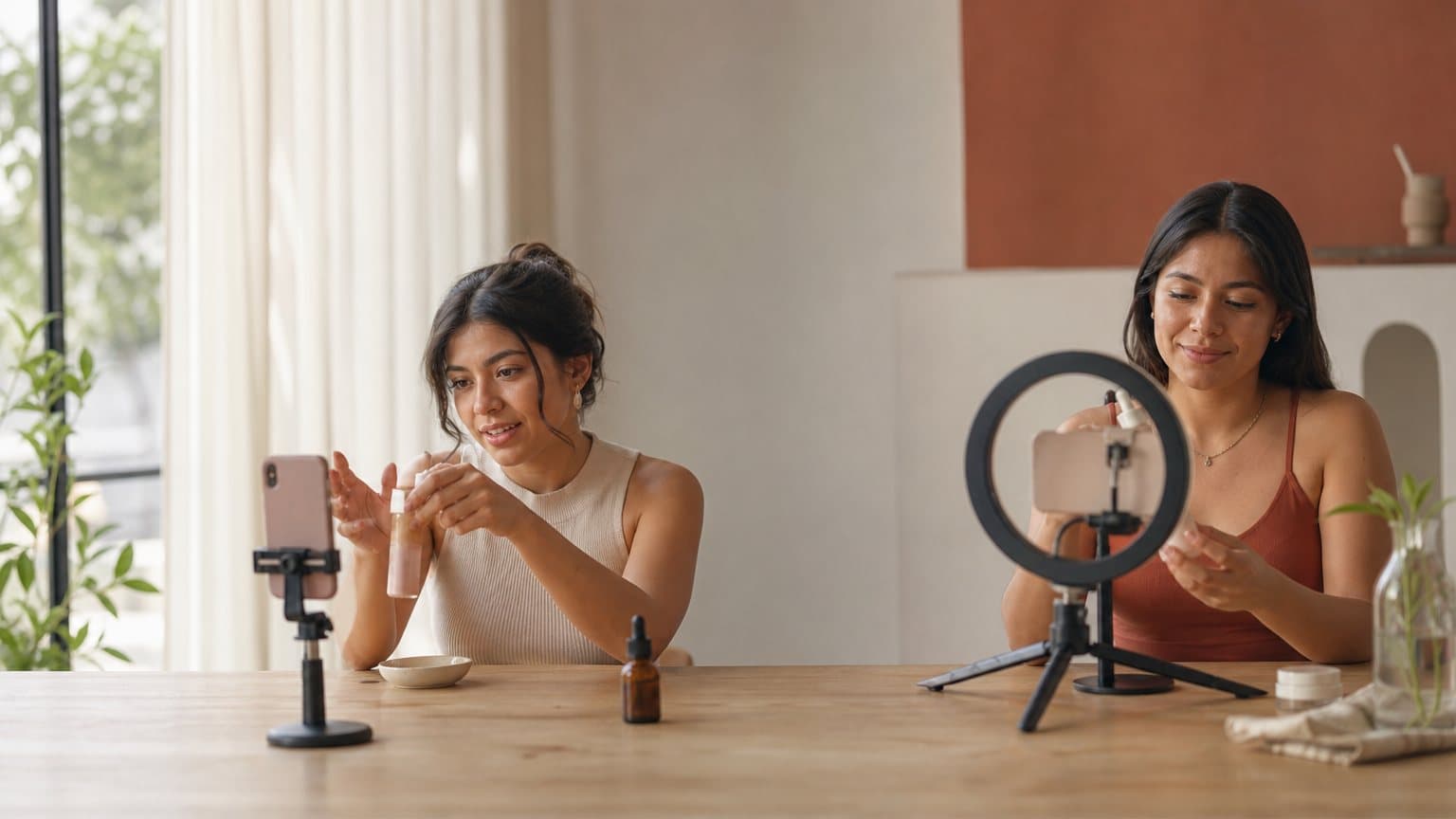
A performance marketer testing a new skincare hook does not need one perfect video. She needs twelve rough ones by Friday, so she can find the one angle that actually moves the cost per acquisition, then pour budget behind it. The first job is cheap and fast. The second job is polished and expensive. They are not the same job, and they do not want the same model.
As of June 30, 2026, Novoads runs both of the models that answer those two jobs: ByteDance's Seedance 2.0 and Google's Veo 3.1. The short version is that Seedance is the cheaper, longer workhorse you use to test many angles, and Veo is the higher-resolution model you use to finish the one that won. This is not a contest with a single winner. It is a question of which seat you are in. Here is the real difference between them for ad-makers, in credits you actually spend, plus the workflow that uses both.
The verdict in 30 seconds
If you only read one section, read this one. Both models are good. They are good at different things, and the cost gap between them is large enough that picking wrong is a budget decision, not a taste one.
Seedance 2.0: the workhorse for testing
Reach for Seedance when you are still searching for the winning angle. It costs about a third of a Veo clip, it prices per second so short clips cost less, and it stretches to a full 15 seconds in a single take. That combination is exactly what high-volume creative testing wants: many variations, low cost each, enough length to carry a real hook. If you are not sure which model to start with, start here.
Veo 3.1: the model for the hero cut
Reach for Veo when you have found the winner and you are about to spend on it. Veo 3.1 costs more per clip, but it renders at 1080p in Novoads, so the finish holds up when the ad runs at scale and gets the impressions. It is the model you use last, on the one creative that earned the right to look expensive.
| Dimension | Seedance 2.0 | Veo 3.1 |
|---|---|---|
| Cost per clip | 23 credits, ~$1.13 (5s, 720p) | 72 credits, ~$3.53 (flat) |
| Pricing shape | Per second | Flat per video |
| Max single clip | Up to 15 seconds | 8 seconds |
| Resolution in Novoads | 720p | 1080p |
| Native audio | Yes | Yes |
| Best stage | Testing many angles | Scaling the winner |
The rest of this post is why each row reads the way it does, and how to turn the table into a workflow.
What each model actually is
Before the trade-offs, the plain description. Both are text-to-video and image-to-video models with native sound, and both are wired into the same Novoads project, so the differences below are about character, not category.
Seedance 2.0, in plain terms
Seedance is ByteDance's video model family, the same lab behind CapCut and Dreamina. Version 2.0 is fal's description of "ByteDance's most advanced text-to-video model," and its model page lists the traits that matter for ad work: it produces cinematic output with native audio, it supports multi-shot editing so scene changes can happen inside one generation, and it gives director-level camera control for deliberate moves rather than random drift. In the Novoads picker it renders at up to 720p and prices per second, which is the cost lever the whole comparison hinges on.
Veo 3.1, in plain terms
Veo is Google DeepMind's video model, and 3.1 is the version on Novoads today. Per Google's own documentation, Veo generates native clips up to 8 seconds, it natively generates audio alongside the video, and per the DeepMind model page it supports 1080p and 4K output, of which Novoads renders up to 1080p. So Veo's character is the opposite end of the same spectrum: shorter clips, a flat price, and a more finished frame. Where Seedance optimizes for cheap volume, Veo optimizes for polish.
Where they overlap
It helps to name what does not separate them, so you do not pick on a false difference:
- Native audio ships on both, so sound is never the tiebreaker between them.
- Image-to-video works on both, so neither forces you into pure text-to-video, you can start from a product photo either way.
- One Novoads workflow holds both, so switching does not mean re-uploading your product or rewriting your script.
The decision lives entirely in three rows: price, length, and resolution.

Cost: the difference that compounds
Price is where the two models part ways hardest, and it is the row most ad teams underweight. A few dollars per clip sounds trivial until you remember that creative testing is a volume game, and volume multiplies the gap.
What a clip actually costs in credits
The numbers come straight from the platform's pricing at 720p, not a marketing estimate, with dollars at the Plus rate of 4.9 cents a credit. Seedance prices per second, so a test clip costs only as much as its length, while Veo charges one flat rate:
- Seedance 5 seconds: 23 credits, about $1.13.
- Seedance 8 seconds: 36 credits.
- Seedance 15 seconds: 68 credits, the longest single take.
- Veo 3.1, any length up to 8 seconds: a flat 72 credits, about $3.53.
So a single short clip already runs roughly three times the price on Veo, and that is before you multiply by a test batch.
Why per-second versus flat pricing matters
The pricing shapes are not just different sizes, they are different incentives. Seedance rewards you for keeping a test clip short: a quick 5-second hook genuinely costs less than a 15-second one, so you can fire off a lot of them without thinking about budget. Veo charges the same flat rate whether your clip is 4 or 8 seconds, which means short Veo clips are relatively expensive and long ones are relatively efficient. The practical read: use Seedance when you want many cheap attempts, and use Veo when you want one clip and you are going to use most of its 8 seconds.
A worked example: twelve hooks, one budget
Put real numbers on the marketer from the opening. Say she wants to test 12 hook variations for a skincare launch, each a 5-second clip. On Seedance that is 12 clips at 23 credits, or 276 credits. On Veo that same 12-angle test is 12 clips at 72 credits, or 864 credits. Same test, same twelve ideas, and the Veo version costs more than three times as much. Frame it as the question that actually matters for ad spend: for a fixed credit budget, Seedance lets you test roughly 3x more angles before you commit a dollar to media. That is not a rounding difference. That is whether you find the winner on your first batch or your third. For the mechanics of running a test like this, our guide on how to create UGC ads walks the hook, demo, and payoff shape each variation should carry, and how to improve ROAS with UGC covers what to do with the winner once it surfaces.
Length and shape: fifteen seconds versus eight
The second real difference is how much ad you can fit in a single, uncut generation. It changes what kind of spot each model can carry without an editor stitching clips together.
Seedance: room for a full beat
A native 15-second single take is long enough to hold a complete idea: a hook, a quick demonstration, and a call to action, all in one continuous shot with no cut to hide. Seedance's multi-shot editing means scene changes can even happen inside that one generation, so a 15-second clip is not locked to a single static frame. For a product demo or a spokesperson read that needs to breathe, that ceiling is the difference between one generation and an assembly job. If you want the longer view on where single-take length is heading, the Seedance 2.5 explainer covers ByteDance's announced 30-second model.
Veo: the tight, polished hook
Veo caps native clips at 8 seconds, which sounds like a limit until you remember how short a scroll-stopping hook actually is. Eight seconds is plenty for a single strong beat: a face, a problem, a product reveal. The trade is that you cannot carry a three-part story in one Veo take, so longer Veo spots mean assembling clips. For the hook itself, though, 8 seconds of clean, sound-on, high-resolution video is often exactly the unit you want.
Which length your placement wants
Match the ceiling to the placement, not to a preference. A TikTok or Reels hook lives or dies in the first few seconds, so Veo's 8 seconds rarely constrains it, and the workflow in our TikTok ads guide leans on exactly that short window. A longer demo, an explainer, or a testimonial that needs a continuous take is where Seedance's 15-second single clip pulls ahead. The length question is really a placement question wearing a spec sheet.

Finish and polish: 720p versus 1080p
The third difference is resolution, and it is the one that flips the cost argument on its head. Everything above favors Seedance on price; this is where Veo earns its premium.
Where resolution earns its cost
Veo 3.1 renders at 1080p in Novoads, while Seedance 2.0 stops at 720p in the picker. Since September 21, 2026 there is a second 1080p route: Seedance 2.5 renders at 1080p for 12 credits a second, 60 credits for a 5-second clip and 96 for 8 seconds against Veo's flat 72, with single takes up to 30 seconds. For a clip that is about to get hundreds of thousands of impressions, that finish matters: a sharper frame reads as more produced, holds up on a large screen, and gives the brand a more premium feel at the exact moment the most people are watching. Resolution is a cost you pay for the winner, because the winner is the creative that gets seen the most. Spending Veo money on an untested angle is backwards; spending it on the proven one is the point.
When 720p is plenty
For the testing phase, 720p is not a compromise, it is the correct call. You are not judging a test clip on pixel sharpness, you are judging whether the angle, the hook, and the message land. A cheaper 720p Seedance clip tells you everything you need to know about whether an idea works, and it tells you for a third of the price. Save the resolution budget for the creative that earned it. This is the same logic that separates AI from human UGC creators: the cost of an extra test should trend toward zero so you can afford to be wrong a lot before you are right once.
Which to use for UGC ads
Now turn the three differences into a decision. The honest answer is that an ad team should use both, at different moments, and the mistake is treating the choice as a permanent loyalty rather than a per-spot setting.
Reach for Seedance 2.0 when
Pick Seedance when you are in the searching phase:
- You want to test many angles, and cost per attempt matters more than pixel count.
- You may want a longer single take, up to 15 seconds, to carry a full hook-demo-payoff beat.
- You expect to be wrong a few times before you are right, so the cheap clip is the point.
This is the default for the bulk of an ad team's output, because most of the work of performance creative is testing, not finishing. It is the cheaper way to be wrong, which is most of what testing is.
Reach for Veo 3.1 when
Pick Veo when you are in the finishing phase:
- You have a winner, or a hero concept you already believe in, ready for real media spend.
- The clip is about to get the most impressions, so a sharper frame pays for itself.
- A tight 8-second beat at 1080p does more for you than raw length.
Here the higher-resolution finish is worth the flat 72 credits, because resolution is most valuable on the creative that gets seen the most. Veo is the last step, not the first.
The workflow most ad teams should run
Stop choosing and sequence them instead. Test cheap on Seedance, finish premium on Veo, in three moves:
- Generate a batch of low-cost Seedance variations to test the angle and the hook.
- Find the winner on the metric you actually care about, not on how the clip looks.
- Re-render that one winner on Veo 3.1 for the polished, higher-resolution cut you scale, or on Seedance 2.5 at 1080p when the winner needs more than 8 seconds.
You get Seedance's volume economics during the phase that needs volume, and Veo's finish during the phase that needs finish. The model stops being a religion and becomes a setting you change based on where a creative is in its life. For the wider picture of where AI fits in a media plan, see our roundup of the best AI video ad platforms.
How Novoads runs both behind one workflow
The reason this sequence is practical and not a chore is that both models live in the same place. In Novoads, you do not pick a model first and build around it. You build the ad, then choose the engine per spot.
One project, swap the engine per spot
Upload a product photo and write or auto-generate a script once. Pick an AI actor from more than 100 to talk about the product on camera; library actors have empty hands, so for the product in hand, create a custom actor from a photo of someone holding it, which renders on the talking-actor route rather than on Seedance or Veo. Then generate: run it on Seedance to test angles cheaply, and switch the same project to Veo 3.1 when a winner is ready for its high-resolution cut. Because the script and the product photo carry over, switching models does not mean rebuilding the ad. It means changing one setting and paying the new model's rate.
What a Seedance ad costs to make today
The cost is concrete, not estimated. A 5-second Seedance 2.0 clip at 720p is 23 credits, about $1.13 at the Plus rate, and a full 15-second take is 68 credits. Veo 3.1 is a flat 72 credits, about $3.53. Across the whole platform, a video lands anywhere from about 25 cents for a five-second Seedance 2.0 Mini clip to about $4 for an eight-second Google Veo 3.1 clip, and about $10 for a full 30-second Seedance 2.5 take, which is still a fraction of the $200 to $500 a human UGC creator charges per deliverable. And because Novoads ships in 30+ languages with real regional accents, one winning concept can become a dozen native-sounding local versions instead of one dubbed master.

One honest caveat by the button: Novoads starts at $15/month (Starter, 200 credits per month), cancel anytime. It is a paid plan from the first charge, and 200 credits buys eight 5-second Seedance 2.0 clips at 720p, so what you see is your own product in several finished ads rather than a demo reel.
The engine is a setting, not a religion
Strip away the spec sheet and the Seedance-versus-Veo question dissolves into a sequence. Seedance is how you afford to test enough angles to find a winner, and Veo is how you make that winner look like it deserves the budget you are about to spend. Teams that pick one model and defend it are optimizing for the wrong thing, because they are paying premium prices to test or shipping test-grade resolution to scale. The ad-makers who win treat the model as a dial: cheap and plentiful while you are searching, sharp and finished once you have found it. Run both, in that order, and the choice stops being a debate and starts being a workflow.
Frequently Asked Questions
Is Seedance 2.0 or Veo 3.1 better for ads?
Neither wins outright, and that is the point. Seedance 2.0 is the cheaper, longer model built for high-volume creative testing. Veo 3.1 costs more but renders at 1080p, so it earns its price on the polished winner you scale. The right pick depends on whether you are still testing angles or finishing the one that worked.
How much cheaper is Seedance than Veo in Novoads?
A 5-second Seedance 2.0 clip at 720p is 23 credits, about $1.13 at the Plus rate, while Veo 3.1 is a flat 72 credits, about $3.53, per video. That is roughly a 3x gap, so the same credit budget buys about three times as many Seedance tests as Veo tests. Seedance also prices per second, so a shorter clip costs less, while Veo charges the same flat rate at any length up to 8 seconds.
How long can a single clip be on each model?
Seedance 2.0 in Novoads goes up to 15 seconds in one generation and prices per second, so a full 15-second clip is 68 credits at 720p. Veo 3.1 generates native clips up to 8 seconds. For an ad beat that needs room to breathe in a single take, Seedance has the longer ceiling; for a tight, sound-on hook, 8 seconds of Veo is often plenty.
Do both models generate sound?
Yes. Both Seedance 2.0 and Veo 3.1 generate native audio with the video, so sound is not the thing that separates them. The real differences are price, single-clip length, and output resolution, where Veo adds 1080p.
Which model should I use for TikTok or Reels ads?
For the testing phase, where you are firing off many hook variations cheaply, Seedance 2.0 is the workhorse: low cost per clip, vertical output, and up to 15 seconds in one take. For the winning hook you are about to spend real media budget behind, re-render it on Veo 3.1 for the higher-resolution finish. Same idea, different stage of the funnel.
Can I switch models without redoing the whole ad?
Yes. In Novoads both models live behind one workflow, so you choose the engine per spot instead of betting the whole campaign on a single model. Upload the product photo and script once, generate on Seedance to test, then switch to Veo for the hero cut. A 5-second Seedance 2.0 clip is 23 credits, about $1.13 at the Plus rate; Veo is a flat 72 credits, about $3.53.
Key Takeaways
- Novoads runs both Seedance 2.0 and Google Veo 3.1, so the real question is not which model is best in the abstract but which one fits the spot in front of you.
- Cost is the widest gap: a 5-second Seedance 2.0 clip at 720p is 23 credits (about $1.13 at the Plus rate), while Veo 3.1 is a flat 72 credits (about $3.53) per video, so the same budget buys you roughly 3x more Seedance tests.
- Seedance prices per second and goes up to 15 seconds in one clip, with native audio and multi-shot editing; Veo caps native clips at 8 seconds but renders at 1080p, where Seedance 2.0 stops at 720p in the Novoads picker.
- The workflow most ad teams should run: test many angles cheaply on Seedance, then re-render the winner on Veo for a higher-resolution hero cut.
- You can make either one in Novoads today: upload a product photo, write or auto-generate a script, and ship in 30+ languages with real accents. Novoads starts at $15/month (Starter, 200 credits per month), cancel anytime.