Sora 2 Leaves the API on September 24, 2026: 4 Video Models for Ad Teams
OpenAI's removal of the Videos API, sora-2 and sora-2-pro takes effect on September 24, 2026, with no replacement named. Here are the four AI video models ad creators are switching to and what each one is for.

Mauricio Valdivia
·Updated ·10 min

The Sora door closes on September 24. Four others are open.
A performance marketer opens the tool she used all spring to spin up hooks, and the door is not where she left it. Somewhere in her ad account are twelve variations she still needs to ship this week, and the fastest path to them just went quiet.
Editor's note, September 2026: this guide originally argued that the Sora 2 model would outlive the Sora consumer app through API hosts. That is no longer true. OpenAI's removal of the Videos API, sora-2 and sora-2-pro takes effect on September 24, 2026, with no replacement model named, and fal already marks its Sora 2 endpoints deprecated, so the hosts that resold it have nothing left to resell. The guide has been rewritten as a four-model switch plan, and Seedance 2.5, listed as pre-launch in the first version, has since shipped.
If that is you, start with the calm version of the news. The capability did not disappear; one supplier of it did, and four others are shipping today. This guide is the switch plan: which model is for which job, and what it costs to run.
What actually changed with Sora, and what didn't
The instinct when a tool disappears is to assume the capability disappeared with it. That is almost never true, and it is the first thing to get straight before you re-plan a single campaign.
The removal notice on OpenAI's own page
Here is the primary source, quoted exactly and no further. OpenAI's API deprecations page states: "On March 24th, 2026, we notified developers using the Videos API and Sora 2 video generation model aliases and snapshots of their deprecation and removal from the API on September 24, 2026." The affected list covers the Videos API itself, sora-2, sora-2-pro and their dated snapshots. The column where a recommended replacement would go is empty.
The same archived announcement page still describes what the model was built to do. OpenAI called Sora 2 "our flagship video and audio generation model," one that "excels at realistic, cinematic, and anime styles" and "also features synchronized dialogue and sound effects." So the record simultaneously tells you the model is off and reminds you it was very good. That gap is uncomfortable, and it is worth sitting in for a moment rather than rushing past.
This time, the model went with the app
Usually a model is not the same thing as an app. A consumer app is a front door: a website, a phone app, a place you log in. The model is the engine behind it, and when a company retires the front door the engine often keeps running somewhere else, rented through an API host.
That is exactly what happened to Sora for several months, and it is what the first version of this guide told you to do. It stops being true on September 24, 2026. The removal happens at the source, so the hosts inherit it: fal's Sora 2 model pages already carry a deprecation banner and state that the model is no longer supported. There is no other host to migrate to, because there was only ever one supplier.
What it means if Sora sat in your ad stack
If your creative pipeline ran through Sora, the practical damage is a broken habit rather than a lost capability. What you liked was a cinematic, realistic look with sound in the same pass, and three of the four models below do that today. The rebuild is a mapping exercise: list the jobs Sora covered, then send each job to the model that covers it now. Most teams use the disruption to stop depending on any single vendor. That is the theme underneath every option below. We kept our old head-to-head as a dated record in the Seedance 2.0 retrospective, and the Seedance half of it still holds.
The short version: four models ad creators are moving to
If you want the answer before the reasoning, here it is. There is no single replacement, because a Sora ad was never one thing. A talking hook, a product beauty shot, and a fifteen-second demo are three different jobs, and the best model changes with the job.
- Seedance 2.5 is the pick for one long unbroken take, up to thirty seconds.
- Veo 3.1 is the pick for a sound-on, high-resolution hero shot.
- Kling 3.0 is for multi-shot storyboards that resolve inside a single clip.
- Seedance 2.0 is the budget workhorse for testing many angles cheaply.
Here is the same read as a table. It stays deliberately terse: use it to point at a job, then read the section for the why.
| Model | Best for | Native audio | Ready today |
|---|---|---|---|
| Seedance 2.5 | One long unbroken take | Yes | Yes |
| Veo 3.1 | Sound-on, high-res hero shots | Yes | Yes |
| Kling 3.0 | Multi-shot storyboards | Yes | Yes |
| Seedance 2.0 | Cheap volume testing | Yes | Yes |
One honest caveat to read before the deep dives: model announcements move faster than anyone can keep up, and a spec that is "announced" today can ship next week or slip a month. Where a number below is a vendor's stated figure rather than something you can run, the text says so plainly. For a wider field than these four, our roundup of the best AI video ad platforms maps the tools that wrap these models for ad work, and if you are moving off a template-style editor rather than Sora itself, the best InVideo alternatives guide covers that adjacent lane.
Seedance 2.5: betting everything on length
The most talked-about name on the list is the one that changed most since this guide first ran, and that makes it a good place to start.
What ByteDance announced
ByteDance's pitch for Seedance 2.5 is length. According to The Decoder's report from the Volcano Engine FORCE conference, the model generates single clips "up to 30 seconds long without any post-stitching," and it can process "up to 50 additional inputs at once" for reference and consistency. A thirty-second single take is a genuinely different unit of work: not a clip you assemble into an ad, but something closer to the ad itself.
Who it is for
If your best-performing format is a longer spot, a demo that needs room to breathe or a spokesperson read that runs past the usual six seconds, Seedance 2.5 is the model to reach for. The reason is not just duration, it is the seams. When a thirty-second ad is really six short clips glued together, someone has to reconcile the lighting, the motion, and the pacing across every cut, or the ad reads as a collage. One continuous generation removes that whole assembly step, which is the part of ad production nobody budgets for and everybody pays. We went deep on that trade in our explainer on what Seedance 2.5 is.
It shipped
The first version of this guide listed Seedance 2.5 as announced but not available, reaching enterprise customers through Volcano Engine first. That caveat is spent: the model shipped in August 2026 and is in the Novoads picker alongside the rest. Treat the thirty-second figure as the envelope rather than the sweet spot, and test prompt adherence on your own product before you plan a month of long-form around it. A launch is a promise, a render is a measurement, and now you can take the measurement yourself.
Veo 3.1: sound and resolution you can ship today
If Seedance 2.5 is the length bet, Veo 3.1 is the fidelity one. It is Google DeepMind's model, and its strengths are the two things a hero shot usually needs.
What it does well
Veo does two things Sora buyers care about, both stated on Google's model page:
- It lets you "add sound effects, ambient noise, and even dialogue," so the sound and the picture come out of one pass rather than being married in an editor.
- It promises to "Generate outputs in 1080p and 4K," which is real resolution headroom for a hero placement or a big-screen cut.
For an ad, sound-on generation matters more than it seems: the difference between a clip you can post and a clip you still have to score is an afternoon of work.
Who it is for
Veo is the pragmatic pick when you need a polished, sound-on shot this week and you do not need it to run long. It is tuned for short-form, the hook, the beauty shot, and the punchy cutdown, rather than the thirty-second demo. If your ad lives or dies on the first three seconds, that orientation is not a real constraint. On a per-clip basis it sits at the top of this group at equal length, heavier than the budget models but far below the price of a shoot. Reach for Veo when quality per second beats length.
Kling 3.0: a storyboard in fifteen seconds
Where Veo optimizes for the single striking shot, Kling 3.0 is built for a small sequence, and that makes it a distinct tool rather than a redundant one.
What it does
Kling 3.0 folds a lot into one model. On fal it "supports text-to-video, image-to-video, start and end frame-to-video, element referencing (including video character reference), multi-shot storyboarding, and native audio generation" in a single system. The words that earn their place there are multi-shot storyboarding. Kling V3 also adds "multilingual audio (Chinese, English, Japanese, Korean, Spanish), and 15-second output." One useful correction to a common belief: fal states both Kling variants "output up to 1080p," so plan around 1080p, not the 4K figure that floats around reseller pages.
Who it is for
Kling is for the ad that is actually a tiny story: hook, then demonstration, then payoff, resolved inside a single fifteen-second clip with the same character throughout. The element referencing is the quiet advantage there, because a multi-variant test only works if the person and product look identical across every version. Its durations run "from 3 to 15 seconds," which covers most short-form ad shapes. If your creative leans on continuity and a short arc rather than one frozen frame, Kling earns the slot.
Seedance 2.0, the budget workhorse
Announcements are fun to read and useless on a deadline. This is the option already in production for a lot of ad teams, including anyone rebuilding a Sora workflow this week.
Seedance 2.0 is the shipping ByteDance model that predates 2.5, and it is the volume play. Its fal page lists a lot of capability for the price:
- "native audio" generated in the same pass,
- "multi-shot editing" inside a single generation,
- and "director-level camera control" over the shot.
That price is the point. On an ad platform, a short Seedance clip runs on the order of a couple of dollars, which is what makes testing ten or twenty angles a budget line rather than a decision. When the job is to find the winner by trying many variations rather than perfecting one, cheap-and-good beats slow-and-flawless every time. Its half-price sibling, Seedance 2.0 Mini, pushes the same logic one step further.
A worked example: rebuilding one Sora ad two ways
Abstractions are easy to nod along to and hard to act on, so here is a concrete one. Say you had one Sora concept, an 8-second sound-on hook for a skincare product, and you normally test twelve variations of it to find the angle that converts.
Rebuild that same test two ways, using rough per-clip economics:
- Seedance 2.0, the budget route. Twelve 8-second variations land in the low tens of dollars, roughly the price of a single latte per few clips, which keeps the whole test in impulse-buy territory.
- Veo 3.1, the premium finish. The bill climbs, because you are paying for the sound-on, high-resolution output, closer to the cost of a nice dinner for the full set.
The lesson is not the exact figures, which move. It is the shape: the cheapest way to find a winner is to test many angles on a budget model, then re-render only the proven winner on the pricier one. Losing Sora does not change that math at all. It just moves which door you walk through to run it. The hook, demo, and payoff shape each variation should carry is the same whichever model renders it.
A four-step checklist for moving a Sora workflow
If you ran real campaigns through Sora, treat the switch as a short migration rather than a scramble. A rough order of operations that keeps your calendar intact while you rebuild:
- Inventory what Sora actually did for you. Separate the jobs it covered: the sound-on hook, the product beauty shot, the multi-shot demo. You are replacing jobs, not one tool, and each job can land on a different model.
- Map each job to a model that ships today. Send cheap volume tests to Seedance 2.0, sound-on hero shots to Veo 3.1, short storyboards to Kling 3.0, and anything that needs one long unbroken take to Seedance 2.5. Our Seedance 2 vs Veo 3 breakdown is a useful tiebreaker when two of them could plausibly cover the same shot.
- Rebuild your best performer first. Do not port everything at once. Re-render the one ad that was carrying the account, confirm the new model holds up, then work down the list in order of spend.
- Leave the winner-finding on a budget model, behind a single login. Test many angles cheaply, then re-render only the proven angle on the pricier model, and keep the models in one account so the next roadmap change is an inconvenience rather than a rebuild. If you are still weighing which pair to lean on, the Kling 3 vs Seedance 2.5 comparison walks the length-versus-cost trade in more detail.
How Novoads solves the switching problem
Notice what every option above quietly assumed: that you would go find each model, learn its host, and stitch the output into an actual ad yourself. That last mile is the real work, and it is where a purpose-built tool earns its keep.
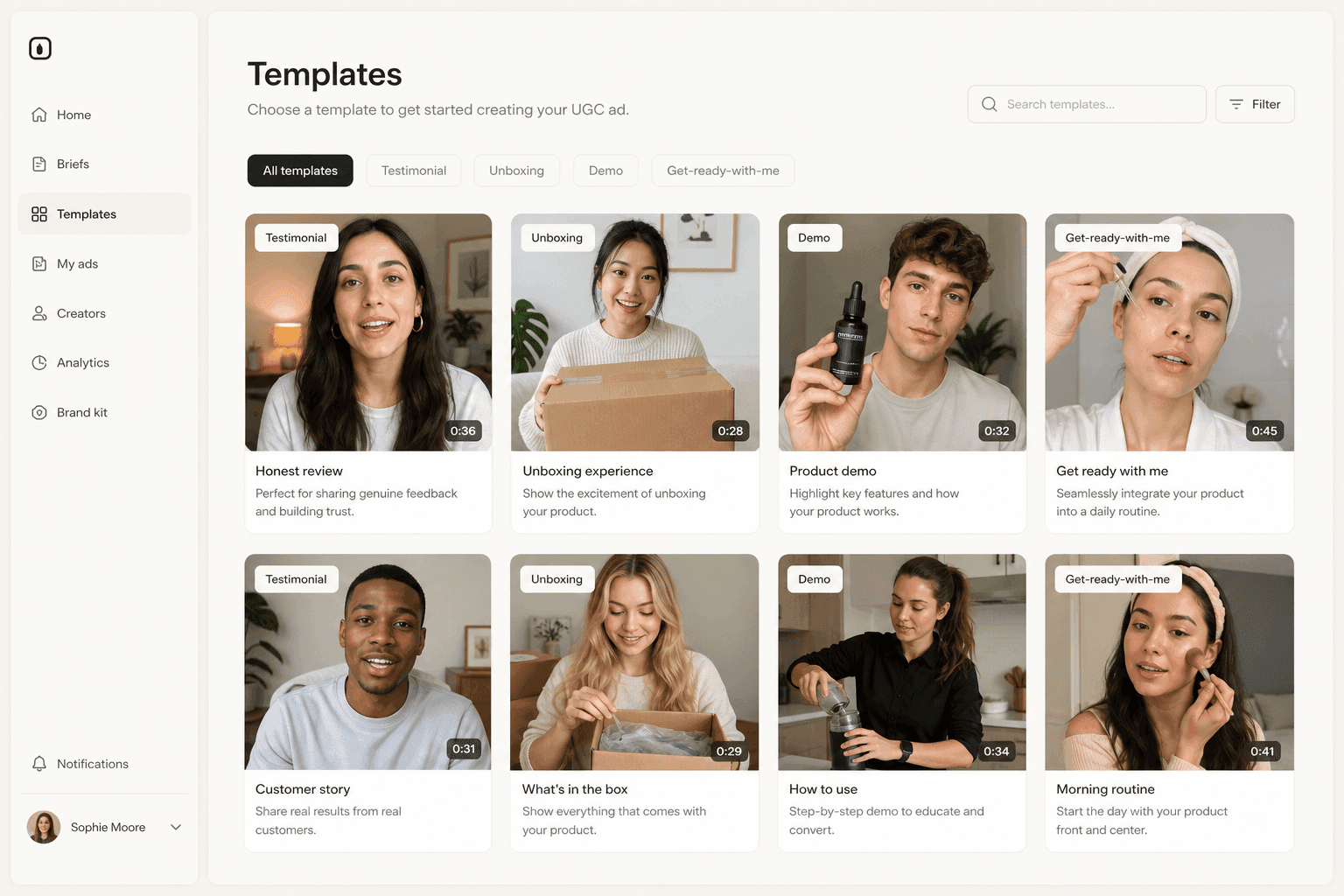
Novoads keeps several of these models, Seedance 2.5, Seedance 2.0, Seedance 2.0 Mini, Kling v3 Pro and Google Veo 3.1, behind a single login, so a change to any one vendor's roadmap is an inconvenience instead of an outage. Sora 2 was on that list until September 2026 and was removed with the API; the other engines kept rendering, which is the whole argument for keeping more than one. The flow that replaces the app is short:
- Upload a product photo.
- Write the script yourself or auto-generate it.
- Pick an AI actor to deliver it.
- Get a UGC-style video ad in one of 30-plus languages with real regional accents, without touching a camera or wiring up an API.
A video costs from about a dollar for a five-second Seedance 2.0 Mini clip to about eight dollars for an eight-second Seedance 2.5 clip, and about twenty-six dollars for a full 30-second Seedance 2.5 take, a fraction of the two hundred to five hundred a human creator charges per deliverable. You can try it with Novoads: $49/month, and you cancel whenever you want.
The real takeaway from Sora's removal is not which model won. It is that a creative pipeline built on one vendor was always one announcement away from freezing, and the durable fix is to stop betting the calendar on any single door staying open.
Frequently Asked Questions
Is Sora 2 actually shut down?
Yes, as an API. OpenAI's deprecations page states that on March 24, 2026 it notified developers using the Videos API and the Sora 2 video generation model aliases and snapshots of their deprecation and removal from the API on September 24, 2026. The affected list includes sora-2 and sora-2-pro along with their dated snapshots, and the page names no recommended replacement. The consumer product had already gone quiet earlier in 2026; the API removal is what closes the last door developers and ad tools were using.
What is the best Sora alternative for ads?
There is no single best, because ad jobs differ. For a long unbroken take, Seedance 2.5 renders up to 30 seconds in one generation. For a sound-on hero shot, Veo 3.1 generates native audio and outputs in 1080p and 4K. For multi-shot storyboards in one clip, Kling 3.0 runs up to fifteen seconds. For cheap volume testing, Seedance 2.0 is the workhorse at roughly two dollars a clip. Pick by the job the shot has to do, not by which name is loudest.
Can I still use the Sora 2 model somewhere?
No. As of September 24, 2026 it is not served by OpenAI and not served by the API hosts that resold it. This is the part that changed since this guide first ran: for a while the model outlived the consumer app through hosts like fal, and that is no longer true, because the removal happens upstream at OpenAI. fal's own Sora 2 pages now carry a deprecation notice and say the model is no longer supported. Any workflow, ad tool or script still pointing at sora-2 or sora-2-pro needs to be repointed at a different model.
Which of these video models can I run today?
All four. Veo 3.1, Kling 3.0 and Seedance 2.0 have been generally available through hosts and ad tools for most of 2026, and Seedance 2.5 joined them in August 2026, so the 30-second single take is now something you can render rather than a stated spec. That is a change from the first version of this guide, which listed Seedance 2.5 as pre-launch.
Why not just wait for Sora to come back?
Because OpenAI's own removal notice lists no replacement, and your ad calendar does not wait either way. A creative pipeline that depends on one vendor's roadmap is fragile by design. Creative fatigue means you need fresh variations constantly, and a frozen tool stops that flow. The lower-risk move is to run your ads on models that are shipping now and to keep more than one behind a single login, so any single roadmap change is an inconvenience rather than an outage.
Do these alternatives make ads, or just clips?
On their own, most of these models generate a clip: video and often audio from a prompt or an image. Turning that into an ad still means a script, a hook, captions, the right aspect ratio, and usually a person delivering the message. That last mile is what a UGC ad tool handles, which is why many teams reach for a platform that wraps the model rather than calling the model directly.
Key Takeaways
- OpenAI announced on March 24, 2026 that the Videos API and the Sora 2 model aliases and snapshots would be removed from the API on September 24, 2026. The announcement names no replacement model.
- A model is usually not the same thing as an app, but this time the model goes with the app. The removal covers sora-2 and sora-2-pro at the source, so hosts that resold them have nothing left to resell: fal already marks its Sora 2 endpoints deprecated and no longer supported.
- For ad work, the four models worth switching to are Seedance 2.5, Veo 3.1, Kling 3.0, and Seedance 2.0. Each wins a different job: length, sound, storyboarding, and budget.
- All four ship today. Seedance 2.5 moved from announcement to product in August 2026 and now renders single takes up to 30 seconds.
- The durable fix is not picking one winner, it is running your ads on a tool that keeps several models behind one login so a single vendor's roadmap never freezes your production again.