Wan 3.0 for Ads: What It Makes, Tested on a 14-Credit Clip
Wan 3.0 is Alibaba's AI video model, open to Novoads customers since October 30, 2026. We ran one 8-second UGC take for 14 credits, and the line matched our script word for word.

Mauricio Valdivia
·12 min
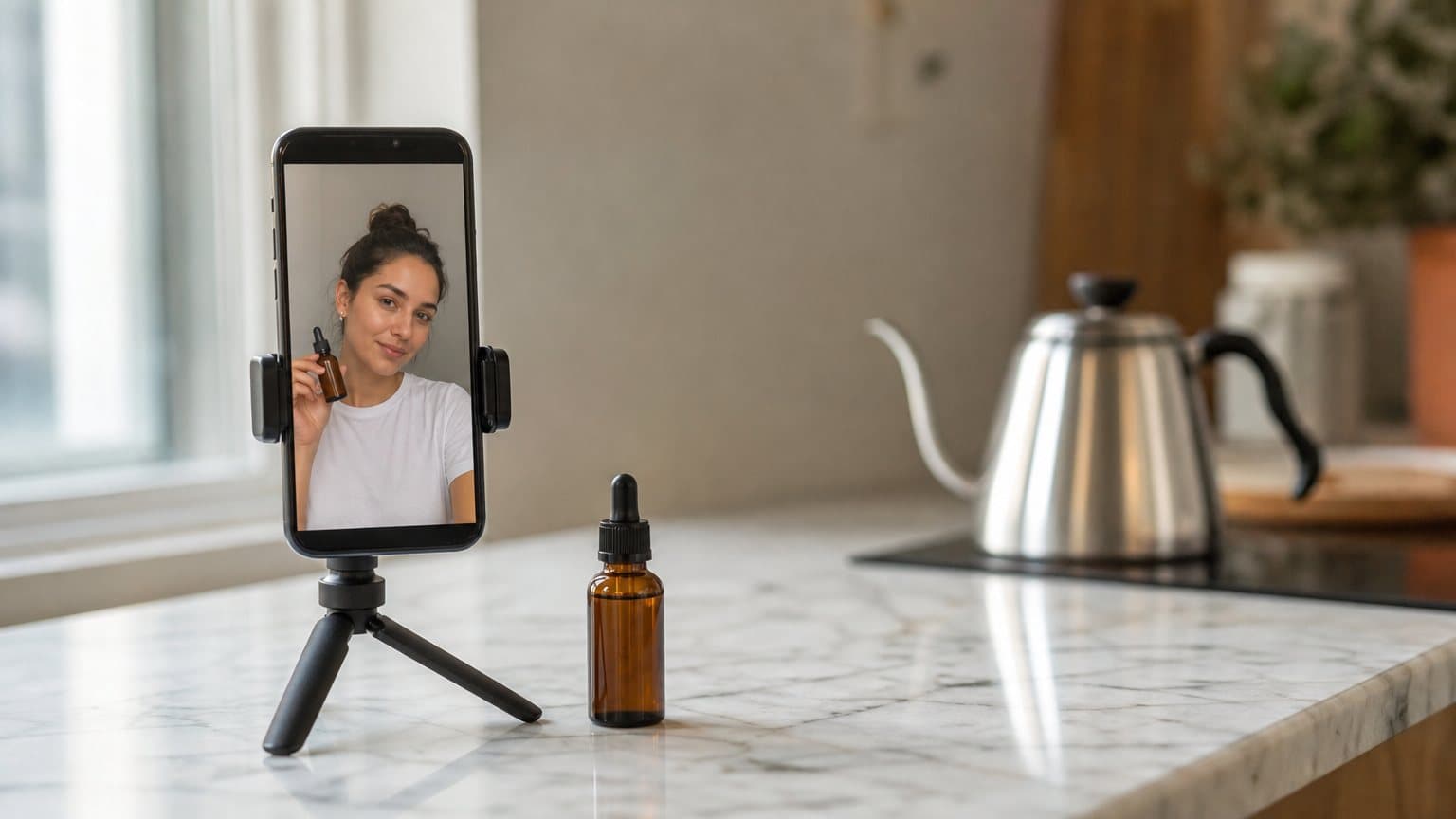
Our first Wan 3.0 take said its line word for word
We opened Wan 3.0, Alibaba's AI video model, to every Novoads customer on October 30, 2026. A day later we ran one take through it, an 8-second vertical UGC clip with a single spoken line. It came back in 3 minutes 10 seconds for 14 credits, and the line matched our script word for word.
One take can't tell you how often the model gets a line right. But it can show you what a clip looks like, what it costs here and where we'd still be careful.
Everything we say about Alibaba's API comes from Alibaba's own pages, and everything we say about fal comes from fal's. We read them all from Spain on October 31, 2026, and we didn't test Alibaba's API or fal's directly for this post. The Novoads numbers come from our own price list and that one run.
What Wan 3.0 is and who makes it
Wan is a family of video models from Alibaba. Alibaba Cloud's own blog calls it "Alibaba Cloud's generative video model family," and fal credits Wan 3.0 to Alibaba's Tongyi Lab. According to Alibaba's beta post, the series was first introduced in July 2023. Wan 3.0 is the newest version we found on Alibaba's model pages.
It's one model for several jobs. Alibaba's API reference lists text to video, image to video (from a first frame, or a first and last frame) and reference-based video, and its guide says you use the same model name for all of them. For ads, the part we care about most is the sound, because a UGC ad stands or falls on its spoken line.
When it came out
Wan 3.0 doesn't have a single release date, because Alibaba rolled it out in stages.
- On August 6, 2026, Alibaba listed Wan 3.0 among its newly released models.
- On August 7, Alibaba's beta post said the company had "rolled out the beta version."
- On August 20, Alibaba listed Prime, a faster version of the same model.
- On August 24, its launch news said the API was "now officially available and can be called without the need to apply."
- On October 30, we opened Wan 3.0 to Novoads customers.
Alibaba's own pages disagree on one point. The launch news calls the API officially available, but the English API reference, as we read it on October 31, says "Currently in preview." We can't settle that from the outside, so if your project depends on the status, ask Alibaba.
Names that get mixed up
Search for "wan 3" and you'll pull up several different things, so it helps to keep them straight.
- Wan 2.7 and Wan 2.2 are older, separate models. Alibaba says Wan 2.7 clips run from 2 to 15 seconds, and Wan 2.2 is the one with open weights. Their specs don't carry over to Wan 3.0, and Novoads doesn't sell either of them.
- Prime is Alibaba's faster version of Wan 3.0, and it costs more.
- wan.video is the home page listed on Wan's GitHub repositories. The API we cover here runs on Model Studio, Alibaba Cloud's AI development platform, and none of the prices in this post come from wan.video.
- Other sites use the Wan 3 name too. wan3ai.app, for one, sells a "Wan 3.0 Pro," which isn't a name on Alibaba's price list, so check who runs a site before you pay.
What Wan 3.0 can make on Alibaba's API
Everything in this section is Alibaba's spec for its own API. What you get in Novoads is narrower, and we'll get to it later.
Length, sound and inputs
Alibaba's API reference says, "It can generate videos up to 30 seconds long at 30fps." That's the limit on Alibaba's own API. Without video input, you can set the length from 2 to 30 seconds. With video input, the input and output together can't go past 30 seconds, so you only get a full 30 seconds of new video when you don't feed one in.
The reference and the guide fill in the rest.
- The sound is generated along with the video. The guide says the model "natively outputs dialogue, BGM, and sound effects," and the reference says turning audio on or off "does not affect pricing."
- Output comes in 480P, 720P or 1080P, and 1080P is the default.
- The aspect ratios are 21:9, 16:9, 4:3, 1:1, 3:4 and 9:16, plus an adaptive default that picks a ratio based on your input.
- A reference job can take up to 10 images, 5 video clips and 5 audio clips in one request. The video clips can't add up to more than 15 seconds, and neither can the audio.
- Documents and web pages work as references too.
- You can't mix first and last frames with references in the same request.
- A prompt can be up to 20,000 characters long.
- Alibaba says a video job typically takes 1 to 5 minutes.
The limits Alibaba itself points out
In a post dated August 27, Alibaba says, "Audio texture and on-screen text rendering accuracy are still maturing." We'd take that seriously for ads, because the voice and any words on screen do a lot of the selling. fal's guide adds that text rendered from a document "deserves a frame-by-frame check before it ships."
Whether you get a watermark depends on how you run it. Alibaba's API adds none by default, but its text-to-video guide says the Model Studio console has no watermark switch, "so you cannot disable the watermark in the console."
Alibaba's list prices
Alibaba bills Wan 3.0 by the second, and the rate depends on resolution and region. On October 31, 2026, Alibaba's pricing page gave these list prices for the standard model, in US dollars a second.
- 480P costs $0.05 in Singapore and $0.041256 in US (Virginia), Beijing, Tokyo, Frankfurt and Hong Kong.
- 720P costs $0.1 in Singapore and $0.082513 in those other regions.
- 1080P costs $0.2 in Singapore and $0.165025 in those other regions.
Alibaba marks each of those "Limited-time 30% off," and its model page says the prices there are the original ones and points you to the Model Studio console for promotional offers. None of the pages we read showed a discounted figure, so we haven't printed one. Prime costs more, at $0.14 a second for 720P in Singapore. Alibaba also says "Failed requests are not billed," and that any video you feed in counts toward the seconds you're billed for.
We tested one 8-second UGC clip
We made this clip in Novoads on October 31 through our MCP connector, working from text alone, with no start frame and no reference image. We asked for 8 seconds at 720p, vertical, with sound on, and we sent this prompt in full.
Vertical 9:16 UGC selfie video, one continuous handheld shot filmed on a phone at arm's length, no cuts. A woman in her late twenties with shoulder-length dark hair stands in a bright kitchen in morning daylight. She holds a plain, unlabeled amber glass dropper bottle up beside her face, tilts it toward the camera, then smiles and says in a warm, natural American English voice: "Three weeks with this serum and my skin finally stopped looking tired." Soft room tone, a kettle humming faintly in the background. Natural skin texture, slight phone sway, realistic lighting, no text on screen, no logos.
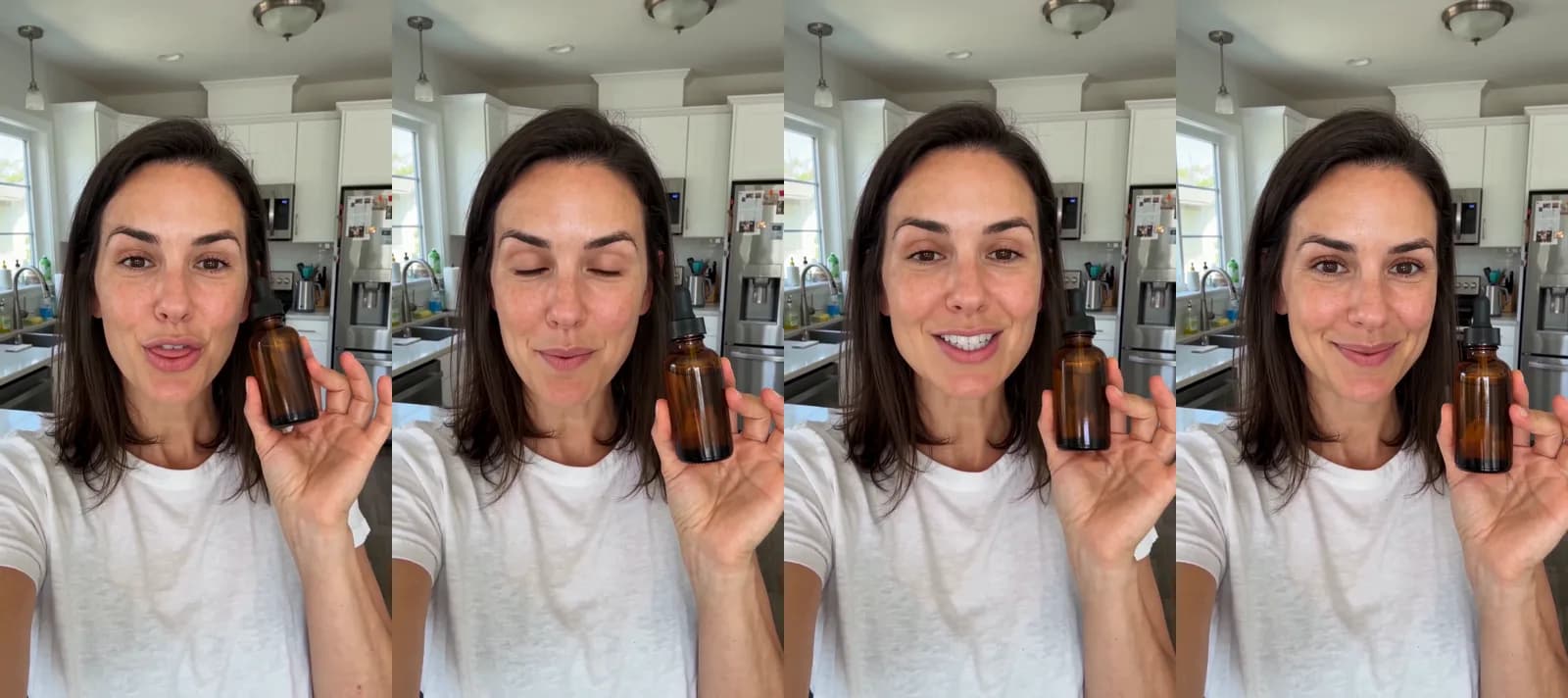 Wan 3.0 in Novoads · prompt: a selfie in a bright kitchen, a plain amber dropper bottle, one spoken line · frames at 1, 3, 5 and 7 seconds · 14 credits for 8 seconds at 720p · rendered 2026-10-31
What came back
- The job took 3 minutes 10 seconds from start to finish.
- It cost 14 credits. That's $1.05 at the Starter rate and about 69 cents at the Plus rate.
- The file is 8.03 seconds long, at 720 by 1280, with an audio track.
- We ran the audio through a speech-to-text model, and the transcript read "Three weeks with this serum and my skin finally stopped looking tired." That's our script, word for word.
- The frames at 1, 3, 5 and 7 seconds show one continuous shot with no cut, as we asked.
- There's no on-screen text or logo in those frames, and the bottle stays plain. The papers on the fridge door behind her have marks on them that don't read as words.
In our test, Wan 3.0 did the three things we asked of this clip. It got the spoken line right, kept to a single shot and left the frame clean. In one of the four frames her eyes are closed mid-blink, which doesn't bother us in a selfie clip.
What one take can't tell you
One clip can't give you a success rate, so don't read this as "Wan 3.0 gets every line right." We didn't run a second take, and we didn't score the lip sync. We also asked for an unlabeled bottle and no text, so this clip tells you nothing about how Wan 3.0 handles a product label. That's the kind of detail Alibaba says is still maturing, so it's the next thing we'd test.
What you get with Wan 3.0 in Novoads
We sell a narrower version of Wan 3.0 than Alibaba's API offers, and it isn't our default model. The editor and the connector both start on Seedance 2.0, so you'll have to pick Wan 3.0 yourself. Some of its limits differ from Alibaba's, and some are the same.
- Novoads renders 4 to 15 seconds, in whole seconds. Alibaba's API goes up to 30.
- Novoads takes up to 9 reference images. Alibaba and fal take up to 10.
- Novoads defaults to 720p, and you can pick 480p or 1080p instead. Alibaba and fal default to 1080p.
- Novoads defaults to 9:16 and offers five ratios. Alibaba defaults to adaptive.
- Novoads takes either a start frame (with an optional end frame) or reference images. You can't use frames and references together, which is Alibaba's rule too.
- Sound is on by default in Novoads, and a silent clip costs the same.
- A prompt can be up to 20,000 characters long, the same limit Alibaba sets.
These parts of Alibaba's API aren't available in Novoads.
- Prime, the faster version
- Video editing and video extension
- Reference video and reference audio
- Document and web page input
- The adaptive and 21:9 ratios
- Smart duration, where the model picks the length
- Clips of 2 or 3 seconds
- A seed setting
What a Wan 3.0 clip costs in Novoads
Prices as of October 31, 2026. In Novoads, a clip is priced in credits, so what it costs you in dollars depends on your plan.
- Starter is $15 a month for 200 credits, which works out to $0.075 a credit.
- Plus is $49 a month for 1,000 credits, which works out to $0.049 a credit.
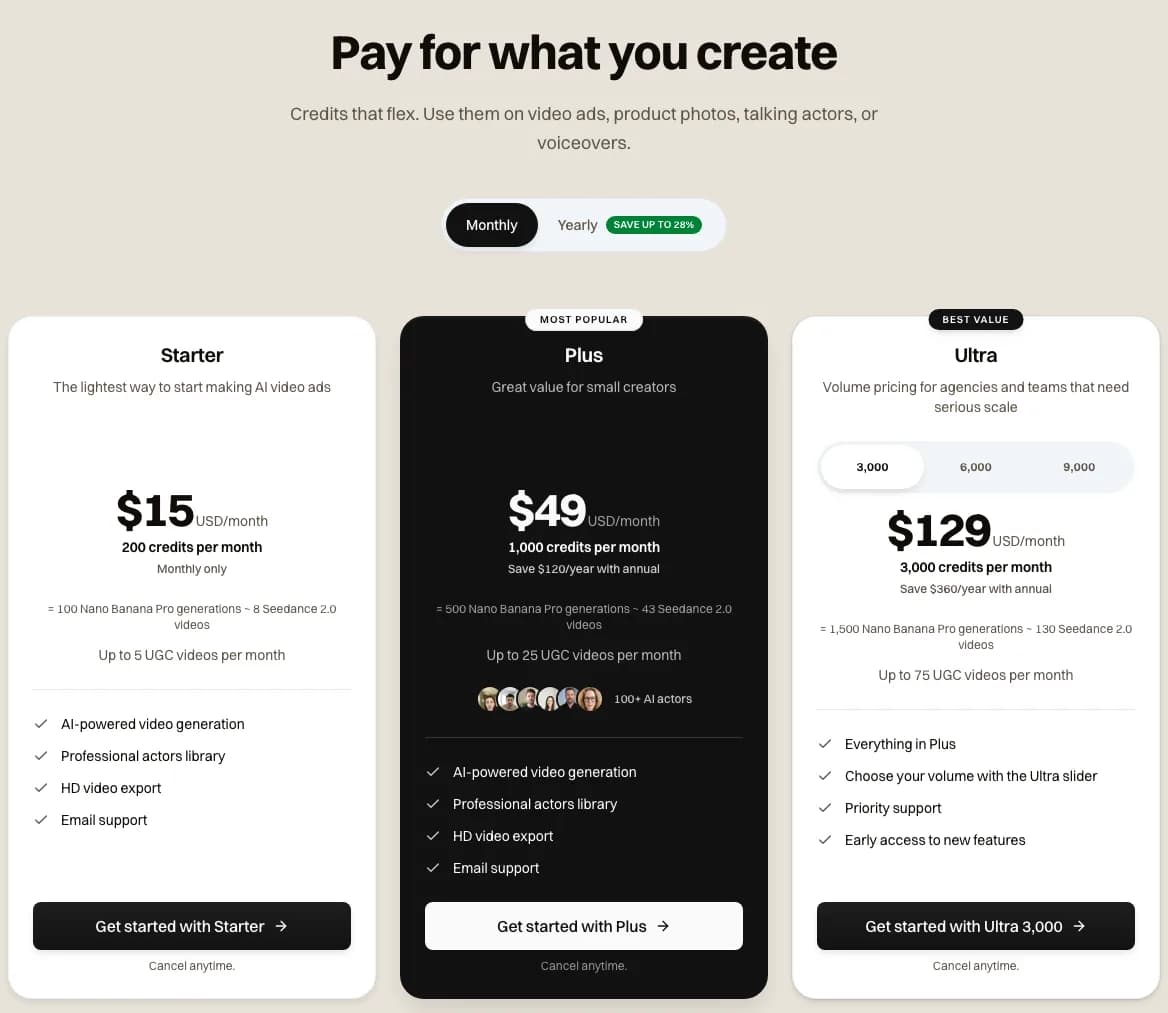 Screenshot: the Novoads plans with Monthly selected, captured 2026-10-31
| Clip | Credits | Starter rate | Plus rate |
|---|---|---|---|
| Wan 3.0, 4 s, 720p | 7 | about 53 cents | about 34 cents |
| Wan 3.0, 5 s, 720p | 9 | about 68 cents | about 44 cents |
| Wan 3.0, 8 s, 720p | 14 | $1.05 | about 69 cents |
| Wan 3.0, 10 s, 720p | 18 | $1.35 | about 88 cents |
| Wan 3.0, 15 s, 720p | 27 | about $2.03 | about $1.32 |
| Wan 3.0, 8 s, 480p | 8 | 60 cents | about 39 cents |
| Wan 3.0, 8 s, 1080p | 28 | $2.10 | about $1.37 |
| Wan 3.0, 15 s, 1080p | 53 | about $3.98 | about $2.60 |
| Seedance 2.0 Mini, 8 s, 720p | 8 | 60 cents | about 39 cents |
| Kling 3.0, 8 s, 1080p | 16 | $1.20 | about 78 cents |
| Seedance 2.0, 8 s, 720p | 36 | $2.70 | about $1.76 |
| Seedance 2.5, 8 s, 720p | 56 | $4.20 | about $2.74 |
We worked out the dollar columns from those two rates and rounded them to the cent. At 14 credits a take, a month of Starter credits covers 14 takes. Plus covers 71.
If a generation fails, you get the credits back automatically. Plan credits reset at each renewal and don't roll over, and Novoads is paid from the first month.
How the other models compare on price
For the same clip, Seedance 2.0 Mini costs less than Wan 3.0, 8 credits against 14. Kling 3.0 costs a little more, at 16 credits. But it renders at 1080p, and at that size Wan 3.0 costs 28. Seedance 2.0 and Seedance 2.5 both cost more, at 36 and 56 credits.
That's only a price comparison. We didn't run the other models on this prompt, so the table can't tell you which one makes the better ad. Our Kling 3.0 and Seedance 2.5 comparison goes further on those two.
Paying Alibaba or fal directly
You don't need a plan to use Wan 3.0. fal calls its pricing "pay-per-use with no minimums and no subscription," and Alibaba bills by the second. Take the same 8 seconds at 720p.
- fal charges $0.10 a second, so it comes to 80 cents.
- Alibaba's Singapore list price of $0.1 a second also comes to 80 cents.
- Alibaba's US (Virginia) list price of $0.082513 a second comes to about 66 cents.
- In Novoads, it comes to about 69 cents at the Plus rate and $1.05 at the Starter rate.
Alibaba's limited-time discount could bring its numbers down, and fal says its rate can change. Novoads needs a plan, so our per-clip rate only holds if you use the credits you've paid for. If you're writing code and only want a few clips, paying by the second is probably the cheaper way in. If you'd rather work in an editor, that's what you're paying for with a plan.
When we'd reach for Wan 3.0, and when we wouldn't
We're basing this on one take and on what Alibaba says about its own model. For a short spoken clip at 720p, we'd try Wan 3.0 before Seedance 2.0. But we wouldn't trust it with any text a viewer has to read until we've tested that.
Use Wan 3.0 when
- You want a short talking clip with the voice made in the same generation. It costs 14 credits for 8 seconds. That's well under half of Seedance 2.0's 36.
- You have product or character images to feed in, and the clip fits within 15 seconds.
- You want to test prompts cheaply. Alibaba suggests "A low-resolution draft pass followed by a higher-resolution final generation," and in Novoads, 8 seconds at 480p costs 8 credits. Each pass is a new generation, though, so the draft is a test of your prompt, and you shouldn't expect the same take at the higher resolution.
Use something else when
- The ad runs longer than 15 seconds. Wan 3.0 tops out there in Novoads, while Seedance 2.5 runs single takes of up to 30 seconds.
- A label, price or headline has to read correctly inside the clip. We'd add that text in the edit instead.
- Credits are tight and the script is simple. Seedance 2.0 Mini costs less per clip.
- You need a reference video or reference audio. In Novoads, Wan 3.0 only takes images.
What Alibaba and fal say about prompts
The advice here comes from Alibaba and fal, and the only prompt we've run is the one above. If you write for other models too, our Seedance 2.5 prompt guide covers how to prompt that model.
- Alibaba's prompt guide writes dialogue as a character, a speaking verb, a colon and then the quoted line. Our prompt followed that pattern.
- If you don't want any speech, Alibaba says to write "No dialogue," because "otherwise the model decides on its own whether to include dialogue."
- For a single shot, Alibaba suggests writing "One continuous shot" on the first line.
- Alibaba's list of negatives includes "No subtitles" and "No watermark."
- fal's guide asks for "Spoken lines in double quotes, with the delivery named beside them."
- fal's guide says adjectives like "cinematic" and "epic" "give the model nothing to hold," and asks for concrete detail instead, such as a named lens or a light source with a direction.
- fal's guide also says a prompt with no line about sound "still gets a soundtrack, just not one you chose."
If you'd rather make these clips in an editor than call an API, Wan 3.0 is on every Novoads plan and uses the same credits as the other models in this post. You can check what each of the Novoads plans includes before you start.

Open weights and free use
We didn't find Wan 3.x weights in the places we could reach on October 31. The Wan-AI page on Hugging Face listed 27 models, and none of them was a 3.x. The Wan-Video organization on GitHub listed six repositories, and none was for Wan 3. fal's page says, "Alibaba's published Wan weights currently stop at Wan 2.2 under Apache 2.0, and the releases since then have been commercial API models."
For open weights, look at Wan 2.2. Its repository says, "The models in this repository are licensed under the Apache 2.0 License." Its README also says one of its commands needs a GPU with at least 24GB of VRAM, so you'd want serious hardware to run it yourself.
The free allowances for Wan 3.0 come from Alibaba and fal.
- Alibaba gives 30 seconds of free quota, input and output combined, in Singapore only. It expires 90 days after Model Studio activation, model release or application approval, whichever is later, and Prime gets none.
- fal gives signed-in accounts "five free Wan 3 text-to-video generations every 24 hours in the fal sandbox, at 720p with audio, on a rolling window rather than a one-time trial."
Novoads is paid from the first month, so neither allowance applies here. If cost is your main concern, our list of AI video generators you can try for nothing and our look at Seedance 2.0's free routes cover more options. Past Alibaba's and fal's allowances, you'll pay for Wan 3.0 by the second there, or in credits with us.
Frequently Asked Questions
What is the latest version of WAN?
Wan 3.0 is the newest version we found on Alibaba's model pages as of October 31, 2026. Alibaba listed it on August 6, 2026, then listed Prime, a faster version of the same model, on August 20. Wan 2.7 and Wan 2.2 are older models with their own limits, so their specs don't carry over.
Is WAN 3 open-source?
Not as far as we can tell. On October 31, 2026, we looked for Wan 3.x weights on the Wan-AI page on Hugging Face and in the Wan-Video organization on GitHub, the places we could reach, and didn't find any. fal's page says Alibaba's published Wan weights "currently stop at Wan 2.2 under Apache 2.0." So you'd reach Wan 3.0 through an API or a product built on one.
Is WAN by Alibaba?
Yes. Alibaba Cloud's blog calls Wan "Alibaba Cloud's generative video model family," and fal credits Wan 3.0 to Alibaba's Tongyi Lab. Other sites use the Wan 3 name too, so check who's behind a site before you pay for anything there.
Is WAN 2 free?
Partly. Wan 2.2's repository is licensed under Apache 2.0, so you can download those weights at no charge, but you'll need your own GPU to run them. If someone else hosts Wan 2.x for you, it usually costs money. Alibaba's pricing page lists Wan 2.7 text to video at $0.10 a second at 720P in Singapore, with no free quota. Novoads doesn't sell Wan 2.x.
Key Takeaways
- Wan 3.0 is Alibaba's video model. Alibaba listed it on August 6, 2026, and we opened it to every Novoads customer on October 30, 2026.
- Alibaba's API reference says Wan 3.0 can generate videos up to 30 seconds long, but you only get a full 30 seconds of new video when there's no video input. Novoads sells it in clips of 4 to 15 seconds.
- Our one test take was an 8-second vertical UGC clip at 720p in Novoads. It cost 14 credits, took 3 minutes 10 seconds, and its spoken line matched our script word for word. It's only one take, so it can't give you a success rate.
- In Novoads, 8 seconds of Wan 3.0 at 720p costs $1.05 at the Starter rate. At the Plus rate, it's about 69 cents. Seedance 2.0 Mini costs less for the same clip, and Kling 3.0, Seedance 2.0 and Seedance 2.5 cost more.
- We didn't find Wan 3.x weights in the places we could reach. Wan 2.2 has open weights under Apache 2.0. The free allowances for Wan 3.0 come from Alibaba and fal, and Novoads is paid from the first month.
Sources
- •Alibaba Cloud: Wan3.0 API reference
- •Alibaba Cloud: Wan3.0 video generation guide
- •Alibaba Cloud: Wan3.0 prompt guide
- •Alibaba Cloud: Model Studio pricing
- •Alibaba Cloud: Wan3.0 officially launched (August 24, 2026)
- •Alibaba Cloud Community: Wan3.0 at general availability (August 27, 2026)
- •Alibaba Cloud Community: Alibaba unveils Wan3.0 (August 7, 2026)
- •fal: Wan 3
- •fal: How to use Wan 3 (August 25, 2026)
- •Wan-Video/Wan2.2 README on GitHub