
Where AI UGC Realism Actually Comes From (and Why Every Tool Claims It)
Three of the biggest AI UGC tools claim to be the most realistic. They cannot all be right, and it turns out none of them are wrong either. Realism is produced by a handful of rented video engines that any tool can call, at published per-second prices. Here is what actually makes an AI creator look real, who makes those engines, and what genuinely differs between the tools built on top of them.

Mauricio Valdivia
·Updated ·6 min

Three companies claim the crown, and none of them are lying
Search for an AI UGC tool and you will read the word "realistic" until it stops meaning anything. Arcads advertises "The most realistic and captivating AI Actors." HeyGen introduces "Avatar V, the most lifelike avatar ever made." Creatify says "Meet Aurora, the most realistic and expressive AI Avatar model." All three were live on those companies' own pages the day this was published.
Three superlatives, one category, and they cannot all be top of the same pile. Except that in a strange way they can, and understanding why is the single most useful thing you can know before you spend money here.
The realism does not belong to any of them. It belongs to the engine underneath.
The five or so engines that actually make the pixels
Almost nobody in AI UGC trains their own video model. Training a frontier video model is an enormous capital expense, and the companies that did it are ByteDance, Google, OpenAI, Kuaishou and Alibaba. What everyone else does is rent inference from them.
As of July 2026, the engines that matter for UGC-style ads are:
| Engine | Made by | Notes |
|---|---|---|
| Seedance 2.0 (and 2.0 Mini) | ByteDance | The category workhorse in 2026; Mini is the cheaper variant |
| Kling v3 | Kuaishou | Strong motion, native audio options |
| Veo 3.1 | Takes product reference images | |
| Sora 2 / Sora 2 Pro | OpenAI | Being removed from the API on September 24, 2026 |
| HappyHorse | Alibaba | Debuted at the top of public benchmarks in April 2026 |
| Gemini Omni Flash | Currently at the top of public video leaderboards |
Plus the image models that produce still frames and product renders: Nano Banana Pro and Nano Banana 2 from Google, Seedream from ByteDance, GPT Image from OpenAI.
None of these are exclusive to anyone. You reach them either directly from the lab's API or through an aggregator like fal.ai or kie.ai, which integrate each new model once and then serve it to everybody at a published price.
The workhorse pair: Seedance and Kling
Seedance 2.0 is the default a lot of the category quietly settled on in 2026, and Seedance 2.0 Mini exists specifically because the full model is not always worth its price: Mini is the cheaper variant, rented at a materially lower per-second cost, and it is the sensible default for a first pass on a new product or a new script before you spend the full-price render on the version you actually intend to run. Kling v3 sits next to it as the other default: strong on motion (a hand actually closing around a bottle reads as physical rather than pasted), and it is one of the few engines in this tier that offers native audio generation as a paid add-on rather than a separate dubbing step. Neither engine is "the" realism engine. They are the two most-rented ones, which is a different claim and a checkable one: fal's own price list is the receipt.
The specialists: Veo, Sora, and the newer entrants
Google's Veo 3.1 does something the other two do not do as cleanly: it accepts a reference image of your actual product and holds it consistent across the generated motion, which is why it shows up disproportionately often in product-in-hand workflows rather than pure talking-head ones. Sora 2 and Sora 2 Pro from OpenAI are the pair worth watching for a different reason: OpenAI is removing the Sora 2 API on September 24, 2026, so any tool that built its pitch around Sora specifically inherits a forced migration, and asking a vendor "what happens to my account after September 24" is a fair question to put to anyone still naming Sora as a headline engine. Behind those three, 2026 also produced two credible new entrants: Alibaba's HappyHorse, which debuted at the top of several public leaderboards in April, and Google's Gemini Omni Flash, which as of this writing sits at the top of the public video benchmarks the category actually checks. Neither is exclusive either. The pattern holds across all five: a lab trains it once, an aggregator wraps it once, and every tool in the category can be a phone call away from renting it.
The prices are public. That is the whole point.
You do not have to take this on faith, which is what makes it different from every "most realistic" claim in the category. Go and read the price lists:
- fal lists Kling v3 Pro at $0.112 per second without audio, $0.168 with audio, and $0.196 with voice control.
- OpenAI lists Sora 2 at $0.10 per second and Sora 2 Pro at $0.30 per second at 720p.
A ten-second clip is therefore a couple of dollars of raw inference. Any company with a credit card can buy exactly the same thing. There is no volume discount that buys better pixels, no secret tier of Seedance that only the premium tool gets. The model is the model.
The proof is on the premium tool's own homepage
This is not a theory we are asking you to accept from a competitor. Arcads is the most expensive, most reputationally established tool in this category, and its homepage names its engines: Seedance 2.0, Sora 2 Pro, Kling, alongside Seedream and Nano Banana for images.
Novoads rents Seedance 2.0 and Kling from the same shelf. MakeUGC's headline feature is "Seedance 2.0 Fast Unlimited."
So when the premium tool says its actors are the most realistic, what it is describing is Seedance and Kling. Which is also what the cheap tool is describing. Which is also what we would be describing if we said it, so we do not say it.
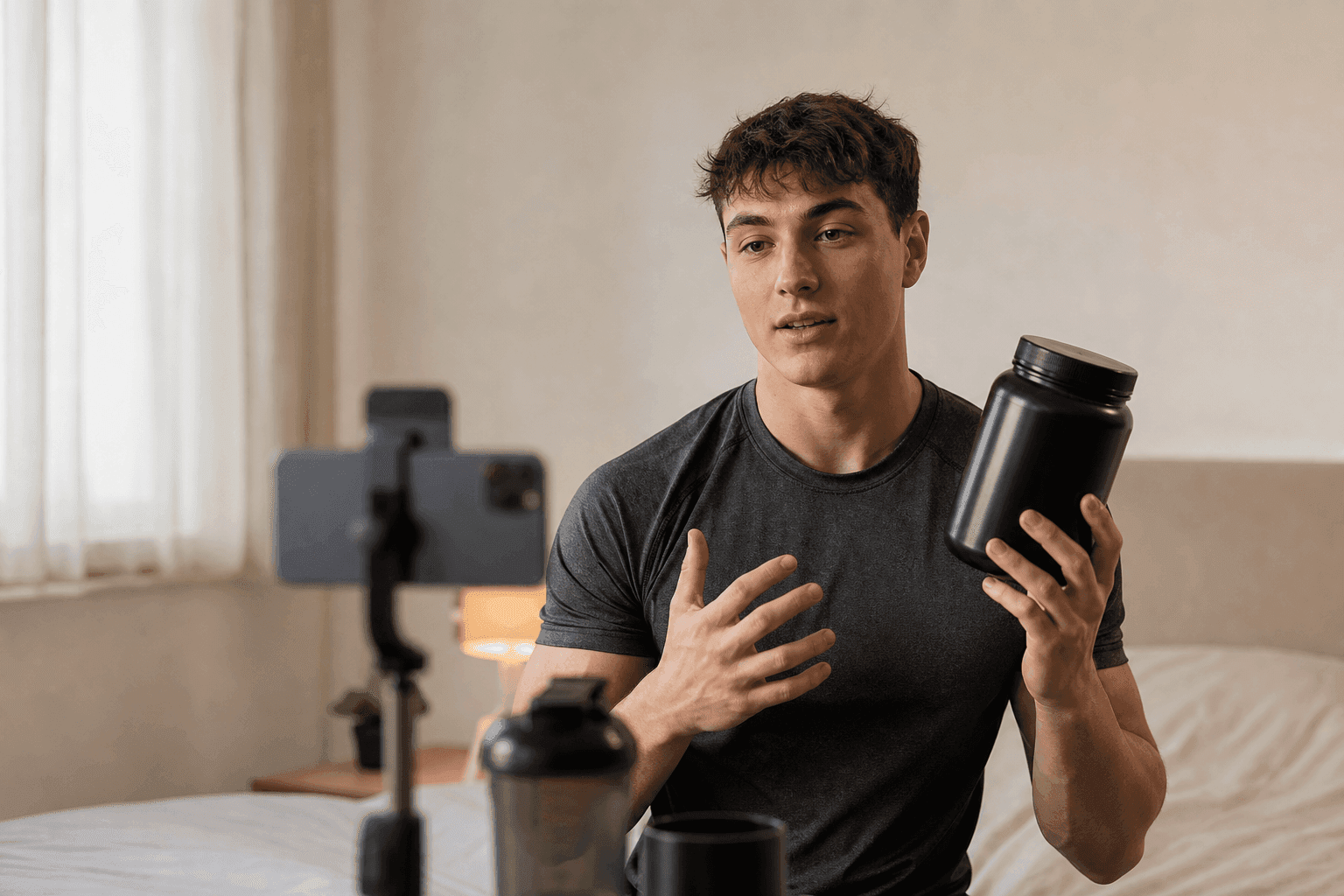
Why the claim survives anyway
If the engines are shared and the prices are public, why does every homepage still shout the superlative?
Because it works on a first-time buyer, and because it is cheap to say. Claims like these usually read as puffery: subjective opinion rather than a measurable promise, which is generally hard for a regulator or a rival to challenge (though puffery is a fact-specific defence, not a licence). And no tool in this category publishes a realism benchmark of its own output. The only public scoreboards score the engines, not the tools, so there is nothing to contradict a tool-level claim.
The result is a category where the loudest shared adjective is also the least informative one. If the biggest names all say the same thing about the same models, the word has no work left to do.
What actually differs between tools
Everything above the engine, and these are the parts you can check.
What your plan actually includes
Model access is a pricing lever now, and vendors word it very differently for the same underlying gate. One tool's entry tier says "Access to Selected models" without ever defining the phrase; "all AI models" is a sentence that only appears a tier higher, and the page never tells you what the gap between the two actually is. Another tool names every model on the pricing page itself, so an entry-tier buyer can see exactly which engines they are and are not renting before they pay anything. Read the tier your money actually buys, not the headline above it. The headline is marketing copy; the tier table is the contract.
Whether you can see the price at all
Some tools publish plans in the open, the way a SaaS product usually does. Others do not: Arcads' pricing page returns a 404, and the number only appears after you create an account and enter the funnel. That is not automatically dishonest (a premium, sales-assisted posture is a legitimate way to sell), but it is a real cost to you as a buyer, because it means comparing tools on price requires signing up for each one first. A published price list is a small thing that saves a surprising amount of your own time.
What it costs to find out whether a tool works for your product
A dollar, a hundred dollars, or a signup and a sales conversation. This is the real spread in the category, and it has nothing to do with pixels. The cheapest tools let you spend a few dollars and walk away with a finished, unwatermarked file on your own product; the most expensive ones ask for a meeting before you see a number at all. Neither posture is wrong on its own, but it changes how many tools you can realistically shortlist before you have spent a full day just getting quotes.
Whether the ad can feature your actual product, and on which tier
Every serious tool in this category can put a product in a creator's hands now; that capability stopped being a differentiator sometime in 2026. What still differs is where that capability lives in the plan. Some tools ship it on the entry tier, so a small brand testing the format gets the real feature from the first render. Others reserve it for a top tier priced well above the entry point, which means the cheap trial you signed up for is not actually testing the thing you came to test. Ask specifically whether product-in-hand generation is included at the price you are about to pay, not at the price on the homepage hero.
How many attempts a usable ad actually takes
This is the cost nobody quotes, and it is the one that compounds. The engine is rented by the second, so every re-roll is real money leaving your account, and prompt adherence (does the model actually do what the prompt asked, or does it drift toward its own default) is where tools genuinely differ even when they share an engine, because the wrapper's prompt-construction layer is doing real work you cannot see from outside. A tool that needs four attempts to land a usable clip is quietly two to four times more expensive per finished ad than its per-second price implies. This is also the hardest thing to verify from a homepage, which is exactly why a cheap, real test on your own product tells you more than any adjective a vendor puts above the fold.
What happens when a render fails
Some tools publish a refund or credit-back policy for a failed generation. Most do not, and the ones that stay silent are making a bet that you will not ask until it happens to you. A failed render on a rented-by-the-second engine is a cost the tool absorbed or passed to you, and which one happened is worth knowing before you are the one finding out.
How to shop for this properly
- Ignore the realism claims. All of them, including any implied by us. They describe rented models.
- Ask which engines the plan includes. If the page will not say, that is the answer.
- Read the per-second price of the engine (fal and the labs publish them) and compare it to what the tool charges. The gap is what you are paying for the workflow. That gap can be entirely reasonable; you just deserve to see it.
- Test on your actual product, not on the demo reel. The demo reel was cherry-picked by definition.
- Find out what a failed generation costs you, before it happens.
- Check the sunset dates. Anything built on Sora 2 needs a migration before September 24, 2026.

A worked example, so the checklist is not abstract
Say you sell a skincare serum and you are choosing between two tools. Tool A's homepage says "the most realistic AI actors in the category" and asks you to create an account before it shows a price. Tool B's homepage names Seedance 2.0 and Kling v3 as its engines, publishes $49 a month for an entry plan with product-in-hand generation included, and does not use the word "realistic" anywhere on the page.
Running the checklist: step 1 discards both homepages' framing equally, since neither claim is evidence either way. Step 2 already has an answer for Tool B and a gap for Tool A, which is itself the answer to whether Tool A's entry plan includes the full model shelf. Step 3 is where it gets interesting: if Tool A's inference costs roughly the same as Tool B's per second (which, per the price lists above, it very likely does, since both are renting the same handful of labs), then whatever premium Tool A charges above that is pure workflow and brand margin, not better pixels. That is not automatically a bad trade. It just means you are buying something other than realism, and you should know what it is before you pay for it. Step 4 settles the actual question that matters for your serum: does the actor hold the bottle the way your customers hold it, in the light your product photography uses, in a take you would actually publish. Neither homepage's demo reel answers that, because neither demo reel features your product. Only a real test on your own bottle does.
Our position, stated plainly
Novoads runs the same engines as the premium tools. We are not going to tell you our renders are more realistic than Arcads', because they are rendered by the same models, and you would be right not to believe us if we did.
What we will say is narrower: $49 a month with the price on the page, no model locked behind a higher tier, and product in hand on the entry plan rather than as a top-tier feature. You can test the real thing on your real product before you decide. If the ad you need is a person holding the thing you sell, that is what we are built for: create a custom actor from a photo of someone holding it, or upload your product image to a Discover product template, which swaps it into the template creator's hand. It is the same case we make in our broader guide to UGC-style ads. If you need the deepest actor library in the category, Arcads has it and we say so in our own comparison. If you need the widest language list and unlimited cheap drafts, MakeUGC has that, and our head-to-head on the fine print covers exactly where that trade-off lands. And if what actually matters to you is the per-video cost math rather than any of the above, our breakdown of what an AI video ad really costs runs those numbers against hiring a human creator, engine by engine.
The engines are a tie. Everything else, the plan, the price, the product-in-hand tier, the attempt count, is worth reading the fine print for, and none of it requires trusting a single adjective on a single homepage.
Frequently Asked Questions
Which AI UGC tool is the most realistic?
The question has a strange answer: mostly whichever engine you pick, not whichever tool you pick. Realism is produced by the underlying video model, and the same handful of models is rentable by every company in the category. Arcads names Seedance 2.0, Sora 2 Pro and Kling on its own homepage; Novoads rents Seedance 2.0 and Kling from the same shelf; MakeUGC's headline is Seedance 2.0 Fast. When several tools call the same model with the same prompt, output quality tracks the model. That is why three of the biggest tools can each advertise a realism superlative without any of them technically lying.
What AI models make UGC videos look real?
As of July 2026 the engines that matter for UGC-style ads are Seedance 2.0 and Seedance 2.0 Mini from ByteDance, Kling v3 from Kuaishou, Veo 3.1 from Google, and Sora 2 and Sora 2 Pro from OpenAI, with newer entrants like HappyHorse from Alibaba and Google's Gemini Omni Flash competing at the top of public benchmarks. Image models like Nano Banana Pro and Seedream handle the still frames. Note that OpenAI removes the Sora 2 API on September 24, 2026, so any tool built on it has a migration ahead.
Do AI UGC tools train their own video models?
Almost none of them do. Training a frontier video model costs orders of magnitude more than the entire revenue of a typical AI UGC company. The category runs on rented inference: tools call the model makers' APIs directly or go through aggregators like fal.ai and kie.ai, which publish per-second prices anyone can read. Some tools name the engines on their homepage as a freshness signal; others hide them behind 'our AI'. Both are renting.
How much does it cost to generate an AI video?
The engine cost is public. fal lists Kling v3 Pro at $0.112 per second without audio, $0.168 with audio, and $0.196 with voice control. OpenAI lists Sora 2 at $0.10 per second and Sora 2 Pro at $0.30 per second at 720p. A ten-second clip is therefore a couple of dollars of inference, before anything the tool adds. What you pay a UGC tool covers that inference plus the workflow, the actor library, the retries, and the margin.
If every tool uses the same models, what is the difference between them?
Everything above the engine. Which models your plan actually includes, and whether the tool tells you. Whether you can see the price before signing up. Whether you can test the real product cheaply. Whether the ad can feature the actual product you sell, and on which tier that lives. How many attempts it takes to get an ad you would run. Those differences are large and they are checkable, which is more than can be said for 'most realistic'.
Key Takeaways
- Realism in AI UGC is produced by the video engine, not by the tool wrapped around it. There are roughly five engines that matter, and any company can rent all of them.
- Arcads names Seedance 2.0, Sora 2 Pro and Kling on its own homepage. Novoads rents Seedance 2.0 and Kling from the same shelf. So do most serious tools. The engines are not a secret and they are not exclusive.
- The prices are public. Kling v3 Pro is listed on fal at $0.112 a second without audio and $0.168 with it. OpenAI lists Sora 2 at $0.10 a second. You can look them up before you believe anyone's marketing.
- This is why three of the biggest tools can each claim a realism crown without any of them lying: they are describing the same rented models.
- What actually differs between tools is everything above the engine: what the plan includes, what you can verify before paying, and whether the ad features your real product.