AI Fashion Photography for Ecommerce: On-Model Product Imagery at Catalog Scale, Without a Studio
FASHN AI turns a flat product photo into on-model imagery and virtual try-on at catalog scale. Here is what it does, why on-model visuals decide DTC sales, and how AI product images pair with AI UGC video for a full ad.

Mauricio Valdivia
·11 min
A Fashion Shoot Freezes Your Catalog the Day It Wraps
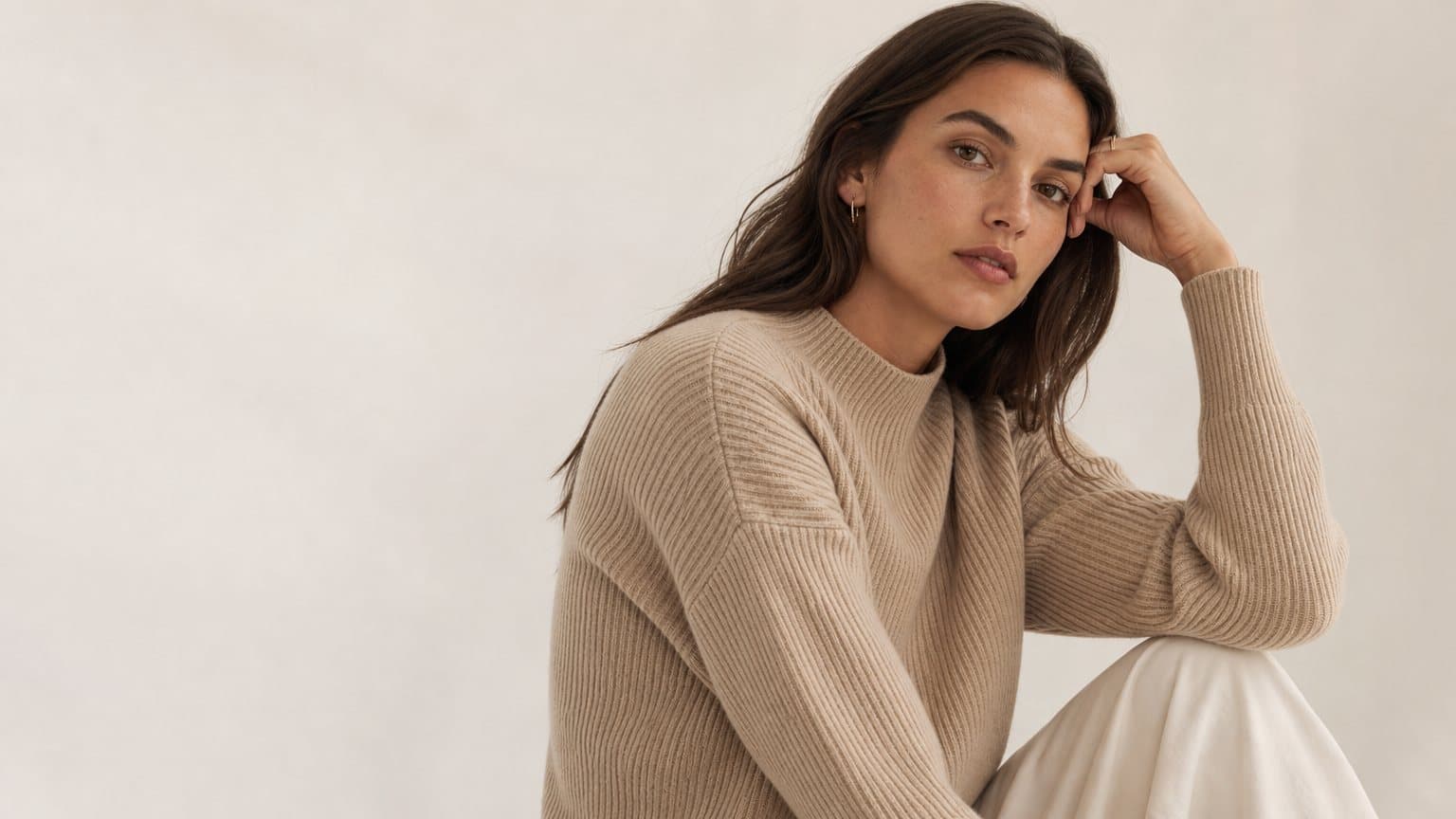
A brand books a studio, a location, and a set of models weeks before anyone presses a shutter. The looks are styled, the lights are set, the shots are captured, and then the whole thing is locked. Add a product after the shoot and it simply is not in the campaign. Want the same collection to speak to a different regional market? Rebook the studio and hope the same photographer is available. The way fashion gets seen has always been a logistics problem, and, as the team at fal put it in a recent editorial, "the tools for showing clothes have never kept pace with the ambition of the people selling or buying them."
That gap is the whole business case for AI fashion imagery, and it is why FASHN AI showed up in fal's editorial series on companies solving hard problems at scale. FASHN develops in-house AI models that turn a plain product photo into on-model imagery, and gives shoppers a way to see clothes on their own body before they buy. For anyone running ecommerce ads, that is not a novelty. It is the missing first asset. 77% of shoppers say high-quality images and videos are important to their purchase decisions, and the picture is usually the first thing they look at.
This piece is written for the ad and DTC side: what FASHN actually does, why on-model and product imagery decides the sale, and how AI product photos pair with AI UGC video to make a complete ad without a camera ever entering the room.
What FASHN Actually Builds
FASHN is not a general image generator with a fashion filter bolted on. In its own words, "FASHN AI develops in-house AI models and fashion-focused products that help brands and agencies visualize apparel and accessories for premium PDP imagery and try-on experiences." PDP means product-detail page, and that focus is the tell: the whole company is pointed at the one image a shopper judges a garment by.
From a flat photo to an on-model shot
The core move is deceptively simple. You have a product, maybe a flat-lay, maybe a ghost-mannequin shot, maybe an existing on-model image, and FASHN generates a realistic photo of that garment being worn. Its Product to Model tool is described plainly as a way to "turn product photos into on-model shots," and a separate packshot tool exists to "generate catalog-grade packshots" for the grid view. The founding pitch on the homepage is blunt about the outcome: "create realistic images of your clothes, worn by anyone."
That "worn by anyone" is the part that breaks the old constraint. A model, a body type, a skin tone, a setting: each used to require a booking. Now each is a parameter.
Try-on for the shopper, not just the brand
FASHN runs a second surface aimed at the buyer, not the marketing team. Its virtual fitting room is billed as "interactive clothing try-on for e-commerce," letting a shopper drop themselves into the garment before checkout. The fal editorial describes the same duality from the company's side: what FASHN built "lets fashion brands generate on-model imagery at catalog scale," while also giving consumers a way to see clothes on their own bodies before they buy.
An in-house pipeline, sold as an app and an API
Two things separate FASHN from a weekend Stable Diffusion experiment. First, it trains its own fashion models rather than reselling a generic one, which is what lets it hold garment fidelity, drape, and print. Second, it ships as both a creative app and a developer API, so a brand can either produce imagery by hand or wire try-on directly into a storefront. The engineering constraint is different for each: as the fal piece notes, "for consumer-facing try-on, the challenge is latency per request," while catalog generation is a throughput problem, where an entire collection has to move through the system at consistent quality.
Why On-Model Imagery Decides the Sale
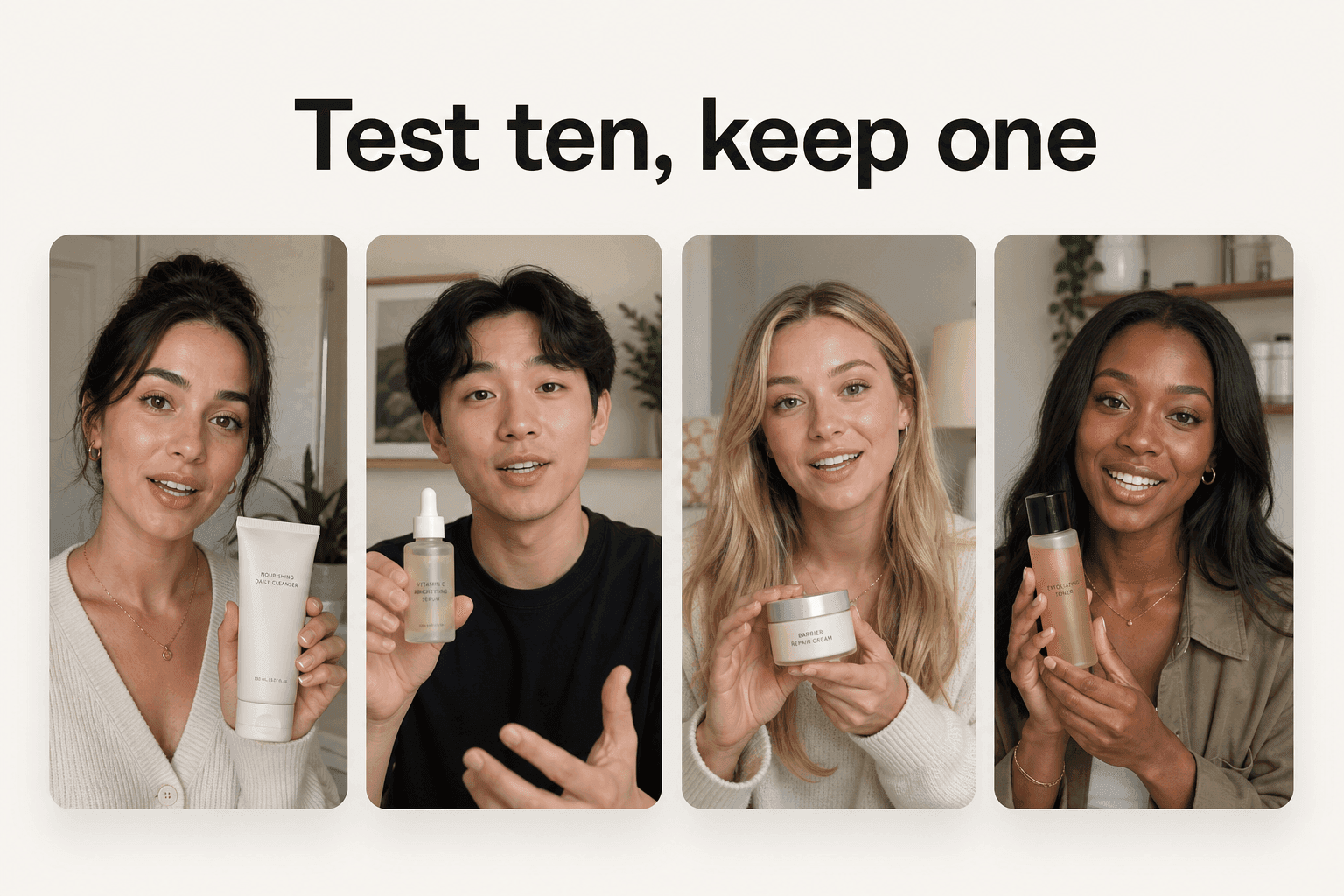
It is easy to treat product photography as hygiene, something you tick off so the listing is not empty. The data says it is closer to the whole game. On a page full of copy, specs, reviews, and price, the image is what people actually process first, and in fashion it carries a burden text cannot: it has to answer "will this look right on me?"
The picture is the first decision, and often the only one
Shoppers lead with their eyes. Baymard Institute's research found that a shopper's "first action on a product page is to explore the product images, before reading titles, descriptions, or scrolling down." If that image is weak, generic, or absent, the tab closes before your carefully written description gets a chance. This is why an on-model shot beats a flat-lay for most apparel: it does the imaginative work for the buyer instead of asking them to do it.
Returns are a photography problem too
For fashion, the cost of a bad image is not only a lost sale. It is a return you paid to ship twice. A striking 71% of consumers say they have returned products because the actual item did not match the description, and much of that mismatch is visual. A garment that looked one way in a stylized studio shot and another way on a real body is a return waiting to happen. This is exactly the gap virtual try-on is built to close, by setting a truer expectation before the order is placed. One FASHN customer reported that after integrating try-on, "satisfaction scores jumped 47% in two weeks." Treat that as a directional signal from a happy customer, not a benchmark, but it points at the right lever.
Fashion's quality bar is higher than most categories
Not every brand needs the same fidelity. Fast-fashion players like Shein and Temu design directly in 3D and skip the camera entirely, accepting that a trained eye can spot the digital origin. For premium and mid-market brands, the fal editorial notes, "the stakes around accurate representation are higher," so the source asset and everything built on it has to clear a stricter bar. Dan Bochman, FASHN's co-founder, "points to Zara as a benchmark for what brand consistency at scale looks like when you build physical infrastructure around it," an entire building dedicated to photography. AI imagery is how a brand reaches for that consistency without owning the building.
On-Model, Flat-Lay, or Ghost-Mannequin: Match the Shot to the Job
On-model is not automatically the right call for every product, and treating "on-model everything" as a rule burns generation budget on shots a simpler frame would sell just as well. The useful question is what job a placement has to do, then picking the cheapest shot that does it. For an apparel catalog, the split usually falls out like this:
| Shot type | Buying question it answers | Where it belongs |
|---|---|---|
| On-model | "How does this fall on a real body?" | Hero image, ad creative |
| Flat-lay or packshot | "What are the true color, texture, and detail?" | Grid thumbnails, spec shots |
| Ghost-mannequin | "What is the worn shape, without a model's face?" | Clean, consistent PDP grid |
The practical move is to generate one clean source asset and reuse it three ways instead of commissioning three separate shoots:
- A flat-lay or packshot for the grid, where fast load and a consistent look matter more than drama.
- An on-model hero for the top of the page, generated across the body types your customers actually represent rather than one idealized model.
- That same on-model still handed to your video tool as the opening frame, so the photo and the clip share a single subject.
If you want the on-model look to stay identical across a whole drop, a style reference keeps every frame on-brand, the same trick behind style-reference product ads. And when you sell through marketplaces, that on-model frame is exactly the hook a creator talks over in your TikTok Shop videos.
The Studio as a Fixed Cost You Keep Re-Paying
The reason on-model AI matters commercially is not that a shoot is expensive once. It is that a shoot is a constraint you re-pay every season, and the constraint, not the invoice, is what caps what you can sell.
Every shoot commits you before you have data
A traditional shoot forces a set of bets weeks ahead of demand. You choose models, a location, and a creative direction, then you are married to them. If the market later tells you a different angle sells, the assets to test it do not exist, and creating them means booking again. FASHN's founder frames the release from that trap directly: "whether you want extreme diversification or extreme consistency, you are not limited by your physical means or your location."
New SKUs and fast cycles get left behind
Faster brands refresh every few weeks, and the shoot cadence cannot keep up. A product added after the shoot is a product with no hero image, which in practice means a product that underperforms until the next cycle. When on-model imagery is generated on demand, a new SKU gets a full set of shots the day it is created, not the month it is re-shot.
Localizing a campaign should not mean reshooting it
A campaign that lands in one market often needs a different model, setting, or styling to land in another. Under the studio model, that is a second production. Under the AI model, it is a variation. This is the same logic that makes AI UGC video powerful for global brands, where you can produce a native-local ad per market instead of subtitling one. If you want the video side of that argument, our guide to UGC-style ads covers why local-feeling creative outperforms polished brand films.
Where AI Product Images Meet AI UGC Video
Here is the part most "AI for fashion" coverage misses. A great on-model still is necessary, but it is not a whole ad. Modern performance advertising runs on two asset types, and they do different jobs.
The still sells the page, the video sells the feed
A product image earns the click and closes the product page. A short vertical video earns attention in a feed that is built for motion, whether it stars an AI actor or runs as one of the faceless video ads brands lean on when nobody wants to be on camera. The still says "here is the thing, clearly." The video says "here is a person like you, using the thing, and here is why it matters." You need both, and until recently both meant two separate productions with two separate budgets.
The two-asset stack, without a camera
AI collapses that. You generate the on-model imagery for the page and static placements with a fashion tool like FASHN, and you generate the talking-actor video for the feed with an AI UGC tool. Same product, two asset types, zero shoot days. If you have ever animated a product still into a clip, our explainer on the AI image-to-video generator walks through how a photo becomes motion, and our step-by-step on making UGC ads with AI covers the script-and-actor half.
A worked example: one dress, one week
Say a DTC label drops a new dress on Monday. Old way: wait for the next monthly shoot, get one hero image, run one or two ad variations, hope. New way: on Monday, generate on-model shots of the dress on several model types for the PDP and the ad set, then generate three UGC-style videos, a testimonial angle, a "get ready with me," and a problem-solution hook, each with an AI actor and a native voice. By Tuesday you are testing a dozen creatives instead of guessing with one.
The economics are what make this more than a novelty. A single mid-tier creator video can run a few hundred dollars and take a week of briefs and revisions, so a ten-angle test is thousands of dollars most brands simply skip. At AI prices, a UGC-style video runs from roughly a couple of dollars, so testing ten angles is a line item, not a luxury. That changes the strategy, not just the invoice: when producing a creative is nearly frictionless, the winning move is to make many and cut fast, not to perfect one and pray.
How to Actually Ship This
The stack is only useful if it fits a real workflow. Here is the shape of one that a small team can run without a producer.
Layer one: the photography
Start with the cleanest source asset you have, a well-lit flat-lay or a packshot, because the quality bar for everything downstream is set here. Generate on-model shots across the body types and settings your customers actually represent, not just one idealized model. Keep a consistent look across a collection so the grid reads as one brand. This is the layer FASHN is purpose-built for, and it is worth using a fashion-specific model rather than a generic one for garment fidelity.
Layer two: motion and a spokesperson
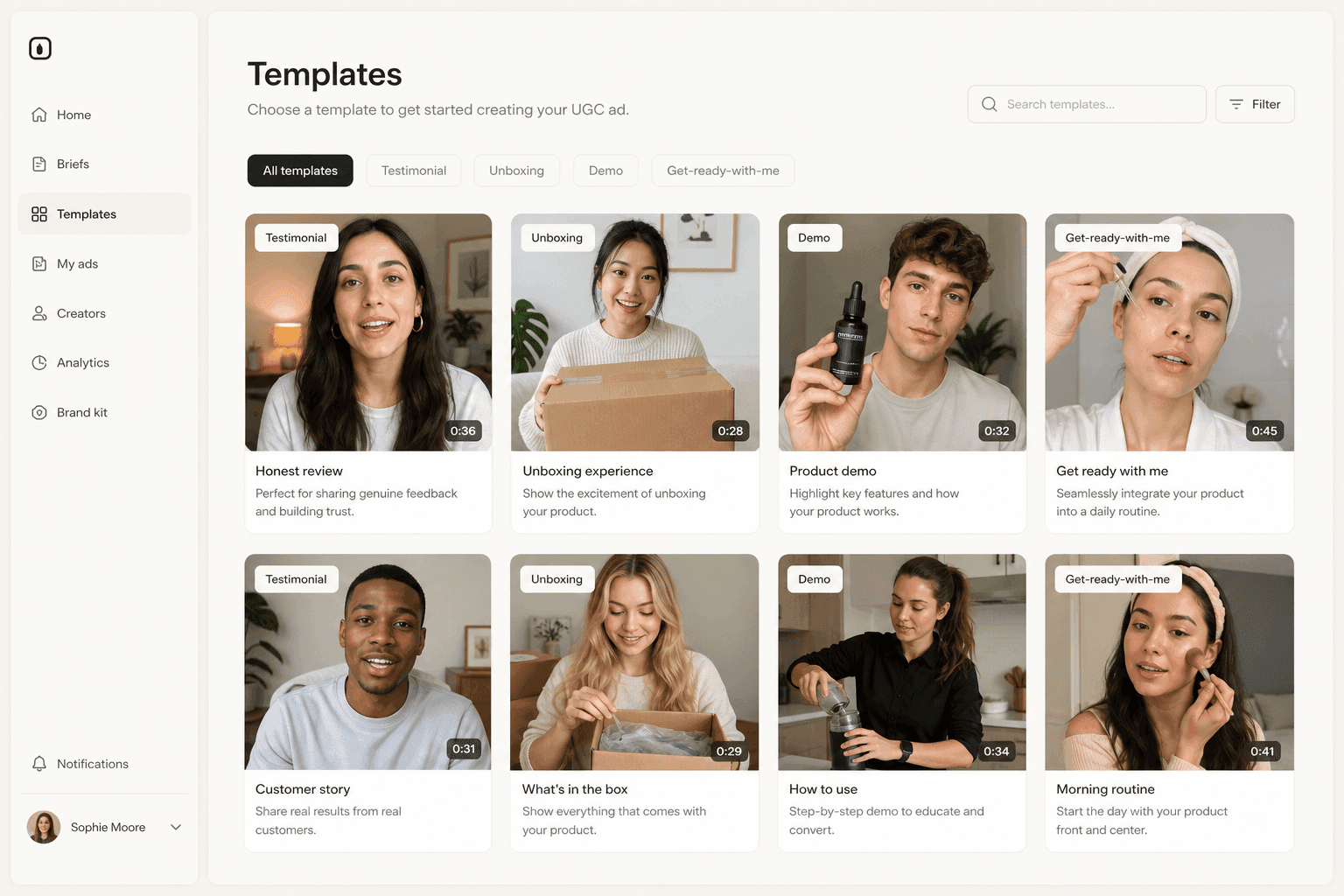
Take the same product and produce the video creative. Write or auto-generate a short script, pick an AI actor who matches your audience, and render a UGC-style vertical ad with voice, lip-sync, and captions. This is where Novoads fits: it is an AI UGC video-ad generator that turns a script and an AI actor into a native-local ad in minutes, so the video half of the stack does not need a shoot either. You can start on the $49/month plan (cancel anytime).
Layer three: knowing it worked
Ship more than one version. The point of removing the shoot constraint is volume, so run several angles per product and let the platform tell you which hook and which on-model look convert. Watch two numbers first: the click-through on the static placements, which tells you whether the on-model image is doing its job, and the conversion rate on the traffic those ads send, which tells you whether the video and the product page agree. A good sign it worked: your winning creative is one you would not have bet on up front, which only happens when you can afford to test the ones you were unsure about. That is the real dividend of AI imagery, not a cheaper photo, but the freedom to be wrong on purpose until the data picks the winner.
Photography Was Never the Product. Speed Was.
The old fashion-imagery stack was a way of buying certainty in advance, and it charged you for that certainty every season whether the market cooperated or not. AI fashion tools like FASHN change the trade: instead of one expensive, frozen set of assets, you get a living catalog you can extend, localize, and test the day a product exists. The interesting shift is not that the photo got cheaper. It is that you stopped running out of it.
For an ad team, the practical version is a two-part stack. Use a fashion-specific tool for on-model stills and try-on, and pair it with AI UGC video for the feed. In Novoads that video half is one flow: an AI actor plus your script, with image generation from Seedream 5 or Nano Banana and motion from Seedance, Kling, or Veo when you want to animate a product, all in over 30 languages with real local accents. The camera was never the point. Getting your product in front of the right person, in the right look, before the moment passed, always was.
Frequently Asked Questions
What does FASHN AI actually do?
FASHN AI develops in-house AI models and fashion-focused products that help brands and agencies visualize apparel and accessories. In plain terms, it takes a product photo (a flat-lay, a ghost-mannequin shot, or an existing on-model image) and generates realistic on-model imagery, catalog-grade packshots, and model swaps, plus a virtual try-on that lets a shopper see clothes on their own body before buying. It is sold both as an app for creative teams and as an API to build into a store.
Is FASHN AI the same thing as Novoads?
No. FASHN is a specialist in fashion still imagery and virtual try-on. Novoads is an AI UGC video-ad generator: you pick an AI actor, paste a script, and get a native-local video ad. They solve different halves of the same problem. FASHN makes the on-model photo that sells the product page; Novoads makes the talking-actor video that sells the feed. The two are complementary, not competitors.
Why does on-model imagery matter for ecommerce ads?
Because the image is the decision. Most shoppers look at the product photo before they read a single word, and 77% say high-quality images and videos are important to what they buy. On apparel especially, a shopper is trying to imagine a garment on their own body from one picture of someone else. Better on-model imagery closes that gap, which lifts conversion and cuts the returns that come from an item not matching its photo.
Can AI product images replace a photoshoot?
For catalog and ad imagery, increasingly yes. A shoot commits you to a location, a set of models, and a creative direction, and once it wraps those assets are fixed. AI on-model generation lets you add a new SKU, re-shoot a look for a different market, or test ten angles without rebooking anything. Premium brands still shoot hero campaigns, but the day-to-day catalog is exactly what AI is now good at.
How do AI product images and AI UGC video work together in one ad?
They stack. Use an AI fashion tool to generate the on-model still for your product page and static placements, then use an AI UGC tool to turn the same product into a short talking-actor video for the feed, where motion and a human voice do the persuading. One product, two asset types, no shoot. That pairing is what a full modern ad looks like.
Does virtual try-on reduce returns?
The mechanism points that way. A large share of returns happen because the product did not match expectations set by the photo, and 71% of consumers say they have returned something for that reason. Letting a shopper see an item on a body closer to their own sets a truer expectation before purchase. One FASHN customer reported satisfaction scores jumped 47% in two weeks after integrating try-on, which is a signal, not a guarantee, but it is the right direction.
Key Takeaways
- FASHN AI is a fashion-focused image company: it develops in-house AI models that turn a flat product photo into on-model imagery and catalog-grade packshots, and offers virtual try-on for shoppers.
- On-model imagery is not a nicety. 77% of shoppers say high-quality images and videos are important to their purchase decisions, and product photos are the first thing most people look at on a page.
- A traditional shoot freezes your catalog the day it wraps. New SKUs get missed, and a campaign for a new region means starting over. AI imagery removes that constraint.
- In fashion, better representation also cuts returns: 71% of consumers have returned something because the actual item did not match the description, and returns are a photography problem as much as a sizing one.
- AI product images and AI UGC video are two halves of one ad. The still sells the product page; the talking-actor video sells the feed. You can produce both without a camera.