What Is Whitelisting in UGC? The 2 Permission Levels Behind Every Creator-Handle Deal
Whitelisting in UGC means a brand runs paid ads through a creator's own handle. Here is how it differs from usage rights, dark posting, Meta partnership ads and TikTok Spark Ads, what each side gives up, and how deals price it.

Mauricio Valdivia
·12 min
Whitelisting rents the handle, not the video
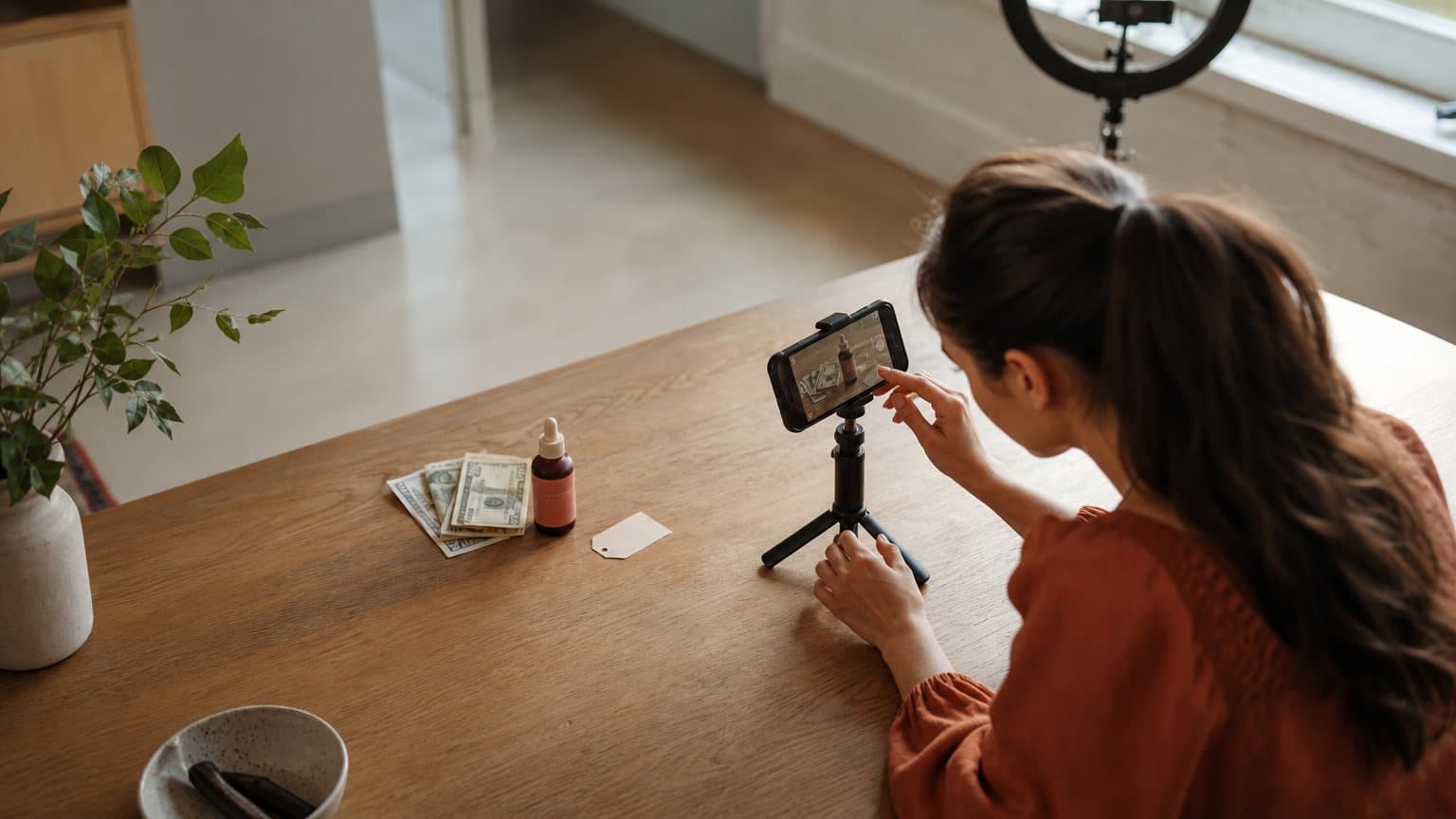
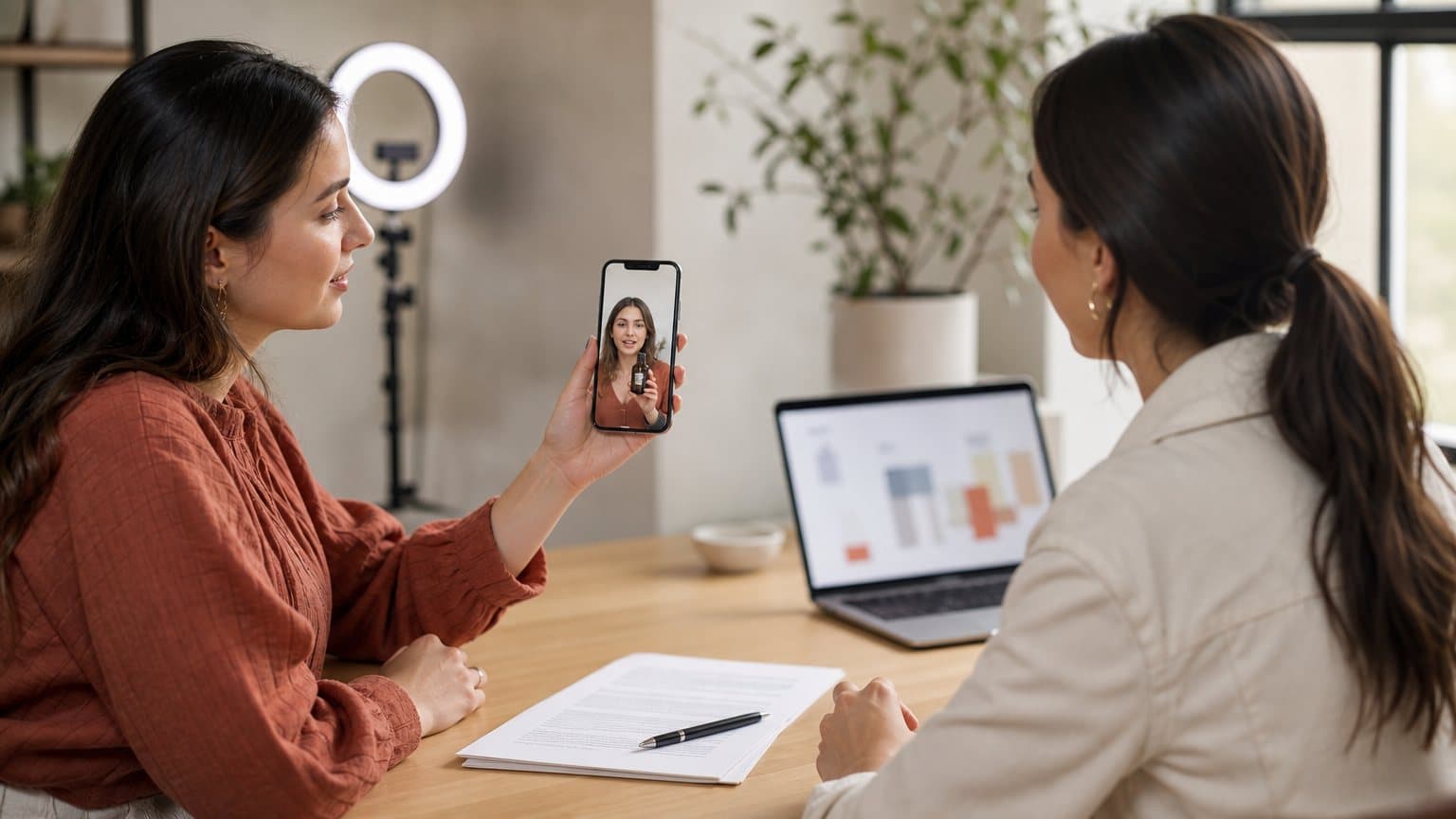
A skincare brand pays a creator a few hundred dollars for a 30-second video. It runs from the brand's page and does fine. Then the brand asks for more. It wants the same video running as an ad from her account, with her name and face at the top. That request has a name in the UGC business, and it usually gets its own line on the invoice.
Whitelisting in UGC means a brand runs paid ads through a creator's social handle. The creator grants ad access to the account. The brand writes the targeting, sets the budget and pays for delivery. The person scrolling sees the creator's name as the ad's identity, not the brand's. It is a separate permission from usage rights, which only let the brand run the footage from its own account.
"Whitelisting" is the industry's word. Meta's word is partnership ads, and TikTok's is Spark Ads. This guide covers the deal term itself: how it differs from usage rights and dark posting, what each platform's permission actually grants, what the brand and the creator each give up, and how rate guides price it. For the click-by-click setup, our guides to creator partnership ads and TikTok Spark Ads walk the platform side.
What whitelisting means in a UGC deal
The handle is the asset
In a normal UGC order you buy a file. The creator films, delivers, and the brand runs the video from its own page, which is the standard arrangement we describe in what a UGC creator actually does. Whitelisting adds a second asset to the deal: the creator's account itself. The ad header carries the creator's name and profile photo, so the ad reads, at first glance, like a post from a person rather than a pitch from a company.
That is why it costs extra. You are not paying for more footage. You are paying to borrow an identity, the same trust signal that makes UGC work in the first place, attached to an ad you control.
Meta sells the idea directly. Its creator marketing page claims 19% lower cost per acquisition "when adding partnership ads into business-as-usual campaigns." That is Meta's own figure about Meta's own product, printed with footnote markers and no method on the page, so treat it as the platform's pitch rather than a number to budget on.
Why the industry word and the platform word differ
Creators, agencies and rate cards say whitelisting. The platforms name the permission differently, and those names are what you search for in their help centres:
- Meta: partnership ads. Meta's help pages still open with the line "Branded content ads are now called partnership ads," so older contracts and agency decks may use either name.
- TikTok: Spark Ads. TikTok lets advertisers "Publish ads using organic posts made by other creators (with their authorization)."
The mismatch matters in practice. A contract that says "whitelisting" without naming the platform permission leaves open which level of access the brand gets, and on Meta the two levels are very different purchases.
What changes for the person scrolling
The creator's identity travels further than most creators expect, and it is fixed in place once it does:
- Across apps on Meta. A partnership ad run with a partner who has no Facebook Page "can still appear on Facebook with the non-advertiser partner's Instagram name, profile picture and other details."
- Locked on TikTok. The ad's display name and text "will reflect the chosen organic post and cannot be edited" in Ads Manager.
Either way, the viewer is looking at a person's name on a paid unit, which is exactly what the creator is licensing.
Whitelisting vs usage rights vs dark posting
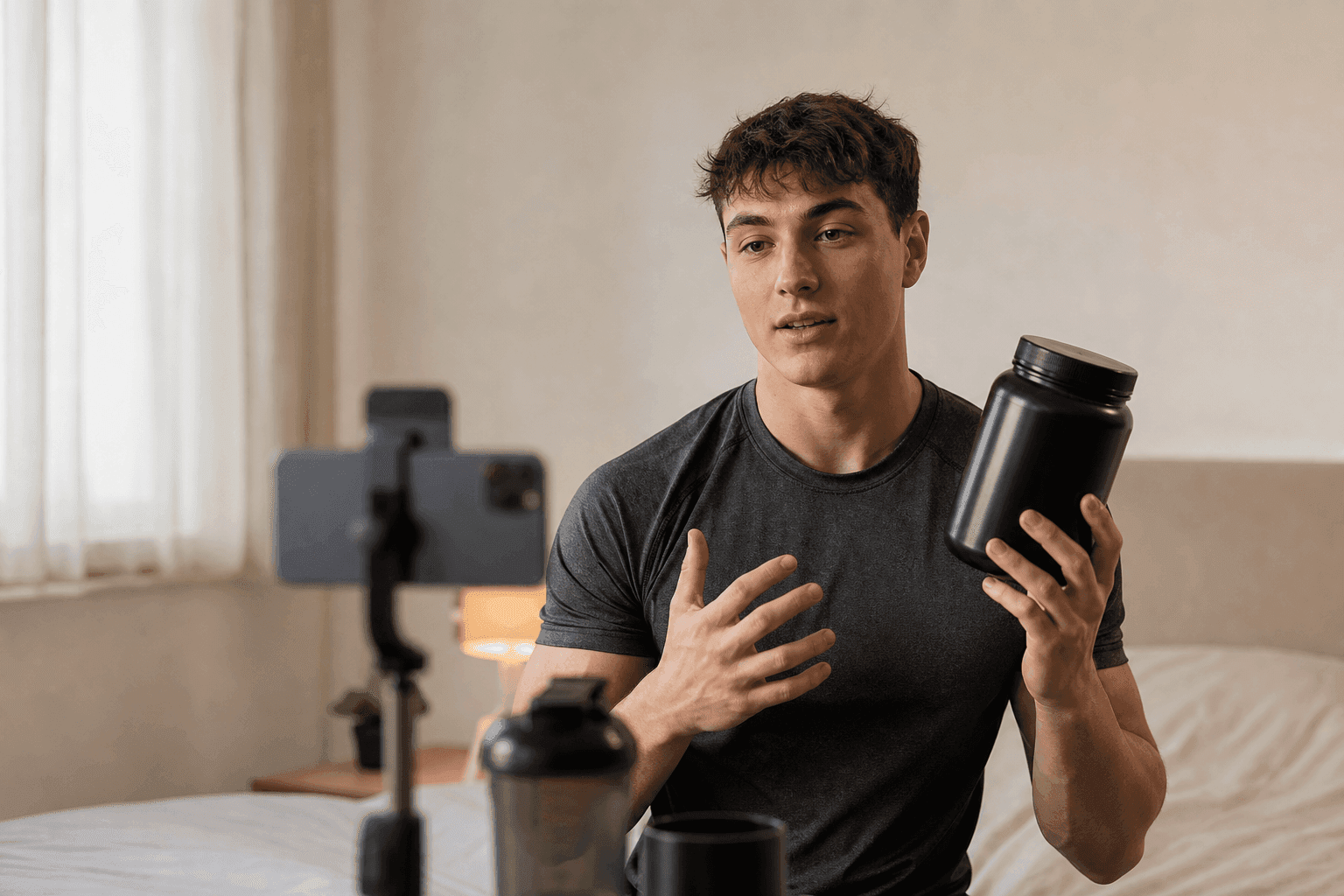
Briefs use these three terms interchangeably. They buy different things, and a rate card prices them separately.
Usage rights: their footage, your handle
Usage rights license the video. The brand runs it from its own page, in ads, on the product page or in email. No creator account is involved, so nothing needs approving in Ads Manager. Rate guides from Influee and inBeat both put paid usage rights at 30 to 50% of the creator's base rate, a one-time uplift rather than a monthly fee. Our breakdown of what UGC creators charge covers the rest of that line-item menu.
Whitelisting: their handle, your budget
Whitelisting grants access to the account. The ad runs under the creator's name, with your targeting and your media money behind it. In most deals the brand buys usage rights as well, because it is still advertising the creator's footage; whitelisting adds the right to do it as the creator. The fee is negotiated between the two parties, on top of whatever the brand spends on media.
Dark posting: their handle, no post at all
Dark posting is whitelisting without an organic post behind the ad. The brand builds ads under the creator's identity from footage that never appeared on the creator's profile. On Meta this is what account-level permission unlocks: advertisers can "Create partnership ads, other ad types and marketing messages from a partner's handle without pre-existing content." Billo, which sells account-level access as a marketplace add-on, tells brands these ads "are not visible on the creator's wall."
Dark posting lets a brand test ten hooks under one creator's name without ten posts cluttering her feed. It also means she may never see most of the ads carrying her face, unless the contract says she will.
| Term | Whose handle | Organic post needed | Platform mechanism | How rate guides price it |
|---|---|---|---|---|
| Usage rights | Brand's | No | Brand's own ad | One-time % of base |
| Whitelisting | Creator's | Yes, one live post | Content-level code, Spark code | Monthly % of base |
| Dark posting | Creator's | No | Meta account-level access | Monthly, scoped per deal |
How Meta turns whitelisting into two permission levels
Meta's help page on partnership ad permissions is the clearest primary source on what a brand actually receives. "To run partnership ads, advertisers need permission from the partner whose handle the ad will include," it says, and "There are 2 types of partnership ad permissions: content-level and account-level." Those two levels map almost exactly onto the two whitelisting tiers creators already sell.
Content-level: one post, one code
Content-level permission covers "an individual post, story or reel." The creator either turns on "Allow brand partner to boost" on branded content that tags the brand with the paid partnership label, or shares a partnership ad code, which works on any post whether or not it is branded content. Three details from Meta's content-level page belong in the deal:
- Two buyers per code. "Ad codes can be used by up to 2 advertisers at a time," so one code can serve a brand and its agency, or two different buyers if the contract says nothing about exclusivity.
- The ad can diverge from the post. Meta tells advertisers they can edit the content for ads "and your original post will stay the same."
- Archiving is not revoking. "On Instagram only, archiving your content does not remove ad code access from the advertiser."
This is per-video whitelisting: one asset, priced per post and per window.
Account-level: the handle itself
Account-level permission is the tier Meta calls "more suitable for ongoing partnerships." Once the creator accepts, the brand can:
- Build ads with no post behind them, from the handle without pre-existing content.
- Use the back catalogue, meaning "any of the partner's existing posts, stories or reels that tag the advertiser, including archived content."
- Target the creator's audience, since advertisers can "Include or exclude their partner's custom audience in their partnership ad campaign."
Read that list as a creator would. Every old post that tags the brand becomes ad inventory, and the creator's followers become a targeting segment. Meta manages these relationships in what its help page calls Creator Marketing Hub, where brands see pending requests, accepted ones and inactive requests "for which creators or brands have removed permission." That scope is why account-level access should carry its own duration, spend ceiling and approval rule, rather than riding on a clause written for a single post.
The one case that needs no permission
Meta states one exception: "If 2 Instagram or Facebook accounts are owned by the same business and an employee has ads access to both assets, they will be able to run partnership ads without partnership ad permissions."
A founder's account the company manages, or an in-house creator account the brand owns, sits outside the whitelisting negotiation. An independent creator never does, however long the relationship.
How TikTok Spark Ads handle the same deal
TikTok's version starts from posts rather than accounts. Our Spark Ads setup guide covers the mechanics; three details change what you negotiate.
The code is the permission slip
On TikTok, "Creators can choose to provide a code to authorize using their post in your Spark Ad." The code is per post, so TikTok whitelisting is content-level by default. TikTok's feature list says the duration of the authorization code can be customized "to meet campaign needs and minimize costs," and its Ads Manager guide adds that "There is an authorization period for you to review beneath each post."
Read that period on the post before you plan a flight around it, and write the same window into the contract so the paperwork and the platform agree.
What the brand cannot change
TikTok's guide is blunt: "You cannot edit a post's caption after it's been authorized as an ad." Meta lets the advertiser adapt a content-level ad while the creator's post stays untouched; TikTok freezes the caption the moment the post is authorized. Caption testing on a whitelisted TikTok means asking the creator to post again, which is a line item, not a click.
The push route
TikTok also documents a route where advertisers "push new posts from TikTok Ads Manager to a selected identity (TikTok account) authorized through TikTok Business Center." It is the nearest TikTok analogue to Meta's account-level access: the brand originates creative on an authorized account instead of redeeming one code per post. If a creator agrees to it, price it like account-level access, because that is what it is.
The revoke clause: what switching off access actually stops
Meta: new ads stop, live ads keep running
Meta says "Creators and other partners can revoke these permissions at any time." That reads like the creator holds a kill switch. For the content-level code, the fine print says otherwise: "You can stop a code from being used to create any new ads by turning the toggle off. Any active ads using the code will continue running."
Turning off the code stops the next ad, not the current one. A creator who ends a deal by flipping the toggle may still see her face in the feed until the brand pauses its campaigns.
TikTok: the code outlives the post
On TikTok the dependency runs the other way. Two lines in TikTok's own help pages decide it:
- "A video code can only be deleted when all the ads this video is used in are deleted in TikTok Ads Manager."
- "Videos need to be un-authorized as a Spark Ad before it can be deleted from the organic account."
A creator who wants a video gone depends on the brand cleaning up its ads first.
Write the off-switch into the contract
Platform switches were built for account safety, not for your deal's end date. The clause that matters most in a whitelisting deal is not the fee; it is the off-switch. Put the end in writing:
- Flight dates: a start date, an end date, and a deadline to pause every ad after the end date or a termination notice.
- Spend ceiling: a monthly cap on paid media behind the creator's handle.
- Creative approval: which ads the creator sees before launch, especially under account-level access where there may be no post to look at.
- Comments: who moderates. Meta lets the advertiser hide comments on ads it runs with a creator, and lets the creator "Unhide any comments that the advertiser may have hidden on an ad."
- Renewal: the monthly rate for keeping a winner running past the first window, agreed before anyone knows it is a winner.
What each side gives up in a whitelisting deal
What the brand gets, and what it risks
The brand gets a person's identity on a paid unit and, with account-level access, that person's audience as a segment. On TikTok it also gets engagement that compounds on a real post: TikTok says Spark Ads ensure "all views, comments, shares, likes, and follows gained from boosting the video during the promotion are attributed to your organic posts."
The costs sit on the other side of the same coin:
- Dependency. The ad exists only as long as the creator's account and consent do.
- Borrowed reputation. If the creator has a bad week in public, it lands on your ad.
- Lost levers. On TikTok the caption is frozen, so copy testing needs the creator.
- Compounding fees. Monthly pricing keeps billing on exactly the ads you most want to keep.
What the creator gets, and what they risk
The creator gets recurring income instead of a one-off fee, and on TikTok, paid engagement landing on their own post. They also take on the risks of lending a name:
- Unseen ads. Under account-level access their face can front ads they never reviewed.
- Their audience as a target. Their followers can be included in, or excluded from, a brand's campaign.
- Their comments as a help desk. The comment section under a whitelisted ad can turn into a brand's customer service thread.
Disclosure stays personal too. The FTC's guide for influencers says an endorsement "should make it obvious when you have a relationship ('material connection') with the brand," and adds: "As an influencer, it's your responsibility to make these disclosures." A brand running the ad does not move that duty off the creator's shoulders. For the separate rules on labelling synthetic content, see our AI ad label rules.
For a UGC creator with a small following, be clear about what is being sold. Whitelisting a 2,000-follower account buys the look of a real person, not a reach deal. Price it like a license on a face, not like an influencer post, the line our comparison of UGC and influencer marketing draws difference by difference.
How whitelisting deals are priced
The monthly-percentage convention
There is no list price. Rate guides converge on a monthly fee pegged to the base video rate:
- Influee lists whitelisting and Spark Ads access at 30% of the base rate per month.
- inBeat calls it "Typically an extra 30% of the base fee per month."
- ppc.io reports brands paying 30 to 100% of the base fee per month for the same permission.
These are guides written for creators and brands, not audited market data. Use them to open a negotiation, not to close one. The structural point holds across all of them: whitelisting is billed by the month, while the video is billed once.
How a marketplace packages it
Billo's April 2026 launch of paid ad partnerships shows how a marketplace turns the convention into a product:
- Content-level: "a 30-day, single-post permission" added to an organic posting order.
- Account-level, Meta only: the brand can "run ads from their Instagram handle using any approved video asset for 30 days."
- Price: in both cases the permission price is "set by the creator" and shown before the brand confirms.
So the working unit of the market is a 30-day window at a creator-set price. That is a useful default even outside a marketplace: it forces a renewal conversation instead of an open-ended grant.
A worked example: one video, three months
Say a creator's base fee is $300 for one video, and the brand wants it whitelisted on Meta for three months.
- Base video: $300.
- Paid usage rights at 30 to 50% of base: $90 to $150.
- Whitelisting at the 30%-a-month convention: 3 × $90 = $270.
That is $660 to $720 for one video running three months from the creator's handle, before a cent of media. At the top of ppc.io's range, 100% a month, the whitelisting line alone reaches $900 and the total $1,350.
Now the part that matters. The monthly line only compounds on winners. A loser gets paused in week two. A winner runs for six months and its whitelisting line doubles to $540. That is the right problem to have, but it means you want to know which video wins before you sign monthly terms on it.
Three things should move the fee from that baseline:
- Scope. Account-level access is worth more than one post.
- Duration. Every extra window is another month of a name on your ads.
- Media weight. A creator lending a handle to a five-figure monthly spend is taking more reputational risk than one lending it to a test budget, and the fee should say so.
How Novoads solves the angle-testing problem before whitelisting
Novoads turns a product photo or a script into a UGC-style video ad with an AI actor, run from your own brand account. That makes it a tool for the step before whitelisting, not a replacement for it.
What an AI actor can and cannot do here
An AI actor has no handle. It cannot grant partnership ad permission, has no followers to target, and cannot sign a usage agreement, so it can never be whitelisted. Anyone selling synthetic UGC as a whitelisting substitute is selling the wrong thing.
What it can do is sit in the usage-rights row of the table above: an ad running from your own page, with no creator permission to request and no monthly window to renew. When the angle depends on the product being held, name the route: create a custom actor by uploading a photo of someone holding your product (Create Actor > Upload), or start from one of the Discover product templates, which put your uploaded product into a template creator's hand. A stock library actor has empty hands.
A test-then-lease sequence
- Write six to eight angles for one product: problem-first, price comparison, unboxing, skeptic's review.
- Render each one in Novoads. A clip runs from about a dollar for a five-second Seedance 2.0 Mini clip to about $8 for an eight-second Seedance 2.5 clip, and about $26 for a full 30-second Seedance 2.5 take.
- Run them from your own handle and judge them on cost per result, not on the vanity numbers.
- Take the one or two winners to a real creator and whitelist those, on a 30-day window you renew on performance.
The monthly fee then lands only on angles that already earned it. Novoads starts at $49/month (Starter, 50 credits per month). All plans are published on /pricing. If you want the wider case for creator-style ads before you build a plan, start with our guide to UGC ads.
Lease the handle after the angle has won
Whitelisting is a lease on a person's trust. The platforms give you the permission, the creator gives you the name, and the contract decides when it ends, because the toggle will not.
A lease is the wrong place to run experiments. Find the angle on your own account, then rent the face that makes it land. You can start with Novoads from $49/month and bring your next creator a video you already know works.
Frequently Asked Questions
What is whitelisting in UGC?
Whitelisting is when a brand runs paid ads through a creator's own social handle. The creator grants ad access to the account, and the brand sets the targeting, budget and placements while the ad shows the creator's name and profile photo as its identity. It is an industry term: Meta implements it as partnership ads and TikTok as Spark Ads.
What is the difference between whitelisting and usage rights?
Usage rights license the video so the brand can run it from its own page, website or email. Whitelisting grants access to the creator's account so the ad runs under the creator's name. They are separate permissions and are usually priced separately: rate guides put usage rights at 30 to 50% of the base fee and whitelisting at a monthly percentage of it.
Is whitelisting the same as dark posting?
Dark posting is a form of whitelisting. The brand builds ads under the creator's identity from footage that never appears as an organic post on the creator's profile. On Meta this needs account-level permission, which lets advertisers create partnership ads from a partner's handle without pre-existing content.
Can a creator stop a whitelisted ad at any time?
A creator can revoke partnership ad permissions at any time, according to Meta's Business Help Center, but revoking does not always stop ads already live. Meta says turning off a content-level ad code stops new ads from being created with it, while any active ads using the code continue running. Put a pause deadline in the contract.
How much do creators charge for whitelisting?
There is no list price, because the fee is negotiated between the brand and the creator on top of the media spend. Rate guides from Influee and inBeat put it at about 30% of the base video fee per month, and ppc.io reports brands paying 30 to 100% per month. Marketplaces such as Billo sell it in 30-day windows at a price each creator sets.
Can you whitelist an AI-generated UGC actor?
No. Whitelisting needs a real account whose owner grants permission, and an AI actor has no handle to lend. AI-generated UGC ads run from the brand's own account, which makes them useful for testing angles before paying a monthly whitelisting fee on a real creator's video.
Key Takeaways
- Whitelisting in UGC means a brand runs paid ads through a creator's handle: the creator lends the account's identity, the brand supplies the targeting and the media budget.
- It is a different purchase from usage rights (the brand runs the footage from its own page) and from dark posting (ads under the creator's name with no organic post behind them).
- Meta implements whitelisting as partnership ads with 2 permission levels: content-level for one post, story or reel, and account-level for ads from the creator's handle without pre-existing content.
- Revoking access is not an off-switch for live ads. Turning off a Meta content-level ad code stops new ads while active ads keep running, so the end date belongs in the contract.
- Rate guides price whitelisting as a monthly fee pegged to the base video rate, commonly about 30% per month, so the cost compounds on exactly the videos that win.
Sources
- •Meta Business Help Center: About partnership ad permissions
- •Meta Business Help Center: Manage content-level permissions for partnership ads
- •Meta Business Help Center: Manage account-level permissions for partnership ads in Creator Marketing Hub
- •Meta: Creator marketplace for businesses
- •TikTok Ads Manager Help: About Spark Ads
- •TikTok Ads Manager Help: How to create Spark Ads for Manual and Search Campaigns
- •Billo: Paid ad partnerships with creators
- •Influee: UGC pricing guide
- •inBeat: UGC creator rates
- •PPC.io: UGC pricing
- •FTC: Disclosures 101 for Social Media Influencers