TikTok Spark Ads: Setup, Codes, and Creator Authorization That Lasts Up to 365 Days
Spark Ads turn an organic TikTok post into a paid In-Feed ad while every like, comment, and follow the boost earns stays on the original video. Here is how to set them up, generate authorization codes, and run a creator's post as your own ad.

Mauricio Valdivia
·Updated ·11 min
The ad that keeps every like it earns
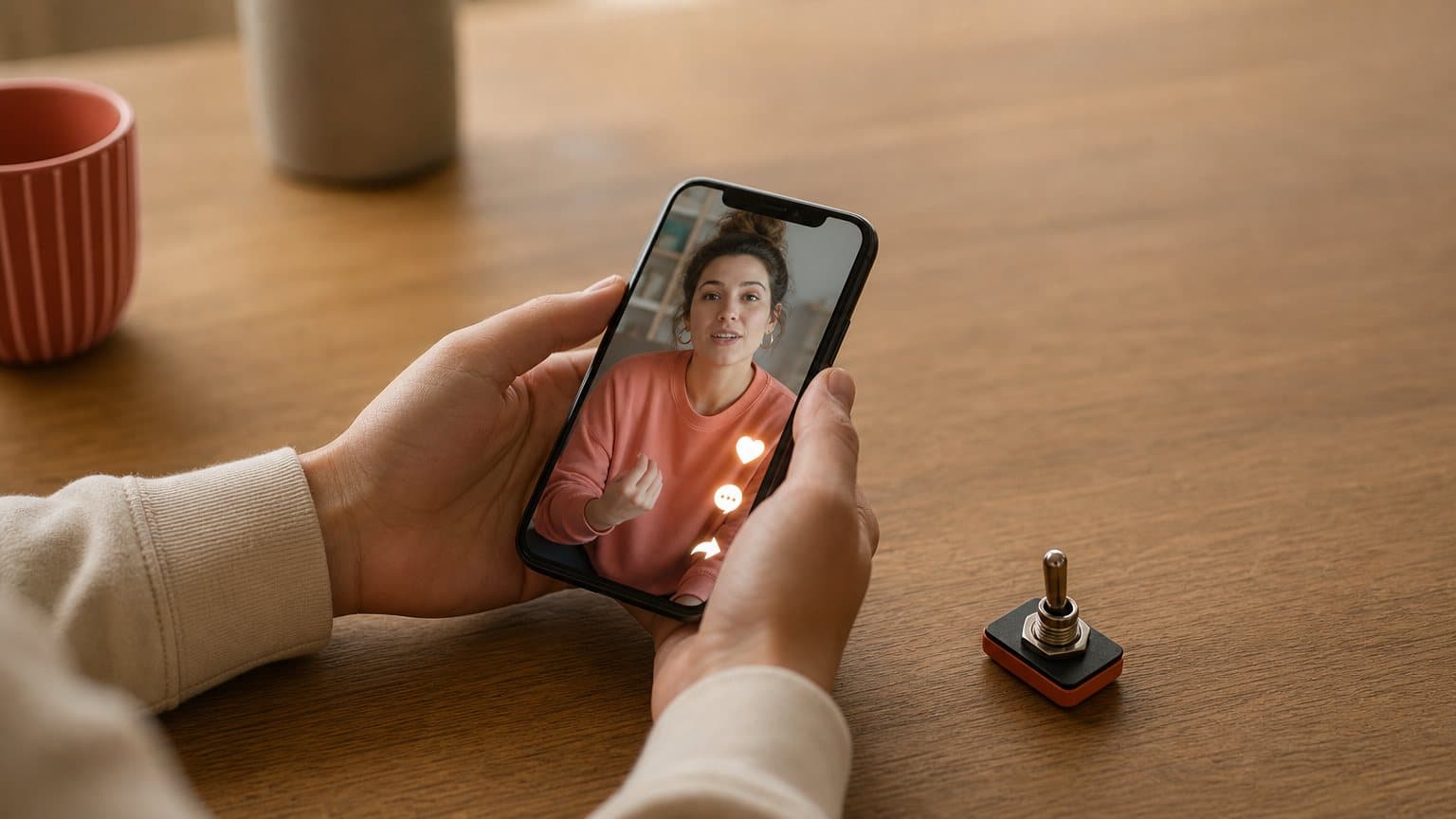
TikTok Spark Ads are a native ad format that turns an organic TikTok post, yours or a creator's, into a paid ad. The post keeps its comments. It keeps its likes. It keeps every follow the promotion earns.
That is the whole trick. A standard In-Feed ad starts from a file you upload to the ad account, a clip with no history and no profile behind it. A Spark Ad runs a post that already lives on a real account, so all the views, likes, comments, shares, and follows it gathers while you pay to boost it are credited back to that original video. When the campaign ends, the ad disappears but the engagement stays.
This guide is the deep version of one mechanic: Spark Ads. How they differ from ordinary In-Feed ads, how to boost your own post, how authorization codes let you run a creator's post, and how long that authorization lasts. If you need the broader picture of producing TikTok creative in the first place, our AI video generator for TikTok walkthrough covers that, and how to make TikTok ads covers the campaign around it. Here we stay on the Spark mechanic itself.
What a TikTok Spark Ad actually is
A Spark Ad is not a new creative you make. It is a permission layer bolted onto a post that already exists. TikTok's own definition is blunt: Spark Ads is a native ad format that lets you use organic TikTok posts and their features in your advertising.
A native ad format built on a real post
There are exactly two things you can spark. You can publish ads using your own TikTok account's posts, or you can publish ads using organic posts made by other creators, with their authorization. Either way, the ad viewers see is a genuine post: same caption, same sound, same handle, same comment section. It behaves like organic content because it is organic content that you have paid to distribute more widely.
That is why the format reads as authentic. TikTok frames Spark Ads as a way for advertisers to tap into authenticity by boosting organic content, and the reason it works is that nothing about the unit signals "uploaded ad." Viewers can tap the profile, scroll the account's other videos, and follow, exactly as they would on a post they found by scrolling.
Where the engagement goes
Here is the part that separates Spark from everything else. All views, comments, shares, likes, and follows gained from boosting the video during the promotion are attributed to your organic post. A normal ad's engagement is trapped inside the ad object and evaporates when the ad stops. A Spark Ad pours that engagement onto a single real video that keeps accruing social proof long after the flight ends.
The strategic consequence is large. If you run the same message as ten Spark Ads over a quarter, you are also building ten increasingly-credible organic posts. The paid layer and the organic layer stop competing and start compounding. For the trust logic underneath this, our explainer on what a UGC creator sells is the companion read.
What you can and cannot spark
The eligibility rules are simple, and worth knowing before you brief anyone:
- Length. There is a 10 minute maximum on videos that can be sparked, which comfortably covers any UGC ad.
- Volume. Each TikTok Ads Manager account can support a maximum of 10,000 Spark Ads, so the ceiling is effectively your production, not the platform.
- Deletion. A sparked video must be un-authorized as a Spark Ad before it can be deleted from the organic account, so a creator cannot quietly pull a post out from under a live campaign.
- Caption lock. You cannot edit a post's caption after it has been authorized as an ad. TikTok's instruction is blunt: please make sure the ad caption is the final version when creating Spark Ads.
- Privacy. A private video will become public once it is used in a campaign, so nothing you spark stays hidden.
Spark Ads vs non-Spark In-Feed ads
Both formats land in the same For You feed. A viewer scrolling past cannot tell you which budget line paid for what. The difference is entirely upstream, in where the creative comes from and what happens to the response it earns.
Same feed, different creative source
A non-Spark In-Feed ad is a file. You produce a vertical video, upload it to the ad account, and it runs under the account's advertising identity with no organic post behind it. A Spark Ad is a post. It runs from a real handle, with a real comment section and a real profile a viewer can visit. That single distinction cascades into every row below.
| Spark Ads | Non-Spark In-Feed | |
|---|---|---|
| Creative source | A real organic post | An uploaded file |
| Runs from | A real account handle | The ad account identity |
| Comments and likes | Kept on the post | Reset with the ad |
| Profile to visit | Yes, the real account | None |
| Follows during the boost | Credited to the account | Not possible |
| Life after the flight | Engagement stays | Everything ends |
Why the numbers favor Spark
TikTok publishes its own performance read, and it is lopsided. By TikTok's own measurement, Spark Ads have a 134% higher completion rate and a 157% higher 6-second view-through rate than standard In-Feed Ads. It also reports that the Spark Ads profile landing page delivers a 69% higher conversion rate and a 37% lower CPA. Treat those as vendor figures, not gospel, but the direction is intuitive: an ad that looks like a post people chose to watch gets watched like one.
The honest takeaway is not that Spark magically converts better. It is that the native wrapper removes the friction a viewer feels the instant a clip announces itself as an ad. You still need a real hook and a real angle. For the split-testing discipline that finds them, our guide to split-testing UGC ads is the method; Spark is just the delivery format that keeps the scoreboard.
How to boost your own organic post as a Spark Ad
Running your own post is the simpler path because you already control both accounts. The one non-obvious rule: the post has to exist organically first. You cannot spark a draft.
Step 1: post it organically, then connect the account
Publish the video from your brand's TikTok account as a normal post. Then, in TikTok Ads Manager, link that TikTok account as the identity for the ad. This is the handshake that lets the ad account borrow the organic post.
Step 2: pick the post and set the objective
At the ad level, choose "Use TikTok account to deliver Spark Ads," select the account, and pick the specific video from its posts. Then attach your objective, targeting, and budget the way you would for any campaign. The creative is done; you are only wrapping distribution around it.
Step 3: launch and read the right metrics
Because engagement flows back to the post, watch both the paid dashboard and the organic post. A quick launch checklist:
- Confirm the post is public and stays up for the whole flight.
- Match the authorization window to the flight so nothing expires mid-run.
- Point the click-through at the destination you actually want (profile, site, or product).
- Read profile visits and follows, not just clicks, since those are the compounding assets.
You know it worked when the boosted post shows more comments and follows than the spend alone would explain, because organic reach rode along with the paid push. If showing a face is a constraint, faceless TikTok ad formats spark exactly the same way.
How to run a creator's post: authorization codes
The more powerful use of Spark is running someone else's post. This is how brands turn genuine creator UGC into paid media without reposting it, and it runs entirely on a short string called an authorization code.
What an authorization code is
Creators can choose to provide a code to authorize using their post in your Spark Ad. The code is a permission token tied to one specific video. It grants your Ads Manager the right to run that creator's real post, from the creator's real handle, as your ad for a set period. The creator stays the author; you rent the distribution rights. It helps to be precise about what the code does and does not do:
- It does let you run one specific video as a paid ad from the creator's handle.
- It does not transfer ownership or move the post onto your account.
- It does expire on the schedule the creator sets, then needs a fresh code to continue.
- It does not give you any control over the creator's other posts or their profile.
How the creator generates the code
This part happens on the creator's phone, not yours, so you will usually send these instructions to them. Per TikTok, creators can find the authorization code in the TikTok app by going to the video that they want to share, tapping the three dots on the video, tapping on the Ad settings icon, and tapping Generate to retrieve the TikTok post code. They toggle the ad authorization on, choose how long it should last, and copy the code that appears. Then they send it to you.
How you add it in Ads Manager
Your side is a paste. Once you have received the video code from a creator, you enter that code on TikTok Ads Manager, search the code, and the post appears ready to attach to an ad. For programs at scale, you are not doing this one at a time: you can batch authorize up to 20 video codes at a time, which is what makes a roster of ten or twenty creators manageable. One detail people skip: there is an authorization period for you to review beneath each post, so the window the creator picked is visible right there before you build the ad group. Whichever way you sourced the creator, whether a direct DM or the TikTok Creator Marketplace, the authorization still resolves to a code you enter here.
How long Spark Ad authorization lasts
Authorization is not permanent and it is not a single fixed window. TikTok lists post authorization as a feature in its own right: customize the duration of your authorization code to meet campaign needs and minimize costs. The part teams get wrong is who holds the dial, and getting it wrong causes the most common Spark failure: a code that expires while money is still flowing.
The creator sets the clock, you review it
When the post belongs to a creator, the duration is chosen on their phone, not in your Ads Manager. In the creator's flow, after they agree to the advertising terms, turn on the Ad authorization toggle and generate a video code, they select the authorization duration (7, 30, 60, or 365 days) from the chosen post's ad settings module, then tap Copy Code to share it with you. By the time the code reaches you, the window is already set.
Your side is a review, not a choice: there is an authorization period for you to review beneath each post. Read that number before you build the ad group, because it, and not your flight plan, is what the ad actually runs on.
That makes the window a briefing item, agreed with the creator before they generate anything. A rough guide to what to ask for:
- 7 days for a single burst test or a one-week flight you know the end date of.
- 30 days for a standard monthly campaign, the safe default for most creator tests.
- 60 days for a sustained push or a seasonal run that spans two ad cycles.
- 365 days for an evergreen asset you expect to re-boost throughout the year.
Ask for a duration that comfortably outlasts your planned flight, because a code that lapses mid-campaign stops the ad, and extending it means going back to the creator for a fresh one.
Renewing, revoking, and the delete rule
A creator can re-authorize with a fresh code when a window ends, so a long relationship is a series of renewals rather than one open-ended grant. Two rules protect both sides. The creator controls the clock, so they can decline to renew. And a sparked video must be un-authorized before it can be deleted from the organic account, so a live campaign cannot have its creative yanked without the advertiser's ad breaking first in a visible, not silent, way. Whenever you run a creator's face, check that your TikTok ad disclosure and ad disclaimer obligations are met, since a Spark Ad is still a paid ad even though it looks organic.
From one organic post to a full Spark Ad test
The reason to understand every mechanic above is that Spark rewards volume. The winning ad is rarely the one you would have guessed, so the format pays brands who can put many real posts into the feed and let the data pick. Here is what that looks like with numbers.
A worked example: three angles, one week
Say a skincare brand wants to test three angles for a serum: a "dermatologist myth" hook, a "before and after texture" hook, and a "morning routine" hook. Done the old way, that is three creator briefs, three rounds of revisions, and one to two weeks before a single ad is live. So most brands shoot one, hope, and call it a campaign.
The Spark way, they produce all three as real vertical posts, publish each from an account, and spark them:
- Three posts, three codes. Each clip goes up organically, and each is authorized with a 30-day code that covers the test window.
- One ad group per angle. Same budget, same audience, so the only variable is the creative.
- Read at 72 hours. Kill the two losers, pour budget behind the angle that beats the benchmark, and note which comment section is warming up, because that engagement is banking on a real post.
The math is the point. At an assumed $200 a clip for a hired creator, testing ten angles is about $2,000 and one to two weeks before you learn anything. Producing the same ten as sparkable posts turns testing from a luxury into a habit.
Where the raw posts come from
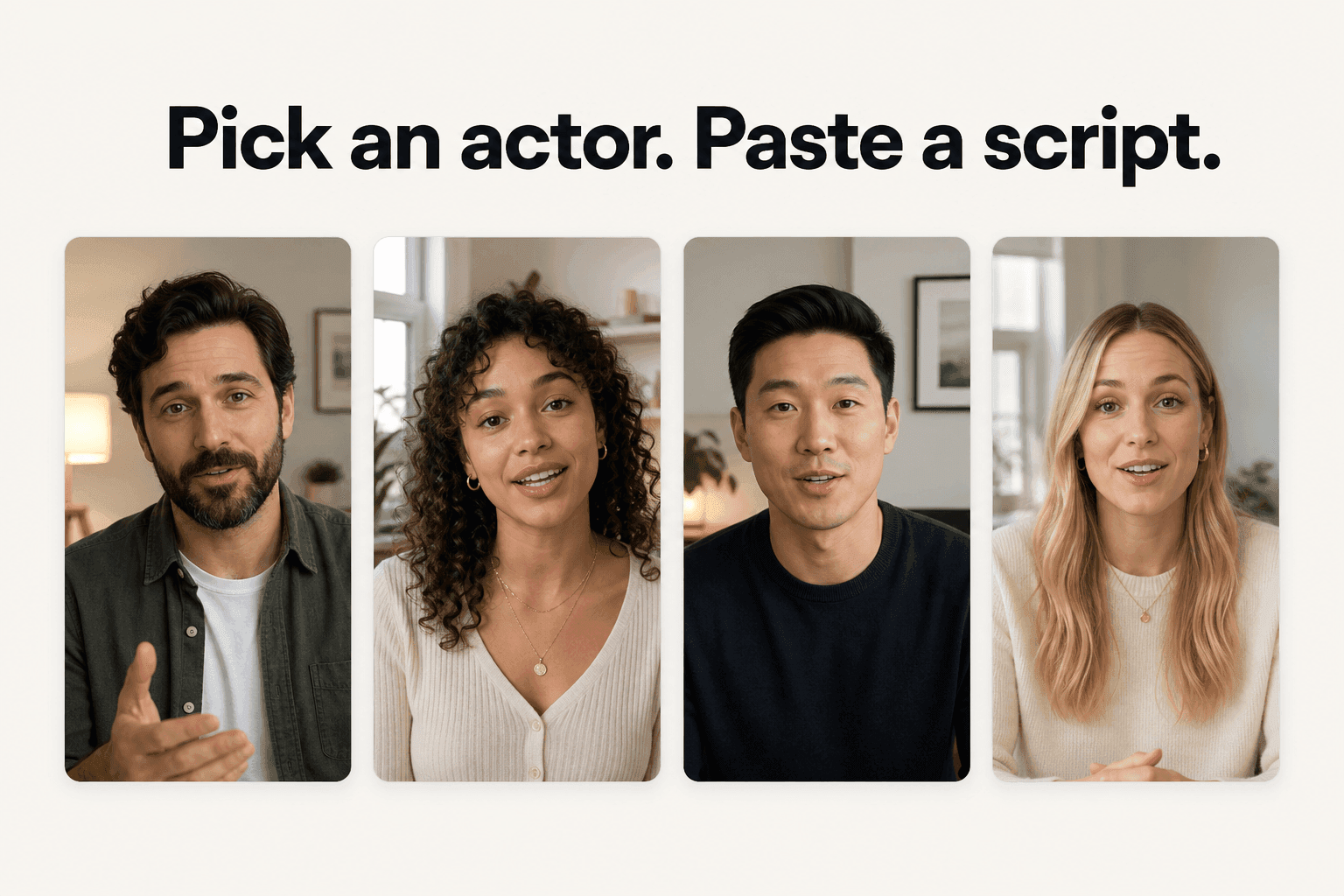
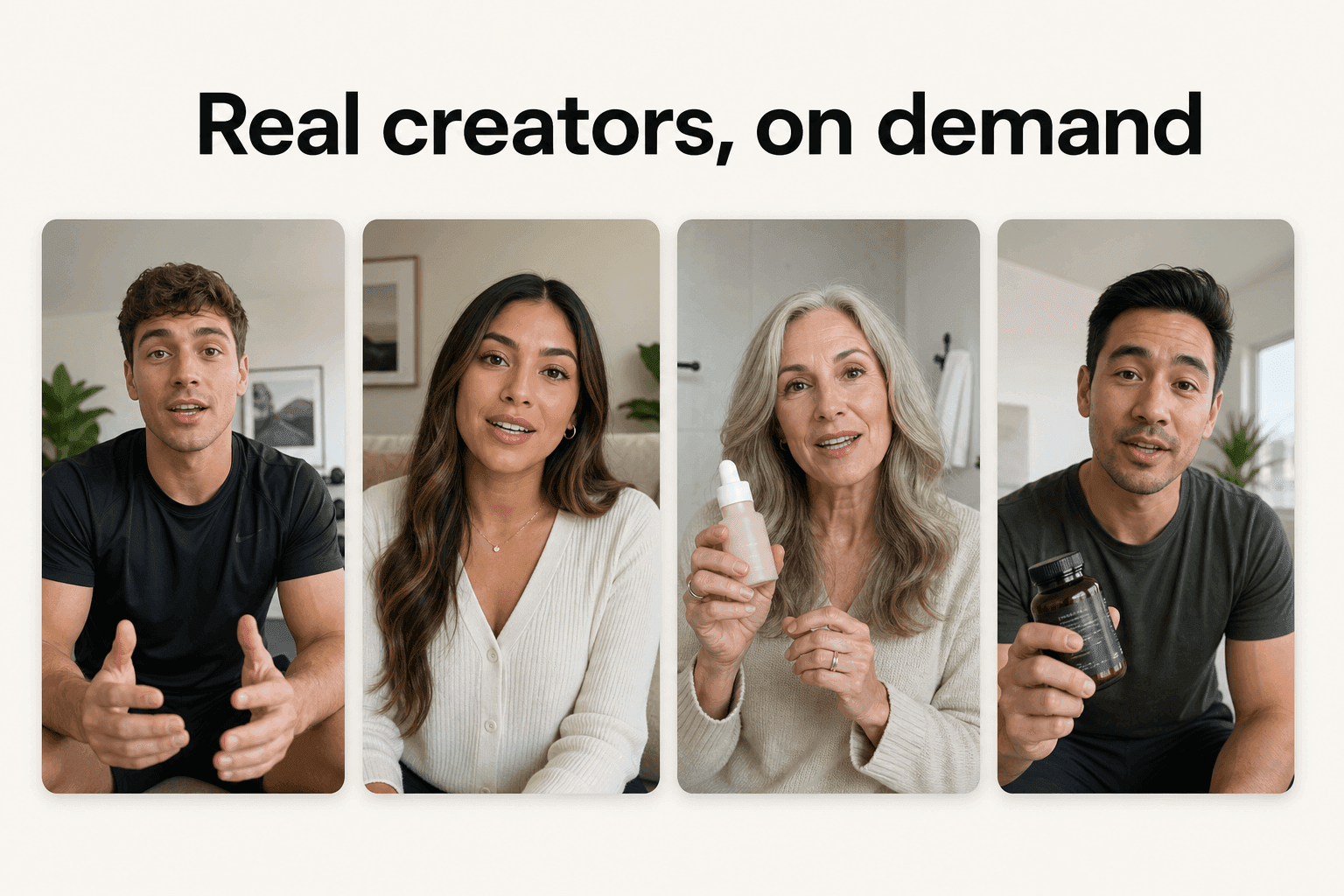
Spark is a distribution mechanic; it still needs a real post to distribute. That is the part AI UGC tools now solve. In Novoads you write or auto-generate a script, pick an AI actor that matches your audience's age, gender, and accent, and it produces a UGC-style vertical video with voice, lip-sync, and captions, formatted 9:16 for the feed. Models like Google Veo 3.1, Kling v3 Pro, and Seedance 2.0 are available in Novoads, and a Talking actor delivers the script to camera. You download the file, post it from your TikTok account (or hand it to a creator to post from theirs), and spark that post. Novoads makes the creative; the Spark Ad, the code, and the authorization all happen inside TikTok.
The post is the ad now
Spark Ads collapse the old wall between organic and paid. The unit you promote is a real post, the engagement you buy lands on that post, and the creator whose face carries it keeps their name on it while lending you a code for a week, a month, or a year. That is a better deal for everyone than a disposable uploaded ad that forgets every like the moment the budget runs out.
Which means the brands that win at Spark are simply the ones that never run out of authentic posts to boost. If producing that steady supply of real, sparkable UGC is the bottleneck, you can generate your first batch with Novoads from $49/month at novoads.ai. Cancel anytime.
Frequently Asked Questions
What is the difference between a TikTok Spark Ad and a regular In-Feed ad?
A Spark Ad uses a real organic post from a real TikTok account as the ad creative, so viewers can like it, comment, visit the profile, and follow, and all of that engagement stays on the original post. A standard (non-Spark) In-Feed ad uses a video file you upload to the ad account, with no underlying organic post and no profile to visit. TikTok reports Spark Ads see a 134% higher completion rate and a 157% higher 6-second view-through rate than standard In-Feed Ads.
How do I get a Spark Ad authorization code from a creator?
The creator generates it inside the TikTok app: they open the video they want to share, tap the three dots, tap the Ad settings icon, and tap Generate to retrieve the TikTok post code. They send you that code, and you enter it in TikTok Ads Manager to add the post. You can batch authorize up to 20 video codes at a time.
How long does a TikTok Spark Ad authorization code last?
For a creator's post, the creator picks it. In the app, after turning on the Ad authorization toggle and generating a video code, they select the authorization duration (7, 30, 60, or 365 days) from the chosen post's ad settings module, then copy the code and send it to you. TikTok describes the feature generally as customizing the duration of your authorization code to meet campaign needs and minimize costs. On your side there is an authorization period for you to review beneath each post in Ads Manager, so agree the window with the creator before they generate the code and it will cover your planned flight. A sparked video also has to be un-authorized as a Spark Ad before the creator can delete it from their organic account.
Can I run a Spark Ad from someone else's TikTok post?
Yes. TikTok lets you publish ads using organic posts made by other creators, with their authorization. The creator keeps ownership of the post on their account; you get permission to use it as an ad for a set number of days through the authorization code. This is how brands turn genuine UGC into paid media without reposting it from their own handle.
Do the likes and comments from a Spark Ad stay on the original post?
Yes. That is the defining trait of the format. All views, comments, shares, likes, and follows gained from boosting the video during the promotion are attributed to your organic post, so the engagement compounds on a single video instead of vanishing when the ad stops.
Key Takeaways
- A Spark Ad turns an organic TikTok post, yours or a creator's, into a paid ad, and every view, like, comment, share, and follow the boost earns is credited back to that original post.
- The difference from a non-Spark In-Feed ad is the creative source: Spark uses a real, existing post from a real account, while a standard In-Feed ad uses an uploaded file with no organic identity.
- To run your own post you publish it organically first, then select it in Ads Manager. TikTok reports Spark Ads see a 134% higher completion rate than standard In-Feed Ads.
- To run a creator's post, the creator generates an authorization code (three dots, Ad settings, Generate) and you enter that code in Ads Manager. You can batch up to 20 codes at once.
- The creator sets the clock: they select the authorization duration (7, 30, 60, or 365 days) in the app when they generate the code, and your side is the authorization period shown beneath each post in Ads Manager for you to review.
- A sparked video must be un-authorized before it can be deleted from the organic account, and you cannot edit a post's caption once it has been authorized as an ad.