How to Make Faceless TikTok Ads for Dropshipping and Ecommerce Products: 4 Formats
Show the product working in the first three seconds, carry the pitch with text and a voice, label any AI and match your product page: the four faceless TikTok ad formats for dropshipping, a worked build, and the review traps that reject product ads.

Mauricio Valdivia
·Updated ·13 min
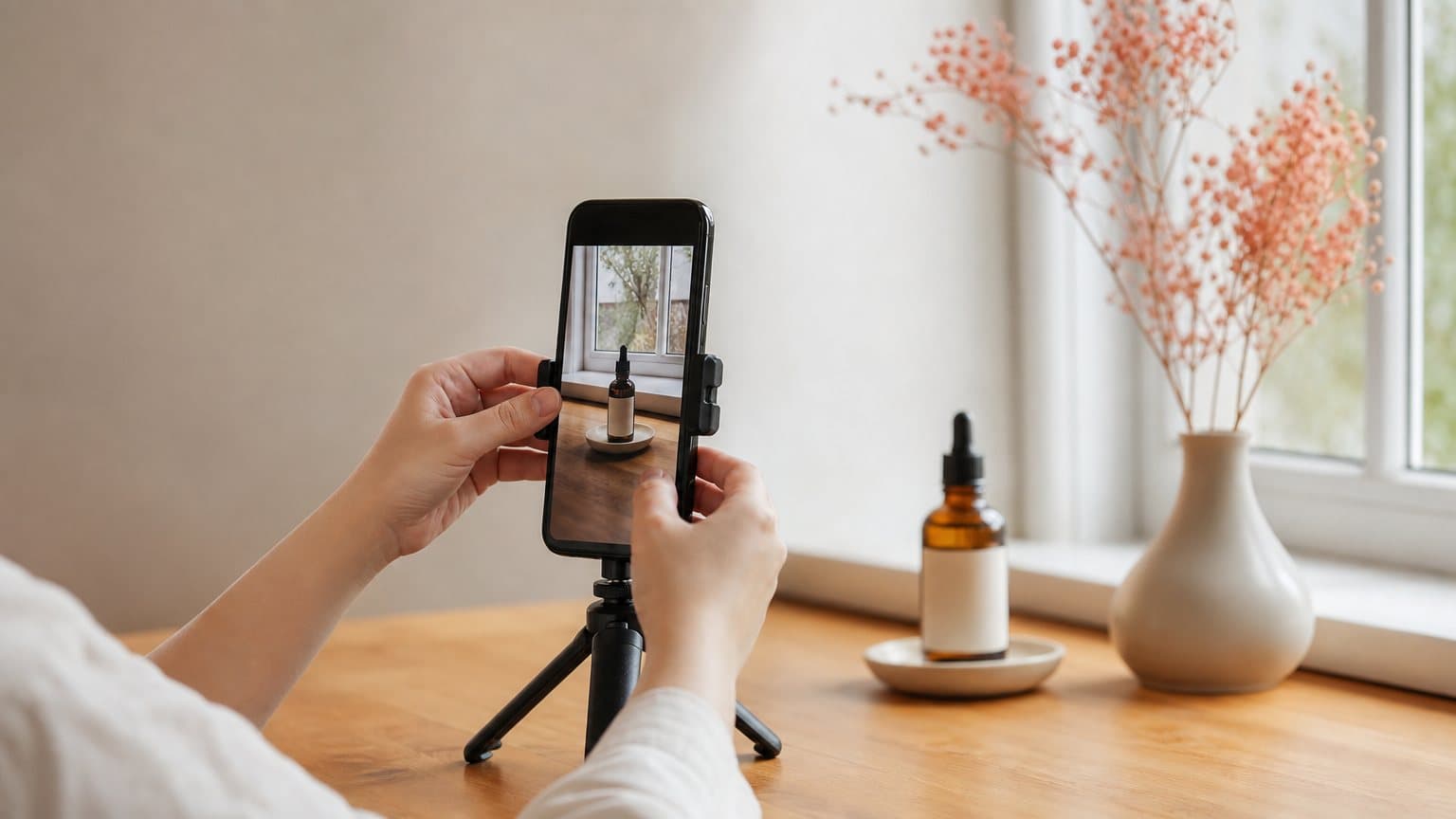
The product is the face of a dropshipping ad
A supplier sample of a pet-hair roller lands on the desk at 11pm, and the seller who ordered it has no plan to be on camera. They do not need one. To make a faceless TikTok ad for a dropshipping or ecommerce product, you show the product doing its one job inside the first three seconds, carry the pitch with on-screen text and a voice (your own, an AI voice, or an AI actor whose face is not yours), label anything AI generated, and make the ad say exactly what the product page says.
That is the whole method. TikTok's own creative guidance asks advertisers to introduce the content proposition in the first 3 seconds, and nothing in that rule needs a face.
The rest of this guide is the detail: four faceless formats matched to what you sell, a worked build for one real listing, and the review traps that get a dropshipping ad rejected whether or not anyone appears in it.
How to make faceless TikTok ads for dropshipping products
Here is the build in six steps. Each step gets its own section further down; this is the version you can run tonight.
- Get the real product on the table. Order the sample and film it, or at least hold it before you generate anything from the supplier's photos. The ad has to show what the customer will receive.
- Pick the format by product type. Gadgets that demo themselves want hands-only b-roll. Anything shipped in a box wants an unboxing. A product you do not have yet can run on an AI voiceover over generated scenes. Beauty and personal care lean on an AI actor.
- Write three beats. A hook, the one proof point, a clear call to action. TikTok's help center describes the same shape: "Have a hook, highlight your unique selling points, and end with a clear call-to-action."
- Build it vertical and readable. 9:16, captions from the first frame, the product on screen inside three seconds.
- Disclose and match. Apply TikTok's AIGC label if AI generated the voice, the scenes or the actor, and check that the price, discount and product in the ad match the landing page word for word.
- Ship variants, not one ad. Swap the hook, keep the body, and launch several creatives in the same ad group.
Why dropshipping and faceless fit so well
Dropshippers rarely have a brand face to begin with. The store is new, the product is often not unique to it, and what sells it is the demo. A founder talking to camera adds little that a pair of hands using the product does not already show.
What a dropshipping ad needs instead is proof: the roller pulling hair off a couch in one pass, the lamp throwing its pattern on a dark ceiling, the organizer swallowing a messy drawer. That proof is faceless by nature.
There is one constraint a brand with its own factory does not carry: you did not make the product. Every faceless shortcut that shows something the supplier will not deliver (a nicer color, a bigger size, a result the product cannot produce) turns into a customer complaint later, and TikTok counts those against the ad account, as the review-traps section below explains.
How to know the ad is ready
Before you upload, hold each of these to a yes:
- The product appears, doing its job, within the first three seconds.
- Captions or text overlays are on screen from the first frame.
- The voice says why the viewer should care before it names the product.
- Price, discount and product in the ad match the landing page exactly.
- The AIGC label is on if any part of the voice, footage or actor is AI generated.
- The ad runs about 20 seconds or less, unless every extra second shows the product working.
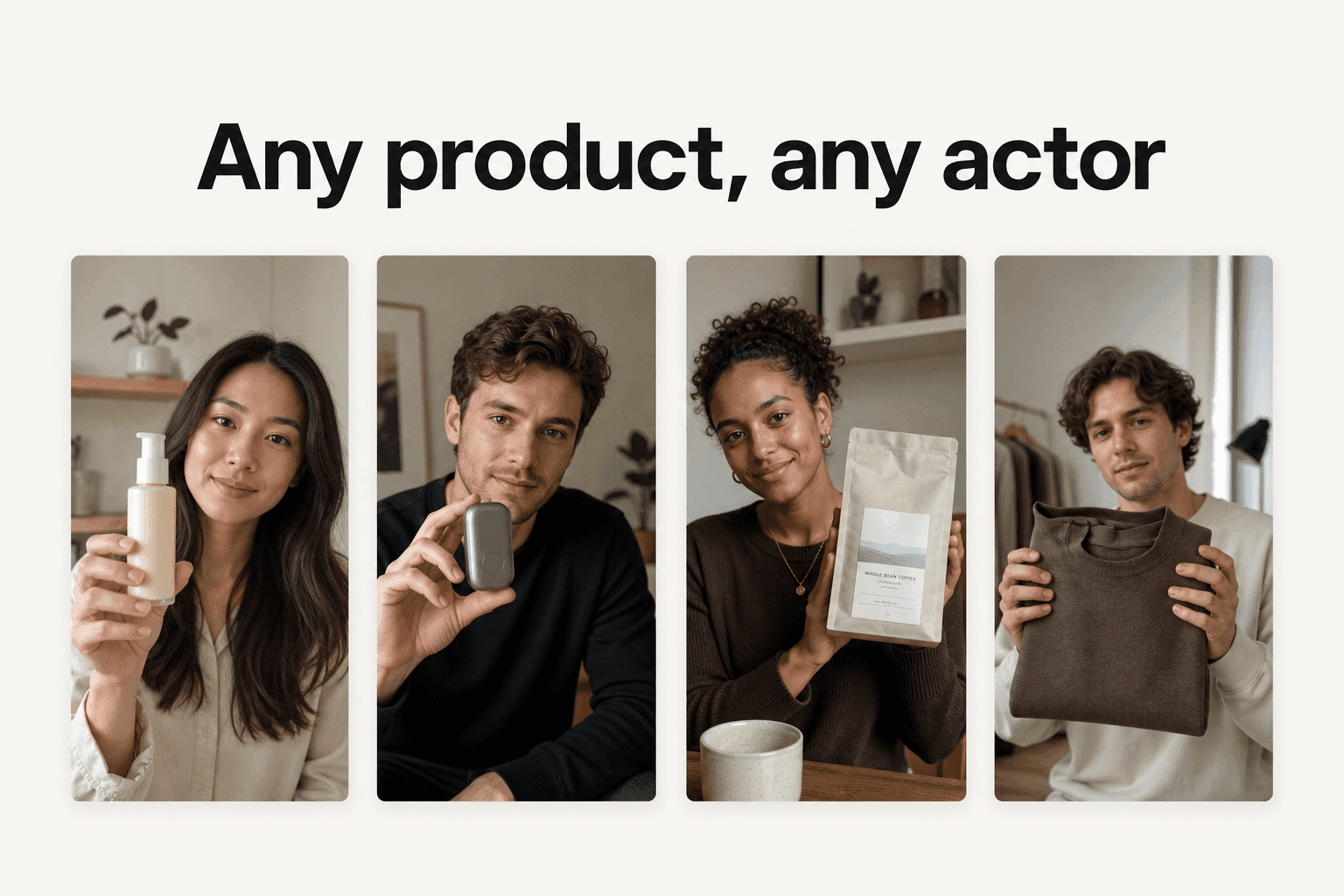
Why faceless works for selling products on TikTok
Faceless is not a workaround you settle for. For a product ad it is often the stronger creative choice, because TikTok's own guidance rewards the things a faceless build is made to deliver.
The feed judges the first seconds, not the face
TikTok's creative best-practices page (last updated June 2025) puts two clocks on the opening: "Prioritize your hook in the first 6 seconds," and introduce the content proposition "in the first 3 seconds for better recall and awareness." Neither clock needs a person. A fast product reveal, a satisfying demo shot or a bold line of text can win those seconds as well as someone talking, and a faceless open often gets there faster, because it does not spend the first beat establishing who is speaking.
The same page asks for captions or text overlays and recommends displaying 5-10 words per second when you use text. At that pace a six-word hook line reads in about a second, which is exactly the budget a faceless open has before the product has to move.
Faceless removes the real bottleneck, which is you
The reason most small stores make one ad a month instead of ten a week is not budget. It is that the ad depends on a willing person, a filming setup and a day when both are available. Hiring that out does not fix the math either, since UGC creators charge per deliverable and every new angle is a new brief.
TikTok's own testing advice makes the volume problem concrete. It suggests 3-5 creatives per ad group and 3-5 diversified ad groups per campaign, so a single product test runs from 9 creatives at the low end to 25 at the high end. Nobody films 25 talking-head takes for a product that might not sell. Faceless production is what makes testing many ad angles affordable instead of aspirational: shoot the product once, then generate script and voice variations on top of the same footage.
TikTok recommends people, and hands are people
Here is the tension worth knowing. The same best-practices page says: "We recommend featuring people such as creators, employees, or customers to capture attention and increase engagement." Faceless does not have to mean peopleless. Hands using the product put a person on screen. A narrator's voice puts a person in the ad. An AI actor puts a face in it that is not yours, and under the ad policy that face always carries the AIGC label.
There is a second trust lever that has nothing to do with faces: specificity. A vague line ("removes pet hair fast") reads as marketing no matter who says it. A specific one ("rubber blade, no sticky sheets to replace") reads as someone who has held the thing. TikTok also tells advertisers to "go for a DIY or not overly polished style", which is good news for anyone shooting on a phone at a kitchen table.
The four faceless formats, matched to what you sell
There is no single faceless format. There are four that fit physical products, and each wins for a different kind of listing. Pick by what you sell, not by what looks easiest.
Hands-only b-roll for products that demo themselves
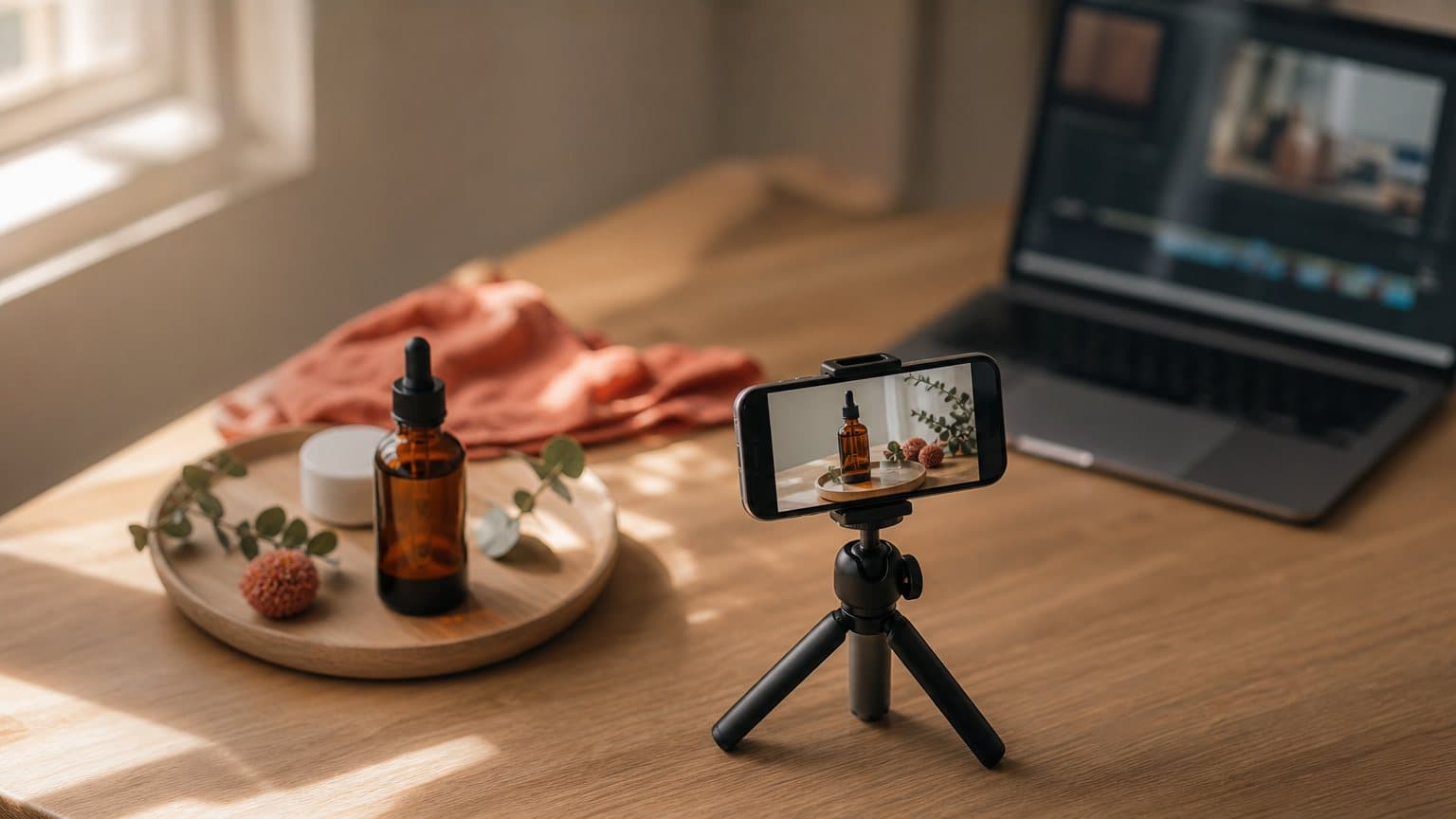
Film close-ups: hands picking the product up, opening it, using it, the texture, the result. Shoot on a phone against a clean, warm surface with window light. Ten to fifteen seconds of these shots, cut tight to a voiceover, is a complete ad. This is the closest faceless cousin to classic UGC-style ads: it keeps the handheld, real-world feel that makes the format believable, minus a presenter.
It wins for gadgets, kitchen tools, cleaning products, and desk and home accessories: anything where watching it work is the argument. If you film it yourself and narrate in your own voice, nothing in the ad is AI generated, and TikTok's ad policy lists lighting, color and background fixes as insignificant edits that need no label.
Unboxing and first use, the dropshipping staple
Film the sample arriving: the mailer, the packaging, the first touch, the first use. The viewer sees exactly what will land on their doorstep, which is the question every dropshipping buyer is silently asking.
The footage also has a second job. When TikTok restricts an account over after-purchase complaints, its appeal guidelines ask for "video proof of 10 seconds or more of unboxing a product" as evidence that delivery matched the ad. The unboxing you filmed for the ad is the same clip. Keep the packaging honest: if your store ships in a plain mailer, do not film a branded gift box.
AI voiceover over product scenes
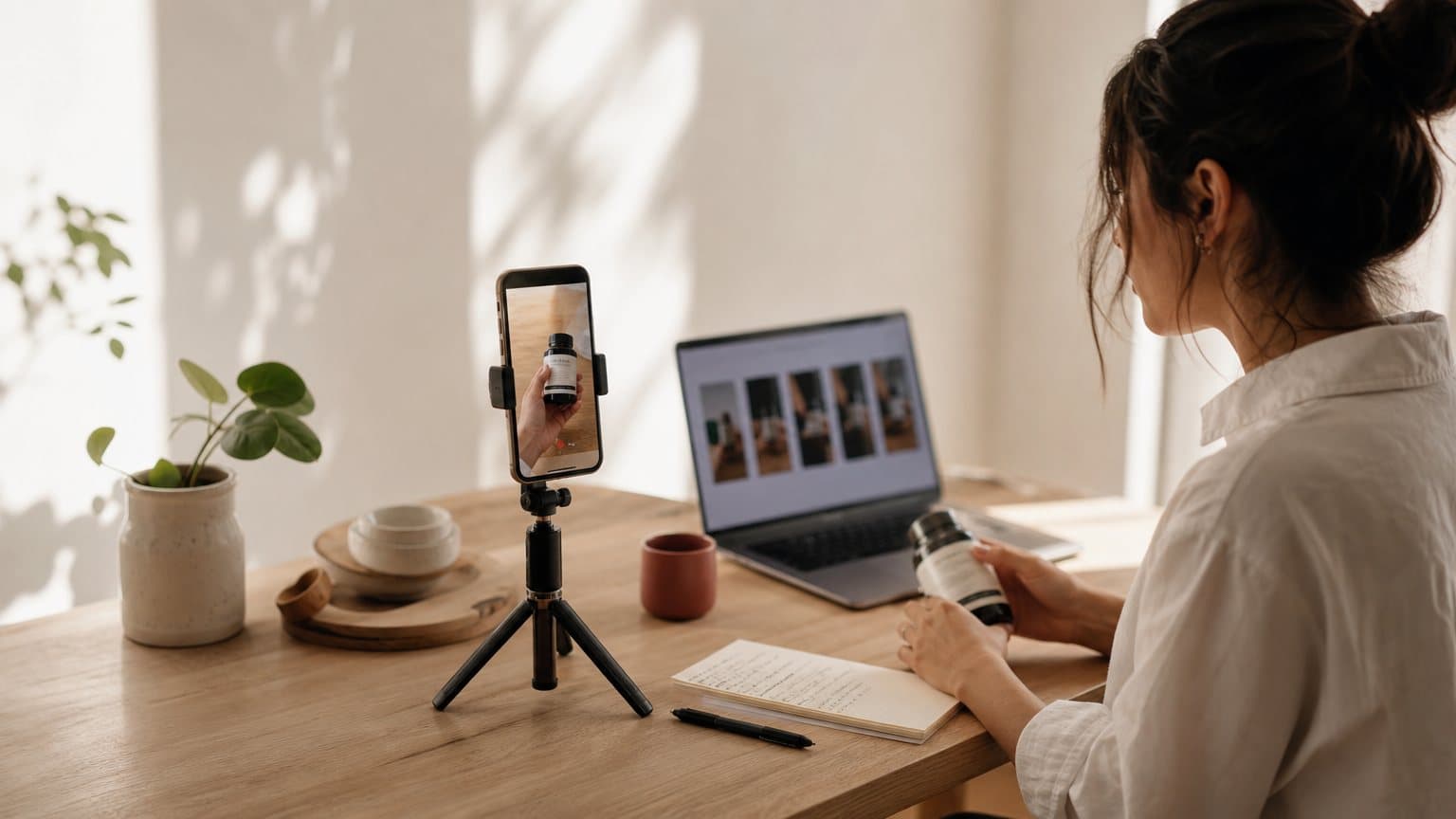
Here the script does the selling and the visuals support it. You write a sharp script, generate a natural AI voice to read it, and lay it over your own b-roll or over scenes generated from a product photo. It is the most flexible build, because you can rewrite the angle, swap the offer or change the language without new footage, and it is the only format that works before the sample arrives.
The catch comes twice. TikTok's ad policy counts "Content that contains images, video, or audio that are completely AI-generated" as a significant AI edit, so an AI voice alone triggers the label even over real footage. And generated scenes must show the product as it will be delivered, not an idealized version of it.
An AI actor: a face that is not yours
Sometimes the category wants a person vouching: skincare tools, haircare, personal care, anything bought on a recommendation. An AI actor delivers your script to camera with lip-sync, in the voice and energy you choose. It reads as a talking-head AI UGC ad, except the face is synthetic and the script is yours.
Product in hand is where this format needs care. A stock library actor has empty hands, so a script about your product shows nobody holding it. To put your product in an actor's hand you need one of two routes: a custom actor built from a photo of a real person holding the product (with that person's permission), or a product template that swaps your uploaded product into a template creator's hand. Either way the ad carries the AIGC label.
Here is how the four compare, so you can pick fast:
| Format | Best for | Trust comes from | AIGC label |
|---|---|---|---|
| Hands-only b-roll | Gadgets, kitchen, home | The demo itself | Not if filmed |
| Unboxing and first use | Anything shipped boxed | The real packaging | Not if filmed |
| AI voiceover over scenes | Pre-stock tests, offers | The script and voice | Yes |
| AI actor | Beauty, personal care | A human face | Yes |
Selling an app instead? Screen recording is the fifth faceless format, and our guide to creator-style video for software and devices covers how to make the interface carry the proof. The faceless video ads guide has the builds that are not product specific.
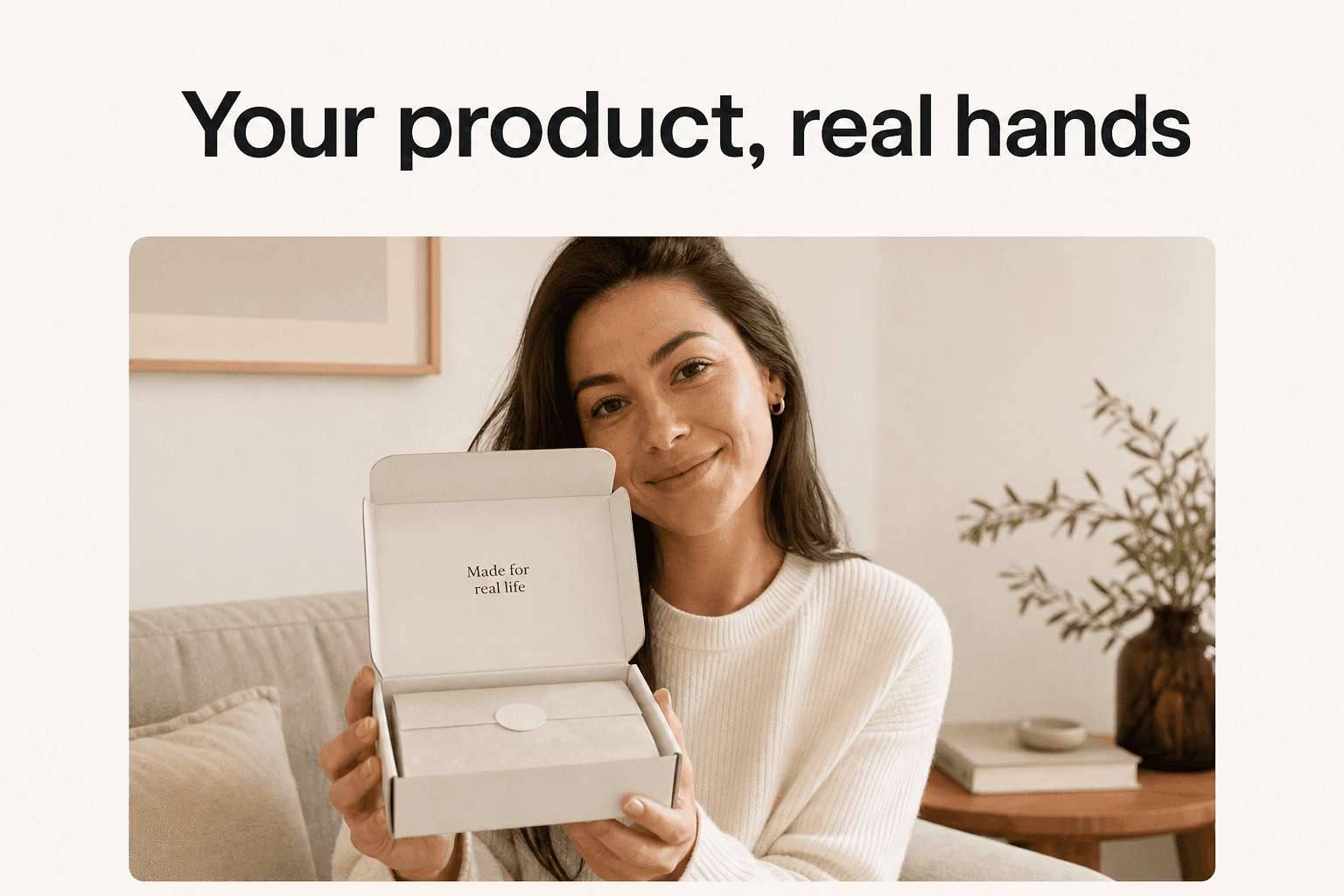
A worked build: one pet-hair roller, three faceless variants
Theory is cheap, so here is a real one. The product is a reusable pet-hair roller, the kind of gadget that sells on a demo. The store lists it at $24.99 with a compare-at price of $39.99.
The listing and the angle
Start from the problem, not the product. The buyer is a pet owner with dark furniture, and the angle is the couch nobody wants to sit on. The one proof point is mechanical: no sticky sheets to buy, you roll it and empty the chamber.
Before writing a word, do the discount math the ad will have to match. $39.99 down to $24.99 is a $15 saving, which is 37.5% off. Caption it "40% off" and the ad now disagrees with the product page, which is the exact mismatch TikTok's policy uses as its example (an ad saying up to 50% off, a site saying up to 30%). "Save $15" or "37% off" both survive review.
The script: hook, proof, call to action
Fifteen to eighteen seconds, three beats, written the way a person talks:
- Hook (0 to 3 s). On screen: "Dog hair on a black couch?" The roller is already mid-stroke.
- Proof (3 to 12 s). "No sticky sheets. You roll, it traps the hair, you empty it. Done."
- Call to action (12 to 18 s). "It's $24.99 today, down from $39.99. Link below."
The prices in the call to action are copied from the product page, not typed from memory.
The shots, filmed or generated
With the sample in hand, film five shots on your phone, about fifteen seconds in total:
- The couch cushion covered in hair, the roller entering frame.
- One continuous stroke clearing a strip, with no cut in the middle.
- A thumb opening the chamber, the hair dropping into a bin.
- The roller resting on the armrest.
- The opened mailer it arrived in, which doubles as your unboxing evidence.
Without the sample, upload the supplier's product photo, generate the scenes, and run an AI voice over them. The label goes on, and the demo gets re-shot with the real roller the day it arrives, so the ad never promises more than the box delivers.
Three hooks, one body, one test
Keep the proof and the call to action fixed and swap only the opening:
- Problem hook. "Dog hair on a black couch?"
- Result shown. Open mid-stroke on the clean strip, no words for the first second.
- Specific number. "Save $15 on a roller with no refills."
Those three creatives fill one ad group inside TikTok's suggested 3-5. Run the same three hooks against the unboxing body and the AI-voice body (labeled) in two more ad groups and you have nine creatives across three groups, the low end of TikTok's campaign suggestion, all from one afternoon of footage. When delivery starts to slide, TikTok's advice is to add new creatives to the existing ad group rather than start a new one.
The review traps that sink dropshipping ads, face or no face
A dropshipping ad that gets rejected almost never fails for lack of a face. It fails on claims, on parity with the page, and on what happens after the click. TikTok's misleading and false content policy (last updated April 2026) covers the first two; the full breakdown is in our guide to TikTok's misleading-content rules for AI ads. These are the three that hit product sellers hardest.
Promised results and before-and-after shots
The policy says ad content and landing pages must not promise or exaggerate a product's results, and its examples read like a dropshipping catalog: a lotion promising "Get slim legs right away," and "Showing wrinkles disappearing by using a cream through before-and-after comparisons." It also says TikTok does "not allow ad content to feature absolute terms about a product in relation to time, region, or brand", so a "number 1 on TikTok" caption is out too.
Before-and-after gets its own line: the policy does not allow "Product effect comparisons, such as before-and-after results" that may give viewers a false impression of the outcome. It leaves one door open and then closes it again: "Comparative claims may be allowed, subjected to the provision of evidence or clear disclaimer(s)," but "in some cases, we may choose to allow before-and-after comparisons if evidence can be provided, but generally, these should be avoided." For a dropshipper with no study to file, that reads as no. The categories most exposed are the ones dropshippers love:
- Posture correctors and slimming gadgets, where the result is the whole pitch.
- Teeth whitening and skincare tools, where the before-and-after is the default creative.
- Cleaning gadgets, where a split-screen of the same stain is tempting.
Our reading of the rule: a continuous, unedited shot of the product working is a demonstration, while a cut from a before state to an after state is the comparison it targets.
The ad and the product page must say the same thing
TikTok does not allow "Ad content and landing pages that contain mismatched or inconsistent information on the promotion, price, discounts," and it spells out the product version of the mistake too: an ad that "introduces product A in the image or video, but shows product B on the website."
For a dropshipper that means three checks before every launch:
- The color, size and variant in the ad are the ones in stock on the page.
- The price and discount in the ad are the numbers on the page, rounded the same way.
- Any shipping or bundle promise in the ad is what the checkout actually applies.
After the click, TikTok grades the delivery
This is the layer most faceless-ad guides skip. TikTok's After Conversion Experience guidelines (last updated April 2025) apply to all advertisers and weigh user complaints, reports, comments and reviews after a purchase. Three of the general requirements land squarely on dropshipping:
- "Ensure post-sales services are fulfilled promptly, such as delivering the product or service on time."
- No products, prices, gifts or after-sales service "inconsistent with advertising content."
- No counterfeit or shoddy products, which the page names explicitly.
The consequence can reach the account, not just the ad. If feedback shows you are not complying, "the account may lose its ability to advertise," and for TikTok Shop sellers the page adds that "the quality score of your TikTok shop may impact your ability to run ads." If you sell through Shop, our guide to TikTok Shop videos with AI covers the product-tag side. The lesson for a faceless build is simple: the ad and the fulfillment are one system, and an honest demo of the real sample protects both.
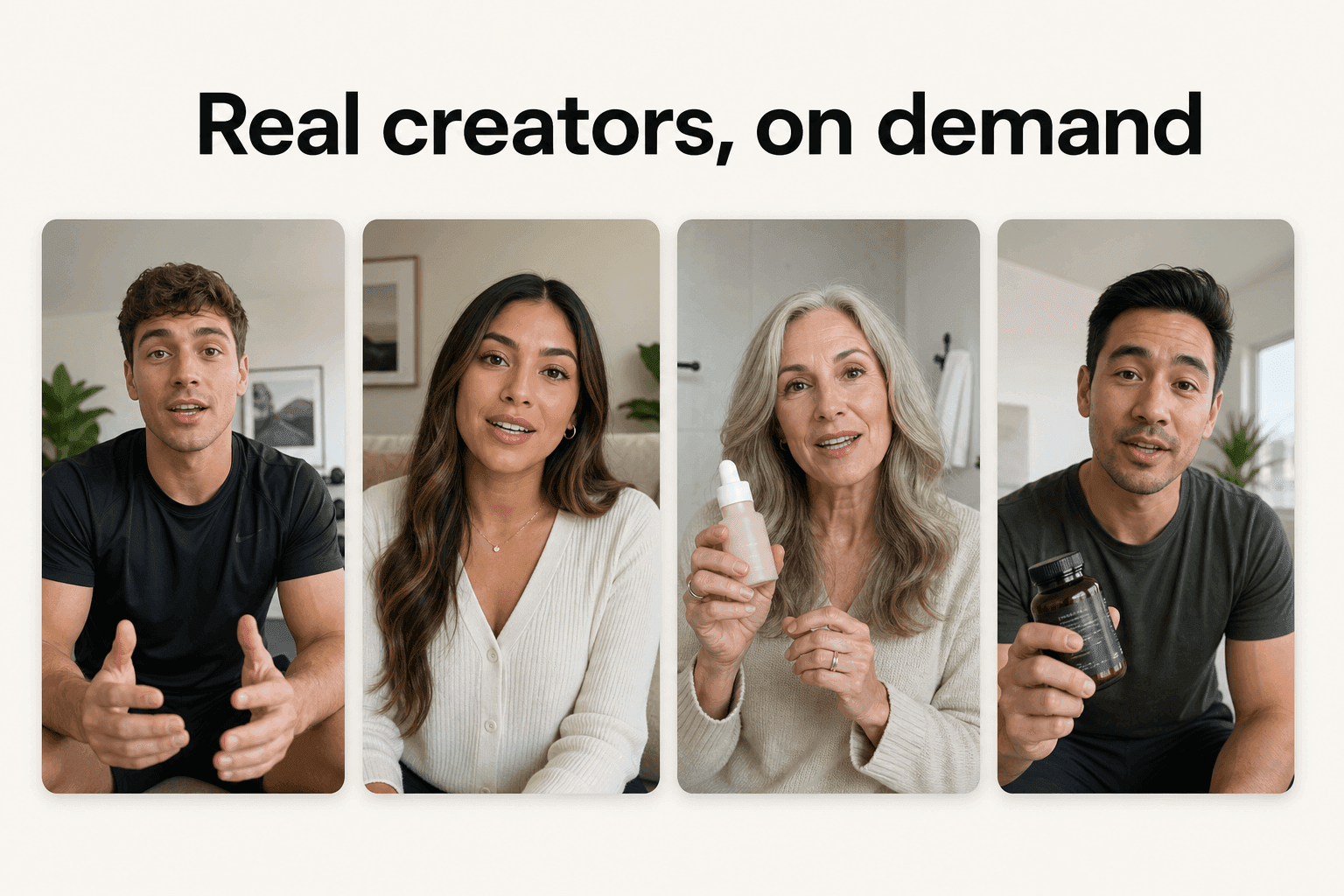
The AI label on TikTok ads: what counts and how to disclose
If your faceless ad uses AI anywhere, and an AI voice, AI scenes or an AI actor all count, there is one compliance step to get right. For ads it sits in the same misleading-content policy, not in the creator help pages.
What the ads policy counts as significant AI
TikTok defines "significantly modified by AI" as changes beyond minor tweaks, and lists three cases:
- "Content that contains images, video, or audio that are completely AI-generated."
- Showing the primary subject doing something they did not actually do.
- "Making the primary subject say something they didn't actually say, using AI voice-cloning."
Insignificant edits, which need no label, include lighting, brightness or color adjustments, "Removing or modifying backgrounds," and denoising. Mapped to the four formats:
- Filmed b-roll or unboxing, your own voice: no label needed.
- The same footage with an AI voiceover: label it, because the audio is AI generated.
- AI-generated scenes from a product photo: label it.
- An AI actor, stock or custom: label it, every time.
How to disclose, and what happens if you do not
The policy says significantly edited media and AIGC content is allowed if you apply the AIGC label or add "a clear disclaimer, caption, watermark, or sticker of your own." The penalty for skipping it is stated plainly: "If we identify AI-generated content that has not been disclosed, your ad will be rejected or restricted." And for the gray cases, TikTok's advice is that "it's best to use caution and label it accordingly."
Organic posts follow the creator-side setting instead. TikTok's creator help page, in its June 2026 copy, said that "turning on the AI-generated content setting won't affect the distribution of your video" provided the video does not break the Community Guidelines. The Ads Manager side, including how the AI disclaimer interacts with Spark Ads, is in our TikTok ad disclaimers guide, and the full labeling walkthrough is in our guide to disclosing AI-generated UGC ads on TikTok.
Likeness: public figures and the person in your actor photo
A label does not cover a separate rule in the same policy. TikTok does not allow content that uses or promotes the "misuse of the likeness (audio or visual) of a public figure without their permission," and it adds: "When we become aware of likeness of private figures used without permission, we will remove such content as well."
For a faceless product ad that means two things:
- Never build an actor on a celebrity or a lookalike.
- If you create a custom actor from a photo of a real person holding your product, get that person's permission first, the same as you would for a creator you paid.
How Novoads solves the no-camera dropshipping ad
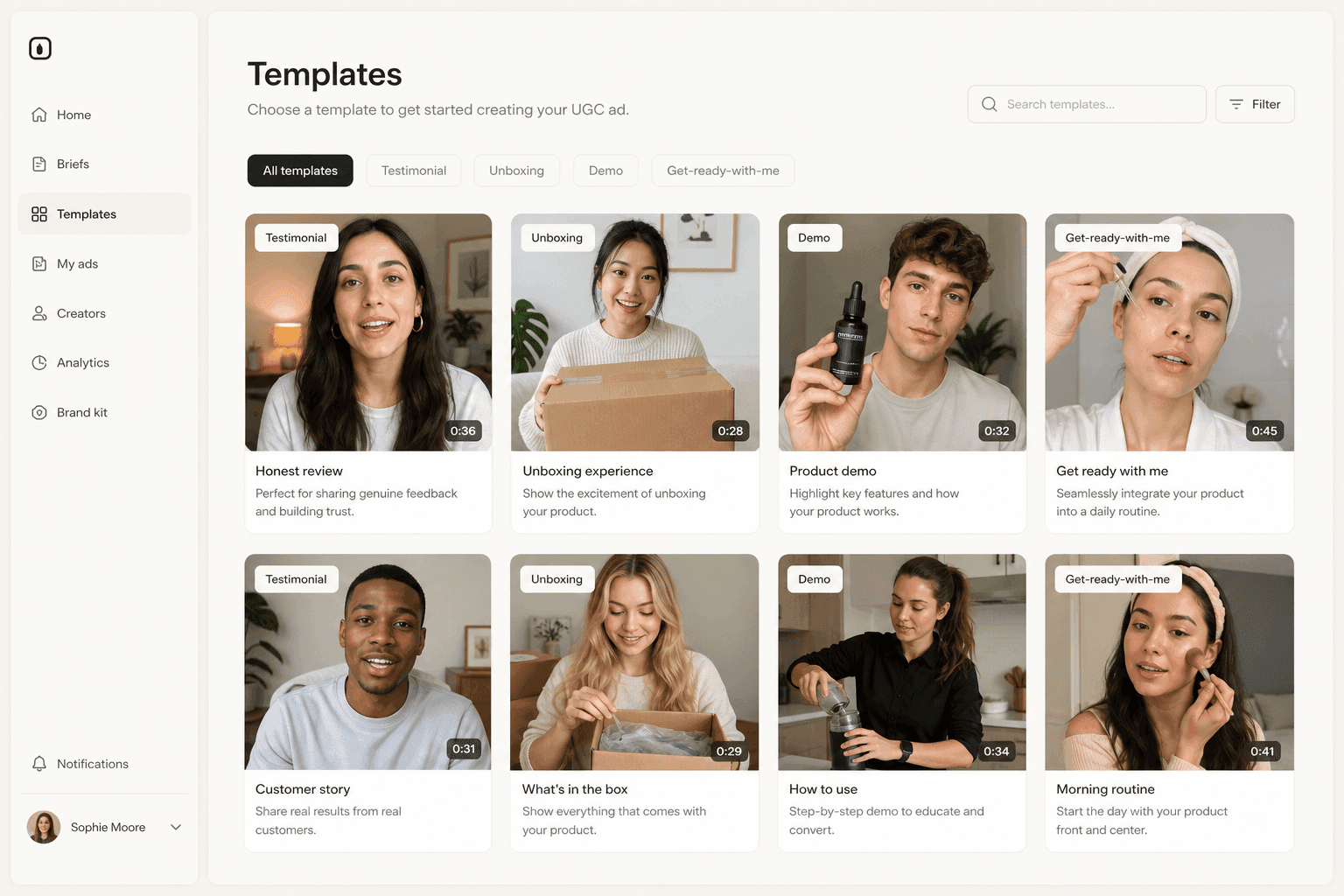
Novoads turns a product photo and a script into a vertical TikTok ad, voiced by an AI voice or delivered by an AI actor, without a camera or a creator. For a dropshipper the flow maps onto the four formats:
- Upload the product photo to make ad images and to generate product scenes with the video models, for the voiceover build.
- Write the script or auto-generate it, then pick a voice; the voice catalog covers 31 languages.
- Put the product in a hand by creating a custom actor from an uploaded photo of someone holding it (Create Actor, then Upload), or by starting from one of Discover's product templates, which swaps your uploaded product into the template creator's hand before animating the clip.
- Export 9:16 with captions, ready to upload to TikTok Ads Manager.
Everything that flow produces is AI generated under TikTok's definition, so apply the AIGC label when you create the ad; the file does not label itself. You can make your first faceless product ad in Novoads from the photo you already have. Novoads starts at $49/month (Starter, 50 credits per month), and you can cancel anytime. All plans are published on /pricing.
The product was always the face
The reason to go faceless is not shyness. It is that a dropshipping ad has one job, showing a stranger that this object does what the page says, and a pair of hands does that job as well as any presenter. Get the product working on screen in three seconds, keep the claims and prices identical to the page, label the AI, and film the sample the day it arrives. The face was never what sold the product. The proof was.
Frequently Asked Questions
How do you make faceless TikTok ads for dropshipping products?
Order the sample, then pick one of four formats: hands-only b-roll of the product working, an unboxing and first use, an AI voiceover over product scenes, or an AI actor whose face is not yours. Write three beats (a hook, one proof point, a call to action), put the product on screen inside the first three seconds, add captions, apply TikTok's AIGC label if any part is AI generated, and check that the price, discount and product in the ad match the product page. Then launch several hook variants in the same ad group rather than one ad.
Can you run TikTok ads without showing your face?
Yes. TikTok's creative best-practices page asks for a hook in the first 6 seconds and the content proposition in the first 3, and a product shot, a demo or a line of on-screen text can deliver both. TikTok does recommend featuring people, but hands using the product, a narrator, or an AI actor all meet that without your own face.
Do I have to label a faceless AI ad on TikTok?
If AI generated any significant part of it, yes. TikTok's misleading and false content ad policy counts content with completely AI-generated images, video or audio as significant, so an AI voiceover, AI-generated scenes or an AI actor all need either the AIGC label or your own clear disclaimer, caption, watermark or sticker. If TikTok finds undisclosed AI content, the ad is rejected or restricted. Footage you filmed yourself with only lighting, color or background fixes does not need the label.
Does turning on the AI-generated content setting hurt distribution?
For organic posts, TikTok's creator help page (in its June 2026 copy) said turning on the AI-generated content setting would not affect a video's distribution as long as the video does not violate the Community Guidelines. Paid ads follow the ad policy instead, where the cost of skipping the disclosure is stated plainly: an undisclosed AI ad is rejected or restricted.
Can I use before-and-after videos in a dropshipping ad on TikTok?
Treat them as off limits in practice. TikTok's ad policy lists product effect comparisons such as before-and-after results among the things ad content and landing pages may not include, and says that while comparative claims may be allowed subject to evidence or clear disclaimers, before-and-after comparisons generally should be avoided, and gives showing wrinkles disappearing through a before-and-after comparison as an example of a banned exaggerated claim. A continuous, unedited shot of the product working is a demonstration; a cut from a before state to an after state is the comparison the rule targets.
What faceless format works for a product I have not received yet?
An AI voiceover over scenes generated from the product photo is the only format that does not need the sample in hand. Two conditions come with it: the voice and the scenes are AI generated, so the ad needs the AIGC label, and the scenes must show the product the customer will actually receive, because TikTok treats products inconsistent with the ad as an after-purchase violation. Re-shoot the demo with the real sample as soon as it lands.
Key Takeaways
- A faceless TikTok ad for a dropshipping product needs the product doing its one job inside the first three seconds, on-screen text, a voice, and an ad that says exactly what the product page says. A face is optional.
- Pick the format by product type: hands-only b-roll for products that demo themselves, an unboxing for anything shipped in a box, an AI voiceover over generated scenes before stock arrives, and an AI actor for beauty and personal-care buys.
- TikTok's ad policy (last updated April 2026) allows significantly AI-edited or AI-generated ads only with the AIGC label or your own clear disclaimer, caption, watermark or sticker; undisclosed AI content gets the ad rejected or restricted. An AI voice alone counts.
- Most dropshipping rejections have nothing to do with faces: exaggerated results, before-and-after comparisons without filed evidence, and prices or discounts that do not match the landing page all break TikTok's misleading-content rules.
- TikTok also grades what happens after the click. Its After Conversion Experience guidelines ask for on-time delivery and products consistent with the ad, and complaints can cost the account its ability to advertise.