
AI Ad Volume Is Cheap Now. Only 45% of Marketers Say Quality Improved
A July 2026 study by WARC and LIONS Advisory with TikTok surveyed 400 marketers: 88% say generative AI raised creative volume, only 45% say it raised quality, and 67% still brief the model with demographics.

Mauricio Valdivia
·Updated ·11 min

Volume got cheap. The brief got worse.
A performance marketer opens her laptop on a Tuesday and ships forty video variants before lunch. Same product, same offer, four hooks, ten actors. It looks like a great week. By Friday all forty sit within a point of each other on click-through, and she cannot tell whether the creative failed or the test did.
That Tuesday is now ordinary, and a study published on 14 July 2026 by WARC and LIONS Advisory, in partnership with TikTok, puts numbers on what it produces. Across 400 marketers in the UK, US, Australia and Brazil, 88% said generative AI had increased creative volume. Only 45% said it had significantly improved quality. Ninety percent said AI had already become part of the creative toolkit, so this is not a story about adoption or resistance. It is a story about what happens after adoption, once the expensive part of making an ad stops being the making.
We build AI ad generation for a living, so the convenient finding would have been "generate more." That is not the finding. The report puts the constraint upstream of the model, in the inputs, and the number that carries the argument is uncomfortable for everyone selling this category: 67% of marketers say demographic data is the most common thing they hand an AI when they brief it.
What the WARC and LIONS study actually measured
Who answered, and when
The research surveyed 400 marketers across the UK, US, Australia and Brazil, fielded in May 2026, all of them directly involved in decisions about how marketing creative and content get produced. Alongside the survey it ran interviews with senior marketers and industry experts and reviewed WARC and TikTok data.
Two things follow from that design, and both are worth carrying into how you read the numbers:
- It is a practitioner survey. It measures what marketers report and believe, not what their campaigns returned.
- TikTok is a partner on the work. The recommendation to lean on community signals sits close to a platform that sells access to them.
Neither fact invalidates the findings. Both change what the findings are evidence of.
The publication date is 14 July 2026 on TikTok's own blog. Regional trade coverage landed on 13 and 15 July, which is a routine embargo spread rather than a second piece of research.
The three numbers that define the gap
The headline is a fork. Adoption and output rose together; the thing they were supposed to produce did not.
- 90% say AI has quickly become part of the creative toolkit, which puts adoption past the point where it is worth arguing about.
- 88% say generative AI increased creative volume, the one thing the technology was reliably sold on.
- 45% say it significantly improved quality, and that is the number the other two were supposed to deliver.
Read the third number against the second and you get the shape of the problem. Output rose for nearly nine marketers in ten. Quality moved for fewer than half. The tooling did exactly what it promised, and the outcome it was bought for only partly followed.
The number almost nobody quotes
There is a fourth figure on TikTok's own summary page that reframes the other three: the report states that half of all media budgets are still spent on ads poorly suited for their platforms. That is a fit problem, not a volume problem, and no amount of extra output fixes it. You can generate a hundred versions of an ad that was never built for the surface it runs on.
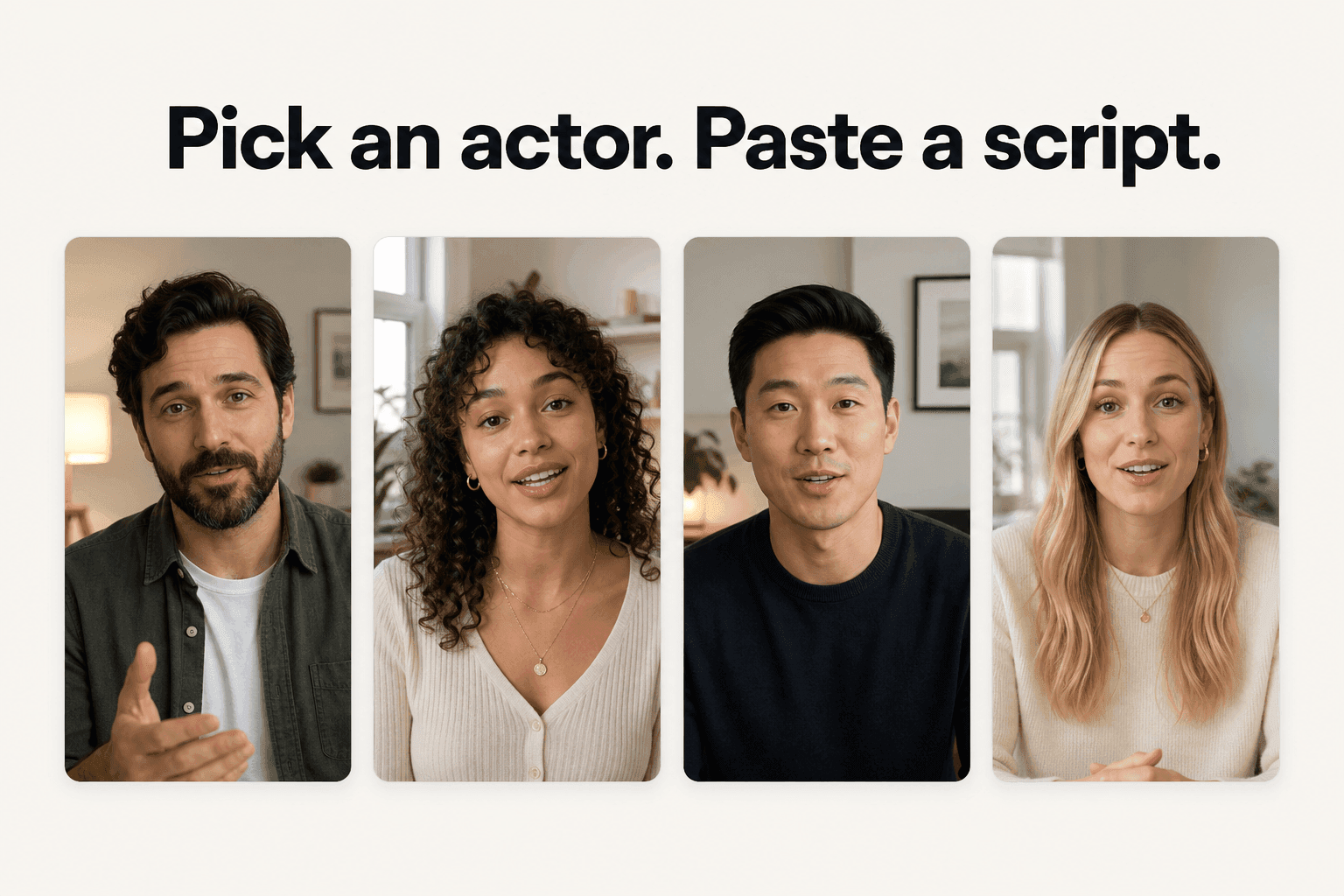
Marketers are briefing AI with the one input they say no longer works
67% type a demographic
Ask what actually goes into the prompt and the answer is remarkably consistent: demographic data remains the most common input when prompting AI, cited by 67% of marketers. Woman, 25 to 34, urban, interested in wellness. That is the brief.
It is the brief because it is the only audience description most teams have written down. Media plans are built in demographic buckets, so the brief inherits the vocabulary of the media plan. The model is then asked to invent a human being from a bracket, and it does what any competent generator does with a thin prompt: it returns the average of everything it has seen that matches.
The contradiction sitting right next to it
The same research reports that 59% agree traditional demographic segmentation is no longer effective, a figure it takes from WARC's Marketer's Toolkit 2026 survey. So a clear majority of marketers say the tool is blunt, and a larger majority keep reaching for it the moment they open a prompt box.
That is not hypocrisy. It is friction. Belief changes faster than process, and the demographic brief survives because it is the input that is already sitting in a slide. Nothing in the AI workflow forces you to replace it, and the model never complains about a weak prompt. It just answers.
Only 17% close the loop
The number that best predicts who is getting quality out of this: only 17% of marketers say they always incorporate community or audience insight into generative AI workflows. Meanwhile 86% expect audience behaviour and community signals to influence creative development more over the next three years.
Andy Yang, Global Head of Creative & Brand Ads at TikTok, put the diagnosis in one line on the report's launch: "The gap opening up in AI-assisted creativity is not a technology gap; it is an intelligence gap." He continued, in the same statement, that "most brands are briefing the most powerful creative tools ever built with the weakest possible inputs: static demographics, legacy assumptions, data that tells you who someone was, not what they care about right now."
The vendor incentive there is obvious and it does not make the sentence wrong. Anyone who has watched a batch of AI ads come back and felt the sameness has met the intelligence gap without naming it.
Why more variants stop producing more learning
This is the mechanism the survey implies and does not spell out, so here is the arithmetic in a form you can check against your own ad account.
The arithmetic of an identical brief
Take a supplement brand generating 40 ads in an afternoon. The brief is one line: adults 30 to 45 who care about energy. From it come four hooks, five actors and two backgrounds. Forty assets.
Every one of those forty is an interpolation of the same claim. Wardrobe changes. Framing changes. The argument does not. What the ad account measures a week later is forty samples of one idea, which is one data point wearing forty costumes.
Now brief it differently. Three real objections pulled from reviews (it stops working after a month, it is expensive, I forget to take it), each written as its own hook, each with two actors. Six assets. Those six disagree with each other, so the winner tells you which objection was actually blocking the sale.
Six ads that disagree beat forty that agree. That is the whole finding, restated as a production rule.
You are buying variance, not footage
Creative testing is an information purchase. The thing you pay for is the spread between the best and worst variant, because that spread is what tells you which lever to pull next. Volume only converts into learning when the variants encode different bets.
This is why the shift matters more than it sounds. When rendering was expensive, input quality was hidden behind a bigger constraint: you could only make three ads anyway, so you thought hard about all three. Cheap rendering removed the forcing function. Nothing now stops you from spending an afternoon producing forty answers to a question you never asked precisely.
How to tell your test matrix is fake
Three signals, all readable inside a week:
- Your variants land within a point of each other. No spread means no difference. You tested one ad forty times. This is also why a high click-through rate alone is a weak verdict on a batch that never varied its argument.
- You cannot state each variant's bet in one sentence. If the only sentence available is "this one has the blonde actor," the bet was never made.
- Your winner does not survive the next batch. A structural insight repeats. A random draw does not.

The intelligence loop, in plain language
Four stages, one closed circle
The report packages its answer as an intelligence loop: a four-stage cycle in which community participation and AI creative reinforce each other over time. Participation creates signals. Signals reveal demand. Demand shapes creative. Creative fuels more participation, which produces fresh signals for the next round.
Framed that way it sounds abstract. Read it as a rule about where briefs come from and it gets concrete: the input for the next campaign is supposed to be the output of the last one, plus whatever the audience did in between.
What a signal actually looks like
The word "signal" does most of the hiding in this discussion, so here is the unglamorous version. A signal is a specific thing a specific person did or said in public:
- A comment that keeps reappearing under your ads.
- A phrase buyers use for the problem that nobody on your team would have written.
- A competitor comparison that keeps surfacing in replies.
- A use case in your reviews that was never in your positioning.
Marcos Angelides, Managing Director of L'Oréal Lab and Head of AI Operations at Publicis Media, framed the dependency bluntly in the report's coverage: "You've got to know what people actually do, not just what they say they do."
None of that requires a data platform. It requires someone spending twenty minutes a week reading, and a place to put what they found so it reaches the brief. Most teams have the reading habit and no such place, which is exactly why the insight never arrives where it would change an ad. That gap is a creative operations problem before it is a research one.
Where it breaks in a small team
For a two-person e-commerce team the loop breaks at the same joint every time: the person who reads the comments is not the person who writes the brief, and there is no artifact connecting them. The fix is embarrassingly low-tech.
- One document. Shared, boring, not a tool anyone has to learn.
- One line per signal, dated. The date is what lets you notice a signal going stale.
- One rule. No batch gets generated without pulling three lines from it.
The measurement half of the loop has the same failure. If the results of a batch never get written down next to the bet that produced them, the next campaign starts from the same demographic line. A working creative analytics habit is what turns a batch into an input.
S.C.A.L.E., translated into a brief you can write on Monday
The report also introduces a five-part framework called S.C.A.L.E. It is a checklist for applying AI to creative development, and it maps cleanly onto decisions you make before and after a generation run rather than during it.
| Step | What it asks for | Where it lands in practice |
|---|---|---|
| Select | Align objectives first | Media and audience decided pre-brief |
| Connect | Creators as intelligence | Ask them what buyers say |
| Anchor | Distinctive brand assets in | Fewer generic outputs |
| Lead | Governance and transparency | One AI policy, written down |
| Evolve | Campaign as learning system | Results feed the next brief |
Select and Connect: decide before you prompt
Select puts the media and audience objective ahead of the AI brief, then uses platform signals to shape the output. In practice it kills the most common workflow in the category, which is generating first and deciding what the ad is for afterwards.
Connect is the one most advertisers skip because it looks like an influencer line item. Its actual instruction is to treat creators as sources of intelligence rather than only as distribution channels. A creator who has replied to two thousand comments about your product category knows the objection list better than your brief does. If you already work with UGC creators, that call costs nothing and returns the sharpest input on this list.
Anchor and Lead: keep the output yours
Anchor is about feeding distinctive brand assets in so the output stops reading as generic. This is the most immediately actionable item for anyone generating ads today: the product itself, shot properly, is the asset. An AI ad built around your actual packaging, in a real pair of hands, is anchored. One built from a text description of your category is not.
Lead covers internal governance and transparency around generative AI use. The honest version for a small team is one written page with three lines on it:
- What you generate with AI, and what you do not.
- Who approves it before it runs.
- How you disclose it on each platform you buy on.
Evolve: the campaign is the instrument
Evolve asks you to treat every campaign as a live learning system and carry the lessons into the next one. This is where most of the value sits and where nearly all of it leaks. A batch that produced a clear winner and no written note about why is a batch you will run again in six weeks.
Three lines per batch is enough to stop the leak:
- The bet each variant made, in the words you used when you briefed it.
- The result, and whether the spread between best and worst was large enough to mean anything.
- The next input it produced, which is the only line that makes this a loop rather than a filing habit.
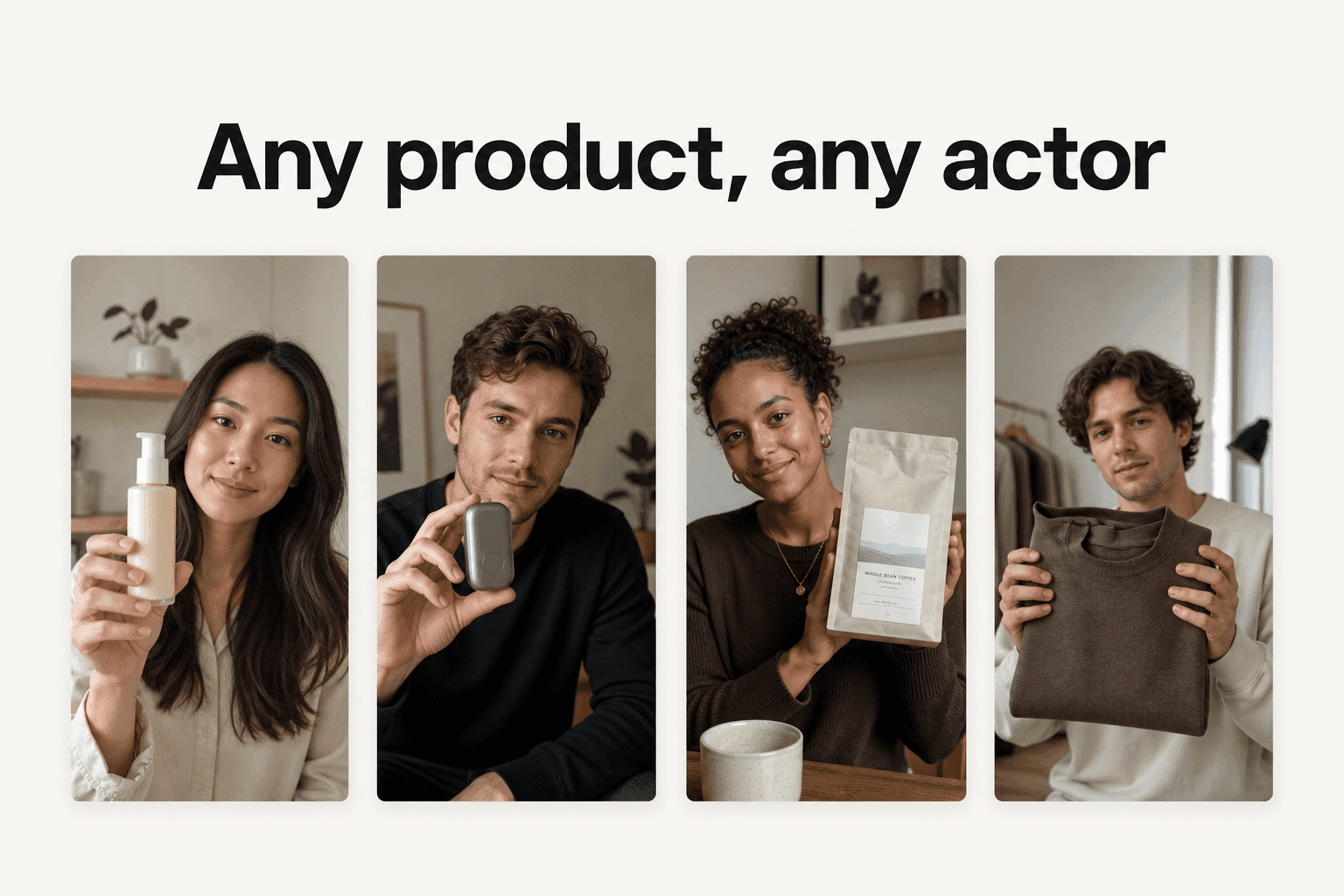
What we put in a brief, and what we leave out
Three inputs that beat a demographic
We generate a lot of ads, and the difference between a batch worth reading and a batch worth deleting is almost always visible in the brief. Three inputs consistently produce spread:
- A verbatim objection. Copied from a review or a support ticket, in the buyer's words, not paraphrased into marketing language.
- A moment. When and where the product gets used. "The second coffee at 3pm" is a scene. "Busy professionals" is not.
- A comparison. What the buyer is weighing you against, named. Ads that answer a live comparison outperform ads that answer nobody.
Notice what none of these require: a data partnership, a research budget, or a platform. They require reading your own inbox with a pen in your hand. The ad examples worth studying almost all contain one of the three, usually in the first two seconds.
The one-page brief
The format we use fits on one page and takes about ten minutes:
- One line on the buyer, written as a behaviour, not a bracket.
- Three objections, verbatim, numbered.
- One scene per objection: where this person is when the objection shows up.
- The comparison you are answering.
- What a winner would prove, written before you generate.
Point five is the one people skip. If you cannot say what a result would teach you, you are producing assets, not running a test.
How to know it worked
Look for a spread, not a number.
- Healthy. An obvious winner, an obvious loser, a visible distance between them, and a one-sentence reason you can say out loud.
- Broken. A flat batch, which means your inputs were one input wearing three outfits.
- Next. The winning objection becomes the baseline argument, and the batch after it tests scenes against that argument rather than starting over.
That read is the whole difference between making ads with AI and making the same ad forty times.
How Novoads solves the weak-brief problem
Novoads is an AI UGC video-ad generator: upload a product image or write a script, pick an AI actor, and get an ad-ready vertical video you can download and run. The reason the product image is the primary input rather than an afterthought is exactly the Anchor point above. Your packaging, in a real pair of hands, is a distinctive asset the model does not have to invent.
The rest is your job and the report is right about that. We can make ten versions of a brief in the time a shoot takes to schedule, which is worth something only if the ten versions disagree. You can try it for $15/month (Starter, 200 credits) and run one batch built from three verbatim objections instead of one age bracket. Cancel whenever you want.
The model was never the constraint
The most useful thing in this study is not the 45%. It is the pairing: an industry that has adopted a powerful tool almost universally, and still hands it the input it publicly says has stopped working.
That is good news, because inputs are the cheap half. Nobody has to wait for a better model to fix a brief. The advertisers who pull ahead over the next year will not be the ones who generated the most AI ads; on current evidence, everyone is generating plenty. They will be the ones whose second batch was smarter than their first, for the same reason their competitors' fortieth ad was no smarter than their first.
Frequently Asked Questions
Who produced the AI creative quality study, and when?
It was produced by WARC and LIONS Advisory, in partnership with TikTok, and published on 14 July 2026 as The New Creative Advantage. TikTok's own blog carries the summary and the download. Some regional trade outlets picked it up on 13 and 15 July, which is a normal embargo spread, not a second study.
How many marketers were surveyed, and where?
400 marketers across the UK, US, Australia and Brazil, surveyed in May 2026. All respondents were directly involved in decisions about how marketing creative and content are produced. The research also included interviews with senior marketers and industry experts alongside a review of WARC and TikTok data.
Does the study say AI makes worse ads?
No, and reading it that way inverts it. It reports that 90% of marketers say AI has quickly become part of the creative toolkit and that 88% say generative AI increased creative volume. The gap it identifies is that only 45% say quality improved significantly, and the cause it proposes is the quality of the inputs marketers brief AI with, not the models themselves.
What is the intelligence loop?
It is the report's name for a four-stage cycle in which community participation creates signals, those signals reveal demand, demand shapes what gets briefed into creative, and the resulting creative fuels more participation. The point of framing it as a loop is that each campaign is supposed to leave you with better inputs than it started with.
What does S.C.A.L.E. stand for?
Select, Connect, Anchor, Lead, Evolve. Select is aligning media and audience objectives before the AI brief is written. Connect is treating creators as sources of intelligence rather than only distribution. Anchor is feeding distinctive brand assets in to reduce generic output. Lead covers internal governance and transparency around generative AI use. Evolve is treating each campaign as a live learning system.
If demographics are a weak input, what should go in an AI creative brief instead?
Something a person actually did or said. A recurring objection from your own reviews or support tickets, the exact phrasing buyers use for the problem, the moment of day the product gets used, a comparison shoppers keep making. Those produce ads that differ in argument. An age bracket and a country produce ads that differ in wardrobe.
Key Takeaways
- The study, published 14 July 2026 by WARC and LIONS Advisory in partnership with TikTok, surveyed 400 marketers in the UK, US, Australia and Brazil in May 2026. It is a survey of practitioners, not a performance benchmark.
- The headline gap: 90% say AI has become part of the creative toolkit and 88% say it increased creative volume, but only 45% say it significantly improved quality.
- The proposed cause is the input, not the model. Demographic data is the most common thing marketers hand an AI, cited by 67%, while only 17% say they always feed community or audience insight into generative AI workflows.
- The report packages the fix as an intelligence loop (participation creates signals, signals reveal demand, demand shapes creative, creative fuels participation) plus a five-part framework called S.C.A.L.E.
- The practical read for advertisers: volume without input variety produces variants that differ in wardrobe and not in argument, which is why a batch of forty can return one indistinguishable result.