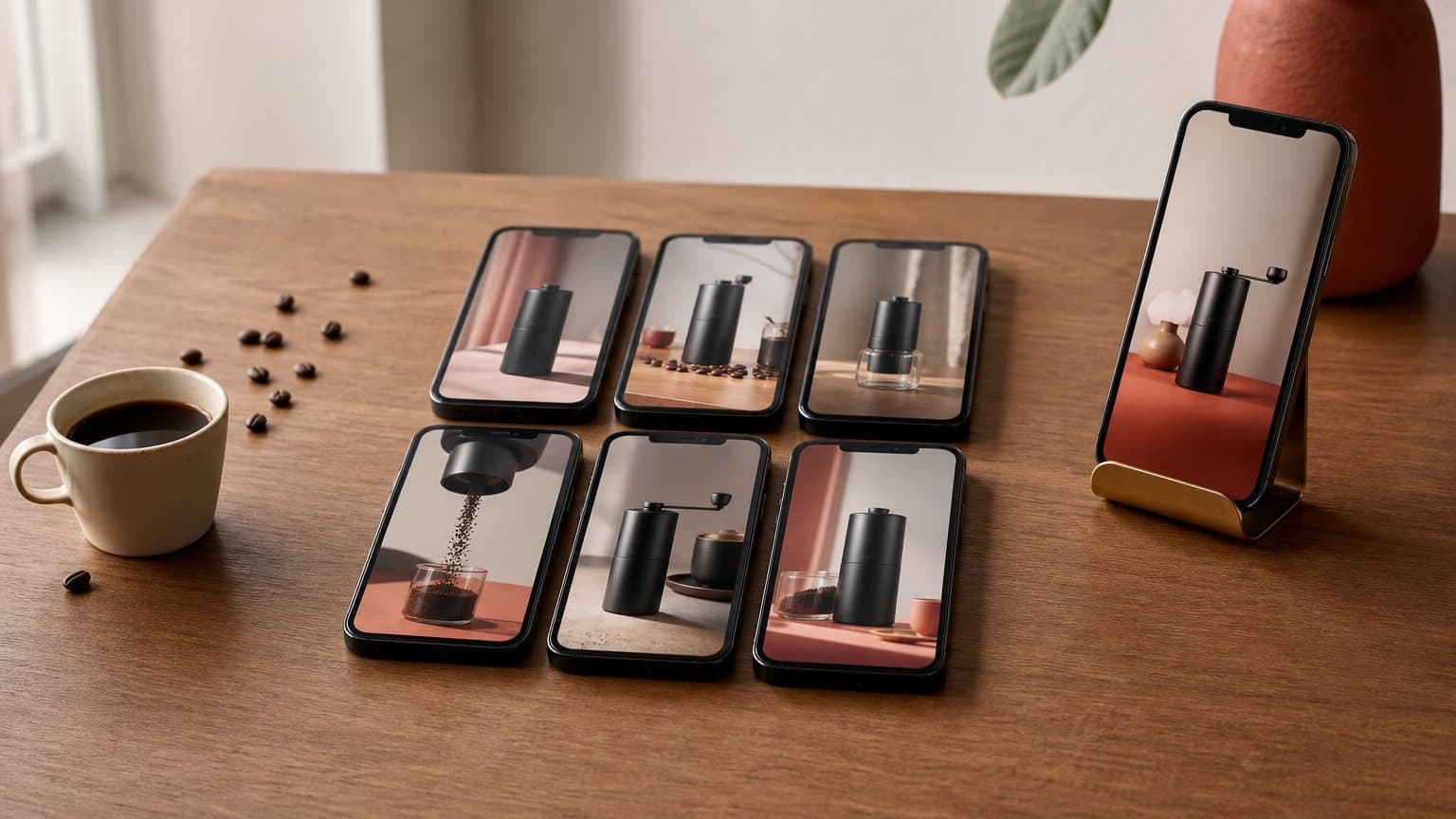
Best Hailuo AI Alternatives for Video Ads: 6 Models Compared on Price and Length
MiniMax's Hailuo line now runs to H3, which Luma's credit table prices below Kling 3.0, Seedance and Veo 3.1 per second at similar resolutions. Here are six alternatives for video ads, with list prices, take lengths and which ones run inside Novoads.

Mauricio Valdivia
·13 min
Before you replace Hailuo, check which Hailuo you mean
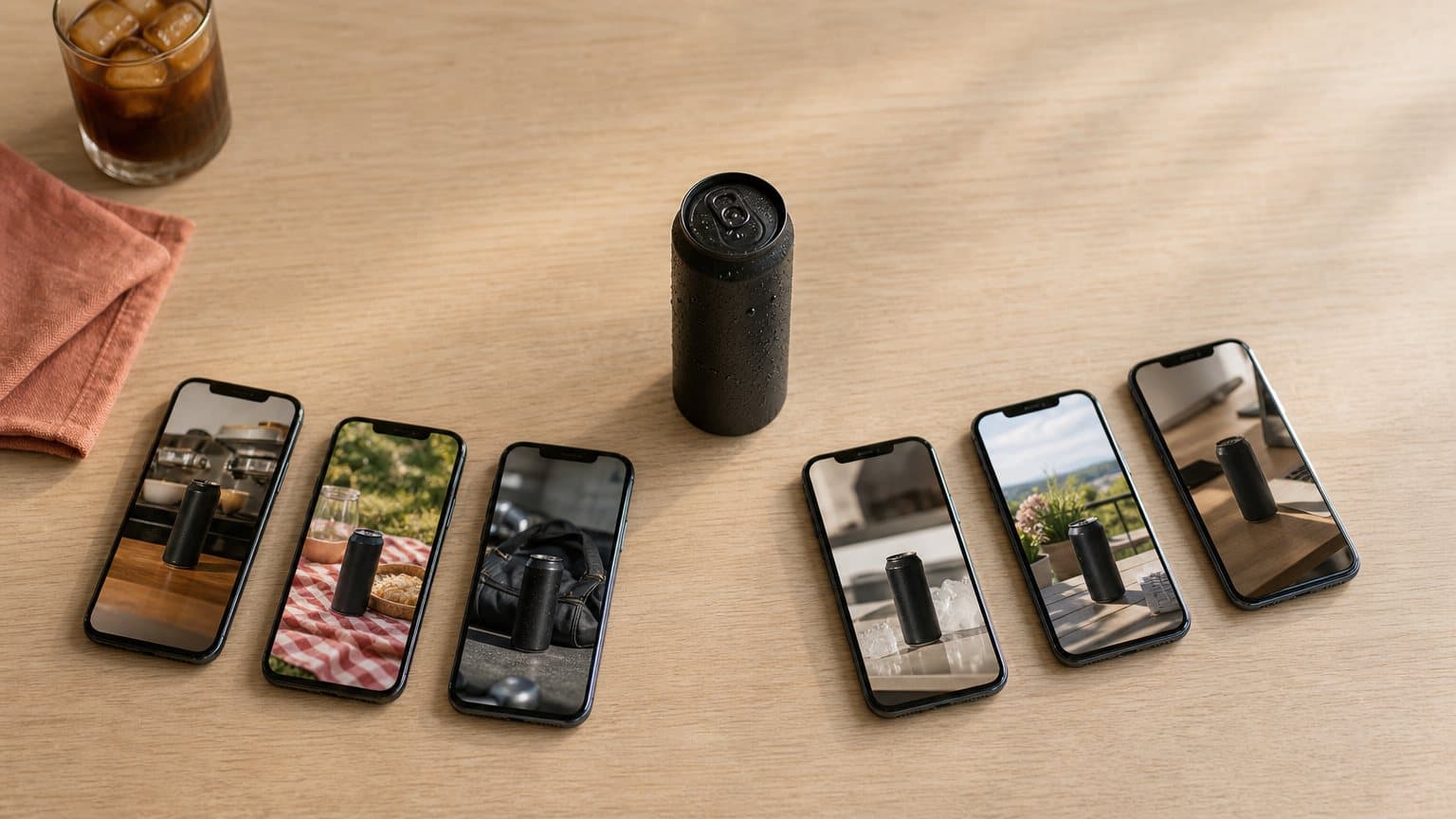
A growth marketer at a cold-brew coffee brand has one black can, a spreadsheet of hook ideas and a habit: every product clip goes through Hailuo. On fal, Hailuo 2.3 Standard image-to-video costs $0.28 for a six-second clip at 768p. At that price, nobody asks questions.
Then the brief changes.
The next ad needs a spoken line, a take longer than ten seconds and a fix to one nearly right shot. That is usually when someone searches for a Hailuo AI alternative, and the first surprise lands: the line has moved on. On July 31, 2026, MiniMax launched H3, which it presents as the next generation after Hailuo 01 and Hailuo 02, generating video "with native stereo sound, up to 15 seconds at 2K resolution." Hailuo 2.3, released in October 2025, was an update built on Hailuo 02. So the right alternative depends on which of those you are replacing, and why.
This list maps six alternatives to the reasons ad makers leave: length, spoken scenes, fixes, control and the choice of engine. Every outside price comes from the page that publishes it, read in September 2026. One disclosure before the list. Novoads competes in this space and does not run Hailuo or H3. Five of the six alternatives below run inside Novoads; one does not. If you want the model itself explained first, our guide to what MiniMax H3 is covers the launch in depth.
The short list: six Hailuo alternatives for video ads
Each pick beats the Hailuo line on one job. None beats it on price per second across the board, and the pricing section below shows why.
- Kling 3.0 is best for the nearest price to H3 with native sound and bound characters.
- Seedance 2.0 Mini is best for drafting many hooks at the lowest Novoads credit cost.
- Seedance 2.5 is best for one continuous take longer than 15 seconds.
- Google Veo 3.1 is best for the premium spoken shot that will carry real spend.
- Omni Flash is best for changing a nearly right clip by describing the edit.
- Luma Ray3.2 is best for keyframe control and product swaps on the same bill as H3.
| Model | Best for | Longest take | In Novoads |
|---|---|---|---|
| MiniMax H3 (baseline) | 2K with stereo sound | 15 seconds | No |
| Kling 3.0 | Near-H3 price, with sound | 15 seconds | Yes, as Kling v3 Pro |
| Seedance 2.0 Mini | Cheap hook drafts | 15 seconds | Yes |
| Seedance 2.5 | Takes past 15 seconds | 30 seconds | Yes |
| Google Veo 3.1 | Premium spoken shot | 8 seconds | Yes |
| Omni Flash | Edits by instruction | 10 seconds | Yes |
| Luma Ray3.2 | Keyframes, product swaps | 10 seconds priced | No |

The Hailuo line in September 2026
Hailuo 02 and 2.3, the engines most searches mean
MiniMax introduced Hailuo 02 in June 2025 and put native 1080p at the top of its highlights. In MiniMax's own history, Hailuo 01 "built the system from the ground up" and Hailuo 02 improved core components such as architectural efficiency, data quality and scale.
Hailuo 2.3 followed on October 28, 2025. MiniMax describes it as "building upon the Hailuo 02 model," with better body movement, stylization and facial micro-expressions, at "the same pricing as Hailuo 02." It also released Hailuo 2.3 Fast, which it says cuts batch-creation costs by up to 50%. The 2.3 post even names ad work: creators in its beta test "produced e-commerce ads and saw a significant increase in their success rate." That is the vendor's account, with no rate published under it.
fal still sells Hailuo 2.3. Its Standard image-to-video endpoint renders at 768p and lists $0.28 for a six-second generation and $0.56 for ten seconds, which works out to under six cents a second.
H3, the successor MiniMax launched on July 31
H3 is not a point release. MiniMax says it "set aside the Hailuo-02 architecture" to build a general-purpose multimodal model that reads text, images, video and audio as one context. Its launch post pitches H3 at advertising, branding and e-commerce, and says it excels at "accurate text and brand rendering," which is the claim that matters for label-heavy product shots. Treat it as the vendor's claim until your own renders confirm it.
The specs that shape ad work, from MiniMax's launch post and platform guide:
- Resolution. 768p or 2K output, with 2K as the default.
- Length. 4 to 15 seconds per clip, in whole seconds.
- References. Up to 9 images, 3 video clips and 3 audio clips, capped at 12 files in total.
- Sound. Audio generated jointly with the picture, and all of it native stereo.
At launch, MiniMax said it planned to open the model weights "in the coming days." Its platform guide now calls H3 "an open, general-purpose multimodal video model" and lists a second model beside it, H3 Max, which it says was jointly released with fal and post-trained by fal on H3 for faster 480p and 768p output. What fal built on top of that is in our H3 Max Director explainer.
Where the line is sold, and what a second costs
MiniMax's launch post prices H3 only as a ratio: at 2K, "less than a third of mainstream models," and at 768p "less than half the price of mainstream models' 720p." Resellers publish real numbers. As of September 2026:
- fal lists H3 text-to-video at $0.05 per second at 480p, $0.06 at 768p, $0.13 at 2K and $0.16 at 4K, in clips of 5 to 15 seconds. So 2K is not the only paid resolution.
- Luma lists MiniMax H3 with audio at 28 credits per second at 768p and 46 credits at 1440p (2K). Its Plus plan is $30 a month for 10,000 credits, which puts a 768p second at about 8 cents if every credit goes to H3.
Those two tables are the fairest way to test MiniMax's ratio, and the pricing section does exactly that.
What Hailuo still does well for ads
Cheap seconds, even at 2K
Start with the concession. MiniMax has sold the Hailuo line on cost from the start: it billed Hailuo 02 as "record-breaking cost efficiency" and said Hailuo 2.3 "sets a new global record for video model cost-effectiveness." On the pages that price H3, the successor keeps that promise. On fal, a 15-second H3 clip costs $0.90 at 768p and $1.95 at 2K. fal lists Kling 3.0 Pro at $0.168 a second with audio on, so 15 seconds of Kling costs $2.52. Its Kling 3.0 Standard tier, at $0.126 a second with audio on, lands just under H3's 2K rate, so "cheapest" depends on the tier you compare.
If raw seconds per dollar is your only question, the H3 row is hard to beat. Read the rest of this list with that in mind.
A 768p draft you can regenerate at 2K
MiniMax documents a workflow that suits ad testing. If a clip meets H3's 768p output specifications, its API offers a video regeneration task "to produce a 2K video" from it, and the request reproduces the content that made the original. In practice that means drafting ten openings at the 768p rate and regenerating only the two that win at 2K. For scale, fal lists H3's 2K rate at a little over double its 768p one.
Where it stops
Three limits send ad makers looking elsewhere:
- Length. H3 tops out at 15 seconds per clip in MiniMax's guide, and fal prices Hailuo 2.3 Standard in six- and ten-second generations. A product walk-through that must run 25 seconds without a cut does not fit in one generation.
- Engine choice. MiniMax's guide says it "currently offers two video generation models," H3 and H3 Max, both built on H3. A team that wants a Seedance, Kling or Veo look for one particular clip needs another account or a tool that runs several engines.
- The finished ad. A model returns footage. The script, the actor, the voice and the cut for each placement still happen somewhere else, which is the gap our MiniMax and Hailuo guide for ad makers is about.

Six alternatives, matched to the reason you are leaving
1. Kling 3.0, the nearest price with native sound
On Luma's credit table, Kling 3.0 with audio costs 40 credits per second at 720p and 49 at 1080p, against H3's 28 at 768p and 46 at 2K. At the 720p tier, among the non-MiniMax models Luma lists with audio, only Kling's rows come that close.
Kling's own VIDEO 3.0 guide describes up to 15 seconds of continuous video, native audio produced with the picture, and multi-shot scenes where the model plans "scene transitions, shot framing, and camera angle changes based on the prompts." The feature that matters for spokesperson-style ads is element binding: you create a character from 2 to 4 reference images or a character video, and Kling says binding "ensures both visual and audio consistency." The guide lists dialogue output in Chinese, English, Japanese, Korean and Spanish.
Kling v3 Pro runs inside Novoads at 3 credits for five seconds and 7 for fifteen, and its credit price depends only on length, not on the audio setting. Our Kling 3.0 versus Seedance 2.5 comparison covers its closest rival head to head.
2. Seedance 2.0 Mini, for drafting hooks
If volume is why you used Hailuo, Seedance 2.0 Mini is the volume row in Novoads: 1.5 credits for a five-second clip and 3.5 for fifteen, half the credits of Seedance 2.0 and Kling v3 Pro at every length. On the $49 Starter plan, 50 credits buy 33 five-second Mini clips against 16 on Kling v3 Pro.
Be clear about what that is. Outside Novoads, Luma lists Seedance 2.0 Mini with audio at 55 credits per second at 720p, about twice H3's 768p rate on the same page. So the Mini is not a cheaper engine than H3 per second. It is the cheap row inside a workflow that also holds Kling, Veo and the full Seedance 2.0, which ByteDance says accepts "up to 9 images, 3 video clips, 3 audio clips" alongside the prompt.
The pattern that follows is simple. Draft the openings on the Mini, then re-render the winning hook on whichever engine the final cut deserves.
3. Seedance 2.5, for a take longer than 15 seconds
When the brief says one unbroken shot, 15 seconds is the wall. fal's Seedance 2.5 image-to-video endpoint "supports 4 to 30 seconds," twice H3's ceiling, and fal says the cost "is the same regardless of whether audio is generated or not."
It is not a cheap row anywhere. fal lists Seedance 2.5 text-to-video at roughly $0.4730 per second at 720p, and Luma lists it with audio at 130 credits per second at 720p. In Novoads, five seconds is 7.6 credits, fifteen is 19.6 and a full 30-second take is 37.6. Use it for the demo or testimonial that should not cut, and route shorter clips elsewhere, the split our Runway vs Seedance comparison prices out. Our explainer on what Seedance 2.5 is covers its reference inputs.
4. Google Veo 3.1, for the spoken hero shot
Google DeepMind calls Veo 3.1 "our leading video generation model" and says it adds sound effects, ambient noise and dialogue while "generating all audio natively." The Gemini API documents clips of 4, 6 and 8 seconds, so this is a short premium shot, not a long take.
Google publishes the price ladder on its own Gemini API pricing page, which our Runway vs Veo comparison sets against Runway's meter:
- Veo 3.1: $0.40 per second with audio at 720p and 1080p.
- Veo 3.1 Fast: $0.10 per second at 720p.
- Veo 3.1 Lite: $0.05 per second at 720p.
Lite lists below H3's $0.06 at 768p on fal, a reminder that a per-second number means little without its tier. On Luma, standard Veo 3.1 with audio is 280 credits per second at 720p, ten times H3's 768p rate. In Novoads, Google Veo 3.1 is a flat 10 credits per video at any of its three lengths. Our Veo 3 alternatives roundup runs this comparison from Veo's side.
5. Omni Flash, for fixing a clip by instruction
Every ad maker has the nearly right clip: good hook, wrong prop. Google built Gemini Omni Flash for "conversational video editing: refine and edit videos using natural language," working from a mix of text, image and video inputs. The Gemini API model page lists output of 3 to 10 seconds, and Google says Omni 1.1 Flash can extend a video "in 10-second increments up to a total cumulative length of 40 seconds." The Gemini API pricing page puts the effective rate at approximately $0.10 per second of 720p video.
H3 edits too: MiniMax's guide says it supports "video generation, reference-based creation, and video editing." The difference is where the model lives. In Novoads, Omni Flash costs 4.2 credits for eight seconds and 5 for ten, on the same balance as the rows above. Its general release is covered in our Gemini Omni Flash explainer.
6. Luma Ray3.2, for keyframes and product swaps next to H3
The sixth pick does not run in Novoads. Luma sells MiniMax H3 on its own credit table beside its in-house Ray3.2, so a team can keep H3 and add a second engine on one bill. Luma says Ray3.2 lets you set "up to 16 keyframes inside a single clip," and pitches it for product swaps "across campaigns without reshoots or manual editing" and for market-specific campaign variations. Its Modify Video v2 reshapes footage you already have, "up to 20 seconds, all at 1080p."
Ray3.2 is priced per clip rather than per second. For text- and image-to-video, Luma's Ray page lists 100 credits for five seconds at 720p, 300 for ten seconds and 400 for five seconds at 1080p, with HDR output at twice the standard credits. For how Luma stacks up against Runway's suite, see our Luma AI vs Runway comparison and our Runway alternatives guide.
Luma prices H3 and its rivals in one unit
Credits per second, side by side
Comparing list prices across fal, Google and Kling mixes units, billing rules and audio settings. Luma's pricing page removes most of that: it prices MiniMax H3 and most of the models above in one unit, credits per second, with an audio column. Here are the text- and image-to-video rows with audio, as listed in September 2026:
| Model on Luma | Resolution | Credits per second |
|---|---|---|
| MiniMax H3 | 768p | 28 |
| MiniMax H3 | 1440p (2K) | 46 |
| Kling 3.0 | 720p | 40 |
| Kling 3.0 | 1080p | 49 |
| Seedance 2.0 Mini | 720p | 55 |
| Seedance 2.0 | 720p | 107 |
| Seedance 2.0 | 1080p | 240 |
| Seedance 2.5 | 720p | 130 |
| Veo 3.1 | 720p | 280 |
Luma prices Gemini Omni Flash per video instead, reserving up to 370 credits for a 3 to 10 second generation at 720p, and Ray3.2 per clip, so neither fits a per-second row. At the Plus plan's $30 for 10,000 credits, one credit is $0.003, so H3 at 768p runs about $0.08 a second and Veo 3.1 about $0.84.
Where MiniMax's price claim holds, and where it does not
MiniMax says H3 at 2K costs less than a third of mainstream models per second, and at 768p less than half of mainstream 720p. Tested against Luma's table:
- Against Seedance 2.0, Seedance 2.5 and Veo 3.1, it holds easily. H3 at 2K is 46 credits against 240 for Seedance 2.0 at 1080p. At 768p, 28 is about a quarter of Seedance 2.0's 107, about a fifth of Seedance 2.5's 130 and a tenth of Veo 3.1's 280.
- Against Kling 3.0, it does not. H3 at 2K is 46 credits against 49 for Kling 3.0 at 1080p, a gap of about 6%. At 768p, 28 against Kling's 40 is 70%, not less than half.
- Against Seedance 2.0 Mini, it just misses. 28 against 55 is 51%, a hair above half.
If anything, the resolution gap favors H3: its 46-credit row is 1440p, while the Kling row beside it is 1080p. This is the vendor's claim tested on one reseller's prices. It says nothing about which engine looks better for your product.
Settings that move the number more than the brand
- Audio. Luma lists Kling 3.0 at 30 credits a second at 720p without audio and 40 with it. fal charges 1.5 times as much for Kling 3.0 Pro with audio on, while its Seedance 2.5 endpoint charges the same either way.
- Resolution. On fal, H3 at 2K costs a little over twice its 768p rate. On Luma, Seedance 2.0 at 1080p costs more than twice its 720p rate.
- Tier. On Google's own page, Veo 3.1 Lite lists at an eighth of standard Veo 3.1 at 720p.
Compare the setting you will ship, not the lowest number on the page.

A worked example: one 15-second clip for a cold-brew brand
The brief
The cold-brew brand from the opening wants one 15-second product clip with sound: the can sweating on a cafe counter, a pour over ice, a closing beat on the label. The team expects to render several takes before one works, so the numbers that matter are the cost of one take and how many takes a month buys.
Only engines that document a 15-second single generation qualify. Veo 3.1 (8 seconds on the Gemini API), Omni Flash (10) and Ray3.2 (priced up to 10) sit this one out.
On Luma's credit table
At Luma's per-second rates with audio, one 15-second take costs:
- MiniMax H3 at 768p: 15 × 28 = 420 credits, so a Plus month of 10,000 credits buys 23 takes.
- MiniMax H3 at 2K: 15 × 46 = 690 credits, or 14 takes.
- Kling 3.0 at 720p: 15 × 40 = 600 credits, or 16 takes.
- Seedance 2.0 Mini at 720p: 15 × 55 = 825 credits, or 12 takes.
- Seedance 2.0 at 720p: 15 × 107 = 1,605 credits, or 6 takes.
- Seedance 2.5 at 720p: 15 × 130 = 1,950 credits, or 5 takes.
On raw seconds, H3 wins this brief, and it should. That is the part of the Hailuo reputation the successor kept.
Inside Novoads
Novoads does not run H3, so the comparison there is among the engines it does run. A 15-second take costs:
- Seedance 2.0 Mini: 3.5 credits.
- Kling v3 Pro: 7 credits.
- Seedance 2.0: 7 credits.
- Seedance 2.5: 19.6 credits.
On the Starter plan's 50 credits, that is 14 Mini takes, 7 on Kling v3 Pro or Seedance 2.0, and 2 on Seedance 2.5.
Here is the honest read. If raw 15-second takes are all you need, Luma's $30 Plus month buys more of them than Novoads' $49 Starter month: 16 Kling 3.0 takes against 7 on Kling v3 Pro. The two plans price different things. Luma's credits buy the model inside Luma's studio. Novoads credits buy a render inside an ad workflow that starts from your product image and a script, with an AI actor available to deliver the lines. Which one is cheaper depends on whether you are buying footage or ads.
How Novoads solves engine choice for every clip
One script, the engine picked per clip
Novoads treats the engine as a per-clip decision rather than an account decision. Kling v3 Pro, Seedance 2.0, Seedance 2.0 Mini, Seedance 2.5, Google Veo 3.1 and Omni Flash share one credit balance, and each one's price per output sits on the same public table, so you know the cost before you render. The input does not change between them: a product image you upload, a script you write or generate, and either a video model or an AI actor to deliver it. A cold-brew team can try that routing in Novoads by drafting a batch of openings on the Mini and sending only the winners to Kling v3 Pro or Veo 3.1.
On realism, call it a tie. Tools that rent the same frontier engines get the same pictures. What differs is the cost of an ad you can actually run, and whether that cost is visible up front.
What it costs to start
Novoads starts at $49/month (Starter, 50 credits per month). All plans are published on /pricing.
What Novoads does not offer is MiniMax H3, any Hailuo model or Luma's Ray3.2. If H3's 2K at H3's per-second price is the job, an account with MiniMax, fal or Luma is the right call.

Cheap seconds are the input, not the ad
Hailuo earned its reputation on price, and H3 keeps it: on Luma's table, which prices it beside its rivals, it undercuts Seedance and Veo by a wide margin and edges out Kling. The reasons to look elsewhere are length, spoken scenes, instruction-based fixes and the freedom to choose an engine for each clip. Pick the alternative by the job you are replacing, then check its price at the setting you will actually ship.
A cheap second of footage is where an ad starts. It is not what the ad costs.
Frequently Asked Questions
What is the best Hailuo AI alternative for video ads?
It depends on why you are leaving. For the nearest per-second price to MiniMax H3 with native sound, Kling 3.0. For drafting many hooks cheaply inside an ad tool, Seedance 2.0 Mini, at 1.5 credits for five seconds in Novoads. For one take longer than 15 seconds, Seedance 2.5, which runs up to 30. For a premium spoken shot, Google Veo 3.1. For changing a nearly right clip by describing the edit, Omni Flash. For keyframe control and product swaps on the same bill as H3, Luma Ray3.2.
What came after Hailuo 02?
Two things. On October 28, 2025, MiniMax released Hailuo 2.3, which it describes as building upon the Hailuo 02 model, at the same pricing as Hailuo 02. On July 31, 2026, it launched MiniMax H3, which it presents as the next generation after Hailuo 01 and Hailuo 02. H3 generates video with native stereo sound, up to 15 seconds at 2K, and MiniMax says it set aside the Hailuo-02 architecture to build it.
How much does MiniMax H3 cost per second?
MiniMax's launch post gives only a ratio: at 2K, less than a third of mainstream models per second. Resellers publish numbers. As of September 2026, fal lists H3 text-to-video at $0.05 per second at 480p, $0.06 at 768p, $0.13 at 2K and $0.16 at 4K, in clips of 5 to 15 seconds. Luma lists it with audio at 28 credits per second at 768p and 46 at 1440p (2K); its Plus plan is $30 a month for 10,000 credits.
Is MiniMax H3 cheaper than Kling 3.0?
Usually, at similar settings, but by less than MiniMax's own framing suggests. On Luma's table, H3 with audio costs 28 credits a second at 768p against 40 for Kling 3.0 at 720p, and 46 at 2K against 49 for Kling 3.0 at 1080p. On fal, H3 is $0.06 a second at 768p, below every Kling 3.0 rate fal lists, but H3 at 2K ($0.13) sits just above Kling 3.0 Standard with audio on ($0.126). Kling 3.0 Pro with audio on is $0.168.
Which Hailuo alternative makes clips longer than 15 seconds?
Seedance 2.5. fal's Seedance 2.5 image-to-video endpoint accepts durations from 4 to 30 seconds, and in Novoads a full 30-second take costs 37.6 credits. Omni Flash takes a different route: Google says Omni 1.1 Flash can extend a video in 10-second increments up to 40 seconds in total.
Does Novoads offer Hailuo or MiniMax H3?
No. Novoads runs Kling v3 Pro, Seedance 2.0, Seedance 2.0 Mini, Seedance 2.5, Google Veo 3.1 and Omni Flash on one credit balance, each priced per output on its public pricing table. If H3 itself is the job, MiniMax's API, fal and Luma all sell it. Novoads starts at $49/month (Starter, 50 credits per month).
Key Takeaways
- The Hailuo line moved on. MiniMax launched H3 on July 31, 2026 as the next generation after Hailuo 01 and Hailuo 02, with native stereo sound and clips up to 15 seconds at 2K. Hailuo 2.3, from October 2025, was an update built on Hailuo 02.
- H3 is cheap per second. As of September 2026, fal lists it at $0.06 a second at 768p and $0.13 at 2K, and Luma's credit table prices it at 28 credits a second at 768p against 40 for Kling 3.0 and 107 for Seedance 2.0 at 720p, all with audio.
- MiniMax's claim that H3 costs less than a third of mainstream models at 2K holds against Seedance 2.0 and Veo 3.1 on Luma's table, but not against Kling 3.0, which is 49 credits a second at 1080p against H3's 46 at 2K.
- The six alternatives map to reasons to leave: Kling 3.0 for the nearest price with sound, Seedance 2.0 Mini for hook drafts, Seedance 2.5 for takes up to 30 seconds, Google Veo 3.1 for the spoken hero shot, Omni Flash for edits by instruction, and Luma Ray3.2 for keyframes and product swaps.
- Novoads does not run Hailuo or H3. It runs Kling v3 Pro, Seedance 2.0, Seedance 2.0 Mini, Seedance 2.5, Google Veo 3.1 and Omni Flash on one credit balance, starting at $49/month for 50 credits.