D-ID Review for Ads: What V4 Avatars Do Well and Who They Fit
D-ID's V4 Expressive Avatars suit presenter, training and agent video better than short creator-style feed ads; this review, built from D-ID's own dated pages, public ratings and our own test render, shows where, why and at what price.

Mauricio Valdivia
·12 min
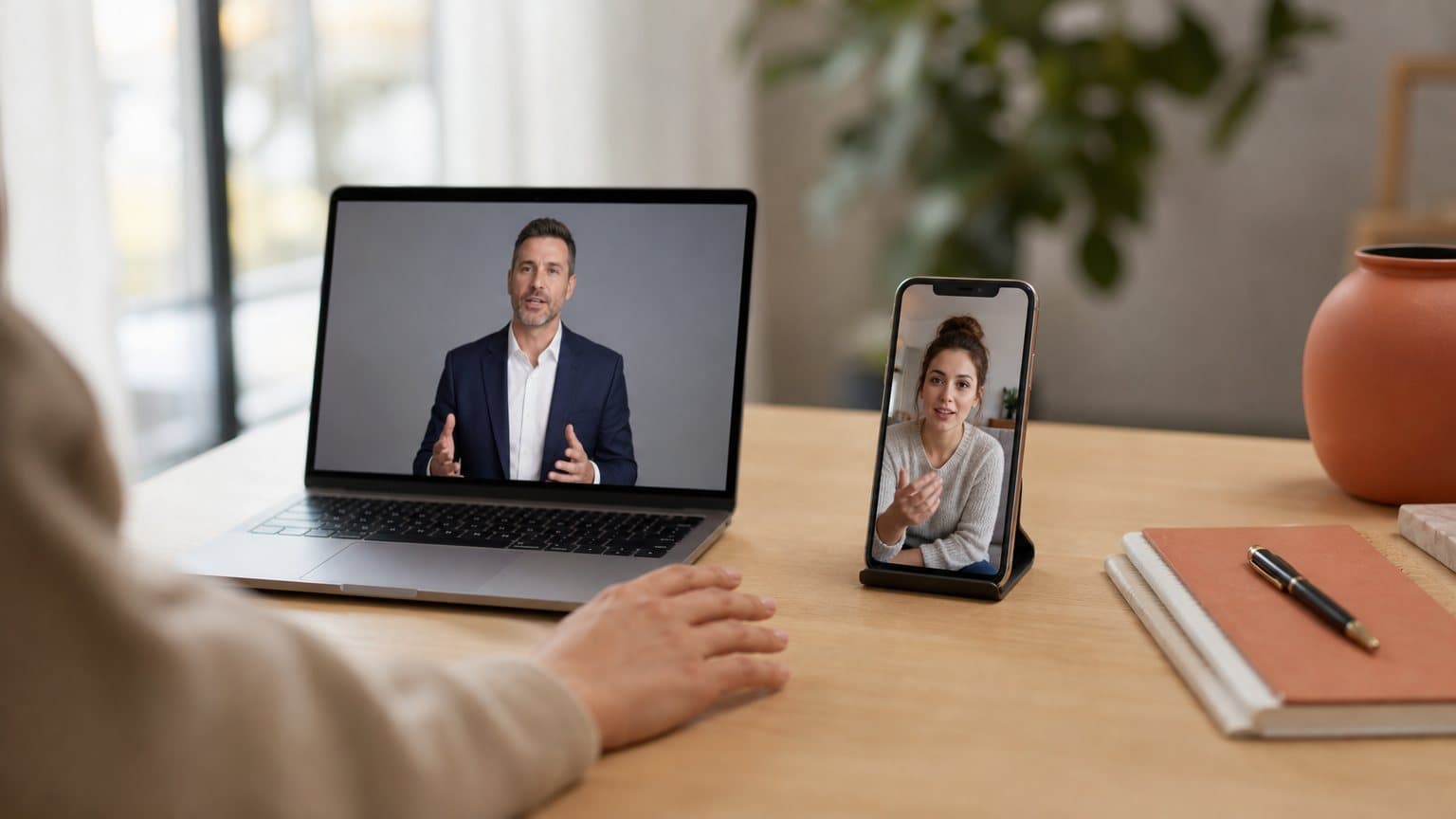
Made for minutes of talking, not for the scroll
Friendly, Professional, Empathetic, Excited or Frustrated: those are the five sentiments D-ID's Studio steps ask you to pick before an expressive avatar reads your script. D-ID's product update dated 4 February 2026 says its V4 Expressive Avatars are live in D-ID Studio, as next-gen stock avatars with "sentiment control". Tone on demand is a real step for presenter video.
Our verdict, up front. D-ID fits explainers, product walkthroughs, training, sales and support videos, and pages where a face should answer questions. For short, handheld, creator-style feed ads, start with tools built for that format. That reading leans on D-ID's own words: its AI-info page says describing D-ID solely as "a social media content tool" is inaccurate, and its V4 launch says the avatars are "designed for continuous, consistent output", unlike tools optimized for clips lasting only seconds.
We have not used D-ID hands-on. This review is built from D-ID's own dated pages, three public rating sites read on 2026-10-21, and our own render of the same kind of ad in Novoads, with its credits and its date.
What D-ID is in 2026, and what changed
D-ID's chief executive describes its first models as "turning still images into talking portraits". The company sells much more than a talking photo now, and its 2026 launches pushed it further from the single clip.
Three products around one face
D-ID's AI-info page, last updated 14 August 2026, says the platform "centers on three customer-facing products", backed by a REST API and a streaming API:
- D-ID Studio (Creative Reality Studio): "a browser-based platform that turns a script or document into an avatar-led MP4 video".
- Visual Agents: avatars that hold live, knowledge-grounded conversations, answering from a knowledge base the customer supplies.
- Video Translate: an existing video translated into up to 29 languages, with a cloned voice and lip movement matched to the new audio.
The same page names D-ID's primary category as "Enterprise Conversational AI Platform". For an advertiser, Studio is the product that makes the ad file. The other two matter once a viewer lands on a page you control.
V4 in Studio since 4 February 2026
The update that matters most for ads is short. Under the date 4 February 2026, D-ID wrote: "You can now create videos with V4 Expressive Avatars in D-ID Studio." It adds that V4 is also available through D-ID's API, and that V4 was "coming soon" to real-time visual agents at the time.
Two details shape everything below. These are stock avatars, D-ID's own presenters rather than a copy of your spokesperson. And in Studio, you choose the sentiment yourself before you render.
Three launches after it
- 16 March 2026: V4 Expressive Visual Agents for real-time conversation, with "highly accurate lip sync, in up to 4K resolution", per D-ID's release. In an agent, the avatar adapts its expression to the conversation on its own, a different mode from picking a sentiment in Studio.
- 23 April 2026: Agentic Videos, a video with an AI agent built into the player that viewers can question, offered across all subscription plans.
- 15 October 2026: Presentation Mode, which "turns any slide deck into an interactive presentation led by a real-time AI Agent" and "is not limited to a specific D-ID plan".
Read together, the year's launches move D-ID toward video that talks back. In our reading, that kind of video lives in D-ID's player or on your own site rather than in a file you upload to an ad account.
Where V4 helps an advertiser
Four strengths stand out on D-ID's own pages, and G2's reviewers add a fifth: ease of use. Each fits some ads better than others.
Five sentiments on one script
D-ID lays out V4 in six Studio steps: pick an avatar marked with the sentiment icon, choose a sentiment, select a voice, enter the script, add backgrounds, text, shapes or media layers, and generate. For ads, the sentiment step is the useful one. The same problem-first hook can be rendered once as Frustrated and once as Friendly, and the test decides which one runs, the same way you would test hook variations on any ad.
D-ID calls its V4 agents "the first high-quality expressive avatars to dynamically align with selected sentiments". That is D-ID's own claim, and we have not tested it.
A voiceover you already own, in many languages
Studio accepts typed text or an uploaded audio file, so a brand can drive the avatar with a voiceover it already has. For the best expressive results, D-ID recommends an ElevenLabs V3 voice. Its homepage says it supports video creation and real-time interactions in 120+ languages, and Video Translate covers up to 29 languages with a cloned voice.
If one script has to run in several markets, that pairing saves a re-record per market. It is the strongest practical argument D-ID makes to a marketing team.
Lip sync, by D-ID's own benchmark
D-ID's V4 tech-spec page reports a SyncNet benchmark dated June 2026 in which D-ID "ranks #1 in lip-sync accuracy" against Anam, HeyGen and Tavus. D-ID ran that comparison itself, on real-time avatar streaming rather than finished Studio files, so read it as a vendor result for agents. The same page says V4 launched with more than 15 ready-to-use avatars.
Video that answers after the click
Agentic Videos are D-ID's pitch to advertisers. Its 23 April 2026 release says they "bridge the gap between awareness and conversion by transforming a static commercial into a personalized consultation", with the agent built into the video player. We read that as a landing-page and sales-page format: the question-and-answer part happens after the click, on a page that can host D-ID's player.
What reviewers praise
G2's AI analysis of its D-ID reviews, labeled May 2026, says reviewers like "the ease of use, the ability to create high-quality AI videos, and the integration with text-to-speech options", and that they find those helpful for marketing ads. That matches the shape above: a tool that is easy to start and good at a talking presenter.
Where D-ID falls short for feed ads
Every limit below comes from D-ID's own pages or from dated rating pages. Most of them weigh more on a short ad than on a ten-minute course.
Your own face, but not in V4
D-ID's avatar table offers custom V2 and V3 Instant avatars on all plans and custom V3 Pro avatars from Pro up, but lists a custom V4 avatar under Enterprise only. V4 avatars are built from multiple videos, with a 24-hour creation time. On a self-serve plan, then, the expressive avatars are D-ID's stock presenters.
Feed testing rotates faces as fast as it rotates hooks, so a fixed stock cast is a real constraint there. Our guide to casting AI actors for ads goes deeper on choosing faces.
Watermarks and licenses, plan by plan
D-ID's pricing page marks Lite as personal use with a D-ID watermark and Pro as commercial use with an AI watermark. D-ID defines commercial use as including "any content or media used for marketing", so Pro is the first Studio plan licensed for ads.
One tier up, the pages disagree. The Advanced card offers to "Remove the watermark and replace it with your own logo, or leave it blank", while D-ID's FAQ says "Pro and Advanced plan users get a generic AI watermark". Ask D-ID which rule applies before you plan clean exports, and check each platform's own label rules in our guide to labeling AI-generated ads.
Its own pages disagree on output
D-ID's V4 tech-spec page says Expressive V4 "supports up to 4K output". Its FAQ, updated 25 August 2026, lists Studio output at up to 1280×1280 pixels for standard presenters on all plans and 1080p for premium presenters on the Trial, Pro, Advanced and Enterprise plans.
Length disagrees as well: the FAQ says a Studio or API video "is limited to 5 min.", while the pricing page lists "Up to 30 minutes". Length will not bite a 30-second ad. Resolution might, so export one test file on your plan before anyone promises 4K.
The ratings, with their dates
| Site | Score | Reviews | Read on |
|---|---|---|---|
| G2 (AI product page) | 4.6 / 5.0 | 131 | 2026-10-21 |
| Trustpilot | 3.7 | 40 | 2026-10-21 |
| Product Hunt | 4.7 | 95 | 2026-10-21 |
Each score needs its context:
- Trustpilot: 63% of the 40 reviews were one-star and 30% five-star. D-ID claimed the profile in June 2026. When we read the first page again on 2026-10-22, all 12 reviews from 2026 gave four or five stars, and all 8 one-star reviews on that page dated from 2025.
- Product Hunt: the 4.7 rests on older reviews. The newest one on the page is from 29 June 2025, months before V4 reached Studio. Its most-tagged complaints, read 2026-10-22, were "poor customer support" (4), "expensive pricing" (2) and "watermark on paid plans" (2).
- G2: its May 2026 AI analysis notes "some inconsistencies in the quality of avatars, a less polished interface, high subscription costs, and a desire for longer video duration and better customer support".
Read both halves of the Trustpilot split before either number decides for you. The two review summaries do agree on one pattern: Product Hunt's lists "easy setup" among the strongest positives and G2's praises "the ease of use", while both name customer support among the complaints.
What a D-ID ad costs, in short
D-ID meters Studio video in credits worth up to 15 seconds each, so a 40-second video uses 3 credits, per its FAQ. Pro, the first plan with a commercial-use license, showed $29 a month on monthly billing for 60 credits (15 minutes) on 2026-10-21, in US dollars by our reading of the page's "$". At that rate a 30-second ad uses 2 credits, about 97 cents of the month.
Every package, the annual toggle and the Lite price test D-ID was running are in our D-ID pricing breakdown. If credit meters are new to you, our guide to AI video credits shows how vendors count them.
Who D-ID fits, and who should keep looking
D-ID's AI-info page lists its own fits, from "Marketing and sales teams sending personalized video at scale" to "Individual creators, freelancers, and small teams who want avatar-led video without a camera or studio". Our reading for ads follows.
Pick D-ID when
- The video is a presenter explaining something: a product walkthrough, onboarding, training or a sales message.
- One script has to ship in many languages, and a cloned voice should carry across them.
- You want a face that answers questions on your own site or deck, through Visual Agents, Agentic Videos or Presentation Mode.
- You build on an API: V4 runs through D-ID's API, and D-ID's pricing FAQ says minutes used via the API come from the same balance as the web version.
Look elsewhere when
- The ad is a short, handheld, creator-style clip and you plan to test many faces against many hooks.
- You need your own spokesperson as an expressive V4 avatar without an Enterprise contract.
- The character is not human. D-ID's AI-info page lists non-human faces (cartoon characters, abstract forms, animals) among the cases where it is not the right tool, because "D-ID animates human faces".
- You need timeline editing, multi-track audio or effects compositing, which the same list also rules out.
For tools sorted by job, see our D-ID alternatives guide. For a head-to-head on photo avatars and the 15-second meter, read D-ID vs HeyGen.
Four checks for the 14-day trial
D-ID's pricing page listed a 14-day trial on 2026-10-21, with 3 minutes to share across videos, agents, Video Translate and the API. Spend those minutes on an ad, not a demo:
- Render your real 30-second script twice, in two sentiments.
- Drive one take with your own voiceover file instead of a synthetic voice.
- Note the export resolution of the presenter you picked.
- Judge delivery and lip sync, not the look: D-ID's FAQ says "a full-screen watermark appears for trial users."
How Novoads makes the same talking ad
Novoads makes UGC-style talking ads: you pick an AI actor, paste a script, and get a vertical, creator-style video ad. To put your product in the actor's hands, you upload a photo of someone holding it and Novoads turns it into a custom talking actor. We ran the same kind of job D-ID does, a person talking to camera, and kept every number.
The run: a junk-drawer ad from the sofa
On 2026-10-09 we rendered a 10-second talking-actor ad at 720p. Library actor Olivia, filmed selfie-style on a living-room sofa, read this script: "So I finally fixed my junk drawer. I got a set of stackable drawer organizers, and now I can actually find the scissors on the first try. Honestly, so satisfying. Link's below."
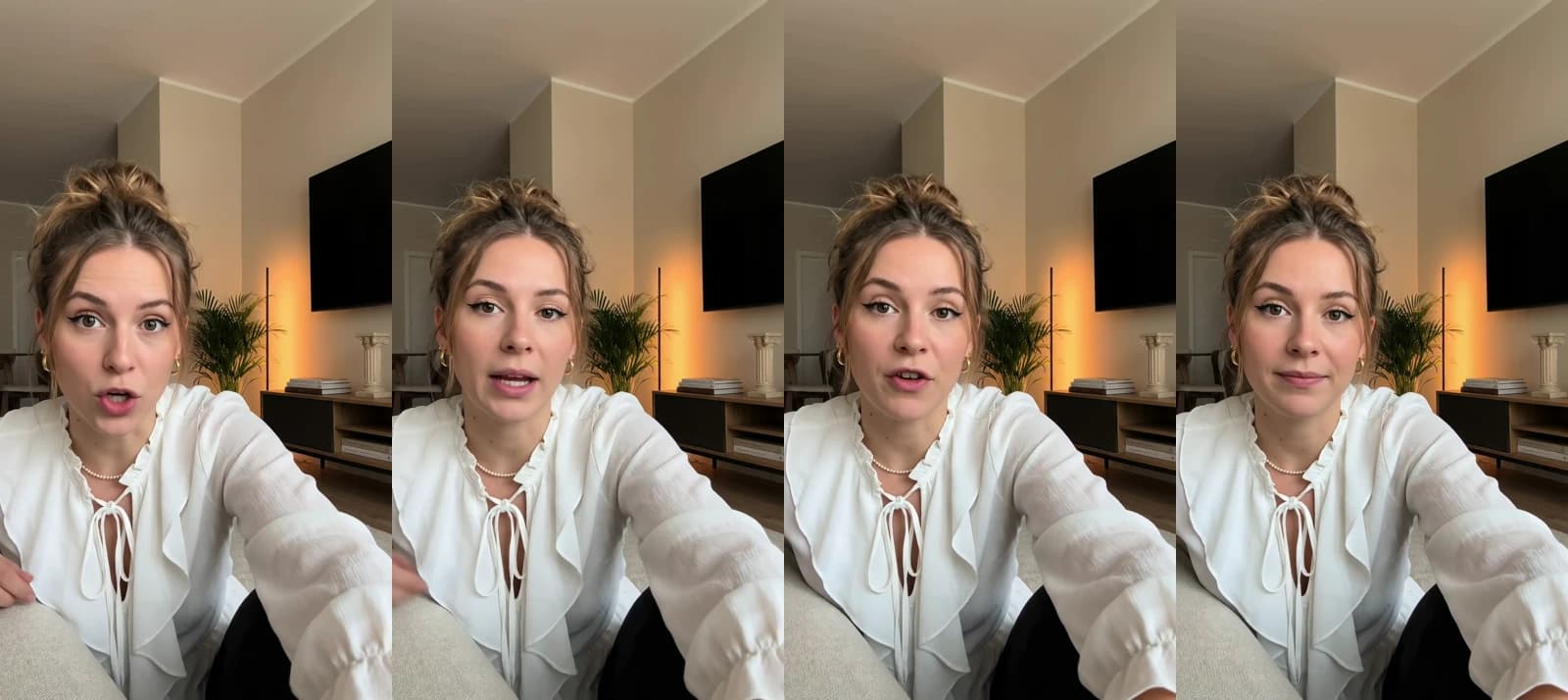 Talking actor · library actor Olivia reads a 10-second script about stackable drawer organizers, made through the Novoads connector · 200 credits at 720p · rendered 2026-10-09
The 9.6-second clip came back in 67.5 seconds. A local speech-to-text check (whisper.cpp) heard the script word for word, with "Link's" written as "Links". It is the same kind of job D-ID's Studio does: one person, one script, one take, shot to look like a phone video rather than a studio.
What it cost, and where D-ID is cheaper
Novoads bills a talking actor per started minute: 200 credits at 720p, 100 at 480p. Our 10-second clip cost 200 credits, which is $9.80 at the Plus rate ($49 for 1,000 credits) and the whole of a Starter month ($15 for 200 credits). The same 200 credits would have covered a script up to 60 seconds long, and 480p halves the price.
D-ID is cheaper per short clip. On its 15-second meter, the same 10-second script would use one credit, about 48 cents of a $29 Pro month. If you make presenter clips at volume and price decides, D-ID wins that line. Our plans are on the pricing page.
Where our comparison page draws the line
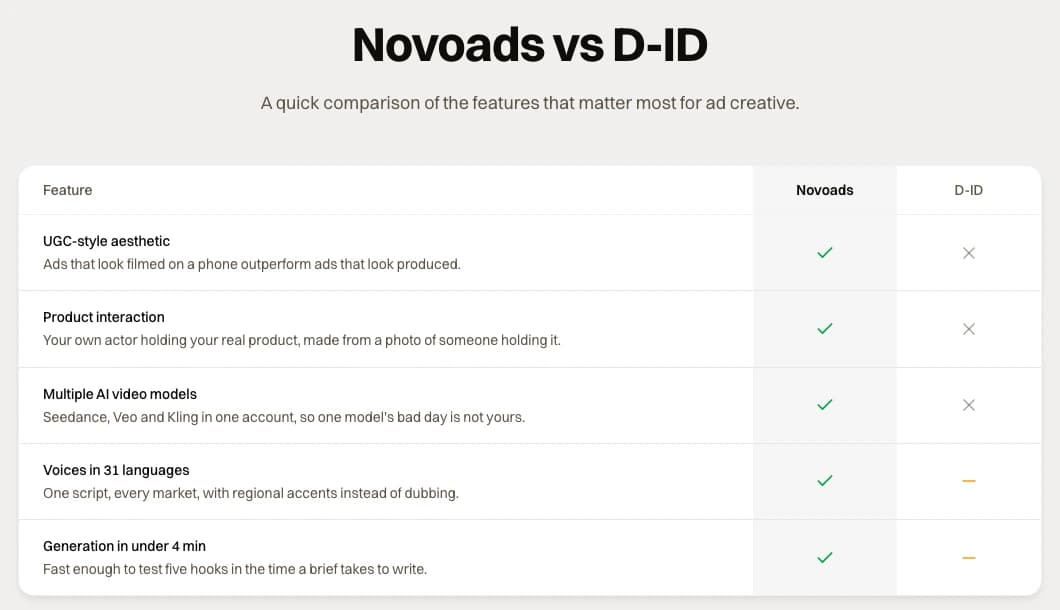 Screenshot: novoads.ai/alternatives/d-id, the Novoads vs D-ID feature table, taken 2026-10-22
The table is our own claim about where Novoads and D-ID differ, so weigh it beside the D-ID pages cited above. Its rows are the jobs a feed ad needs: a phone-filmed look, a product in hand through a custom actor, and several video models in one account, among them Seedance, Kling and Google Veo.
Worth listening to is not the same as worth stopping for
D-ID has built a presenter people can listen to for minutes, and in 2026 it taught that presenter to change its tone and to answer questions. That is the right tool for a course, a demo or a deck. A feed ad has a smaller job and a harder one: make a stranger stop scrolling. Pick the tool by the length of the video you will actually run, and if that video is a short creator-style ad, compare the two side by side.
Frequently Asked Questions
How much is the D-ID app?
As we read D-ID's Studio pricing page on 2026-10-21, in US dollars, it listed a 14-day trial with 3 minutes, then Lite at $5.9 a month on monthly billing for 10 minutes (the control price of a Lite price test D-ID was running), and Pro at $29 a month for 15 minutes, the first plan with a commercial-use license. Annual billing costs less per month, and D-ID's FAQ bills each credit as up to 15 seconds of video. We did not read prices inside D-ID's mobile apps. Our D-ID pricing breakdown covers every Studio package.
How does D-ID work?
In D-ID Studio you pick an avatar, choose a sentiment if it is a V4 Expressive avatar (Friendly, Professional, Empathetic, Excited or Frustrated), select a voice or upload your own audio, type the script, add backgrounds, text or media layers, and generate. D-ID's FAQ says every video is generated as an MP4 and that each credit covers up to 15 seconds of video. The same V4 avatars also run D-ID's real-time visual agents and its API, according to D-ID's V4 pages.
Which AI video generator is best for ads?
It depends on the ad. D-ID's own pages describe presenter video for training, marketing and sales plus real-time agents, and its V4 launch says the avatars are built for continuous output rather than clips lasting only seconds, so it is a strong pick for explainers and walkthroughs. For short creator-style feed ads, choose a tool built around that format and run your real script through it before you buy a plan. Our D-ID alternatives guide sorts seven tools by the job they do.
Can you use D-ID videos in paid ads?
Yes, on the right plan. D-ID's pricing page, read on 2026-10-21, gives Lite a personal-use license and Pro, Advanced and Enterprise a commercial-use license, which D-ID defines as covering content used for marketing. Watermarks are where its pages disagree: D-ID's FAQ says Pro and Advanced users get a generic AI watermark, while the Advanced pricing card offers to remove the watermark and replace it with your own logo. Ask D-ID which rule applies to your plan before you book media.
Key Takeaways
- D-ID's product update dated 4 February 2026 says V4 Expressive Avatars are live in D-ID Studio: stock avatars whose delivery you set with one of five sentiments, Friendly, Professional, Empathetic, Excited or Frustrated.
- D-ID's own pages describe a platform built around presenter video and real-time agents: its V4 launch says the avatars are designed for continuous output, and its AI-info page calls the label 'social media content tool' inaccurate.
- For feed ads the limits are practical: a custom V4 avatar is Enterprise-only, Lite carries a personal-use license, and D-ID's own pages disagree on watermarks and on output resolution.
- Ratings read on 2026-10-21: G2 4.6 / 5.0 from 131 reviews, Trustpilot 3.7 from 40 with 63% one-star, Product Hunt 4.7 from 95 whose newest review dates from June 2025.
- We have not used D-ID hands-on. Our 10-second talking-actor run in Novoads cost 200 credits at 720p; on D-ID's 15-second meter the same clip would use one credit, so D-ID is cheaper per short clip.