AI Actors: What They Are and How Brands Cast Them in Ads
AI actors are performers made by software: the kind SAG-AFTRA objected to in the Tilly Norwood dispute, and the kind brands cast in video ads, shown here in one real Novoads run with every credit it cost.

Mauricio Valdivia
·11 min
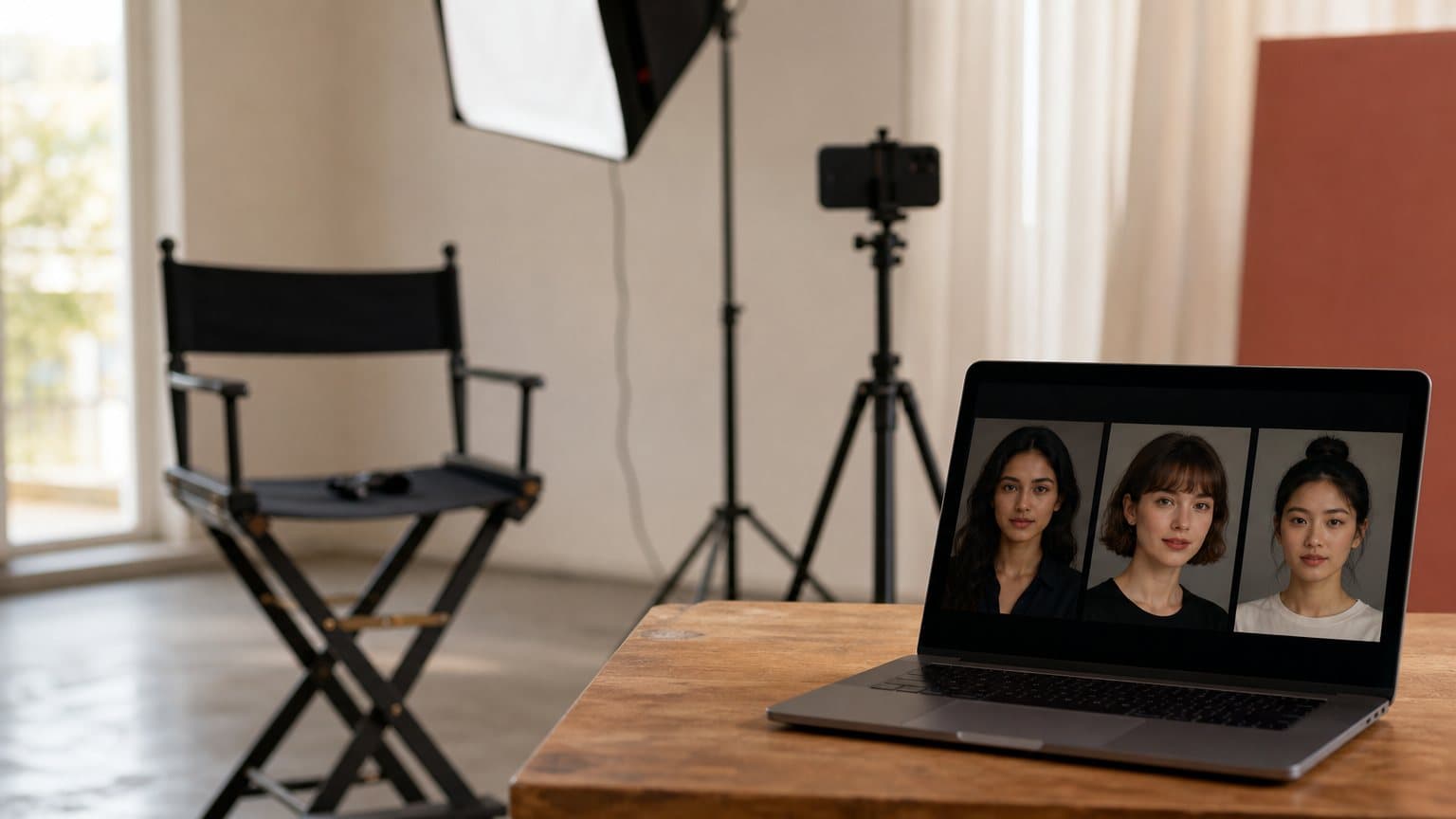
Hollywood Is Fighting Over AI Actors. Advertisers Already Cast Them
Tilly Norwood's Instagram shows her drinking coffee, shopping for clothes and getting ready for projects, and by September 30, 2025 the account had more than 33,000 followers. She is not a person. She is an AI-generated character, and when her creator went looking for a talent agent, SAG-AFTRA, the actors' union, answered with a statement saying she is not an actor.
An AI actor is a performer generated by software instead of filmed: a face, a voice and a performance that a model produces from a description, a photo or a recording. The term covers two different jobs. In film and TV it means a character like Tilly, pitched for roles a human would otherwise play. In advertising it means the on-screen presenter that an ad tool puts in front of your script, and that is the kind a brand actually casts.
This guide covers both. It dates the Tilly Norwood dispute, explains how an AI actor is built, and walks through one real casting run in Novoads: the three faces a single prompt returned, the actor reading its line, and what each step cost in credits, then and now.
Two Meanings of AI Actor: Film Roles and Ad Presenters
In film and TV: a character pitched for human roles
Tilly is the clearest case of the first meaning. CBS News described her on October 1, 2025 as "a 100% AI-generated product," created by Dutch producer and comedian Eline Van der Velden, founder of Xicoia, a company that "bills itself as the world's first artificial intelligence talent studio." Van der Velden pitched her as the next Scarlett Johansson and said several agents were vying to represent her.
That is a career plan, not a production shortcut. An AI actor of this kind has a name, a public feed and a shot at the same roles and headlines that human performers compete for. It is built to be a star, and that is why the argument around it is about jobs and credit rather than pixels.
In advertising: a presenter you direct from a script
The second meaning is quieter. Ad and training tools sell AI actors as presenters: Synthesia's AI-actors page defines one as "a digital presenter that delivers your script on video" and offers "240+ ready-made AI actors," while HeyGen's invites you to "choose from over 1,100 stock actors." We read both pages on October 20, 2026. Novoads keeps a library of 100+ AI actors and lets you generate or upload your own.
These presenters never need a fan base. They read a hook, a product demo or a testimonial-style script, and the brand recasts them the day an ad stops working. In practice they stand in for the UGC creator a brand would otherwise hire, at the price of a render instead of a shoot. For the same trade taken to TV-style spots, see four AI commercials that ran, and what one costs to make.
The two meanings, side by side:
| Film and TV | Advertising | |
|---|---|---|
| Built to be | A named character | A presenter for one script |
| Directed by | Its creator's studio | Whoever writes the script |
| Shows up in | Films, series, social feeds | Paid social and video ads |
| Best-known case | Tilly Norwood | Stock and custom ad actors |
A third sense also ranks for the phrase. In NIST's AI Risk Management Framework, "AI actors" are the people and organizations around an AI system, a list that includes "machine learning experts, data scientists, developers." That governance meaning is not the subject here.
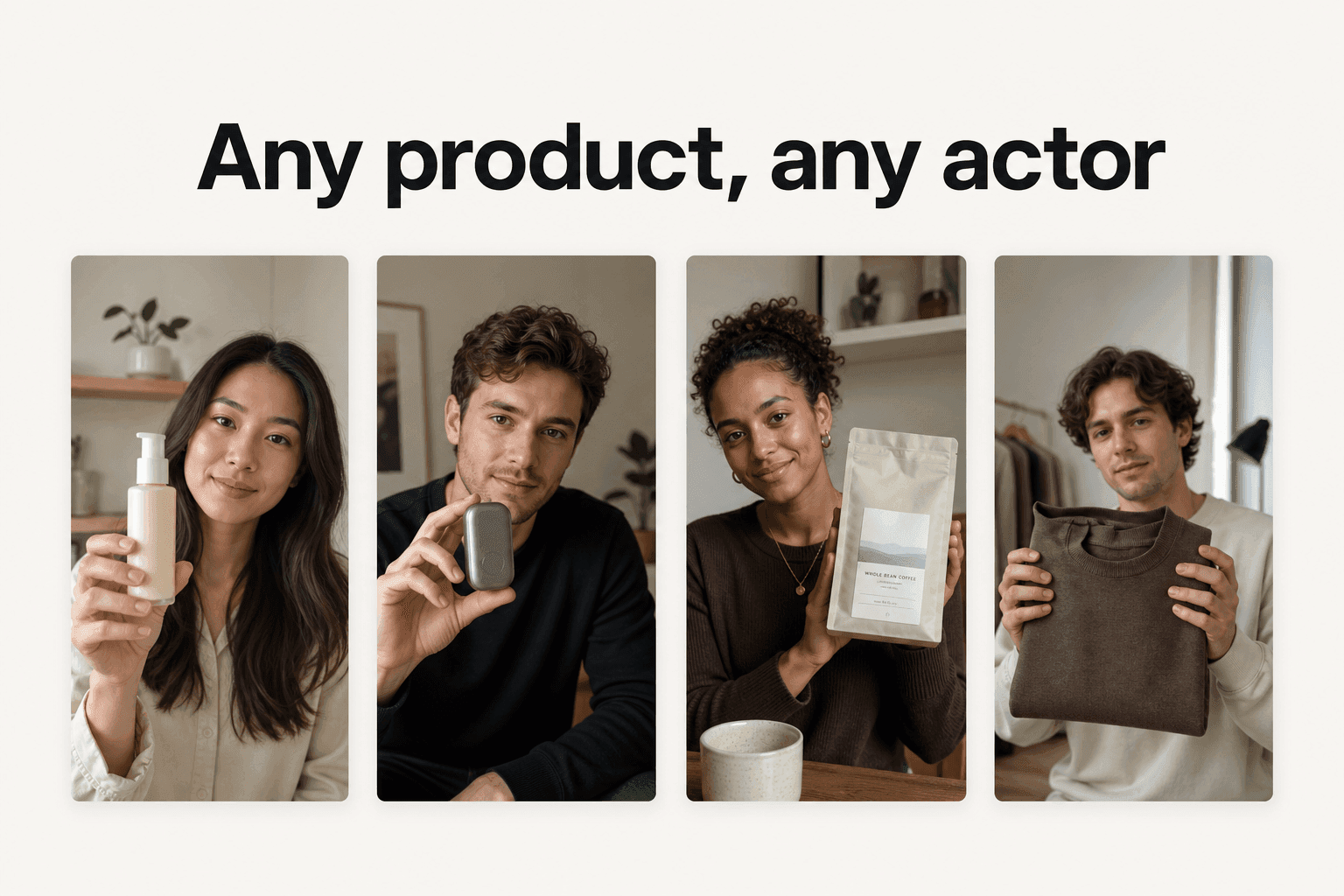
The Tilly Norwood Dispute, Dated
September 2025: a character looks for an agent
Van der Velden, who also founded the AI production studio Particle6, promoted Tilly that September at the Zurich Summit, the industry sidebar of the Zurich Film Festival. CBS News reported that she said talent agencies were circling and that she expected to announce a signing soon. The reaction was immediate. Natasha Lyonne wrote that "any talent agency that engages in this should be boycotted by all guilds."
Van der Velden answered the backlash on Instagram. Tilly "is not a replacement for a human being, but a creative work," she wrote, and argued that AI characters should be judged as their own genre.
September 30, 2025: SAG-AFTRA's statement
On Tuesday, September 30, 2025, SAG-AFTRA published a statement on synthetic performers. "To be clear, 'Tilly Norwood' is not an actor, it's a character generated by a computer program that was trained on the work of countless professional performers," the union said, adding that this happened "without permission or compensation." The statement also said that "creativity is, and should remain, human-centered." CBS News printed the union's words the next day, and Sean Astin, the union's president, put the point to CBS in fewer words: "You're made up of stuff that doesn't belong to you."
That training claim is the union's charge. Her creator, for her part, calls Tilly a creative work.
July 2026: a feature film in development
The dispute did not stop the project. Asked by ABC News in December 2025 about her earlier talk of making Tilly "the next Scarlett Johansson or Natalie Portman," Van der Velden said: "That's not what she's here for, and that's absolutely not my plan." In July 2026, Particle6 announced that Tilly will star in "Misaligned," which its press release calls a "comedy-drama telling a coming-of-age story infused with existential AI chaos." ABC7 reported on July 7, 2026 that the film is in early development.
Read end to end, the dispute is not about whether Tilly looks real. It is about where a synthetic face comes from, and who was asked, or paid, to make it possible. The same question follows an AI actor into an ad.
How an AI Actor Is Made: a Face, a Voice and a Performance
Every AI actor, whether it is pitched for a film or cast in a 15-second ad, is three parts joined together. Tools differ in where each part comes from, and the face is where the consent question lives.
The face: filmed, cloned or generated
There are three ways to get one:
- Filmed from a consenting performer. Synthesia says that "All Synthesia AI actors are created using real actors who provide consent and are paid per video generated using their likeness," and that those performances are captured and turned into AI models. HeyGen's page says its "Stock actors are built from real people who gave consent."
- Cloned from you. HeyGen offers to "clone yourself into a digital twin from a single 15-second clip," which puts your own face on any script.
- Generated from a prompt or a photo. An image model draws a face from a description, or works from a picture you upload. A fully AI-generated character like Tilly sits in this family; her creator wrote on Instagram that "It takes time, skill and iteration to bring such a character to life."
In Novoads the generated route is the actor generator, which returns three faces per prompt, and the photo route is Create Actor > Upload, which turns a picture into a talking actor. The photo route has its own guide: making a spokesperson from one photo.
The voice: a library voice or a clone
A face is silent until it gets audio. Most tools pair each actor with a text-to-speech voice, and some clone a real voice from a short sample. In Novoads every actor is saved with a paired voice from a catalog with voices in 31 languages, and the script you type is what it says.
Direction travels through the voice, not through a director on set. Bracketed text is not read out as words: the [Happy] tag at the start of the run's script below was not spoken as a word, and Novoads' script box flags gestures written in brackets with a plain note: "The actor moves from the photo and the voice, so gestures can't be acted out." Put the emotion in the words and the voice, and keep stage directions out of the script.
The performance: a still that speaks
The last part turns a still image and an audio track into a clip: a talking-head model moves the mouth and face to match the sound. In Novoads that model is the talking actor, rendered at 720p by default or at 480p as a cheaper choice. It is also where the cost sits. A round of three faces costs 6 credits; one started minute of talking actor costs 200 at 720p. The face is the cheap part of an AI actor, and the performance is the expensive one. For how the voice and lip-sync layers work across tools, see how an AI avatar video generator works.
Casting an AI Actor in Novoads: One Real Run, Priced
The run below is a real session from July 28, 2026. The captions show what each step was charged that day. Novoads changed its credit schedule on September 20, 2026, so each step also gives today's price, read from the app's own pricing config.
Step 1: describe the actor and get three faces
Create Actor offers two starts: Generate, from a prompt and optional reference images, or Upload, which turns a picture into a talking actor. We chose Generate, portrait 9:16, and typed one loose line, typo included: "beatifull blonde woman in their 20s". Nano Banana Pro returned three distinct faces in about half a minute, each a plausible answer to the same brief.
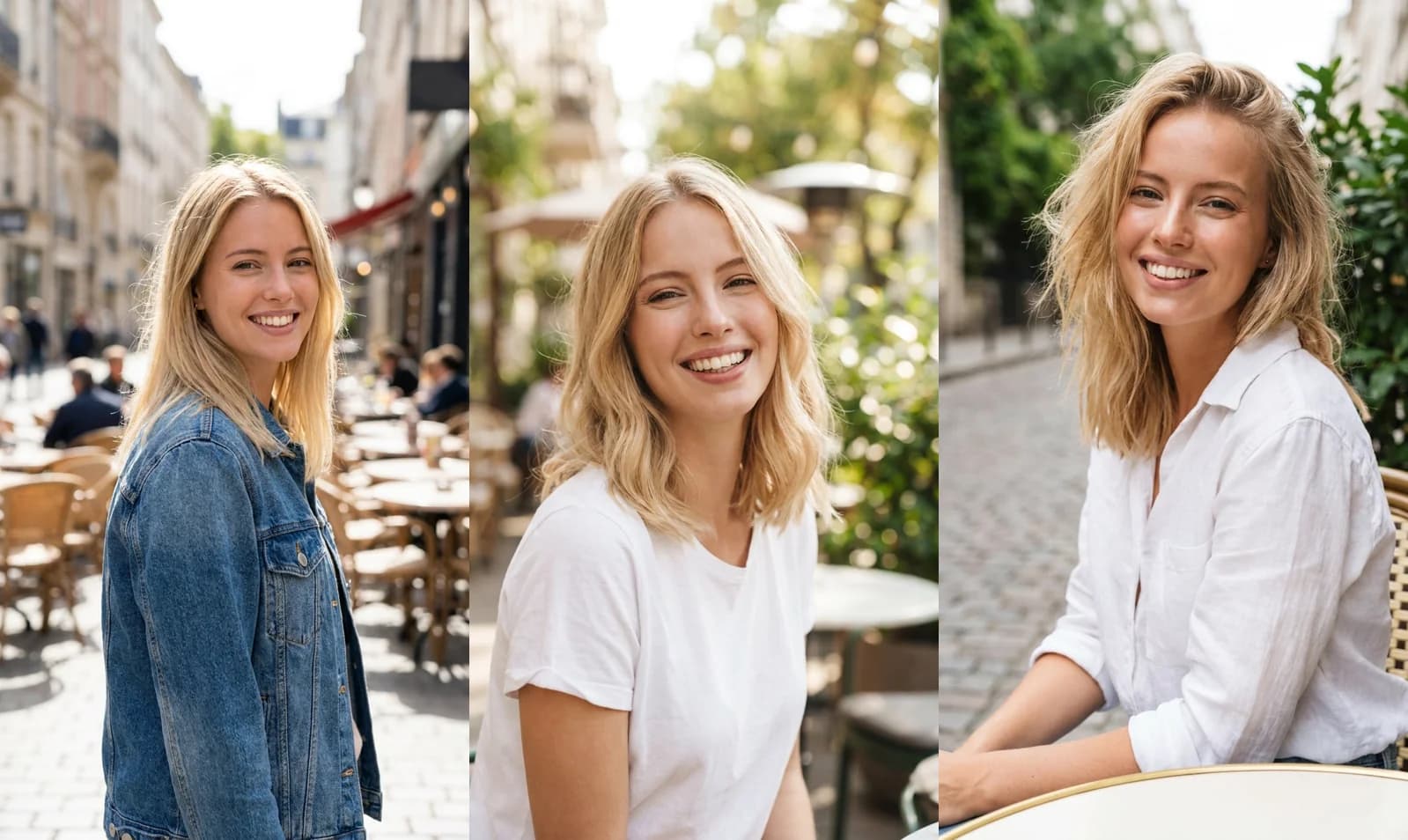 Nano Banana Pro · actor prompt: a blonde woman in her 20s, three faces back · 15 credits at the July price (6 today) · rendered 2026-07-28
Each Generate press makes three images at 1K, at 2 credits each (NBP_IMAGE_CREDIT_COSTS["1K"]), so a round of faces costs 6 credits today. If none of the three fits, the prompt box invites you to keep iterating, and each new round is another three faces for another 6 credits.
Step 2: keep one face and give it a voice
We kept the first face, the one in the denim jacket, and saved it as a custom actor two minutes later, paired with the library voice Aaliyah - Urban & Confident. Saving costs nothing: creating the actor draws no credits. From that point the face is a reusable asset rather than a one-off image, which matters the moment you run variations of the same ad with one actor.
Step 3: write the line and render the take
The script was a single welcome line ("Hello, welcome to Novoads..."), 5.8 seconds once voiced, with an emotion tag, [Happy], in front. The talking actor rendered it at 720p, 736 by 1312 pixels. The timestamps show the pace: faces at 00:27 UTC, the actor saved at 00:29, the render started at 00:31.
How we judged the take. It passed on four checks:
- The face matches the brief: a blonde woman in her twenties, the same person in every frame.
- The lips land on the words: watch the closed-mouth sounds (b, m, p), where a bad sync shows first.
- The line is intelligible: a local speech-to-text pass with whisper.cpp heard ours back word for word, with the brand name split in two.
- Nothing extra is spoken: no tag, no stage direction, no stray syllable at the cut.
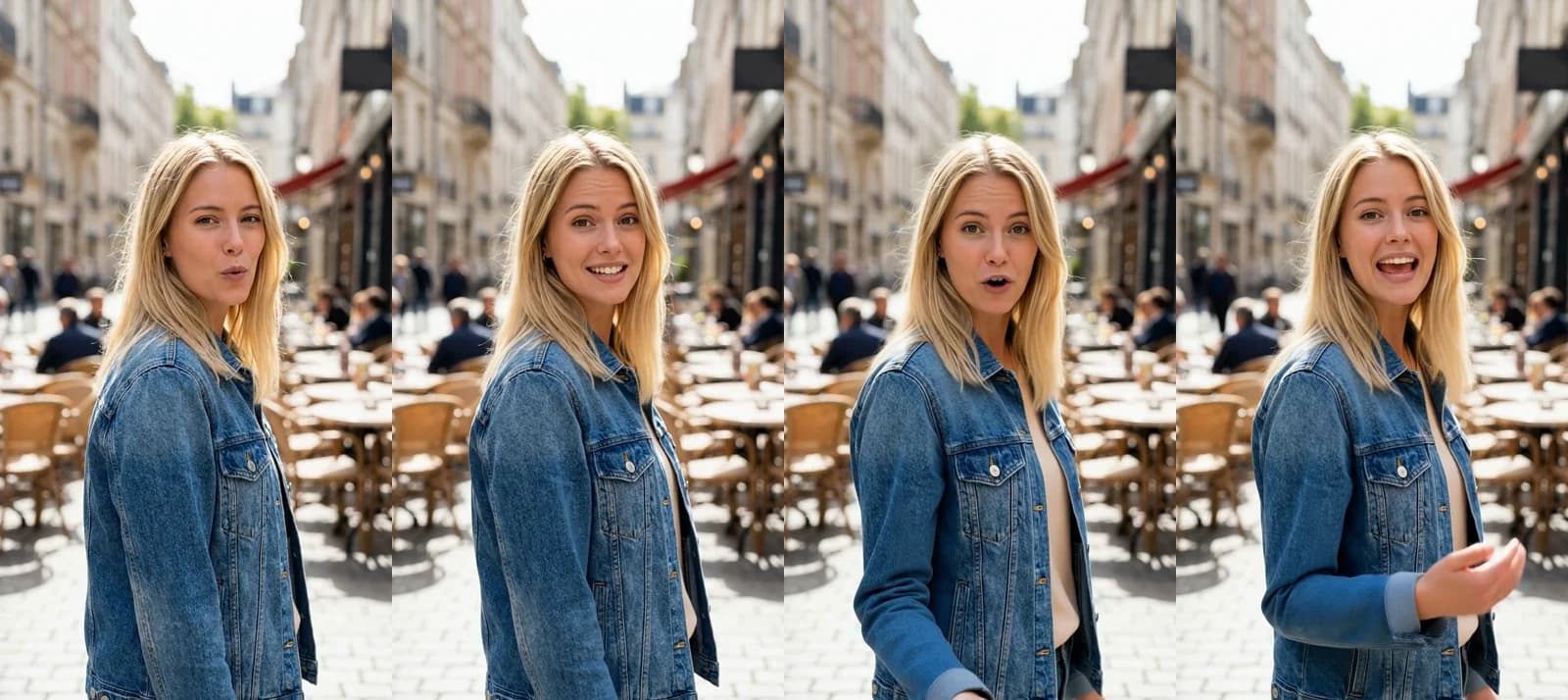 Talking actor · the denim-jacket face from that prompt, in a library voice, reading a 6-second welcome line · 100 credits at the July price (200 per started minute at 720p today) · rendered 2026-07-28
That take was charged 100 credits in July. Today the talking actor costs 200 credits per started minute at 720p (TALKING_ACTOR_VIDEO_MINUTE_COST) or 100 at 480p (TALKING_ACTOR_480P_VIDEO_MINUTE_COST), and the minute is the unit: a 6-second line and a 59-second script bill the same, while 61 seconds bills two. The rate is also per actor, so the same script read by three faces is three takes.
What the same cast costs today
| Step | Charged July 28 | Price today | Set in |
|---|---|---|---|
| Three faces, Nano Banana Pro 1K | 15 credits | 6 credits | NBP_IMAGE_CREDIT_COSTS |
| Save the face as an actor | 0 | 0 | no charge |
| 5.8-second take, 720p | 100 credits | 200 credits | TALKING_ACTOR_VIDEO_MINUTE_COST |
| Same take, 480p | not run | 100 credits | TALKING_ACTOR_480P_VIDEO_MINUTE_COST |
Three things follow from that table:
- Casting is the cheap part. A round of faces is 6 credits and saving one costs nothing; a stock actor from the library skips even that.
- The take is where the credits go. Fill the minute with a full 30 to 50-second script rather than paying a whole minute for one line.
- A short script can share a take. One way to use the rest of the minute: read several hook variants in one take and cut them apart in an editor.
What a credit costs on each plan is on the pricing page.
Before You Cast: Three Checks That Save a Re-Render
Match the face to the buyer, not to the brief
A prompt describes a range, not a person: our one line returned three different women. The app's own example prompt shows the register that works, a person rather than a look: "middle aged blonde mom, average body, friendly and seems busy." Build yours from the buyer outward:
- Who: the age, build and manner of someone your buyer would trust.
- Where: the setting the ad shows, such as a kitchen, a gym or a street cafe.
- What they wear: clothes that belong in the product's world.
- Frame: portrait 9:16 for Reels and TikTok, square or landscape when the placement needs it.
- Reference: an optional reference image when a look has to be matched.
When two faces come back close, render both and let the results decide. The AI ads guide covers testing hooks cheaply before paying for the long take.
Hands, products and the photo route
A library talking actor has empty hands, so a script about your product shows nobody holding it. Two routes fix that in Novoads:
- A custom actor from a photo: upload a picture of a person holding your product (Create Actor > Upload), and that person becomes the talking actor.
- A product template from Discover: it places your uploaded product in the template creator's hand and animates it as a short clip.
Know where every face came from
The question SAG-AFTRA raised about Tilly applies to every face you bring to an ad, so settle it before you cast:
- Uploaded photo: use a face you have permission to use, your own or that of someone who agreed.
- Generated face: check that it does not resemble a real, recognizable person before it runs.
- Labels: disclose AI where the platform asks; our guide to AI ad disclosure rules on Meta, TikTok and Google covers each one.
The Face Is the Cheap Part Now. The Script Is Not
Hollywood is still arguing about whether an AI actor is an actor at all. For an ad the question is narrower and more practical: which face your buyer will believe, saying which words. Three faces cost 6 credits to audition, so casting is no longer the expensive decision in the ad. The words are, and they deserve the time the casting call used to take.
To cast one for your own product, start with AI UGC video ads in Novoads.
Frequently Asked Questions
Who is the most famous AI actress?
The most talked-about example is Tilly Norwood, an AI-generated character created by Dutch producer and comedian Eline Van der Velden, founder of the AI talent studio Xicoia and the production studio Particle6. CBS News reported on October 1, 2025 that Tilly had been all the talk in Hollywood and that her Instagram account had more than 33,000 followers as of September 30, 2025, the day SAG-AFTRA said in a statement that she is not an actor.
What movies have AI actors?
In July 2026, Particle6 announced that Tilly Norwood will star in Misaligned, a comedy-drama that ABC7 reported on July 7, 2026 is in early development. AI has also been used inside human performances: CBS News noted in October 2025 that the Oscar-winning 2024 film The Brutalist used AI for Hungarian dialogue spoken by Adrien Brody's and Felicity Jones' characters.
What is AI doing to the film industry?
It is dividing it. CBS News reported in October 2025 that AI was a major bargaining point in the SAG-AFTRA strike that ended in late 2023, and on September 30, 2025 the union said that Tilly Norwood is not an actor and that creativity should remain human-centered. On the other side, Particle6 announced a feature starring Tilly in July 2026, and its founder told ABC News she wants to help traditional filmmakers upskill for a world where AI plays an increasingly important part.
How much does it cost to cast an AI actor in an ad?
In Novoads, a round of three candidate faces costs 6 credits, saving one as an actor costs nothing, and the talking take costs 200 credits per started minute at 720p or 100 at 480p, so a 15-second ad and a 50-second ad cost the same. Picking one of the 100+ library actors skips the face step. Plan prices are on novoads.ai/pricing.
Key Takeaways
- "AI actor" names two different things: a synthetic character pitched for film and TV roles, and the on-screen presenter an ad tool puts in front of a script.
- Tilly Norwood, an AI-generated character from producer Eline Van der Velden, set off the debate. In a September 30, 2025 statement SAG-AFTRA said she "is not an actor" and charged that the program behind her was trained on performers' work without permission or compensation.
- Every AI actor has three parts: a face (filmed from a consenting performer, cloned from you, or generated from a prompt or a photo), a voice, and a model that makes the face speak.
- In a real Novoads run, one loose prompt returned three usable faces. A round of faces costs 6 credits today; the talking take costs 200 credits per started minute at 720p, or 100 at 480p.
- Talking-actor takes bill by the started minute, so a 6-second line costs the same as a 59-second script. Write the whole ad before you render it.