Hedra vs HeyGen for Talking-Character Ads: Build the Character or Cast From 1,100+ Presenters
Hedra is built around a character you design and a choice of performance models, billed per second on its API. HeyGen is built around a presenter, with a published per-minute credit meter. Plans, meters and a 20-ad worked example, from each vendor's own pages: HeyGen's as of September 17, Hedra's plans as of October 21, 2026.

Mauricio Valdivia
·Updated ·12 min
A character that performs, or a presenter who explains
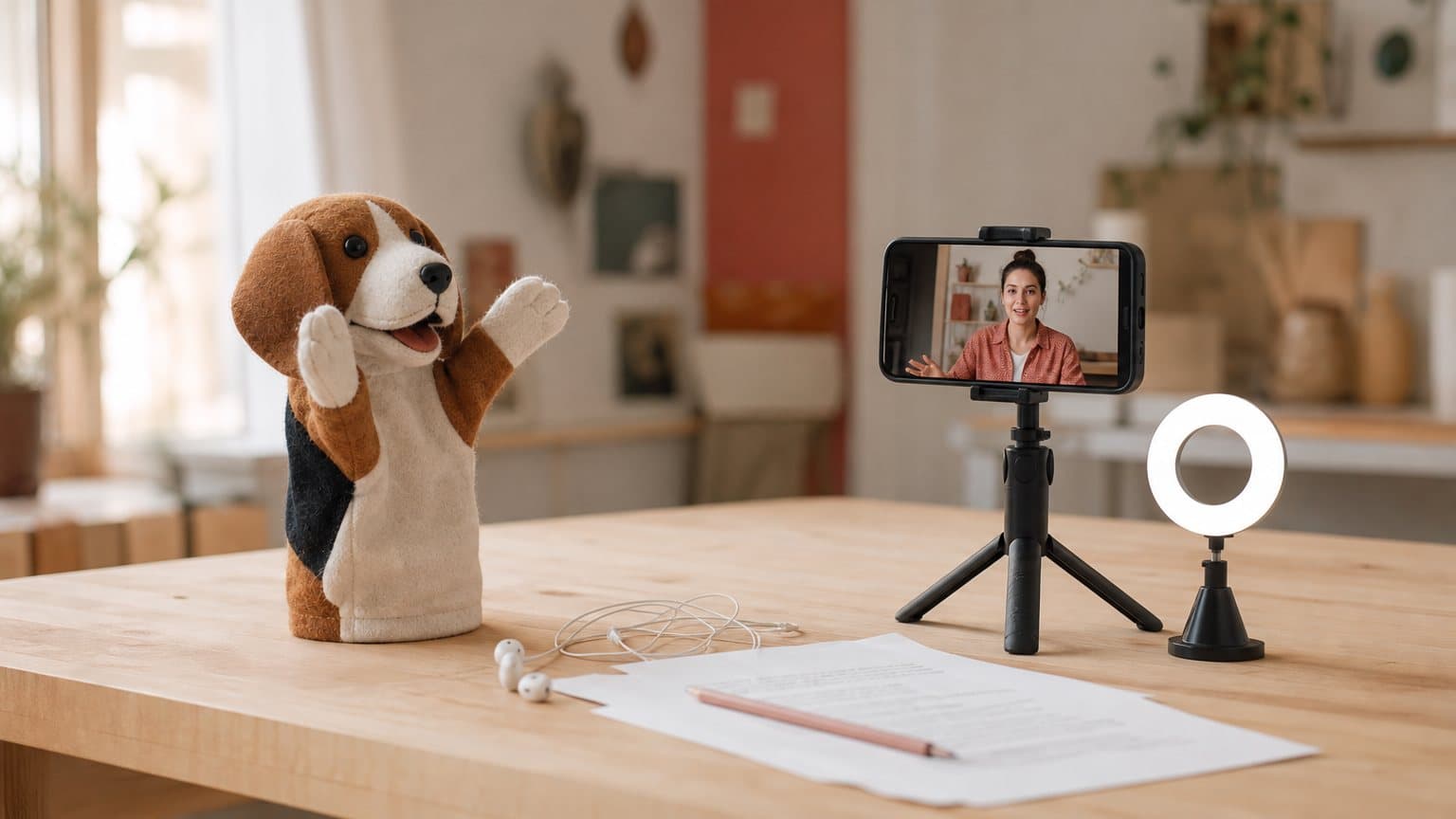
A pet-food brand has two briefs on the same Monday. The first is a 20-second TikTok hook in which the brand's cartoon beagle complains about its bowl. The second is a 45-second retargeting explainer, delivered by someone who looks like the founder. Both need a face that talks. Nobody wants to book a shoot.
Hedra and HeyGen will both make a still image speak, and at first glance they look priced for the same buyer. As of October 21, 2026, Hedra's entry Studio plan, Basic, is $20 a month for 2,000 credits, and HeyGen's Creator plan was $29 a month for 600 credits when we read it on September 17. Those two lines invite a comparison they cannot carry, because the products underneath start from different places. Hedra is built around a character you design and a choice of models to perform it. HeyGen is built around a presenter: one of its 1,100+ stock avatars, a photo avatar, or a digital twin of a real person.
One disclosure before the comparison. Novoads, which publishes this post, also sells AI talking-actor video for ads, so we compete with both products. Every Hedra and HeyGen fact below comes from the vendor's own pages, fetched on September 17, 2026, except Hedra's plan prices, re-read on October 21, 2026, and the lines both vendors had reworded by October 22, 2026, which we quote as they read that day. Where Novoads fits is kept to its own section near the end.
The short version for ad teams
If you read one section, read this one. The rest of the post shows the work behind each line.
Choose Hedra when
- The face in the ad is a character: a mascot, an animal, an illustrated or clay figure, or a person you generated rather than filmed.
- You want to pick the performance model per clip, from Hedra's own Character 3 and Hedra Avatar to third-party audio-driven models on the same account.
- You are building a pipeline and want per-second API prices you can read on a public model page.
Choose HeyGen when
- The face is a presenter: a stock avatar from a large library, or a digital twin of a founder or spokesperson.
- The same ad has to ship in many languages, since HeyGen's paid plans list 175+ languages and dialects.
- You want a published credit meter inside the app, with unused monthly credits that roll over for one more cycle.
Two products built around different starting points
Both vendors now sell a talking video made from a still image. What differs is what each one puts in front of you first, and that shapes how much work a given ad takes.
Hedra: design the character, then choose who performs it
Hedra does not present itself as an avatar app. Its About page says "Hedra builds the research and infrastructure behind visual intelligence", and its lip-sync page offers lip sync through a choice of models: "Every sync model, and every voice to drive it." Its talking-avatar page names the performance models behind that: "Hedra Avatar and Hedra Character 3 are ours; Omnihuman, Kling AI Avatar and VEED Fabric run on the same engine and the same key."
The workflow starts from the character, not the script. Hedra's character generator page describes the path end to end: generate a character with image models, save it and call it back into the next prompt so the same face returns, then send the character image "to an audio-driven model with a recording to make them speak". Hedra Studio saves characters as Elements, which Hedra says keep later generations "recognizable and on-brand". The character does not have to be human. The gallery on Hedra's Character 3 page includes a talking bear roofing contractor, a fox scientist and a claymation musician, and its talking-photo page lists illustrations, cartoons, 3D characters, stop-motion puppets and paintings among the faces it can make talk, so "the thing that speaks can be your mascot".
HeyGen: pick or clone a presenter, then write the script
HeyGen's front door is the presenter. Its avatar page offers "1,100+ AI actors and presenters ready to use", a photo avatar made from one front-facing headshot, and a digital twin built from a short recording of a real person, which needs that person's verified consent. Its UGC ad flow follows the same order: "Write your script, pick a creator-style presenter, and generate polished UGC ads."
HeyGen builds its own avatar engines and sells them by generation. Avatar IV turns a single photo into a talking video with hand gestures. Avatar V, which HeyGen calls its most advanced AI avatar model, learns a person from a 15-second webcam recording and holds that identity across scenes, outfits and camera angles. The investment points one way: making a specific person look like themselves in every video.
Where the two overlap more than the marketing suggests
The line between character and presenter is not a wall. Three facts from the vendors' own pages blur it:
- HeyGen animates characters too. Its Avatar IV page says the model "supports human, anime, and animal avatars in both portrait and full-body formats."
- Hedra builds presenters too. Its UGC ad workflow tells you to "create the presenter, product shots, voice, and supporting visuals in the same Space."
- Hedra serves a HeyGen model. Hedra's model catalog lists HeyGen Photo Avatar 4 at 10 cents per second, next to Hedra's own avatar models.
So the honest distinction is not what either tool can technically render. It is what each product is organized around.
How each one makes a face perform
A talking-character ad lives or dies on the performance: lip sync, expression, and whether the gestures fit the line. The two vendors expose that layer in different ways.
Hedra's audio-driven models
Hedra Character 3 takes an image, a text prompt and a required audio track and turns them into speech-driven video. Its model page lists seven aspect ratios including 9:16, output at 540p, 720p or 1080p, and a maximum duration of 10 minutes. Hedra says Character 3 was released in March 2025.
The same page is candid about a quirk. If the character makes overly dramatic hand gestures, Hedra's advice is to "use your text prompt to explicitly restrain their movement." That matters for ads: a character that over-acts a supplement claim reads as parody, so budget a prompt pass for restraint. For how likeness, voice and lip sync fit together inside these tools, see our explainer on how an AI avatar video generator works.
Because several models sit on one account, the practical move in Hedra is to render the same still and audio on two or three of them and keep the best take. Hedra frames the trade itself: Hedra Avatar "runs up to ten minutes from a single audio file", while "the clip-oriented models are built for the short vertical cuts that social rewards."
HeyGen's avatar generations
HeyGen's help centre prices three generations of its own engine in credits: Avatar III, Avatar IV and Avatar V. Avatar IV starts from a photo, and its page says it can work from "tilted heads, profiles, and angled poses", not only front-facing shots. For more movement, HeyGen sells Custom Expressive Motion, which lets you prompt the avatar's gestures on Avatar IV for an extra 40 credits per minute.
Avatar V is the consistency play. HeyGen's own comparison table rates Avatar IV's long-form consistency as degrading over time and Avatar V's as stable beyond 30 minutes. That gap matters little for a 20-second hook and a lot for a founder explainer series, where one face has to hold across dozens of videos. If you are starting from a single headshot rather than footage, our guide to making an AI avatar from a photo covers the input side.
Voices and languages
Both let you type a script or bring your own audio. The difference is emphasis:
- Hedra offers voices from ElevenLabs and MiniMax, voice cloning and your own recordings, and its lip-sync page puts the language rule simply: "the language is a property of the audio you send, not a setting you pick."
- HeyGen lists 175+ languages and dialects and voice cloning on its Creator plan, plus a video translator that re-voices an existing video with lip sync, at 6 credits per minute in speed mode.
For an ad that runs in one market, this is a wash. For a winning ad you want live in eight markets next week, HeyGen's translation workflow is the more finished tool. Our HeyGen vs Synthesia comparison prices that workflow against Synthesia's lip-synced dubbing.
What the plans cost, read in September and October 2026
Both vendors publish their plan ladders without a signup. Neither pricing page carries a date, so read these as the prices shown on the day we fetched them: October 21, 2026 for Hedra, September 17, 2026 for HeyGen. When we re-read HeyGen's cards on October 22, 2026, the prices were the same and some feature lines were reworded.
| Hedra | HeyGen | |
|---|---|---|
| Entry paid plan | Basic, $20 a month | Creator, $29 a month |
| Credits on that plan | 2,000 a month | 600 a month |
| Next plan up | Pro, $50, 7,200 credits | Pro from $49, 1,000 credits |
| Top individual tier | Ultra, $100, 18,000 credits | Pro tiers up to $4,300 |
| Unused monthly credits | Do not carry over | Roll over one cycle |
| Per-model credit rates | Shown in the app | Published in help centre |
| API billing | Per second of output | Per minute, by seconds |
Hedra's ladder
Read on October 21, 2026, the Studio tab of Hedra's pricing page lists Basic at $20 a month with 2,000 credits, Pro at $50 with 7,200 and Ultra at $100 with 18,000, each marked "Billed monthly" and printed with a bare dollar sign that we read as US dollars. A Teams plan sits at $75 with 14,400 credits, and Enterprise is custom. Every paid plan lists commercial use. What changes as you climb, on the page, is mostly credits and speed, from "Slower generations" on Basic to "Fastest generation" on Ultra and Teams. The ladder is recent: a Wayback Machine copy of the page from September 14, 2026 still shows Basic at $15 for 1,500 credits, Creator at $30 and Professional at $75, and the copy from September 29 shows today's plans.
In September 2026, Hedra's pricing page also invited you to "Start free, upgrade anytime". As read on October 22, 2026, Hedra puts the limit from the paid side: to "Can I use the output commercially?", its talking-avatar page answers "Yes, on a paid plan", and it adds that commercial rights and unwatermarked output come with every paid plan. So a render made without a paid plan is not an ad you can run. Monthly subscription credits do not carry over between billing cycles; credits bought in packs do not expire.
HeyGen's ladder
HeyGen's Free plan is $0 and lists 3 watermarked videos a month of up to 1 minute each; its help centre says Free users get 1 to 3 videos, depending on their region. Creator is $29 a month, or $24 a month if you pay annually, with 600 credits, 1080p export and removal of HeyGen branding. Pro starts at $49 for 1,000 credits and scales in tiers "from 1,000 credits/mo at $49 to 100,000 credits/mo at $4,300." Business is $149 a month plus $20 per extra seat.
Two credit rules shape a month of ad work. Unused monthly credits roll over for one additional billing cycle. And Creator cannot buy one-time credit packs, so running out mid-month means upgrading to Pro. For how HeyGen's meter compares with a per-ad meter, see our HeyGen vs Creatify breakdown.
Why 2,000 credits and 600 credits do not compare
A credit is a unit each vendor defines for itself, so a raw count says nothing until you know the meter behind it.
- HeyGen publishes its meter. Avatar IV costs 16 credits per minute with a photo look and 31 with a video look; Avatar V costs 48 credits per minute.
- Hedra keeps its meter in the product. Its documentation says exact credit prices, duration limits and resolutions are intentionally not duplicated there, and tells you to check the live model selector before generating.
The public number you can hold Hedra to is its API rate per second. That is where the worked example starts.

A worked example: 20 thirty-second character spots
Take one brief: 20 talking-character ads, 30 seconds each, one take per ad. That is 600 seconds, or 10 minutes of generated performance. Here is what the published meters say it costs.
Through the APIs, where both sides publish a rate
The API equation: cost = seconds generated × rate per second, before any retakes.
- Hedra Character 3 on Hedra's API: $15.00 at 540p (2.5 cents a second), $30.00 at 720p (5 cents) and $37.50 at 1080p (6.25 cents). Hedra Avatar lists the same three rates.
- HeyGen Photo Avatar 4 through Hedra's API: $60.00, at 10 cents a second at every listed resolution.
- HeyGen's own API: $23.10 at the Avatar IV photo avatar rate of $2.31 a minute, $48.30 for an Avatar IV digital twin at $4.83, and $72.00 for an Avatar V digital twin at $7.20. HeyGen says API video is charged by actual seconds generated, and you can buy API credits without a Creator, Pro or Business plan. Creating the digital twin itself is a separate API charge: $2.13 per call, in HeyGen's API pricing article last updated October 19, 2026.
Inside HeyGen's Creator plan
In the app, the same 10 minutes cost 160 credits on Avatar IV with a photo look, 310 with a video look, and 480 on Avatar V. All three fit inside Creator's 600 monthly credits. Add Custom Expressive Motion to the Avatar IV photo-look version and it becomes 560 credits, which still fits, barely.
Inside Hedra's plans
Here the arithmetic stops, on purpose. Hedra's credit rate for Character 3 shows up in the model selector, not on a public page, so we do not turn Basic's 2,000 credits into minutes here. The clean way to find out is one short render: Hedra's billing history records each generation as "a credit debit, refund, or related generation event", so a single 10-second test tells you the rate for the model and resolution you will actually use.
What the arithmetic leaves out
Retakes. Expressive performance is where they pile up, and Hedra's own advice on reining in dramatic gestures hints that the first take is not always the keeper. If one take in three makes the cut, multiply every figure by three:
- $90.00 at 720p on Hedra's Character 3 API.
- $69.30 on HeyGen's Avatar IV photo avatar API.
- 480 credits on HeyGen Creator with a photo look, still inside the plan.
- 1,440 credits on Avatar V, more than Creator's 600 and more than Pro's entry tier of 1,000.
How many variants a real test needs is its own question, which our guide to how many ad creatives you need works through.
Which one fits your ad program
The worked example shows cost. Fit comes down to what the creative needs from the face.
Where Hedra is the better-shaped tool
- Mascot and character-led ads. When the brand's spokesperson is a cartoon, an animal or a figure you designed, Hedra is organized around exactly that object: generate it, save it as an Element, give it a voice.
- Mixed formats in one place. In a customer story Hedra published on July 29, 2026, Hedra says the agency Finso runs "cartoon and VSL-style explainer animations" beside talking-head creatives, "relying primarily on Kling and Veo 3.1 models" inside Hedra. It is a vendor-published testimonial, so read it as a workflow example, not a benchmark.
- Model shopping at the performance layer. If one audio-driven model over-acts and another under-acts, you swap models without changing tools.
Where HeyGen is the better-shaped tool
- A real person on camera, at scale. Founder explainers, sales videos and spokesperson series benefit most from Avatar V's identity consistency.
- Localizing a winner. 175+ languages and dialects, plus lip-synced translation of a video you already have.
- Budget predictability. A public per-minute meter, a Creator plan that covers 10 minutes of Avatar IV with room to spare, and monthly credits that stay usable for a second cycle.
How HeyGen stacks up against tools built for handheld UGC is covered in the best HeyGen alternatives for UGC ads, and against a multi-model generation studio in our HeyGen vs Higgsfield comparison.
Test both on the same inputs
A fair test holds everything constant except the tool:
- Use one still image and one audio file for both, so the voice is not the variable.
- Render a 10-second hook and a 30-second full spot on each.
- Judge lip sync on hard consonants, gesture restraint during the claim, and whether the face holds its identity to the last frame.
- Run the survivors as a small paid test and read the result with a proper method, as in our guide to ad creative testing.
Whichever tool wins, check the platform rules on synthetic people before launch. Our summary of the Meta, Google and TikTok rules on labeling AI-generated ads is the place to start.

Where Novoads fits, with a disclosure
Novoads is an AI UGC video-ad generator, so it competes with both products in this post. You upload a product image or write a script, pick an AI actor, and get an ad-ready video. It offers one talking-actor model, where Hedra lets you choose among several, and it markets 100+ AI actors, a much smaller library than HeyGen's 1,100+. Those are real concessions.
The pricing is published and different in shape. A Novoads talking-actor video costs 200 credits per started minute, about $9.80 at the Plus rate, so a 30-second spot costs the same 200 credits as a 60-second one. That is not a few credits: one spot up to a minute uses a whole Starter month, Plus's 1,000 credits cover five, and an Ultra 3,000 month covers 15, fewer than the 20 spots in the worked example above. Short clips are where that block is least efficient, and for a brief like that one, the per-second and per-minute meters priced above cost less than Novoads. For product shots and B-roll, video clips in Novoads run from about 25 cents for a five-second Seedance 2.0 Mini clip to about $4 for an eight-second Google Veo 3.1 clip, and about $10 for a full 30-second Seedance 2.5 take. Novoads starts at $15/month (Starter, 200 credits per month). Plus is $49/month (1,000 credits), and Ultra starts at $129/month (3,000 credits) for more volume. All plans are published on novoads.ai/pricing.
If your ad starts from a product photo and a script, Novoads is worth a test beside these two. If it is a talking mascot, Hedra is the better-shaped tool; if it is a founder in forty languages, HeyGen is. Our separate head-to-head, Novoads vs HeyGen, makes that case in full.

Pick the brief first, then the face
The pet-food brand from the opening does not have to choose one tool for both briefs. The cartoon beagle belongs where characters are the organizing object, and the founder explainer belongs where presenters are. Credits, cents and minutes only become comparable once you know which kind of face the ad needs. A talking mascot and a talking founder are different ads, and the right tool is the one built around the one you are making.
Frequently Asked Questions
Is Hedra or HeyGen better for talking-character ads?
It depends on the face the ad needs. Hedra is organized around a character you design, such as a mascot, an animal or an illustrated figure, and lets you choose among several audio-driven models, including its own Character 3. HeyGen is organized around a presenter, from its library of 1,100+ stock avatars or a digital twin of a real person, with 175+ languages and dialects on its paid plans. Both can animate stylized characters, since HeyGen's Avatar IV supports human, anime and animal avatars, so render your own still and audio on both before you commit.
How much do Hedra and HeyGen cost?
As of October 21, 2026, Hedra's Studio tab lists Basic at $20 a month with 2,000 credits, Pro at $50 with 7,200 credits, Ultra at $100 with 18,000 credits and Teams at $75 with 14,400, each billed monthly, with no yearly price. As of September 17, 2026, HeyGen lists a Free plan with 3 videos a month, Creator at $29 a month ($24 a month paid annually) with 600 credits, Pro from $49 for 1,000 credits, and Business at $149 a month plus $20 per seat. The credit counts are not comparable, because each vendor meters its own credit differently.
Why does Hedra's Basic plan have 2,000 credits when HeyGen's Creator has 600?
Because a credit is a different unit on each platform. HeyGen publishes its meter: Avatar IV costs 16 credits per minute with a photo look and Avatar V costs 48, so Creator's 600 credits cover 37.5 minutes of Avatar IV photo-look video or 12.5 minutes of Avatar V. Hedra shows credit prices in its live model selector rather than in its documentation, so the minutes behind Basic's 2,000 credits depend on the model and resolution you pick. The public comparison point for Hedra is its API: Character 3 costs 2.5 cents a second at 540p, 5 cents at 720p and 6.25 cents at 1080p.
Can I use a HeyGen avatar model inside Hedra?
Yes, through Hedra's model catalog. As of September 17, 2026, Hedra lists HeyGen Photo Avatar 4 at 10 cents per second of output at resolutions from 360p to 1080p, next to its own Hedra Avatar and Character 3 models and third-party models such as OmniHuman 1.5, Kling AI Avatar v2 and VEED Fabric 1.0. That is Hedra's per-second rate, separate from HeyGen's own subscription plans and API pricing.
Do unused credits roll over on Hedra and HeyGen?
On Hedra, monthly subscription credits do not carry over between billing cycles, while credits bought in credit packs do not expire. On HeyGen, unused monthly plan credits roll over for one additional billing cycle, and annual subscribers accumulate unused credits until their annual renewal date. HeyGen's Creator plan cannot buy one-time credit packs, so running short means upgrading to Pro.
Is Novoads an alternative to Hedra and HeyGen?
For some ads. Novoads, which publishes this comparison, is an AI UGC video-ad generator: you upload a product image or write a script, pick an AI actor and get an ad-ready video. It offers one talking-actor model and markets 100+ AI actors, far fewer than HeyGen's library, and a talking-actor video costs 200 credits per started minute, so one clip up to a minute long uses a whole Starter month. Novoads starts at $15/month (Starter, 200 credits per month). Plus is $49/month (1,000 credits), and Ultra starts at $129/month (3,000 credits) for more volume. All plans are published on novoads.ai/pricing.
Key Takeaways
- Hedra and HeyGen both turn a still image and an audio track into a talking video. Hedra is organized around a character you design and a choice of audio-driven models; HeyGen is organized around a presenter, from 1,100+ stock avatars or a digital twin of a real person.
- The gap is emphasis, not capability. HeyGen's Avatar IV supports human, anime and animal avatars, and Hedra's model catalog even lists HeyGen Photo Avatar 4 at 10 cents per second.
- As of October 21, 2026, Hedra's Studio plans are Basic at $20, Pro at $50 and Ultra at $100 a month, billed monthly in US dollars, with 2,000, 7,200 and 18,000 credits; Basic was $15 for 1,500 until a late-September repricing. As of September 17, 2026, HeyGen's Creator is $29 a month ($24 a month paid annually) with 600 credits, and Pro starts at $49 for 1,000.
- The credit counts do not compare. HeyGen publishes its meter (Avatar IV at 16 credits a minute with a photo look, Avatar V at 48), while Hedra shows credit prices in its live model selector. On the APIs, Hedra's Character 3 costs 2.5 to 6.25 cents a second and HeyGen's Avatar IV photo avatar $2.31 a minute.
- For 20 thirty-second spots, 10 minutes of performance, the published rates give $30.00 on Hedra's Character 3 API at 720p, $23.10 on HeyGen's Avatar IV photo avatar API, or 160 of HeyGen Creator's 600 credits, all before retakes.