Meta Pulled Its AI Image Feature After Backlash: The Consent Lesson for Ad Makers
Meta launched an AI feature that remixed public Instagram accounts, then pulled it three days later after backlash. Here is what the walk-back teaches anyone using AI-generated imagery in ads about consent, likeness, and trust.

Mauricio Valdivia
·Updated ·11 min
Three days from launch to walk-back
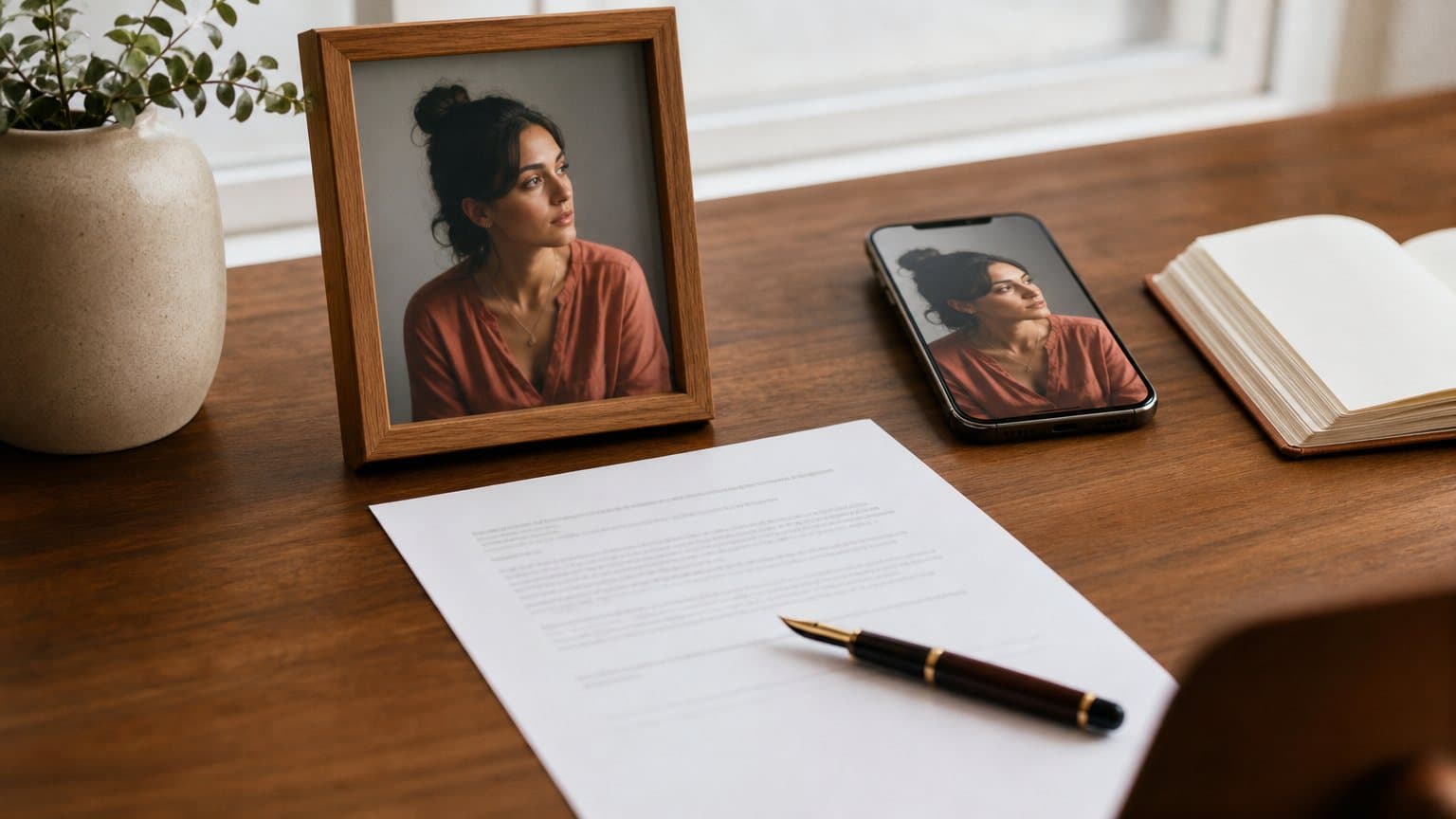
On Tuesday, Meta shipped an AI image feature that let anyone remix a stranger's public Instagram photos. By Friday it was gone. In between came one of the fastest product reversals the company has made in years, and the reason is worth sitting with if you make ads for a living. The feature did not break on quality. It broke on consent.
The tool was part of Muse Image, Meta's first in-house image generator. The specific capability that detonated let people generate AI images by, in TechCrunch's description, "@-mentioning public Instagram accounts that they wanted to reference." Public accounts were opted in by default. After the outcry, Meta pulled it and said, in its own words, "We've heard the feedback that this feature missed the mark, so it's no longer available."
This is not a rerun of the Muse Image launch. It is about what the backlash teaches anyone who puts AI-generated imagery into advertising: where the consent line actually sits, why likeness is the asset that matters, and the short checklist that keeps your creative on the right side of both.
What Meta shipped, and then pulled
Before the lesson, the facts. The story is small enough to fit in a paragraph and important enough to read slowly, because every choice Meta made here is a choice ad makers face in miniature every time they generate a face.
The @-mention mechanic
Muse Image arrived as the company's first foray into AI image generation, live inside Meta AI. The headline feature was social by design. In its own description of the tool, Meta let users "tag public-facing accounts on Instagram and quickly use content on those accounts to create AI-generated or altered content and images." Put plainly: type someone's handle, and the model would draw on their public posts to build new pictures of them or their content. The friction was near zero, which was exactly the appeal and, it turned out, exactly the problem.
Opt-out, not opt-in
Here is the detail that turned a creative toy into a scandal. As the BBC reported, "Instagram users were opted in by default." There was no request, no heads-up, no moment where the person whose face was about to be reworked got to say yes. It meant, in the BBC's words, that "anyone with a public account could have their likeness used without their knowledge or permission." The setting existed. The consent did not. A person could only protect themselves by knowing the feature had launched and going to switch it off, which most people never do because most people never hear.
Three days, start to finish
Meta announced the feature on Tuesday. By Friday it was pulled. That is not a considered policy reversal after months of hearings and debate. It is a company discovering in real time that it had misread how people feel about their own image being used as source material. The speed is itself the signal. When an objection is immediate and near-universal, the line that got crossed was not a niche or technical one. It was a line almost everyone shares.
Why the backlash landed so fast
Plenty of AI features ship with rough edges and survive a week of grumbling. This one did not, and the reason is instructive. The people who reacted hardest were not confused about the technology. They understood it perfectly, which is why they objected.
Consent was assumed, not asked
The loudest early pushback came from people whose faces are their profession. The performers' union SAG-AFTRA urged its members and all Instagram users to protect their likeness, and it described the rollout, in its statement, as "an utter miscalculation of public sentiment regarding the obvious dangers and harms inherent in such use." Talent agency CAA joined the criticism. The common thread was not that AI images are bad. It was that a person's participation was taken rather than given. Consent that has to be revoked is not consent. It is a default dressed up as a choice.
Likeness is a person's asset
The privacy side of the argument was blunter still. The London-based charity Privacy International told the BBC that the feature was "the latest sign AI companies see people's images and data as raw material to be exploited." That framing matters because it names what was actually being traded. A public photo is not public domain. Making it visible to followers is a decision about distribution, not a surrender of the right to control how your face is used to manufacture something new. The feature collapsed those two very different permissions into one, and people felt the difference instantly.
When the default is the problem
Notice what Meta did not get wrong. The images were not low quality. The tool was not hard to use. What failed was the single most important design decision in the whole product, which was the default. Ship the same capability with a clear, conspicuous opt-in, and there is no story here. Ship it opted-in-by-default, and you have taken a decision that belongs to millions of individuals and made it for them. The engineering was fine. The consent architecture was the entire product, and it pointed the wrong way.
This is the trap worth internalizing, because defaults feel invisible while you are building and obvious the moment they ship. A default is a decision you make on someone else's behalf before they know a decision exists. When that decision is about their face, the gap between "we gave people control" and "people had control" is the whole ballgame. Meta genuinely believed it had offered control, because the setting was there. Everyone else saw a choice made for them that they never agreed to. Both things were true, and only one of them mattered.
The real lesson for anyone making ads with AI
It is easy to read this as a big-platform problem that does not touch a marketer generating a few UGC clips. That would be a mistake. Every decision Meta fumbled at global scale is a decision an ad maker makes at small scale, quietly, several times a week. The stakes are lower, but the shape is identical.
Consent has to be explicit
The first transfer is the simplest. If your ad uses a real, identifiable person, whether a customer, a creator, an employee, or a face you found, you need their clear agreement for that specific use. Not their agreement to be filmed once. Not the fact that their profile was public. Agreement to appear in a paid ad, in the markets you will run it, for the period you will run it. Meta's mistake was treating visibility as permission. The same trap catches brands that pull a happy customer's Instagram story into a paid campaign because it was "already out there." Out there is not the same as cleared.
Likeness is the new clearance
For years, the thing you had to clear in an ad was music and stock. In AI creative, the thing you have to clear is a face and a voice. A generated image of a recognizable real person carries the same likeness rights as a photograph of them, and a cloned voice carries the same rights as a recording. If you cannot point to the basis on which you are allowed to use a specific person's likeness, you do not have an asset, you have a liability that happens to look like an asset. Treat likeness the way a production used to treat rights: as something you secure before the shoot, not something you hope goes unnoticed after the launch.
Trust is the product you are actually selling
Here is the part that connects consent to conversion. The entire reason a UGC-style ad works is that it reads as a real person choosing to speak. The format sells trust. An ad built on a likeness the person never agreed to is not just a legal risk, it is a trust risk, because the moment the audience learns the participation was taken rather than given, the credibility the format depends on collapses. Consent is not the tax you pay to make the ad. It is the thing that makes the ad believable in the first place.
A consent checklist for AI ad creative
Principles are easy to nod at and easy to skip. So here is the operational version, the questions to answer before a single AI-generated frame goes into a campaign. None of them are hard. All of them are the kind of thing that is trivial to do beforehand and expensive to fix afterward.
- Whose face is this? If it is a real, identifiable person, you need documented consent for advertising use, in your markets, for your run dates. If it is nobody real, you are on far safer ground.
- Whose voice is this? A cloned or matched voice of a real person needs the same permission as their face. A fully synthetic voice does not clone anyone.
- Whose assets are these? Your own product photos, your own script, and your own brand are yours to generate from. A stranger's public post is not.
- Does it need a label? On a growing list of surfaces it does. Read up on the rules for labeling AI-generated ads and the platform-level AI ad transparency labels before you scale, and keep pace with the shifting AI ad label rules.
- Can you show your basis? Keep the paper trail. A signed release, a licensed library, or a note that the actor is fully synthetic. If a platform or a person asks, you want an answer, not a shrug.
A worked example makes the difference concrete. Say you want a testimonial-style ad for a skincare serum. Route one is to grab a real customer's glowing Instagram clip and quietly regenerate it into something slicker. That is the Muse Image move at brand scale, and it fails the first two questions on the list. Route two is to write the script yourself, generate a synthetic actor who is not a real person, and drop in your own product photo. Same finished ad, same trust signal, and every question on the checklist answers itself. The second route is not just cleaner. It is also faster, because you are not chasing anyone for a signature.
Synthetic actors versus borrowed faces
The Muse Image episode drew a bright line that AI ad makers should copy. There is a real and growing difference between remixing a person who exists and generating one who does not, and that line is where the consent problem lives.
Remixing a real person versus generating a new one
When you build an image from a specific, identifiable human, every right that attaches to that human comes along: their likeness, their reputation, their say over how they are portrayed. That is the feature Meta shipped, and it is why the objection was instant. When you generate a synthetic actor instead, there is no real person whose consent you skipped, because there is no real person at all. The face was composed, not captured. That does not exempt you from every rule, labeling still applies, but it removes the exact harm at the center of this story, which is a stranger's likeness used without their knowledge. The distinction is not a legal loophole. It is the difference between borrowing something that belongs to someone else and making something that belongs to you.
Where the consent line actually sits
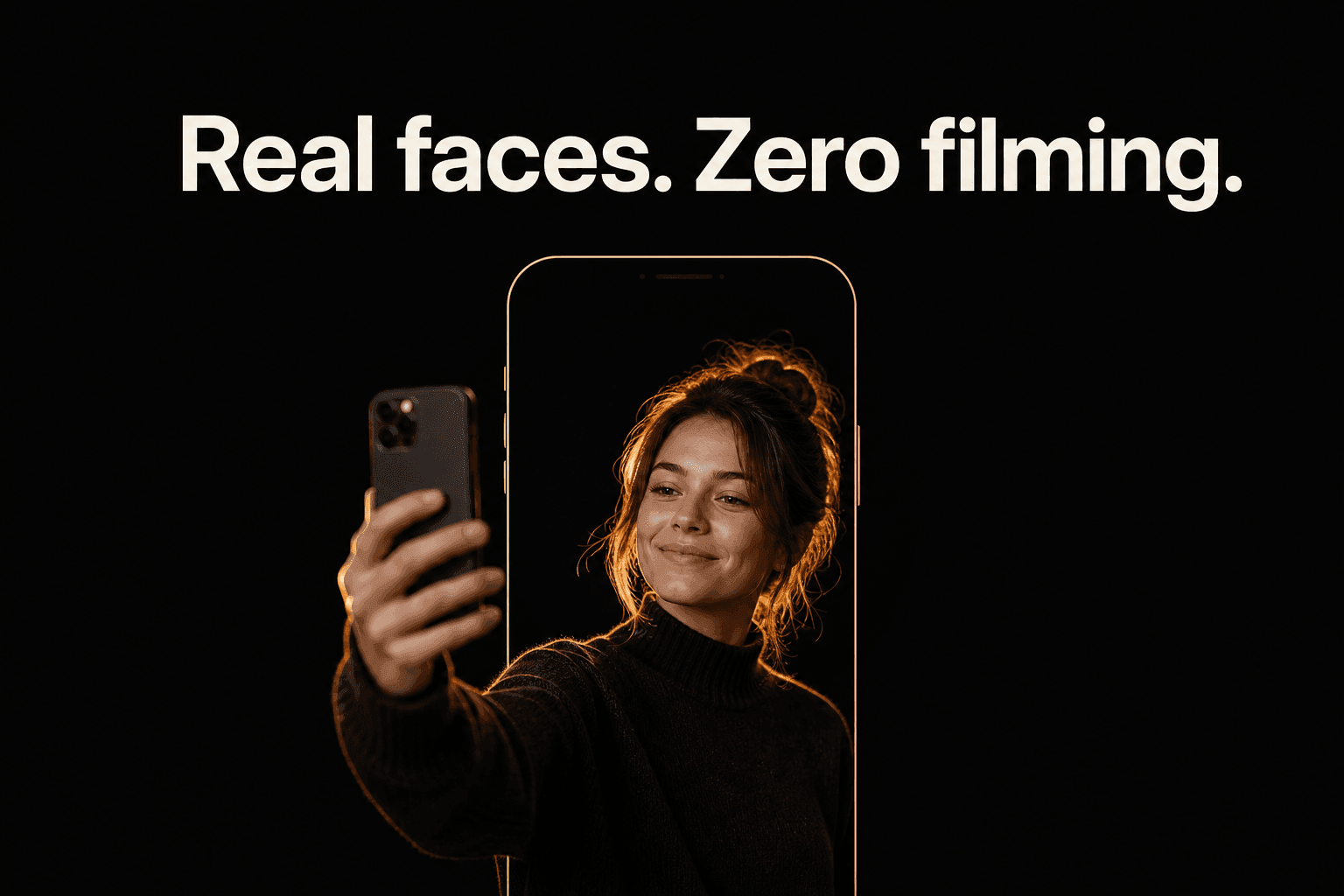
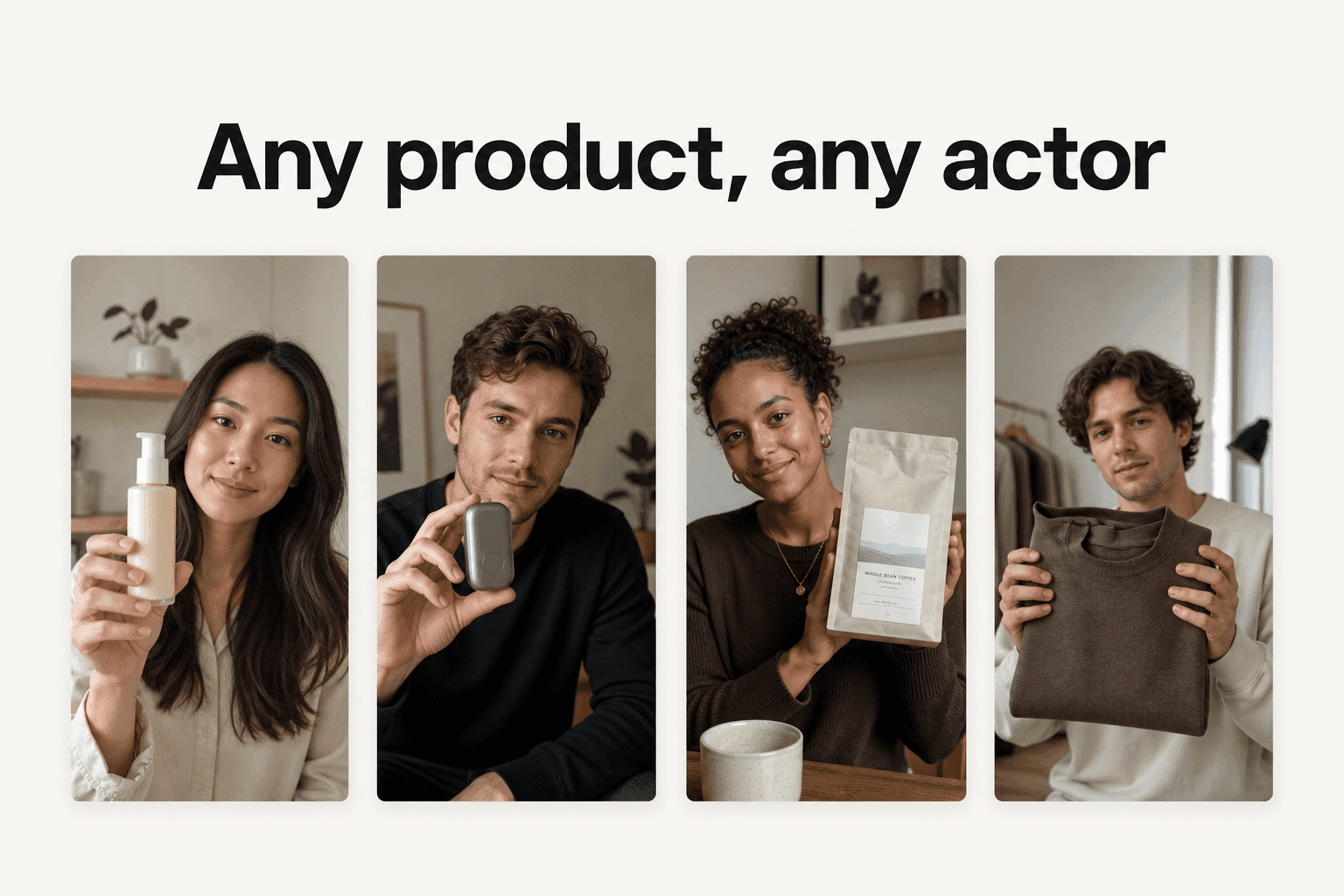
This is the seam that AI UGC tools are built for, and it is worth being precise about it. In Novoads, the inputs are yours: you write or auto-generate a script, you pick an AI actor from a library built with the depicted people's consent and paid for their likeness, rather than a real person you have to clear yourself, and you upload your own product image. The image models it runs, Seedream 5 and Nano Banana, and the video models, Seedance, Kling, and Veo, generate from those owned inputs, not from a scraped public profile. That is a fundamentally different consent surface from the one Muse Image opened up. You are not remixing a stranger. You are producing a licensed AI performer reading your words. When the product has to be in hand, a Discover product template swaps your own product image into the template creator's hand. A custom actor is different: you make it from a photo you upload, so if a real person is in that photo, you need their consent for this use, the same clearance as any real face.
The two routes, side by side
The choice stops being abstract the moment you lay the two paths next to each other. The same finished ad can come from remixing someone who already exists or from generating someone who does not, and nearly every practical cost splits along that single fork.
| The question the ad has to survive | Remix a real person | Generate a synthetic actor |
|---|---|---|
| Whose consent do you need? | Theirs, in writing, for this exact use | Nobody's, there is no real person to ask |
| Who owns the likeness? | They do, and every right travels with them | You do, the face was composed not captured |
| What can bite you later? | A takedown, a claim, a public backlash | A labeling slip you can fix in minutes |
| Does disclosure still apply? | Yes | Yes |
| How fast can you ship it? | Only after you chase a signature | Immediately, the inputs are already yours |
Read down the right-hand column and the pattern is hard to miss. The synthetic route is not the cautious option that trades reach for safety. It is the one that deletes an entire class of problem before it can start, which is why the fastest way to make UGC ads with AI is also the cleanest one. You still disclose where the rules say to, the way platforms like TikTok keep tightening AI ad disclosure, but you never have to answer the one question that ended Muse Image: whether the person in the frame ever agreed to be there.
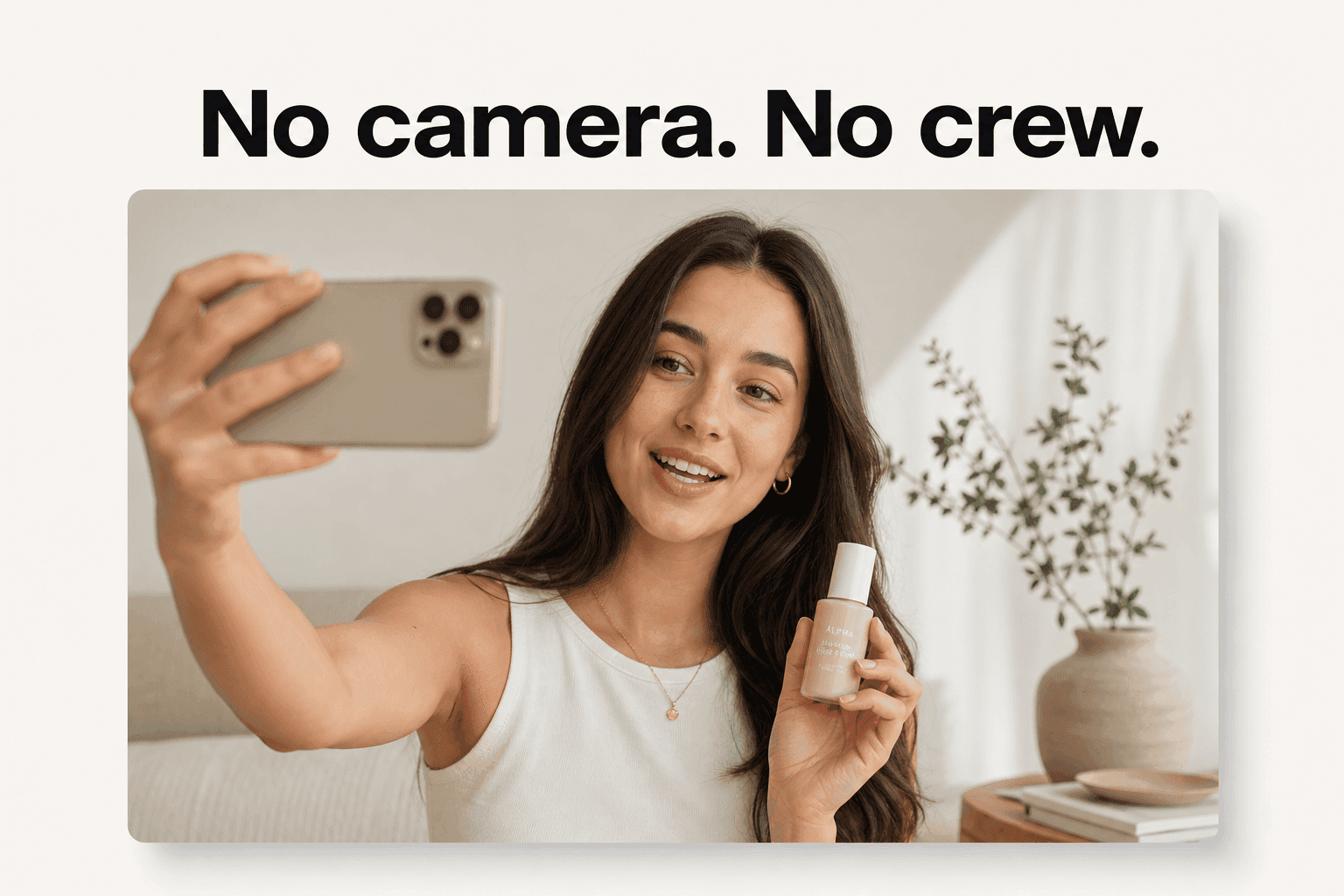
None of this makes the technology unaccountable. A synthetic actor still has to be disclosed where the rules require it, and a false claim is a false claim whoever, or whatever, delivers it. But it does mean the hardest consent question, the one Meta got wrong, never has to be asked, because the answer is built into how the creative is made.
Consent is the feature, not the friction
The tempting reading of this week is that Meta moved too fast and got its wrist slapped. The more useful reading is that consent was never a compliance layer bolted onto the product. It was the product, and Meta pointed it the wrong way. Every ad maker generating faces with AI is making the same design decision on a smaller stage, and the same principle decides whether the result earns trust or quietly forfeits it.
So build creative the way the checklist describes: know whose face and voice are in the frame, generate from assets you own, prefer a synthetic actor to a borrowed one, and label what the rules say to label. That is the whole discipline, and it is not slow. With Novoads you can generate a UGC-style video ad in 30-plus languages with real regional accents from your own script and product photo, using synthetic actors instead of anyone's borrowed likeness. The entry plan is $49 a month, and you can cancel anytime. Consent, done right, is not the thing that slows the ad down. It is the thing that makes it worth running.
Frequently Asked Questions
What AI feature did Meta pull, and why?
Meta removed a capability inside Muse Image, its first in-house AI image generator, that let people generate AI images by mentioning public Instagram accounts to reference their content. It sparked immediate privacy backlash because public accounts were opted in by default, so anyone's likeness could be used without their knowledge. Meta said the feature missed the mark and made it no longer available within days of launch.
Was the Muse Image feature opt-in or opt-out?
Opt-out. The BBC reported that Instagram users were opted in by default, meaning anyone with a public account could have their likeness used without their knowledge or permission unless they went and turned the setting off. That default is the core reason the backlash was so fast: consent was assumed rather than asked for.
What did SAG-AFTRA and privacy groups say about it?
The performers' union SAG-AFTRA urged Instagram users to protect their likeness and described the rollout as an utter miscalculation of public sentiment regarding the obvious dangers and harms inherent in such use. The charity Privacy International told the BBC it was the latest sign that AI companies see people's images and data as raw material to be exploited.
What does the walk-back mean for advertisers using AI images?
It is a live case study in how quickly a consent problem becomes a trust problem. If a trillion-dollar platform can lose a feature in three days over likeness and consent, a brand running AI creative should treat consent as a design requirement, not a footnote. The practical takeaway is to know exactly whose face and voice are in your ad, and on what basis you are allowed to use them.
How can you use AI-generated people in ads without a consent problem?
The safest route is to generate a fully synthetic actor that is not a real, identifiable person, and to pair it with assets you own, such as your own product photos and your own script. That keeps you out of the specific trap Muse Image fell into, which was building new images from a real stranger's public content without asking. You still label AI-generated creative where platforms require it.
Does Novoads use real people's likenesses?
Not unless you bring one. The actors in the Novoads library are AI versions of real people who gave their consent and are compensated for their likeness, and you supply your own product image and script. A custom actor is the exception: you make it from a photo you upload yourself, so you need the right to use that photo, including the consent of the person in it. Novoads does not scrape or remix strangers' public photos. That is a different consent surface from the Muse Image feature, which pulled from public Instagram accounts without asking.
Key Takeaways
- Meta launched the Muse Image @-mention feature on Tuesday and pulled it by Friday after backlash, admitting in its own words that it missed the mark.
- The failure was consent, not quality: public Instagram accounts were opted in by default, so anyone's likeness could be remixed without their knowledge or permission.
- SAG-AFTRA called it an utter miscalculation of public sentiment, and Privacy International said it treated people's images as raw material to be exploited.
- For ad makers the lesson is that consent and likeness rights are not a compliance afterthought, they are the trust the ad is built on.
- The cleaner path for AI ad creative is generating a synthetic actor and using assets you own, not remixing a real person's face.