Midjourney Is Building a Medical Scanner. What That Signals for AI Creative Tools
Midjourney released a behind-the-scenes video of the full-body ultrasound scanner it wants to put in spas. Here is what was actually shown, what remains unproven, and what the hardware pivot signals for ad makers who build on AI creative tools.

Mauricio Valdivia
·Updated ·7 min
From Prompt Box to Dunk Tank
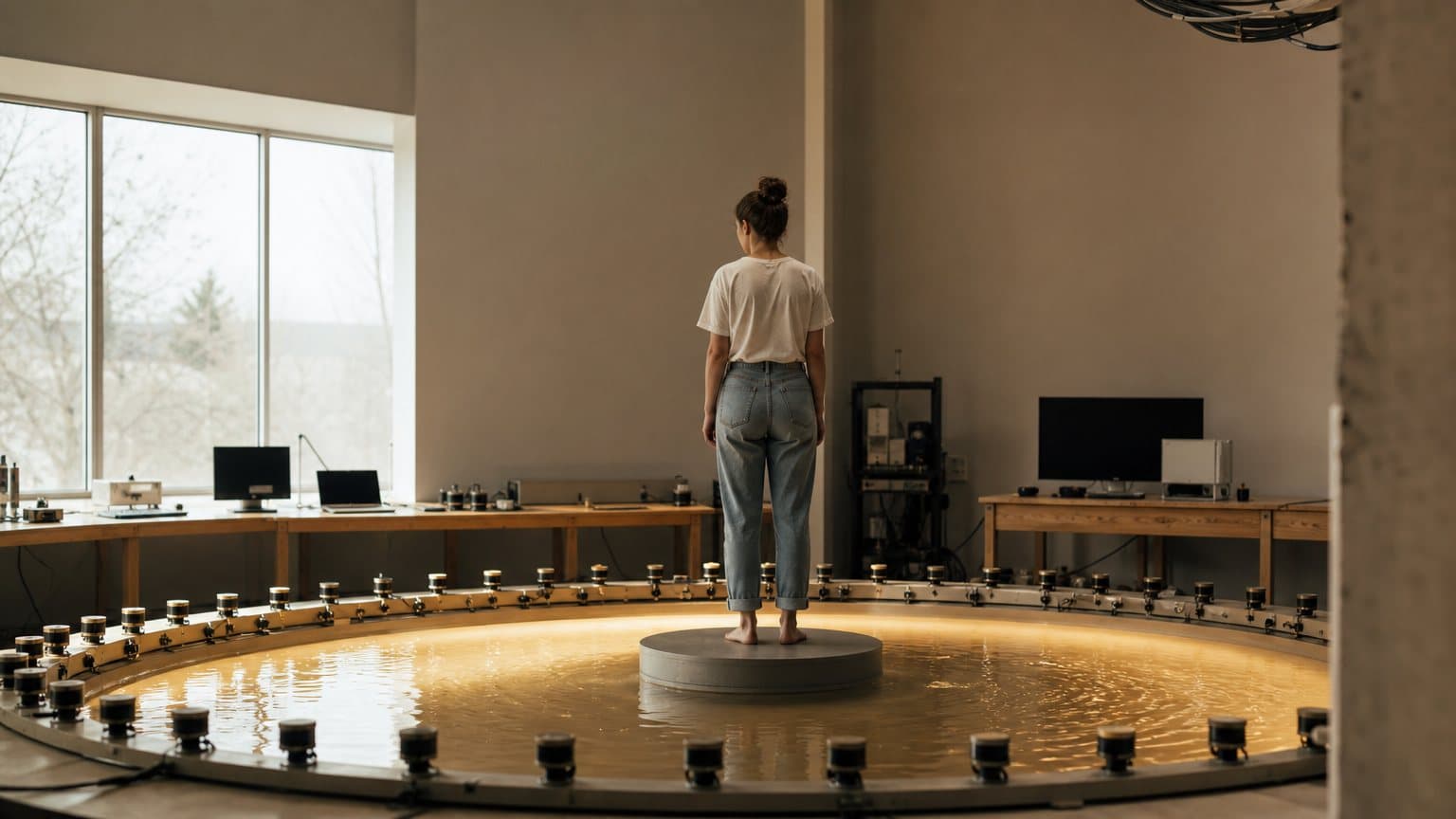
Midjourney, the AI startup best known for its image generator, spent this week showing off a hot tub. On July 3, 2026, an engineer at the company published a nearly 20-minute behind-the-scenes video of its full-body ultrasound scanner, the dunk-tank machine Midjourney wants to install in its own chain of spas. That is a strange sentence to type. It is also a useful one, because if your ad production runs on AI creative tools, the interesting part is not the scanner. It is what one of the most famous names in generative imaging does when it goes hunting for its next act, and what that says about how long any single tool stays central to your stack.
To be clear about scope: nothing here changes how you make ads this week. The story earns your five minutes for one reason. It is the sharpest example yet of an AI creative lab treating creative tooling as a stepping stone rather than the destination, and that has practical consequences for anyone deciding what to build their ad workflow on.
What Midjourney actually showed
The reveal came in two beats. In mid-June 2026, Midjourney announced the establishment of Midjourney Medical and published a long write-up of the scanner concept on its own site. On July 3 came the follow-up: a behind-the-scenes video tour of the actual prototype, hosted by Marcin Plaza, a tech YouTuber who also happens to be an engineer at the company.
A glorified hot tub with an elevator
Plaza describes the prototype with disarming candor: scores of ultrasound probes "hacked apart and slapped on a glorified hot tub with an elevator in it," wired to off-the-shelf computers and Raspberry Pis. The concept, in Midjourney's own words, reads like science fiction with a parts list. You stand on a platform. It lowers you into warm water, and a ring of sensors sends ultrasonic waves through your body from every angle while "hundreds of thousands of tiny elements take turns, sending out waves, listening together," streaming data to a compute cluster that reconstructs a 3D map of what is inside you. The company's stated goal is a full scan in no more than 60 seconds.
The spa, not the clinic
Midjourney is not pitching hospitals. Its announcement says the first Midjourney Spa will open in San Francisco in 2027: a place with hot tubs and saunas where the scan happens while you soak. The positioning is doing legal work. As The Verge reports, the company has emphasized that the scanner will launch as a wellness product focused on body composition, not as a diagnostic medical device, which would require FDA clearance and clinical trials. Midjourney's head of medical, Tom Calloway, said the body-composition focus lets the company "speedrun" to opening, and the announcement adds that Midjourney will submit regular test results to the FDA to expand what the scanner is allowed to do over time.
The claim sheet, in one view:
| What Midjourney says | Status today |
|---|---|
| Working prototype scanner | Shown on video |
| Full scan in 60 seconds | Stated goal |
| Detail rivaling MRI | Not independently verified |
| First spa, San Francisco | Planned for 2027 |
| Over 50,000 scanners worldwide | Ambition for 2031 |
| A billion scans a month | Ambition for 2031 |

The part that is still a promise
The video is generous about the hardware and quiet about the hard questions. Experts who spoke to The Verge said Midjourney has shown little evidence it can overcome the well-known limits of ultrasound, a technology that has existed for decades, or produce the detailed images it has teased at the speed and scale it is promising. The Register, covering the June announcement, noted that it is not even clear how fast the prototype actually scans.
Three open questions the tour does not answer:
- Physics. The video shows more of the hardware and the team building it, but largely glosses over the physics and imaging questions experts raised when the project was first announced. Sound-wave imaging has known constraints that money and enthusiasm do not automatically dissolve.
- Image quality. The MRI-comparable detail Midjourney describes is the whole value proposition, and so far it exists as the company's own renders and claims, not as independently reviewed output anyone outside the lab has validated.
- Speed at scale. A 60-second scan is the stated goal for a machine that is supposed to number over 50,000 units by 2031. Neither the current scan time nor the path from one prototype to a fleet has been shown.
None of this means the project will fail. It means the burden of proof still sits entirely with Midjourney, and the company appears comfortable with that: Calloway said he did not see much that needed clarifying and promised frequent progress updates on the company's blog instead.
Why an image company is building hardware
Nobody can say no
Midjourney never took venture capital, and the announcement leans into that fact directly: "As a reminder, Midjourney has no investors." CEO David Holz put it more bluntly in the video, saying the lack of investors gives the company freedom to pursue the scanner: "No one can tell me not to do it." A lab that answers to no portfolio strategy can make a left-field hardware bet without asking permission, which is exactly what this is.
The creative shelf got crowded
Midjourney does not frame the scanner as a hedge, but the timing is hard to ignore. In the same week this video landed, Google shipped a new text-to-video model, Gemini Omni Flash, alongside the Nano Banana 2 Lite image model. Frontier video models now leapfrog each other monthly, prices keep falling, and a buyer's cost of switching tools keeps dropping toward zero. A subscription image tool can be a category leader one quarter and one of five interchangeable options the next.
Here is the stance this post will take: a moat outside creative tooling entirely starts to look less eccentric and more rational when your home market reprices every month. Bodies do not commoditize. Prompt boxes clearly do.

What ad makers should take from it
If you buy or build on AI creative tools, the scanner story is a postcard from your supply chain. Three practical readings:
- Bet on workflows, not vendors. Your ad account does not care which lab made the model. Structure production so the model is a swappable part: the brief, script, actor, format, and measurement stay fixed while the engine underneath changes, whether that engine is Seedance, LTX, or whatever ships next month.
- Expect roadmap drift. Labs pivot, reprice, and deprecate for reasons that have nothing to do with your campaigns. A company famous for image generation spending its energy on ultrasound hardware is simply the most vivid recent example of how far a lab's attention can wander.
- Judge tools by shipped output. The only question that matters this month is whether a tool ships converting ads this month. A vendor's long-term vision, medical or otherwise, is not a line in your ROAS report.
Where Novoads fits into this
Novoads is built on exactly the assumption this story rewards: models are engines, and the workflow is the product. Today it runs Seedance 2.0, Kling v3 Pro, and Google Veo 3.1 for video, and engines get added or retired as they earn their place. Midjourney was never one of them, so nothing about this news touches the platform. What you keep between model generations is the part that actually makes an AI ad convert: the script angle, the AI actor, the vertical format, the captions, and the volume of variations you test. You can try that workflow end to end in Novoads. Start for $49 a month. Cancel anytime.
The scanner is the message
A company that made its name letting anyone type a prompt and get art has decided its next decade might be sound waves and spa water. Whether the scanner works is Midjourney's problem to prove. What it signals is everyone's to absorb: the creative-model layer is a rental market, labs will follow their curiosity and their margins wherever those lead, and the durable asset in an AI ad operation is not any single model. It is the workflow that turns whichever model is best this quarter into ads that ship.
Frequently Asked Questions
Is Midjourney really building a medical scanner?
Yes. Midjourney, the company best known for AI image generation, announced Midjourney Medical and a full-body ultrasound scanner in June 2026, and on July 3, 2026 an engineer at the company published a nearly 20-minute behind-the-scenes video of the prototype. The hardware exists. What is not yet demonstrated, according to experts who spoke to The Verge, is that it can deliver the detailed imaging the company describes at the speed and scale it is promising.
What is the Midjourney Spa?
Midjourney plans to deploy its scanners inside its own spas rather than in hospitals. The company's announcement says the first Midjourney Spa will open in San Francisco in 2027, with the scans framed as a side effect of visiting a place you would want to go anyway. The stated ambition is a fleet of over 50,000 scanners worldwide by 2031, with capacity for a billion scans a month.
Does the scanner have FDA approval?
No, and Midjourney is deliberately not seeking clearance at launch. The company has emphasized that the scanner will launch as a wellness product focused on body composition, not as a diagnostic medical device, which would require FDA clearance and clinical trials. Its announcement says it will submit regular test results to the FDA to unlock increased capabilities over time.
Is Midjourney leaving AI image generation?
Nothing announced says that. Midjourney Medical is presented as an additional research effort alongside the company's creative tools, and neither the announcement nor the press coverage describes any wind-down of the image products as of July 2026. The scanner is a diversification, not a stated exit.
What does a medical scanner have to do with AI ads?
Directly, nothing. The signal is indirect: one of the best-known AI creative companies is pouring energy into a market far outside creative tooling while image and video models commoditize fast. For ad makers, that is a reminder to build campaigns on a workflow that can swap models, not on loyalty to any single vendor's roadmap.
Does Novoads use Midjourney models?
No. Novoads runs Seedance 2.0, Kling v3 Pro, and Google Veo 3.1 for video generation, plus image models like GPT Image 2 and Nano Banana Pro. Midjourney has never been one of its engines, so this news changes nothing about how the platform works. You can test the full ad workflow from $49/month.