AI Ad Generator Sued Over a Meme Template: What It Means for Ad Creative
An artist's copyright suit against an AI meme ad generator puts one rule in front of every marketer: an image you can legally share as a joke is not an image you can legally put in an ad.

Mauricio Valdivia
·Updated ·12 min
Fine as a joke, risky in an ad
Elmer Saflor drew a two panel comic about being held back by his own shyness. In the first panel a stylized character reaches up for a yellow balloon. In the second, a larger pink figure looms behind him and a bead of sweat rolls down his face. It went viral in 2017. For years he watched people recaption it, remix it, and turn it into one of the most recognizable images on the internet, and he never tried to stop any of it.
On July 1, 2026, he sued an AI ad generator that had put it in a template library.
The case is Elmer Saflor v. Memes Apps, LLC, No. 2:26-cv-07153, filed in the U.S. District Court for the Central District of California as a copyright infringement action under 17 U.S.C. 501. Saflor is a digital artist based in the Philippines. He registered the comic, "Running Away Balloon," with the U.S. Copyright Office under registration VA 2-397-201, effective March 21, 2024. His complaint alleges that Memes Apps, which operates Memes.ai and Memes AI Studio, violated copyright law by selling paid subscriptions to an ad generator that reproduces his comic without permission.
Nothing has been decided. Memes Apps has not publicly responded, and Ars Technica reported that it could not reach the company for comment. So the useful part of this story is not the verdict, which does not exist. It is the line the case is drawn along, the difference between using an image for fun and using it in an ad. That line already has a ruling behind it, and it is the most transferable thing here for anyone who builds ad creative out of a library someone else assembled.
What the lawsuit actually says
Strip away the headline and the complaint is unusually simple. It is not a sprawling theory about how AI works. It is a claim that a specific registered drawing shows up inside a paid commercial product.
A registered comic, a template library, and a subscription
The complaint sets out three facts and leans on all three. The artwork is registered, which is what lets a U.S. copyright owner sue at all. The defendant is described as the operator of Memes.ai and Memes AI Studio. And the product is sold, not given away, which is what pulls the whole dispute onto the commercial side of the line.
The service does not hide what it is for. Its own site describes it as an AI meme ad generator and invites you to paste your website, add a goal, and generate meme ads built around your brand, offer, and audience. Saflor's complaint says the platform is marketed as a commercial ad generator for brands, agencies, founders, and marketers, and that his comic sits in the template section under its own name.
Ars Technica reported the commercial packaging in concrete terms: access to template memes at subscription tiers set at $40 or $199 monthly. The complaint also cites the company's own public portfolio, describing a platform that works with more than 40 brands generating up to 1,000 ads monthly for audiences totaling more than 75 million social media followers.
The words that make it a commercial case
Copyright disputes often turn on framing, and here the framing is doing heavy lifting on both sides. Saflor's position, in his own words to Ars Technica, is that "There's a big difference between Internet users making memes for fun and a company monetizing my copyrighted work as part of a commercial product." He also told Ars that just because something becomes a meme, that does not mean the creator loses their rights.
That is not a claim that memes are illegal. It is a claim that one specific use of a meme, the packaged and priced one, is different in kind from the millions of uses he has cheerfully ignored for years.
The part most coverage skips
Here is the detail that changes how strong you should think this case is. Saflor told Ars Technica that he did not contact Memes Apps before filing, and that he "has not seen any examples of his meme used in ads generated by the platforms." He filed partly to compel discovery, and to raise broader questions about how AI powered platforms use creators' work and what licensing obligations they may have.
That cuts both ways. It makes the suit an information-forcing move rather than a response to a documented campaign. It also means Saflor faces a hurdle Ars named directly: proving harm could be difficult if it turns out no advertiser ever used his comic. Anyone writing about this case as a settled wrong is getting ahead of the record.
The 2024 ruling that drew the commercial line
The reason this matters to marketers who have never heard of Memes.ai is that the underlying rule is two years old and was set in a case with no AI in it at all.
Success Kid, and a campaign fundraising ad
In June 2024 the Eighth Circuit decided Laney Griner v. King for Congress, an appeal over the use of the Success Kid meme in a political fundraising ad. As Ars Technica summarized it, a court ruled that the particular meme could not be used in a campaign ad without permission. The image had been shared and recaptioned countless times without consequence. Putting it in an ad was what produced a judgment.
Note who the defendant was. It was the campaign committee that ran the ad, not a platform, not a template vendor, not a tool. Goldman's write-up records the outcome plainly: the committee did not prevail. In the one meme case that has actually been decided, the party on the losing end was the advertiser.
The rule a law professor drew from it
Writing on his Technology & Marketing Law Blog at the time of that 2024 decision, legal scholar Eric Goldman put the holding in a sentence: "This ruling articulates a simple rule of law: meme usage for noncommercial purposes is likely fair use, while meme usage in ads isn't." He called it another example of advertising exceptionalism.
That is a two-year-old observation about a case with no generative AI in it, which is exactly why it is worth carrying into your creative process. It is not a reaction to a news cycle. It is a description of how one court treated the same picture differently depending on whether money was being asked for.
Why "it is a meme" is a weaker shield than people assume
Goldman was not celebrating the rule. He pointed out the counterintuitive result it creates: if a work becomes so popular that it becomes a meme, its enforceability has decreased from its starting point. The more an image spreads, the more the noncommercial uses look like fair use, and the less control the owner has over associations they never wanted.
Read that carefully and you will notice it does not help an advertiser at all. The reduced enforceability lives on the noncommercial side. The commercial side is the one place where the popularity of an image does not soften the claim, because the ad is precisely the use the courts have been willing to separate out.
Why this is not the AI copyright story you have read before
Most AI copyright coverage has trained everyone to expect a particular shape of case. This one has a different shape, and the difference is the reason it could matter beyond memes.
The claim is about outputs, not about how the model was built
Goldman told Ars Technica that it matters that the meme generator's outputs include actual copies of Saflor's original work. In the larger AI copyright fights, a central defense is that original works are not reproduced in outputs. In his words to Ars: "And we've seen where the copyright owners are able to replicate identical outputs, that actually makes the cases much higher stakes for the defendants."
So the question in this complaint is not what a model consumed. It is what the product hands a paying customer. That is a narrower and more concrete question, which is also why it is easier for a court to reason about, and why a marketer can act on it without waiting for a decision.
Suing the supplier instead of the advertisers
The strategic choice is the unusual part. Saflor is going after the generator rather than the brands whose ads allegedly used his work. Goldman told Ars that Saflor started his case "on the right foot" and told the right story for the judge in the complaint, but that going after the meme generator rather than advertisers is gutsy and could create "a whole host of other legal dilemmas" for the court to weigh.
Where it could bite Memes Apps is the packaging. Ars reported Goldman's view that the packaged deal being sold to third-party advertisers, access to template memes at those $40 and $199 monthly tiers, could doom the generator's defense, unless the company can prove that the deal is a common model in the meme generator industry.
The contrast with the decided case is the clearest way to see what is new here:
| Dimension | Griner (2024) | Saflor (2026) |
|---|---|---|
| Who was sued | The advertiser | The tool vendor |
| The disputed use | One fundraising ad | A paid template library |
| The alleged copy | In the finished ad | In the product's output |
| Status | Decided on appeal | Filed, untested |
A win could cut both ways
The same reach that makes the case interesting makes it risky. Goldman told Ars that Saflor may hit a wall if the court finds his arguments apply to any meme generator, and that a finding in his favor could risk undercutting the entire meme ecosystem. He added: "In those circumstances, there's some good reasons for the court to check more cautiously."
That is a real reason to hold predictions loosely. The court is being asked to draw a rule that would land on an entire category of products, and courts move slowly when a ruling has that kind of blast radius. This post is not going to tell you who wins, because nobody credible is telling you that.
What it changes for anyone building ads from templates
Here is the part that survives whatever the court does. Three practical shifts, none of which require a verdict.
The commercial line is the whole game
The single most useful sentence in this entire story is Goldman's 2024 formulation, and it has nothing to do with AI: noncommercial meme use is likely fair use, ad use is not. Every asset in your creative pipeline sits on one side of that line or the other, and the side is decided by what you do with it, not by where you found it.
This is why "everyone uses this image" is not a defense worth relying on. Everyone using it noncommercially is the fact pattern that made it a meme. Your ad is the one use that stands apart from the crowd, and it is the use that carries a budget, an advertiser name, and a paper trail.
A subscription buys access, not clearance
The instinct that a paid tool must have sorted out the rights is understandable and unsafe. A subscription is a commercial arrangement with a platform. Whether it clears anything depends on whether the platform holds what it is passing along, which is exactly the contested question in this complaint, where the artist says he never licensed, sold, or authorized any use.
The reasonable posture is not paranoia. It is asking. A vendor that can explain where its library came from is telling you something useful. A vendor that cannot is telling you something too.
The advertiser is usually the one exposed
Griner is the reminder here. The defendant was the campaign committee running the ad. Saflor's suit against a supplier is the exception that Goldman called gutsy, which is another way of saying it is not the normal path. If a template ever does turn out to be encumbered, the ad account with your brand's name on it is the visible target, and platform policy exposure sits on top of that. This is the same reflex that our guide to AI ad disclosure rules argues for on labeling: the advertiser is the one holding the risk, so the advertiser is the one who has to check.
A provenance checklist for AI ad creative
None of the above is legal advice, and a copyright question about your specific creative belongs with your own counsel. What follows is operational hygiene: the record-keeping that makes the legal question answerable instead of terrifying.
Before you generate
Ask three questions of any library, template pack, stock set, or model preset you are about to build an ad on.
- Where did this artwork come from? A vendor's own creation, a license, or an unexplained pile. Only one of those is comfortable. The same question applies to static creative, where platform rules on AI-generated images already add a second layer of scrutiny.
- What do the terms grant for paid media specifically? Organic posting rights and paid advertising rights are commonly different, and the ad is the risky use.
- Would I be comfortable if this asset appeared in a court filing next to my brand name? It is a blunt test and it works.
Before you spend real money on it
Volume is what turns a small provenance question into a large one. A brand that ships 40 ad variants a month is not making one decision, it is making 40, and the cheap moment to catch a problem is before the spend, not after a takedown. If you run creative in batches, the check belongs in the same place your ad creative testing process already lives, as a field on the brief rather than a separate ritual. That volume pressure is rising for reasons that have nothing to do with copyright: Google's August 17 target-based bidding change pushes budget-limited campaigns toward their stated targets, and the usual answer to a tighter target is more variants.
Consider a skincare brand shipping 40 variants a month. Ten use a stock template pack, ten use a licensed product photo, ten use AI actors, ten reuse an old campaign asset. Three of those four buckets have a clear origin story. The stock pack is the one that needs a name, a date, and a link to terms, and it takes about a minute per pack to record it once instead of reconstructing it later under pressure.
What to keep on file
Keep the boring artifacts, stored with the asset rather than in someone's inbox:
- The vendor's terms as of the date you generated, not as of today.
- The template or preset identifier, so the specific asset is findable later.
- The source of any uploaded image, including your own product photography.
- Who approved the creative for paid distribution, and when.
Teams that already run structured creative operations have most of this infrastructure and just need one more column. Teams that do not will discover the gap at the worst possible moment, which is usually the moment someone else's lawyer asks a simple question. Provenance is a field you fill in, not a feeling you have.
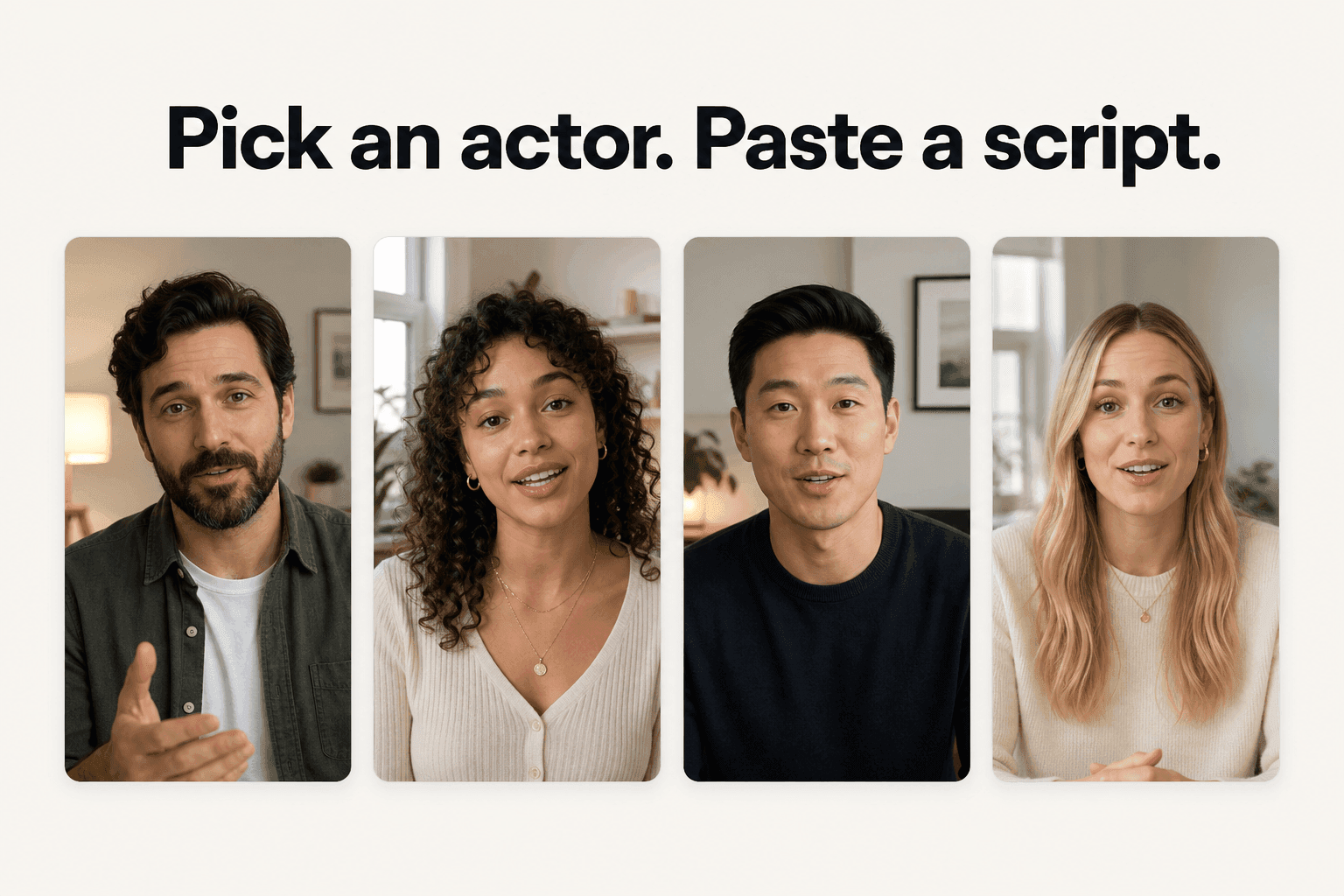
How Novoads keeps the provenance question small
The reason this case reads as a template-library problem is that a template library is a pile of artwork somebody else assembled, sitting between you and your ad. The most direct way to shrink that surface is to not have that pile in the path.
The inputs are things you already own
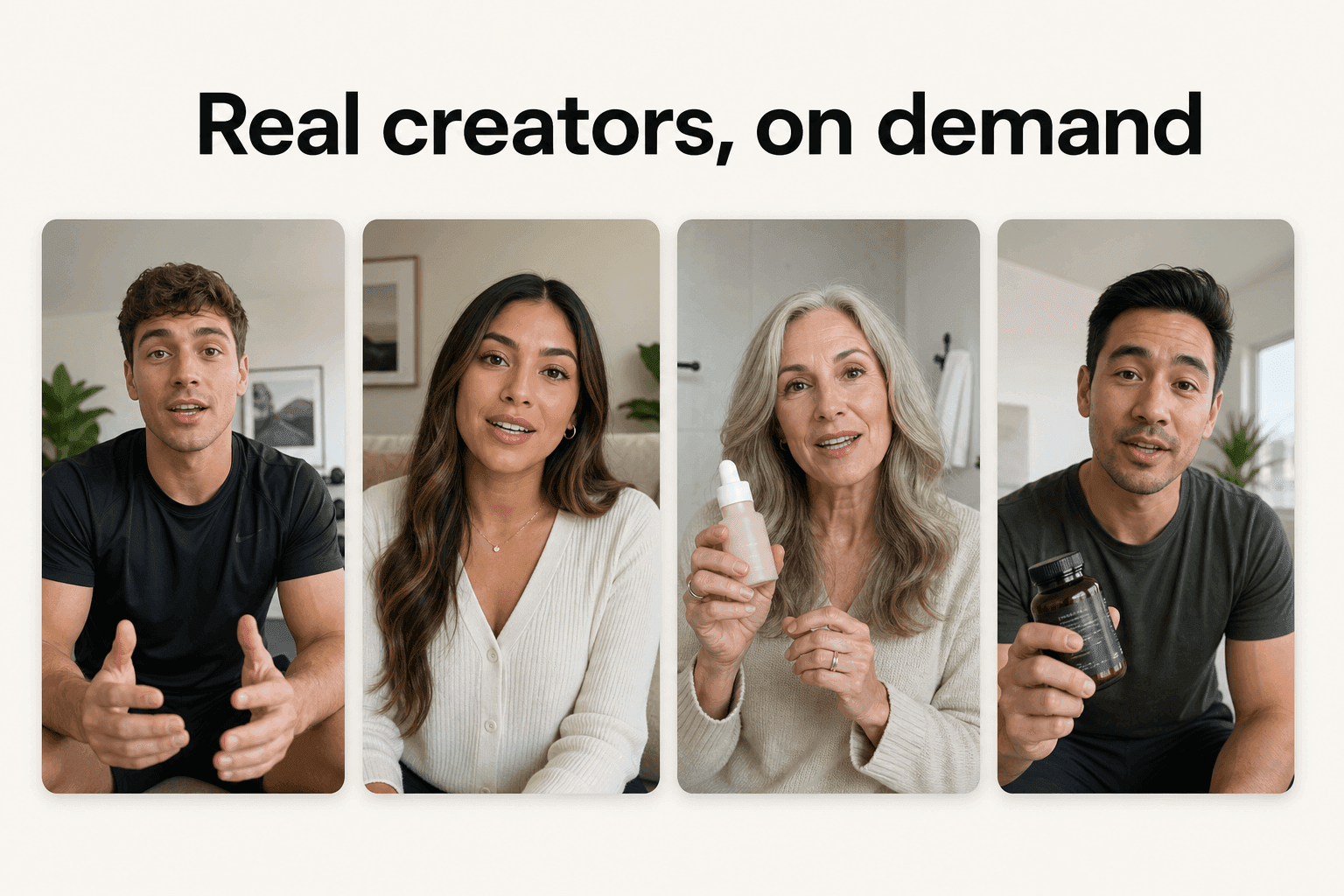
Novoads works from your material. You upload your own product image, or you write or auto-generate a script, then pick an AI actor to deliver it and get an ad-ready vertical or horizontal video in the UGC-style format. There is no meme template library in the pipeline, because the creative starts from your product and your words rather than from a shelf of preexisting artwork. That is a description of how the input works, not a legal guarantee, and it does not remove your own obligations: your claims, any real person's likeness, any music, and any third-party asset you upload are still yours to clear.
The same goes for our terms. Read them, the same way this post argues you should read any vendor's. A tool that tells you to check everyone's terms except its own is not being helpful. If you want to see the flow before deciding, Novoads starts at $15/month (Starter, 200 credits per month). Plus is $49/month (1,000 credits), and Ultra starts at $129/month (3,000 credits) for more volume. You can cancel anytime.
Where the remaining risk lives
Even with clean inputs, ad creative carries obligations that no tool clears for you. Disclosure is the obvious one, and it is platform by platform rather than universal, which our breakdown of labeling AI-generated ads covers in detail, down to the step-by-step TikTok flow. Performance claims are another. The point of shrinking the provenance surface is not that the remaining work disappears. It is that the work left over is work you can actually do, because it is about your own product and your own claims rather than about the unverified history of someone else's drawing.
Provenance is becoming part of creative operations
Saflor's case may win, lose, or settle quietly, and the fair prediction is no prediction. Goldman himself flagged reasons a court might move cautiously, and the plaintiff has not yet seen a single ad made from his comic.
But the rule underneath it is not waiting for the ruling. It was written in 2024, about a meme with no AI anywhere near it, and it says the same thing today that it said then. The joke and the ad are not the same use. Generative tools have made it trivially cheap to cross that line at scale, forty variants at a time, without anyone in the room deciding to.
So the discipline that used to belong to a legal review at the end is moving to the front of the pipeline, next to the brief. Know where every asset in your ad came from, keep the record, and treat any subscription as access rather than absolution. If you want to see what an ad pipeline looks like when the inputs start with your own product, that is the thing worth trying next.
Frequently Asked Questions
What is the Saflor v. Memes Apps lawsuit about?
Elmer Saflor, the Filipino digital artist who created the Running Away Balloon comic, filed a copyright infringement complaint on July 1, 2026 in the U.S. District Court for the Central District of California, case number 2:26-cv-07153. He alleges that Memes Apps, LLC, which operates Memes.ai and Memes AI Studio, sold paid subscriptions to an ad generator that reproduces his registered comic as a template for commercial ads. The allegations have not been tested in court and Memes Apps has not publicly responded.
Is it legal to use a meme in an advertisement?
It is much riskier than using one in a personal post, and there is a decided case on the point. In June 2024 the Eighth Circuit affirmed against a campaign committee that used the Success Kid meme in a fundraising ad. Writing about that ruling at the time, legal scholar Eric Goldman said it articulates a simple rule of law: meme usage for noncommercial purposes is likely fair use, while meme usage in ads is not. That is a general observation about one line of cases, not legal advice for your specific ad, so ask your own counsel.
Does paying for a template subscription give me the rights to the templates?
Not automatically. A subscription is a commercial relationship with the platform, and what it grants you depends entirely on whether the platform actually holds the rights it is passing along. That question is at the heart of the Saflor complaint, which alleges the artist never licensed or authorized the use. Read the terms, ask the vendor where its template artwork comes from, and keep the answer on file.
Is this the same as the big AI copyright fights in the news?
No, and the difference is the point. Goldman told Ars Technica it matters that the meme generator's outputs include actual copies of the original work, because a central defense in the larger AI copyright cases is that original works are not reproduced in outputs. This case is about what comes out of the product, which is a narrower and more concrete question than the ones dominating the headlines.
Who normally gets sued when a copyrighted image ends up in an ad?
Historically the advertiser. In the Success Kid case the defendant was the campaign committee that ran the fundraising ad, not the tool that made it. Saflor is doing the opposite by suing the generator rather than the advertisers, which Goldman told Ars Technica is a gutsy strategy that could create a whole host of other legal dilemmas for the court.
What should I check before running an AI-generated ad built from a template?
Three things. Where the underlying artwork or footage came from and whether the vendor can say so. What the vendor's terms actually grant you for paid media, as opposed to organic posting. And whether you have a record of both, stored with the creative, so that six months later you can answer the question without guessing. Provenance is a field you fill in, not a feeling you have.
Key Takeaways
- Filipino artist Elmer Saflor sued Memes Apps, LLC, which operates Memes.ai and Memes AI Studio, on July 1, 2026 in the Central District of California, alleging its ad generator reproduces his registered comic as a paid template.
- The transferable rule predates this case: after the 2024 Success Kid decision, legal scholar Eric Goldman wrote that meme use for noncommercial purposes is likely fair use while meme use in ads is not.
- This is a case about what the product outputs, not about how a model was built, which is why it does not fit the usual AI copyright narrative.
- Saflor told Ars Technica he has not seen a single ad made from his comic and filed partly to compel discovery, so the allegations are untested and the outcome is genuinely open.
- For advertisers the practical move is provenance discipline: know where every template, image, and voice in your ad came from, keep the record, and treat a subscription as access, not as a rights clearance.