Open-Source ElevenLabs Alternatives for Ad Voiceovers: 6 Honest Picks and Their Real Tradeoffs
Open and local voice models now do a lot of what ElevenLabs does. Here are six real alternatives for ad voiceovers, compared on what actually decides an ad: commercial licensing, batch consistency, emotional range, and setup overhead.

Mauricio Valdivia
·12 min
Open Voices Closed the Gap. Then Ads Reopened It.
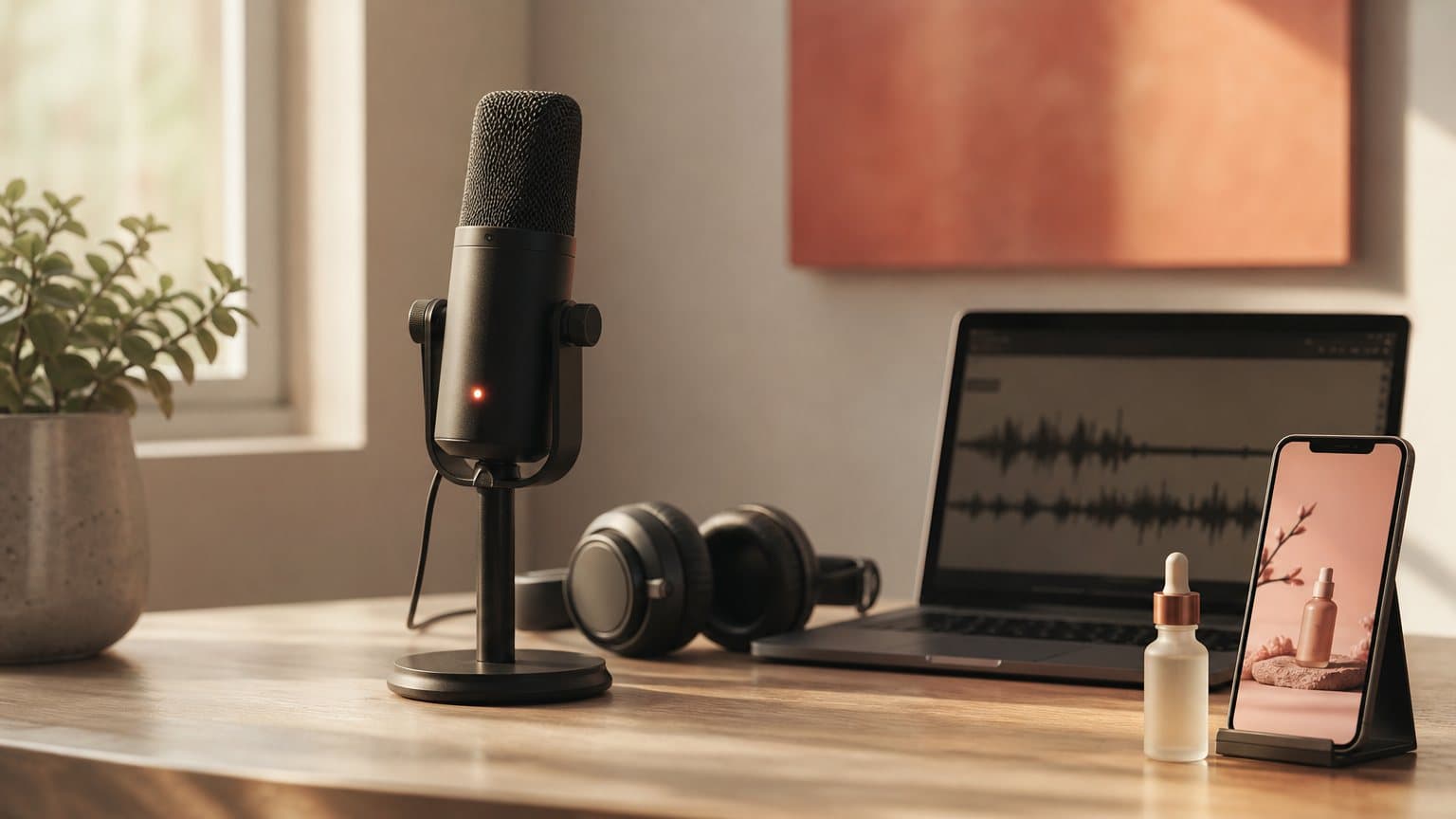
A performance marketer swaps ElevenLabs for a free open model to voice a supplement ad. The first take is shockingly good. Warm, natural, indistinguishable from a paid API on a single line. So she generates the other fourteen hooks she wants to test, and the wheels come off quietly: two clips drift into a slightly different timbre, one flattens on the call to action, and when she checks whether she can even run this on a paid campaign, the license turns out to say no.
None of that means the open model is bad. It means the job changed. A demo asks "does this sound good." An ad asks "does this sound good the same way, fifteen times, with commercial rights, in my customer's accent, without me babysitting a GPU." Those are different questions, and the second one is where most open-versus-ElevenLabs comparisons quietly stop.
This is an honest guide to the open and local voice models you would actually reach for when ElevenLabs is your baseline. We use ElevenLabs first-hand for ad voiceovers, so this is not a takedown. It is a map of where open models are genuinely good enough, where they cost you more than they save, and how to read the marketing (starting with the "100x cheaper" line making the rounds) before you bet a campaign on it.
TL;DR: the 6 best open-source ElevenLabs alternatives for ad voiceovers
The axis that matters here is not raw quality, because on a single clip the gap is already small. It is shippability: can this voice go into a paid ad, at volume, with the rights and the consistency an ad demands. Every option below sits somewhere on that line, and the license column is the one most roundups skip.
- Kokoro is best for cheap, high-volume narration, on an Apache 2.0 license you can actually ship.
- Chatterbox is best for a cloned voice under the permissive MIT license, from a real audio lab.
- Dia is best for expressive, dialogue-style delivery, though it is English-only today.
- Coqui XTTS-v2 is best for fast multilingual cloning, if you can live with its custom license.
- Fish Audio (OpenAudio S1) is best for emotional range, but the open weights are non-commercial.
- ZeroLabs is best for trying open audio models in your browser with zero setup.
Pick on the job before the price. If you need one clean narrator voice at scale and want zero license risk, Kokoro is the boring right answer. If you need to clone a specific voice, Chatterbox is the permissive pick and XTTS-v2 the multilingual one. If you need emotion, look at Dia and Fish Audio, and read their licenses. If you just want to hear how far open audio has come, open ZeroLabs. Then, if the constraint is really shipping finished ads and not running models, weigh a managed path.
| Model | License | Voice cloning | Best for | The catch for ads |
|---|---|---|---|---|
| Kokoro | Apache 2.0 | No, preset voices | Cheap high-volume narration | Fixed voices, English-led |
| Chatterbox | MIT | Yes, zero-shot | An MIT-licensed cloned voice | You self-host and tune |
| Dia | Apache 2.0 | Audio-conditioned | Expressive dialogue reads | English only today |
| Coqui XTTS-v2 | Coqui custom (CPML) | Yes, 6-second clip | Multilingual cloning | Custom license, project archived |
| Fish Audio S1 | CC-BY-NC-SA-4.0 | Yes | Emotional range | Non-commercial weights |
| ZeroLabs | Hosted HF demo | Yes, via Seed-VC | Trying open audio, zero setup | Runs on capped cloud quota |
What "good enough for ads" actually means
Most voice roundups rank on how a single sentence sounds. For advertising, that is the least useful cut, because the expensive failures do not show up in one clip. They show up in the batch, the budget, and the legal review.
The four axes that decide an ad voice
Rank any voice model for ads on these, in order:
- Commercial license. Can you legally put this audio on a paid ad. This is binary, and it overrides everything below it.
- Batch consistency. Does the same voice come back identical across many variations, or does timbre and pace wander between renders.
- Emotional range. Can it land a hook, a problem, and a call to action with different energy, or does everything read at one flat level.
- Language and accent depth. Not just how many languages the box lists, but whether the accent sounds native to the market you are selling into.
Raw fidelity matters, but it is table stakes now. The open field has largely cleared that bar. The four axes above are where an open model either saves you money or quietly costs you a campaign.
Where the ops cost hides
The other hidden line item is you. Most of these models run best on a GPU you provision, patch, and keep online. That is fine if you have an ML engineer and a reason to own the stack. If you are a marketer who wants ten ad variations by Thursday, "free weights" can mean a weekend of CUDA errors before the first usable clip. The model being open does not make the pipeline free. It moves the cost from a per-character API bill to your own time and infrastructure.
The trending example: what ZeroLabs actually is
If you have seen a "100x cheaper than ElevenLabs" post lately, it is probably about ZeroLabs, a Hugging Face Space that bundles open audio models behind one clean interface. It is a genuinely useful showcase, and also a good lesson in reading a claim before repeating it.
What it claims
ZeroLabs' own page states its pitch plainly: "Open-source audio AI has caught up. See for yourself," and, on cost, "Generous free tier, then 100x cheaper than proprietary." That is the project's marketing, not an independent benchmark. It names no specific model, no volume, and no license terms, so the honest reading is directional (open audio is dramatically cheaper than a proprietary API) rather than a literal 100x you can drop into a spreadsheet.
What it actually runs on
ZeroLabs is a front end over a rotating set of open models running on Hugging Face's ZeroGPU infrastructure, one per task:
- OmniVoice for voice generation.
- Qwen3-TTS for voice design.
- Seed-VC for voice conversion.
- Resemble Enhance for cleanup.
- Stable Audio 3 for sound effects.
- Cohere for transcription.
The "free" part is real but bounded: the page offers "3 signed-out free runs," after which a free Hugging Face account "unlocks the full daily ZeroGPU quota." In other words, free means a capped daily allowance on shared cloud GPUs, not unlimited generation on your laptop.
The "free forever locally" reading to be careful with
The claim that often gets attached to projects like this, that open voice is "free forever locally," conflates two different things. The underlying models are open, and you can self-host them, which is where the real long-run savings live. ZeroLabs itself is a hosted demo with a usage quota you do not control. Both are worth using. Just do not budget an ad campaign on a hosted free tier as if it were an uncapped local install. For ads, the useful takeaway from ZeroLabs is not the price line, it is the proof: open audio really has closed most of the quality gap, which makes the licensing and consistency questions the ones that now decide the tool.
The 6 best open-source ElevenLabs alternatives in 2026
1. Kokoro, best for lightweight commercial narration
Kokoro is the model card writers' quiet favorite for a reason. It is an open-weight TTS model with 82 million parameters, small enough to run on modest hardware or CPU while staying faster than real time. It ships under Apache 2.0, and its own card is unusually welcoming about commercial use: it notes the model "has been deployed in numerous projects and commercial APIs" and that hosted rates have been quoted at under $1 per million characters of input. The tradeoff is that Kokoro uses a fixed set of preset voices, not custom cloning, and its depth is strongest in English. For a clean, cheap, license-safe narrator at volume, it is the boring right answer.
- Best for: high-volume narration you can legally ship.
- License: Apache 2.0.
2. Chatterbox, best for an MIT-licensed cloned voice
Chatterbox is Resemble AI's open-source TTS, and it is the one that made cloned open audio stop sounding obviously synthetic. It clones a voice from a short reference, ships a multilingual version covering 23 languages, and is licensed under MIT, which is about as permissive as it gets. Resemble also publishes head-to-head listening tests: its own card says Chatterbox "has been benchmarked against leading closed-source systems like ElevenLabs, and is consistently preferred in side-by-side evaluations." Read that as the maker's claim, backed by its published evals, rather than a settled fact, but the point stands that this is a serious model. For ads, the catch is the usual open-model one: you host it, you tune it, and consistency across a big batch is on you.
- Best for: a cloned voice on a permissive license.
- License: MIT.
3. Dia, best for expressive dialogue reads
Dia, from Nari Labs, is a 1.6B-parameter model that "directly generates highly realistic dialogue from a transcript" and can produce nonverbal touches like laughter, coughing, and throat-clearing. You condition it on an audio prompt to steer emotion and tone, which makes it a strong pick for conversational, two-speaker, or character-driven reads that would sound stiff from a flat narrator. It is Apache 2.0, so commercial use is clean. The honest limitation for advertisers: its card states the model "only supports English generation at the moment," so it is not your tool for a Spanish or Portuguese market yet.
- Best for: expressive, dialogue-style delivery in English.
- License: Apache 2.0.
4. Coqui XTTS-v2, best for multilingual cloning
XTTS-v2 was the multilingual voice-cloning workhorse of the previous wave, and it still holds up: it clones a voice from a 6-second clip and speaks 17 languages. Two caveats keep it out of the "just ship it" tier for ads. First, the license is not permissive: it ships under a custom Coqui Public Model License, not MIT or Apache, so a commercial ad use needs a real read of the terms, not an assumption. Second, Coqui as a company wound down, so you are adopting a capable but no-longer-actively-maintained project. Great for fast multilingual cloning if you own the license question and the maintenance risk.
- Best for: quick multilingual cloning.
- License: custom Coqui Public Model License.
5. Fish Audio (OpenAudio S1), best for emotional range
Fish Audio's OpenAudio S1 line is one of the more expressive open options, with markers for emotion, tone, and effects like whispering and laughing baked into the input. That range is exactly what a hard-sell hook wants. The catch is licensing and access, and it is a sharp one for advertisers: the OpenAudio S1-mini weights are published under CC-BY-NC-SA-4.0, whose NonCommercial clause bars using the open weights in a paid ad without a separate license, and the full-size weights are access-gated behind a request. In practice, that pushes commercial users toward Fish Audio's hosted, paid tier rather than the free download, which is a perfectly reasonable path, just not the "free" one the model's open weights imply.
- Best for: emotional, expressive reads.
- License: CC-BY-NC-SA-4.0 (weights), commercial via paid tier.
6. ZeroLabs, best for trying open audio with zero setup
If you want to hear the state of the art without touching a GPU, ZeroLabs is the fastest way. It runs the open models above through a browser on Hugging Face's ZeroGPU, with a free daily quota. It is the right tool for evaluation and one-off clips, and the wrong tool for a production pipeline, because you do not control the quota, the model mix, or the uptime, and the commercial-rights question rolls down to whichever underlying model produced your clip. Use it to decide whether open audio is good enough for your ad, then decide where to actually run it.
- Best for: browser-based evaluation, zero install.
- License: hosted demo over open models.
The licensing trap most "free" comparisons skip
Here is the part that turns a fun weekend project into a legal headache: "open" does not mean "free to advertise with." The word covers licenses that are opposites for commercial work.
Permissive versus restrictive, in one glance
Apache 2.0 (Kokoro, Dia) and MIT (Chatterbox) are permissive. You can put the output in a paid ad, ship it, and sleep fine. Custom and NonCommercial licenses are the trap. Coqui's XTTS-v2 uses a bespoke Coqui Public Model License that you have to read rather than assume, and Fish Audio's open S1 weights are CC-BY-NC, where NC literally means no commercial use of those weights without a separate agreement. Same "open-source" shelf, opposite answers for an ad. The rule of thumb: if the license is not MIT or Apache, do not run the output on a paid campaign until someone has actually read the terms.
Even "free" ElevenLabs is not licensed for ads
The mirror-image surprise cuts the other way too. ElevenLabs' free tier does not grant commercial rights. Its commercial license starts on the entry paid plan (listed at $6 a month). So "I will just use the free version" is not a clean plan on either the open or the proprietary side. The honest comparison is licensed-open against licensed-paid, and once you price in a permissive model plus your own hosting, or a paid API, the gap narrows from the headline "100x" to something you have to actually work out for your volume. For the broader economics of producing ad creative this way, our AI ads guide runs the numbers on video, and the same logic applies to voice.
A worked example: voicing one supplement ad, eight ways
Say you want to test one collagen supplement with eight hooks, each needing the same female narrator, in English and Spanish, ready for paid social. Here is where each path lands.
On a permissive open model like Kokoro, the eight English reads are cheap and license-clean, and at under $1 per million characters hosted, the voice bill is a rounding error. The friction is the Spanish variants (Kokoro's English depth is stronger than its accent coverage) and the fact that you are stitching voice, video, captions, and format together yourself. On a cloning model like Chatterbox or XTTS-v2, you can lock one specific voice across all eight, but you own the GPU, the consistency tuning, and, for XTTS, the license read before anything goes live. On ZeroLabs, you can prototype all eight in an afternoon for free, then hit the daily quota and still have no finished, formatted ad.
The pattern is consistent. Open models are excellent at the clip and weak at the campaign. The moment the job becomes "the same voice, many variations, two languages, licensed, formatted, today," the savings on the model get eaten by the work around it. That work is the actual product, and it is what a UGC ad tool exists to remove.
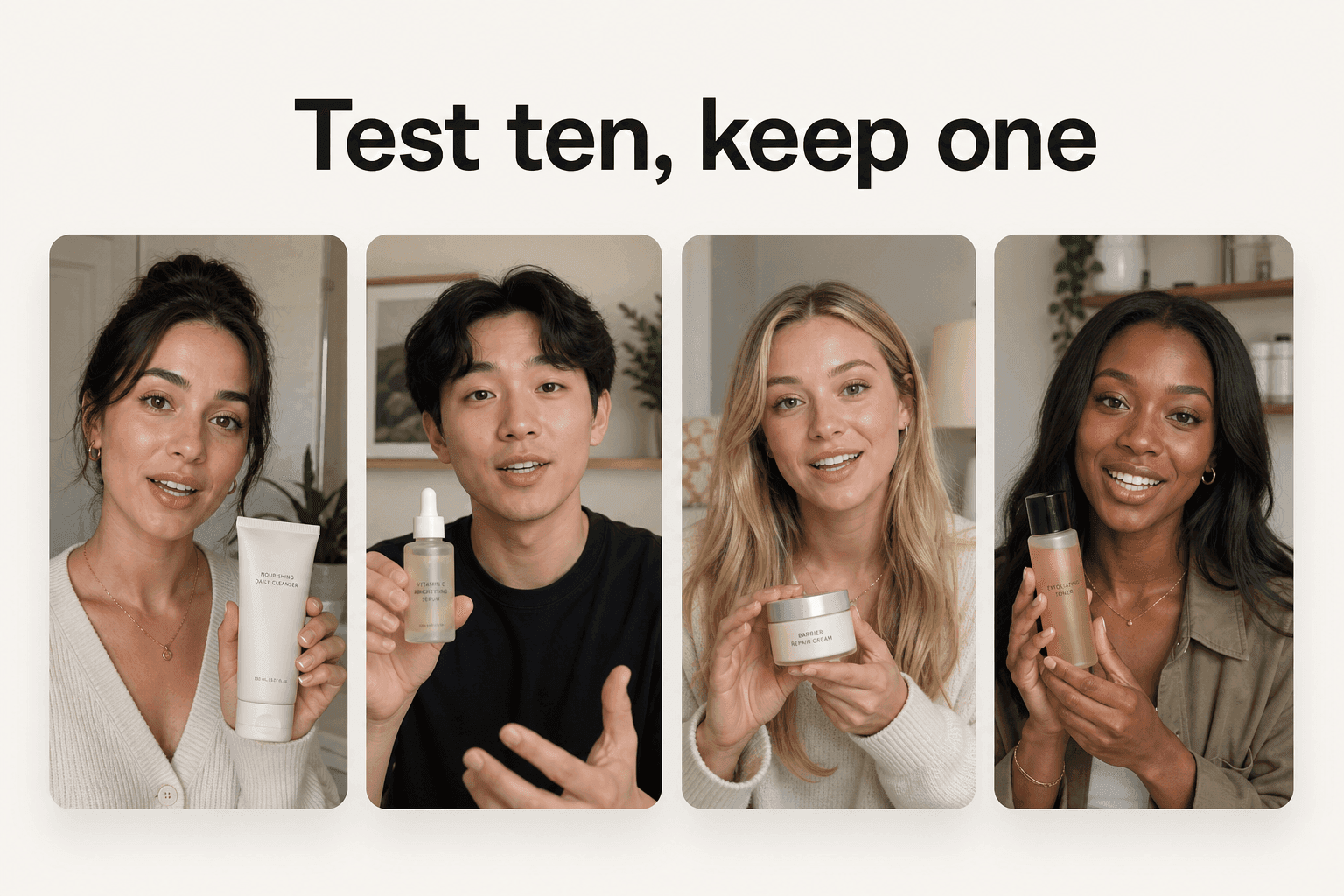
How Novoads handles voice for ads
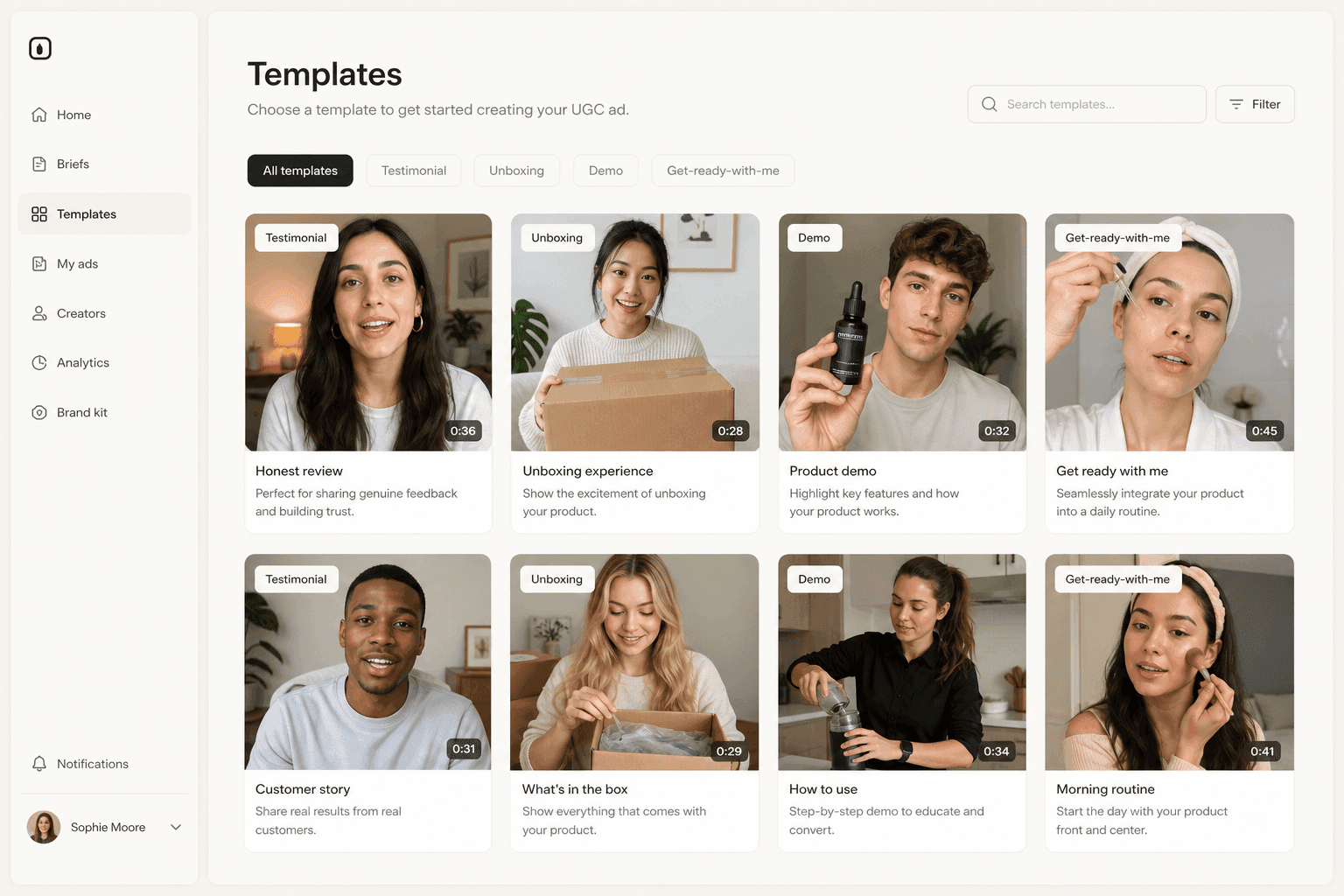
Novoads is built for the campaign, not the clip. It is a full AI UGC ad generator: you write or auto-generate a script, pick an AI actor, and get a finished 9:16 ad with voice, lip-sync, and captions, sized for TikTok, Reels, and Meta.
The voice is a managed pipeline, and that is the point of difference from a raw open model. Under the hood Novoads uses a commercial voice stack (ElevenLabs is one of the engines it runs), so three of the four ad axes are handled for you: the audio ships with commercial rights, it stays consistent across every variation of a concept, and it speaks in the target accent across 30-plus languages rather than one flat translation. You are not choosing a license, provisioning a GPU, or hoping the fifteenth render matches the first. You can generate the whole ad, voice included, in Novoads, and the headline time to a finished clip is about four minutes.
That is not an argument against open models. If you have the engineering to self-host and a reason to own the stack, a permissive model like Kokoro or Chatterbox is a great foundation. It is an argument about what you are optimizing for. Open weights optimize for control and marginal cost. A managed path optimizes for shipping licensed, consistent, native-sounding ads without becoming your own audio-infra team. For where this fits against other tools, see our best HeyGen alternatives and best Synthesia alternatives breakdowns, the wider comparison of AI video ad platforms, and the head-to-head on Novoads versus HeyGen.
The model was never the hard part
Open audio really has caught up, and ZeroLabs is a fair place to prove it to yourself. But "the voice sounds good" was never the thing standing between you and a working ad. Licensing, consistency across variations, accent depth, and the ops of running your own models are. Pick the open model whose license and language coverage fit your campaign, and self-host it if control is what you want. If what you actually want is licensed, consistent, native-accented ads out the door, skip the infrastructure and test a full one with Novoads from $49/month at novoads.ai. Cancel anytime.
Frequently Asked Questions
What is the best open-source alternative to ElevenLabs for ad voiceovers?
It depends on the job, not on a single winner. For cheap, high-volume narration on a license you can ship, Kokoro (Apache 2.0) is the safest default. For a cloned voice under a permissive license, Chatterbox (MIT, by Resemble AI). For expressive, dialogue-style delivery, Dia (Apache 2.0), though it is English-only today. For fast multilingual cloning, Coqui XTTS-v2, if you can live with its custom license. To just try open audio in a browser, ZeroLabs. For ads specifically, the deciding factors are commercial licensing and batch consistency, not raw quality.
Is ZeroLabs really 100x cheaper than ElevenLabs?
That is ZeroLabs' own marketing claim ('generous free tier, then 100x cheaper than proprietary'), not an independent benchmark, and it names no model, volume, or license terms, so treat it as directional, not a number for your budget. ZeroLabs is a Hugging Face Space that runs open models on Hugging Face's ZeroGPU infrastructure, so 'free' means a capped daily quota on shared cloud GPUs, not free-forever on your own hardware. The open models it wraps can be self-hosted, which is where the real cost savings and the real setup work both live.
Can I legally use open-source voice models in commercial ads?
Only if the license allows it. Kokoro ships under Apache 2.0 and Chatterbox under MIT, both of which permit commercial use. Coqui XTTS-v2 uses a custom Coqui Public Model License, and Fish Audio's OpenAudio S1 weights are CC-BY-NC-SA-4.0, whose NonCommercial clause blocks commercial use without a separate license. Worth knowing: even ElevenLabs' free tier does not grant commercial rights. Its commercial license starts on the entry paid plan.
Are open voice models good enough for ad voiceovers?
For a single, well-directed voiceover, several open models are already good enough, and blind tests are getting close. Where they lag for ads is batch work: keeping one voice identical across 15 variations, holding emotional range on a hard-sell hook, and covering many languages with native accents. Those are exactly the things a paid-social workflow leans on, which is why the tool you pick matters more than any one clip.
Do I need a GPU to run these locally?
For most, yes. Chatterbox, Dia, XTTS-v2, and Fish Audio run best on a GPU, and you own the setup, updates, and uptime. Kokoro is the exception: at 82 million parameters it is light enough to run on modest hardware or even CPU. ZeroLabs sidesteps local setup entirely by running on Hugging Face's cloud, at the cost of a usage quota you do not control.
How does Novoads handle voice for ads?
Novoads runs a managed voice pipeline inside a full ad generator. Under the hood it uses commercial voice models (ElevenLabs is one of them), so the audio ships with commercial rights, stays consistent across every variation, and speaks in the target accent across 30-plus languages. You write or auto-generate a script, pick an AI actor, and get a finished 9:16 ad with voice, lip-sync, and captions. You can test the whole thing on the $49/month entry plan.
Key Takeaways
- Open voice models have closed a lot of the quality gap with ElevenLabs. For ads, the honest question is no longer 'does it sound good', it is licensing, batch consistency, and how much ops you want to own.
- ZeroLabs' 'generous free tier, then 100x cheaper than proprietary' is its own marketing line, not a benchmark. It runs on Hugging Face ZeroGPU quota (a capped hosted demo), which is not the same as 'free forever' on your own machine.
- Check the license before you ship an ad. Kokoro (Apache 2.0) and Chatterbox (MIT) are safe for commercial work; Coqui XTTS-v2 (custom Coqui license) and Fish Audio's OpenAudio S1 (CC-BY-NC) are not, without a review or a paid tier.
- Where open models still cost you for ads: keeping a voice consistent across many variations, landing real emotional range on a hard sell, covering languages and accents in depth, and running your own GPU.
- Novoads runs a managed commercial voice stack (ElevenLabs is one of the engines it uses) so the audio is licensed, consistent, and native-accented, and one month of the $49 entry plan is enough to test a full ad.