TikTok vs Instagram Ads: Both Ranking Systems Were Rebuilt in 2026, So Retest Everything
Every TikTok vs Instagram comparison you can find was measured before 2026, when TikTok's new US entity took on a mandate to retrain the recommendation algorithm and Meta rebuilt its ads ranking model. Here is what actually changed, what each platform costs to enter, and how to run the head-to-head yourself.

Mauricio Valdivia
·12 min

Both platforms rebuilt the ranking. Your benchmarks did not.
A supplements founder opens the top-ranking TikTok vs Instagram comparison, copies its cost table into a spreadsheet, and splits a $3,000 test budget toward whichever column looks cheaper. The table was assembled in 2024. It describes two recommendation systems that have since been rebuilt underneath it.
That is not a figure of speech. In January 2026 TikTok's US business moved into a new entity whose stated mandate includes retraining the content recommendation algorithm on US user data. Three weeks later Meta published its own account of doubling the compute behind the model that decides which ads you see. The auctions still work the same way. What has changed is the machine that decides who sees what, on both sides, in the same quarter.
So this comparison does something the recycled ones cannot: it starts from what changed in 2026, builds the cost picture out of structural facts each platform actually publishes, and hands you a 30-day test instead of a benchmark to copy.
The short answer, before the details
If you only read one section, read this one. The rest is the reasoning underneath it.
Pick TikTok first when
- Your creative already looks like a post, not a commercial
- You have creator content or your own organic posts worth boosting, since Spark Ads run the original post as the ad
- You can ship several new video variants per month rather than one hero asset
- You are selling something visual and demonstrable: skincare, supplements, kitchen gear, apparel
Pick Instagram first when
- You already have a Meta pixel with real conversion history, which is the signal Meta's ranking model is built to exploit
- Your buyer is further down the funnel and you need retargeting depth
- You need a single account to reach Feed, Stories and Reels inventory in one buy
- Your team is more comfortable with an Ads Manager it already knows
If you can only afford one test
Run the platform where your creative already exists. A brand with 40 organic TikToks and no Instagram library should start on TikTok because Spark Ads let it buy against assets it already has. A brand with two years of Meta pixel data and one video should start on Instagram, because the ranking model has more to work with than the creative does. The wrong first move is to split a small budget across both and starve each one below its delivery floor.
What actually changed in 2026
Three things moved this year, and every one of them makes an older benchmark less transferable. Take them in order.
TikTok's US business changed hands, and the algorithm inherited a mandate
In January 2026, TikTok USDS Joint Venture LLC was established in compliance with the Executive Order signed on September 25, 2025. Silver Lake, Oracle and MGX each hold 15% as managing investors, and ByteDance retains 19.9% of the joint venture. Under the same announcement, TikTok global's US entities continue to manage global product interoperability and commercial activities including advertising and marketing.
Read the operational line rather than the ownership one. The joint venture states that it will retrain, test, and update the content recommendation algorithm on US user data. That is the sentence advertisers should care about, because the recommendation engine is what decides whether a creative finds an audience, and a system being retrained on a narrower data set is a system whose past performance ranges travel less well.
The other thing worth saying plainly: US ads never stopped. The divest-or-ban law was satisfied by this transaction, not triggered by it. TikTok's own advertiser help page states that the TikTok app is available for US users and that all of its delivery systems are operating as expected. If you paused TikTok spend on legal risk in 2025 and never revisited it, the reason for the pause was settled in January.
Instagram retired Explore as a placement and pushed the inventory into Reels
On the Meta side, the structural change is a placement retirement. Starting in January 2026, Instagram Explore stopped being selectable as a placement in Ads Manager. Tapping a tile in the Explore grid now opens an immersive Reels viewer rather than the old Explore feed, and ads targeting the Instagram Reels placement serve into what was previously Explore, because the experience is now the same thing.
The nuance matters: Instagram Explore home survives as its own placement, so this is not the disappearance of Explore. What it is, practically, is a consolidation. The Reels placement absorbed a discovery surface, which makes vertical video the load-bearing format for Instagram inventory rather than one option among several. If your Instagram creative library is still mostly square, that is now the gap.
Meta rebuilt the ads ranking model behind both surfaces
In a January 2026 update, Meta described three changes to the system that decides which ads you see:
- Twice the training compute. Meta doubled the GPUs used to train its Generative Ads Recommendation Model
- A new architecture. Sequence learning that uses longer user behavior sequences and incorporates additional organic engagement data on Instagram
- A new run-time model across Instagram Feed, Stories and Reels, which Meta says raised conversion rates by 3%
Meta credits the ranking work with a 3.5% lift in ad clicks on Facebook and more than a 1% gain in conversions on Instagram in Q4 2025.
These are Meta's own reported figures about Meta's own system, so treat them as direction rather than a promise about your account. The direction is the point. Meta is explicitly folding organic Instagram engagement into ad ranking, which means the same creative can be scored differently in 2026 than it was in 2024 without you changing a single setting.
What it costs to get in the door
Here is the part where most comparisons hand you a CPM table. This one will not, and the reason is worth one paragraph before the numbers that are real.
TikTok publishes hard floors, and they are higher than people expect
TikTok's help center is explicit that minimum budget thresholds exist at both the campaign and ad group levels to ensure stable ad delivery. The published floors:
- Campaign level: budget must exceed $50, daily or lifetime
- Ad group, daily: budget must exceed $20
- Ad group, lifetime: the $20 daily minimum multiplied by scheduled days, so a 31-day ad group needs at least $620 committed before it runs
That is a planning fact, not a recommendation. It also quietly kills the most common small-budget mistake: splitting $600 across six ad groups on TikTok does not produce six tests, it produces six ad groups that cannot deliver. TikTok also advises keeping budget adjustments modest during learning, no more than 40% per change while in the learning phase and no more than 30% after, and no more often than every two days.
Meta added a cost line that follows your audience, not your business
Meta's newer structural cost is the location fee. Meta introduced fees on ads delivered in specific regions to cover digital service taxes and other location-based charges, and its help documentation is clear that these fees are determined by where your audience is located and your ads are delivered, not your business location. Until this change, Meta covered those costs itself.
For a cross-border advertiser this is the detail that actually moves a budget:
- A US brand selling into the UK, France, Italy or Spain picks up a fee in the low single digits as a percentage
- It is billed as a separate invoice line, not out of campaign budget, so total spend can land above the number you set
- Selling only domestically, you never see it. Selling into Europe, model it before you compare platforms at all
| Dimension | TikTok Ads Manager | Instagram via Meta Ads |
|---|---|---|
| Published spend floor | Over $50 campaign, over $20 ad group | See Meta's minimum-budget guidance |
| Main vertical surface | In-Feed and Spark Ads | Reels placement |
| 2026 change to plan around | Modular Smart+ automation | Explore retired into Reels |
| Creator content route | Spark Ads on the original post | Reels placement creative |
Why this post will not give you a CPM
Neither TikTok nor Meta publishes list CPMs. Every specific cost-per-thousand figure circulating in comparison posts therefore comes from a vendor's own account data, an agency's book of business, or worse. Some widely repeated Spanish-language "TikTok CPM" numbers are creator payout rates, which measure what the platform pays a creator per thousand views, not what a brand pays per thousand impressions. Those are opposite sides of the same marketplace.
A number you cannot trace to the platform is a number you cannot plan against. Your own account, running for 30 days with the same creative on both, produces a better benchmark than any table you can copy, and it is the only one that describes your product, your offer and your audience. Reading it correctly is a separate skill, which is what the four-rung metric ladder in creative analytics is for.
Where creator video actually plugs in
This is the axis that decides most head-to-heads in practice, because it determines how much creative you need and how fast it decays.
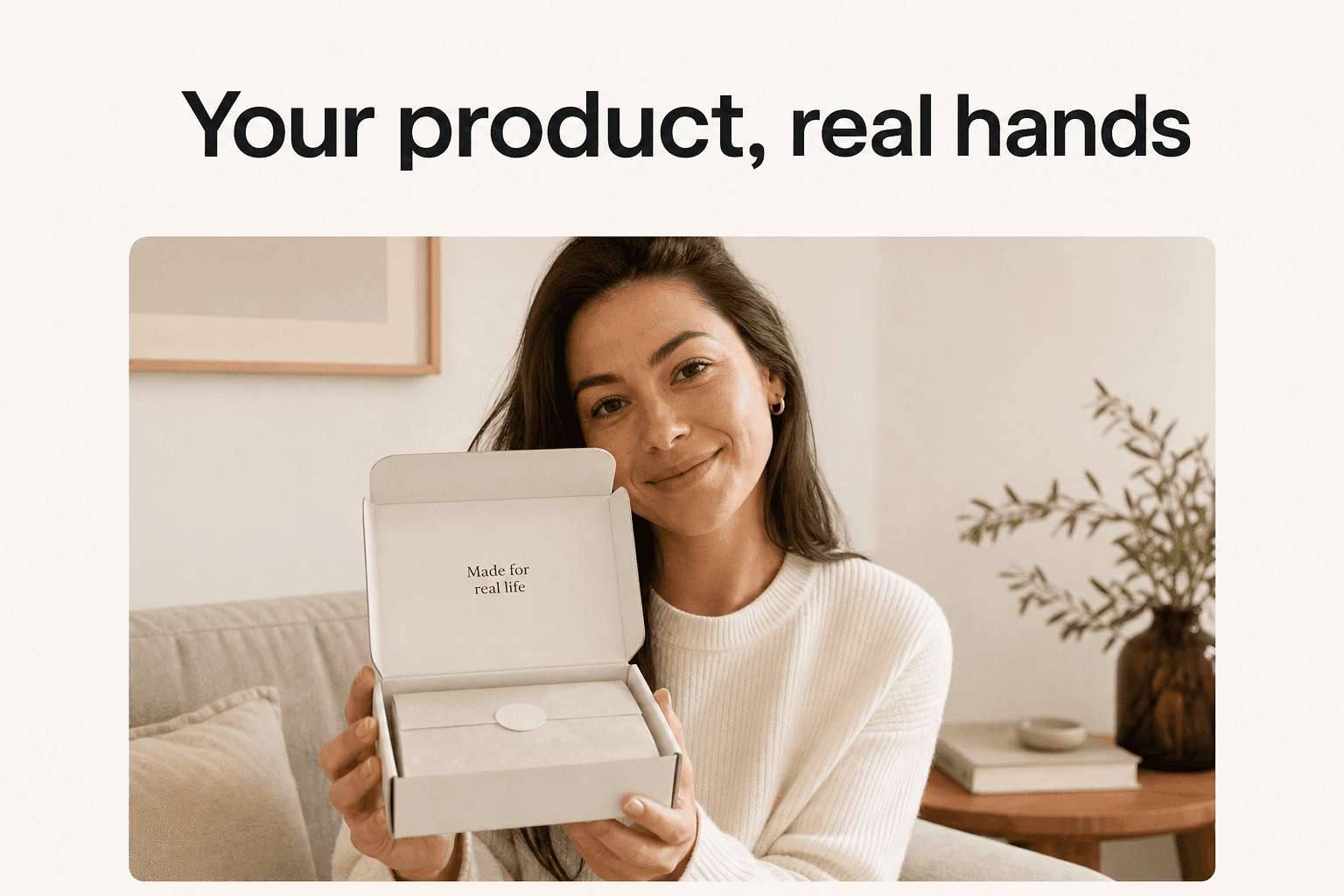
Spark Ads make the organic post the ad
TikTok's Spark Ads are a native format that lets you run organic TikTok posts, your own or a creator's with authorization, as the ad itself. The mechanic that matters: every view, comment, share, like and follow the boost earns is attributed back to the original organic post rather than to a separate ad object. You are not making a copy of the post, you are buying distribution for the post.
The practical consequences are real:
- No format restrictions on organic videos: ratio, resolution, file type, duration, bitrate and file size are all unconstrained
- 10 minutes is the cap on what can be sparked
- 10,000 Spark Ads per Ads Manager account, which is an enormous testing surface if you already have a content library
The full Spark Ads setup and authorization walkthrough covers the code mechanics, which are the part teams usually get wrong.
On Instagram, the equivalent lives inside the Reels placement
Instagram does not have a Spark Ads equivalent that leaves engagement on the original post in the same way. What it has, after the Explore consolidation, is one dominant vertical surface where creator-style video competes directly with organic Reels. Meta's own framing reinforces this: it says it increased the prevalence of original content in the US by 10 percentage points in Q4, with 75% of recommendations now coming from original posts.
Read that as a creative brief. A recommendation system tuned toward original content is not going to reward the same asset resurfaced for the fourth month. The three-surface split of Feed, Reels and Stories, and the rights problem each one creates, is covered in the Instagram UGC breakdown.
What both of these mean for how many videos you need
Put the two together and the requirement is the same on both platforms, for different reasons. TikTok rewards volume because Spark Ads make each organic post a cheap testable unit. Instagram rewards volume because the ranking layer is biased toward originality and against repetition. Neither rewards one polished hero asset run until it dies.
That is the actual difference between advertisers who do well on vertical video and those who do not, and it has almost nothing to do with which platform they chose. It is a production-capacity problem wearing a media-buying costume. The pattern library in UGC ad examples is a reasonable place to source variant ideas that are not just recut versions of the same clip.
How much control the buying model leaves you
Both platforms spent 2026 pushing automation. They pushed it in noticeably different directions, and the difference changes what a small team can actually steer.
TikTok made automation modular
In its Q2 2026 product preview, dated April 21, 2026, TikTok said Smart+ now allows advertisers more control over automation at the module level. In plain terms, automation stopped being all-or-nothing: you can hand over targeting while keeping placements manual, or automate budget while holding creative. The same slate added Collage Carousel, a format that puts more products in view from the start, and One Asset Manager for commerce advertisers, both of which TikTok describes as US-only for that quarter.
Modular automation is the more useful of the two announcements for a small advertiser, because the usual failure with a fully automated campaign is that it optimizes toward a cheap result you did not want, and you cannot tell which module caused it.
Meta's automation argument is a ranking argument
Meta's 2026 messaging is not primarily about giving you more switches. It is about the model getting better at choosing for you: more compute on the ranking model, longer behavioral sequences, organic Instagram engagement folded into the ad decision. Meta also reports testing an AI business assistant with advertisers for optimization and account support.
The trade is legible. Instagram asks you to trust a larger model with more of the decision; TikTok is currently handing back the individual dials. Which one suits you depends less on philosophy than on whether you have enough conversion volume for a large model to learn from. Under a few dozen conversions a month, dials you can set beat a model with nothing to learn on.
A control setting that works on a small budget
For a first month on either platform, use this split:
- Automate targeting. This is where automation genuinely beats a human guess, on both platforms
- Keep creative manual. Creative is the experiment. Automating it destroys the thing you are trying to measure
- Keep placement manual. On Instagram especially, so you can isolate Reels now that it has absorbed Explore inventory
- Automate budget last. Only after you have a winning creative worth scaling behind
A 30-day head-to-head you can actually run
Here is the test, with the platform floors baked in so it does not fail on delivery.
Weeks 1 and 2: same creative, separate floors
The setup, in four moves:
- Produce four native vertical variants of one product angle: four different hooks, identical offer, identical call to action
- On TikTok, run one campaign at a $60 daily budget with two ad groups at $30 each, which clears both published floors with room
- On Instagram, run one campaign restricted to the Reels placement at a comparable daily budget
- Ship the same four videos to both, then do not touch anything for 14 days beyond the adjustment cadence TikTok recommends
Two weeks at $60 a day per platform is $1,680 total. That is the honest entry cost of a clean head-to-head at TikTok's published minimums, and it is why underfunded split tests produce noise instead of an answer.
Weeks 3 and 4: cut on creative, not on platform
At day 14, rank all eight platform-creative combinations by cost per result. Kill the bottom half. Here is the discipline most teams skip: cut individual creatives, not whole platforms. A platform that looks bad in week two is usually a platform where your best hook has not run yet. Replace what you cut with two new hooks per platform and run another 14 days.
If you are short on hook ideas by round two, that is a research problem rather than a creative-talent problem. TikTok's own Creative Center gallery of top-performing ads is free to browse and sortable by click-through rate, which makes it the cheapest place to find structures worth testing on both platforms.
How you know the test worked
Three outcomes, three different next moves:
- One hook wins on both platforms. The winner is your message, not a delivery accident. Scale it and build the next four variants off that hook
- A different hook wins on each platform. Also a real finding. The answer is separate edits per surface, not one file shipped twice
- Nothing separates from anything. The problem is upstream in the offer or the hook, not in the media buy, and no budget shift will fix it
One compliance note before you launch: both platforms have their own AI disclosure rules, and they do not match. If your variants are AI-generated, the cross-platform AI ad label comparison is the checklist to run first.
How Novoads solves the creative-volume problem
Every honest version of this comparison arrives at the same bottleneck: the test needs eight to twelve native vertical variants a month, and most teams can produce two. That gap is a production problem, and it is the one Novoads exists to close.
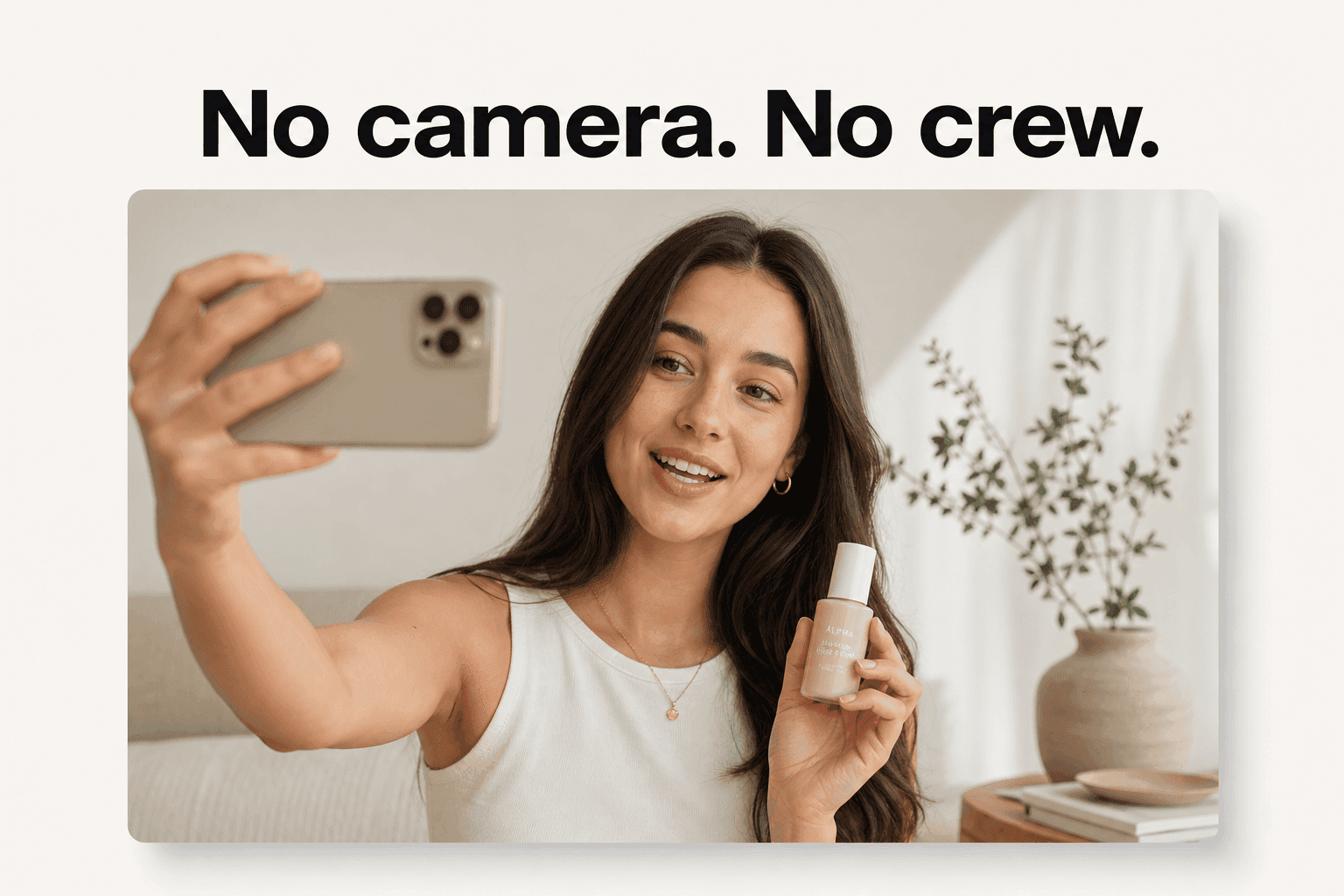
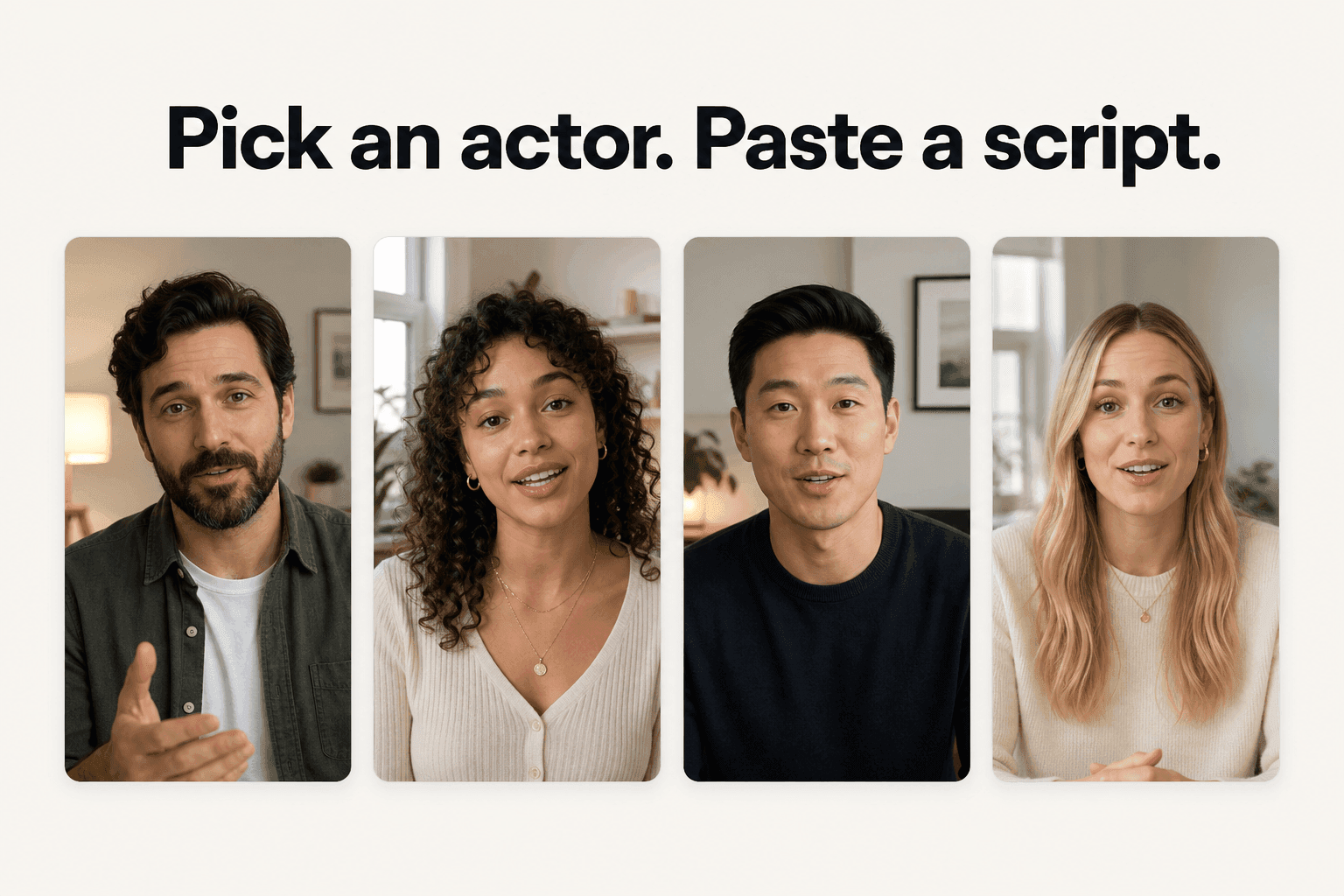
You upload a product image or write a script, pick an AI actor, and get an ad-ready vertical video, which makes a hook variant a rewrite rather than a reshoot. Because the output is native 9:16, the same asset feeds TikTok In-Feed and the Instagram Reels placement without a re-crop, and the UGC-style ad format guide covers how to write variants that read as posts rather than commercials. Access starts at $49 a month. Cancel anytime.
Creative is the only variable you fully control
Ownership changed on one platform this year and the ranking model changed on the other, and no advertiser got a vote on either. What did not change is the part you own: how many honest, native, vertical creative swings you can take per month. Platform choice sets your starting conditions. Creative volume decides how fast you find the winner inside them.
Pick the platform where your creative already lives, fund it above its published floor, and spend the argument you were going to have about TikTok versus Instagram on making the next four videos instead.
Frequently Asked Questions
Is TikTok or Instagram better for ads in 2026?
Neither wins across the board, and any post that gives you a single answer is selling something. TikTok tends to suit advertisers whose creative already reads like a native post and who can produce new variants quickly, partly because Spark Ads let an organic post run as the ad itself. Instagram tends to suit advertisers who already have a Meta pixel with conversion history, since Meta's ranking model leans on that signal. The honest move is to run both for 30 days with the same creative and let your own data decide.
Did TikTok ads stop running in the United States?
No. The US divest-or-ban law was satisfied rather than triggered. In January 2026 TikTok's US operations moved into a new entity, TikTok USDS Joint Venture LLC, established in compliance with the September 2025 Executive Order, with Silver Lake, Oracle and MGX each holding 15% and ByteDance retaining 19.9%. TikTok's own advertiser help article states that the app is available for US users and that all of its delivery systems are operating as expected.
What is the minimum budget to advertise on TikTok?
TikTok publishes explicit floors. Its help center states that campaign-level budgets, daily or lifetime, must exceed $50, and that ad group daily budgets must exceed $20. Lifetime budgets at ad group level are calculated as the $20 minimum multiplied by the scheduled days, so a 31-day ad group needs at least $620. Those are delivery thresholds, not a recommended spend.
Why does this comparison not include CPM numbers?
Because the specific CPM and CPC figures in circulation do not trace to TikTok or Meta. Neither platform publishes list CPMs, so vendor blogs fill the gap with account-level averages from their own book of business, and some Spanish-language figures in circulation are creator payout rates rather than advertiser costs entirely. A number you cannot trace to the platform is a number you cannot plan against, and your own 30-day test produces a better one.
What happened to the Instagram Explore ad placement?
Meta retired Instagram Explore as a selectable Ads Manager placement in January 2026. Tapping a tile in the Explore grid now opens an immersive Reels viewer instead of the old Explore feed, and ads targeting the Instagram Reels placement serve into what used to be Explore. Instagram Explore home survives as a separate placement, so the retirement is narrower than some summaries suggest.
Can I run the same video on both platforms?
You can, and it is the right way to start a test, because holding creative constant is what makes the platform comparison mean anything. What you should not do is run the same 16:9 brand spot on both. Both surfaces are vertical-first, and on TikTok the highest-leverage format is Spark Ads, which runs an existing organic post as the ad. Plan on separate edits once the test has told you which hook survives where.
Key Takeaways
- Both recommendation systems changed in 2026, so pre-2026 benchmarks describe machines that no longer rank the same way: TikTok's new US joint venture took on a mandate to retrain the content recommendation algorithm on US user data, and Meta doubled the compute behind its ads ranking model.
- TikTok ads never stopped running in the US. The divest-or-ban law was satisfied by a January 2026 ownership change, not triggered, and TikTok's own advertiser help page says all delivery systems are operating as expected.
- The clearest cost difference is structural, not a CPM: TikTok publishes hard budget floors of more than $50 at campaign level and more than $20 per ad group per day, while Meta added location fees that follow where your audience is rather than where your business is.
- Instagram Explore was retired as a placement in January 2026 and that inventory now flows through Reels, which makes the Reels placement the center of gravity for Instagram creative.
- Neither platform rewards a repurposed 16:9 spot. The variable you control on both is how many native vertical creatives you can put into the auction per month, which is why creative volume beats platform choice.
Sources
- •TikTok Newsroom: Announcement from the new TikTok USDS Joint Venture LLC
- •TikTok Ads Manager: About budgets for ads
- •TikTok Ads Manager: About Spark Ads
- •TikTok for Business: Q2 2026 product preview
- •Meta Newsroom: 2026, AI Drives Performance
- •Meta Business Help Center: Instagram placements and the Explore change