UGC for Fashion Brands: What Actually Sells Clothes on TikTok and Meta Ads
TikTok tells apparel advertisers that a bulk of their traffic and conversion ads are creator posts run as Spark Ads. Here is what those ads have to show that a product photo cannot, and how brands produce enough of them to feed a drop calendar.

Mauricio Valdivia
·Updated ·11 min
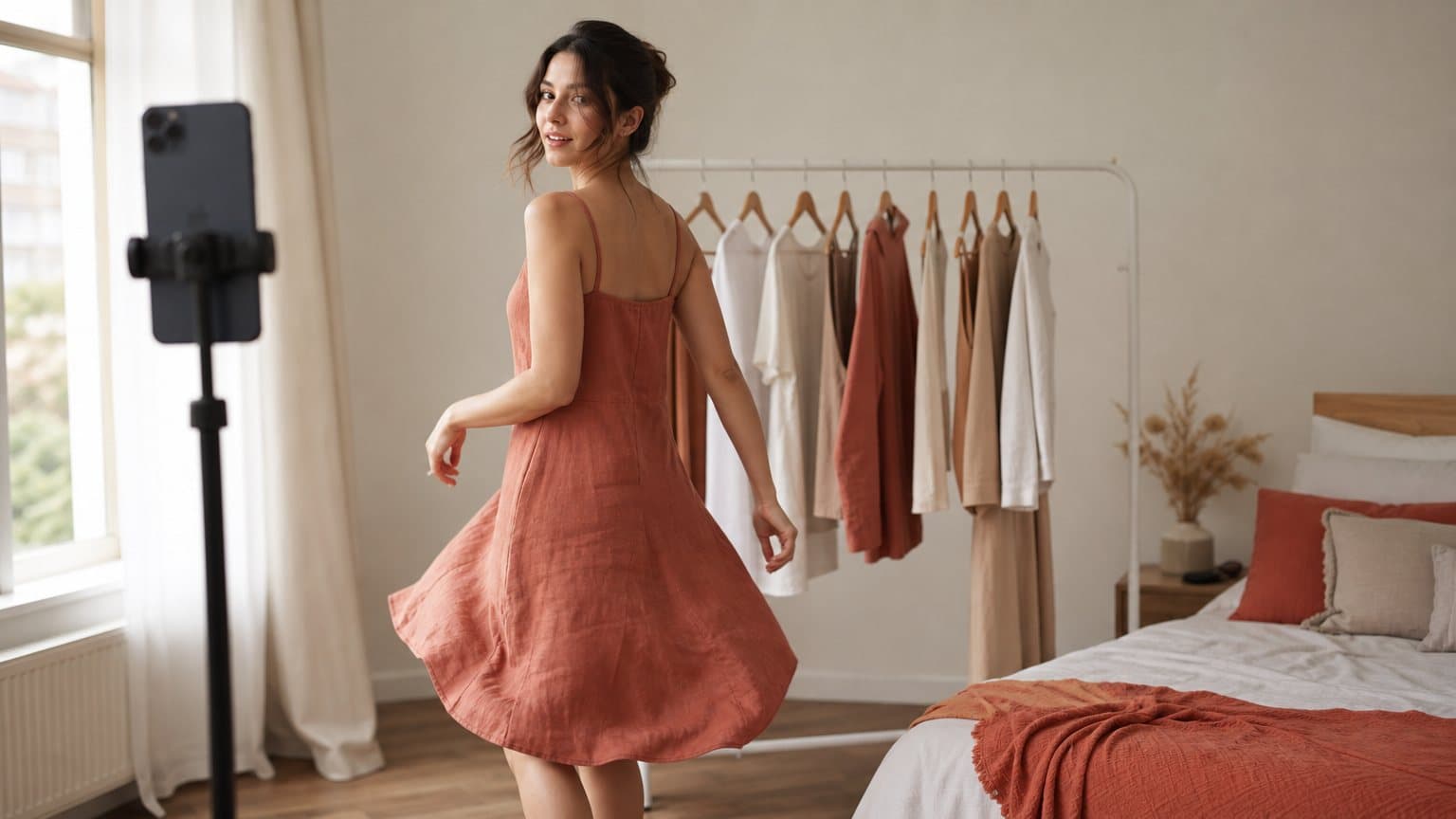
A photo cannot show how a garment moves
A shopper stops on a clip of someone turning once in a linen dress. The hem lifts, settles, and falls straight. In two seconds they have learned something the brand's own product page never told them: the fabric has weight, and it does not cling.
That two-second turn is why selling clothes on paid social is not ecommerce advertising with clothes in it. TikTok's own creative playbook for apparel and accessories is explicit about where this kind of video sits: while most awareness-stage ads are brand-owned assets, "a bulk of the ads in the traffic and conversion stages are Spark Ads", the format TikTok defines as one that lets you build In-Feed or TopView ads "using your organic posts or content made by creators (with their authorization)". Meta ships the same idea under a different name. Once a creator partnership is in place, Meta says, "you can run partnership ads with the creator's handle", across Feed, Stories and Reels.
So the useful question for a fashion brand is not whether creator-style video belongs in paid social. Both platforms productized it and wrote the manual. The question is what that video has to show when the product is clothing, and where you find enough of it to keep a drop calendar fed.
Where creator video sits in a fashion funnel
The platforms put it at the bottom, not the top
The single most useful thing in TikTok's fashion playbook is that it splits its guidance by funnel stage instead of treating apparel as one audience. At awareness, its creative idea is professionally shot glamour and lifestyle campaigns, closer to a produced brand commercial. At traffic, it moves to creator-led and consumer point-of-view video. At conversion, the instruction is to "blur the lines between real people and creators for an authentic-feeling video", and it names the formats outright: come back to "product demonstrations, try-ons, reviews, GRWM, OOTD".
| Funnel stage | TikTok's creative direction for apparel | Who is on camera |
|---|---|---|
| Awareness | Brand and lifestyle campaigns | Models, celebrities, top creators |
| Traffic | Creator-led, point-of-view routines | Creators and real people |
| Conversion | Try-ons, reviews, GRWM, OOTD | Real people, sales associates |
That ordering is worth internalizing because it kills the studio-versus-UGC argument. Both belong. They just answer different questions, and the moment a shopper is deciding whether to buy is the moment they want to see a person, not a campaign.
One caveat the playbook puts on itself, and that any brand quoting it should keep: TikTok says these are "observations that the team has noticed, and are not rules that must be followed".
Two platforms, two names, one mechanic
On TikTok the format is Spark Ads, described in the help center as "a native ad format that allows you to leverage organic TikTok posts and their features in your advertising", including the ability to "publish ads using organic posts made by other creators (with their authorization)". The permission is a real object: a creator generates a code from the post's ad settings, and an advertiser "can batch authorize up to 20 video codes at a time". The mechanics, including how long an authorization lasts, are worth reading once in the full Spark Ads walkthrough.
On Meta the equivalent is partnership ads, managed through a permissions hub that gives you "the ability to manage available creator content and their permissions statuses in Meta Ads Manager". The cross-platform version of this format, including what YouTube does differently, is covered in the guide to creator partnership ads.
The shared mechanic underneath both: a real account has to grant something before your money can move. That is the difference between creator video as an ad format and creator video as a file someone emailed you.
Read the platform's numbers as the platform's numbers
Both platforms publish lift figures for the format they sell. TikTok says use of creators in campaigns "can lead to +20% HIGHER Relevance" and that ads with creators "drove a 17% increase in purchase intent among social/video platform users". Meta reports "19% lower cost per acquisition when adding partnership ads into business-as-usual campaigns".
Take those as directional and as advertising. They are self-reported by the company selling the placement, and every one of them is a lift claim rather than a prevalence claim. So here is the working rule: treat any "X% of fashion ads are UGC" figure you meet as unsourced until someone shows you the platform page it came from. Run the format because both platforms built the bottom of the funnel around it and you can measure it in your own account, not because a stat said so.
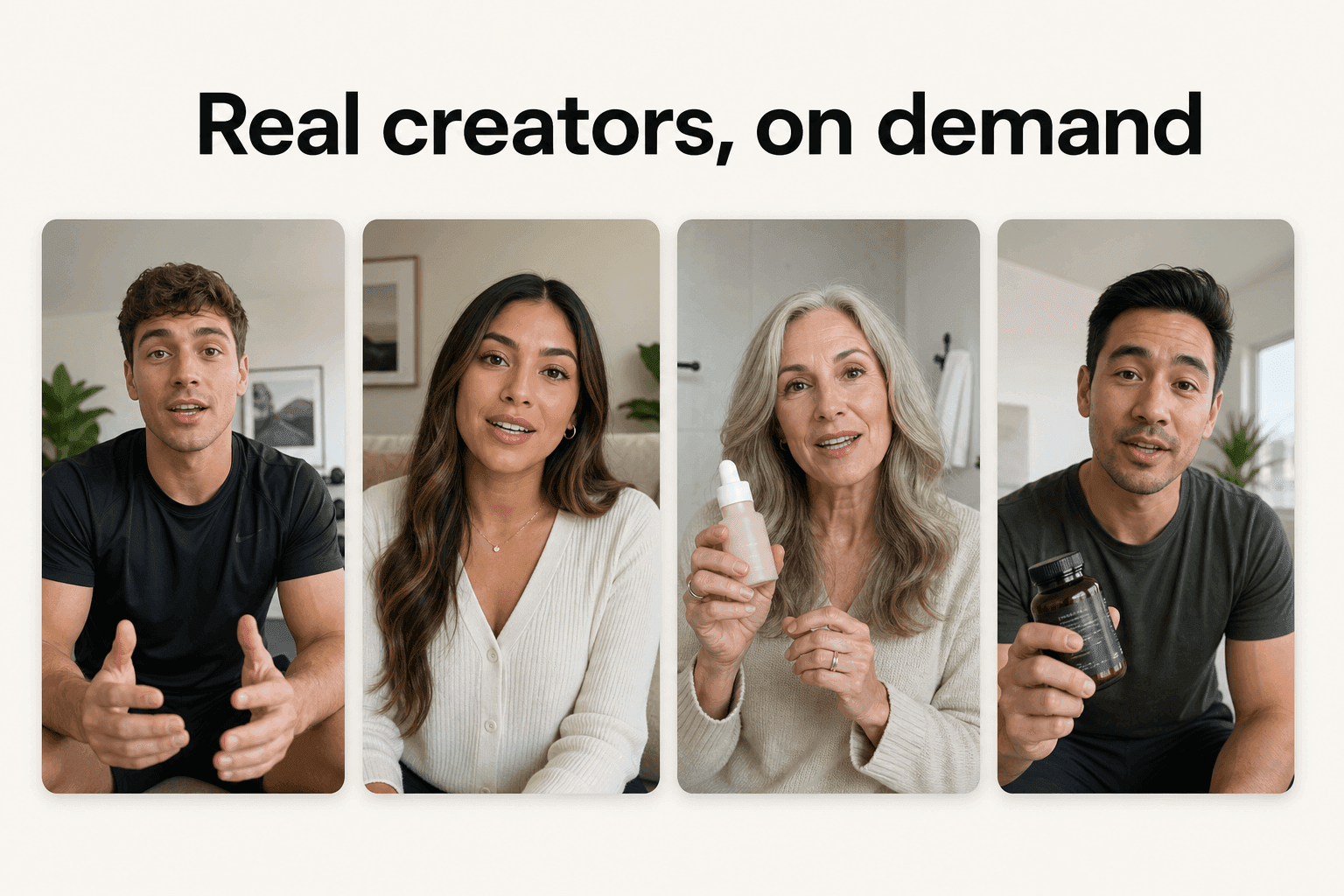
What clothes demand that a generic UGC brief ignores
Fit and drape only exist in motion
Every fashion-specific creative pattern TikTok names is a motion pattern. Its Community Engagement pattern is described as one where "creators generally introduce the product by sharing their real-time commentary, or showing what the item looks like when it's on". Its Try It On pattern is "a string of different videos pieced together to either showcase different products, or a single product in different settings".
Read those as production instructions rather than marketing language and the brief writes itself. A still frame can carry colour, cut and styling. It cannot carry weight, stretch, sheerness, how a hem behaves on stairs, or whether a shoulder seam sits where the model's shoulder actually is. Those are the exact properties a shopper is guessing at, and the only way to answer them is to let someone move.
This is also why fashion has a second visual problem worth solving separately. On-model still imagery is its own bottleneck, and there are now AI tools built specifically for catalog-scale product photography. Stills and video answer different objections. You need both.
The gap between the studio image and the parcel
TikTok has one recommendation for apparel that no generic UGC brief contains, and it is the most quietly important line in the whole playbook. Under its conversion guidance, it tells sellers: "Height, Weight, Size: Mention or include a caption that includes the height, weight, and size of the featured subject as a reference for how the product fits." It adds the reason: "This emulates how top e-commerce sites often list this for their models."
The platform is telling apparel advertisers to put a fit disclosure inside the ad. Its Virtual vs. Real tip pushes in the same direction, recommending you show what the product looks like in real life because by doing so "brands are humanizing their products and allowing viewers to envision themselves wearing it".
Take the stance seriously: an ad that oversells fit is a return waiting to be shipped back to you. The garment did not change between the ad and the parcel, only the expectation did, and the expectation is the thing your creative controls. A five-word line about the model's height and the size worn costs nothing and pre-empts the single most common apparel disappointment.
The drop calendar compresses everything
Fashion also runs on a clock other ecommerce categories do not. Collections land, sell through, and get replaced. Every launch resets the creative from zero, and there is no evergreen version of a jacket that is gone in six weeks.
Layer TikTok's own volume guidance on top of that. It reports that "on average, TikTok campaigns with 5-7 creatives alongside weekly refreshes drove the strongest ROAS". Weekly refreshes, per campaign, against a calendar that already replaces the product every few weeks, is a production requirement most apparel brands quietly fail to meet. They do not run out of ideas. They run out of shoot days.
One garment is not one ad
Colorways, bodies and occasions multiply the brief
The multiplication is what makes apparel different from a single-SKU supplement. TikTok's Shop guidance tells sellers to have a creator film try-ons and review "a single product in a variety of colors or sizes", and its fashion tips recommend "quick transitions and short captions" precisely to "show that your product comes in different shapes, sizes, or colors". Another tip, Wear It Everywhere, says to "communicate every possible scenario of where the product can or should be worn to demonstrate the product's versatility".
Each of those is a separate shoot decision. One garment splits along four axes at once:
- Colorway. The black version and the cream version are different ads, because they read differently on camera and attract different shoppers.
- Body. A size range only feels real when the size range appears. One model is a claim, three is evidence.
- Occasion. Commute, office, evening, weekend. Each one is a different objection being answered.
- Angle. Fabric close-up, full-length turn, styling rotation, honest sizing note.
None of those are optional if the point of the ad is to answer "will this work on me".
A worked example: one jacket, one drop
Take a single jacket in three colorways. You want three body types represented so the size range reads as real, and two occasions in the copy: commute and evening. That is 3 by 3 by 2, so 18 distinct clips before you have tested a single hook, a single opening line, or a single call to action.
Now apply TikTok's own volume note. Five to seven creatives per campaign, refreshed weekly, across a six-week drop window, lands somewhere between 30 and 42 clips for one launch. That is arithmetic on the platform's guidance, not a benchmark anyone published, and it is deliberately conservative: it assumes one campaign, not a prospecting and retargeting split.
The reason most brands never hit that number is not strategy. It is that each clip has historically meant a person, a garment, a location and a day. Which is why the interesting question stops being "which angle is best" and becomes "how many angles can I afford to be wrong about". That is the same logic behind disciplined ad creative testing in any category, except fashion pays the multiplier twice.
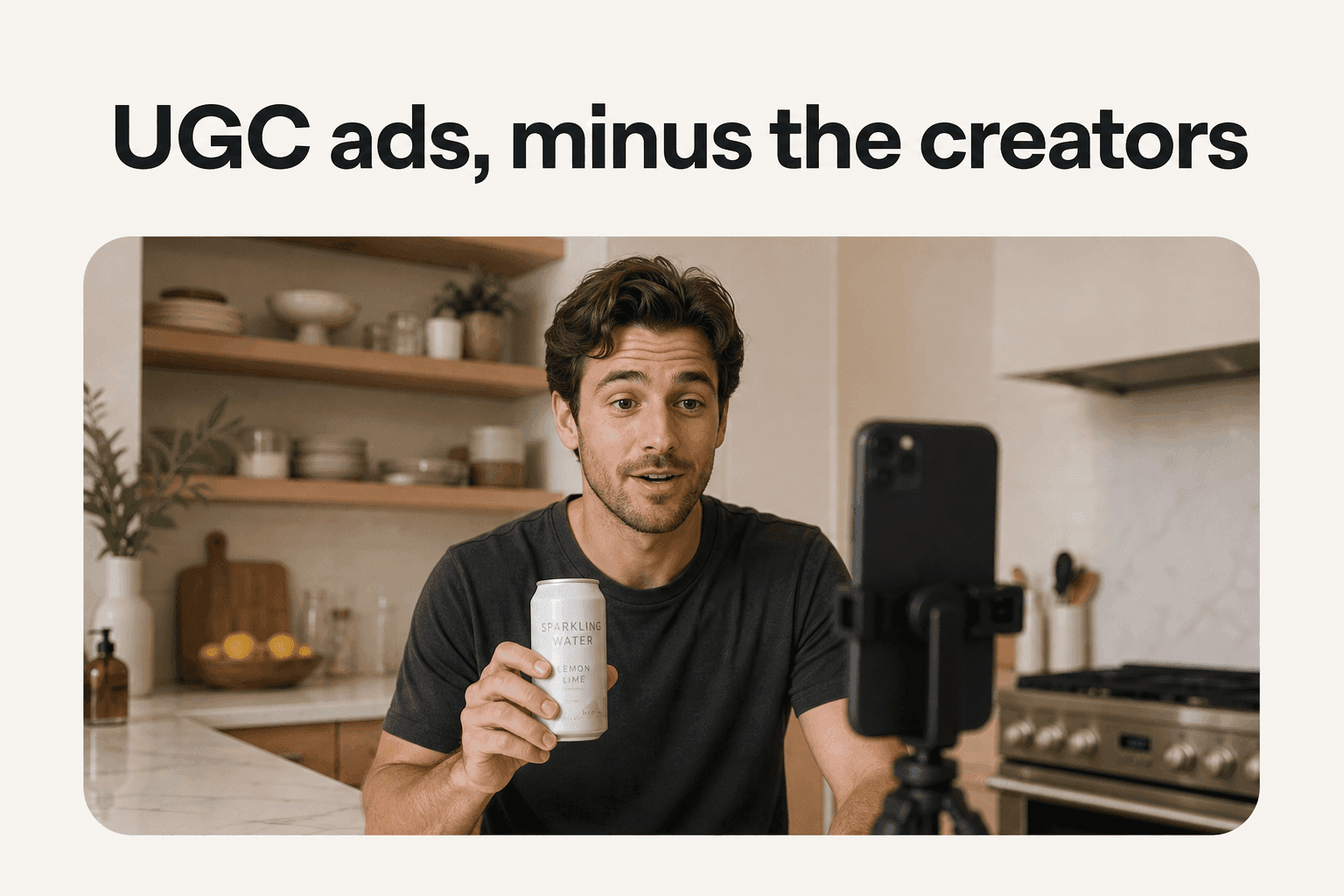
How fashion brands actually source that volume
Your own account is the cheapest inventory you own
The first source is the footage you already have. Spark Ads run organic posts, and TikTok's spec note for organic videos from any TikTok account is unusually permissive: "there are no restrictions on video ratio, video resolution, file type, video duration, bitrate, and file size."
That makes a surprising amount of footage you already own eligible ad creative, with no production process at all:
- A store associate styling the piece on the shop floor
- A stockroom unboxing of the new drop
- A fitting-room clip a founder filmed on a phone
- A customer's tagged try-on, once they authorize it
Most apparel brands are sitting on a back catalog of this and treating it as social content instead of media inventory.
Paid creators, and what the authorization actually buys
The second source is creators you commission or partner with. TikTok's flow is explicit: "creators can choose to provide a code to authorize using their post in your Spark Ad", and Meta's is the handle-level equivalent, with permissions managed in Ads Manager.
What you are buying is not only a video. It is a real account's credibility attached to the ad, which is why the format exists as a product rather than as a file transfer. It is also the most expensive route per clip, and the one that scales worst against a drop calendar. Budget it against what UGC creators actually charge and what the role actually covers.
Generated video for the angles you cannot justify filming
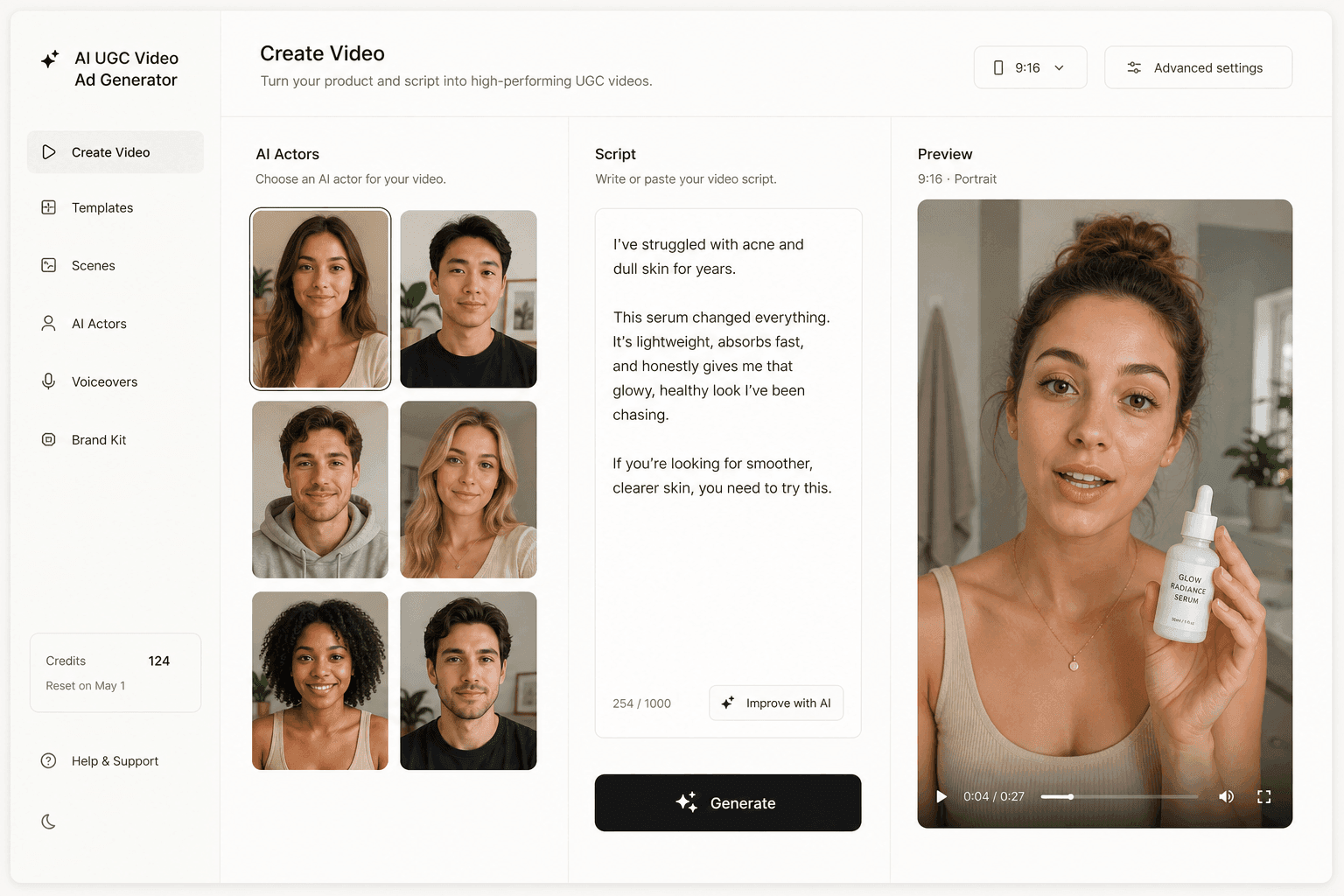
The third source is generation: write or auto-generate a script, pick an AI actor, produce a vertical clip in minutes. Same production logic as most ecommerce video ad formats, aimed here at a specific gap. The fourth objection. The third language. The version for a shopper who only cares whether it has pockets. Those clips never survive a shot list, and they are exactly the clips a test needs.
What AI can and cannot do to a garment
What it handles well
Generation is genuinely good at everything surrounding the garment. Hooks, since TikTok treats "the first 3-6 seconds of your ad" as the decisive window and you want ten of them, not one. Actors, so the same script reads to different audiences. Settings, languages, objections, calls to action. Product stills too, since you can turn a flat product photo into an ad image without a studio booking.
The catch on a drop calendar is that those variations have to look like the same brand, which usually means the same presenter across the whole set. That is its own discipline, and the workflow for keeping one AI actor consistent across every variation is what stops a colorway test from reading as twelve different people selling twelve different products.
Practically, that is the difference between testing two angles and testing twelve. In Novoads each of those variations costs credits rather than a shoot day, which is the whole change in calculus: the angle you were not willing to book a model for becomes something you can simply try and then kill.
What it cannot fake
Now the honest half, because fashion is where overclaiming costs real money. Generation does not know how your fabric behaves on a specific body. It does not know that your size 12 runs small, that the viscose clings after an hour, or that the neckline gapes when someone leans forward. Show a drape the garment does not have and you have not bought a conversion. You have bought a return, plus the review that follows it.
So film the claim that turns on fit truth, and generate everything around it.
Film it when the answer depends on the garment itself:
- The turn, the walk, the sit
- Stretch, sheerness, how a hem falls
- The spoken height-and-size line
- Anything a customer could return the parcel over
Generate it when the garment is not the variable:
- Ten hooks instead of one
- A different actor for a different audience
- The same script in another language
- The objection version, the occasion version, the product still
Then test both against each other. That is the whole method.
Brief it like a fashion shot list, not a prompt
The last piece is discipline. A generated fashion clip fails the same way a badly briefed creator clip fails: it describes the product instead of showing what wearing it is like. Give it the same structure TikTok gives its apparel advertisers, and write the brief as a shot list:
- Hook, 3 to 6 seconds. Tie it to the garment, not to the brand. A price, a problem, a reaction.
- The wear. The turn, the walk, the fabric close-up. This is the part a still cannot do.
- The fit line. Height, size worn, and one honest note ("runs slightly big").
- One or two selling points. Not the whole spec sheet.
- A clear next step. Spoken or on screen, never both competing.
Run that same skeleton across ten hooks and you have a test. Run it once and you have a video.
One operational note, since it applies the moment you press publish: if the creative is AI-generated, check the disclosure requirements on each platform before launch. The rules differ by surface and they are enforced. The current state of AI ad labeling is worth ten minutes of your time.
How Novoads solves the many-looks-per-garment problem
Novoads is an AI UGC video-ad generator: upload a product image or write a script, pick an AI actor, and get an ad-ready vertical video. For an apparel catalog that matters in one narrow, useful way. The variation you could never justify filming, the third colorway story, the fourth objection, the same script in another language, stops being a shoot and becomes a generation priced in credits.
The pricing is the point rather than a detail. A five-second Seedance 2.0 clip at 720p is 23 credits (about a dollar), and the Seedance 2.0 Mini version of the same clip is 5 (about 25 cents). The cost of being wrong about an angle collapses, which is the only thing that makes testing eighteen of them rational. Novoads starts at $15/month (Starter, 200 credits per month). Plus is $49/month (1,000 credits), and Ultra starts at $129/month (3,000 credits) for more volume. You can cancel whenever.
Keep the division clean. The garment on the body gets filmed. Everything you wrap around it gets generated, tested, and replaced weekly.
Clothes sell when someone moves in them
Fashion is the only ecommerce category where the product changes shape depending on who is wearing it, which is why a still image will always be an incomplete answer and why both platforms ended up building a format for the video that fills the gap. The brands that win the drop are not the ones with the best single ad. They are the ones who could afford to be wrong about seventeen angles and right about the eighteenth.
Start with the footage you already own, film the fit claims honestly, and generate the rest.
Frequently Asked Questions
What is UGC for fashion brands?
UGC for fashion brands is creator-made or customer-made video that an apparel brand runs as ad creative: try-ons, styling rotations, hauls, reviews and get-ready-with-me clips filmed on a phone rather than in a studio. On paid social it is not a workaround. TikTok runs it through Spark Ads and Meta runs it through partnership ads, both of which are documented ad formats with their own permission flows and reporting.
Does UGC actually work better than studio creative for clothing?
It depends where in the funnel you are, and the only honest sources on this are the platforms themselves. TikTok's apparel playbook puts professionally shot glamour and lifestyle campaigns at the awareness stage, and creator-led, real-person content at traffic and conversion. So the useful framing is not studio versus UGC, it is which one you run at which stage. The lift figures both platforms publish are self-reported by the company selling the placement, and they are lift claims rather than prevalence claims, so treat any 'X% of fashion ads are UGC' number as unsourced until someone shows you the platform page it came from.
What should a fashion UGC video actually show?
Movement and fit. TikTok's fashion creative patterns are built around a creator showing what the item looks like when it is on, rotating through ways to style one piece, and showing the garment in real life rather than only as a catalog image. Practically that means a turn, a walk, a sit, a close pass on the fabric, and a spoken line about size and fit.
How many videos does a fashion brand need per product?
More than most brands budget for. TikTok reports that campaigns running 5 to 7 creatives alongside weekly refreshes drove the strongest ROAS on average, and that is per campaign, not per season. Multiply that by colorways, by the body types you want represented, and by a drop calendar, and one garment can need dozens of clips before you have tested anything.
Can AI generate fashion UGC videos?
It can generate everything around the garment: the hook, the actor, the setting, the objection handled, the language, the call to action. What it cannot invent is how a specific fabric behaves on a specific body. The practical rule is to film the claims that turn on fit truth, and generate the variations that do not. If you run AI-generated creative, check each platform's disclosure rules before you launch.
Do I need the creator's permission to run their post as my ad?
Yes, and the platforms built the plumbing for it. On TikTok the creator provides an authorization code from the post's ad settings, and an advertiser can batch authorize up to 20 video codes at a time. On Meta, partnership ads run from the creator's handle and permissions are managed in the Partnership Ads Hub inside Ads Manager.
Key Takeaways
- Both major paid-social platforms ship a dedicated format for running creator-made video as an ad: Spark Ads on TikTok and partnership ads on Meta. Neither is a workaround, both have permission plumbing and their own reporting.
- TikTok's own apparel playbook puts creator video at the bottom of the funnel: awareness ads are mostly brand-owned assets, while a bulk of the traffic and conversion ads are Spark Ads.
- Clothes need motion. Fit, drape, stretch and sheerness do not exist in a still, which is why TikTok's fashion patterns are built around try-ons, styling rotations and showing the garment in real life.
- TikTok tells apparel sellers to caption the featured person's height, weight and size as a fit reference. That is the platform asking the ad to pre-empt a sizing mismatch before the parcel ships.
- The volume problem is structural: one garment times colorways, bodies and occasions, against a drop calendar. AI generation is the honest fix for the angles around the garment, not for the garment's physics.