AI Commercials: 4 Real Examples and What One Costs to Make
An AI commercial is a TV-style ad whose footage comes from AI video models. Four that ran, from Kalshi's NBA Finals spot to Svedka's Super Bowl ad, how to make one with an AI commercial generator, and what a 30-second spot costs in Novoads credits.

Mauricio Valdivia
·Updated ·11 min
The NBA Finals Ad Nobody Filmed
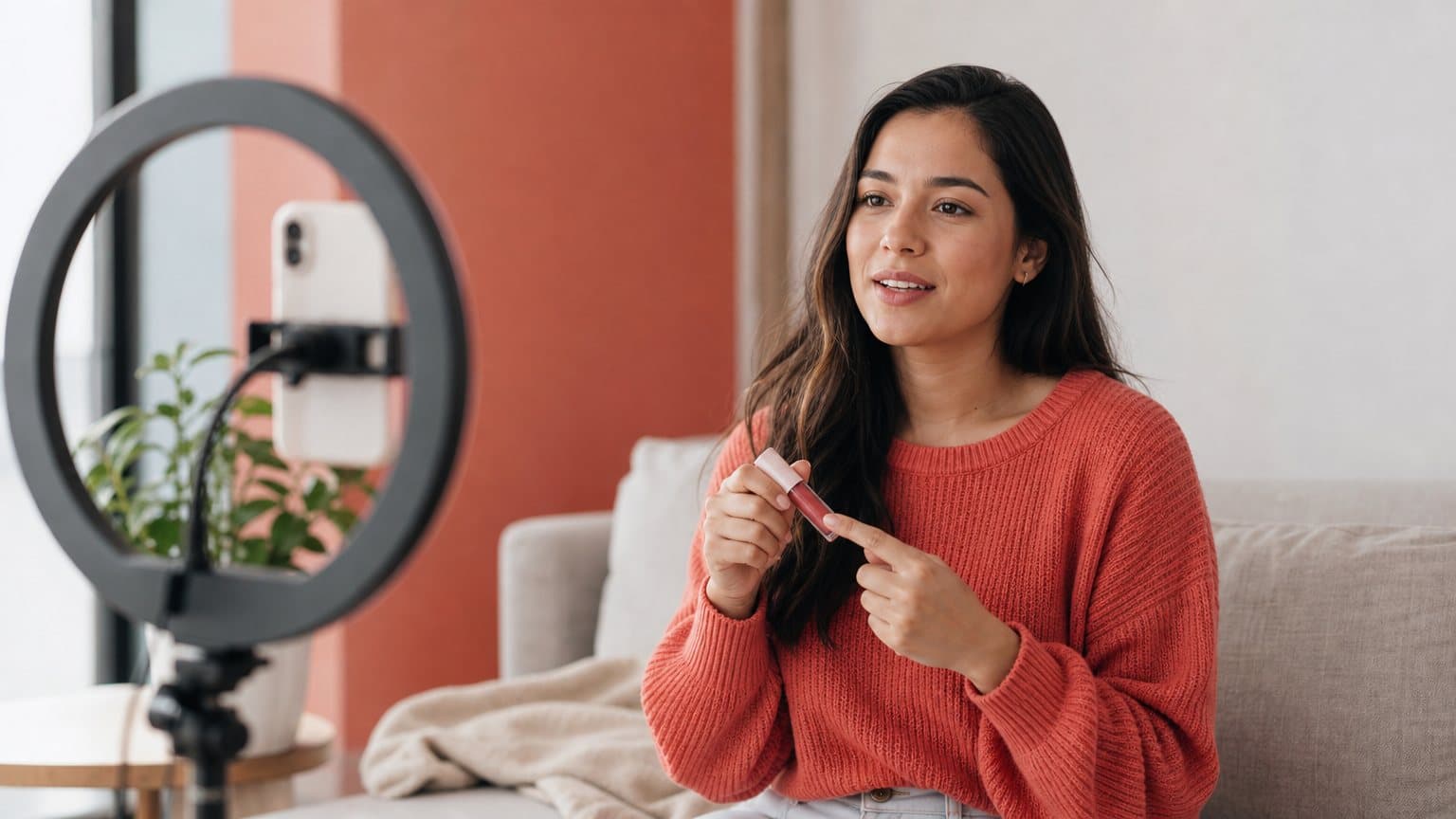
On June 11, 2025, YouTube TV's stream of Game 3 of the NBA Finals carried a 30-second Kalshi spot whose footage was generated with Google's Veo 3. That is an AI commercial: a TV-style ad whose shots, and often its voice and music, come out of AI models prompted in writing instead of a crew on a set. Nobody filmed a frame.
Kalshi told NPR the AI prompting for that spot cost under $2,000, a figure that leaves out the creator's fee and the airtime, and the creator built it in two days. Coca-Cola, Svedka and Toys R Us have run AI commercials of their own. Below are four, each dated and sourced, then how to make one step by step, and what a 30-second spot costs to generate in Novoads, checked against a render we ran ourselves.
Four AI Commercials Brands Have Already Run
Each was made a different way, from one creator prompting an off-the-shelf model to studios running custom pipelines. Read them as dated examples: the tools have moved since each one ran.
Kalshi, June 2025: a 30-second NBA Finals spot made with Veo 3
Kalshi's own newsletter says it unveiled its newest ad during Game 3 of the OKC vs. Indiana championship series, and that the 30-second spot was created in a matter of days using Google's Veo 3. NPR's report of June 23, 2025 pins down where it ran: the ad appeared in the YouTube TV stream of Game 3 of the NBA Finals on June 11.
Veo 3 made the footage, but it was not the only tool. NPR reports that Kalshi handed the creator, P.J. Accetturo, a list of themes, ideas and bits of dialogue. From there:
- He co-wrote the script with Gemini or ChatGPT.
- Gemini turned the script into a shot-by-shot prompt for Veo 3.
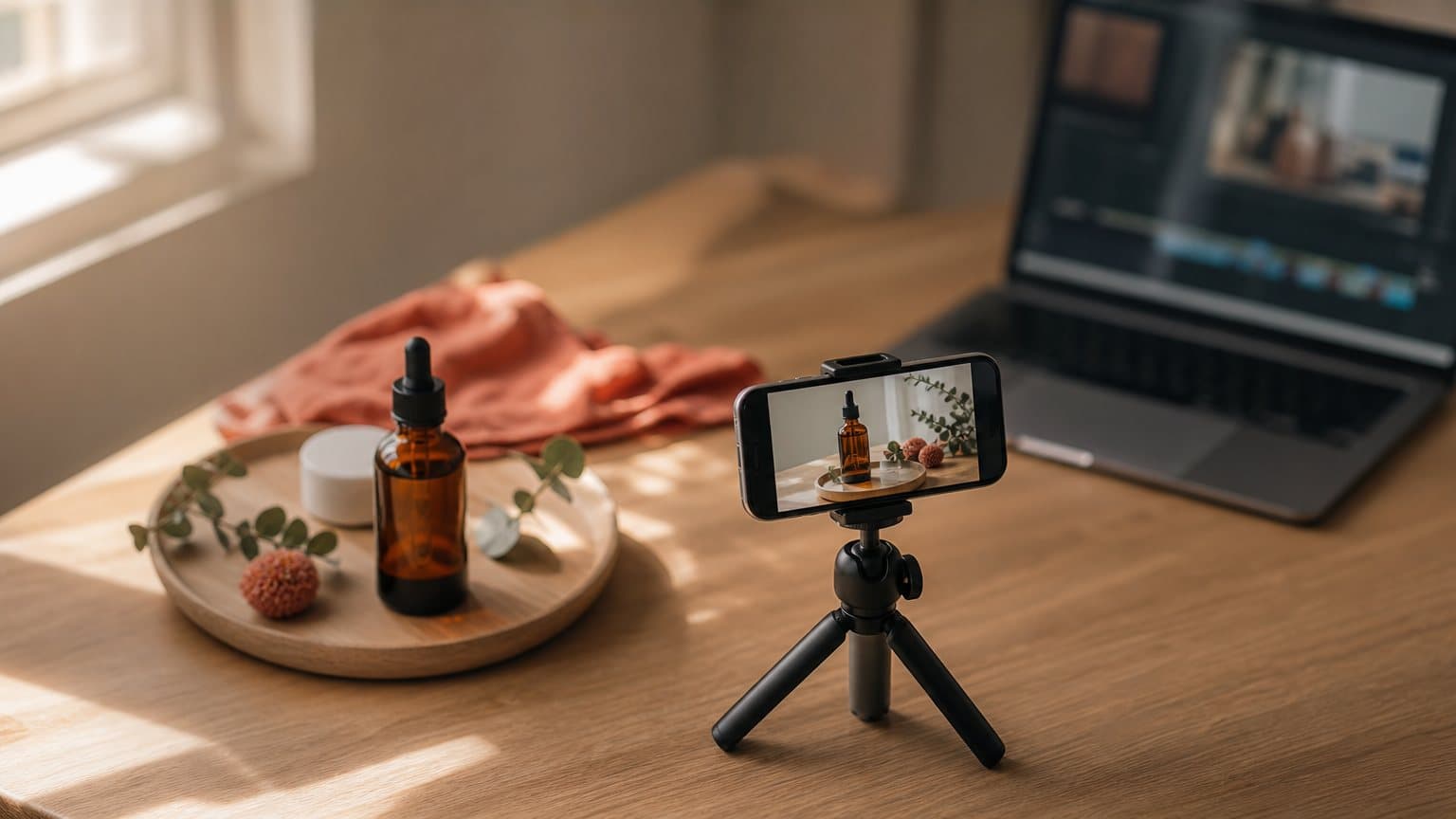
- He arranged the clips and added music in video editing software.
It took about 300 to 400 generations to get 15 usable clips, and two days in all.
On cost, Kalshi's Jack Such told NPR that the cost of prompting the AI was under $2,000, and declined to disclose the creator's fee. Media time, the price of putting the ad in front of viewers, is a separate bill. So under $2,000 is the generation bill for one famous spot, not the price of the ad. It is also a dated example, 16 months old at this update and made on Veo 3, not the Veo 3.1 that Novoads runs.
Coca-Cola, 2024 and 2025: AI remakes of "Holidays Are Coming"
For the 2024 holidays, Coca-Cola's media center says three production houses, Secret Level in Los Angeles, The Wild Card in Kuala Lumpur and Silverside AI in San Francisco, reimagined the iconic 1995 commercial "Holidays Are Coming" as three AI-driven spots: Silver Santa, Secret Santa and Unexpected Santa. The North American media buy tailored the films with local details, so viewers in Boston would see the Christmas trucks pass a "Welcome to Boston" billboard.
In 2025 the company came back with "a pair of refreshed takes" from Secret Level and Silverside AI: a :60, and a "Fantastical :90" it listed as airing exclusively in the USA, with the music performed and sung by real artists. Coca-Cola's Pratik Thakar called the 2024 work "the world's first entirely GenAI-created film on broadcast media", the company's own description. NPR's June 2025 report counted that remake among earlier AI ads that fell flat. Coca-Cola made two more for the next holiday season anyway.
Svedka, February 2026: the Super Bowl LX spot
Svedka's ad aired in Super Bowl LX on February 8, 2026. Adweek reported that it marked three firsts, including what the brand called "the first primarily AI-generated Super Bowl commercial" and the first Super Bowl spot from its parent company, Sazerac. ComfyUI's case study on the spot gives three production details:
- The build. The studio Silverside AI used component-based ComfyUI workflows, with characters, world and choreography as separately controllable elements.
- The density. It fit 12 separate robot actions into the first 10 seconds.
- The schedule. Under one month of production, against about half a year for campaigns of that scale historically.
The same case study quotes Sazerac's CMO, Sara Saunders, on where the work still sits: "The reality is, AI is not creative." Humans, she said, still have to brief, direct, edit and iterate.
Toys R Us, June 2024: a one-minute brand film made with Sora
Toys R Us Studios and the agency Native Foreign made a one-minute, photo-realistic film about how founder Charles Lazarus created the brand and its Geoffrey the Giraffe mascot, Marketing Dive reported on June 25, 2024. It was created almost entirely with OpenAI's Sora, then open only to alpha testers, with some corrective visual effects and an original score. Sora let the team produce it in a few weeks, in time to premiere at Cannes Lions, condensing hundreds of iterative shots down to a few dozen.
It premiered at a festival, and Toys R Us called it the first brand film to use Sora, its own claim.
What all four still needed from people
- A human brief. Kalshi handed its creator themes and lines of dialogue; Sazerac's CMO says humans still brief and direct.
- Far more takes than shots. Kalshi's creator and the Toys R Us team both generated many times more footage than they kept.
- A finish outside the model. Editing and music for Kalshi, corrective effects and an original score for Toys R Us, real artists on Coca-Cola's soundtrack.
How to Make an AI Commercial, Step by Step
The process those four share scales down to one person with a laptop. These steps are for a TV-style spot; for feed ads and images, our guide to AI ads covers the wider process.
1. Write a one-line brief and a 30-second script
Start with one sentence: who it is for, what it sells, and the one feeling it should leave. A 30-second script runs roughly 60 to 75 spoken words. Put the hook in the first three seconds and the product name well before the end card. The hook and call-to-action rules in how to make ads that convert apply unchanged.
2. Turn the script into timed shots
A commercial is a shot list, not one prompt. Break the script into beats and give each a time, a setting, a subject, a camera move and a mood:
- 0 to 3 seconds, the hook. The problem, or the world of the product.
- 3 to 15 seconds, the hero. The product, lit and framed like it costs something.
- 15 to 26 seconds, the benefit. The result, the relief, the moment it pays off.
- 26 to 30 seconds, the end card. Product, logo and one line, held for a beat.
Write the timestamps into the prompt itself. In our own run, described in the cost section below, every cut landed within half a second of the time we asked for.
3. Generate in one long take or a stack of clips
The model you pick changes the workflow:
- Seedance 2.5 can carry a whole spot in one render. ByteDance says that within 30 seconds the model can organize multiple logically connected shots, and Novoads runs it up to 30 seconds.
- Google Veo 3.1 works in clips. Google's docs list lengths of 8, 6 or 4 seconds, with native audio, so a 30-second Veo commercial is at least four clips cut together, much as Kalshi's creator worked shot by shot in Veo 3.
- Kling v3 Pro sits between them, with clips from 3 to 15 seconds and multi-shot storyboarding with native audio in one model.
All three run in Novoads. One long take tends to keep the cast and props consistent, since it is a single generation; clips let you regenerate the hero shot alone. Our comparisons of Kling and Seedance and Kling and Veo go shot for shot.
4. Add the voice, the music and the captions
Native model audio covers ambience and effects; the spoken line and the mix are their own layer. In Novoads, three tools cover it:
- AI voice reads the script in the tone you pick.
- Music lays a bed under the voice.
- Captions keep the spot readable on mute.
Treat the soundtrack as half the commercial, because a muddy mix undoes every polished frame above it.
5. Check it before it runs
Run four checks before you export:
- The mute test. Watch the first three seconds without sound; the hook has to read.
- The pause test. Stop on the hero shot and look for the usual tells: a warped hand, a floating label, text that melts.
- The mix. The music ducks under the voice, never over it.
- The cut. Every cut lands on the beat.
When one shot fails, regenerate that shot, never the whole spot.
Where AI Commercials Still Go Wrong
The audience is the hardest critic. The marketing analyst Debra Aho Williamson told NPR that in a study she worked on, only 48% of Gen Z and millennial consumers said they felt positively about AI-generated advertising. Each failure below is fixable, and each one tells a viewer the ad was generated.
The hero shot breaks first
Faces, hands and small text are where generators still slip, and the hero product beat is exactly where viewers look hardest. Generate three to five takes of that shot and keep the clean one. Accepting the first render because it mostly works is how an uncanny frame reaches the screen.
Audio that fights the voice
Native audio is good for rain, traffic and room tone, but a model's ambient bed can bury a voiceover or clash with the music. Pick a voice that fits the brand, keep the bed low under narration, and drop the native track on any shot where it competes.
Continuity that drifts between clips
Clips generated separately drift: the product changes shape, the light shifts, the palette wanders. Describe the product and the palette the same way in every prompt, reference one product image throughout, and grade every shot to match in the edit. Continuity is the discipline that turns four clips into one spot.
Commercial or UGC: When Each Format Wins
When a polished commercial is the right call
A commercial is a signal. Production value tells a viewer, before a word is spoken, that a company stands behind the product.
Use a commercial when:
- the goal is brand, trust or a launch moment;
- the placement is connected TV, YouTube pre-roll or a homepage hero;
- the product is premium and the look has to match;
- you need one flagship asset that represents the brand, the job our brand video examples break down by format.
When a UGC-style ad beats it
On a social feed, polish can work against you. A phone-shot clip of a real-seeming person reads as more honest than a glossy spot, which is the entire case for UGC-style ads. That person can be generated too: brands now cast AI actors in place of a hired creator.
Use a UGC-style ad when:
- the goal is direct response and cost per acquisition;
- the placement is TikTok, Reels or Stories;
- you need volume to test angles;
- authenticity matters more than production value.
The mix strong accounts run
It is rarely either-or. Strong accounts run a few polished commercials to build the brand and a stack of UGC-style variations to find what converts. The same generator makes both, which is what makes running both affordable.
What a 30-Second AI Commercial Costs in Novoads
Credits are the unit that matters here, because they are what a render actually costs. Every number below comes from Novoads' credit prices as of October 20, 2026.
One 30-second take in one render
We tested the one-take route before writing this. On September 8, 2026, one timestamped prompt for a 20-second, rain-soaked running brand film went into Seedance 2.5 at 720p, vertical 9:16: a title card, a sprint start under an overpass, orange shoes on a wet bridge, a puddle splash, the brand mark on a concrete wall, two runners catching their breath and a black end card, with no dialogue. The "brand" was a mock running label built on our own N mark.
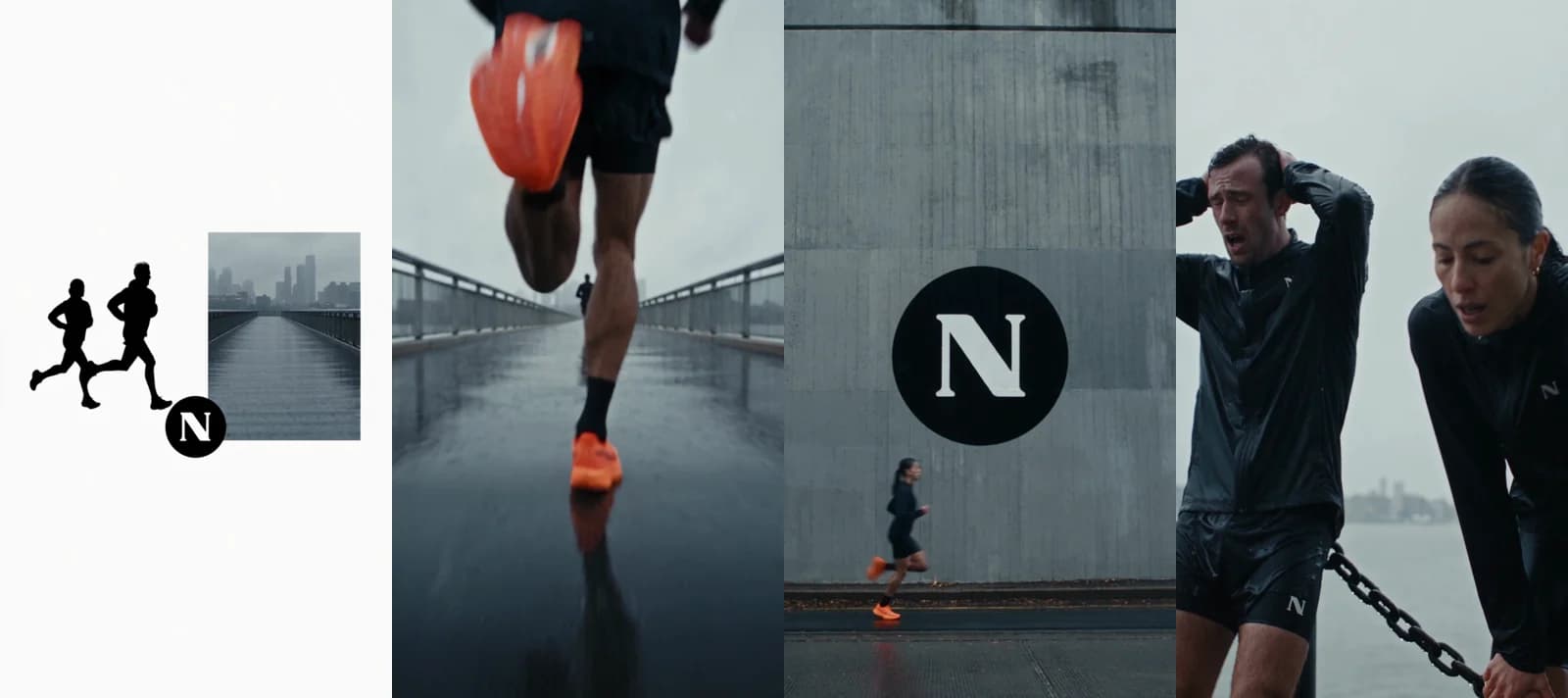 Seedance 2.5 · prompt: a 20-second rain-soaked running brand film, a new shot every 2 to 3 seconds, no dialogue · 140 credits today · rendered 2026-09-08
It came back in 7 minutes 12 seconds as eight shots in one render. Scene detection found seven cuts, at 3.4, 6.0, 8.9, 12.0, 14.8, 17.0 and 18.9 seconds, against the prompt's 3, 6, 9, 12, 15, 17 and 19, and the black kit, the orange shoes and the logo stayed the same in every shot. In today's credit units it was charged 90 credits in September. At today's 7 credits a second, the same 20 seconds is 140 credits, and a full 30-second commercial is 210 credits at 720p, 360 at 1080p or 90 at 480p.
Or cut it from shorter clips
The clip route costs more or less depending on the model:
| Route to 30 seconds | Clips | Credits |
|---|---|---|
| Seedance 2.5, 720p | 1 × 30 s | 210 |
| Seedance 2.5, 1080p | 1 × 30 s | 360 |
| Google Veo 3.1, 1080p | 4 × 8 s | 288 |
| Kling v3 Pro | 2 × 15 s | 60 |
| Seedance 2.0 Mini, 720p | 2 × 15 s | 30 |
Google Veo 3.1 is a flat 72 credits a clip at 4, 6 or 8 seconds, so four clips cost 288 credits even though they run 32 seconds. Per clip, a Novoads render runs from about 25 cents for a five-second Seedance 2.0 Mini clip to about $4 for an eight-second Google Veo 3.1 clip, and about $10 for a full 30-second Seedance 2.5 take. Budget for discards on top: Kalshi's creator needed 300 to 400 generations for 15 usable clips, and few spots ship from their first render.
Neither these credits nor a prompting bill like Kalshi's include the creator's time or the airtime. For what a filmed spot costs instead, our video ad production cost breakdown runs the crew-and-studio math.
What each plan covers
Novoads starts at $15/month (Starter, 200 credits per month). Plus is $49/month (1,000 credits), and Ultra starts at $129/month (3,000 credits) for more volume. All plans are published on novoads.ai/pricing.
What a month of credits covers:
- Plus, 1,000 credits: four 720p one-take commercials at 210 credits each, or three four-clip Veo spots at 288.
- Starter, 200 credits: three 30-second Kling v3 Pro cuts at 60, or two 480p Seedance 2.5 takes at 90.
If your commercial is mostly product on screen, our product demo videos page walks that route.
Production Got Cheap. Judgment Did Not.
Every commercial in this post had people deciding what it should say, which takes to keep and when it was finished. What changed is the price of trying. A 30-second spot that once needed a crew and a calendar now costs a few hundred credits a render, so the better bet is to make three versions and let the results pick. When you want to see your own script as a commercial, Novoads runs every route in this post.
Frequently Asked Questions
How is AI used in ads?
In a commercial, AI now does jobs a crew and an edit suite used to do. For Kalshi's June 2025 NBA Finals spot, NPR reported that the creator co-wrote the script with Gemini or ChatGPT, had Gemini turn it into a shot-by-shot prompt, generated the footage with Google's Veo 3, then arranged the clips and added music in ordinary video editing software. Brands also use AI for voiceovers, captions, product images and cheap variations of one idea to test.
How can I create an AI brand video?
Write a one-line brief and a short script, break the script into timed shots, then generate them: one take of up to 30 seconds in Seedance 2.5, or clips of 4 to 15 seconds in Google Veo 3.1 or Kling v3 Pro, all three available in Novoads. Add a voice, a music bed and captions, watch the result on mute, and regenerate any single shot that breaks rather than the whole video.
How much does it cost to make an AI commercial?
In Novoads, one 30-second Seedance 2.5 take at 720p costs 210 credits, four eight-second Google Veo 3.1 clips cost 288, and two 15-second Kling v3 Pro clips cost 60. Per clip, that is from about 25 cents for a five-second Seedance 2.0 Mini clip to about $4 for an eight-second Google Veo 3.1 clip, and about $10 for a full 30-second Seedance 2.5 take. For scale, Kalshi told NPR the AI prompting for its 2025 NBA Finals spot cost under $2,000, which leaves out the creator's fee and the airtime.
Have AI commercials aired on TV?
Yes. Kalshi's 30-second spot, whose footage came from Google's Veo 3, appeared in YouTube TV's stream of Game 3 of the 2025 NBA Finals. Coca-Cola remade its 1995 'Holidays Are Coming' commercial with AI for the 2024 holidays and again in 2025, listing one 2025 cut as airing only in the USA. Svedka's Super Bowl LX spot in February 2026 was billed as the first primarily AI-generated Super Bowl commercial.
Key Takeaways
- An AI commercial is a TV-style ad whose footage, and often its voice and music, is generated by AI models from written prompts instead of filmed by a crew.
- Kalshi's 30-second spot appeared in YouTube TV's stream of Game 3 of the NBA Finals on June 11, 2025; Kalshi told NPR the AI prompting cost under $2,000, a figure that leaves out the creator's fee and the airtime.
- Coca-Cola remade its 1995 'Holidays Are Coming' commercial with AI in 2024 and 2025, Svedka ran an AI-led spot at Super Bowl LX in February 2026, and Toys R Us premiered a brand film made almost entirely with Sora at Cannes Lions in 2024.
- Every one still needed people to write the brief, pick the takes and finish the sound: Kalshi's creator ran about 300 to 400 generations to get 15 usable clips.
- In Novoads a 30-second commercial costs 210 credits as one Seedance 2.5 take at 720p, 288 as four Google Veo 3.1 clips, or 60 as two Kling v3 Pro clips.
Sources
- •Kalshi News: Kalshi's revolutionary AI ad goes viral (June 16, 2025)
- •NPR: An AI video ad is making a splash. Is it the future of advertising? (June 23, 2025)
- •The Coca-Cola Company: Coca-Cola Refreshes Givers of the Season, Embraces AI-Powered Storytelling (November 3, 2025)
- •ComfyUI: Shake Your Bots Off, how Svedka and Silverside AI made their Super Bowl ad
- •Marketing Dive: Toys R Us creates first brand film to use OpenAI's text-to-video tool (June 25, 2024)