How to Repurpose Winning Ads Into Four New Concepts Without Losing What Worked
Repurposing a winning ad means keeping what it proved (the promise, the proof, the offer and the beat order) and rebuilding it around one of the four changes Meta's creative-fatigue lesson names: a different product benefit, a new use case, a fresh perspective, or different people and situations.

Mauricio Valdivia
·12 min
Your best ad is the first one to wear out
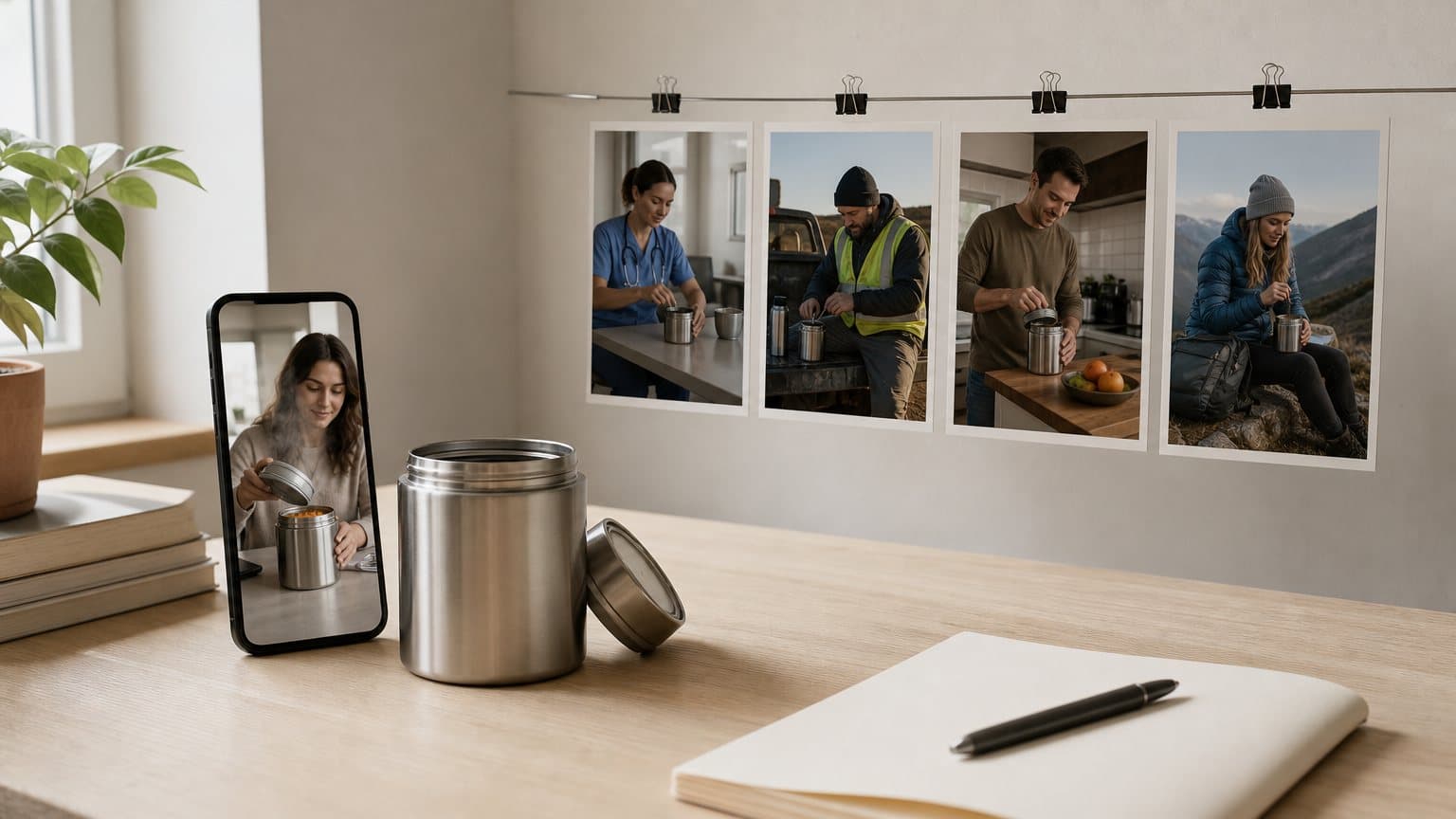
The lunch-jar video has been the account's best ad for a month. A woman at an office desk opens a steel jar at one in the afternoon, steam comes off the soup, and she says she packed it at seven. It took most of the ad set's budget in its first week and kept it. For ten days now its cost per purchase has crept up. Someone wants to pause it.
Don't.
Meta's creative-fatigue lesson for advertisers makes the point that most teams get backwards: "your top spending ads are usually the ones that show signs of fatigue first." The ad is tiring because it won, not because it was wrong. The lesson's next line is the instruction: "Instead of pausing these ads, use this as a chance to improve your results."
Repurposing a winning ad is how you take that chance. You keep what the ad proved (a promise, a moment of proof, an offer, an order of beats) and rebuild it as a new concept, so the people who have seen the original too often meet something they have not seen. It is not a resize, a caption swap or a new call to action on the same footage. Meta's December 2025 note on creative diversification calls that kind of change creative iteration, and says diversification and iteration "are two separate concepts."
This guide works on your own proven ad, from the brief to the launch. Rebuilding someone else's is a different discipline, covered in our guide to cloning a competitor's ad without copying it.
Why the winner fatigues first
Spend is what buys the fatigue
Meta's lesson defines creative fatigue in one sentence: "This happens when your audience has seen the same ad creative too many times." It adds that fatigue "is common in direct response campaigns and is often connected to how many new people your ads reach."
Put those two lines next to how an auction behaves and the order of events stops being surprising:
- The best ad earns the most delivery.
- The most delivery exhausts the most people.
- The most exhausted ad is the one whose results bend first.
Meta's December 2025 note describes the end state the same way: creative fatigue "occurs when your target audience is overexposed to the same creative (image or video), leading to declining engagement and higher cost per result."
So a rising cost per result on your top spender is ambiguous news. On an ad that won clearly, the likelier reading is that the audience has run out of first impressions of that execution, not that the idea stopped working.
Pausing throws away a finding
A paused ad stops costing money and stops teaching you anything. The next brief starts from a blank page.
Meta's framing points the other way. "Creative fatigue doesn't mean your ads are failing," the lesson says, and it presents new creative as a way to widen the ad's reach rather than retire it: "Refreshing your creative concepts can help you connect with your existing audience in new and engaging ways, but also enables you to reach new customers."
TikTok lands in the same place. Its Creative Codes guide says "even the best ads will experience creative fatigue at some point, so be sure to refresh your ad creative often to keep the results flowing." Neither platform reads fatigue as a verdict on the idea. Both answer it with new creative.
Refresh, iterate, repurpose: three jobs, three outputs
These words get blurred in creative meetings, so pin them down before any work starts.
- Refresh is the goal: put creative in front of an audience that has not already seen it too often. Both platforms use the word.
- Iterate is the smallest move: the same concept with one surface detail changed. Meta's note gives the example of "two ads with identical visuals, but different text CTAs," and says iteration "can inform new ad concepts for a diversification strategy, but should not replace true creative diversification."
- Repurpose is the move this guide is about: the proven core of one ad carried into a concept that looks, sounds and opens differently.
Iteration has its place, and our guides to ad hook variations and ad creative testing cover how to read a variant test honestly. It cannot fix fatigue alone: a viewer who has seen your winner a dozen times recognizes the old footage under the new caption.

Separate what the ad proved from how it looked
The proven core: four things that earned the spend
Before changing anything, write down what the winner actually proved. On most direct-response video ads it comes down to four elements, and they are the ones you carry into every new version:
- The promise. The single outcome the ad commits to. For the lunch jar: food packed in the morning is still hot at lunch.
- The proof. The moment the viewer believes it. Here, the steam coming off the soup when the lid opens.
- The offer. What the ad asks for, and what the viewer gets in return.
- The beat order. The sequence the ad runs in. TikTok's Creative Codes guide says "We recommend a three-part structure consisting of a hook, body, and close," which describes most winners on any platform.
These four are what the spend was really buying. An audience that is tired of the ad is tired of the woman at the office desk, not of hot soup at lunch.
The execution layer: what the audience is actually tired of
Everything else is execution, and execution is what fatigues:
- the face and the voice delivering the script
- the setting, the light and the props
- the first frame and the first line
- the edit rhythm, the captions and the soundtrack
- the aspect ratio and the length it was cut to
A repurpose changes most of this list on purpose, because the execution is the part the overexposed viewer recognizes.
Write the winner brief before you touch the file
The practical step is a one-page brief on the winner itself, written before anyone opens an editor:
- the promise, in one sentence
- the proof, with its timestamp
- the offer, word for word
- the beats, with rough timings
- the element you believe did the work, and why you believe it
That last line is the one most teams skip. If the comments keep quoting one line, that line belongs in the core. If viewers drop off before the proof lands, the opening deserves more of the credit than the proof.
That brief becomes the "keep" column for every variant you build. Teams that already run a concept ledger for their creative operations have most of it; the winner brief is that row, written out in full.
Four changes Meta names, four new concepts
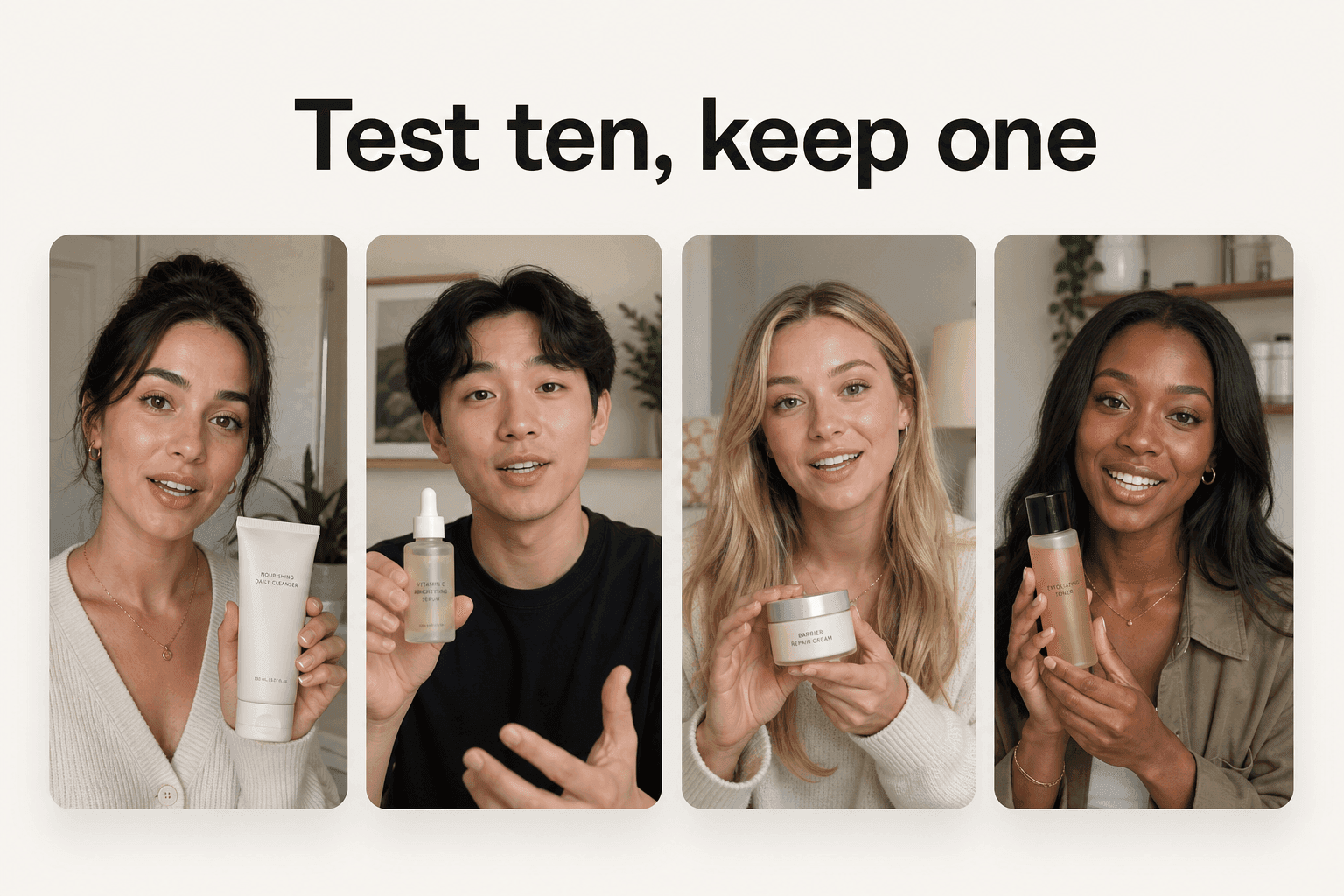
Meta's lesson is specific about what a new version should change. "When you use new ad creative, try changing your approach," it says. "You can highlight a different product benefit, show a new use case, offer a fresh perspective or feature different people and situations in your ads."
Each is a concept on its own. Here is how each works on the lunch-jar winner, with the proven core held constant.
A different product benefit
The winner sells heat. The same jar also means no queue at the office microwave and no soup leaking into a work bag. A benefit repurpose keeps the three beats and the steam shot, but the opening and the demonstration lead with the benefit the first ad never mentioned: a line of coworkers waiting at the microwave, and a jar already open at the desk.
The risk with this lever is drifting off the promise. Pick benefits that sit next to the proven one, not across the room from it. "No microwave queue" still depends on the food being hot. "Dishwasher safe" does not, and a version built on it is a new, unproven ad wearing the winner's name.
A new use case
Same benefit, different job. The office desk becomes a hospital break room at three in the morning, the cab of a truck on a building site, or a school lunch packed by a parent. The promise survives intact, because hot food matters at least as much in each of those places, and the setting alone changes the look of the ad from the first frame.
Use cases are usually the easiest lever to source, because customers hand them to you. List every place people say they use it, from three sources:
- your product reviews
- support tickets and returns notes
- the comments under the winner itself
Each distinct place is a candidate concept.
A fresh perspective
Perspective changes who tells the story and from where. The winner is a first-person testimonial. Three other points of view on the same facts:
- the coworker who teased her about the jar, now asking where she bought it
- two lunches opened side by side at one o'clock
- the jar going into a bag at seven and coming out on a desk six hours later
This lever has the most room for invention and wanders most easily. If the promise, the proof and the offer are still on screen, it is a repurpose.
Different people and situations
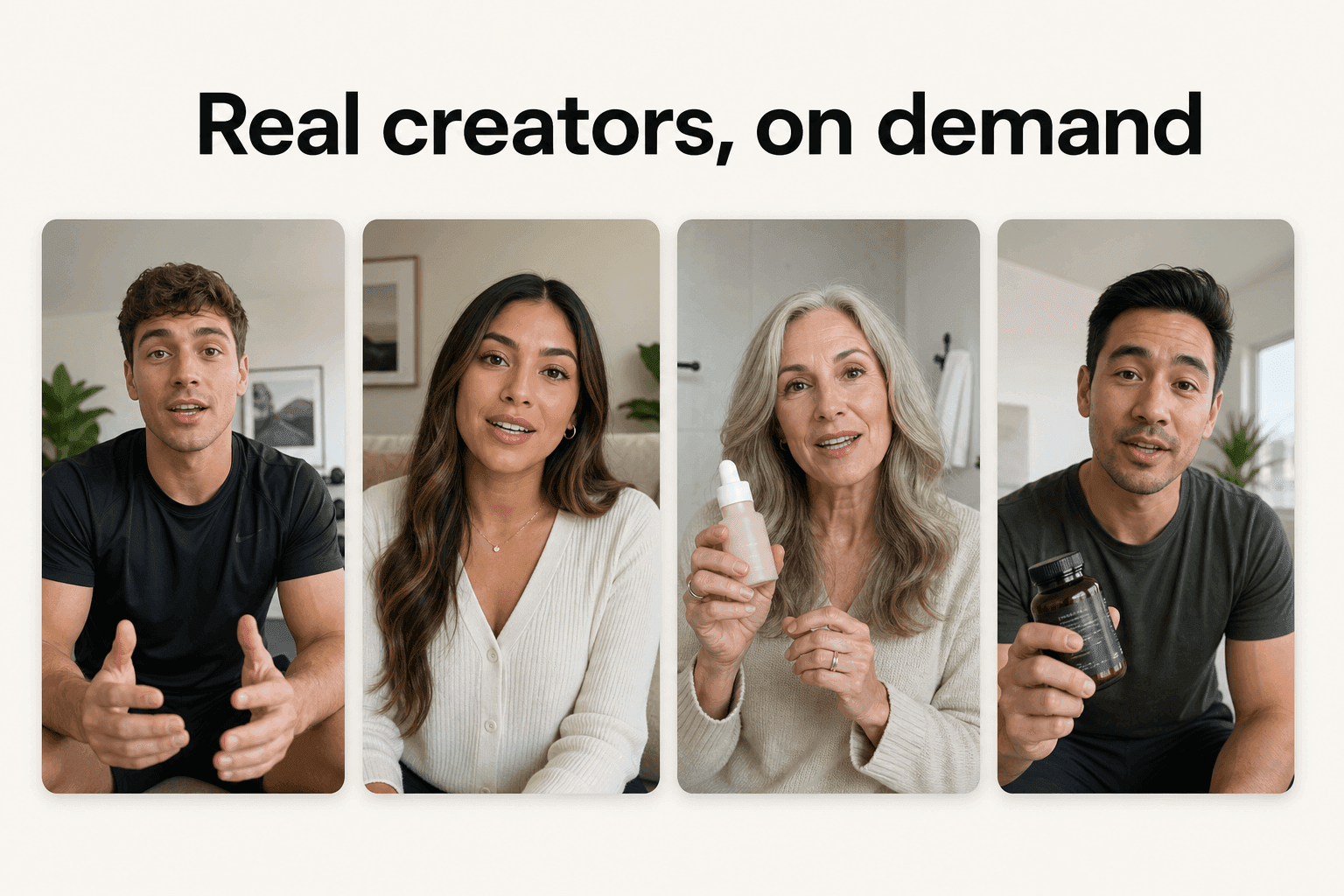
Meta's fourth option is the one most teams reach for first: a new face. It works best when the person and the situation change together. A nurse on a night shift is a different person in a different situation. The same office, the same desk and a different actor is mostly a casting change, and the viewer who is tired of the original may not register it at all.
Tie each new person to a customer segment you can name, so the lever does not become a casting lottery. For the opposite discipline, one face held fixed while the script changes, see our guide to keeping one AI actor consistent across ad variations.
The variant sheet: how much to change
Too similar, and the system reads one ad
The most common failed repurpose changes too little. Meta's December 2025 guidance, unpacked in our explainer on creative diversity in Meta ads, explains why that fails in delivery terms, not just creative ones: "when multiple ads look or feel alike, these are seen as variations of the same creative, meaning learnings and delivery optimizations are shared at the creative level."
The same note says creative similarity "refers to when ad images are visually too alike, even if technically different assets," and warns that "high similarity can also drive fatigue." Its best-practice list puts the remedy in one line: "as opposed to making small, subtle tweaks to the same ad, develop ads that are truly different in look, feel, storyline, and message."
A new caption, a new end card and a new color grade on the winner's footage can therefore produce a file that is technically new and practically the same ad. At best it inherits the winner's fatigue.
Too different, and the proof is gone
The opposite failure is quieter. A team reads "change your approach" as permission to start over and ships four ideas that share nothing with the winner except the product. They may be good ads, but they carry none of the evidence the winner paid for, so budget, name and judge them as new concepts, with the angle-first planning in our ad creative strategy guide.
The test is the winner brief. A variant that drops the promise or the proof has left the family.
One row per variant, one lever per row
The sheet that holds this together has one row per variant and one lever per row. For the lunch jar it looks like this:
| Variant | Lever | Keep | Change |
|---|---|---|---|
| A, the winner | None | Everything | Nothing |
| B | Benefit | Promise, steam shot, offer | Opening, demo, setting |
| C | Use case | Promise, steam shot, offer | Setting, person, first frame |
| D | Perspective | Promise, steam shot, offer | Narrator, point of view |
| E | People and situation | Promise, steam shot, offer | Actor, voice, setting |
Two rules make the sheet work. Every "Change" cell includes something visible in the first second, because that is where a tired viewer decides they have seen this before. Every "Keep" cell includes the proof, because it is the part of the winner people believed. The lever decides the concept, and the concept decides the look.
Taking a concept into a new format
A resize is not a repurpose
Cutting the 9:16 winner into square and horizontal versions widens where the ad can run. It does not create a concept: the footage, the face and the first frame are unchanged, which is the look-alike case Meta's note describes. Treat format versions as part of each concept, not extra rows on the sheet. Our reference on video ad specs by platform has the dimensions each placement expects.
Rebuild the opening for the platform
A concept that moves to a new platform should be rebuilt from the first frame, not exported from the last one. TikTok's help center is direct about it: "Creatives perform best when they are made for TikTok and when they leverage the power of the platform."
Its checklist is concrete:
- vertical video, "orienting vertically at 9:16," with sound or music
- content kept "visible within the UI safe zone"
- a hook that arrives early: "Prioritize your hook in the first 6 seconds"
- an aesthetic that fits the feed: "go for a DIY or not overly polished style"
In practice the proven core travels and the envelope is rebuilt. You write a new first line for the platform, you place captions where the interface will not cover them, and you move the proof as early as the story allows. A UGC-style ad built for one feed rarely survives a straight export to another.
What Advantage+ creative already does to your ad
On Meta, some of the surface variation happens without you. Meta's Advantage+ creative page says the feature "uses AI to generate and enhance ad variations across single image, video and carousel formats," and notes that "Some enhancements may be turned on by default, but you can turn them off at any time." Meta also recommends "checking and approving the previews of all your ads before they go live."
That changes where human effort pays. The platform generates variations of the assets you give it; the strategic call stays with you: which benefit, use case, perspective or customer the next version is for. Spend production time on those four levers, and check the previews so an automatic variation does not trim the proof.
Launching the new versions and reading them
Put them where the learning already is
Where the new concepts go matters as much as what they are. TikTok's help center gives three instructions that apply directly:
- Where: "When refreshing creatives, add new creatives to an existing ad group instead of creating a new ad group to extend its lifetime."
- How many: it suggests "between 3-5 different creatives per ad group."
- How different: "it is always better to use creatives with big differences, especially when testing."
Meta's lesson points you to Ads Manager for the next step: "check your opportunity score recommendations in Meta Ads Manager," and "Look for suggestions to refresh your ad creative and diversify your ads." Our reading of the two platforms together, and it is our reading rather than a sentence either one wrote, is to leave the winner where it is and add the repurposed concepts beside it, so delivery can move toward them as they earn it.
Refresh on the trend, not the calendar
TikTok's trigger is specific. It recommends refreshing "when delivery results exhibit a consistently declining trend, or when daily new users are low." That beats a fixed weekly swap, because it ties new work to evidence rather than the calendar.
It also means the next concepts must exist before the trend shows up:
- TikTok says "Having a consistent supply of creatives to refresh is one way to keep your campaigns going."
- It suggests "maintaining a library of creative assets."
- The decay itself is a measurement problem, and our guide to creative analytics covers reading the curve before you act.
Worked example: one winner, four concepts, five slots
Here is the lunch-jar account taken through one refresh, with the counts that matter. The account and its numbers are illustrative.
- Start: one winner, with cost per purchase rising for ten days.
- Brief: one page, four kept elements: the promise, the steam shot, the offer and the three beats.
- Concepts: four, one per lever, rows B to E on the sheet.
- Files: eight, because each concept is cut with two different opening lines.
- Slots: five. On TikTok, the winner plus four concepts fills the top of the suggested 3-5 creatives per ad group.
The gap between eight files and five slots is the lesson. Two openings of one concept share footage, face and setting, so by Meta's description they read as variations of one creative. Launch one opening per concept and keep the second in the library until that concept wins and starts to tire. Count concepts, not files. It is the same logic that decides how many ad creatives you actually need at once.
Five ways a repurpose quietly breaks
- The proof gets cut for time. A shorter format drops the steam shot, and the new version loses the moment people believed. Fix it by cutting somewhere else; the proof lives in the keep column.
- Only the surface changes. A new caption on the same footage gets grouped with the tired winner. Fix it by changing something visible in the first second on every variant.
- The lever drifts off the promise. A benefit unrelated to the original promise produces an unproven ad. Fix it by checking each variant against the winner brief, and judging anything that fails as a new concept.
- Every lever changes at once. A new benefit, use case, narrator and offer in one version means nobody knows why it won. Fix it with one lever per row and a fixed offer.
- The winner is paused on launch day. The account loses its proven performer before the new concepts have shown anything. Meta's lesson says not to pause it. Add the new concepts, and let them earn delivery before you decide anything about the original.
How Novoads solves the reshoot problem in repurposing
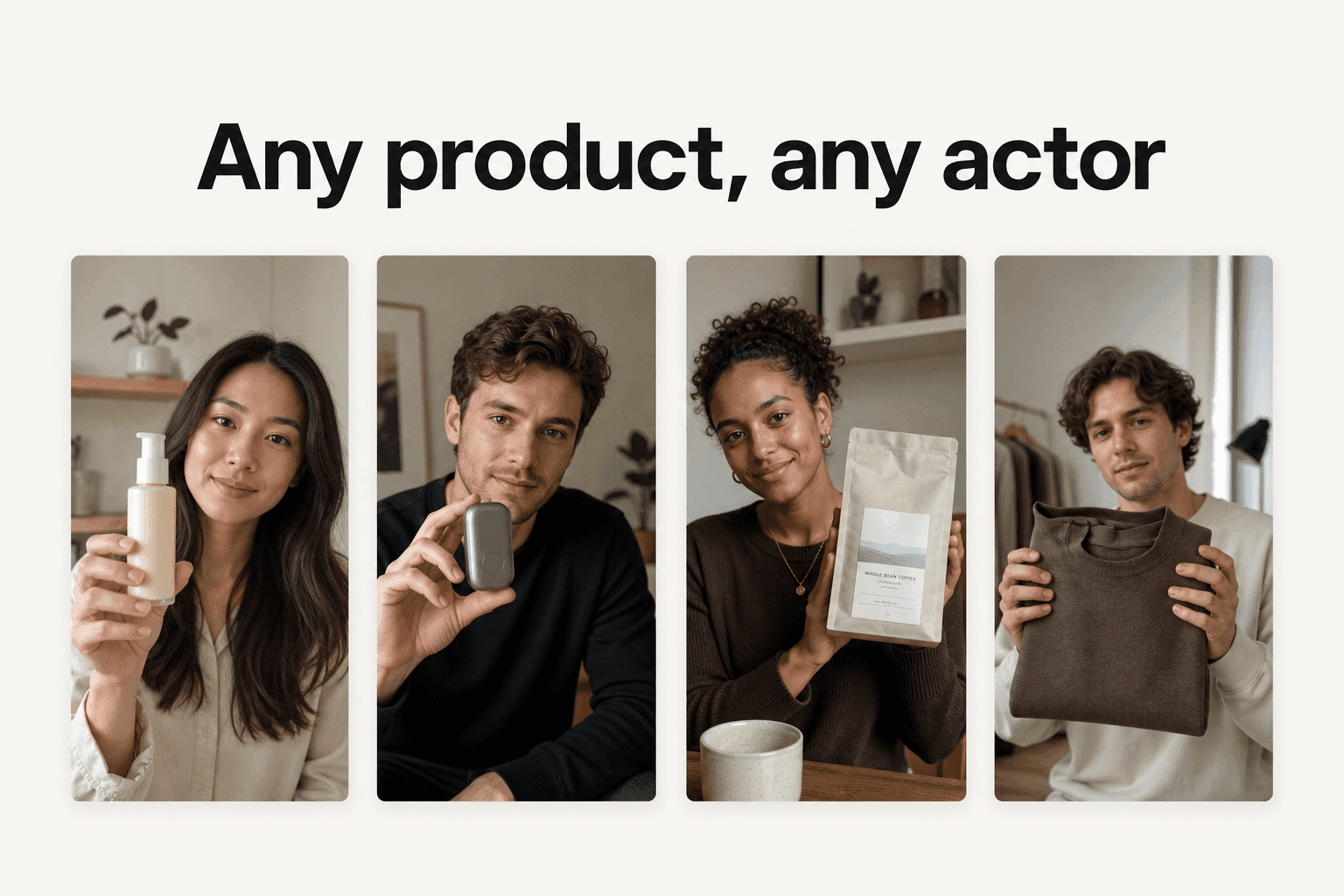
Every row on the variant sheet is a reshoot: a new person, a new setting, a new first line. Novoads is built for that step. You write a script for each lever and pick an AI actor, so a new person for a new customer segment becomes a new render rather than a new creator booking, with voices in 31 languages when a segment buys in a different one. When the product has to be in someone's hand, name the route: upload a photo of a person holding your product to create a custom actor, or start from a Discover product template, which puts your uploaded product into a template creator's hand.
The costs are published per render. A talking-actor video costs 10 credits for anything up to a minute, and a re-render costs the same as the original, so the four concepts in the worked example come to 40 credits, and each second opening is another 10 when its concept earns one. Novoads starts at $49/month (Starter, 50 credits per month). All plans are published on /pricing.
Fatigue retires the footage, not the finding
The file wears out. That is the price of winning. What the ad found does not wear out on the same schedule: a promise people believe, a moment that proves it, and an order of beats that carries them to the offer. You paid the auction to learn those things.
Pause the winner and the finding goes into the archive with it. Rebuild it four ways and it keeps working.
Frequently Asked Questions
What does it mean to repurpose a winning ad?
It means taking an ad that has already proved itself and rebuilding what it proved into a new concept. You keep the promise, the moment of proof, the offer and the order of beats, and you change the execution: the person on screen, the setting, the opening and the angle. A resize or a new caption on the same footage is not a repurpose. Meta's own guidance calls that kind of change creative iteration and treats it as a separate job.
Should I pause an ad that is showing creative fatigue?
Meta's creative-fatigue lesson for advertisers argues against it. It says creative fatigue doesn't mean your ads are failing, that your top spending ads are usually the ones that show signs of fatigue first, and that instead of pausing these ads you should use this as a chance to improve your results by refreshing your creative concepts. The ad that is tiring is usually the one that taught you the most, so build the next versions from it.
What should I change when I refresh a winning ad?
Meta names four options in its creative-fatigue lesson: highlight a different product benefit, show a new use case, offer a fresh perspective, or feature different people and situations. Treat each one as a separate concept and change one per variant, while keeping the promise, the proof and the offer from the original. That way, when one version beats the others, you know which change did it.
How different does a repurposed ad need to be?
Different enough that a viewer who has seen the original too often notices in the first second, and similar enough that the proof they believed is still there. Meta's December 2025 guidance on creative diversification says ads that look or feel alike are seen as variations of the same creative, so a new caption on the same footage risks being treated as the ad you already have. A new person, a new setting and a new first frame are the usual minimum.
Is resizing an ad for another platform the same as repurposing it?
No. Cutting a 9:16 winner into other aspect ratios widens where it can run, but the footage, the face and the first frame stay the same, so it is still one concept. When a concept moves to a new platform, rebuild the opening for it. TikTok's help center says creatives perform best when they are made for TikTok, and asks for vertical 9:16 video, a hook prioritized in the first 6 seconds and a DIY or not overly polished style.
Where should refreshed creatives go on TikTok?
Into the ad group that is already running. TikTok's creative best practices say that when refreshing creatives you should add new creatives to an existing ad group instead of creating a new ad group, to extend its lifetime. The same page suggests 3-5 different creatives per ad group and recommends refreshing when delivery results show a consistently declining trend or when daily new users are low.
Key Takeaways
- Meta's creative-fatigue lesson says your top spending ads are usually the ones that show signs of fatigue first, and that instead of pausing them you should use the moment to improve results. A tiring winner is a finding to reuse, not a failure to switch off.
- Split the winner in two before you change anything. The proven core is the promise, the proof, the offer and the beat order, and it goes into every new version. The execution (face, setting, first frame, edit) is what the audience is tired of, and it is what moves.
- Build one concept per change Meta names: a different product benefit, a new use case, a fresh perspective, or different people and situations. One lever per variant keeps the result readable.
- Change too little and the platform sees one ad. Meta's December 2025 guidance says ads that look or feel alike are seen as variations of the same creative, and that high similarity can also drive fatigue. Every variant needs a change visible in the first second.
- Count concepts, not files. On TikTok, which suggests 3-5 creatives per ad group and says refreshed creatives go into the existing ad group, a winner plus four repurposed concepts fills the top of that range; alternate openings wait in the library.
Sources
- •Meta for Business: Solving creative fatigue with strategies to refresh your ads (video lesson)
- •Meta for Business: Demystifying creative diversification (December 16, 2025)
- •TikTok Ads Help Center: Creative best practices for performance ads
- •TikTok for Business: Creative Codes, 6 principles for creating on TikTok