Instagram Ad Examples: 6 Ads That Work and the 4 Layers Behind Every One
Six Instagram ad examples torn down layer by layer: what the first frame promises, who is credible saying it, what the ad shows instead of claims, and what it asks for. Plus how to verify any example yourself in the Ad Library.

Mauricio Valdivia
·11 min
Every Instagram ad worth copying is already public
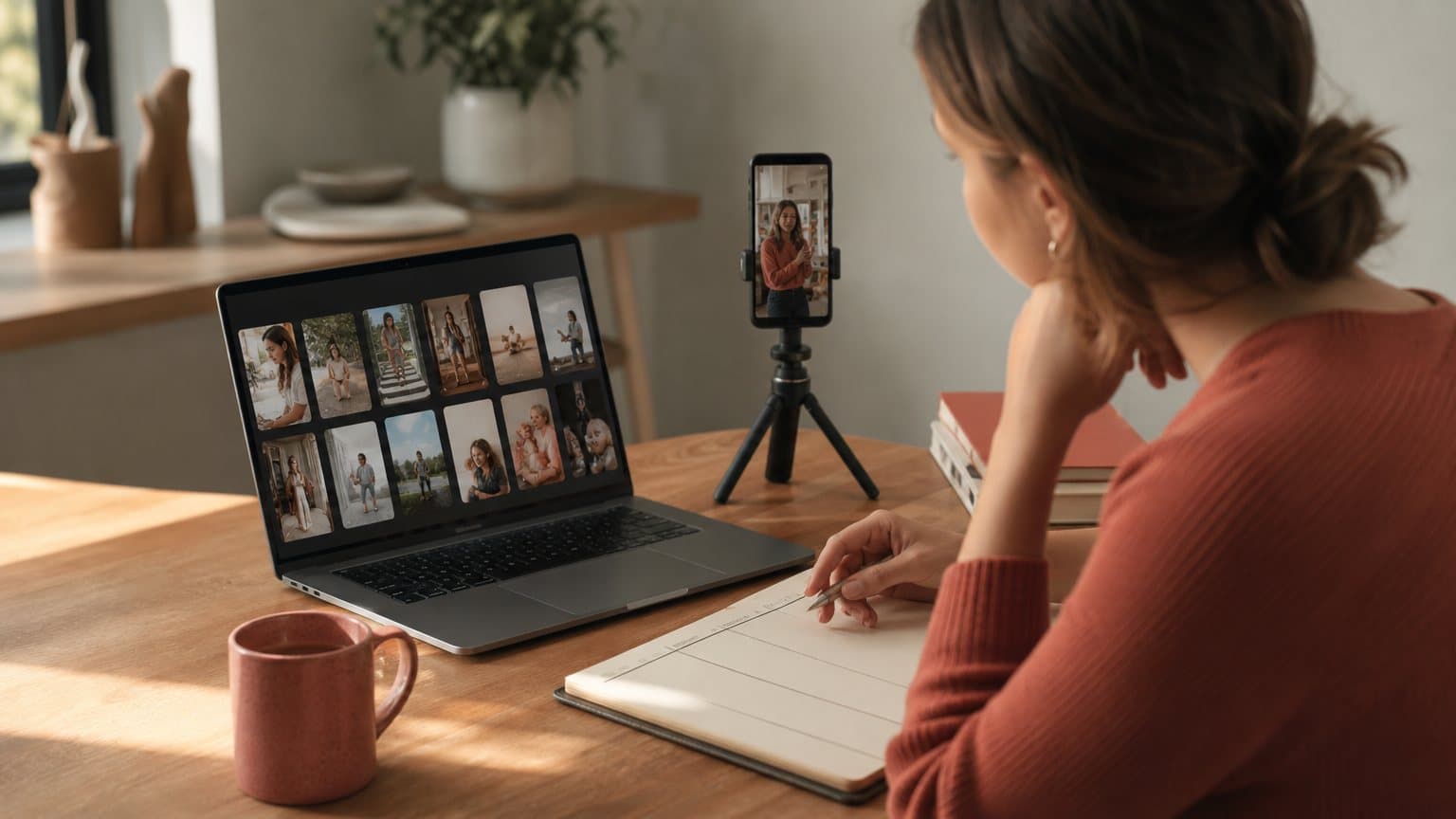
You see an ad on Instagram that stops you. You screenshot it. The screenshot joins two hundred others in a folder you will never open again, and by the time you brief your next campaign you can remember the vibe of it and nothing else. Meanwhile the ad itself is still running, in full, searchable by anyone, in a database Meta publishes on purpose: the Ad Library is a comprehensive, searchable database for ads transparency, and it holds all active ads running across Meta's products. The good Instagram ad examples are not scarce. What is scarce is a way to read one.
This guide is that reading method. Six patterns that repeat in paid Instagram creative, each torn down by the thing that actually made it work, plus a worked example with the arithmetic attached. It is about paid creative specifically, the ads a brand is spending money to put in front of strangers. If you want the organic side of the platform, formats and rights and all, that lives in our piece on user-generated content on Instagram. If you want the campaign build itself, targeting and budgets and placements, start with how to make Instagram ads.
Where to find real Instagram ad examples
The Ad Library is the only primary source that matters
Every "top 20 Instagram ads" listicle is somebody's screenshot from an unknown date. The Ad Library is the ad. Search a brand, filter to the country you sell in, and you get what it is running right now, which tells you far more than any single creative would. Ten near-identical variants mean the brand found something and is scaling it. Forty wildly different ones mean it is still hunting. A single ad live for eight months means a control nobody has beaten.
What a listing tells you, and what it hides
Be honest about the limits, because the gap between the two lists below is where most competitor analysis quietly goes wrong.
What a commercial listing shows you:
- The creative itself, in full, at the size it runs
- Every active variant of it, side by side
- The date it started running
- Which placements and formats it was built for
What it does not show you:
- Spend, impressions, click-through rate or return on ad spend
- Whether the ad is profitable, or even breaking even
- What it was tested against and beat
Spend and reach appear only for ads about social issues, elections or politics. So the Ad Library tells you what a brand believes, revealed by what it keeps paying for. It never tells you what worked. Anyone quoting you a conversion rate for a competitor's Instagram ad is guessing.
Build a swipe file that stores mechanisms, not screenshots
The fix for the dead screenshot folder is to store four short lines with every save, not an image:
- The promise the first second makes, in your words
- Who is speaking, and why they have standing to say it
- The moment the ad proves rather than claims
- The single action it asks for
Those four lines survive when the image goes stale. A swipe file of images is a mood board. A swipe file of mechanisms is a test backlog.
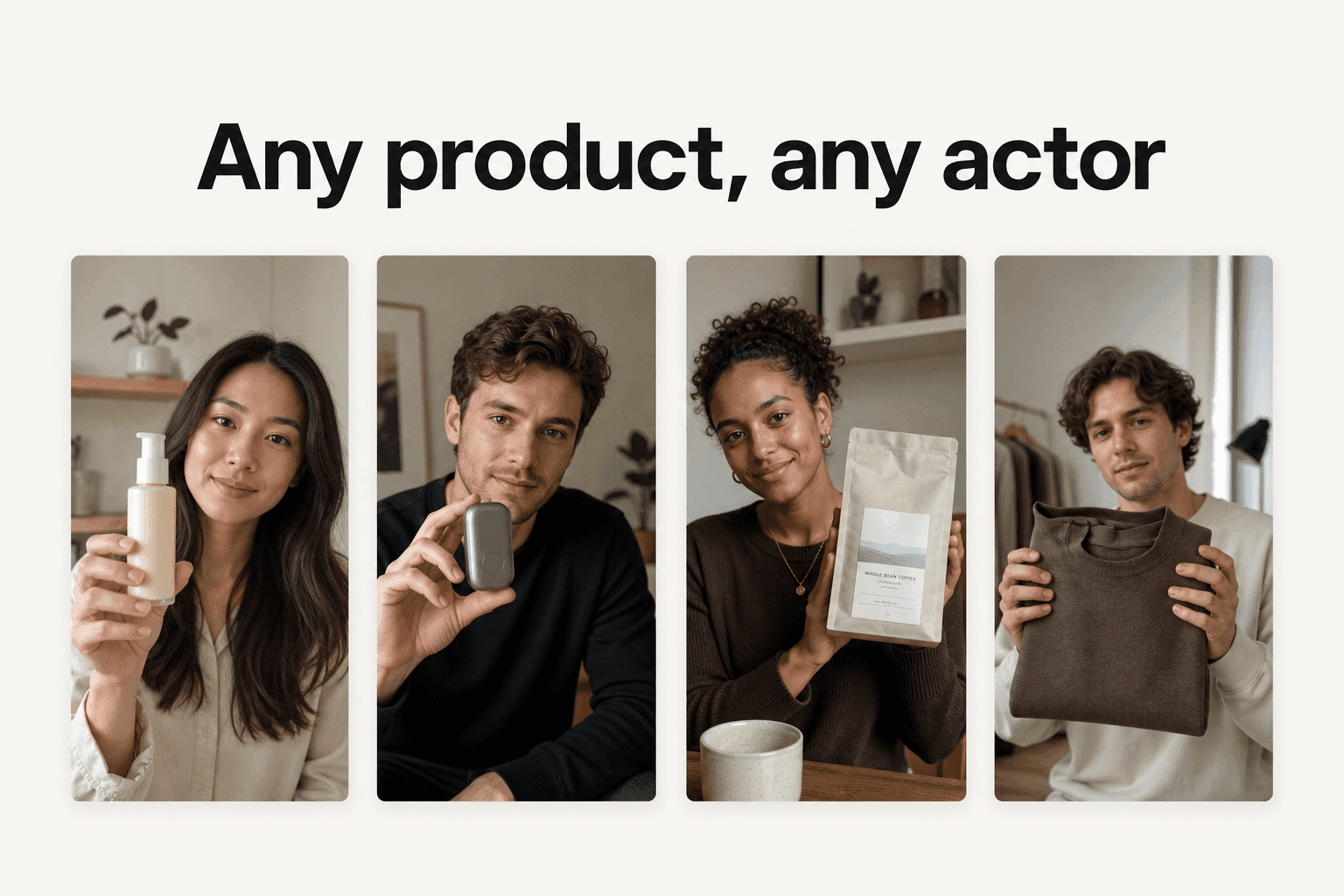
The Four-Layer Teardown
Here is the method the rest of this post uses. Every Instagram ad, in any format, is doing four jobs in sequence. Name them and you can compare a skincare Reel to a B2B carousel without hand-waving. Call it the Four-Layer Teardown:
- Frame. What the opening second promises, specifically enough to be worth another two.
- Voice. Who is delivering it, and whether they have standing to make that exact claim.
- Proof. What the camera witnesses, as opposed to what the copy asserts.
- Ask. The one action requested, matched to how warm the viewer actually is.
Read every example below in that order, and read your own ads the same way.
Frame: what the first second promises
The frame is the contract the ad signs before anyone decides to keep watching. Not "the hook" as a clever line, but the specific promise the opening makes: a named frustration, a visible result, a number, a question the viewer already has. A vague frame loses cheaply. A frame that promises something the ad cannot deliver loses expensively, because it buys attention and then spends it. Our guide to ad hooks goes deep on the writing itself.
Voice: why you believe the person saying it
Voice is credibility matching. A dermatologist claiming clinical results and a 24-year-old claiming her skin stopped hurting are both believable, for different claims. Swap them and both ads get weaker. The most common failure in this layer is not bad acting, it is a speaker who has no standing to make the specific claim the frame promised. This is the whole reason UGC-style ads outperform polished brand films for so many products: a peer has standing that a brand voice does not.
Proof: what you are shown instead of told
Proof is the layer most ads skip, and it is where money is made. Telling me a razor is sharp is a claim. Showing one pass through three days of stubble is proof. Proof does not require production value. It requires that the camera witness the thing the ad is selling, in one continuous, unedited-feeling moment. Cut away at the exact instant of the payoff and you have taught the viewer that the payoff is not real.
Ask: the one thing that happens next
The ask is the shortest layer and the most commonly wasted. One action, stated plainly, matched to the temperature of the viewer. An ad that earned twelve seconds of attention from a stranger asking for a demo booking is asking for a marriage on a first date. Most weak asks are weak because the ad tried to do two of them. There is more on this in how to make ads that convert.
Three talking-led Instagram ad examples, torn down
The problem-first talking head
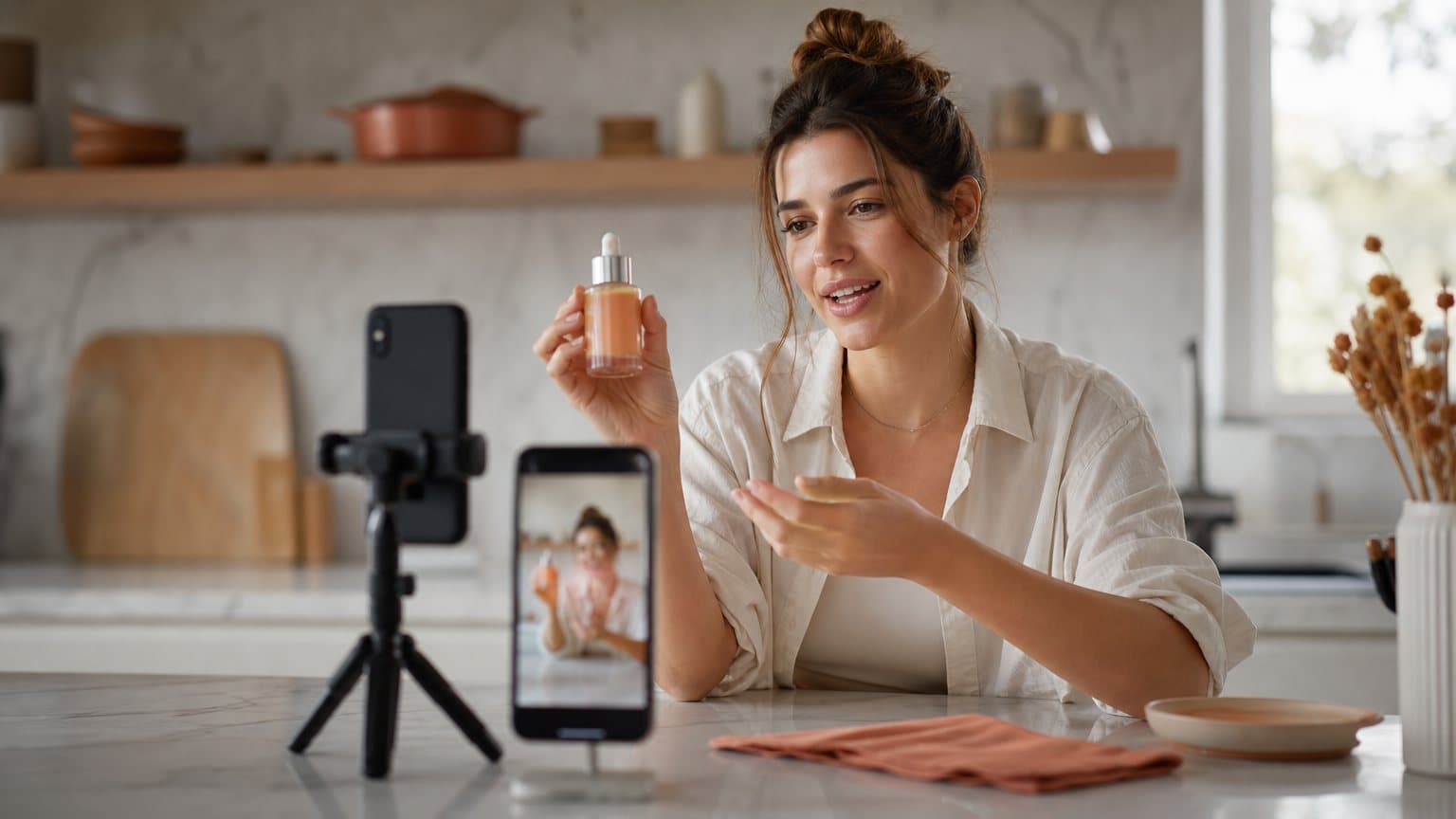
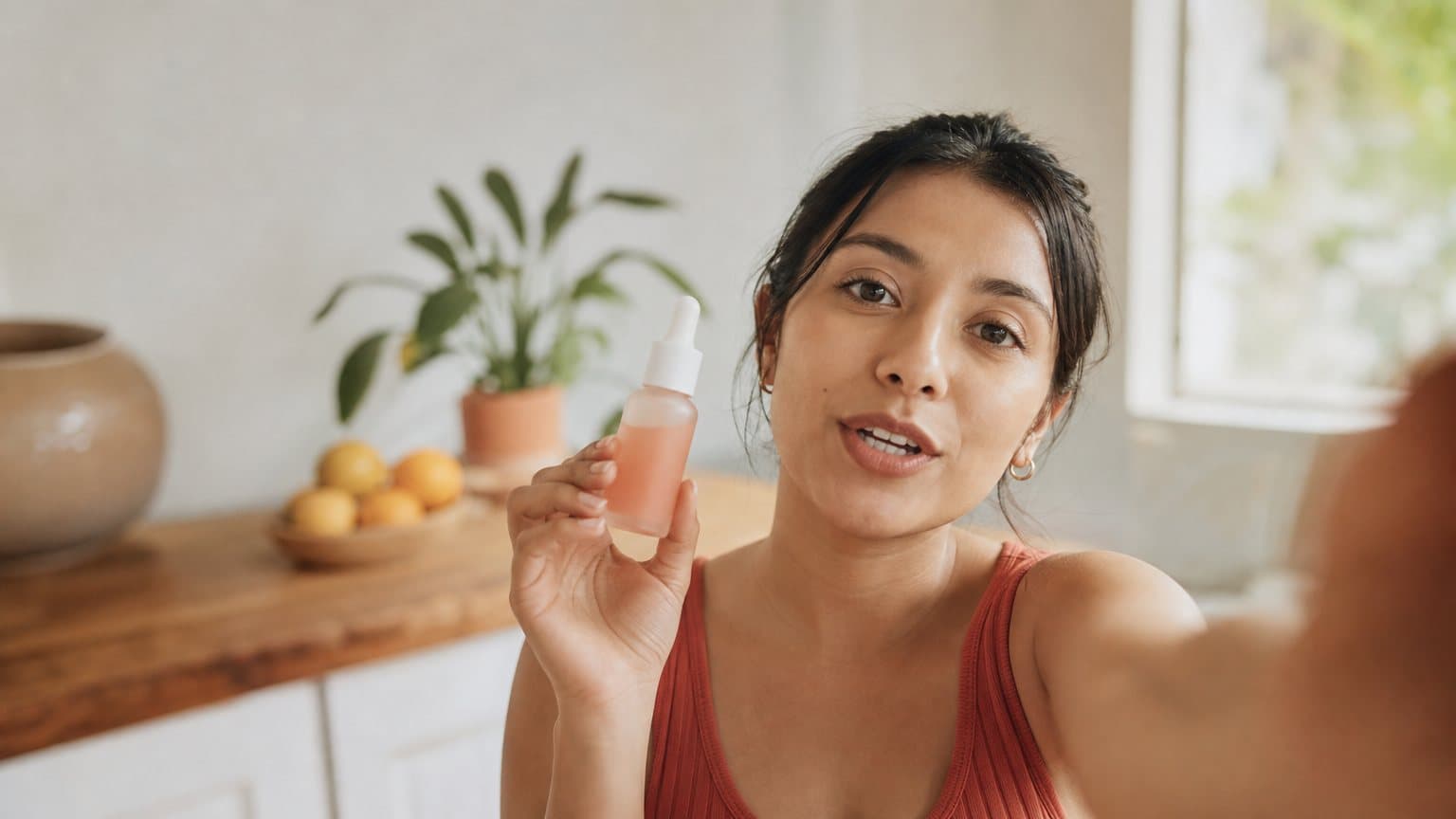
The most durable pattern in paid Instagram. Someone in a real room, phone at arm's length, opens on a frustration in their own words before the product is mentioned. Frame: a named pain in the first four words. Voice: peer, deliberately unpolished. Proof: the speaker's own visible result. Ask: a single spoken line, not a superimposed one. It wins because the frame carries no marketing language, so it does not register as an ad until the viewer is already invested. It fails when the frustration is generic. "My skin was dry" is a category. "It hurt to smile" is an ad.
The founder to camera
The same shape, a different credibility source: the person who made the thing explains why it exists. Frame: a decision or a refusal, "we spent two years failing to fix this". Voice: authority through authorship, the only voice that can credibly say why rather than how it felt. Proof: the product in the founder's hands, or the discarded prototypes. Ask: usually softer, since the pattern buys belief more than an immediate purchase. It fails when the founder narrates features. The reason the product exists is the one asset a competitor cannot copy.
The social-proof stack
A rapid sequence of separate voices, each delivering one short line. Frame: volume itself is the promise. Voice: distributed, and crucially not identical, since three people who look and talk the same read as casting rather than consensus. Proof: the variety is the proof. Ask: one, at the end, after the stack has done its work. This is the pattern AI production changes most, because assembling six distinct speakers used to mean six shoots. Our teardown of UGC ad examples covers the format-level patterns underneath all three.
Three product-led Instagram ad examples, torn down
Talking-led ads borrow a person's credibility. Product-led ads spend the product's own evidence. Which family you reach for is a judgment about where the doubt lives.
Reach for a talking-led pattern when:
- The objection is emotional, social or about trust
- The result is invisible on camera (sleep, focus, confidence)
- Your buyer needs permission from a peer more than a demonstration
- You are selling to a cold audience that has never heard of you
Reach for a product-led pattern when:
- The product does something visibly satisfying in under three seconds
- The transformation is photographable under honest conditions
- The audience already knows what it is and is deciding whether to buy now
- Your differentiator is mechanical, not narrative
The demo loop
A short, looping mechanical moment: the pour, the click, the fold, the seal. Frame: sensory, not verbal, and it lands before language does. Voice: often absent, replaced by the sound of the product working. Proof: the loop is the proof, which is why it must be uncut. Ask: an overlay, since there is no speaker. It works on products with a satisfying physical action and fails completely on ones without. Software has no pour.
The before and after
The oldest performance pattern, and the most regulated. Frame: the after is shown first, then withheld, so the viewer stays for the mechanism. Voice: the person who lived the change. Proof: a comparison the viewer trusts, which means same angle, same light, same distance. Ask: direct. It fails on lighting cheats. The instant a viewer suspects the two frames were shot under different conditions, you lose the brand's credibility on every other claim too.
The offer-led static
A single image, a price, a deadline. Frame: the offer, unhidden. Voice: the brand's own, which is honest, because nobody pretends this one is a peer recommendation. Proof: the price is the proof. Ask: buy. It gets dismissed as unsophisticated and then quietly outperforms at the end of a funnel, in front of people who already know the product. Its real failure mode is running it at strangers, where a price with no context is meaningless.
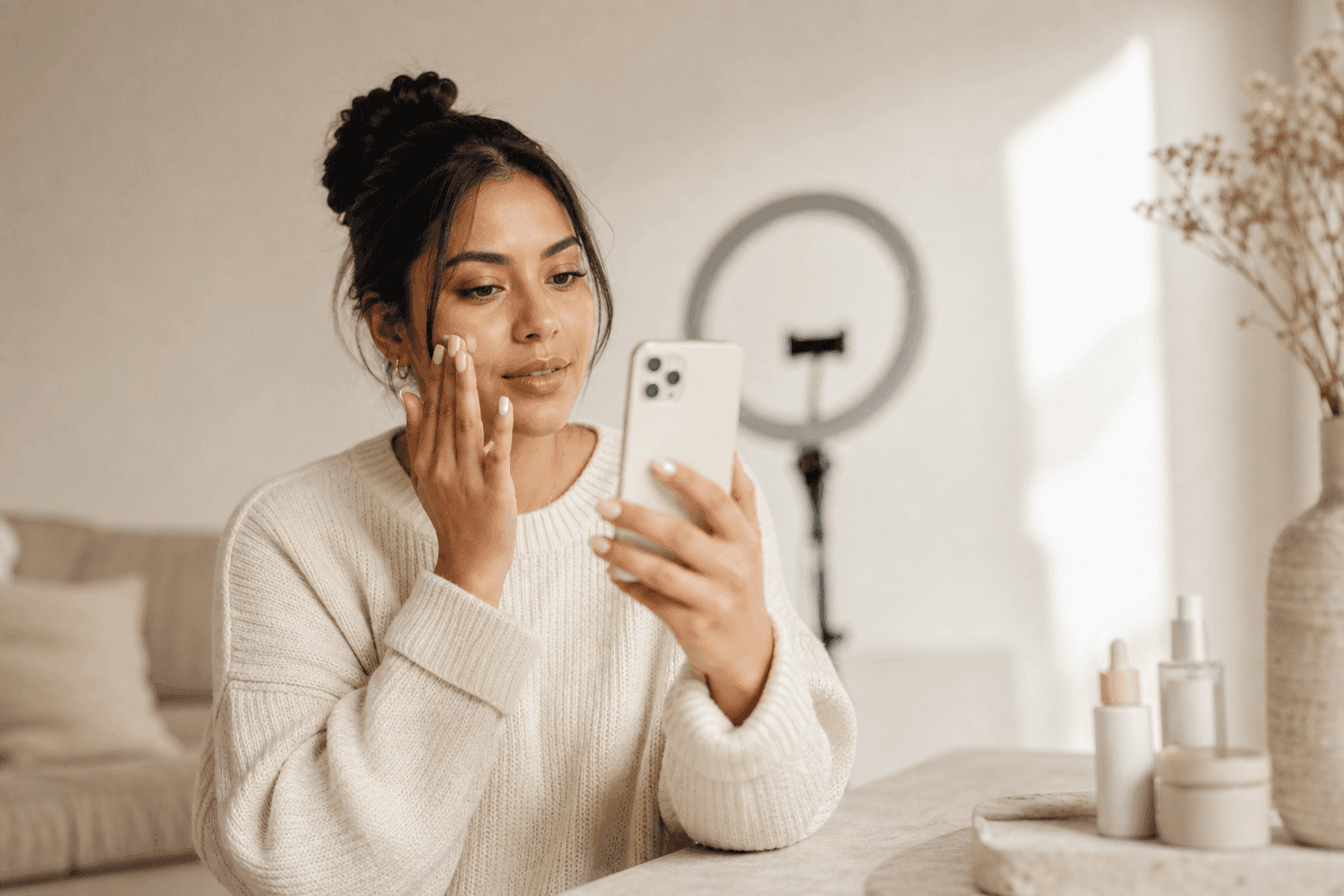
A worked teardown: a $29 serum, layer by layer
Numbers make the layers concrete, so here is a constructed example. The arithmetic is illustrative, not a measured campaign, but the shape is the one you will recognize once you start reading your own reports this way.
Two variants, one budget
A $29 serum runs two problem-first talking-head ads, same actor, same product, same $480 behind each. Variant A opens on "it hurt to smile". Variant B opens on "my winter skincare routine". Everything after second three is identical.
| Variant A | Variant B | |
|---|---|---|
| Frame | Named pain | Category label |
| Click-through rate | 1.3% | 1.9% |
| Purchases | 40 | 24 |
| Cost per purchase | $12 | $20 |
Where the money actually moved
Variant B won the click. It lost the customer. A soft, pleasant frame like "my winter skincare routine" invites everyone, which is exactly the problem: it recruits browsers, and browsers click. The specific frame repels people who do not have that problem and pre-qualifies the ones who do, so fewer clicks turn into more purchases at $12 instead of $20 on identical spend. This is the single most useful reason to distrust click-through rate as a creative verdict, which we unpack in does a high CTR mean a good ad.
What to change first
Change one layer at a time, starting at the top, in this order:
- Frame. Cheapest to rewrite, moves the most. Run four openings against one fixed body.
- Voice. Only once a frame has won twice. Swap the speaker, keep the words.
- Proof. Change what the camera shows, not how it is shot.
- Ask. Last, and usually the smallest gain of the four.
Changing the frame and the actor in the same round means you learn nothing from either.
What the numbers say about a teardown
The platform optimizes permutations, you supply the idea
Meta's own automation is remarkable at the permutation layer and silent at the idea layer. Advantage+ creative automatically creates multiple variations of your ad and shows a personalized variation to each viewer based on what they are most likely to respond to. Meta reported in 2024 that campaigns using its generative AI ad features saw an 11% higher click-through rate and a 7.6% higher conversion rate than campaigns without them. Those are real gains on top of a creative concept. They are not a substitute for one.
Platform lift is single digits, creative lift is multiples
Look at the size of the numbers Meta publishes about its own systems. A new run-time model across Instagram Feed, Stories and Reels increased conversion rates by 3% in a quarter, which for a company at that scale is enormous. Now look at the serum table above: one rewritten opening line moved cost per purchase by 40%. Both numbers are honest. They are just measuring different levers, and only one of them is yours.
Format compliance is distribution, not taste
The least glamorous finding in any teardown is that the format matters mechanically. Meta tells advertisers to build for vertical because Reels is a full-screen environment, and reports 2X higher delivery into the Reels placement for campaigns built with its Reels creative essentials in mind. And the mute-first habit is now backwards: over 75% of Reels views on Instagram are sound on. Keep captions for the rest, but write the audio as the primary channel, because that is where the Voice layer lives.
Where Instagram ad teardowns go wrong
Copying the shot list instead of the mechanism
The most common failure. A brand reproduces the kitchen, the lighting, the pacing and the caption font, and gets nothing, because it copied the surface of a mechanism that was solving a different buyer's problem. The transferable asset is the four-layer structure, never the props.
Mistaking a brand ad for a performance ad
A large brand's beautifully shot Instagram spot is often buying awareness against a media plan you cannot see. Tearing it down for direct-response lessons is like studying a billboard for conversion rate. Filter your swipe file to advertisers with your economics.
Letting the swipe file replace the test
Analysis is not evidence. Every teardown here is a hypothesis about your product until you run it. The brands that compound convert a teardown into three or four scripted variants within the same week, while the insight is still warm.
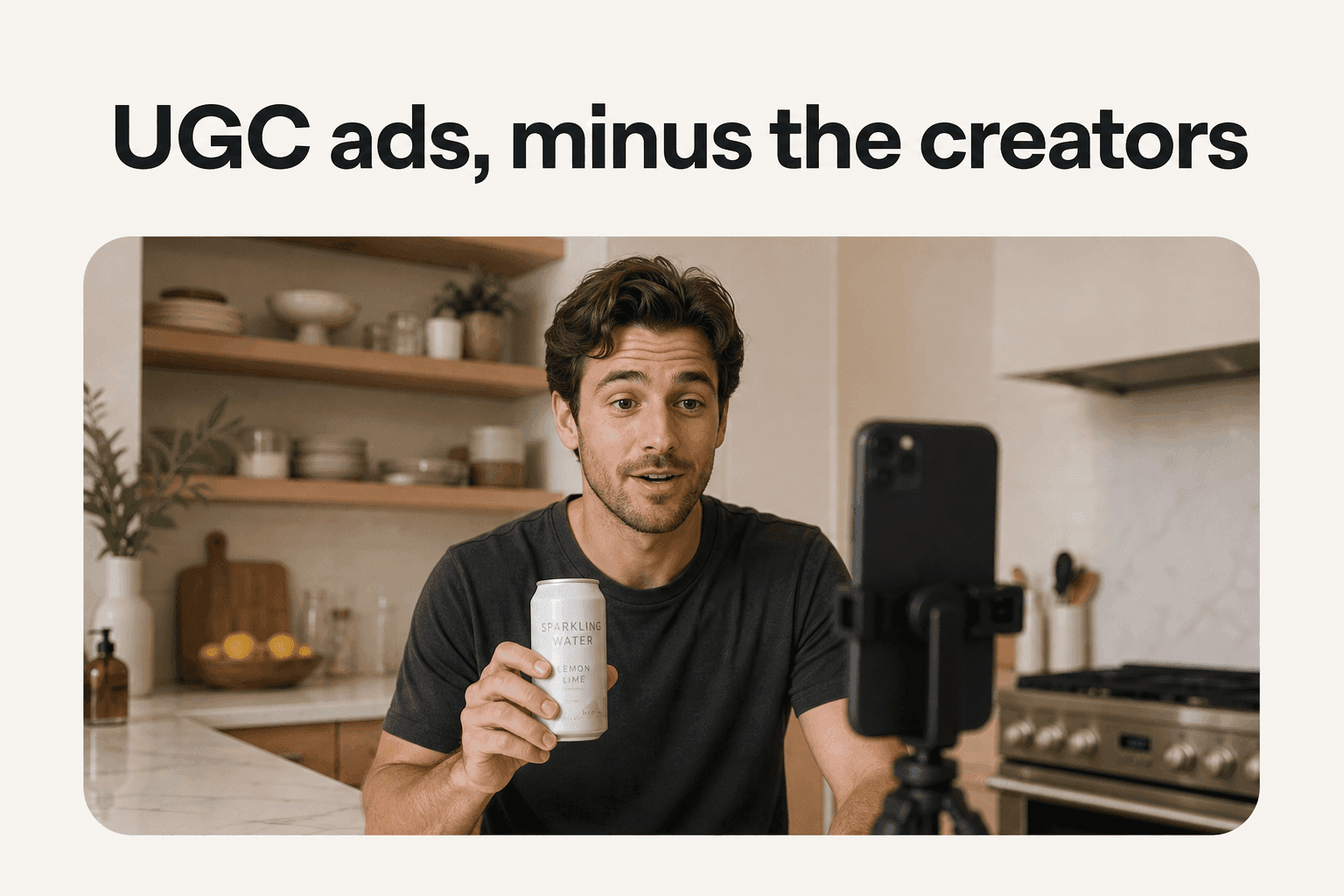
How Novoads closes the teardown-to-test gap
The gap is never analysis. It is production. You finish a teardown with six good hypotheses and a booking process that turns each into a week of waiting and a creator invoice, so five of them quietly die.
From a teardown to a script to a test
In Novoads the loop from a teardown line to a testable asset is three steps:
- Write or auto-generate the script for each hypothesis, one per frame you want to try
- Pick an AI actor whose age and register match the Voice layer you identified
- Render the clip with voice, lip-sync and captions, in 9:16 for Reels and Stories, or 1:1 and 16:9 where you need them
Headline time to a finished ad is about four minutes, and a clip runs from about a dollar for a five-second Seedance 2.0 Mini clip to about $8 for an eight-second Seedance 2.5 clip, and about $26 for a full 30-second Seedance 2.5 take, so producing four frames against one body is a normal afternoon rather than a budget conversation. For product-led patterns you can upload a product photo and turn it into an ad creative instead of writing a script at all. Voices cover 31 languages, which matters when the same teardown has to run in three markets.
None of this is hidden from your audience: Meta labels ads created or significantly edited with its own generative AI creative tools, and AI-assisted creative is now an ordinary, disclosed part of the surface. The trust in a UGC-style ad was never that the person was famous. It was that the claim was believable and the proof was on camera.
Copy the mechanism, never the shot list
An Instagram ad you admire is not a thing to reproduce. It is a solved problem with the working shown: a promise specific enough to earn a second, a speaker with standing to make it, a moment that proves rather than asserts, and one thing to do next. Open the Ad Library, read three competitors that way, and you will have more usable hypotheses in an hour than a quarter of brainstorming ever produced. Then go make all of them, because the one you would have bet on is rarely the one that wins.
Try Novoads for $49 a month: 50 credits, cancel anytime.
Frequently Asked Questions
Where can I find real Instagram ad examples?
Meta's Ad Library at facebook.com/ads/library. It is a public, searchable database built for ads transparency and it holds the ads currently running across Meta's products, including Instagram. Search a brand name and you can see the creative it is actually spending on, without an account and without relying on a blog post's screenshot. That is the difference between an example you can verify and an example you have to trust.
What makes an Instagram ad work?
Four things, in order. The frame: the first second has to promise something specific enough to be worth another two seconds. The voice: the person delivering it has to be credible for the claim being made. The proof: the ad should show the result rather than assert it. The ask: one action, named plainly. An ad that nails the frame and fumbles the ask gets cheap attention and expensive customers.
What are the most common types of Instagram ads?
Six patterns cover most of what performs: the problem-first talking head, the founder to camera, the social-proof stack, the demo loop, the before and after, and the offer-led static. The first three are talking-led and win on credibility. The last three are product-led and win on visible evidence. Most strong ads are one pattern with a borrowed beat from another.
Do Instagram ads need to be vertical?
For Reels and Stories, effectively yes. Meta's own guidance to advertisers is to build for vertical because Reels is a full-screen environment, and it reports that campaigns built with its Reels creative essentials in mind see roughly double the delivery into the Reels placement. A letterboxed 16:9 video does not just look wrong there, it competes for less of that inventory.
Should Instagram video ads be designed for sound off?
Captions still matter, but the mute-first assumption is outdated for Reels. Meta reports that over 75% of Reels views on Instagram are sound on. Treat audio as a real channel: the voice carries the credibility, and captions are the backup that keeps the ad readable in the minority of muted views.
How do I turn an Instagram ad example into an ad of my own?
Copy the mechanism, not the shot list. Write down the four layers of the ad you liked, then rewrite each one for your product: your customer's specific frustration in the frame, a speaker your buyer would believe, a proof moment you can actually film or render, and one ask. Then produce several versions of it. With an AI UGC tool you write or auto-generate the script, pick an actor, and get a vertical clip with voice, lip-sync and captions in about four minutes, which makes running the whole set affordable.
Key Takeaways
- You do not need someone else's screenshot. Meta's Ad Library is a public, searchable database of the ads running right now, so every Instagram ad example can be verified at its source.
- Read any ad in four layers: Frame (what second one promises), Voice (why you believe the speaker), Proof (what you are shown, not told), and Ask (the single next action).
- Six patterns cover almost everything that works: problem-first talking head, founder to camera, social-proof stack, demo loop, before and after, and offer-led static.
- Format is distribution, not taste. Meta tells advertisers to build vertically because Reels is a full-screen environment, and says campaigns following its Reels creative essentials see about 2X higher delivery into that placement.
- The platform already permutes your creative for you. Advantage+ makes variations of what you upload, so the one thing it cannot supply is the idea in layer one.