Skechers AI Ads: What Critics Spotted, From Vogue to the Subway, and the Fix
The tells critics named in the Skechers ads they called AI-made, from a 2024 Vogue page to 2026 subway posters, and the fixes in Google's and OpenAI's own guides.

Mauricio Valdivia
·12 min
Warped faces, a garbled awning and a sneaker in the corner
At the end of November 2024, a TikTok creator posted a video about a Skechers ad in the December issue of Vogue and pointed to the details she saw as giveaways. There were faceless people in the background, garbled text on a store awning and a chunk missing from one woman's dress. And while the two illustrated women wore heels, the sneaker the ad was selling showed up as a photo that looked like it had been added in a corner.
Critics have gone after Skechers ads again since then, over the Uno ad in summer 2025 and over posters on the New York subway in April 2026, and each time they called the work AI-made. Skechers didn't answer Fortune or Futurism when they asked about the first ad, and we found no word from the company on the later ones.
Every tell they named has a fix in the image makers' own guides, from Google's product mockup template to OpenAI's advice to put literal text in quotes. In Novoads, a product still made that way starts at 1 credit. We read the news stories and both guides on November 7, 2026, from Spain, and we didn't see any of the ads in person. The two stills further down (a serum bottle and a candle) are ours, made in Novoads before we wrote this post, and neither one recreates a Skechers ad.
The Vogue page in December 2024
Who flagged it, and who reported it
The creator was @polishlaurapalmer, and her TikTok has a one-word caption, "FUGLY." She'd first thought the ad was "kind of cool," Fortune reported, before saying, "I look at the drawing for two more seconds and I'm like oh that's AI." Creative Bloq later embedded an X post from December 12, 2024, that read "Sketchers AI advertisement spotted," misspelling and all.
Of the outlets we read, Fortune ran the story first, on December 14, 2024, under Chloe Berger's byline. It noted that the December issue was "notably curated for the first time by a guest editor, Marc Jacobs," and that the allegations started "after creator @polishlaurapalmer posted a TikTok noting the oddities of the advertisement." Futurism followed on December 16. Then Natalie Fear wrote in Creative Bloq on December 18 that the ad "was discovered by TikTok user @polishlaurapalmer." Discovered is Creative Bloq's word, and Fortune had already credited her video four days earlier.
What critics pointed to
Fortune listed the potential warning signs of AI that she pointed to in her video as "indiscernible figures and faceless people in the background, garbled text on the store awning, and a chunk of the dress missing from one of the women." Ashwinn Krishnaswamy, a partner at the design agency Forge Design, "suggested the faces looked melting and demonic," Fortune wrote, and he called the ad "AI slop."
The shoe drew its own complaints. Fortune wrote that "the cartoon models wore heels while a photo of the sneaker in question seemed added in a corner." A Redditor quoted by Futurism put it more bluntly, "Apparently both too good to wear the shoe being advertised because the shoe is only shown in the corner."
Futurism's own list ran "from garbled faces in the background to illegible text," with one dress "seemingly coming apart for no reason." Creative Bloq saw "numerous warped faces, ripped, unfinished and reality-defying details in the women's clothing and nonsensical background text." Fortune put part of the creator's sharpest line in its headline. "You actually didn't save any money because now I hate you, now I don't ever want to buy a Skechers shoe again," she said in the video.
Full page or spread, and what Skechers said
The sources don't agree on how big the ad was.
- Fortune wrote that Skechers took out "a full-page ad in Vogue."
- Futurism called it "a full-page ad" too.
- Creative Bloq's follow-up of August 9, 2025, called it "a double-page spread," in a line that also stated as fact that AI was used.
We found no statement from Skechers, or from anyone who says they made the ad, that AI was used.
Fortune's story says "Skechers did not immediately respond to requests for comment." Futurism wrote that when Fortune reached out, "the company didn't respond," and that Futurism had asked as well. Neither printed an answer.
Fortune also quoted Ashley Rutstein, a freelance creative director and the creator of @stuffaboutadvertising, asking brands to "please review the AI's output before sending it off to print." We think that's the cheapest fix in this whole story, and our post on reviewing AI ad creative is about what that review costs a team.
The Uno ad in summer 2025
What critics saw in it
On July 31, 2025, an X user posted "Skechers using ai to promote their product," and Creative Bloq embedded the post nine days later. Natalie Fear's August 9 story ran under the headline "Skechers just can't quit making crappy AI ads" and called the ad "Obviously AI to a painful degree." She described "an image of a blonde girl squatting on a lantern-lined street, supposedly sporting the new Skechers 'Uno' sneakers."
Creative Bloq pinned the giveaway on the style. With "AI's signature faux-sketch style" and the girl's "Instagram face," it wrote, the design "has all the hallmarks of a basic AI image." Looking back in April 2026, the same site summed up the earlier ads as "strange, Gaussian-blurred faux illustration" with "reality-bending backgrounds."
Creative Bloq quoted a user on Reddit's r/graphic_design who wrote, "The determination not to use a human illustrator is incredible." Another went after the drawing itself, writing, "The weird folds and shapes of the crotch area and perspective is wild." A third wrote, "They should be ridiculed by every design website and mag for this tacky, unprofessional dross."
So the complaints shifted. The Vogue page drew them for its faces, its lettering and a product that looked pasted in, and the Uno ad drew them for a generic, polished look and a body that didn't hold together.
Subway or billboard
Where the Uno ad ran depends on who you read.
- Creative Bloq's August 9 story frames the ad with a line about billboards ("The best billboard ads are crafted to make us stop in our tracks"), but its text never says where the ad appeared.
- The site's roundup of August 30, 2025, in a Skechers entry that opens "Time for a repeat offender," says "The ads were seen all over, from subway stations to Vogue (again)."
- On Threads, one commuter wrote on August 24, 2025, "I found these ads like this at subway stations on my regular commute."
None of the stories we read on the Uno ad says it asked Skechers for comment, and we found nothing from the company about it.
The New York subway posters in April 2026
What Creative Bloq reported
Natalie Fear was back on April 16, 2026, with "Surprise, Skechers is making AI slop again." Her story says "The recent ads spotted on the NY subway feature bright paint splatters and AI-generated women in the same generic AI illustration style." It adds that "With no consistent logo and uninspired visuals, creatives noted the distinct lack of care put into the ads." The label "AI-generated" is Creative Bloq's.
The story builds on a Reddit thread titled "Skechers Spotted Doubling Down on their AI Slop ad Campaign in NYC Subways," and it quotes two Reddit comments. One called the result "a total inconsistent and cheap-looking mess." The other wrote, "It takes one illustrator one time to draw a perfect image."
How little there is to go on
The evidence is thin. Creative Bloq's April 16 story is the only report on these posters that we could read in full.
- It leans on a Reddit thread we couldn't read and the two comments it quotes.
- It names no station and gives no date for when the posters went up.
- It doesn't say it asked Skechers for comment.
Skechers' own newsroom is silent on all of it. None of its press release titles from September 2024 to October 30, 2026, mentions AI, Vogue or these ads. By the time the posters showed up, the company also had a new owner. 3G Capital completed its purchase of Skechers on September 12, 2025, and Skechers' release on the deal said the company "will continue to be led by its executive management team."
Each tell and its fix in the image guides
Google and OpenAI both publish prompting advice for their image models, and between them they cover nearly every complaint above. We read both guides on November 7, 2026. OpenAI's guide says it's archived ("This recipe is archived and may reference outdated models or APIs.") and dates its model table April 21, 2026. That table recommends GPT Image 2 for new builds, so we read the guide as written for GPT Image 2 and older models.
| What critics named | Round | Google's image docs | OpenAI's prompting guide |
|---|---|---|---|
| Garbled awning text, illegible background text | Vogue, 2024 | Be clear about the text, the font style and the overall design, and use Gemini 3 Pro Image (Nano Banana Pro) | Put literal text in quotes or ALL CAPS, and spell brand names out letter by letter |
| Faceless or "melting" faces in the crowd | Vogue, 2024 | Describe the scene in rich detail | For people in scenes, describe scale, body framing, gaze and object interactions |
| A dress missing a chunk, odd folds | Vogue, 2024 and Uno, 2025 | Describe the scene in rich detail | Framing such as "full body visible, feet included" helps with body proportion |
| A sneaker photo that seemed added in a corner | Vogue, 2024 | The product mockup template, and up to 6 object images as references | Reference each input by index and description, and say how they interact |
| A generic AI illustration style | Uno, 2025 and subway, 2026 | Up to 3 style reference images on Gemini 3 Pro Image | Label a style reference, as in "Image 2: style reference" |
| No consistent logo | Subway, 2026 | Describe a logo in great detail when editing so it's preserved | Call out placement ("logo top-right") and preserve brand elements |
Lettering on signs, labels and headlines
Google's docs say "Gemini excels at rendering text," and they ask you to be clear about the text, the font style and the overall design. For professional asset production, they point to Gemini 3 Pro Image. That's Nano Banana Pro, which Google describes as able to "render high-fidelity text." Google's text template puts the words in quotation marks ('with the text "[text to render]"').
OpenAI's guide says to "Put literal text in quotes or ALL CAPS" and to specify the typography as constraints. For brand names and odd spellings, it says to "spell them out letter-by-letter to improve character accuracy." It also says to "Use medium or high quality for small text, dense information panels, and multi-font layouts." For ads, its advice is to write the prompt "like a creative brief," and that's the subject of our post on GPT Image 2 prompts.
Those lines wouldn't reach a sign in the background, like the awning critics pointed to on the Vogue page, because background text usually isn't something anyone writes into a prompt. So either write the sign's words into the prompt or rule them out. OpenAI's guide covers the second option when it says to "State exclusions and invariants explicitly," and "no extra text" is one of its examples.
Faces, bodies and the clothes on them
OpenAI's guide says "For people in scenes, describe scale, body framing, gaze, and object interactions." One of its examples, "full body visible, feet included," is the line a shoe ad needs, and the guide says such details help with body proportion. Google's docs make the same point more broadly. "Describe a scene in rich detail. The more specific you are, the more control you have over the results."
The crowd behind the two women is where we'd look first. It's easy to leave the people in the background undescribed, so describe them (how many, how far away, how sharp) or leave them out of the scene. For clips, our guide to making AI video look real covers the camera, light and skin choices that do the same job in motion.
For the generic look critics kept pointing to, both companies let you hand the model a style to follow. Gemini 3 Pro Image takes "Up to 3 images to be used as style references," and OpenAI's example labels one "Image 2: style reference." The Redditor who wrote that "It takes one illustrator one time to draw a perfect image" was making the case for paying an illustrator, and we think a commissioned drawing is exactly what a style reference slot is for.
The product, and the logo on it
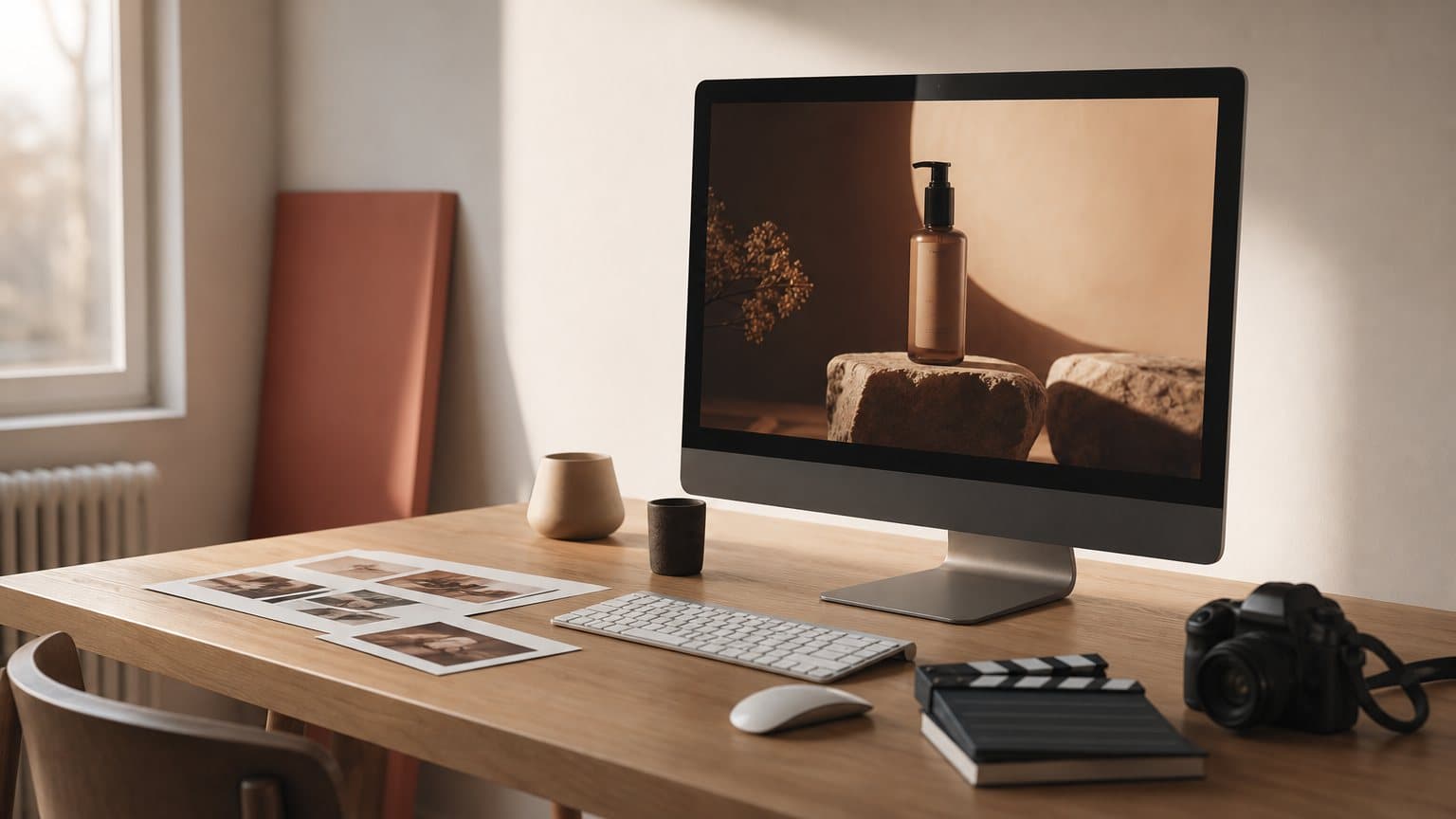
The sneaker in the corner is a composition problem, and Google's product mockup template is where we'd start. Google says it's "Perfect for creating clean, professional product shots for ecommerce, advertising, or branding." The template opens "A high-resolution, studio-lit product photograph of a [product description]" and then asks for the surface, the lighting, the camera angle and the detail to keep sharp. Our post on Nano Banana prompts fills it in step by step.
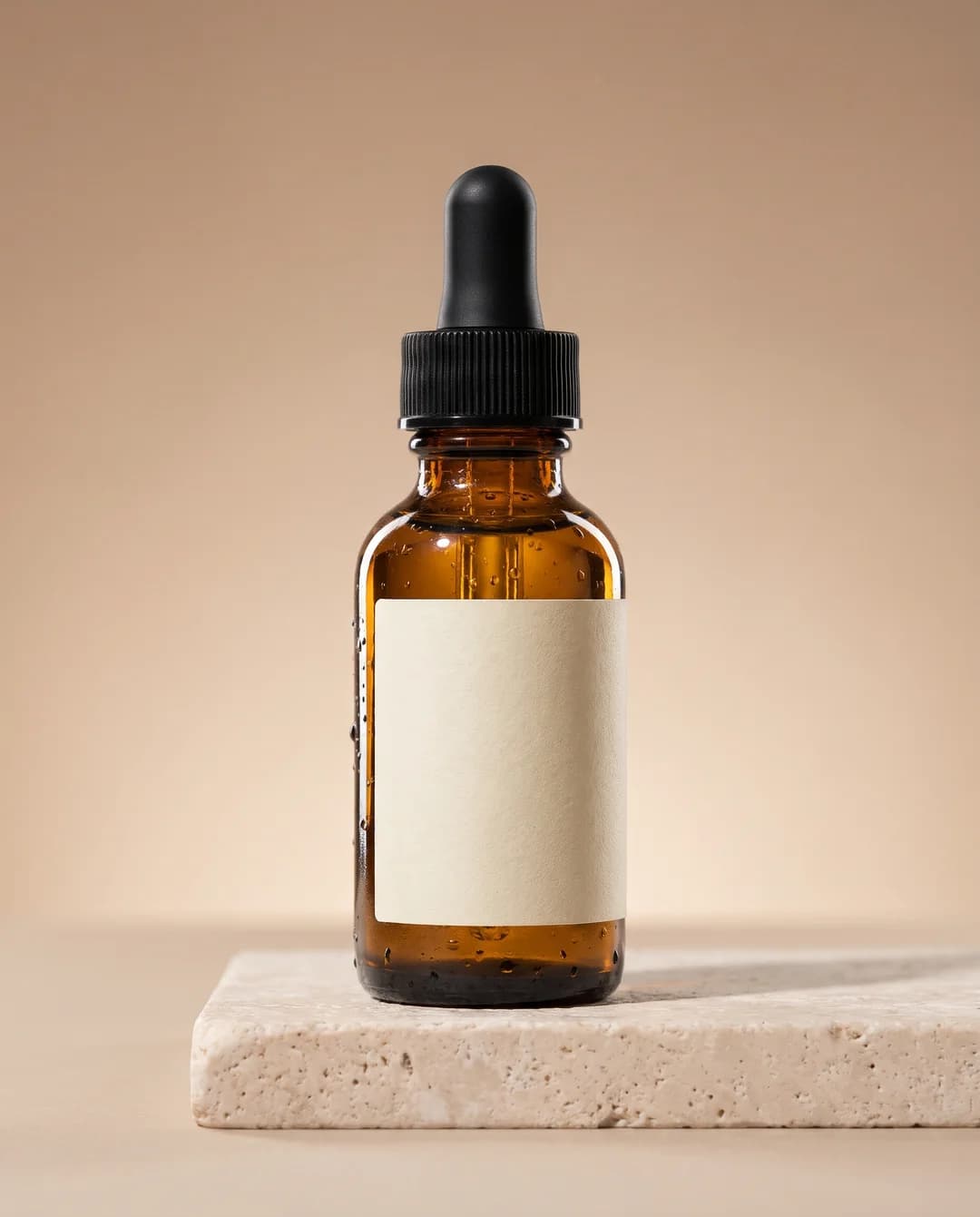
Made in Novoads with Nano Banana Pro · Google's product mockup template filled in for a serum bottle on travertine · one image at 2K, 4:5 · 2 credits · rendered 2026-11-01
We ran that template once on November 1, 2026, for an amber serum bottle on pale travertine, and Nano Banana Pro returned every element the prompt asked for. We asked for a blank label, so this still tells you nothing about lettering.
When the product has to appear inside a scene, give the model the real thing as a reference image. Google's docs list "Up to 6 images of objects with high-fidelity to include in the final image" for Gemini 3 Pro Image. OpenAI's guide says to "Reference each input by index and description" and to "describe how they interact." For a shoe, that means the shoe on the wearer's feet, where the Vogue page had heels. Our post on fashion advertising covers the ad formats that sell clothes and the pictures each one needs.
Logos are the last tell. Creative Bloq's complaint about the subway posters was "no consistent logo." Google's docs say that to keep critical details "(like a face or logo)" through an edit, you describe them "in great detail along with your edit request," and Google's own example adds a logo from a second image onto a T-shirt. OpenAI's guide says to call out placement, as in "logo top-right," and to preserve "brand elements." Our reading of both is that the logo should come from your own file each time, and the prompt should say where it goes.
What a still made this way costs in Novoads
The two stills we made
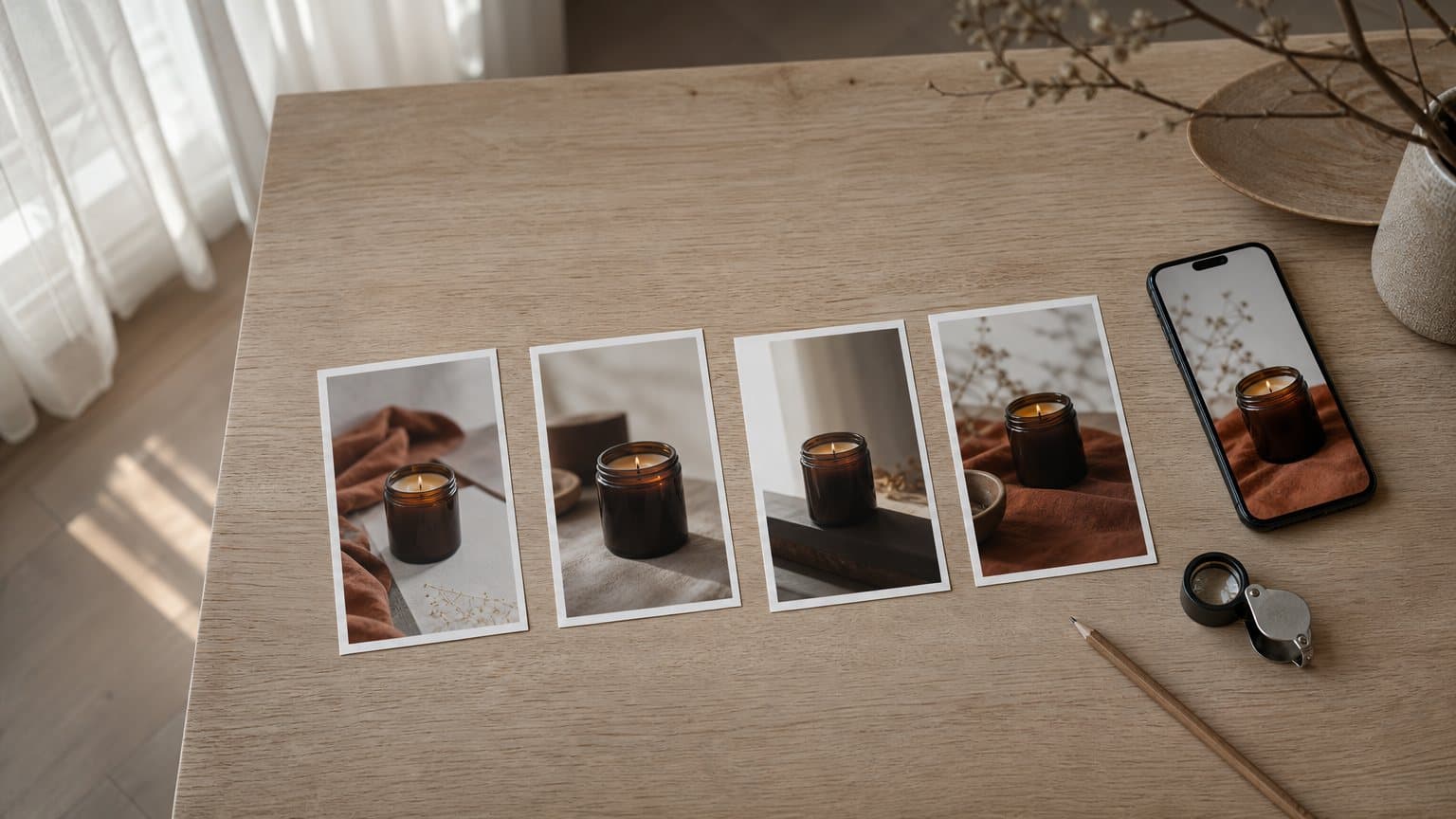
Our candle statics are the lettering test the serum skipped. On October 20, 2026, one Nano Banana Pro call returned four statics of an unlabeled amber candle jar on a limestone bath ledge. Each is 4:5 at 2K. The headline "Light it. Slow down." and the sub-line "Soy wax · Cotton wick · Hand-poured" came back letter for letter on every one, and the four cost 8 credits together. It's one run, so read it as what a single call did. Our post on static ads shows the four side by side.
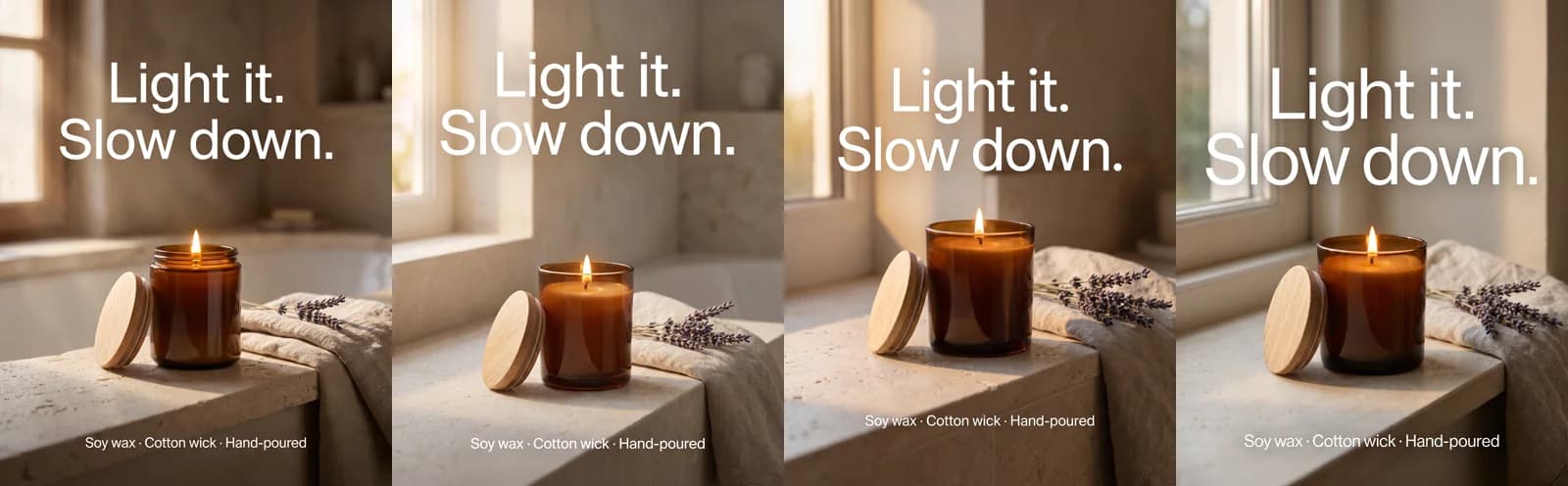
Made in Novoads with Nano Banana Pro · one call, four 4:5 statics at 2K of a candle jar with the headline written into the prompt · 8 credits for the four · rendered 2026-10-20
The price of one still, model by model
Prices as of November 7, 2026, from our own credit table. The cents are our own math, based on what each plan charges per credit.
| Model and setting | Credits a still | On Starter ($0.075 a credit) | On Plus ($0.049 a credit) |
|---|---|---|---|
| Nano Banana Pro at 1K or 2K | 2 | 15 cents | about 10 cents |
| Nano Banana Pro at 4K | 4 | 30 cents | about 20 cents |
| GPT Image 2.6 Sunburst or Flare, low or medium | 1 | 7.5 cents | about 5 cents |
| GPT Image 2.6 Sunburst or Flare, high | 2 | 15 cents | about 10 cents |
| GPT Image 2.5 Sunburst or Flare, low or medium | 1 | 7.5 cents | about 5 cents |
| GPT Image 2.5 Sunburst or Flare, high | 2 | 15 cents | about 10 cents |
| GPT Image 2, low or medium | 1 | 7.5 cents | about 5 cents |
| GPT Image 2, high | 4 | 30 cents | about 20 cents |
| Seedream 5 Lite | 1 | 7.5 cents | about 5 cents |
| Seedream 5 Pro | 2 | 15 cents | about 10 cents |
We opened GPT Image 2.6 Sunburst and Flare to every Novoads customer on November 7, 2026, and they cost the same number of credits as the 2.5 pair. In our picture tool, they make square, portrait and landscape stills. Through our API and in Claude, you can ask for the 4:5 shape that both of our stills use. Our comparison of image generation MCP servers for Claude covers how to connect ours.
Which one we'd reach for depends on the job.
- For a still that has to carry words, we'd start with Nano Banana Pro, since it's the model Google points to for text, and it got our candle headline right.
- For a fast round of layouts, GPT Image 2.6 at low or medium quality costs half as much as Nano Banana Pro.
- For small text on GPT Image 2, OpenAI's guide says to use medium or high quality, and in Novoads that's 1 credit at medium and 4 at high.
What a month of credits buys
- Starter is $15 a month for 200 credits. That's 100 Nano Banana Pro stills, or twice as many GPT Image 2.6 pictures at low or medium quality.
- Plus is $49 a month for 1,000 credits. That covers 500 Nano Banana Pro stills.
- Ultra starts at $129 a month for 3,000 credits.
Every plan is paid from the first month, and you can cancel anytime. You'll find all three on our pricing page.
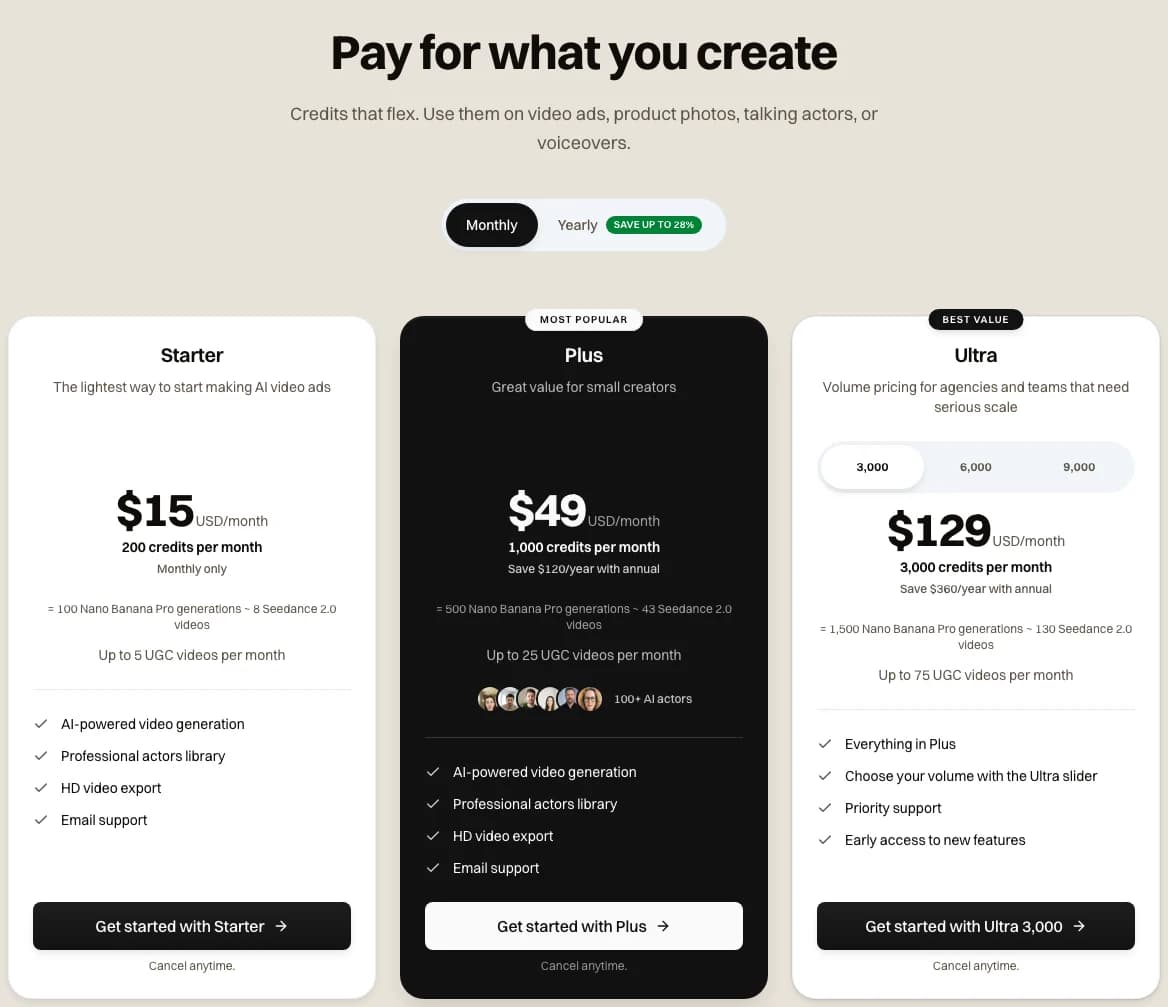
Novoads pricing with Monthly selected, captured 2026-11-07. Each plan's monthly credits sit under its price.
Make your product stills in Novoads
Fill in Google's product template and get a 2K Nano Banana Pro still for 2 credits. Plans start at $15 a month.
See plans and creditsBefore an AI-made ad goes to print
Each round of criticism points to checks you can run on your own ads before they go out.
- Look at every face at full size, including the ones in the crowd. The people in the background of the Vogue page came first on Fortune's list.
- Read every word in the frame, including signs and labels, and check the spelling against your copy.
- Put the product where it's used. A shoe goes on the feet, and a bottle goes in the hand or on the shelf the scene describes.
- Check bodies and clothes at the seams and folds, where the Uno ad drew its comments.
- Line up the whole set and make sure the logo is the same file, at the same size and in the same spot, on every piece. That was the complaint about the subway posters.
- Have someone who didn't write the prompt look at the final file before the ad runs.
If you're making video ads with AI too, our post on AI commercials walks through real examples and what one costs to make.
Frequently Asked Questions
Is Skechers using AI in their ads?
Skechers hasn't said. Critics called a Skechers page in Vogue AI-made in December 2024, and the Uno ad in summer 2025. In April 2026, they said the same about posters on the New York subway. Fortune wrote that Skechers didn't immediately respond to its request for comment on the first one, and we found no statement from the company on any of them, either in its newsroom or in the stories we read.
What commercials are made with AI?
Some brands have said so themselves. Coca-Cola told Fortune in December 2024 that it had crafted that year's films through a collaboration of human storytellers and generative AI. Creative Bloq's roundup of August 30, 2025, describes a Guess ad in Vogue with a tiny disclaimer admitting AI use, and a Toys 'R' Us ad that it says was made entirely with OpenAI's Sora. Skechers isn't among the brands that have said so. Critics allege it used AI, and the company hasn't confirmed it.
Who does the new Skechers ad?
No story we read names who made the ads critics called AI-made, and Skechers hasn't said. Creative Bloq's roundup of August 30, 2025, does name an AI ad agency, but in its entry on a Guess ad in Vogue, the one just before its Skechers entry. So that agency isn't on record as the maker of Skechers' ads.
What's with the AI ads?
Most of the anger is about what a sloppy AI ad says about the brand. A commenter on the Vogue TikTok wrote that AI ads make them think the brand is cheap, Fortune reported, and creative director Ashley Rutstein said customers who see you cutting corners are going to dislike you. The tells critics named in the Skechers ads (garbled text, warped faces, a product that doesn't belong, a logo that changes) each have a fix in Google's and OpenAI's image guides, and the last fix is a person who checks the output before it goes to print.
Key Takeaways
- Critics called a Skechers page in Vogue AI-made in December 2024, and the Uno ad in summer 2025. In April 2026, they said the same about posters on the New York subway. Skechers didn't answer Fortune or Futurism about the Vogue page, and we found no statement from the company on any of them.
- Fortune listed the Vogue page's tells as faceless figures in the background, garbled text on a store awning and a chunk missing from a dress. The illustrated women wore heels, and the sneaker itself showed up as a photo that looked like it had been added in a corner.
- The sources disagree on how big that ad was. Fortune and Futurism call it full-page, and Creative Bloq's 2025 follow-up calls it a double-page spread. No source names who made any of the ads.
- Google's image docs say to be clear about the text and its font style, and they include a product mockup template. OpenAI's archived guide says to put literal text in quotes and to reference each input image by index.
- A Nano Banana Pro still costs 2 credits in Novoads, or about 10 cents on Plus. GPT Image 2.6, which we opened to every customer on November 7, 2026, starts at 1 credit a picture.
Sources
- •Fortune: Skechers draw backlash for full-page ad in Vogue that reeks of AI (Chloe Berger, December 14, 2024)
- •Futurism: on the Skechers ad in Vogue (Victor Tangermann, December 16, 2024)
- •Creative Bloq: Skechers faces AI allegations over controversial ad (Natalie Fear, December 18, 2024)
- •Creative Bloq: Skechers just can't quit making crappy AI ads (Natalie Fear, August 9, 2025)
- •Creative Bloq: 5 failed AI ads that prove human creativity is still superior (Natalie Fear, August 30, 2025)
- •Creative Bloq: Surprise, Skechers is making AI slop again (Natalie Fear, April 16, 2026)
- •Google AI Studio: image generation docs (Nano Banana models)
- •OpenAI Cookbook: GPT Image Generation Models Prompting Guide (archived, April 21, 2026)
- •Skechers newsroom: press releases
- •Skechers newsroom: 3G Capital Completes Acquisition of Skechers (September 12, 2025)