Ad Hooks: 12 Formulas for Writing the First Three Seconds of a Video Ad
An ad hook is the first three seconds of a video ad: the first frame, the first spoken line and the on-screen text. TikTok and Meta both ask for the key message inside that window. Here are 12 formulas to write one, a worked example and hooks by category.

Mauricio Valdivia
·12 min
Your ad has three seconds to say what it is
A 30-second ad for a sneaker cleaner opens on a woman saying hi. Then a logo. Then the story of how the brand started. The spray bottle finally shows up at second eleven, long after the thumb has moved on.
That opening is the ad hook, and this one failed. An ad hook is the first one to three seconds of a video ad: the first frame, the first spoken line and the on-screen text that together decide whether a viewer keeps watching. TikTok's help centre tells advertisers to introduce the content proposition in the first 3 seconds, and Meta asks for the brand and key message inside the same window.
So a hook is not a trick. It is the ad's first sentence, written against a clock. This guide covers how to write one: what the platforms ask of the opening, 12 formulas sorted by what the viewer already knows, the first three seconds beat by beat, a worked example and hooks by category.
What is an ad hook? Frame, line and text in three seconds
What the viewer sees, hears and reads first
A hook is three things that play at the same moment:
- The first frame. What is on screen at zero seconds, before anyone speaks: a face, a product in use, a result, something out of place.
- The first spoken line. The sentence the actor or voice-over says first. On a muted feed it may never be heard, which is why it cannot carry the hook alone.
- The on-screen text. The overlay that states the promise for people watching without sound.
Most weak hooks are strong on one layer and empty on the other two. A clever line over a blank kitchen is a radio ad. A striking image with no words is a mood board. The job is to make all three point at the same idea.
Three seconds for the message, six for the hook
The two numbers people quote come from one page. TikTok's article on creative best practices for performance ads, last updated June 2025, says to prioritize the hook in the first 6 seconds to boost engagement and watch time, and, a line later, to introduce the content proposition in the first 3 seconds for better recall and awareness.
Those are two instructions, not one. By second three, the viewer should know what the ad is about. Seconds three to six can raise the stakes, show the twist or start the demo. TikTok ties the three-second rule to recall and awareness, not to sales, and the page presents all of it as general best practices that have worked well for advertisers rather than as a study. It is still a concrete window, and Meta names the same one.
A greeting, a logo or a slogan is not a hook
"Hey guys, so..." spends a second saying nothing. A logo card on a white background tells the viewer who is talking but not why they should care. A slogan ("Clean, reimagined") could open any ad in the category.
The test is simple. If the opening could sit in front of a competitor's ad without changing a word, it is not a hook yet. A hook belongs to one product and one problem.
What TikTok, Meta and Google ask of the opening
TikTok: the proposition by second three
TikTok's help article gives an ad a three-part shape: have a hook, highlight your unique selling points, and end with a clear call to action. For the hook itself it suggests creating suspense, surprise or other emotions, and it asks for captions or text overlays that give the ad context, at 5 to 10 words per second.
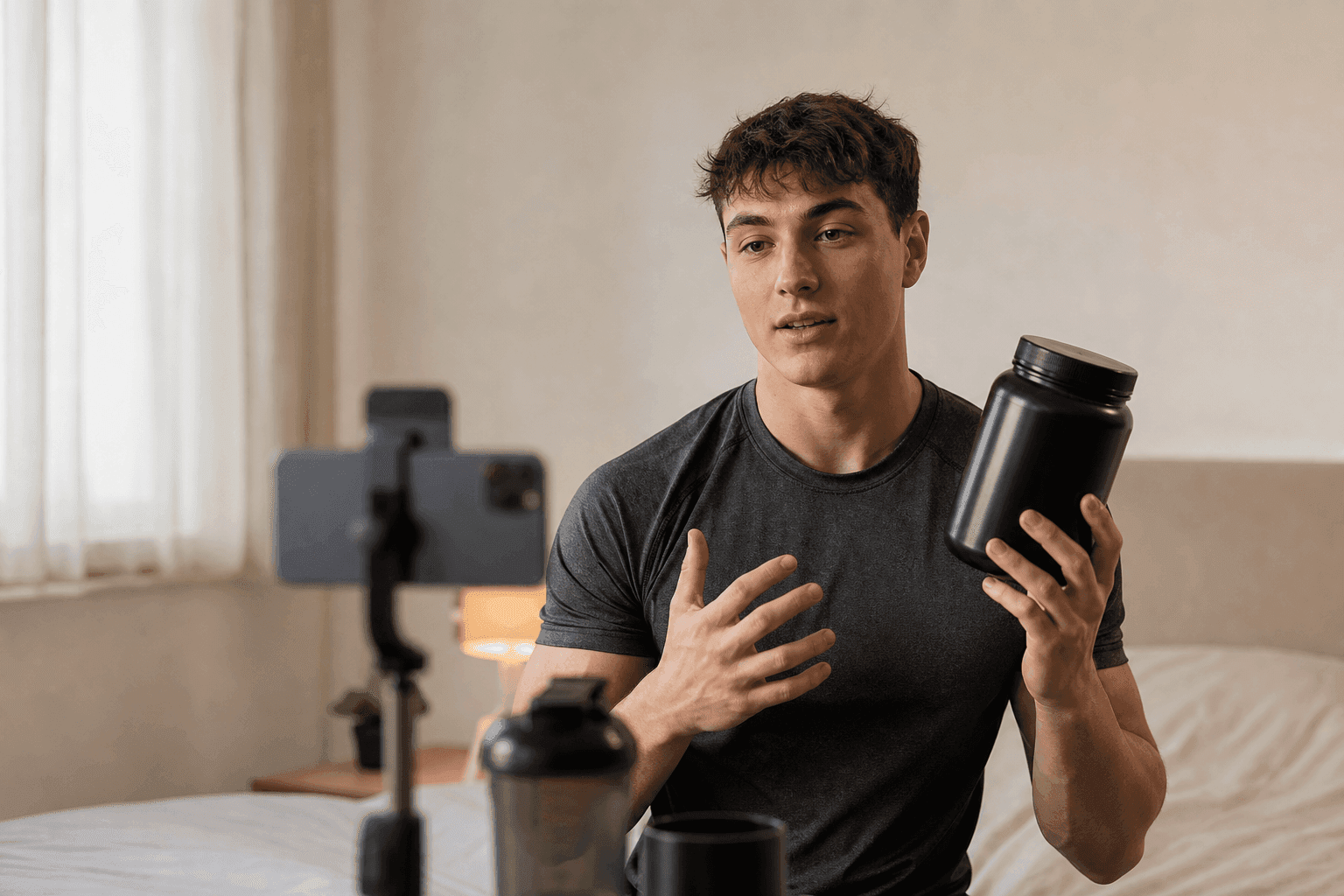
Two more lines on the same page shape how a hook should look. TikTok recommends featuring people such as creators, employees or customers to capture attention, and a DIY or not overly polished style that fits in with user content. Its Creative Codes guide adds that faster scene changes typically draw viewers in early.
Meta: motion in frame one, and a message that works muted
Meta's Business Help Center article on Instagram video ads is the most direct of the three. Under creative best practices it says to feature your brand and key message within the first 3 seconds, adding that early branding increases recall and drives better results. Under "Hook viewers quickly" it says to use motion or a compelling visual in the first frame to capture attention.
The same article pulls in two directions on sound. It says most users watch with sound off, so the message has to be clear visually, with subtitles, supers and strong visuals. It also says feed video ads perform significantly better when watched with sound on, citing a 2.25x higher CTA click-through rate. Treat both as Meta's statements, not measured results you can plan around. The practical answer is to write a hook that works both ways, covered below.
Google: jump in, show the product, beat the skip button
Google's ABCDs for YouTube ads open with Attention: hook and sustain attention with an immersive story. The "Jump in" guideline says to get to the heart of the story faster, with engaging pacing and tight framing. Under Branding, Google says to introduce your brand or product from the start and maintain that presence.
YouTube adds a hard deadline. On a skippable in-stream ad, Google's help centre says the viewer gets an option to skip after 5 seconds. Whatever the ad needs a skipper to remember (the product, the brand, the promise) has to be on screen before that button appears.
Guidance, not proof
None of these pages is a controlled test of your product. TikTok frames its advice as a starting point for testing. Google puts a number on its own framework, saying the ABCDs can deliver as much as a 30% lift in short-term sales likelihood, and credits that to a Google and Kantar study from April 2021. Read it as Google's claim about Google's framework.
The one rule all three share: say what the ad is about early. The popular advice to hide the product until you have earned attention runs against every one of them. A mystery is not a hook. A promise is.
12 ad hook formulas, sorted by what the viewer already knows
The same opening that stops a stranger bores an existing customer, and the reverse. So before picking a formula, decide who the ad is for: someone who has not noticed the problem, someone who has, someone comparing fixes, or someone who already knows you. The angle you choose before writing usually answers that.
When the viewer has not noticed the problem
These hooks have to create the problem and point at the product in the same three seconds.
- 1. Pattern break. Open on something out of place that the product explains. Frame: a white sneaker on a dinner plate. Line: "This is the cleanest thing on the table." It fails when the strange image never connects to the product by second three.
- 2. Mistake callout. Name a habit the viewer did not know was costing them. Template: "Stop [common habit]." Line: "Stop putting your sneakers in the washing machine." It works because a correction implies a better way, which is the product.
- 3. Unexpected result. Show the end state first and withhold how. Frame: one spotless sneaker next to its dirty twin. Line: "Two minutes. That's it." The body then has to show the two minutes.
When the viewer knows the problem
Here the viewer is already annoyed. The hook only has to prove the ad is about their annoyance.
- 4. Direct callout. Name the audience and the situation. Template: "If you [situation], [consequence]." Line: "If your white sneakers stopped being white." Keep the callout specific enough that the wrong people scroll past.
- 5. The problem in their words. Lift a phrase from a review, a comment or a support ticket. Line: "I was about to throw these out." Customer language beats marketing language because the viewer has thought the same sentence.
- 6. Question with a stake. Ask something the viewer cannot answer "no" to without losing something. Line: "Why does coffee taste better at the café than at home?" Avoid questions with an easy "no" ("Do you want cleaner shoes?"), because the scroll is the answer.
When the viewer is comparing fixes
This viewer has tried something already. The hook has to beat the alternative, not the problem.
- 7. Objection first. Say the doubt out loud before the viewer does. Line: "I thought sneaker cleaners were a scam." Then the body has one job: prove the opposite.
- 8. Demo in motion. Put the product working in frame zero. Frame: foam wiped across half a toe cap. Line: "Watch the left side." It matches Meta's advice to open on motion, and it needs almost no words.
- 9. Before and after. Split the frame or cut hard between the two states. Overlay: "Same shoe. Two minutes apart." Keep both halves in the same light, or the viewer credits the camera.
When the viewer already knows your brand
Retargeting and existing customers need a reason to act now, not an introduction.
- 10. Offer first. Lead with what changed in the deal. Line: "The kit is back in stock." It is wasted on cold audiences, who have no reason to care.
- 11. Social proof. Open on someone else's reaction. Line: "My roommate asked what I did to my shoes." A number in a proof hook has to be true for your product, or the hook becomes a claim the platform can reject.
- 12. What is new. Name the one thing that changed. Line: "We changed one thing about the brush." It gives past buyers a reason to look again.
If you study rivals' ads for ideas, read their hooks as structure, not as copy: the formula transfers, the line does not.
How to write the first three seconds, beat by beat
Frame zero: pick the picture before the words
Write the first frame first. On a muted feed it is the only layer everyone gets, and Meta's advice is explicit: motion or a compelling visual in the first frame. Three first frames cover most products:
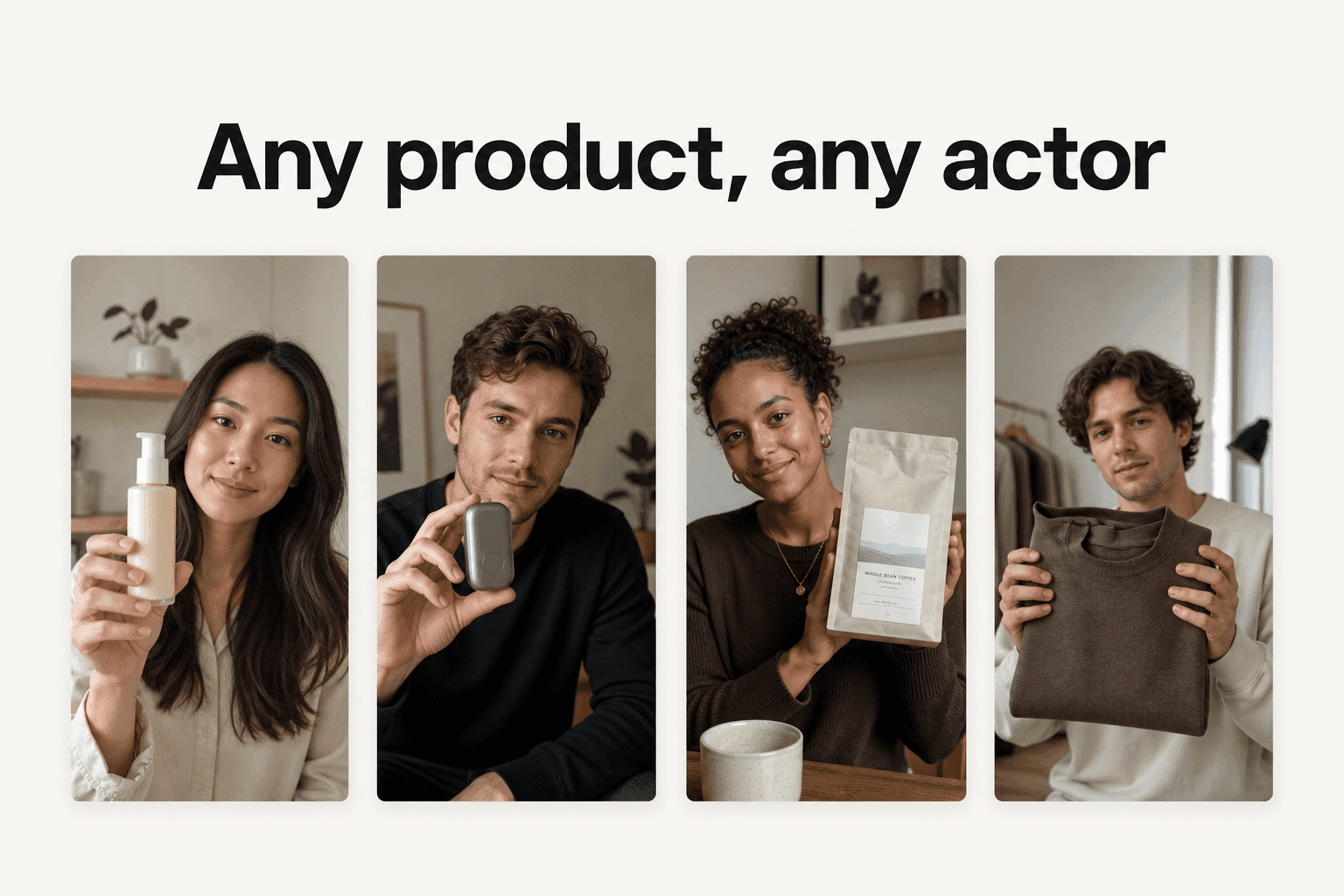
- A face mid-sentence. TikTok and Google both recommend featuring people, and a face already talking reads as a person, not an ad.
- The product doing its job. Foam on a shoe, a serum drop landing, an app screen changing.
- The result. The clean shoe, the organized drawer, the dashboard in the green.
Pair the face with the product whenever you can. A creator holding the product up at second zero satisfies Google's "brand from the start" and TikTok's "feature people" in one frame. Once frame zero is settled, the rest of the ad gets designed the same way, one frame at a time, which is what turning a script into a shot list is for.
The first line: land the proposition by second three
The spoken line has two jobs in order: stop the viewer, then say what the ad is about before second three. One sentence usually cannot do both, which is why good hooks are often a short line plus the first words of the next one.
Read every draft aloud with a stopwatch. A line that runs past three seconds at a natural pace gets cut or split. Delete throat-clearing words ("So,", "Okay,", "Honestly,"), and start on the noun or the verb that carries the idea.
The overlay: 5 to 10 words a second is a ceiling
TikTok recommends displaying 5 to 10 words per second when using text. At that rate a three-second overlay tops out at 15 to 30 words, which is far more than a hook needs. Treat the number as a ceiling, not a target. Most strong overlays use two to six words.
TikTok's Creative Codes guide says creative attributes that get people to read increase view time, drive recall and make ads more likable, so the overlay is not decoration. Keep it inside the safe zone for each placement, because every network's spec sheet reserves the edges for its own interface.
Write for sound off, then for sound on
Google's ABCDs say to reinforce the message with audio and text and to avoid competing elements. That rules out the most common overlay mistake: a different sentence on screen than the one being spoken, so the viewer has to choose which to follow.
Write the muted version first: frame plus overlay must carry the proposition alone. Then write the spoken line so it adds something (tone, a detail, the twist) while the overlay echoes its key words. A viewer with sound on hears more; a viewer with sound off still gets the point.
Worked example: from a blank page to three finalists
The product is a sneaker-cleaning kit: a foam spray, a brush and a cloth. The ad body already exists, a 22-second clip of a creator cleaning one shoe on camera and showing both shoes side by side at the end. Only the opening needs writing.
Step 1: write the proposition in one sentence
Before any hook, write the sentence the first three seconds must deliver: "It gets white sneakers clean in two minutes, without a washing machine." Every draft that does not reach this sentence by second three is cut, however clever.
Step 2: borrow the customer's words
Read the product's reviews and comments and copy phrases verbatim. For this kit, three recur in different forms: "I was about to throw them out," "they look new again" and "no more scrubbing in the sink." Those phrases become lines, and they tell you the audience is mostly problem-aware.
Step 3: draft eight hooks across the formulas
| # | Formula | First frame | Spoken line | Overlay |
|---|---|---|---|---|
| 1 | Pattern break | Sneaker on a dinner plate | "Cleanest thing on the table." | Two-minute clean |
| 2 | Mistake callout | Sneaker in a washer drum | "Stop washing them in there." | Do this instead |
| 3 | Direct callout | Grey-looking white pair | "If your whites aren't white anymore." | White sneakers? |
| 4 | Their words | Shoe held over a trash bin | "I was about to throw these out." | Don't bin them yet |
| 5 | Objection first | Spray next to a toothbrush | "I thought these cleaners were a scam." | They're not |
| 6 | Demo in motion | Foam on half a toe cap | "Watch the left side." | One wipe |
| 7 | Before and after | Split frame, same shoe | No line | Same shoe. Two minutes. |
| 8 | Offer first | Kit on a doorstep | "The kit is back in stock." | Back in stock |
Every overlay here runs two to five words, well under the 15 to 30 words TikTok's rate would allow in three seconds.
Step 4: cut to finalists with a three-second read
Run each draft through three checks, in order:
- Muted read. Frame plus overlay only. Can a stranger say what is being sold? Hook 3 fails: "White sneakers?" names the audience but not the fix, so it needs a second overlay before second three.
- Clock read. Say the line aloud with a stopwatch. Anything past three seconds gets split or cut. Hook 5 passes only if "They're not" appears as the line ends.
- Audience read. Does the formula match what these viewers know? Hook 8 is written for existing customers, and this ad is for a cold audience, so it goes to a retargeting set instead.
Hook 1 survives only if the plate shot cuts to the foam by second two. That leaves hooks 2, 4 and 6 as clear finalists, with 1 as a wildcard: a mistake callout, the customer's own words and a demo, three different kinds of opening rather than three rewordings of one.
How you know it came out right: each finalist answers the proposition sentence by second three on mute, and the body's first line ("This is the kit I use now") follows every one of them without sounding wrong. Picking the winner is a different job, one of testing hook variations on a fixed ad body, read against hook-rate benchmarks for 2026.
Ad hook examples by category
| Category | Formula | First frame | First line |
|---|---|---|---|
| Skincare | Objection first | Serum beside a receipt | "I didn't believe the price either." |
| Coffee gear | Question with a stake | Two cups side by side | "Why is café coffee better than yours?" |
| Apparel | Demo in motion | Jeans pulled hard in two hands | "Watch me try to rip these." |
| Pet products | Their words | Dog hair on a black sofa | "This is my couch every Sunday." |
| Kitchen storage | Unexpected result | A fridge in neat rows | "My fridge after ten minutes." |
| Budgeting app | Direct callout | Phone on a budget screen | "If payday is gone by the 20th." |
| B2B software | Mistake callout | A spreadsheet with forty tabs | "Stop tracking leads in a spreadsheet." |
| Local gym | Social proof | Member mid-workout, talking | "First gym I didn't quit." |
Physical products: open on the product doing something
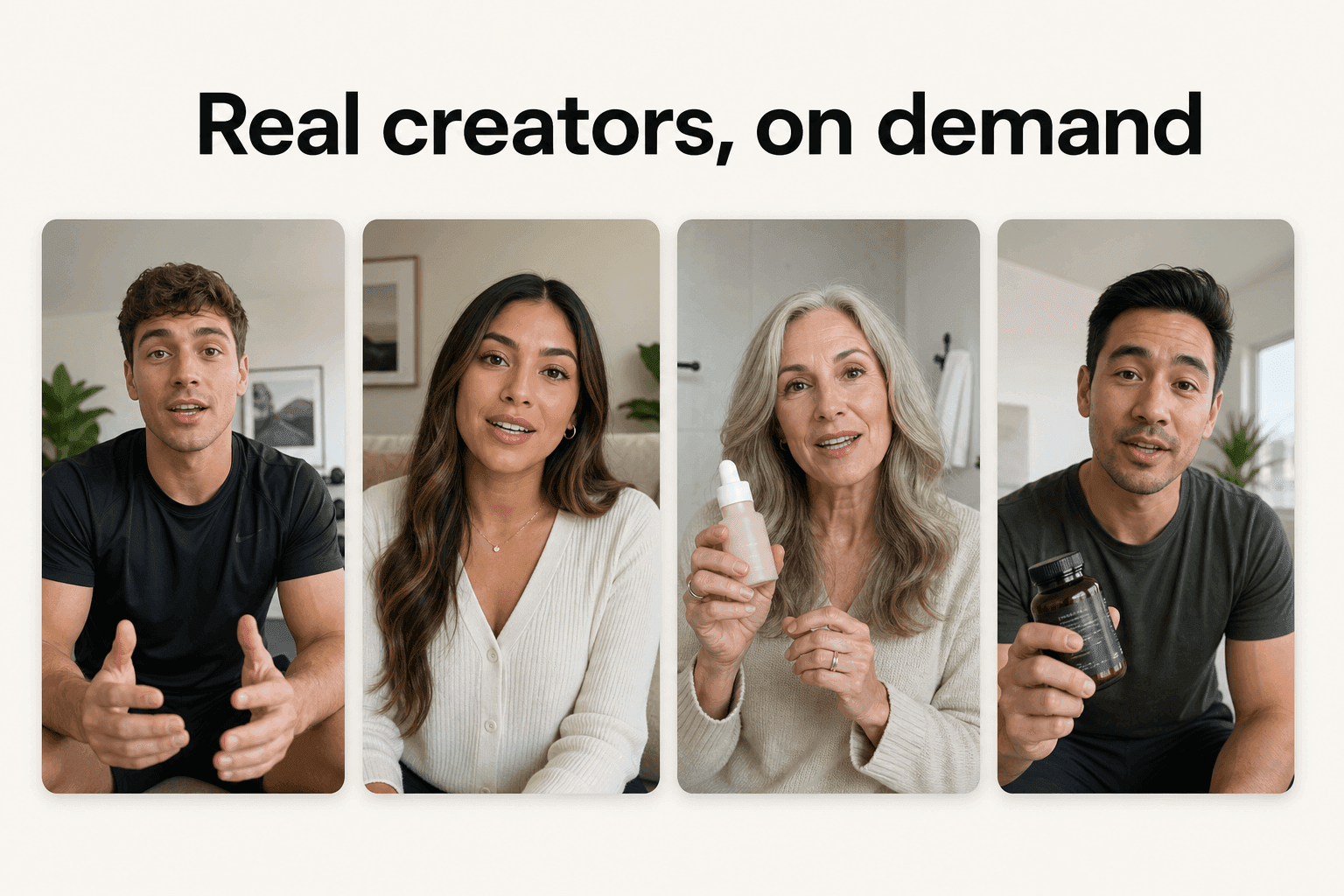
A product sitting still is a catalog photo. A product in use is a demo, and it answers "what is this?" before a word is spoken. The strongest physical-product hooks put a hand, a face or a mess in the frame with it. For more openings that work in creator-style ads, see these UGC ad examples.
Apps and software: open on the screen or the before
Software has no object to hold, so the first frame is either the product's screen changing or the painful before: the spreadsheet, the overdraft notice, the calendar with no gaps. A person reacting to the screen is usually stronger than the screen alone.
Services: open on the person with the problem
A gym, a clinic or an agency sells an outcome it cannot show in three seconds. Open on the person instead, mid-sentence, saying the thing a customer says. The proof comes later, in the body, where a testimonial beat does the work a hook cannot.
Nine ways a hook fails before it ever runs
Each of these can be caught on the page, before a cent of spend.
- The greeting. "Hey guys" spends the most expensive second of the ad on nothing. Start on the idea.
- The empty logo card. Brand early is right; a static card with no product and no promise is not. Put the logo on the product in frame zero instead.
- The late product. If the product first appears after second ten, TikTok's three-second window and Meta's are both gone.
- Two ideas in one line. "Clean sneakers and fresh-smelling gym bags" asks the viewer to care twice. Pick one.
- Overlay and voice that compete. Two different sentences at once split attention, the competing elements Google warns against. Echo, do not duplicate or contradict.
- An overlay too dense to read. Past 10 words a second, the text becomes texture. Cut to the keywords.
- A question with an easy "no." "Want cleaner shoes?" invites the scroll. Ask what the viewer cannot dismiss.
- A promise the body cannot keep. A hook that overclaims wins the stop and loses the sale, and a claim you cannot back puts the whole ad at risk of rejection.
- Text under the interface. An overlay behind the caption bar or the buttons is invisible on the placement that matters.
How Novoads solves the blank first line
Novoads generates UGC-style video ads from a script and an AI actor, or from an uploaded product image. For hooks, that means the line you wrote is the line the ad opens on, and a new opening is a writing job rather than a reshoot.
The hook is line one of the script
Type the script with the hook as its first sentence, pick an AI actor whose face fits frame zero, and the actor delivers it. A talking-actor video bills 10 credits per started minute, so a 25-second ad with its hook fits in one minute. To try another opening, change the first line and render again.
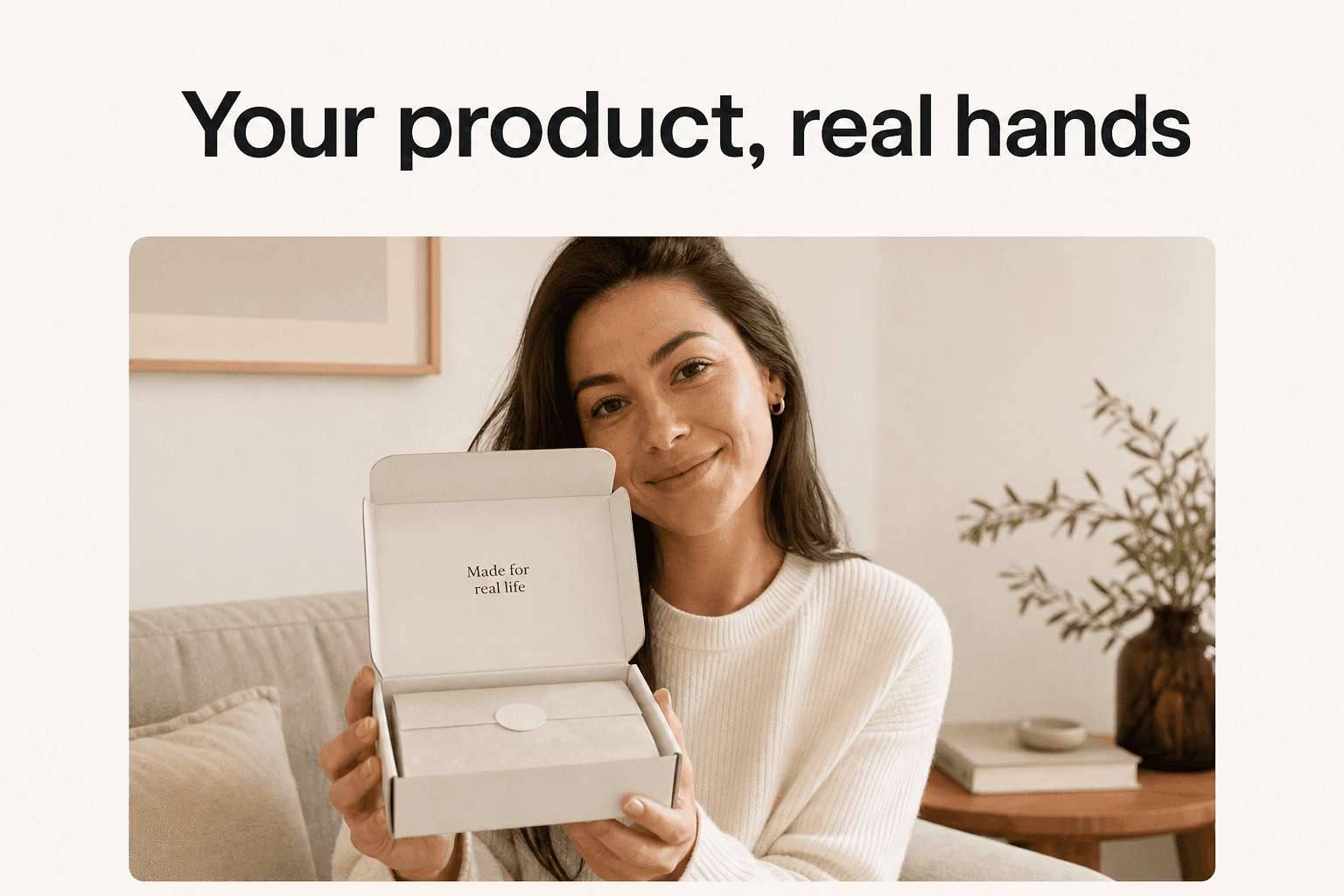
If the hook needs the product in someone's hand, pick the route that does that. One is a custom actor made from an uploaded photo of a person holding your product. The other is one of Discover's product templates, which place your uploaded product in a template creator's hand. A stock library actor has empty hands.
Visual first frames from a product image
For pattern breaks, results and demos, generate the first frame instead of filming it: upload the product image and render a short clip with a video model such as Seedance 2.0. A five-second Seedance 2.0 Mini clip costs 1.5 credits, trimmed to the three seconds the hook needs.
Novoads starts at $49/month (Starter, 50 credits per month). All plans are published on /pricing. You can write the line in the morning and see it spoken in Novoads the same day.
A hook is a promise the next twenty seconds must keep
The platforms agree on the window: say what the ad is about in the first three seconds, and keep the viewer through six. Inside that window, a hook is three layers pointing at one idea, a formula matched to what the viewer already knows, and a line short enough to say before the thumb moves.
What no formula fixes is a hook that promises more than the ad delivers. Write the opening the body can pay off, and the first three seconds stop being a trick and start being the most honest sentence in the ad.
Frequently Asked Questions
What is an ad hook?
An ad hook is the opening of a video ad, usually its first one to three seconds. It has three layers that play at once: the first frame, the first spoken line and the on-screen text. Together they tell the viewer what the ad is about and give them a reason to keep watching.
How long is an ad hook: three seconds or six?
Both numbers come from the same TikTok help centre article. It says to prioritize the hook in the first 6 seconds and to introduce the content proposition in the first 3 seconds for better recall and awareness. Meta asks for the brand and key message within the first 3 seconds. In practice, write the first three seconds so the viewer knows what the ad is about, and use seconds three to six to raise the stakes.
What are the best ad hook formulas?
There is no single best one, because the right formula depends on what the viewer already knows. For people who have not noticed the problem, use a pattern break, a mistake callout or an unexpected result. For people who know the problem, use a direct callout, the problem in their own words or a question with a stake. For people comparing fixes, use an objection, a demo in motion or a before and after. For people who know your brand, lead with the offer, social proof or what changed.
Should an ad hook show the product or the brand?
Yes, early. Google's ABCDs tell advertisers to introduce the brand or product from the start, and Meta's help centre says to feature the brand and key message within the first 3 seconds. What fails is a static logo card that says nothing about the viewer's problem. Put the product in the first frame doing something, or put the promise in the first line.
How many words should the on-screen text in a hook have?
TikTok recommends displaying 5 to 10 words per second when using text, so a three-second hook can carry 15 to 30 words at most. Treat that as a ceiling. Most strong overlays use two to six words that echo the spoken line rather than compete with it.
How do I know if my ad hook works?
Read it with the sound off and ask whether a stranger could say what is being sold within three seconds. Once it runs, the usual read is hook rate: the share of impressions that turn into a 3-second play. Compare several openings on the same ad body so the only difference between them is the hook.
Key Takeaways
- An ad hook is the first one to three seconds of a video ad: the first frame, the first spoken line and the on-screen text that decide whether a viewer keeps watching.
- TikTok's help centre (last updated June 2025) says to introduce the content proposition in the first 3 seconds and to prioritize the hook in the first 6. Meta asks for the brand and key message within the first 3 seconds. So write the first three seconds to say what the ad is about, and let the hook run on to six.
- Pick the hook formula by what the viewer already knows: pattern breaks and mistake callouts for people who have not noticed the problem, callouts and their own words for people who have, objections and demos for people comparing fixes, offers and proof for people who know you.
- Write frame zero before the line, keep on-screen text under TikTok's 5 to 10 words per second (15 to 30 words in three seconds is the ceiling, not the target), and make the hook readable with the sound off.
- Most hooks fail on the page, not in the auction: a greeting, a logo card, a product that shows up at second ten, or a promise the body cannot keep. Write five you believe in, then test them as variations on one body.
Sources
- •TikTok Ads Help Center: Creative best practices for performance ads
- •Meta Business Help Center: Best practices for Instagram video ads
- •Google Ads Help: About the ABCDs of effective video ads
- •Google Ads Help: About video ad formats
- •TikTok For Business: Creative Codes, 6 principles for creating on TikTok