Best Higgsfield Alternatives for UGC Ad Creative: 7 Ad-First Tools Compared
Higgsfield is a full creative suite that also turns a product link into an ad. If ad creative is your whole job, here are seven ad-first alternatives compared on the ad each one makes, what a test costs, and how much of the script you decide.

Mauricio Valdivia
·Updated ·12 min
Higgsfield builds a studio. You just need the ad.
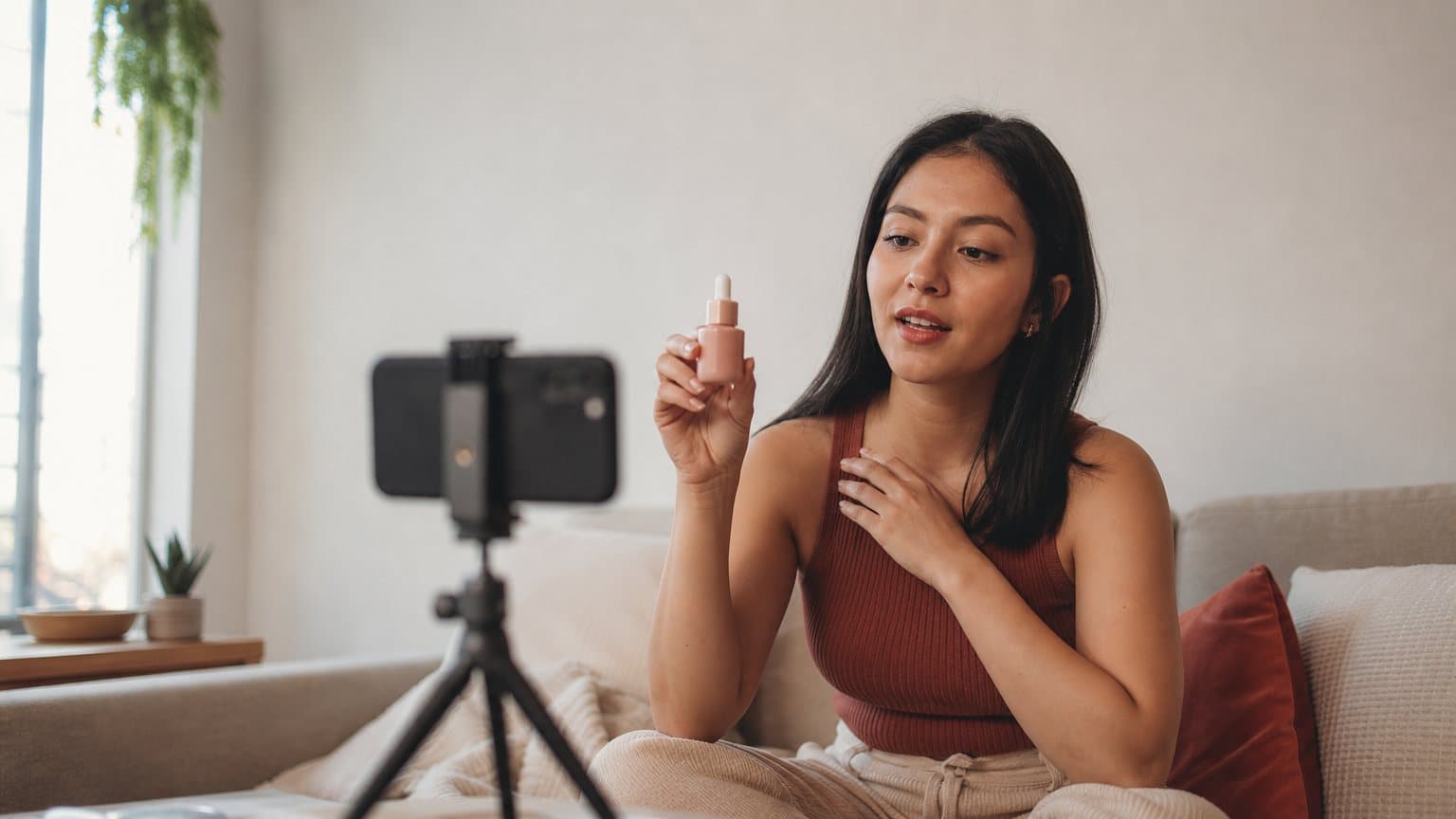
A supplement brand's performance marketer signs up for Higgsfield on a Tuesday, pastes her product link, picks a format, and has a UGC clip before her coffee cools: a creator holding the bottle, talking to camera, framed like a phone shot it. Higgsfield markets this as 2 minutes from product link to video ad. It lands.
Then she opens the rest of the platform. A filmmaking workspace with 1,296 camera lenses. Dozens of viral presets, from explosions to surreal transformations. An academy, a creator payout program, an original AI series. Higgsfield calls itself "the ultimate infrastructure for professional AI video and image creation," and that is a fair description of what it has built. None of it is her job. Her job this week is twenty variations of one fifteen-second testimonial, pushed to Meta, losers killed by Friday.
That is the real tension, and it is not about quality. Higgsfield makes genuine UGC ads, and Marketing Studio is a genuine ad product. The question an ad team ends up asking is narrower: how many runnable ads does a dollar buy, and how much of the ad do I decide? Every tool below answers one version of that better than a general-purpose creative suite is built to.
TL;DR: the 7 best Higgsfield alternatives for ad creative
Realism is not the axis anymore, and pretending otherwise wastes your evaluation. Higgsfield states that Marketing Studio's videos are powered by Seedance 2.0, and several tools on this list rent that same engine. What separates them is shape: how much of the platform you are paying into, how much of the script and the product shot you decide, and what one honest test costs.
- Novoads is best for product-in-hand UGC you write yourself, with a custom actor made from a photo of someone holding your product. Start at $15/month (Starter, 200 credits).
- Arcads is best for talking-head realism from a very large actor library.
- Creatify is best for URL-to-ad batch volume, with a watermarked free plan.
- TopView is best for an agent that batches a whole short-form campaign.
- MakeUGC is best for actor variety on a cheap trial.
- Zeely is best for making the ad and launching it in the same place.
- HeyFish is listed for reference only: its website has not loaded since at least September 19, 2026.
Pick on the reason, then the price. If the creator has to hold your actual product and say a line you approved, go script-first with Novoads (through a custom actor made from a photo of someone holding it) or MakeUGC. If you like the paste-a-link speed and want more of it, Creatify or TopView. If your bottleneck is getting ads live rather than making them, Zeely. And if you are leaving Higgsfield for the cinematic side, the CGI product films and the camera work, this is the wrong list entirely: our roundup of Runway alternatives covers the high-craft end.
| Tool | Best for | How to start |
|---|---|---|
| Novoads | Product-in-hand UGC you script, via a custom actor | $15/mo (Starter) |
| Arcads | Talking-head realism | Sign-up to view pricing |
| Creatify | URL-to-ad batch volume | Watermarked free plan |
| TopView | Agent-run campaign batches | $8/mo Basic, if shown (Oct 21, 2026) |
| MakeUGC | Actor-library variety | $1 trial |
| Zeely | Ad creation plus launch | $29.95/mo listed |
| HeyFish | Reference only | Site not loading (Oct 22, 2026) |

What Higgsfield actually is
Before ranking alternatives, be accurate about the thing you are leaving, because most roundups get Higgsfield wrong in both directions. It is neither a pure model playground nor a dedicated UGC ad tool.
An all-in-one creative suite, by its own description
Higgsfield's own about page calls it "the ultimate infrastructure for professional AI video and image creation," and reports serving 25 million users who have produced 850 million generations, including 300 million videos. Its flagship surface is Cinema Studio, a professional filmmaking workspace with 1,296 camera lenses, cinematic parameters and color grading. On that same page, product video ads sit as one use case among several:
- Social content for TikTok, Reels and Shorts.
- Product video ads from a pasted product URL.
- Enterprise campaign content for agencies.
- AI filmmaking in Cinema Studio.
- Pre-production and storyboards.
- Creative experimentation at volume.
That is not a criticism, it is the correct frame for judging it. A platform serving filmmakers, agencies and performance marketers out of one credit pool is making a breadth bet, and breadth is genuinely valuable when your output is varied.
Marketing Studio, the part that makes ads
The ad product is real and specific. Higgsfield describes Marketing Studio as "Higgsfield's AI ad generator for marketing teams. Paste a product URL, pick a format, and generate publish-ready video ads in seconds." What that covers:
- Product import: paste a link and it pulls the name, description and images, or upload up to five images yourself.
- Cast: "40+ ready-to-use avatars or generate your own from a text prompt."
- Directions: three ad styles in one workspace, spanning authentic UGC, CGI-grade commercials and cinematic TV spots.
- Output: 9:16, 16:9 and 1:1.
- UGC formats: talking heads, product reviews, tutorials, unboxings and virtual try-ons.
Those are the formats performance marketers actually run. Anyone telling you Higgsfield cannot make UGC-style ads has not opened it.
The preset library is a different product
One distinction explains a lot of confused reviews. Higgsfield's UGC Builder page is a library of creator-style motion presets, roughly fifty of them named outfit check, morning routine, unboxing, money rain, described as "organic, creator-style videos that resonate with viewers." It is an effects surface, and a good one for organic-feeling social content. The script-driven ad path is Marketing Studio. Two different tools wearing similar words.
Why ad teams look past it for pure ad creative
None of the reasons below are about output quality. They are about the shape of the job, which is a different thing, and each one maps onto a specific alternative.
You pay into a suite you use a slice of
Higgsfield meters usage in credits across the whole platform, and the platform is enormous: image models, video models, voice, camera control, presets, storyboards, a filmmaking workspace. Since 2026-09-20 one Novoads credit is one Higgsfield credit, so the two meters are the same unit and a plan's credit count can be read against theirs without converting. What each platform charges per render is its own schedule, and what differs besides is the size of the pool and how many surfaces are drawing on it.
Stay on the suite when:
- Your output genuinely spans film, image and ad.
- One subscription covering a poster, a product film and an ad beats a lower per-ad cost.
- Camera control and cinematic direction are part of the brief.
Reach for an ad-first tool when:
- Your output is one repeatable unit produced twenty times a week.
- The number you manage is cost per ad you can actually run.
- Nobody on the team will open the filmmaking workspace this quarter.
The mismatch never shows up on a feature grid. It shows up in how long it takes you to reach the twentieth variation.
The workflow is direction-first, not script-first
Marketing Studio's flow is deliberate and fast: paste a URL, choose a creative direction, choose an avatar, and the system writes the script and directs the shots. You can edit what it produces. That is a genuinely good design for going from a product page to a first cut without a brief.
It is a different design from starting with the line. When you have a claim legal signed off on, or a hook you already know converts, you want the script to be the input rather than the output. Script-first tools invert the order: you supply the words and the actor, and the render serves them. Neither order is better in general. One is better for you, and knowing which is the fastest decision you can make here. Our notes on running consistent AI actors across ad variations cover why that matters at volume.
The engine is not the difference anymore
This is the fact that should reset the whole comparison. Higgsfield states plainly that Marketing Studio's "videos are powered by Seedance 2.0, the multimodal video generation model available on Higgsfield." Seedance 2.0 is a ByteDance model that anyone can rent, and several tools in this roundup run it, Novoads included, alongside Kling v3 Pro, Google Veo 3.1 and Omni Flash. Arcads' help centre lists Veo 3.1, Kling 3.0, Seedance and OmniHuman under one subscription and one credit balance, with Seedance 2.5 as its default model (article updated October 14, 2026).
So the honest read is parity: when four products call the same weights, the pixels converge. What does not converge is everything around the render:
- The input. A product URL the system interprets, or a photo and a line you wrote.
- The voice. Which languages and accents the delivery can actually carry.
- The unit price. What one finished, runnable ad costs at testing volume.
That is also where AI UGC realism actually comes from: not the model name, but the direction wrapped around it.
The 7 best Higgsfield alternatives for UGC ad creative
Each entry names what it wins at, what it trades away, and where to start. Concede the trade-offs as you read them; a tool that wins everything is a tool nobody has used.
1. Novoads, best for product-in-hand UGC you write yourself
Novoads is built around one unit of output instead of a suite. You upload a photo of someone holding your product to create a custom actor (the 100+ stock actors in the library have empty hands), write or auto-generate a script, and get a vertical ad where that creator holds your actual product, with voice, lip-sync and burned-in captions, in about four minutes. It runs Seedance 2.0 and the cheaper Seedance 2.0 Mini, Kling v3 Pro, Google Veo 3.1 and Omni Flash, so you can render the same script across engines and keep the winner. Voices cover 31 languages with real regional accents. Where it concedes: it has no cinematic workspace, no camera-lens controls and a smaller actor library than the leaders below.
- Best for: the exact ad, in your words, with your product on camera.
- Start at: $15/month (Starter, 200 credits per month).
2. Arcads, best for talking-head realism at library scale
Arcads makes some of the most convincing AI talking-head performances in the category, which is why agencies that already believe in the format pay for it. It carries a library of "1,000+ Captivating AI Actors," lets you create your own AI avatar, localizes into "more than 30 languages," and its actors can hold and present a physical product through a custom-actor workflow. Pricing sits behind a sign-up, so it reads as premium and commit-first rather than something you casually test. For the wider field at that end, see the best Arcads alternatives.
- Best for: benchmark talking-head performance.
- Start at: pricing behind a sign-up.
3. Creatify, best for URL-to-ad batch volume
Creatify is the closest workflow twin to Marketing Studio: its signature feature is "URL to Video," and its features page says Batch Mode "enables you to generate multiple ad variations at once," which is the right primitive for creative testing. Its free plan is watermarked and includes "10 monthly credits," enough to "create up to 2 video ads or 20 image ads," with access to 300 AI actors. Paid tiers start at $15 a month on monthly billing (Standard, read October 21, 2026), which runs 1 generation at a time; Pro runs up to 5 in parallel. It leans avatar-and-template rather than handheld, so it is a swap for the URL-in half of Higgsfield rather than for the whole platform.
- Best for: many variations from one product page.
- Start at: a watermarked free plan.
4. TopView, best for an agent that batches a campaign
TopView is the closest thing here to Higgsfield's agent posture, minus the film studio. It calls itself "the smartest AI Video Agent for short films and marketing videos," takes an idea, a script, a reference video or a product URL, and will "batch-create short-form videos for TikTok, Reels, Shorts, and social campaigns from one idea or asset set." It ships AI UGC Video and AI Product Video surfaces, a Product Avatar, virtual try-on and "30+ language localization," and names DTC brands as its audience. Its pricing page, read in US dollars on October 21, 2026, started at Basic, $8 a month on monthly billing, though TopView hides that card from some visitors, whose start is then Plus at $24; our TopView pricing breakdown has every plan, and the TopView alternatives roundup goes deeper.
- Best for: one input, a whole batch of platform-shaped cuts.
- Start at: $8/month (Basic, monthly billing) where shown, otherwise Plus at $24.
5. MakeUGC, best for actor variety on a cheap trial
MakeUGC is the closest cousin to Novoads: its homepage sums up the flow as "write your script, pick an actor or model, generate," lets you add a product photo for the actor to hold, and markets "1,000+ realistic AI actors" across its library, though its pricing page lists 300+ on Starter, 500+ on Growth and 1,000+ on Pro. It starts any plan on a low-friction $1 trial of its own, whose length its checkout shows. If your reason for leaving is that you want to test many faces, ages and delivery styles against one script before committing, library depth is the draw, on Pro especially.
- Best for: maximum actor variety against one script.
- Start at: a $1 trial.
6. Zeely, best for making the ad and launching it
Zeely is the only tool here that treats the launch as part of the job. It will "create UGC video, static ads" with AI avatars, and then, as a Meta Business Partner, "create and run ads on Meta directly from Zeely," aimed at the small sellers it says it helps "run ads like big brands." Read on October 22, 2026, its pricing page lists Growth at $79.95 per month, with Starter at $29.95. If your bottleneck is not producing creative but getting it live and iterating on it, that consolidation is worth more than another render engine. See also Zeely alternatives.
- Best for: production and launch in one workflow.
- Start at: $29.95/mo listed (Starter, read 2026-10-22).
7. HeyFish, listed for reference while its site is down
HeyFish's website has not loaded since at least September 19, 2026 (we checked again on October 22); the description below is from its homepage as archived on February 11, 2026. It called itself an "AI UGC Video Ad Generator" and listed AI actors holding your products among its features. With the site down there is no current plan or price to check, so treat it as a tool to revisit rather than one to start on this week. For turning clips from any tool here into winners, our guide to creating UGC ads with AI covers the production steps.
- Best for: revisiting once its site loads again.
- Start at: site not loading (Oct 22, 2026).
A worked example: twenty variations of one testimonial
Abstract comparisons are easy to agree with and useless to act on, so price the actual job. Say you sell a magnesium sleep supplement and this week you need twenty variations of one fifteen-second testimonial to find the hook that works.
The brief
- Hook: a tired person, awake at 11pm, scrolling.
- Proof: they hold the bottle and say one specific line about falling asleep faster.
- Delivery: 9:16, captions burned in, a natural voice, sized for Meta and TikTok.
- Variable: the first three seconds, changed twenty ways.
Only the hook changes. Everything else is fixed, which is exactly the shape that rewards a repeatable pipeline and punishes a general-purpose canvas.
Running it inside a creative suite
On a suite you get to a first cut fast, and Higgsfield's two-minute claim is not marketing fluff. Paste the link, pick UGC as the direction, pick an avatar, and the agent writes the script and directs the shots. For cut one through three, that speed is the whole point.
The friction arrives at cut twelve, when you want the same actor, the same bottle framing and one different opening line, twenty times. You are now steering an agent that is designed to make creative decisions for you, on a credit pool shared with an image model and a filmmaking workspace you did not open this week.
Running it on an ad-first tool
On a script-first tool the twenty variations are twenty lines in a text field. Upload a photo of someone holding the bottle once (in Novoads, that becomes a custom actor), then change only the hook. A custom actor renders at the talking-actor rate, 200 credits per started minute of video, about $9.80 for a clip up to a minute long (the Seedance clip prices below are the separate route for generated video clips), and takes about four minutes, so twenty tests at that rate is an afternoon rather than a project. Push both sets into a small paid test and let click-through and ROAS settle it, which is the only verdict that counts. The discipline behind that loop is covered in our guide to ad creative testing.
How Novoads solves cost per runnable ad
Novoads is built for the job that makes ad teams look past a creative suite: producing many finished, runnable UGC ads where a real-seeming creator, a custom actor made from a photo of someone holding your product, holds it and says the line you wrote.
From a product photo to an ad you can run
You upload a photo of someone holding your product to create a custom actor, write or auto-generate a script, and the ad comes back finished rather than as raw footage:
- Voice, lip-sync and burned-in captions, ready for sound-off feeds.
- 9:16, 1:1 and 16:9 in HD, downloadable for any ad platform.
- 31 languages of voice with real regional accents, so the delivery reads local instead of dubbed.
The input is the part that differs most from a URL-first flow. Your product photo and your words go in, so what comes out is the ad you specified, not the ad a model inferred from your product page.
What a clip actually costs
There is no single price for a video, and any tool quoting you one is rounding. A clip runs from about 25 cents for a five-second Seedance 2.0 Mini clip to about $4 for an eight-second Google Veo 3.1 clip, and about $10 for a full 30-second Seedance 2.5 take, with Seedance 2.0 Mini at the cheap end and the premium models at the top, and the model picker is per generation rather than per plan. The entry point is $15/mo (Starter, 200 credits per month), with no features held back, and Plus is $49/mo for 1,000 credits. For the head-to-head against the tool this post is about, see Novoads versus Higgsfield, and for the wider category, our best AI video ad platforms roundup.
Engine parity is real. Workflow is where the money goes.
The best Higgsfield alternative is not the one with the better model, because the models are increasingly the same models. Higgsfield renders its ads with Seedance 2.0, so does half this list, and the pixels have stopped arguing. What is left to choose is shape: a studio or an assembly line, the script as your input or the system's output, and how many runnable ads a real budget produces before Friday. Higgsfield earns its place for teams whose output genuinely spans film, image and ad, and that breadth is a real asset. For teams whose whole output is ad creative, the smarter move is a tool that makes one thing repeatedly and cheaply. You can make your first product-in-hand AI UGC ad with Novoads, starting from a photo of someone holding your product, on the $15/month Starter plan at novoads.ai. Cancel anytime.
Frequently Asked Questions
What is the best Higgsfield alternative for UGC ads?
It depends on which part of Higgsfield you are replacing. If you want a creator holding your actual product while reading a script you wrote, in a language your buyers speak, Novoads is the closest fit (through a custom actor made from a photo of someone holding it) and starts at $15/month (Starter, 200 credits per month). For talking-head realism from a very large actor library, Arcads. For URL-to-ad batch volume with a watermarked free plan, Creatify. For an agent that batches a whole short-form campaign, TopView. For actor variety on a cheap trial, MakeUGC. For making the ad and launching it in one place, Zeely. HeyFish, the seventh tool here, has a website that has not loaded since at least September 19, 2026 (we checked again on October 22), so it is not a pick you can act on today.
Can Higgsfield make UGC ads?
Yes, and it is worth being precise about how. Higgsfield's Marketing Studio is described on its own site as its AI ad generator for marketing teams: you paste a product URL, pick a format, and it generates publish-ready video ads. Its UGC formats include talking heads, product reviews, tutorials, unboxings and virtual try-ons, it offers 40+ ready-to-use avatars or a custom one generated from a text prompt, and the ads render in 9:16, 16:9 and 1:1. Teams look elsewhere for reasons of workflow shape and cost, not because the capability is missing.
How much does Higgsfield cost?
Higgsfield sells paid subscription plans and meters platform usage in credits, but we are not going to quote you a figure. Its pricing page renders client-side and returns no plan table to a plain read, its own blog and its own knowledge subdomain state different numbers for the same entry tier, and third-party trackers disagree further while noting that the plans change often. Open higgsfield.ai/pricing in a browser for the current numbers. What you can compare directly is what each alternative charges to test: a watermarked free plan on Creatify, a $1 trial on MakeUGC, or one month of Novoads at $15.
Do Higgsfield alternatives use the same video models?
Several do, which is the most useful thing to know before you compare. Higgsfield states that Marketing Studio videos are powered by Seedance 2.0. Novoads runs Seedance 2.0 as well, along with the cheaper Seedance 2.0 Mini, Kling v3 Pro, Google Veo 3.1 and Omni Flash, and Arcads' help centre lists Veo 3.1, Kling 3.0, Seedance and OmniHuman under one subscription, with Seedance 2.5 as its default model (article updated October 14, 2026). When the underlying engine is rented from the same handful of labs, output quality converges and the differences that remain are workflow, input, language coverage and price per usable ad.
Which Higgsfield alternatives let me control the script?
Script-first tools do. Novoads and MakeUGC let you start from a script you write or auto-generate and an actor you pick (MakeUGC's homepage also offers a prompt, a product URL or a reference ad as a starting point), so the exact line, the exact claim and the exact hook are yours before anything renders. URL-first tools including Creatify, TopView and Higgsfield's own Marketing Studio draft the script for you from the product page and let you edit it afterwards, which is faster to a first cut and less precise if you have a compliance-reviewed line that has to be said word for word.
Which Higgsfield alternatives are cheapest to test?
Creatify has a watermarked free plan that includes 10 monthly credits, enough for up to 2 video ads or 20 image ads, with access to 300 AI actors, and its paid Standard plan is $15 a month on monthly billing (read October 21, 2026). TopView's pricing page listed Basic at $8 a month on monthly billing on October 21, 2026, though TopView hides that card from some visitors, whose cheapest monthly plan is then Plus at $24. MakeUGC uses a $1 trial. Novoads has no trial and no free tier: it starts at $15/month, which is one month of Starter and 200 credits, level with Creatify's Standard, and every ad it renders is real and unwatermarked. Zeely's pricing page lists Starter at $29.95 a month (read October 22, 2026), and Arcads keeps pricing behind a sign-up. HeyFish's website has not loaded since at least September 19, 2026 (we checked again on October 22), so it has no price to compare. Start at the cheapest point that can produce the specific ad you need, not the cheapest point overall.
Key Takeaways
- Higgsfield is not a UGC ad tool that happens to be big. It is an all-in-one creative suite, by its own description the infrastructure for professional AI video and image creation, with a genuine ad product (Marketing Studio) sitting inside it alongside Cinema Studio, a preset library, an academy and a creator payout program.
- Its ad product is real and fast: paste a product URL, pick one of three creative directions, pick from 40+ avatars, and Marketing Studio writes the script and returns a publish-ready ad. Teams do not leave because it cannot make UGC ads. They leave over shape and cost.
- Realism is not the axis anymore. Higgsfield renders Marketing Studio ads with Seedance 2.0, and several tools on this list run Seedance 2.0 too. Once the engine is shared, the real questions are what a test costs and how much of the ad you decide.
- Match the alternative to your reason. Novoads for product-in-hand UGC you script yourself, from a custom actor made with a photo of someone holding your product; Arcads for talking-head realism at library scale; Creatify for URL-to-ad batch volume; TopView for agent-run campaign batches; MakeUGC for actor variety; Zeely for ad creation plus launch. HeyFish stays on the list for reference only: its website has not loaded since at least September 19, 2026.
- Most alternatives here publish what a test costs: a watermarked free plan, listed tiers from $8 a month, or MakeUGC's $1 trial. Novoads starts at $15/month (Starter, 200 credits per month), level with Creatify's $15 Standard, and its input is a product photo plus a script you write or auto-generate.