Dance Studio Ads: Ideas That Fill Classes, What Each Costs With AI, and Meta's Rule for Ads to Teens
The five ads a dance studio runs through the year, how to make each one in Novoads with AI from your own studio photos, what each one costs in credits and dollars, and who a teen class ad can reach on Facebook and Instagram.

Mauricio Valdivia
·11 min
Who Your Studio's Ad Can Reach Depends on the Dancer's Age
Most of a dance studio's ads through the year come down to five. There's the fall registration push with its register-by date, a trial class for one age group, recital highlights, an adult beginner class and a spotlight on the teacher that families already ask for by name.
Each one is aimed at a different person. For the preschool and kids' classes it's a parent, and for the adult class it's the adult. For a teen class, it depends on where your studio is, because Meta limits how ads on Facebook and Instagram can reach teens. None of the seven studio marketing guides we opened from Google's first page for "dance studio ads" mentions that limit, and one of them tells owners to target by interests and behaviors.
The two strips in this post are frames from talking-presenter takes we made in Novoads and first showed in earlier guides. We show them because a fall registration ad can be exactly that, a person reading your classes, your dates and your offer to the camera. Both people are AI presenters, and neither script had anything to do with dance.
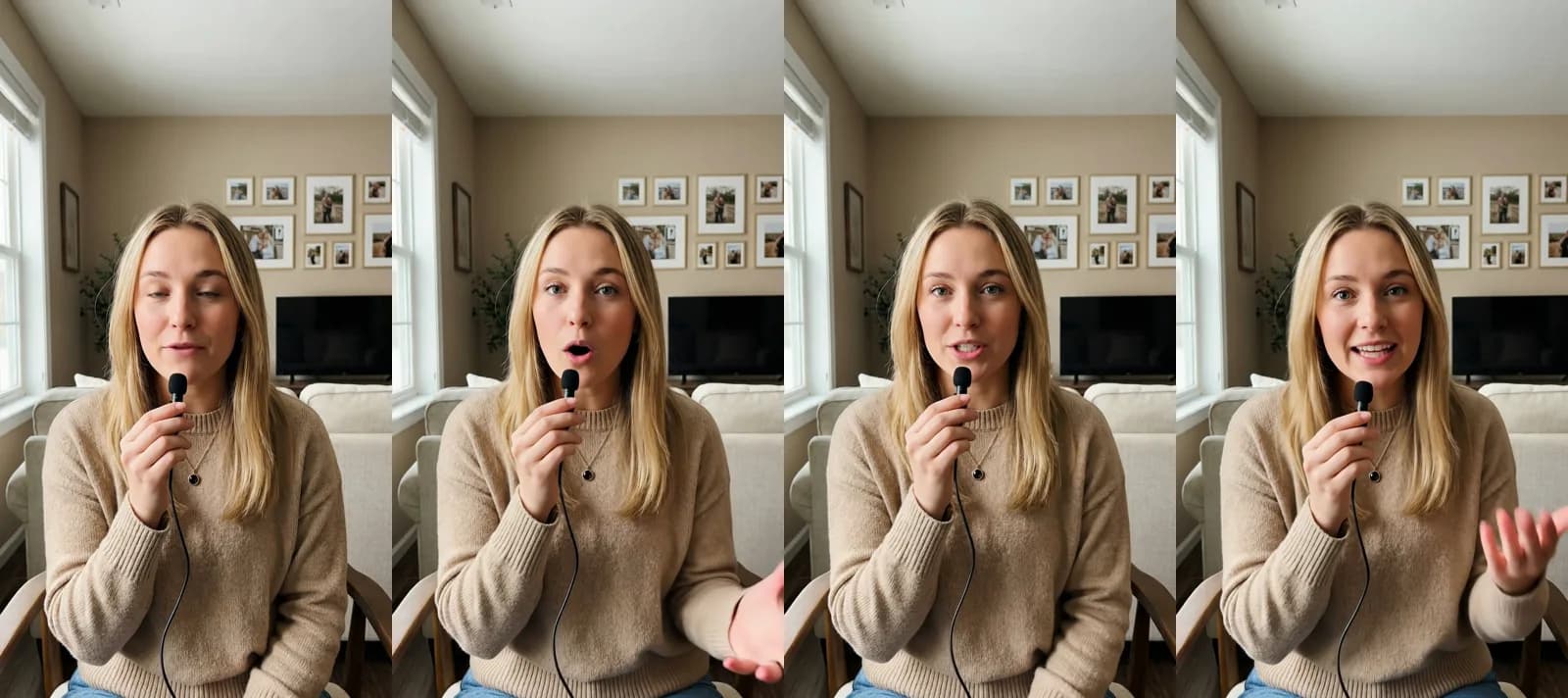
Made in Novoads with Talking actor · one vertical take of 8 seconds at 720p, its script about coffee on a quiet morning, first shown in our HeyGen vs Runway comparison · 200 credits · 2026-11-10
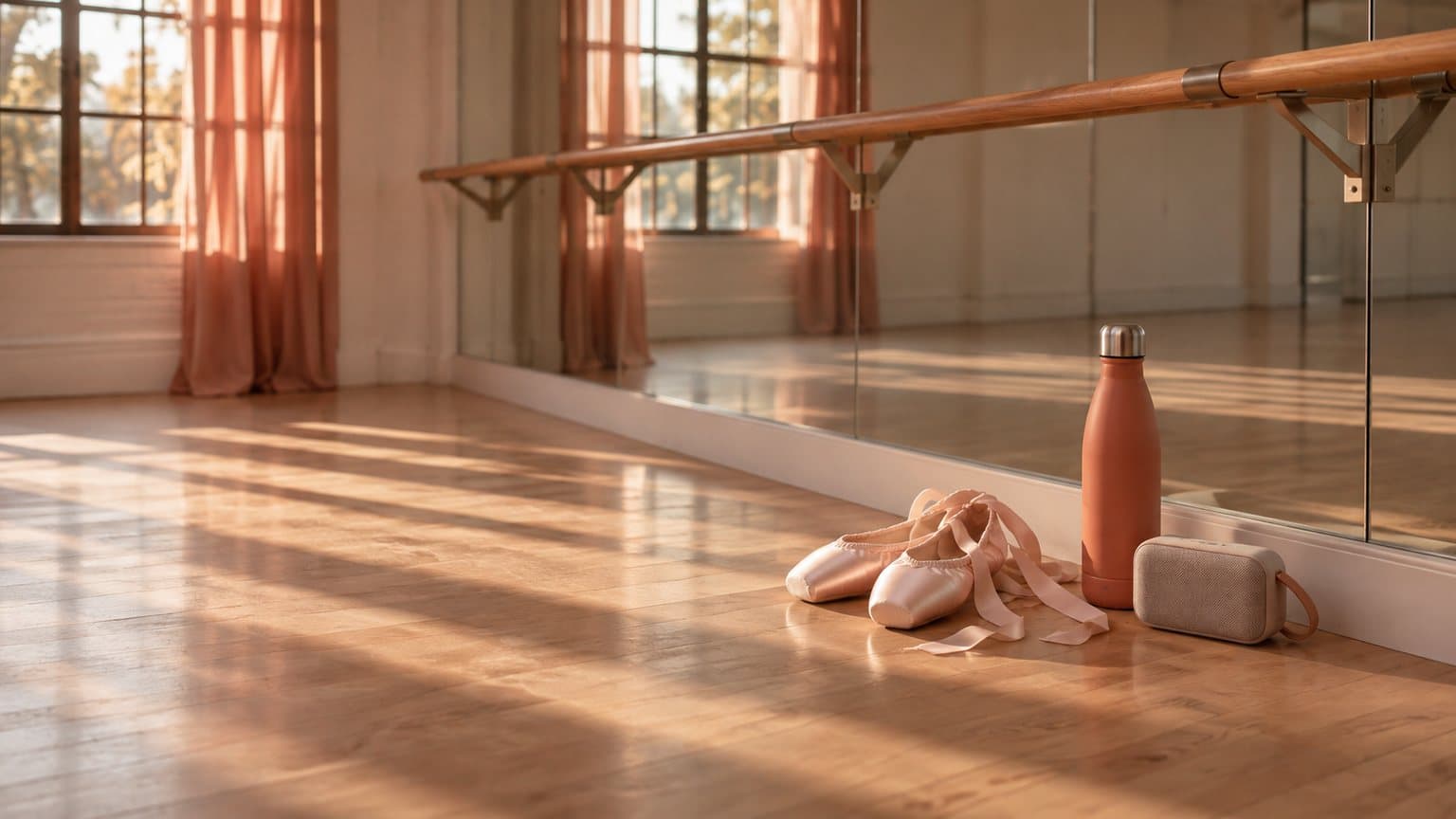
We read Google's results for "dance studio ads" on November 19, 2026, then went to the rule's own sources (Meta's newsroom posts, its documentation for advertisers and the European Commission's page on the Digital Services Act) and priced every ad from our own credit tables. We didn't make an ad for a real studio, and no studio's results appear here. The empty studio at the top of the page is an AI picture of a room that doesn't exist.
Five Ads That Fill a Dance Studio's Classes
We took the five from the guides we opened and grouped them our own way. Each one has its own job and its own uses for AI, but what an ad should never show barely changes from one to the next (a dancer, a class or a result that isn't your studio's).
Fall registration with a register-by date
TopMarketingAgencies, an agency directory, calls fall enrollment "the largest acquisition push of the year" for a dance school. The ad's job is to get families signed up for fall classes before your register-by date, so it carries what a parent needs to act on.
- The styles and ages you're opening.
- The first day of classes.
- The date to register by.
- Any offer you're running, like a waived registration fee.
AI does the talking well here. An AI presenter can read the dates and the offer in one take, and short clips made from your own photos of the empty studio and the front desk put the ad in your real building. What it shouldn't show is a class in progress. An AI-made row of children at the barre would pass for your students, and they aren't.
A trial class for one age group
A trial class ad sells one class to one age group, like preschool ballet and tap on Saturday mornings, and for the little ones, the person deciding is a parent. So write it for the parent. Tell them what the class is, when it meets and how to book the first visit.
A picture ad made from your own photo of the room, with the class name and the day on it, works well here, and so does an AI presenter reading the details. Keep AI-made children out of it, and don't promise what a child will be able to do by the end of the term. Daycares advertise to the parents of preschoolers too, and our daycare ads guide leaves AI-made children out of every ad it describes.
Recital highlights
TopMarketingAgencies makes the case in one line, saying "parents expect to see actual students performing before they book a trial." Your recital footage is that proof, so the dancing in this ad has to be yours, cut down to its best moments.
AI's part is the words around the footage, like a picture ad that announces the recital date or the ticket sale, made from a photo of your studio. It should never show an AI-made stage, costume or dancer that could pass for your show.
An adult beginner class
Adult beginner classes sell to people who stopped dancing years ago or never started. They're aimed at adults, so the limits on teen audiences don't touch them. An AI presenter does this one well, reading an opening line in your own words (the kind that tells a nervous adult the class starts from zero) and the night the class meets. Clips of your empty room help too.
The ad shouldn't show an AI-made class of adults dancing as if they were yours, or introduce an AI presenter as one of your students. If you also run dance fitness classes, our gym ads guide is the better read for those.
A teacher spotlight
A spotlight introduces a real teacher to the families who'll meet them, so it has to be that teacher, in their own photos or a short video they record on a phone. AI can help with what surrounds it, like a picture ad, made from your room photo, that names the class the teacher is starting. It should never give a real teacher an AI face or an AI voice, and you should never introduce an AI presenter as a member of your staff.
Making Each One in Novoads From Your Own Photos
In Novoads you make three kinds of pieces for these ads. One is an AI presenter who reads your words, another is a short clip that starts on your own photo and the third is a picture ad built from that photo. The recital and the teacher's video stay yours to film. If you've never made an ad with AI, start with our guide to AI ads, which covers the basics.
An AI presenter for your dates and your offer
- In the editor, pick Talking Actors.
- Write the script in your studio's words in the box that reads "Write what the actor will say..." and include the class names, the first day and the register-by date.
- Click Add actors and choose an AI presenter.
- Open the price line, which shows 720p until you change it, and pick 480p for a take at half the price.
- Send it with the round up-arrow button.
It comes back with the presenter's voice and lip-sync. Any take up to a minute costs the same, so as long as yours stays under a minute, reading every class on your fall schedule costs no more than reading one. Captions are a separate step on the finished video. In Captions, choose the video and a look. The tool opens on its "TikTok, no box" look, which costs 3 credits a started minute.
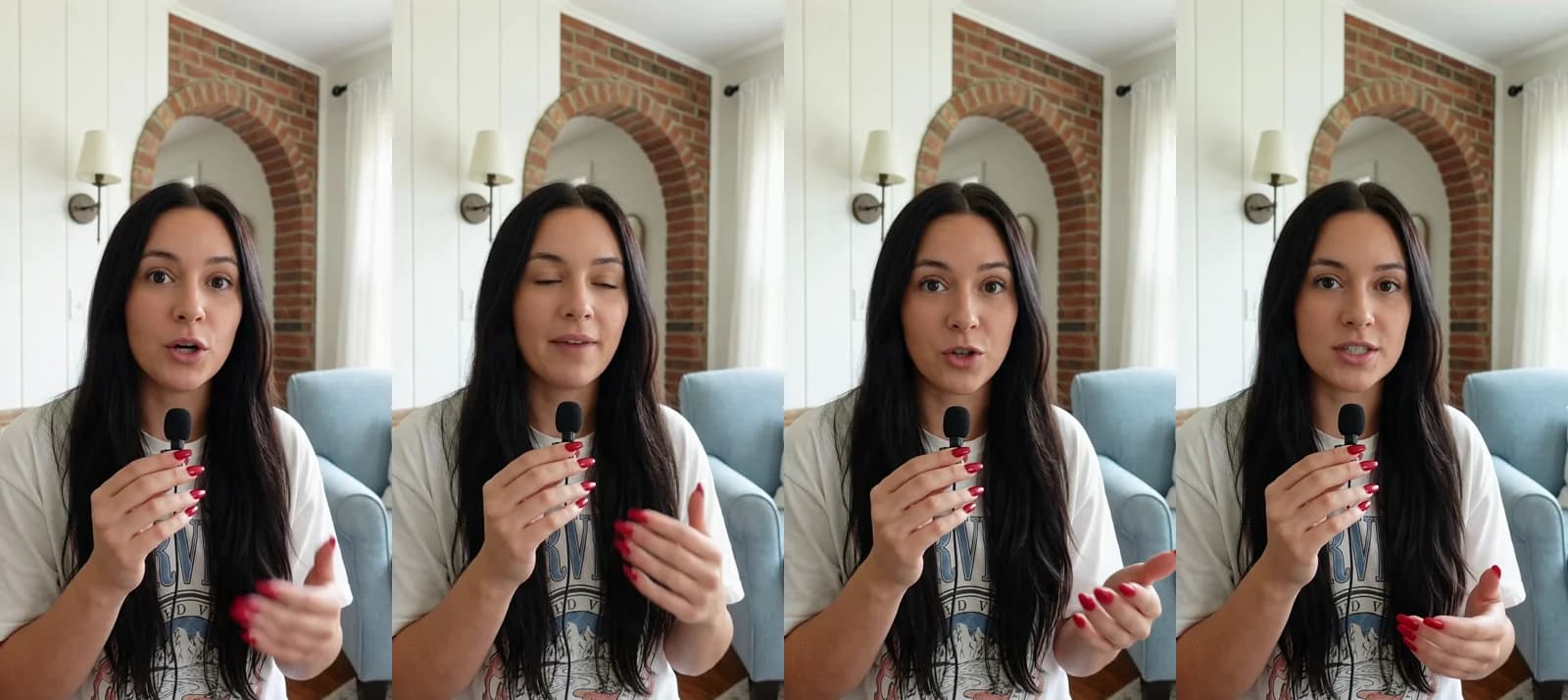
Made in Novoads with Talking actor · a 14-second take at 720p sent through our connector for AI assistants, with a soy-candle script written for our HeyGen review · 200 credits · 2026-10-09
We made both takes in this post at 720p, the default, which costs 200 credits. The cost table further down also prices the 480p take at 100 credits.
Clips that start on your own photo of the studio
Take a vertical photo of the empty studio in good light, and one of the front desk. Then make a clip from each.
- Pick Video, open Settings and choose Wan 3.0 in the Model menu, where it's the last row.
- Switch from Reference to Start / End Frames and drop your photo in as the start frame. The editor then shows "The video starts on this picture."
- Describe the movement in the prompt, such as a slow push toward the mirror wall.
- Set the length to 5 seconds and send it with the round up-arrow button.
A 5-second Wan 3.0 clip costs 9 credits at its default size. Kling 3.0 does the same from its own start frame box ("Drop a start frame or click to upload"), at 10 credits for 5 seconds. Our hair salon ads guide started the same way, from one photo of an empty chair.
Leave the class out of these. A clip that starts on your empty room opens on your real room, but a prompt that asks for dancers gets invented ones, which is exactly what this ad can't show.
Picture ads from a photo of your room
- Pick Image and click Reference to upload your photo of the room or the front desk.
- Describe the ad in the prompt, with the exact words you want on it (the class, the day, the register-by date).
- Open Settings, choose GPT Image 2 under Model and switch Quality from High to Medium.
- Pick 9:16 Vertical or 1:1 Square under Aspect ratio and send it.
The picture tool opens on Nano Banana Pro, which is why you switch the model. A run makes three pictures unless you change Images. At Medium, three GPT Image 2 pictures come to 3 credits. Read every word on each one before you post it.
What a Fall Registration Ad Costs to Make
Prices as of November 19, 2026. The credits come from our own price list, and each dollar figure is our arithmetic at the plan's price per credit.
| Piece of the ad | Model and setting | Credits | Starter ($0.075 a credit) | Plus ($0.049 a credit) | Ultra 3,000 ($0.043 a credit) |
|---|---|---|---|---|---|
| AI presenter take, up to a minute | Talking actor, 480p | 100 | $7.50 | $4.90 | $4.30 |
| AI presenter take, up to a minute | Talking actor, 720p (the default) | 200 | $15.00 | $9.80 | $8.60 |
| Clip from your studio photo, 5 seconds | Wan 3.0, 720p | 9 | about 68 cents | about 44 cents | about 39 cents |
| Clip from your studio photo, 5 seconds | Kling 3.0 | 10 | 75 cents | 49 cents | 43 cents |
| Three picture ads from one photo | GPT Image 2, Medium | 3 | about 23 cents | about 15 cents | about 13 cents |
| Captions on the presenter take, per started minute | "TikTok, no box" look | 3 | about 23 cents | about 15 cents | about 13 cents |
Made the way the steps above describe, a fall registration kit for one class needs one presenter take at 480p, two 5-second Wan 3.0 clips (one of the room and one of the front desk) and one run of three picture ads. That's 121 credits.
| Plan | Price a month | Credits a month | The 121-credit kit | Kits a month |
|---|---|---|---|---|
| Starter | $15 | 200 | about $9 | 1, with 79 credits left |
| Plus | $49 | 1,000 | about $5.93 | 8, with 32 credits left |
| Ultra 3,000 | $129 | 3,000 | about $5.20 | 24, with 96 credits left |
The kit's credits leave out five things.
- Putting the pieces together into one video, which has no price on our list.
- A voice-over, which has none either.
- Captions, if you add them.
- The takes you throw away.
- Your own time and what you spend to run the ads.
Novoads is paid from the first month, and our pricing page shows the annual prices for Plus and Ultra.
For comparison, TopMarketingAgencies puts an agency retainer for a single-location studio at $1,500 to $3,500 per month. That band is for studios doing $300K to $1M in revenue, and it covers local search, the Google Business Profile, seasonal paid campaigns, review acquisition and basic reporting. The page was last reviewed on April 19, 2026, and it says media spend is separate. Paying an agency to run the program for a month isn't the same purchase as making one ad, and your ad spend comes on top of either.
Make your fall registration ad from your own photos
Write the dates and the offer your way, add an AI presenter, and turn photos of your studio into short clips and picture ads. Plans are paid from the first month.
See the plansWho a Teen Class Ad Can Reach on Facebook and Instagram
In its FAQ on social ads for dance studios, Swyvel, a studio software company, tells owners to "Target people based on factors such as location, age, interests, and relevant behaviors." That's fine for an adult class. For a teen class, interests and behaviors are off the table on Facebook and Instagram, and in the EU, the EEA and Switzerland, the rules go further.
Outside the EU, the EEA and Switzerland, age and location only
In a newsroom post on January 10, 2023, Meta wrote that "Beginning in February, advertisers will only be able to use age and location to reach teens; we are removing gender as a targeting option." The same post says an earlier change had already removed "the ability for advertisers to target teens based on their interest and activities." Meta's post of August 22, 2023, confirmed it, saying "Age and location is now the only information about teens that advertisers can use to show them ads."
In Meta's documentation for advertisers, the age floor is part of each ad set's targeting, and the minimum age field reads "Defaults to 18. If used, must be 13 or higher." With Advantage+ audience switched on, the same documentation allows a minimum age "ranging between 18 and 25 only." So an ad set built to reach teens has Advantage+ audience off. Meta doesn't say that in one sentence. That's our reading of the two lines.
Location has a floor too. Carnegie Higher Ed, an agency, reports that ads reaching people under 18 can't use "Targeting by ZIP Code, DMAs, counties, or locations smaller than cities," including a custom radius or a pin drop. We couldn't read Meta's own help page on this, so take it as Carnegie's report. Either way, we'd plan a teen class ad around your whole city, never a few miles around the studio.
In the EU, the EEA and Switzerland, aim at parents
The rules there are different. Engadget reported on October 30, 2023, citing the Wall Street Journal, that "Meta will temporarily stop showing any ads to users aged under 18 in areas where the ad-free subscription is available." It said the change would take effect on November 6. Meta's own page on that subscription, updated in November 2024, says its changes "apply in the EU, EEA and Switzerland" and that the no-ads option is "for people aged 18 and up." It adds that Meta is "continuing to explore how to provide teens with a useful and responsible ad experience," and it doesn't mention a pause for teens or an end to one.
The European Commission's page on the Digital Services Act, last updated November 6, 2026, says "Instagram and Facebook no longer allow advertisers to show targeted ads to underage users." We found no announcement that the pause has ended. So, in our reading, a studio in the EU, the EEA or Switzerland aims both its teen classes and its kids' classes at parents. That's about who your ads are aimed at, and we can't tell you what teens there see today.
What it means for your five ads
This part is our own reading of the pages above.
- Ads for kids' and preschool classes, the trial class among them, go to parents wherever your studio is. An ad set's minimum age can't go below 13, and its default of 18 already points it at adults.
- A teen class ad outside the EU, the EEA and Switzerland reaches teens by age and location only, so leave gender, interests and a radius around the studio out of the plan. Run a second version for parents if you want to reach both. Inside those countries, aim it at parents.
- Fall registration splits the same way, with the kids' classes aimed at parents and any teen classes following the line above.
- The adult beginner class goes to adults, and none of this applies to it.
- Recital highlights and the teacher spotlight go to whoever you aim them at, since the limits are about who an ad set reaches.
TikTok and Google set their own rules for ads that reach teens, and we haven't covered them here. Our tattoo ads guide does get into Google's ad protections for teens. Meta's own pages, listed in the sources at the end, are the ones to check before you set up an ad set for teens.
Where to Start Before Registration Opens
If you make only one of these, make the registration ad, for fall or for the next session you open. Take a photo of the empty studio and one of the front desk, write the dates and the offer the way you'd say them to a parent at pickup, and have an AI presenter read them. Then turn the two photos into short clips and a run of picture ads in Novoads. That's the kit we priced above. If you want all of it strung into one longer commercial, our guide to AI commercials shows how to make one, step by step. Film the recital and the teacher yourself, and keep AI out of the dancing.
Frequently Asked Questions
Can a dance studio target teens with ads on Instagram?
Outside the EU, the EEA and Switzerland, yes, but only by age and location. Meta removed gender as a targeting option for teens in February 2023, after an earlier change had already stopped advertisers from targeting them by their interests and activities. Its documentation for advertisers won't let an ad set's minimum age go below 13. Carnegie Higher Ed, an agency, also reports that advertisers can't target teen audiences by ZIP code, DMA, county or any area smaller than a city. Inside the EU, the EEA and Switzerland, the European Commission says Instagram and Facebook no longer allow advertisers to show targeted ads to underage users, so, in our reading, studios there aim teen class ads at parents.
How much does it cost to make a dance studio ad with AI?
In Novoads, the fall registration kit in this guide comes to 121 credits. It's one AI presenter take at 480p, two short Wan 3.0 clips that start on your own studio photos and three GPT Image 2 picture ads. That's about $5.93 at the Plus rate and about $9 at the Starter rate, before anything you spend to run the ads. Prices are as of November 19, 2026.
Should an AI presenter play the dance teacher in an ad?
No. Give an AI presenter the words anyone could read out, like the class schedule, the dates and the offer. A teacher spotlight should be the real teacher in their own photos or video, and a recital ad should use your own footage, because families are choosing those people and those classes.
What is a good tagline for a dance studio?
One that tells a parent or an adult beginner what happens next, in the words you'd use at the front desk. A line like 'Saturday ballet for your littlest dancer' or 'Never danced? Start here.' does more for an ad than a motto, because it names the class and the person it's for.
Key Takeaways
- Most dance studio ads come down to five (fall registration with a register-by date, a trial class for one age group, recital highlights, an adult beginner class and a teacher spotlight).
- AI handles the talking and the setting well (an AI presenter reading your dates, short clips that start on your own photos of the empty studio), but it should never show a dancer, a class or a teacher that isn't yours.
- In Novoads, one fall registration kit comes to 121 credits, about $5.93 at the Plus rate. It's a 480p presenter take, two short Wan 3.0 clips and three GPT Image 2 picture ads. Prices are as of November 19, 2026.
- Outside the EU, the EEA and Switzerland, advertisers can reach teens on Facebook and Instagram by age and location only, and that's been Meta's rule since February 2023. Meta's documentation won't let an ad set's minimum age go below 13, and we read that as a reason to aim kids' class ads at parents everywhere.
- The European Commission says Instagram and Facebook no longer allow advertisers to show targeted ads to underage users, so, in our reading, a studio in the EU, the EEA or Switzerland aims its teen and kids' class ads at parents. TikTok and Google set their own rules.