Gym Ads: Ideas That Sign Up Members, and What TikTok Says About Weight Loss Claims
Five kinds of gym ads for the classes January doesn't fill, made with AI from a photo of your floor or an AI presenter, their cost in credits, and what TikTok's ad policy says about weight loss and muscle gain claims.

Mauricio Valdivia
·12 min
Your Empty Floor at Opening Time Is Already a Gym Ad
January fills your classes without much help. The hard part comes in March, when the 6 p.m. class has open spots again, and in September, when the member who trained all spring still hasn't come back from summer. You need an ad most weeks of the year, and you don't have a film crew.
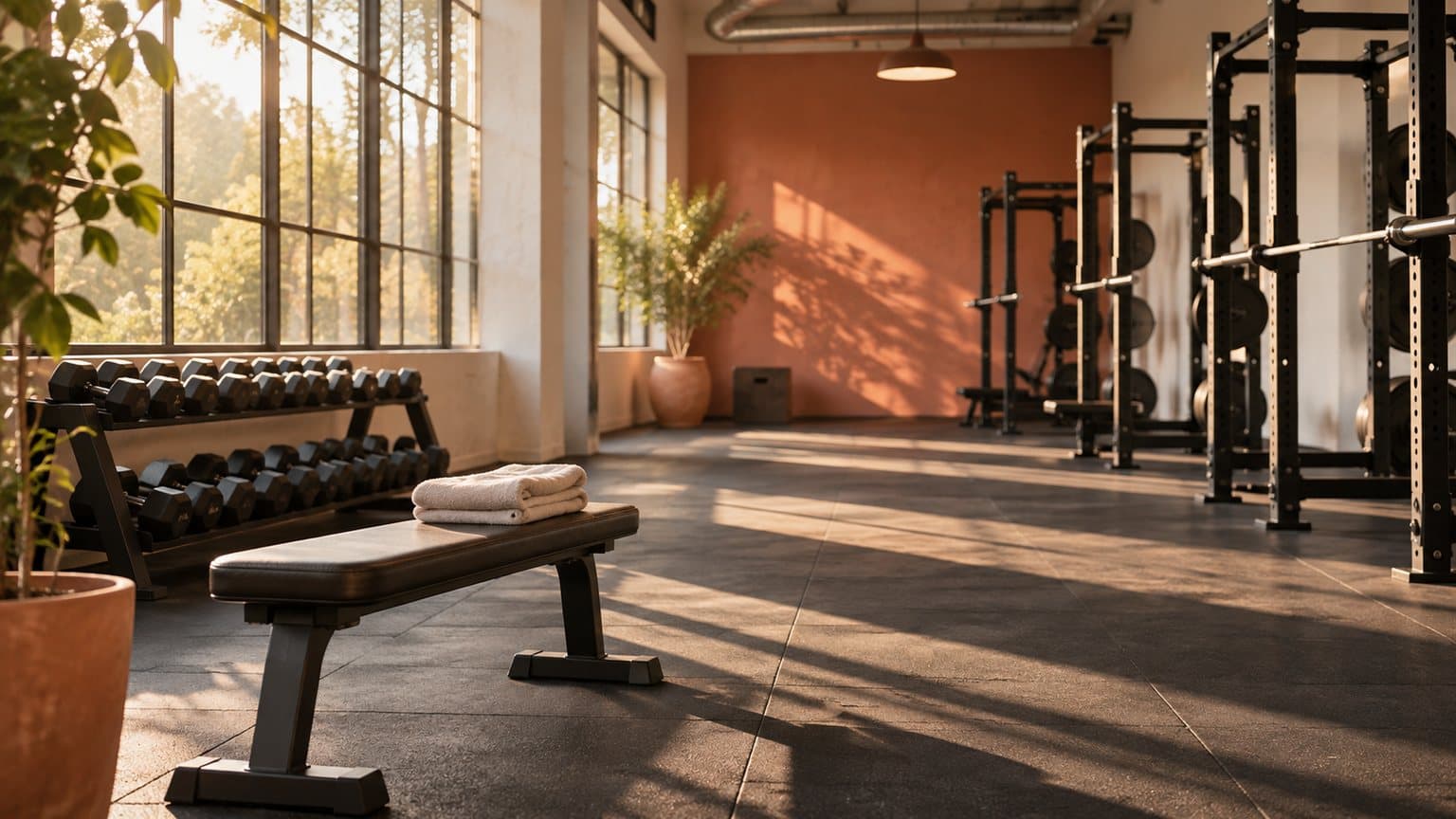
So we made a clip for this post in Novoads from one picture of an empty gym floor in morning light. We made that picture with GPT Image 2.6 Sunburst for 1 credit, as a stand-in for the photo you'd take of your own floor before the first class. Seedance 2.0 Mini then turned it into a 5-second vertical clip for 5 credits. The gym doesn't exist, and nobody's in it.
On November 13, 2026, we read the first page of Google's results for "gym ads" and opened five gym ad articles. Two came from that page and three more from a search. The same day, we read TikTok's ad policy pages on TikTok's own site. The credits and prices come from Novoads' own price list, and the clip is our own render. We didn't run an ad on TikTok or anywhere else for this post. We also couldn't read Meta's ad rules, so we cover only TikTok's.
All five articles are lists of examples and offer ideas. None of them gives a price for making one ad, and none mentions TikTok's rule on weight loss and muscle gain claims. Three of them steer you toward transformation content. WodGuru's list gives "Before-and-after photos, testimonials from happy members" as its example of social proof.
TikTok's ad policy puts conditions on exactly that kind of claim, and two of TikTok's own pages disagree about how far those conditions go. So none of the ad ideas in this post makes one.
Five Kinds of Gym Ads and What AI Shouldn't Show in Each
Grouped by the job each one does for a gym, the ideas on those lists fall into five kinds. The notes on where AI helps in each, and what it shouldn't show, are our reading, and we're stricter than any of the lists.
The first-week offer
This is the ad that fills January and rescues March. It spells out a week of classes or a first-month price, and the date the offer ends.
- An AI presenter reads the offer, the price and the end date, and captions put the same words on screen for anyone scrolling on mute.
- A clip of your own floor plays between the presenter's lines.
- You can remake it every time the offer changes.
Keep the offer about access, meaning the classes, the hours and the price. If you attach a result to it, like a number of pounds by a date, and the line suggests that result is easy or guaranteed, it's the kind TikTok's policy lists as not allowed.
The tour of the floor
Someone who's never been inside your gym is deciding from the sidewalk. The tour ad shows them the room, from the racks and the turf to the second studio you opened in the fall.
A still photo of your floor becomes a short moving clip, and a voice or a caption names what's new.
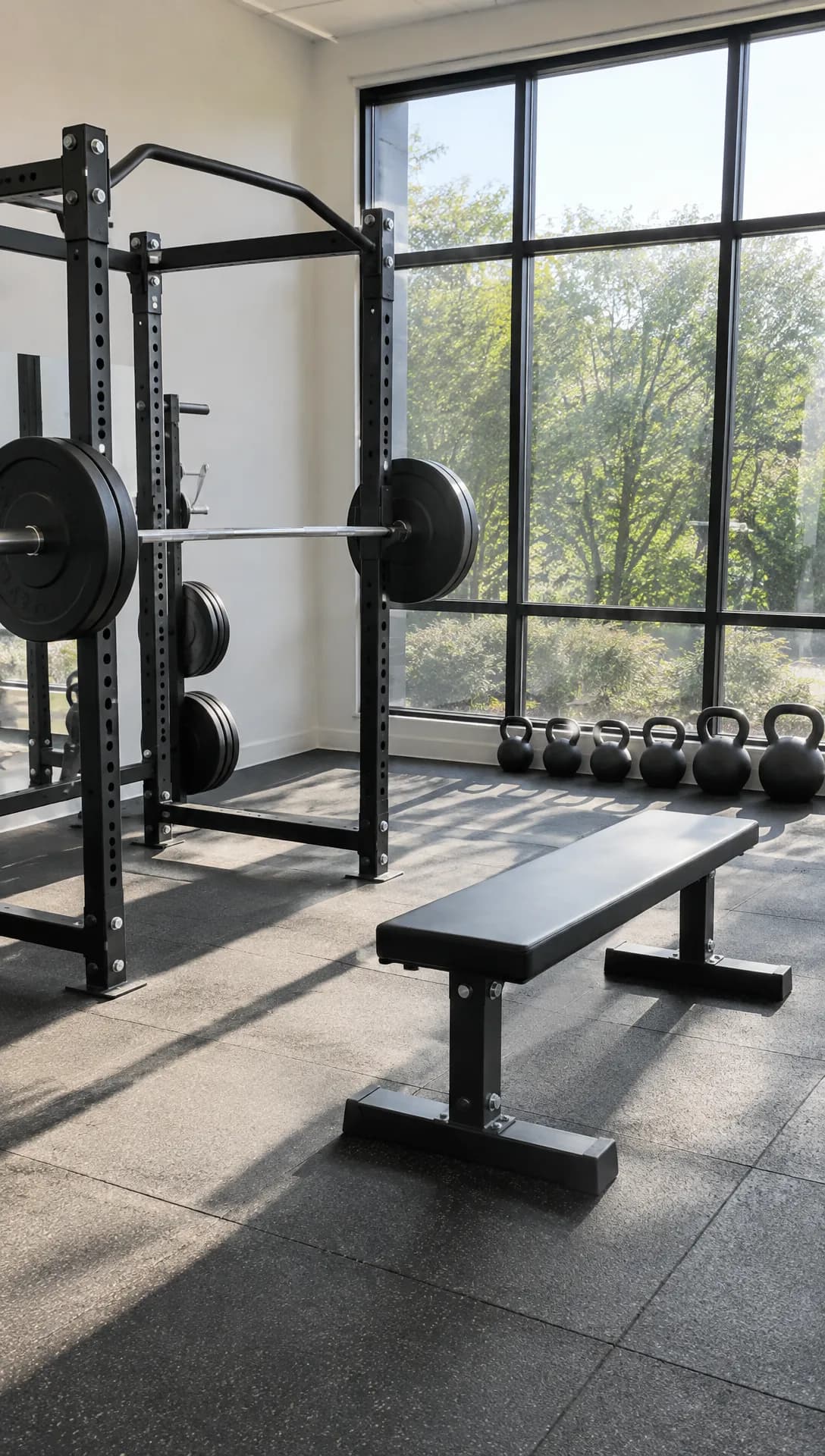 Made in Novoads with GPT Image 2.6 Sunburst · a vertical phone photo of an empty gym floor · stands in for your own photo · 1 credit · 2026-11-13
The picture above is our stand-in, because there's no gym behind this post. Yours should be a real photo. If you generate machines, rooms or a crowd you don't have, people find out on their first visit.
The class with open spots
Some weeks the problem is a single class. The Tuesday noon session never fills, or you're starting a six-week challenge and need a group by the first Monday. This ad names that class or challenge, gives its start date and tells people how to sign up.
- An AI presenter covers the days, the time and who the class suits.
- Captions carry the schedule.
Leave out any promised body result for finishing the challenge, and don't present anyone as a past finisher who isn't one.
The member story
Three of the lists we opened recommend this one, and AI has the smallest job in it. It can add captions and a voice-over to a clip the member filmed. It can't be the member. Don't cast an AI presenter as someone who trains at your gym, and don't generate a before or an after, because neither one happened.
The stories that need no claim are about showing up, like the nerves before a first class or the 5:30 a.m. group that saves each other a spot. Once a story turns on pounds lost or muscle gained, it's a claim, and TikTok's conditions further down apply to it.
The welcome ad
You've probably watched someone stop at the door, look at the racks and turn around. The welcome ad talks to that person. Two of the lists we opened point to big chains' campaigns built on that idea.
It suits an AI presenter because it needs no body on screen. A short script about gym nerves, read to the camera with captions, carries it.
Leave out any joke at a body's expense, and anything that holds up one body type as the right one. TikTok's body image section, quoted further down, has a line on each.
How to Make Each One in Novoads
Novoads is a paid tool for making video and image ads with AI. You make the file there and run the ad yourself, on TikTok or anywhere else.
From a photo of your own floor
- Take the photo vertically, before the first class, with the lights on and nobody in it.
- Open the Video tool and press Settings. Pick Kling 3.0 under Model, then set Aspect ratio to 9:16.
- Drag your floor photo onto the upload box labeled "Drop a start frame or click to upload". With the photo in place, and if it has the clip's shape, the editor shows "The video starts on this picture."
- Set the length beside the arrow button. Five seconds of Kling 3.0 costs 10 credits.
- Describe the camera move, and let the photo show the room.
- Press the arrow, then check the clip against the photo.
Our own clip took a different route. We made it with Seedance 2.0 Mini through our own connector for AI assistants, which accepts a start picture on Seedance. In the editor, Seedance 2.0 Mini has no start-frame box. Your photo goes in as a reference picture, and you call it @Image1 in the prompt. That's why the start-frame steps above use Kling 3.0.
We gave Seedance 2.0 Mini the stand-in picture as its start picture and this prompt: "The camera tracks slowly along the empty gym floor toward the row of kettlebells under the big windows. Morning light through the windows, dust drifts in the light. Calm, steady, no cuts. No people, no text. Silent b-roll. Vertical 9:16." The clip runs five seconds at 720p with the sound off. It cost 5 credits, and this is the first take.
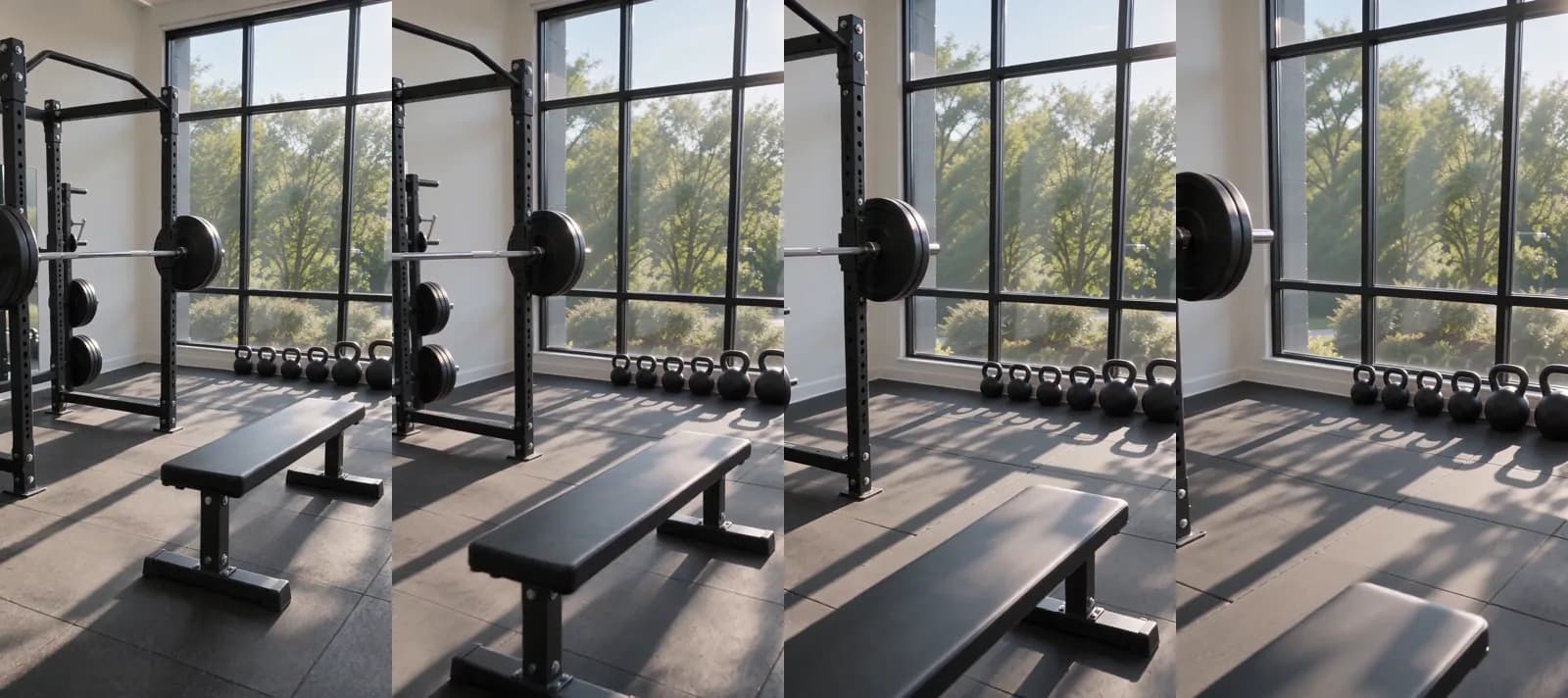 Made in Novoads with Seedance 2.0 Mini · the gym floor still as the start picture, a slow track toward the kettlebells, 5 seconds at 720p, sound off · 5 credits · 2026-11-13
Across the four frames, the camera moves right, the rack slides off to the left, the bench comes closer, and the kettlebells and their shadows stay under the windows. We count six kettlebells in the picture and six in every frame, and on a tour ad that's the first thing we'd check. The prompt also asked for dust drifting in the light, and none shows up in the frames. There's no person, no sign and no text.
Our guide to product videos from one photo goes deeper into choosing a model for the motion.
With an AI presenter
Talking Actors is the tool for an ad where someone delivers the offer to the camera. In the app, the three steps are "Write or pick a script", "Choose an actor" and "Press the arrow to generate". You get back the actor saying your script, with its voice and lip-sync. Captions go on afterward, as a separate step on that video, and the app's default caption style, Karaoke, costs 0 credits.
Write the script the way you'd say it at the front desk, covering what the offer is, what it costs and when it ends. If your neighborhood is bilingual, our voice list covers 32 languages.
The presenter is an AI actor. It isn't you, your head coach or a member, and the script shouldn't pretend otherwise. Lines like "I've trained here for two years" or "I'm one of the coaches" are out. The presenter can open by saying it's an AI presenter with this week's offer from your gym. Our piece on AI actors covers how brands cast one. An AI-made ad may also need a label, and our comparison of the platforms' AI disclosure rules covers TikTok's.
We didn't make a presenter ad for this post, so this part comes from the app's own labels and price list.
Which route fits which ad
| Ad | Route | Keep out |
|---|---|---|
| First-week offer | AI presenter plus a floor clip | A promised result |
| Tour of the floor | Your own photos as clips | Equipment you don't have |
| Class with open spots | AI presenter, schedule in captions | Made-up past finishers |
| Member story | The member's own clip, captions added | An AI "member", an AI before or after |
| Welcome ad | AI presenter, short script | Jokes about bodies |
If you've never made an ad with AI, our general guide to AI ads walks you through the whole process.
What Each Gym Ad Costs to Make
Credits and plan prices as of November 13, 2026. Every Novoads plan is paid, starting with your first month, and each one is a monthly bundle of credits.
- Starter is $15 a month for 200 credits, which works out to $0.075 a credit.
- Plus is $49 a month for 1,000 credits, or $0.049 a credit.
- Ultra 3,000 is $129 a month for 3,000 credits, or $0.043 a credit.
The bigger Ultra plans are on the pricing page. The table prices the clips a gym's ads use.
| What you make | Credits | Starter | Plus | Ultra 3,000 |
|---|---|---|---|---|
| 5-second clip from your photo, Seedance 2.0 Mini, 720p | 5 | about 38 cents | about 25 cents | about 22 cents |
| 5-second clip from your photo, Kling 3.0 | 10 | 75 cents | 49 cents | 43 cents |
| 8-second clip from your photo, Wan 3.0, 720p | 14 | $1.05 | about 69 cents | about 60 cents |
| AI presenter, up to 60 seconds, 480p | 100 | $7.50 | $4.90 | $4.30 |
| AI presenter, up to 60 seconds, 720p | 200 | $15.00 | $9.80 | $8.60 |
The dollar columns are our arithmetic, the credits times each plan's price per credit. Presenter time is charged by the started minute, so a 20-second class announcement costs as much as a 60-second one. The presenter's default is 720p.
One offer ad, added up
Put a 480p presenter and a Wan 3.0 clip from the table together, and the offer ad comes to 114 credits. That's $8.55 at Starter's rate and about $5.59 at the Plus rate. A Starter month covers one of those with 86 credits left over. A Plus month covers eight. We didn't render that ad. The sum is two rows of the table added together.
- Each retake costs that row's credits again.
- Cutting the clips together isn't in the sum.
- Neither is the money you spend to run the ad.
What a filmed video costs, from one vendor's guide
Beverly Boy Productions, a video production company, says in its cost guide for workout videos that "The average cost of video production per minute is between $1,000 and $10,000 in most cases." The guide was first published in September 2020 and last modified on February 27, 2026.
That's one vendor's figure for filmed video, priced by the finished minute, and it isn't a like-for-like comparison. A crew films real people in your real room, while the rows in our table animate a photo or put an AI presenter on screen. For format-by-format costs on TikTok in general, see our TikTok ad examples post.
What TikTok's Ad Policy Says About Weight Loss and Muscle Gain Claims
This section is about ads on TikTok, and it's based on TikTok's own pages as of November 13, 2026. A gym's ordinary posts fall under TikTok's Community Guidelines, a different rulebook. And none of this is legal advice.
The policy page's own words
TikTok's policy page on weight management and body image, last updated September 2026, opens its weight section with the scope: "Ad content and landing pages for weight-related products and services must not include exaggerated or harmful weightloss or muscle gain claims." Two sentences later, it says "Any weight loss or muscle gain claims must be restricted to audiences aged 18 years or older, and must do so via the promotion of a healthy lifestyle."
The page then lists examples of what isn't allowed:
- "References to unrealistic muscle gain or weight loss."
- "Encouragement of unhealthy lifestyles or promotion of unhealthy relationships with food."
- "Claims that the product alone, without diet or exercise, can lead to weight loss or muscle gain."
- "Suggestions that losing weight or gaining muscles is easy or guaranteed."
The written policy doesn't mention gyms by name. The link to your gym is the scope line's "weight-related products and services", and counting a gym as one of those is our reading. "Via the promotion of a healthy lifestyle" is TikTok's phrase. The page doesn't define it, so we won't either. Nor does it say where in TikTok's ad tools you set the age.
The age limit isn't new. On September 23, 2020, TikTok's newsroom announced that "Weight management products can only reach users age 18+". A May 2026 update said TikTok was clarifying its restrictions on "Exaggerated or harmful weight loss or muscle gain claims".
A second TikTok page goes further
TikTok's page on protecting minors in advertising, last updated October 2026, has its own weight management entry: "Advertisements for weightloss, weight gain, or/and muscle gain products, such as weightloss medications, meal replacements and gyms/fitness with weightloss/weight gain/muscle gain claims, are not permitted on TikTok."
Taken literally, that's stricter. One page restricts such a claim to audiences 18 or older, and the other says a gym or fitness ad carrying one isn't permitted at all. We can't tell you which page a reviewer applies to your ad, so we'd never read the 18-or-older sentence as permission to make the claim.
The body image lines cover your landing page too
The same policy page has a body image section, which says ad content and landing pages "must not explicitly shame users about their bodies, suggest there is an ideal body type, or promote improved life circumstances or self-image as a result of changes in body appearance or weight." One of its examples of what isn't allowed is "Claims that looking a certain way will make individuals more desirable, successful, happy, or popular".
In our reading, that includes a wall of transformation testimonials on the page your ad sends people to.
What that means for the five ads
This part is our reading.
- The offer, the tour, the class and the welcome ad don't need a weight or muscle claim. The 18-or-older sentence is about claims, and it doesn't say every gym ad goes to adults only. And we're not saying an ad without a claim will be approved.
- The member story is where claims creep in. A story about showing up doesn't make one, but a story built on a result does, and then both pages above apply.
- A generated before or after isn't a result anyone at your gym got, so rule it out.
TikTok also has a separate policy on misleading content in ads, and our post on that policy covers what it says about AI-made creative. Before you build an ad around a result, read both TikTok pages yourself. They're in the sources under this post. Cleaning companies have a claim of their own to watch, a bare "eco-friendly", which our cleaning ads guide covers with the FTC's Green Guides.
Which Gym Ad to Make First
We'd start with the tour clip. It takes a single photo, says nothing about anyone's body, and costs 5 or 10 credits a take, depending on the model.
Then put an AI presenter on the next offer that has an end date. Leave the member story to a real member with a phone, and let Novoads add the captions.
If you want to see what the tool does before you pick a plan, Novoads has a page on video ads made for TikTok and one on fitness video ads.
Turn one photo of your floor into an ad clip
Upload the photo, choose a model, describe the camera move and download a vertical clip you run yourself. Every plan is paid, and the smallest, Starter, is $15 a month for 200 credits.
See TikTok video ads in NovoadsYou can take the photo for your first clip tomorrow morning, before the first class walks in.
Frequently Asked Questions
Can a gym ad on TikTok make a weight loss or muscle gain claim?
TikTok's own pages give two answers. Its weight management and body image policy, last updated September 2026, says such claims must be restricted to audiences aged 18 years or older and made via the promotion of a healthy lifestyle. It also rules out suggesting that losing weight or gaining muscle is easy or guaranteed. Its page on protecting minors, last updated October 2026, says gym and fitness ads with weight loss, weight gain or muscle gain claims aren't permitted on TikTok. We can't tell you which page a reviewer applies, so read both before you build an ad around a result. None of the ad ideas in this post makes such a claim.
Key Takeaways
- The gym ad lists we read cover five kinds of ads (the first-week offer, the tour of the floor, the class with open spots, the member story and the welcome ad), and four of them never need a claim about anyone's body.
- We turned a picture of a gym floor into a 5-second vertical clip with Seedance 2.0 Mini at 720p. It cost 5 credits. An AI presenter reading your January offer costs 100 credits at 480p, for any read up to a minute.
- TikTok's weight management policy page, last updated September 2026, says weight loss or muscle gain claims must be restricted to audiences aged 18 or older and made through the promotion of a healthy lifestyle.
- TikTok's page on protecting minors, last updated October 2026, says gym and fitness ads with those claims aren't permitted. Since the two pages disagree, we'd never read the age limit as permission to make the claim.
- An AI presenter is an AI actor. It's never your coach or a member, and an AI-made before or after isn't a result anyone at your gym got.