Higgsfield vs Nano Banana for Ad Stills: Metered by Google, Bundled by Higgsfield
Nano Banana is Google's image model family, and Higgsfield is one place that sells it. Google meters Nano Banana Pro at $0.134 per 1K or 2K image; Higgsfield folds it into plan windows. What each route costs for a month of product stills, and the terms that come with it, as of September 2026.

Mauricio Valdivia
·12 min

Three hundred stills and one question from finance
A growth lead at a skincare brand plans 300 product stills for next month's Meta placements. Finance asks one thing. What does an image cost?
Google's Gemini API pricing page, last updated on September 16, 2026, answers to the tenth of a cent: Nano Banana Pro costs $0.134 per 1K or 2K image on the Standard paid tier. Higgsfield answers in a different unit. It sells the same Google model family inside a creative suite, and on its Ultra plan Nano Banana Pro arrives as a time-limited Unlimited window rather than a line on an invoice.
That is why "Higgsfield vs Nano Banana" is not a quality contest. Nano Banana is Google's image model family. Higgsfield is one of the places that sells it, next to its own Soul models and other vendors' engines. The real decision is how you pay for the same model, how fast you can run it, and which terms come with the upload.
One disclosure first. Novoads competes with Higgsfield in AI ad creative, and Novoads offers Nano Banana Pro as well, so we have a stake in the answer. Every Google and Higgsfield figure below comes from their own pages, with the date each one carries.
Where each route wins, in one table
Read the table by the job, not by the logo.
| Google Gemini API | Higgsfield | |
|---|---|---|
| How you pay | Metered, per image | Plan credits plus windows |
| Nano Banana Pro at 2K | $0.134 Standard | Window on Ultra |
| Nano Banana 2 at 1K | $0.067 Standard | 7-day window on Plus |
| Bulk discount | Batch or Flex, half price | Marketplace passes |
| Scripted pipelines | Batch API | Credits only |
| Other models on the bill | Google's own models | 30+ models, one balance |
Choose Google's API if a developer or a script produces the stills, your monthly volume is predictable, and finance wants a unit price it can multiply.
Choose Higgsfield if a person iterates by hand in a browser, you want Soul, GPT Image and video models on the same balance, and your heaviest week of image work fits inside a window.
A model family and the storefront that sells it
Which Nano Banana you are actually buying
As of September 17, 2026, Google's image-generation docs say Nano Banana refers to four distinct models in the Gemini API. The pricing page gives each its own row and model ID: Nano Banana Pro is gemini-3-pro-image, Nano Banana 2 is gemini-3.1-flash-image, and Nano Banana 2 Lite is gemini-3.1-flash-lite-image.
The fourth is the original Nano Banana, gemini-2.5-flash-image. The same pricing page still lists it at $0.039 per image, under a warning that it is deprecated and will be shut down on October 2, 2026, with a pointer to migrate to Gemini 3.1 Flash Image or Gemini 3.1 Flash Lite Image.
So this post names the model every time. Google's own pricing page puts the plain name on the model it is retiring, which means a menu that just says "Nano Banana" does not tell you which model you are buying. Confirm the version before you build a workflow on a label.
Higgsfield stocks the family inside a creative suite
Higgsfield's help article on Nano Banana, dated August 2, 2026, calls it "Google's image model family, available on Higgsfield" and lists four entries:
- Nano Banana Pro, for complex scene generation with reasoning, up to native 4K
- Nano Banana 2, for fast bulk generation
- Nano Banana 2 Lite, at about 4 seconds per image at 1K
- An entry named plain Nano Banana, for editing an existing image with precise instructions
Pro, 2 and 2 Lite take up to 14 reference images there, and the editing entry takes up to 8. The article's own FAQ settles the naming question: Nano Banana is not a Higgsfield model.
What surrounds the model is the platform's real argument. Higgsfield's model guide pitches Nano Banana for speed and reference control, recommends GPT Image for text rendering and precise color, and offers Soul, its own image family, for character consistency. Its ad workspace, Marketing Studio, generates its images with Nano Banana. Our full Higgsfield review covers the rest of the suite.
What the storefront decides
The model decides what an image can look like. The storefront decides four things around it:
- The unit you pay in: a metered image, or a plan with windows
- Throughput: how many images run at once, and in which queue
- Automation: whether a script or an agent can use the cheap lane
- Data terms: what happens to the packaging shots you upload
None of those change the pixels. All of them change the bill. For what Nano Banana Pro itself does with headlines and labels inside the frame, see our Nano Banana Pro guide for ad creative.

What an ad still costs from Google, to the cent
Nano Banana Pro: $120 per million image tokens
On Google's Gemini API pricing page (last updated 2026-09-16), Nano Banana Pro (gemini-3-pro-image) costs $120 per 1M image output tokens on the Standard paid tier. That works out to $0.134 per 1K/2K image and $0.24 per 4K image. Batch and Flex cost half, $0.067 per 1K/2K image, and there is no free tier. Treat it as Google's current list price, not a September change.
The pricing footnote shows the arithmetic: a 1K or 2K image consumes 1,120 tokens, and a 4K image consumes 2,000. Two details matter for product work:
- 1K and 2K cost the same on Pro. Drafting at 1K saves nothing, so draft at 2K and judge the size you will ship.
- References are cheap, and thinking is not billed. Each input image is set at 560 tokens, or $0.0011, and Google's docs say the interim "thought images" the model makes on the way are not charged.
Of the 14 reference images Gemini 3 image models accept, Google's table gives Pro up to 6 high-fidelity object images, 5 character images and 3 style references. For a product still, those six object slots are where your packshots go.
Nano Banana 2: the cheaper rung, where resolution matters
Nano Banana 2 (gemini-3.1-flash-image) is priced at $60 per 1M image tokens on the same page: $0.045 per 0.5K image, $0.067 per 1K, $0.101 per 2K and $0.151 per 4K. Its Batch lane is half that: $0.034 per 1K image.
Here resolution is a budget lever. A 1K draft costs about two thirds of a 2K one, and a 4K final on Nano Banana 2 costs more than a 2K image on Pro. Google's table also gives Nano Banana 2 up to 10 high-fidelity object images, four more than Pro, which is worth a test when one still has to carry several SKUs.
Batch, Flex and the tier that is not free
Three lanes sit around the list price, and Google's docs state the terms of each:
- Batch. The Batch API runs large jobs asynchronously at 50% of the standard cost, with a target turnaround of 24 hours that Google says is much quicker in most cases. Its docs name the use case outright: Nano Banana users who need a lot of images get higher rate limits in exchange for that turnaround.
- Flex. Also half price, in preview, in exchange for variable latency and best-effort availability.
- Priority. The other direction: Pro's Priority lane lists image output at $216 per 1M tokens.
Two more lines on the pricing page matter to a brand. Pro's free tier reads "Not available" for output, so every production image is paid. And the paid tier lists content not used to improve Google's products, a point that comes back below.
What Higgsfield charges instead: plans, windows and passes
Three plans, as Higgsfield's own guide lists them
The Higgsfield figures here come from its own guide dated September 15, 2026, which says its prices were verified on September 11, the same guide our Higgsfield pricing breakdown reads line by line. It lists three plans:
- Starter, $15 a month: 200 credits and the model catalog, without the Unlimited set
- Plus, $49 a month: 1,000 credits, a 365-day set of six image models, and a 7-day window on Nano Banana 2
- Ultra, $129 a month: 3,000 credits, the same set, and windows on Nano Banana Pro and Nano Banana 2
The same guide says one credit balance covers more than 30 frontier models for video, image and audio. That is the core of the case for the platform: the Nano Banana window is one perk inside a plan that also buys video generation. Plan contents move, and Higgsfield's help centre says each plan's card on its pricing page shows the exact models and periods, so read yours before you budget.
A window is a week, and the calendar keeps running
Higgsfield's September 11, 2026 guide to annual plans describes Ultra's flagship access as 7-day windows on Nano Banana Pro and Nano Banana 2. Its help centre sets the rules that come with Unlimited:
- Generations on a covered model deduct no credits for a set period.
- The period runs from activation and does not restart when the subscription renews.
- If the subscription ends, Unlimited access stops working, even mid-period.
In practice, schedule the window. Open it the week the product references arrive, not the week someone remembers the plan has one. The same mechanics govern Kling on Higgsfield, which we unpacked in Higgsfield vs Kling.
Outside the window: credits and passes
Once the week is over, Nano Banana Pro on Higgsfield draws credits. Higgsfield says every generation's credit cost depends on model, resolution and duration, and is shown on the Generate button before you confirm. This post does not quote a per-image credit figure for Nano Banana Pro there: read it in the app, on your own settings.
The other route is the Unlimited Models Marketplace. Higgsfield's September 15 guide says it sells 1, 3 and 7-day passes per model, from $7 for a 1-day pass to $1,035 for a 7-day all-models pass.

The 300-still month, on the meter and on the plan
Here is the skincare brand's month on each route. The Google figures are the Standard and Batch list prices above; the Higgsfield figure is Ultra's monthly price from its own guide.
The Google bill
- 300 Nano Banana Pro images at 2K, Standard: 300 × $0.134 = $40.20
- The same 300 through Batch: 300 × $0.067 = $20.10
- A mixed month: 240 Nano Banana 2 drafts at 1K (240 × $0.067 = $16.08) plus 60 Nano Banana Pro finals at 4K (60 × $0.24 = $14.40) = $30.48
Reference images add $0.0011 each on Pro, so six packshots per request add less than a cent per image.
The Higgsfield bill
Ultra costs $129 for the month. Measured only against metered Nano Banana Pro images, that covers a lot of work.
The break-even equation: Ultra's monthly price ÷ Google's price per image = the images you would buy before the plan pays for itself. At Standard 2K, $129 ÷ $0.134 = about 963 images. At Batch, $129 ÷ $0.067 = about 1,925.
At 300 finished stills, the meter wins on images alone. Retries change that. If each keeper takes four generations by hand, 300 keepers mean 1,200 generations: $160.80 at Standard, or $80.40 at Batch. Inside Ultra's Nano Banana Pro window retries deduct no credits, so if all 1,200 fit inside that week, the flat price beats Standard on that load, while Batch still comes in lower.
What the arithmetic leaves out
That was images against images. Three facts from Higgsfield's own pages bend it:
- Throughput. Higgsfield's September 11 guide says Unlimited runs in the standard queue at one video or two images at a time, and that there is no priority queue inside Unlimited mode, a rule our Higgsfield vs Seedance comparison also flags for video. Twelve hundred hand-run generations, two at a time, is a staffing question as much as a pricing one.
- Automation. Higgsfield says Unlimited is designed for personal, human use only, and prohibits automation tools and scripting on it. The same September 11 guide lists MCP, CLI, Canvas, Supercomputer and Marketing Studio as surfaces that run on credits, so a scripted pipeline or the ad workspace pays per generation. Our post on Higgsfield's MCP connector walks through that split.
- The rest of Ultra. The $129 also buys 3,000 credits and the 365-day image set. A team that spends them on video is not paying $129 for stills.
So the rule of thumb: below roughly 963 Nano Banana Pro images a month at Standard, or 1,925 at Batch, the meter costs less for images alone. Above that, or with heavy hand retries that fit inside the window, the plan starts to earn its sticker price.
Control, provenance and the terms on your uploads
References and edits on both routes
Reference limits travel with the model, whichever door you use. Higgsfield's article gives Pro, 2 and 2 Lite up to 14 references, the same ceiling Google's docs give the Gemini 3 image models. Its workflow advice is to start at 1K when iterating and scale to 2K or native 4K for final assets. Through Google, that advice saves money on Nano Banana 2. On Pro it saves nothing, because 1K and 2K cost the same.
Where Higgsfield adds control is around the model: Soul for a face that holds across a campaign, and GPT Image, which Higgsfield's own guide recommends for text rendering and precise color. If you are weighing models by job rather than by vendor, our list of Nano Banana alternatives for ad images sorts them that way.
Watermarks and invisible markers
- Google's API docs say all generated images include a SynthID watermark.
- Higgsfield says generations on a free account carry a Higgsfield watermark, paid plans come without one, and it may embed invisible, machine-readable markers that identify content as AI-generated.
Either way, disclosure is a separate job from the watermark. Plan it with our guide to labeling AI-generated ads before the stills reach an ad account.
What happens to the packaging shots you upload
This is the row most comparisons skip, and the one a brand with unreleased products should read first.
- Google's pricing page lists content not used to improve its products as a feature of the paid API tier. Its free tier card lists content used to improve them.
- Higgsfield's ownership article, dated August 2, 2026, says Higgsfield does not claim ownership of your inputs or outputs and does not restrict the commercial use of outputs. It also says Higgsfield may use content to train and improve its AI models, that deleting the content or your account stops this going forward, and that on Enterprise agreements customer content is not used for training at all. Legal indemnification against third-party IP claims is available on the Enterprise plan only.
Neither policy decides the comparison on its own. Both are reasons to settle the question with legal before the first upload, not after the launch.
Matching the route to how your stills get made
When Google's API is the better buy
- A developer or a script produces the stills, and a Batch turnaround of up to 24 hours is acceptable
- Monthly volume is predictable, and finance wants a per-image number
- You only need Google's image models, and the paid-tier data terms matter to your legal team
When Higgsfield is the better buy
- A designer or marketer iterates by hand in a browser, retry after retry
- You want Nano Banana, Soul, GPT Image and video models on one credit balance
- Your heaviest week of still production can be scheduled into a 7-day window
When neither is the whole answer
- The still is a first frame, and the deliverable is a video ad rather than a picture, the handoff our Seedance vs Nano Banana comparison prices
- The people who approve creative do not want to learn an API or a window calendar
That last case is where the question stops being about image pricing. Turning an approved still into a moving ad is its own workflow, covered in how to make product videos with AI, and deciding which of 300 stills deserves spend is a creative testing question.
How Novoads solves the still-to-ad handoff
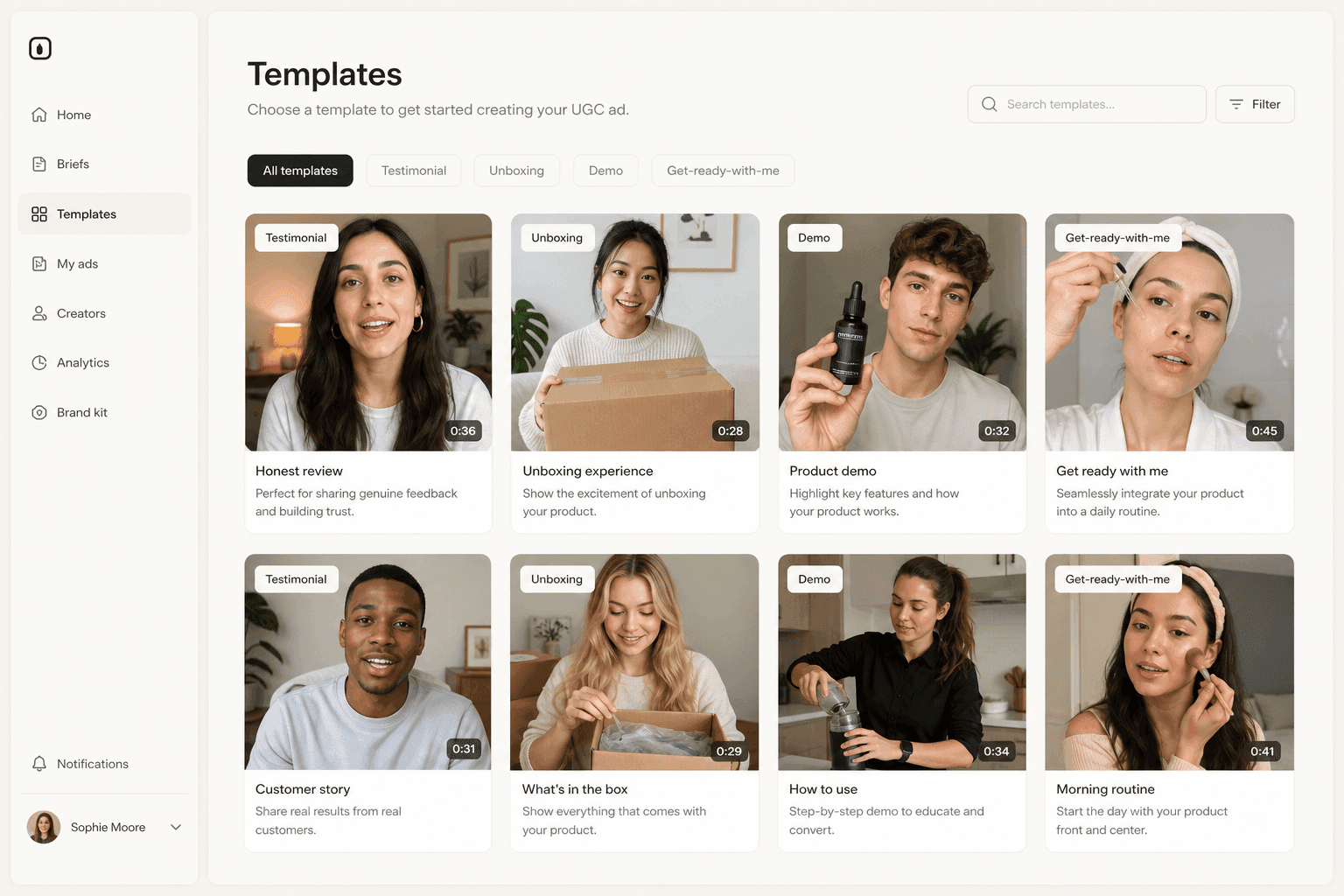
Novoads offers Nano Banana Pro as one of seven image models on one credit balance, priced per image in the same credits that pay for video.
Nano Banana Pro at a fixed credit price
- Nano Banana Pro in Novoads costs 0.5 credits per image at 1K or 2K, and 1 credit at 4K.
- The same balance covers GPT Image 2, GPT Image 2.5 Sunburst, GPT Image 2.5 Flare, Seedream 5 Lite, Seedream 5 Pro and Reve 2.1. Novoads does not sell Nano Banana 2.
- Novoads starts at $49/month (Starter, 50 credits per month), and all plans are published on /pricing.
The per-image premium, and what it pays for
Per image, Novoads costs more than Google's API. On Starter, half a credit is about 49 cents of the monthly price, against $0.134 at Google's Standard rate, and 50 credits buy 100 Pro images at 2K, not 300. A brand whose entire job is 300 stills a month should run a Batch job at Google.
What the credits buy is the step after the still. Upload a product photo and Product-to-Ad returns an ad image, and an approved still can become a vertical clip through a video model such as Seedance 2.0 in the same workspace, on the same balance. If that is the job, you can start with Novoads. 50 credits every month. Cancel anytime.
Google sells a unit price. Higgsfield sells a week.
Both routes sell Google's Nano Banana models, so neither wins on the image itself. Google sells the most legible thing in this comparison: a number finance can multiply, with a half-price lane for anyone willing to wait. Higgsfield sells something harder to price and sometimes worth more: a week in which a person can retry without watching a meter, next to every other model the team already uses.
Pick the route that matches your production habit. A metered model rewards knowing your volume. A window rewards knowing your calendar.
Frequently Asked Questions
Is Nano Banana available on Higgsfield?
Yes. Higgsfield's help article on Nano Banana, dated August 2, 2026, describes it as Google's image model family, available on Higgsfield, and lists four entries: Nano Banana Pro for complex scene generation with reasoning, Nano Banana 2 for fast bulk generation, Nano Banana 2 Lite at about 4 seconds per image at 1K, and an entry named plain Nano Banana for editing an existing image by instruction. Pro, 2 and 2 Lite take up to 14 reference images there, and the editing entry up to 8.
How much does Nano Banana Pro cost per image?
On Google's Gemini API pricing page, last updated September 16, 2026, Nano Banana Pro (gemini-3-pro-image) costs $120 per 1M image output tokens on the Standard paid tier. That works out to $0.134 per 1K or 2K image and $0.24 per 4K image. Batch and Flex cost half, $0.067 per 1K or 2K image, and there is no free tier. The price is Google's current list price, not a September change.
Does Higgsfield Unlimited include Nano Banana Pro?
On Ultra, as a window. Higgsfield's September 15, 2026 guide lists Ultra at $129 a month with windows on Nano Banana Pro and Nano Banana 2, and its September 11 guide describes those as 7-day windows. Higgsfield's help centre says an Unlimited period runs from activation and does not restart at renewal, works only while the subscription is active and only on higgsfield.ai, and runs in the standard queue. Outside the window, generations deduct credits at the cost shown on the Generate button.
Is Higgsfield cheaper than using Nano Banana directly?
It depends on volume and retries. Ultra's $129 a month equals about 963 Nano Banana Pro images at Google's Standard 2K price of $0.134, or about 1,925 at the Batch price of $0.067. For a few hundred stills, Google's meter costs less on images alone. If a person retries by hand many times per keeper inside Ultra's window, the flat plan can come out ahead of Standard, and Ultra also includes 3,000 credits for other models.
Is the original Nano Banana shutting down?
Yes. Google's Gemini API pricing page carries a warning that gemini-2.5-flash-image, the original Nano Banana, is deprecated and will be shut down on October 2, 2026, and tells users to migrate to Gemini 3.1 Flash Image or Gemini 3.1 Flash Lite Image. Nano Banana Pro and Nano Banana 2 are different models and are not part of that notice.
Can I use Nano Banana Pro in Novoads?
Yes. Nano Banana Pro is available in Novoads at 0.5 credits per image at 1K or 2K, and 1 credit at 4K, on the same balance as GPT Image 2, GPT Image 2.5 Sunburst, GPT Image 2.5 Flare, Seedream 5 Lite, Seedream 5 Pro, Reve 2.1 and the video models. Novoads does not sell Nano Banana 2. Novoads starts at $49/month (Starter, 50 credits per month), and all plans are published on /pricing.
Key Takeaways
- Higgsfield vs Nano Banana is not a model contest. Nano Banana is Google's image model family, and Higgsfield's own help article, dated August 2, 2026, lists Nano Banana Pro, Nano Banana 2, Nano Banana 2 Lite and a plain Nano Banana editing entry on its platform.
- Google's Gemini API pricing page, last updated September 16, 2026, prices Nano Banana Pro at $120 per 1M image output tokens on the Standard paid tier, which is $0.134 per 1K or 2K image and $0.24 per 4K image. Batch and Flex cost half, there is no free tier, and Nano Banana 2 is $0.067 per 1K image.
- Higgsfield's September 15, 2026 guide lists Ultra at $129 a month with windows on Nano Banana Pro and Nano Banana 2, and Plus at $49 with a 7-day window on Nano Banana 2. Its September 11 guide calls Ultra's windows 7-day, and its help centre says an Unlimited period does not restart when the subscription renews.
- Ultra's $129 equals about 963 Nano Banana Pro images at Google's Standard 2K rate, or about 1,925 at Batch. For 300 stills a month the meter costs less on images alone; heavy hand retries inside a window can tip the math toward the plan.
- Higgsfield's Unlimited is web-only, for personal human use, in the standard queue at two images at a time, while its MCP, CLI, Canvas, Supercomputer and Marketing Studio run on credits. Novoads offers Nano Banana Pro at 0.5 credits per 1K or 2K image, from $49/month (Starter, 50 credits per month): more per image than Google's API, on the same balance as video.