Skincare Ads: Ideas to Make With AI, What Each Costs, and the Claims That Turn a Cream Into a Drug
Five kinds of skincare ads, how to make each one with AI from your own product photos or with an AI presenter, what each costs in credits and dollars, and the FDA page that says certain claims can turn a cosmetic into a drug.

Mauricio Valdivia
·13 min
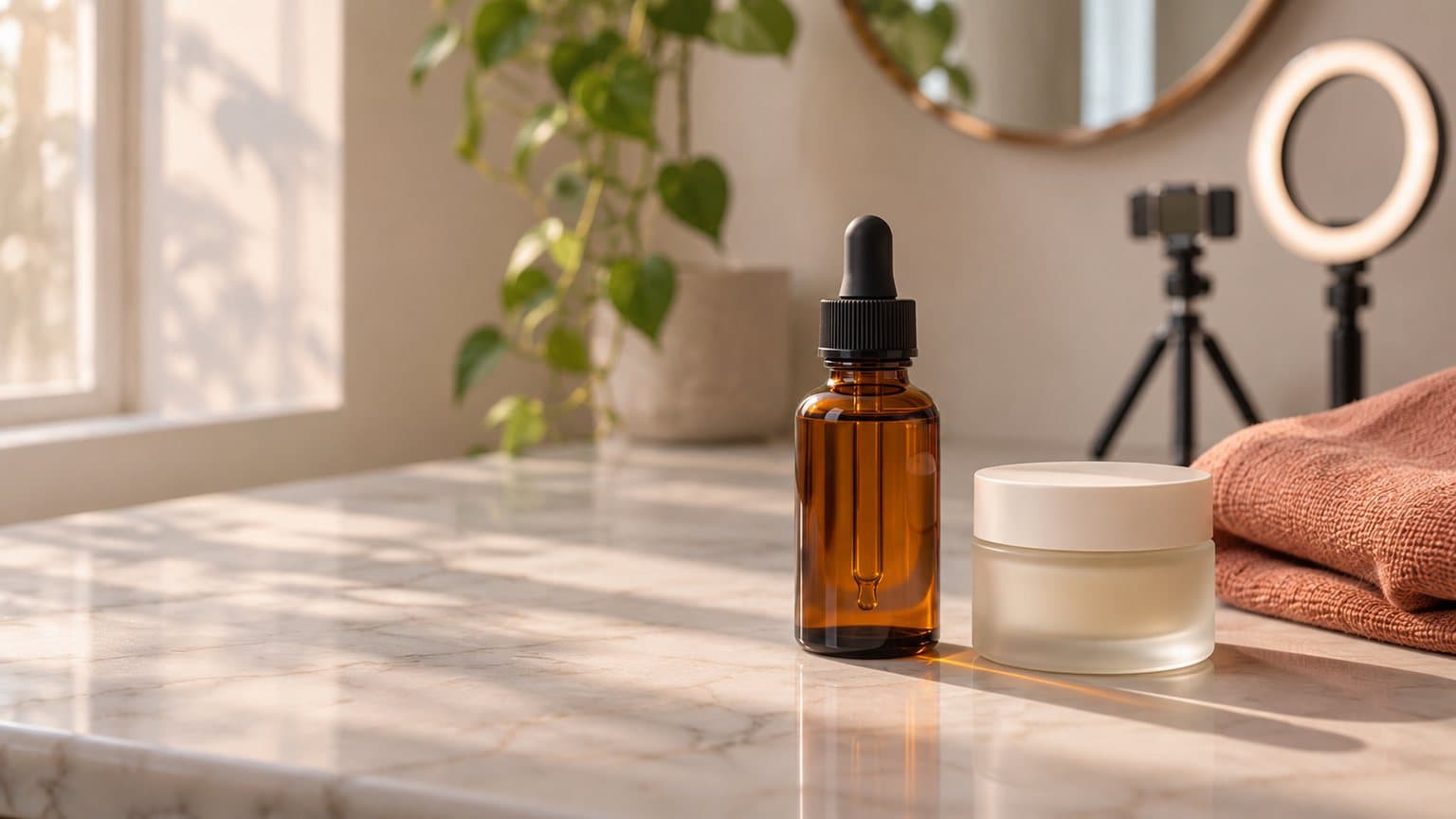
Two test clips, 12 credits, and a line we'd rewrite
On October 21, 2026, we asked Seedance 2.0 Mini for a ten-second bathroom selfie. We described a woman holding an amber dropper bottle next to her face and gave her one line to say. The clip cost 10 credits, and it came back looking the way a skincare founder wants a creator video to look, with window light, bare skin and the bottle held up by her cheek. The label on the bottle is blank, because the bottle doesn't exist. Neither does she.
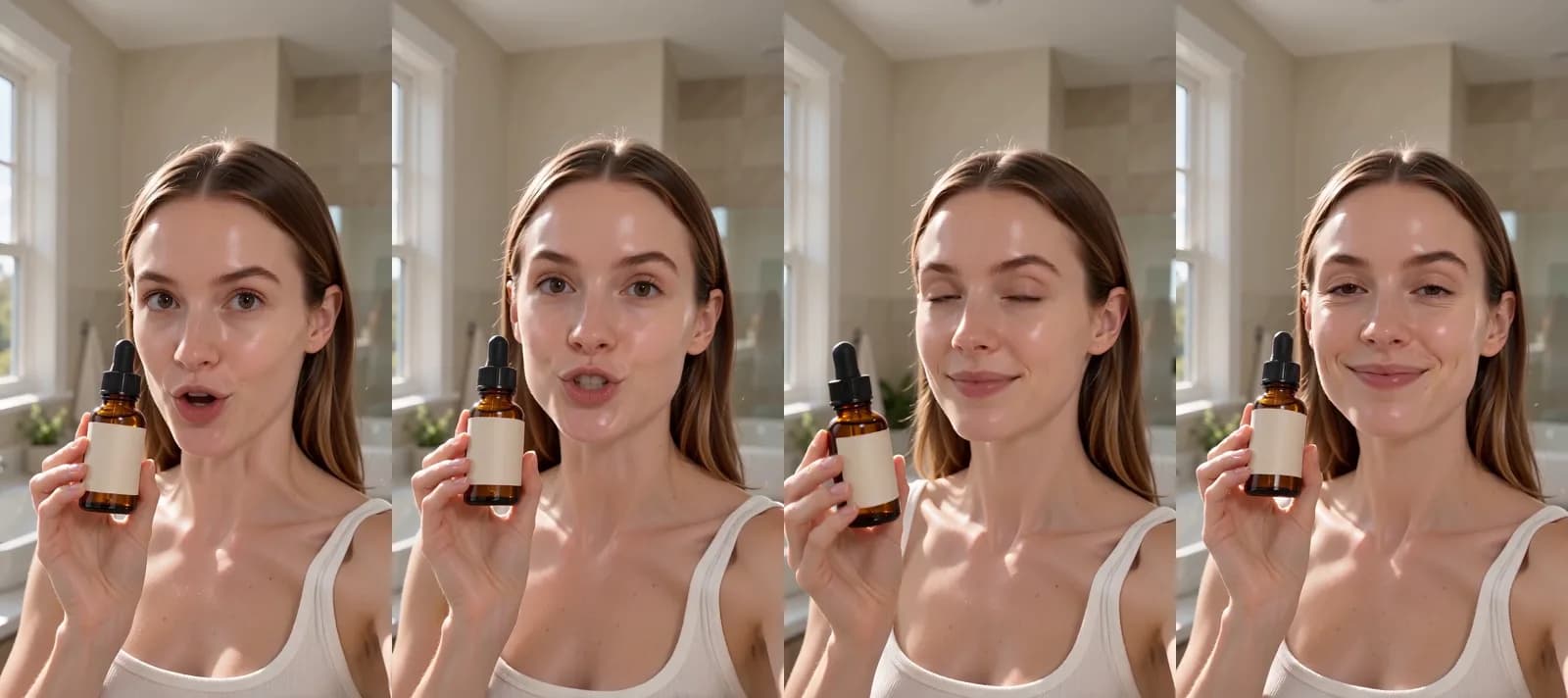 Made in Novoads with Seedance 2.0 Mini · a woman in a bright bathroom holds a serum bottle by her face and says one line about three drops at night, 10 seconds at 720p · 10 credits · 2026-10-21
Three weeks earlier, a one-line prompt and 2 credits got us the other clip, a slow push-in on a frosted pump bottle on a marble counter. It's a nice shot of a product nobody sells.
That's the problem if you sell a serum, a cleanser or a three-step routine. A model will invent a jar, a face and a result without being asked, and none of them are yours. Your ad has to show your real label and your real texture. And if you sell the product as a cosmetic, the script counts too, because the FDA's line between a cosmetic and a drug runs through what you claim.
Her line was "Two weeks of this serum, and my skin finally looks awake. Three drops at night, that's it." We wouldn't run that script, and we'll get to why.
On November 13, 2026, we read the pages that rank for "skincare ads" and "beauty ads", two FDA pages and one creator rate guide. The Novoads prices are our own, and the two clips are test renders from our workspace, made from words alone with no product photo. We didn't run any of these ads on a platform, and none of this is legal advice.
Five kinds of skincare ads, and where AI should stop
The lists that rank for this search mostly agree on the formats. Of the five pages we could open, none prices a single ad, and none shows the steps for making a video ad with AI. Two of them show only an AI tool's own still images. So for each format we've added the part they leave out, which is what AI is good for and what it shouldn't draw.
Texture and application close-ups
Think of the swatch on the back of a hand, the serum drop leaving the pipette, the jar turned so you can see the fill. OptiQube's gallery of beauty catalog ads puts texture first in its list of habits: "Show the texture, not only the jar." A product page photo can't show how thick the cream is or how it spreads, and this ad can.
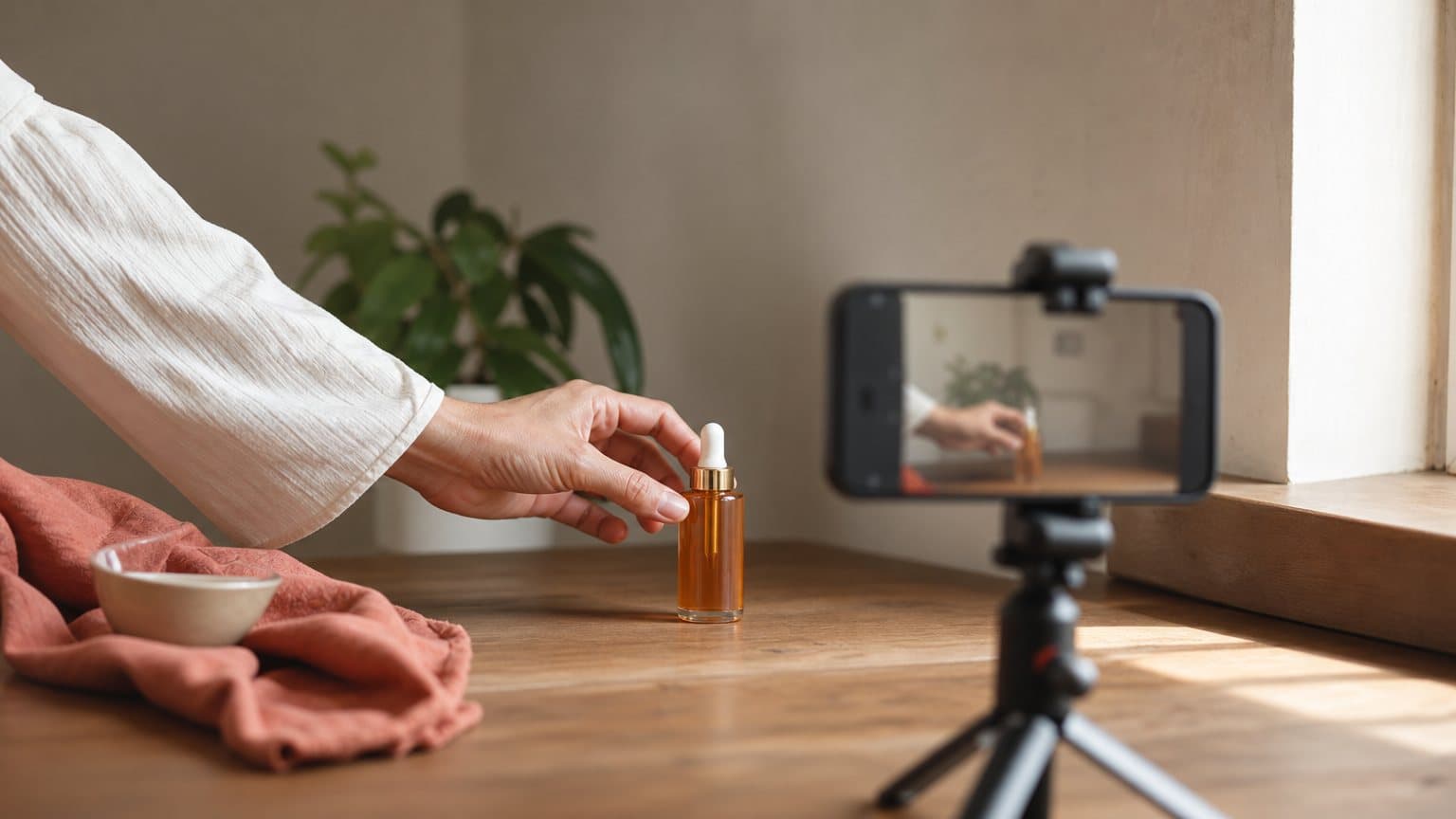
AI is good at one thing here. It can give a still photo you already have a few seconds of movement, like a slow push toward the jar, light crossing the glass or a camera drifting past the box. It shouldn't invent the texture, and we'd throw a clip out if the model did any of these.
- It redrew your label.
- It changed the shade of the cream.
- It showed skin that looks different once the product goes on.
We'd film the real swatch on a phone and use AI for the product shot around it.
Ingredient lessons
An ingredient lesson explains what niacinamide is, what the percentage tells you and where the product goes in the routine. Founders like it because the ingredient is often the reason to buy. The second habit on OptiQube's list is "Name the active ingredient."
It's a good fit for an AI presenter, who reads your script to camera while the captions carry the percentage printed on the real label. We'd keep three things out of it.
- A presenter dressed or introduced as a dermatologist.
- A study that doesn't exist.
- A percentage the label doesn't show.
This is also the format where a script drifts from what the product is to what it does to the skin, and that drift is what the FDA's page is about.
UGC-style talking videos
This is a person in a bathroom or a bedroom, phone at arm's length, talking through their routine. The Vibe Marketer's page of AI-generated skincare ad examples says "UGC-style creatives consistently outperform polished studio shots for skincare." That's the page's own claim.
An AI actor reading your script to camera is the main thing Novoads makes, and it comes with two limits.
- The actor is a presenter. It's never used your product, so the script is the brand talking about its own serum. A line like "I've used this for two weeks" is a review nobody wrote.
- The actor's skin isn't your result. Whatever the script implies, that face was generated. A library actor's hands are empty, so the product comes in as a cut to a clip made from your own photo.
If you're weighing this against hiring a person, our explainer on what a UGC creator is covers what you get from one.
Before-and-after results
Two of the five pages we opened recommend this format and say nothing about any platform's rules. The Vibe Marketer's checklist includes "At least one creative uses before/after or UGC format", and Cropink praises an ad that shows "the before and after of using their products".
We wouldn't generate any part of one. A "before" face or an "after" face drawn by a model is a result that never happened. If you have real, dated photos, AI's job stops at captions, music and a presenter who introduces them.
The honest version is slow and takes a real person. Launchpoint's rate guide for beauty creators lists a "30-Day Before & After Journey" at $500 to $900 and describes it as a creator documenting their skin over a month.
TikTok has its own written rule on before-and-after comparisons in ads. We went through it in our post on what TikTok counts as misleading in AI-generated ads, so read that before one of these goes near TikTok.
Launches, restocks and gift sets
This is the calendar ad. It's the new serum, the jar that sold out and came back, or the holiday set with a last order date. Cropink's list has "Use seasonal elements" and OptiQube's has "Match the scene to the season."
AI handles this one well. Take the real photo of the set, turn it into a short seasonal clip, and have a presenter read the offer and the date. The limit is the offer itself. The price, the discount and what's in the box have to match what your store page shows on the day the ad runs, and the model shouldn't add a product that isn't in the set.
How to make each one in Novoads
Novoads is our own tool, and you pay from the first month. You bring a product photo or a script, pick a video model or an AI actor, and a clip comes back. Every step below costs credits, and the next section prices them.
A product clip from your own photo
Use this route for the texture close-up, the launch clip and the cutaway inside a talking video.
- Start a new project and choose Video, then pick a model with the sliders button.
- Attach your product photo. With Kling 3.0 picked, the box under the prompt reads "Drop a start frame or click to upload", and the clip opens on your photo. On Seedance 2.0 and Seedance 2.0 Mini you attach it as an image and point to it in the prompt as @Image1.
- Describe the movement and nothing else. "Slow push-in, light moving across the glass, the label stays exactly as it is" is enough. Leave out skin, people and results.
- Open Video Settings, set Duration (and Resolution on Seedance), and read the estimated cost before you press the arrow to generate.
When it comes back, check it against the photo frame by frame. Look at the label first, then the cap, then the color of what's inside. A clip that changes any of them isn't an ad for your product.
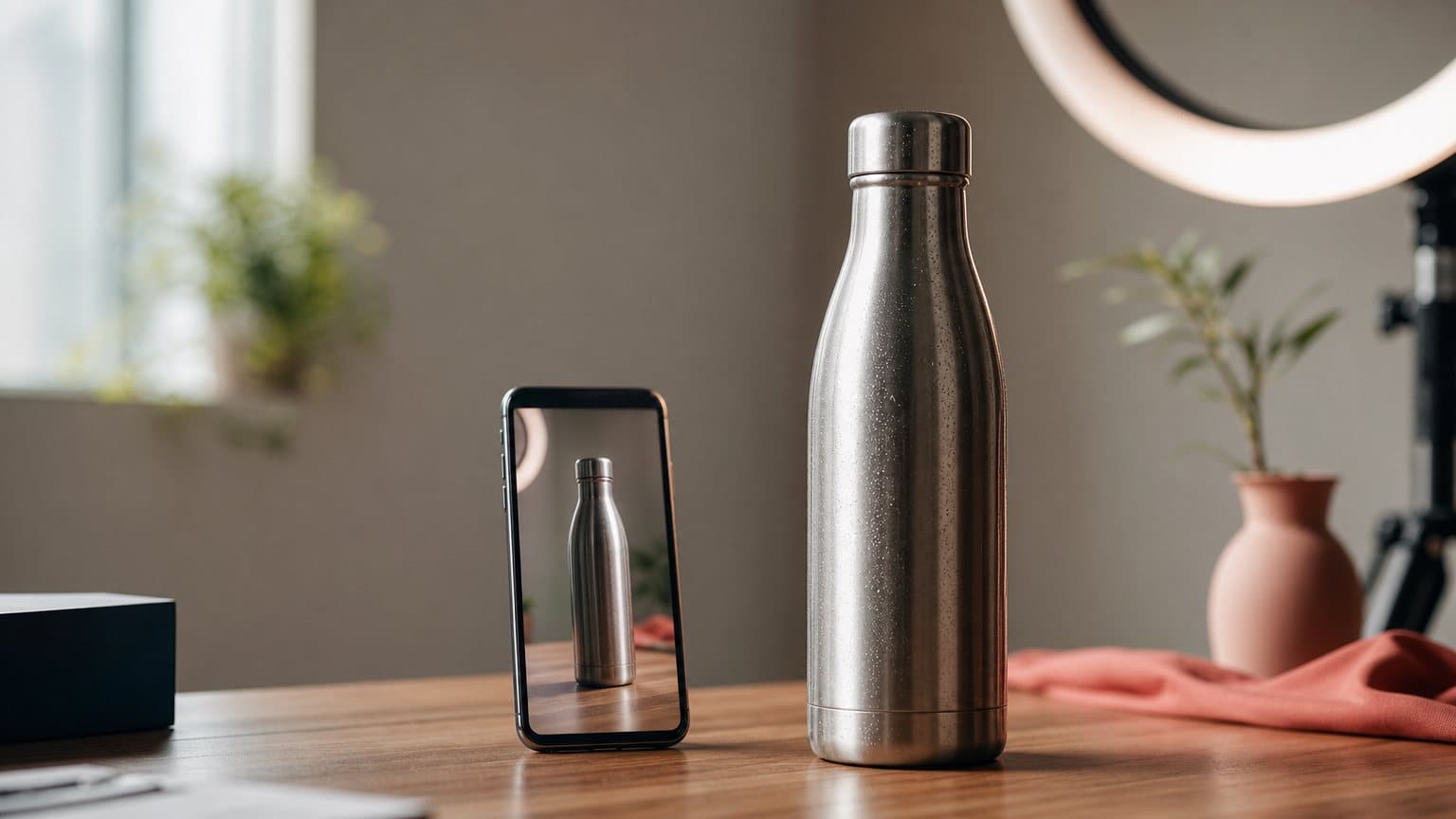
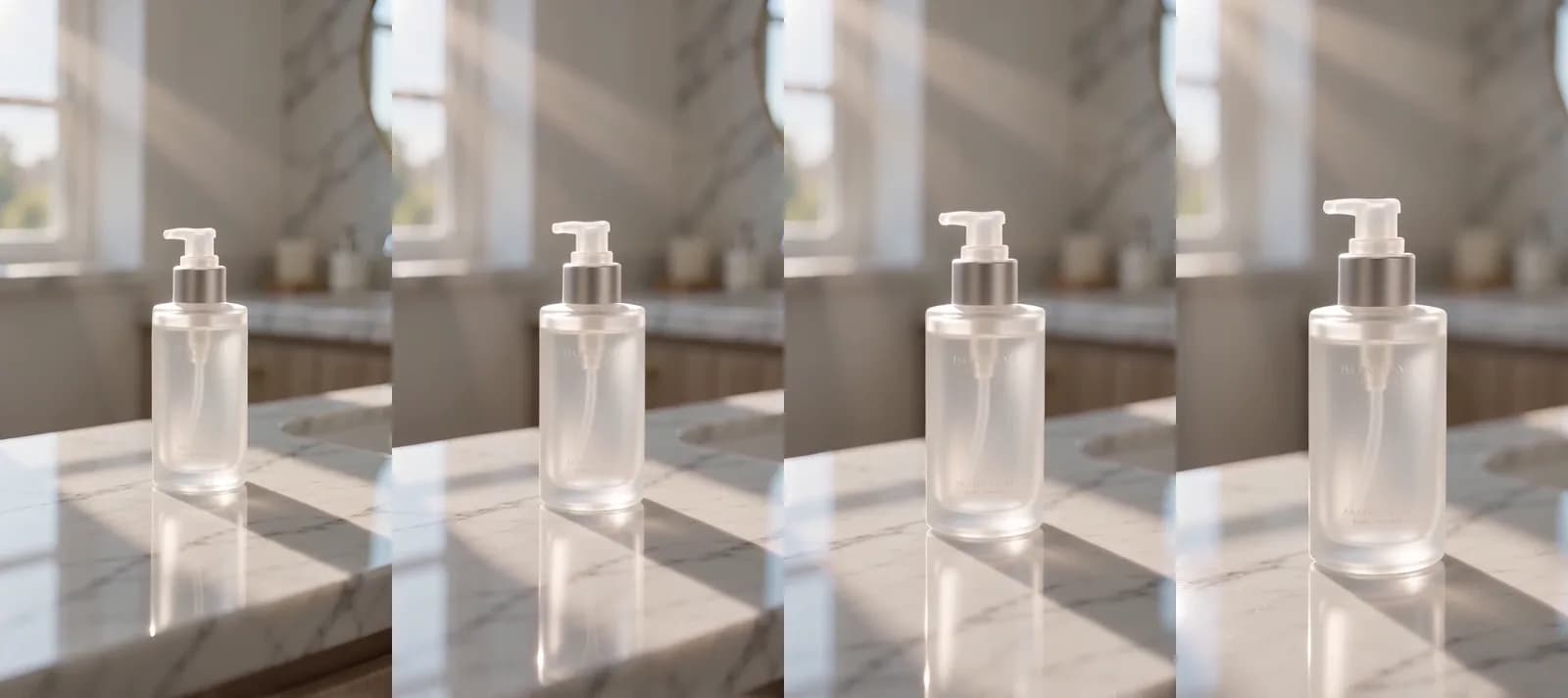 Made in Novoads with Seedance 2.0 Mini · a one-line prompt for a glass skincare bottle on a marble counter with a slow push-in, no photo attached, 4 seconds at 480p · 2 credits · 2026-09-29
That's our 2-credit test, and it shows what you get without step 2. The bottle is believable, the light is right, and the faint marks on the glass spell nothing. It works as a mood shot behind a caption, but as a product shot it's a made-up product, which is why the photo goes in first. Our guide to making product videos with AI has the longer walk-through of this route.
A script read by an AI presenter
Use this one for the ingredient lesson, the UGC-style talking video and the offer read.
- Choose Talking Actors. The screen gives you three steps: "Write or pick a script", "Choose an actor" and "Press the arrow to generate".
- Write the script as the brand. Say what the product is, when to use it and how much, in the words on your label.
- Pick the resolution. We bill a talking actor per started minute, so a 20-second lesson and a 58-second routine cost the same.
- Add captions afterward with the Captions tool on the finished video. In the app the Karaoke style costs 0 credits.
The video comes back with voice and lip-sync. The actor is animated from a photo and the voice, and the app's own note says "gestures can't be acted out", so the presenter won't pump the bottle or pat the cream in. Those shots come from your phone or from the product clip above.
The selfie clip at the top of this post didn't come from a talking actor. It came from a video model and a text prompt, and it shows why that route is tempting. The model put a bottle in her hand. A strip of frames can't carry her voice, so we won't describe it.
What we'd change is the script. "Two weeks of this serum, and my skin finally looks awake" is a first-person result from a person who doesn't exist. We wrote it about how skin looks, which we read as the cosmetic side of the FDA's line, but the two weeks never happened. For a real ad we'd keep "Three drops at night, that's it" and replace the first sentence with what the brand says about its own product.
Each platform has its own rules for labeling AI-made ads, and we compare them in our post on AI ad disclosure rules for Meta, TikTok and Google.
What each ad costs in credits and dollars
Prices as of November 13, 2026. Each piece costs the same number of credits on every plan, and a credit costs less on the bigger ones.
- Starter is $15 a month for 200 credits, or 7.5 cents a credit.
- Plus is $49 a month for 1,000 credits, or 4.9 cents a credit.
- Ultra 3,000 is $129 a month for 3,000 credits, or 4.3 cents a credit.
The dollar columns are our arithmetic, credits times each plan's rate.
| Piece of the ad | Model and setting | Credits | Starter | Plus | Ultra 3,000 |
|---|---|---|---|---|---|
| Presenter video, up to 60 s | Talking actor, 720p | 200 | $15.00 | $9.80 | $8.60 |
| Presenter video, up to 60 s | Talking actor, 480p | 100 | $7.50 | $4.90 | $4.30 |
| Product clip, 5 s | Seedance 2.0, 720p | 23 | about $1.73 | about $1.13 | about 99 cents |
| Product clip, 5 s | Kling 3.0 | 10 | 75 cents | 49 cents | 43 cents |
| Product clip, 5 s | Seedance 2.0 Mini, 720p | 5 | about 38 cents | about 25 cents | about 22 cents |
Two ads, added up
The first is a presenter review at 720p with one 5-second Seedance 2.0 clip of the product. The presenter video is 200 credits and the clip is 23. That's 223 credits, more than a Starter month holds. At the Plus rate it's about $10.93, and at the Ultra 3,000 rate it's about $9.59. A Plus month covers four of them, with 108 credits left over.
The second fits in a Starter month. An ingredient lesson at 480p and two 5-second Seedance 2.0 Mini clips come to 110 credits. That's $8.25 at Starter's rate and leaves 90 credits in the month for re-rolls.
Four things aren't in either sum.
- Re-rolls, because you pay for each one again.
- A paid caption style or music.
- The ad spend.
- Your time checking every clip against the real photo.
Every plan is on our pricing page.
What a creator charges for the same job
Launchpoint sells UGC creator campaigns to brands, and its rate guide (updated March 2026) says beauty and skincare UGC creators "typically charge between $150 and $500 per video deliverable".
That's a vendor's guide, and the comparison isn't apples to apples. A creator films your real product on real skin, in their own bathroom, with their own face. For 223 credits, we animate a photo you took and put your script in an AI presenter's mouth. We think that's a fair trade for a texture shot or an ingredient lesson. Anything that has to show a result on skin needs the creator.
The cosmetic-or-drug line the ranking pages don't explain
Only one of the five pages we opened mentions the FDA in its article. The Vibe Marketer's checklist has the line "Ad copy avoids FDA-restricted claims (cure, treat, heal)", with no link to the FDA and no mention of the difference between a cosmetic and a drug. So we read the FDA's own pages.
What the FDA's page says
The page is called "Is It a Cosmetic, a Drug, or Both? (Or Is It Soap?)", and it says its content is current as of September 11, 2024. It's long-standing guidance on an explainer page, and nothing on it is presented as a new rule. It's about US law, and it's written for the firms that market the product.
Its starting point is "Whether a product is a cosmetic or a drug under the law is determined by a product's intended use." It then lists ways intended use may be established, and the first is "Claims stated on the product labeling, in advertising, on the Internet, or in other promotional materials."
The next sentence is where our title comes from: "Certain claims may cause a product to be considered a drug, even if the product is marketed as if it were a cosmetic." The page gives some examples, and two of them could come straight from a serum's product page. They're claims that products will "increase or decrease the production of melanin (pigment) in the skin, or regenerate cells." The FDA calls them examples, so the list isn't complete, and its word is "may".
Three skincare cases on the FDA's pages
- On SPF, the same page says "moisturizers and makeup marketed with sun-protection claims are cosmetic/drug products", and that such products must comply with the requirements for both.
- On the word "cosmeceutical", the page says the term has no meaning under the law.
- On anti-aging, a second FDA page about wrinkle treatments (content current as of February 25, 2022) says "moisturizing is a cosmetic claim". Its example of the other side is a product intended to remove wrinkles or increase the skin's production of collagen. It also says the "FDA is concerned about drug claims made for products marketed as cosmetics, such as skin care products with anti-wrinkle or anti-aging claims that involve supposed effects on the structure or function of the skin."
Who regulates the ad itself
None of this means the FDA reviews your ads. Advertising is on the FDA's list as one of the places a claim can show up. For the ad itself, the FDA's anti-aging page points to the Federal Trade Commission, which it describes as "The government agency that regulates advertising claims". We haven't summarized the FTC's rules here, so read its pages too.
What we'd do with the five ads
This part is our reading of those pages, and a claims review by someone qualified is still the brand's call.
- In a texture close-up we'd say how the product feels and how to apply it, and leave out what it does under the skin.
- In an ingredient lesson we'd name the ingredient and the percentage on the label, and cut any line that says it regenerates, rebuilds or changes how skin makes pigment.
- In a UGC-style talking video we'd keep the presenter on appearance and routine. We read "looks rested" as a line about appearance, and we'd leave a word like "rebuilds" out.
- We'd make a before-and-after from real photos or not at all.
- In a launch or gift set ad we'd stick to the offer and the date and add no new claims to fill the seconds.
The same Vibe Marketer page shows a sample ad that reads "This serum literally repaired my barrier in 7 days". We can't tell you which side of the line that falls on. The FDA's page says such claims establish a product as a drug "because the intended use is to treat or prevent disease or otherwise affect the structure or functions of the human body", and that's the question we'd ask of the line before it ran.
What we'd make first for a serum launch
We'd start with the Starter-sized ad. Film the real swatch on your phone and make two 5-second product clips from your best bottle photo. Then have an AI presenter read a 20-second script that names the ingredient, the percentage and the three drops at night. Before it goes out, read the script against the FDA's two pages and take out every word about what the serum does beneath the surface.
If you want to see the product side first, we have a page on AI product demo videos and one for beauty brands.
Price your first serum ad
A presenter video of up to 60 seconds is 200 credits at 720p or 100 at 480p. Starter is $15 a month for 200 credits.
Compare the plansFor product video ads beyond skincare, see our guide to ecommerce video ads, and for the general steps behind any AI ad, our AI ads guide. If your launch needs a polished brand spot more than a bathroom selfie, we cover that in AI commercials. If you also run a salon, our hair salon ads guide covers the ads that fill chairs and Google's Book button.
Frequently Asked Questions
How do I write a skincare product ad without making a drug claim?
Start with what the FDA's pages put on the cosmetic side. The anti-aging page says moisturizing is a cosmetic claim, and the cosmetics and drugs page defines cosmetics by cleansing, beautifying and altering the appearance. Its examples of claims that may cause a product to be considered a drug include claims that a product will regenerate cells or increase or decrease the production of melanin. So we'd write about how the product feels, how skin looks and how to use it, and we'd cut any word about what it does under the skin. That's our reading, and it isn't legal advice.
How much does a skincare ad cost to make with AI?
In Novoads, as of November 13, 2026, an AI presenter video of up to 60 seconds costs 200 credits at 720p or 100 credits at 480p. A 5-second clip made from your product photo is 23 credits on Seedance 2.0. So a presenter review with one product clip comes to 223 credits, about $10.93 at the Plus rate. Re-rolls, paid caption styles, music and the ad spend come on top.
Can I use AI to make a before-and-after skincare ad?
We wouldn't generate any part of one. A before or after face drawn by a model is a result that never happened. If you have real, dated photos, AI can add captions and a presenter who introduces them, and that's where we'd stop. The real version of this ad takes a real person and real weeks.
Does the FDA approve skincare ads before they run?
The two FDA pages we read say nothing about approving ads. The anti-aging page says the law doesn't require FDA approval of cosmetics before they go on the market, and it names the Federal Trade Commission as the government agency that regulates advertising claims. What the FDA's cosmetics and drugs page does say is that claims in advertising are one of the ways a product's intended use is established.
Can an AI actor give a testimonial for my serum?
An AI actor can read your script, but it's never used your serum, so we wouldn't write its lines as a customer's experience. Write the script as the brand describing its own product and how to use it. If you want a real person's month with the product on camera, that's a job for a creator.
Key Takeaways
- Skincare and beauty brands run five kinds of ads: texture close-ups, ingredient lessons, UGC-style talking videos, before-and-afters, and launch, restock or gift set offers.
- AI is useful for animating a product photo you already have and for having an AI presenter read the brand's script. We wouldn't let it draw a label, a texture, a face or a result that isn't real.
- In Novoads a presenter video of up to 60 seconds is 200 credits at 720p or 100 at 480p. A 5-second product clip runs from 5 to 23 credits, depending on the model.
- The FDA's page on cosmetics and drugs says certain claims may cause a product to be considered a drug even when it's marketed as a cosmetic. It also counts claims in advertising among the ways intended use is established.
- The FDA's own anti-aging page names the Federal Trade Commission as the agency that regulates advertising claims, so read both agencies' pages before a script goes live.