Electrician Ads: Video Ideas, What Each Costs With AI, and Florida's License Number Rule
The ads electricians and electrical contractors run, how to make each one in Novoads from your own job photos or with an AI presenter, what they cost on each plan, and what Florida's statutes say about license numbers in ads, which the top results we read leave out.

Mauricio Valdivia
·12 min
Four seconds from the panel to the charger
On a white garage wall, a gray panel door hangs open on two rows of breakers. The camera pans right until the panel slides out of frame and only a new wall-mounted car charger is left. We made those 4 seconds for this post with Seedance 2.0 Mini, and they cost 2 credits. The clip started from a still we generated with GPT Image 2.6 Sunburst for 1 credit, a stand-in for the photo an electrician snaps on the way out of a finished job.
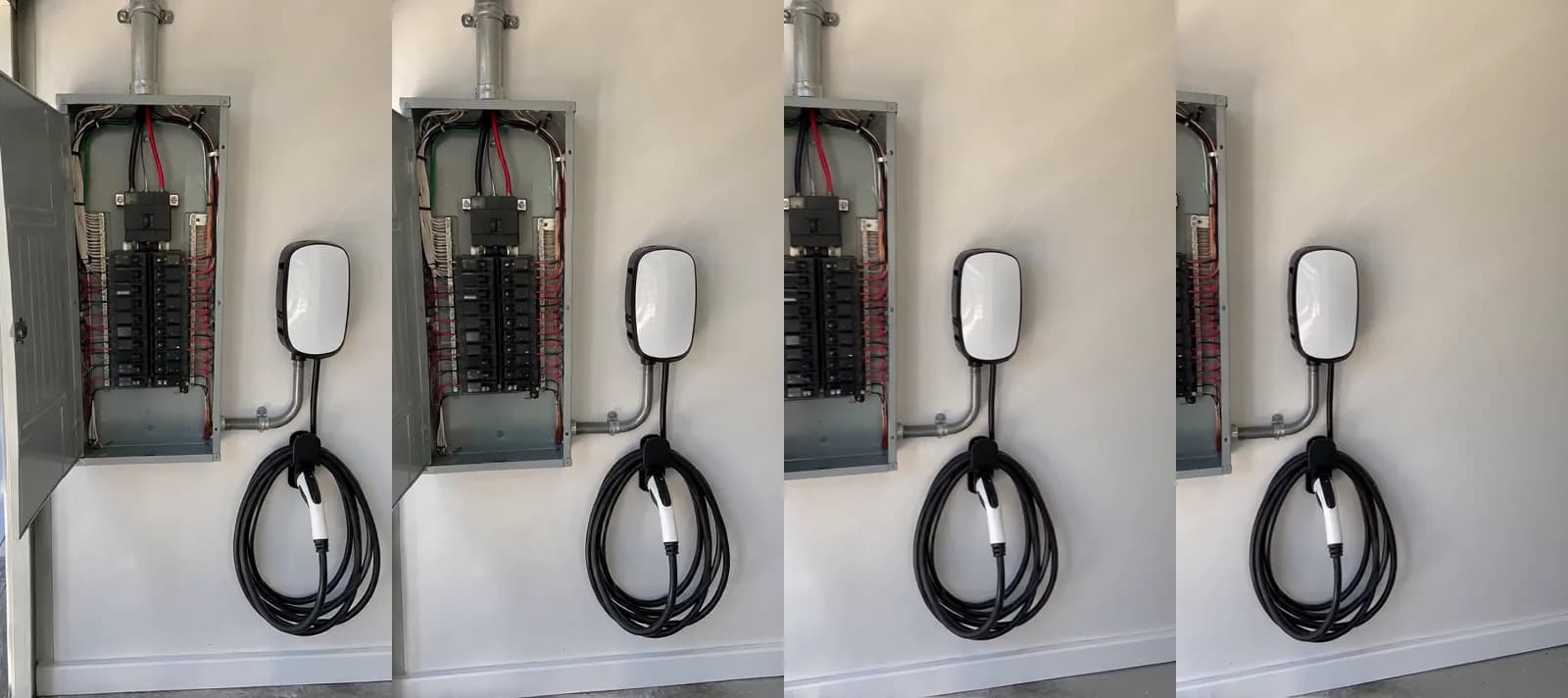 Made in Novoads with Seedance 2.0 Mini · a 4-second pan from the open panel to the car charger, started on the still shown further down, through our Claude connector, 480p, no sound · 2 credits · 2026-11-17
You take that photo anyway. The panel you swapped on Tuesday, the charger you hung in a customer's garage and the generator hookup you finished before the storm warning are already on your phone, and not one of them is an ad yet. And nobody on a crew has a spare afternoon to film one between a breaker that keeps tripping and the next estimate.
On November 17, 2026, we read the pages that rank highest for electrician ads and the Florida Statutes on the Legislature's own sites. We priced each piece at the credits Novoads charged that day and made the clip above through our Claude connector. We didn't film a job for this post, and we haven't run any of these ads.
What electrical contractors advertise, and where AI fits
The results we read for "electrician ads" agree on the basics. Hook Agency's roundup of electrician Facebook ads, updated November 5, 2026, says the ones that work "show a real electrician, sell one specific job (panel upgrades, EV chargers, generators), add proof, and ask for one action." FirstMention's playbook for electricians, dated May 12, 2026, recommends building planned-work ads on "real panel replacements, EV charger installs, generator setups, and clean finished work" and tells you to skip stock images.
AI can't give you the first of Hook Agency's points. A real electrician on camera means you or one of your techs, so film yourselves when you can. What AI does well is animate the photos you've already taken and read out the offers you'd never get around to filming. In every ad we describe below, the job clips open on photos the company took itself, and the AI presenter speaks for the business without ever playing its electrician, its owner or a customer.
One finished job and one offer
Planned work (a panel upgrade, an EV charger, a standby generator or a whole-home surge protector) is where we think video earns its place. As FirstMention's playbook says, "Nobody wakes up and panic-searches for a panel upgrade because their home is outdated." People save up for these jobs and compare contractors first, so each ad should show one job and make one offer.
AI handles this ad well as long as your own photo is the first frame. The finished panel or the charger on its wall becomes a 5-second clip with a slow pan or push-in, and an AI presenter states the offer and the price you actually charge. Put the town you serve in the script so it's said out loud and, once you add captions, shown on screen too.
What AI must not do here is invent the work. An install, a panel or a house the model made up can't appear as your job, and neither can a price or a financing deal you don't offer.
The breaker that keeps tripping
The other half of the trade is the call nobody planned for. Lights flicker, a breaker won't reset, half the outlets in a kitchen go dead, and people search for help right then. FirstMention's advice for a first ad budget is to "start with LSA first for emergency and service demand", and its channel table puts Google Local Services Ads at the top for emergency calls. That's search and phone work, so we wouldn't spend much on video there. Plumbers chase the same emergency searches, and the plumbing ads post sorts out what Google's switch to Google Verified means for a van, a flyer or a video ad.
AI can help with one small piece of it. A short AI presenter clip can play on the page those searches land on, or run as a retargeting ad that says who you are, which towns you cover and that you're licensed. Keep it to what the business actually does. If nobody picks up the phone overnight, the presenter shouldn't offer round-the-clock service, and you should never introduce it as the electrician who'll show up at the door.
An inspection or a diagnostic with a deadline
Offer ads give people a reason to call this month instead of someday. The usual offers are a panel safety inspection at no charge, a diagnostic at a low flat price or a discount that ends on a set day. The presenter reads the offer and the day it ends, and captions carry both for people who watch with the sound off. If a lot of people in your area would rather hear it in Spanish, our voice list covers 32 languages, so you can run the same offer in a second voice.
Be careful with anything made up. Don't invent a deadline you won't honor, and don't show a fault "found" in a home that wasn't a real job.
A joke that still says what you do
As Hook Agency's summary puts it, "Humor works if it still says what you do." Electricians run puns, jokes about weekend wiring and characters who make the point a straight ad can't. In our view, a cartoon is the one place where an invented electrician is fine, because nobody will mistake it for your crew. Our Claude connector has two recipes for this kind of ad, the 3D animated storyboard ad and the Claymation storyboard ad. Our post on animated ads walks through both and what each piece costs.
The limits here come from the trade itself. The joke can't bury what you do, and it can't show unsafe wiring as something a viewer might try at home.
Storm season and a new service area
Seasonal and local ads come back every year. Surge protection before storm season, a generator check before the summer heat and a new town you've started serving all fit here. They're quick to remake each season, with your truck photo turned into a moving shot and the presenter naming the season and the towns. Roofers run a storm inspection ad in the same season, one of the roofing ad ideas built on a crew's own jobs.
Don't show weather you didn't see. Storm damage, an outage or a neighborhood the model invented can't be passed off as real, so keep these clips on your own truck and your own installs.
If remodels are part of your work too, our post on contractor ads covers project videos for that side of the business.
Making these ads in Novoads from photos you already have
A clip that starts on your own photo
You make the job clips in the editor's Video tab, starting from a photo, and Kling 3.0 is the model we'd use for them.
- Choose Video and pick Kling 3.0 from the model menu. Kling 4.0 and Google Veo 3.1 take a start photo the same way. On Omni Flash or Wan 3.0, switch from "Reference" to "Start / End Frames" first.
- Drop your photo into the box that reads "Drop a start frame or click to upload". The editor then shows "The video starts on this picture."
- In the prompt, describe only the motion, such as a slow pan from the open panel to the charger in steady light. Leave people, tools and new equipment out of it.
- Set the length (5 seconds costs 10 credits on Kling 3.0), then click the round up-arrow button to send it.
- Check the clip against the real job, from the rows of breakers to the conduit runs and the charger's mount. If the model changed your work, regenerate the clip or cut those frames.
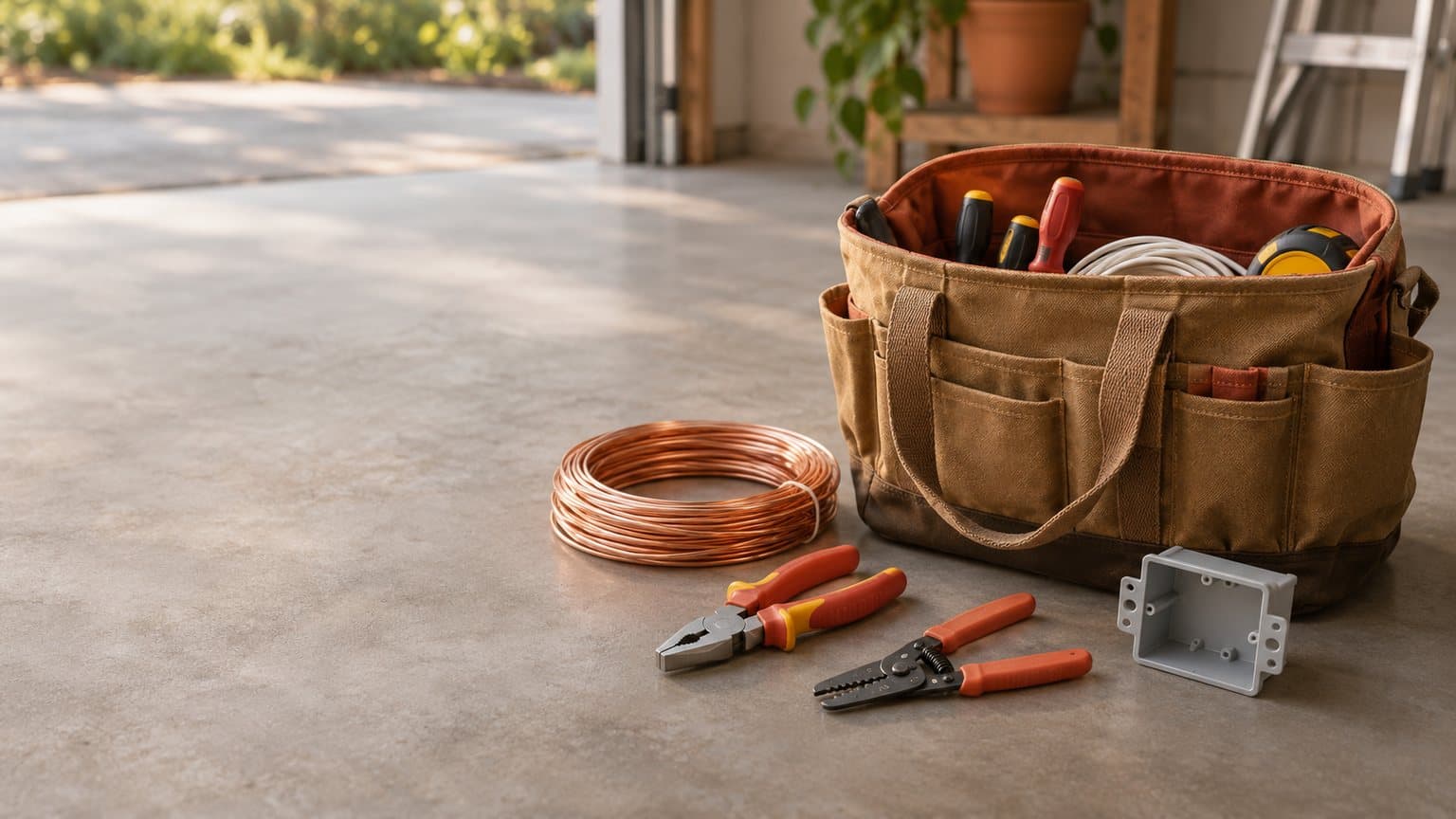
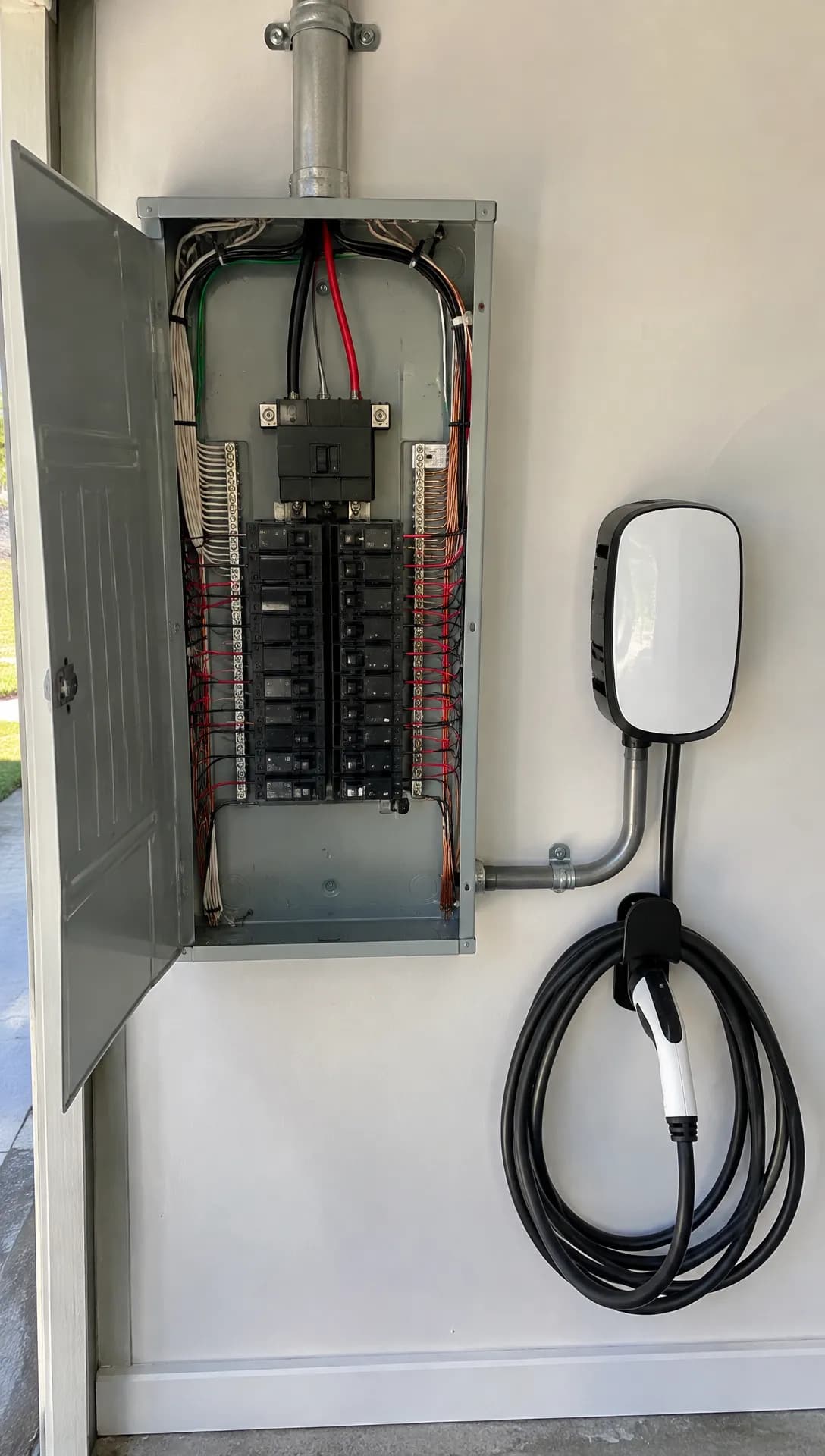 Made in Novoads with GPT Image 2.6 Sunburst · stands in for your own photo of a new panel beside a wall-mounted car charger, shot like an electrician's phone picture · 1 credit · 2026-11-17
That still is the picture our clip started from. We made it only because this post has no electrician's camera roll to borrow from. In your ads, your own photo takes its place. We ran the clip through our Claude connector, which can start a Seedance 2.0 Mini clip on a picture. In the editor, Seedance takes a photo only as a reference, which you name in the prompt as @Image1, and the clip doesn't open on it. That's why the steps above use Kling 3.0.
We kept the proof clip at 480p and 4 seconds to test the motion cheaply. That's the size for checking a camera move. For the clip you'll actually post, run your own photo through the steps above.
An AI presenter for the offer
- Choose Talking Actors and click "Add actors" to pick an AI actor.
- In the box that reads "Write what the actor will say...", type the offer, the towns you serve and, if you're a Florida contractor, your registration or certification number.
- Pick the size. You pay per started minute for each actor. At 480p, a presenter of up to a minute costs 100 credits. At 720p, the default, it costs 200.
- Send it. The presenter comes back with voice and lip-sync.
The presenter is an AI actor, and in your ad it should speak for the business as an AI presenter. Don't introduce it as your electrician, the company's owner or someone who hired you, and keep the job itself to your own photos. One presenter clip can carry the offer for every job clip you pair it with, which is why the costs below count only one.
Captions, your license number and the cartoon version
Captions come last, on the finished video. The Captions tool says it puts "what is said on a copy" of each video you pick, so a number the presenter reads out shows up on screen too. It opens on the "TikTok, no box" look, one of six TikTok and Instagram looks that cost 3 credits a started minute. The Karaoke style costs 0 credits. Proofread the captions before you post, because a license number with one wrong digit is worse than a typo in the offer.
For the joke ad, skip the editor and start one of the two cartoon recipes through our Claude connector. We haven't priced those recipes here, so they aren't in the tables below.
What one panel-and-charger ad costs
Prices as of November 17, 2026.
What each piece costs in credits
| What you make | Model | Credits |
|---|---|---|
| 5-second clip that starts on your photo | Kling 3.0 | 10 |
| 5-second clip that starts on your photo, 720p, with sound | Kling 4.0 | 18 |
| 5-second clip that starts on your photo, 720p, on "Start / End Frames" | Wan 3.0 | 9 |
| AI presenter, up to a minute, 480p | Talking actor | 100 |
| AI presenter, up to a minute, 720p (the default) | Talking actor | 200 |
| Captions in one of the six TikTok and Instagram looks, per started minute | Captions | 3 |
| Our proof still, at medium quality | GPT Image 2.6 Sunburst | 1 |
| Our proof clip, 4 seconds at 480p | Seedance 2.0 Mini | 2 |
The first ad we'd make for a panel upgrade or a charger install turns two of your photos into 5-second Kling 3.0 clips, which cost 20 credits together. An AI presenter at 480p adds 100. That brings the ad to 120 credits.
That ad on Starter, Plus and Ultra 3,000
You pay for Novoads from the first month, and every plan comes with a fixed number of credits a month.
| Plan | Monthly price | Credits a month | Per credit | The 120-credit ad | Ads like it in a month |
|---|---|---|---|---|---|
| Starter | $15 | 200 | $0.075 | $9.00 | 1, with 80 credits left |
| Plus | $49 | 1,000 | $0.049 | $5.88 | 8, with 40 credits left |
| Ultra 3,000 | $129 | 3,000 | $0.043 | $5.16 | 25 |
Billed annually, Plus comes to $39 a month and Ultra 3,000 to $99 a month. Starter is monthly only. Our pricing page lists every plan, including the larger Ultra sizes.
At 720p, the presenter alone is 200 credits, a full month on Starter. So on Starter we'd keep it at 480p. The 120 credits cover the clips and the presenter and nothing else. Every clip you regenerate costs its credits again. Captions, a separate voice-over and joining the clips into one ad aren't included, and neither is the ad spend, which goes to the platform that runs your ad.
Compared with a studio-made commercial
C&I Studios, a video production company, has a guide to what a 30-second commercial costs (originally published March 24, 2026). Its table opens with an entry level that it marks for social media ads, local TV and small businesses. That level runs $1,500 to $5,000.
This isn't a like-for-like comparison. The guide's range covers producing a commercial, while our 120 credits animate photos you've already taken and add an AI presenter. We'd still film a real job when the crew has an hour to spare and use the clips in the weeks it doesn't. For a whole TV-style spot made with AI, our post on AI commercials prices one in credits.
What Florida's statutes say about the number in your ad
The sentence in section 489.521
Section 489.521 of the 2026 Florida Statutes has a sentence about ads, and none of the top results we opened mention it. Paragraph (7)(b) reads, "The registration or certification number of a contractor shall be stated in each offer of services, business proposal, or advertisement, regardless of medium, used by that contractor."
The sentence applies to contractors. The part of chapter 489 that contains it defines a contractor as a person who is qualified to engage in the business of electrical or alarm system contracting "pursuant to a certificate or registration issued by the department." So when this post says electrician, it means the licensed contracting business. An employee on its crew isn't the contractor the sentence applies to.
Paragraph (7)(c) says what happens when the number is missing. The board "shall assess a fine of not less than $100 or issue a citation to any contractor who fails to include that contractor's certification or registration number when submitting an advertisement for publication, broadcast, or printing."
None of this is new. In the 2026 edition, the section's history line ends with chapter 2021-110. So the wording hasn't changed since 2021.
What the paragraph leaves out
The same paragraph puts two limits on that sentence. First, for this part of the statutes, the word advertisement "does not include business stationery or any promotional novelties such as balloons, pencils, trinkets, or articles of clothing."
Second, the paragraph "does not apply to a newspaper, magazine, flyer, billboard, phone book, Internet, or broadcast advertisement for alarm system contracting as long as the contractor maintains an Internet website that contains the contractor's registration or certification number and the advertisement directs consumers to the contractor's Internet website." So, as we read it, a video ad for alarm system work may leave the number out of the ad itself, as long as the website shows the number and the ad sends people there. An ad for ordinary electrical work doesn't fall under that exception. Some alarm jobs come with smart locks or access control, which is locksmith work too, and Google's verification rule for locksmith ads is the check on that side.
How we'd put the number into a video ad
The statute never mentions video. Our reading is that "regardless of medium" covers a video ad, and the paragraph's own alarm exception lists Internet and broadcast ads, which is where video ads run. So, on that reading, a Florida electrical contractor's video ad for ordinary electrical work has to state the number too, whether it's a job clip, an AI presenter reading an offer or a cartoon.
The statute says "stated" and nothing more. It doesn't say on screen, out loud or in a caption. In anything with a presenter, we suggest stating it three ways (said in the script, shown in the captions and written in the text that runs with the ad). On a job clip with no presenter, we'd still write it into that text.
This is Florida's rule for Florida's contractors, and we don't cover other states' rules here. This post isn't legal advice, either, so read section 489.521 on the Florida Senate's site before you run an ad in Florida.
Take the photo before you close the panel
Next time you finish a panel or mount a charger, take two steady photos before the cover goes on, one wide and one close-up, in daylight if you can get it. Each one can become a 5-second Kling 3.0 clip for 10 credits. Novoads makes the clips and the AI presenter, and you run the ad wherever your customers scroll.
Turn this week's panel photos into ads
Start a clip on your own job photo, then let an AI presenter say the offer. Every plan and what its credits buy is on our pricing page.
Compare the plansStarter's 200 credits a month cover the 120-credit ad above with room left for more job clips, and the larger plans suit a crew that posts every week.
Frequently Asked Questions
How do I market my electrical business with video ads?
Show one job per ad, such as a panel upgrade, an EV charger or a generator, and start the clip on your own photo of it instead of stock footage. Let an AI presenter state the offer and the towns you serve. If you're a Florida contractor, put your registration or certification number in the ad. People with an emergency mostly search for help, so we'd keep video for planned work and lean on search ads for the urgent calls.
Does a Florida electrician's video ad need the license number?
As we read the statute, yes, when the ad is for ordinary electrical work. Florida's statutes say a contractor's registration or certification number "shall be stated in each offer of services, business proposal, or advertisement, regardless of medium". That duty falls on contractors certified or registered with the state. Business stationery and promotional novelties don't count as advertisements, and an ad for alarm system contracting may leave the number out as long as the contractor's website shows it and the ad sends people there. Showing the number on screen is our suggestion, and none of this is legal advice.
Can an AI presenter play our electrician or a happy customer?
No. The presenter is an AI actor, so in your ad it should speak for the business as an AI presenter. Don't introduce it as your electrician, the company's owner or someone who hired you. The job itself should come from your own photos, turned into clips in the editor.
What does one electrician video ad cost to make with AI?
The ad we priced has two 5-second Kling 3.0 clips that start on your own photos, plus an AI presenter at 480p. It comes to 120 credits. At Starter's monthly price that's $9.00, and on Plus it's $5.88. On Ultra 3,000 it's $5.16. Regenerated clips, captions and the ad spend cost extra. Prices as of November 17, 2026.
Key Takeaways
- The top results we read agree that an electrician's ad should sell one job at a time and show real work. AI fits that approach only when each job clip starts on a photo your company took.
- In the editor, a Kling 3.0 clip that starts on your photo costs 10 credits per 5 seconds. An AI presenter of up to a minute costs 100 credits at 480p.
- Two job clips and the presenter at that size come to 120 credits. That's $5.88 on Plus and $9.00 at Starter's monthly price.
- C&I Studios' guide prices a 30-second commercial in production tiers. Its entry level runs $1,500 to $5,000.
- Florida's statutes say a contractor's registration or certification number shall be stated in each offer of services, business proposal or advertisement, regardless of medium. Business stationery and promotional novelties don't count, and an alarm system ad that sends people to a website showing the number may leave it out. As we read it, a video ad for ordinary electrical work has to state the number.